

The Unique God Man, Part 1


Seeking to discover from the bible, who is Jesus and what are we going to do about it is the most important spiritual quest anyone could partake in!
JP Jones: Seeking to discover from the Bible, who is Jesus and what are we going to do about it, is the most important spiritual quest anyone could partake in.
Greg: Thank you for joining us on Truth that Changes Lives. Pastor JP Jones is the senior pastor of Crossline Community Church in Laguna Hills, California, and a professor in Biblical Studies at Biola University. Today on Truth that Changes Lives, Pastor JP will be giving us a message from a series entitled Foundations. Let's listen as JP gives us part one of the unique God man.
JP Jones: Who is Jesus Christ? Who do you think Jesus Christ is? That's a pretty profound question. Your answer is even more profound because according to the New Testament, how you answer that question and your authentic engagement with that answer literally determines heaven and hell. It determines the quality of your life right now. The claims that Jesus made, the teachings that Jesus gives us are either true or they're false. If they're true, the implications of them are eternal. In Matthew chapter 16, Jesus kind of did his own man on the street interview. We just saw that on the video.
Jesus asked his disciples, who do you say that I am? And he did it in a pretty important place. It's a place called Caesarea Philippi. It's in northern Israel. It's one of the places where the headwaters of the Jordan River derive. And it's been excavated by archaeologists and it's actually been found to be a place of religious significance because different religious systems of that day and of the ancient peoples used that particular place as a shrine where they built altars and actually carried out religious sacrifices. So here's Jesus has been excavated. You can see these idols today.
So here's Jesus in this place where behind him and around him are these various objects of worship and he asks his followers, who do men say that I am? And they said, well, some of say you're a prophet, some say you're Elijah, some say you're John the Baptist, Jeremiah. Jesus then said to his followers, but what about you? Who do you say that I am? And it's in that passage that Peter says, thou art the Christ, the son of the living God. You see, answering the question who we really believe Jesus to be is the most profound question and answer we could ever have.
Meditating on the person of Jesus Christ is the most life transforming and enriching process we could ever engage in. Seeking to discover from the Bible, who is Jesus and what are we going to do about it, is the most important spiritual quest anyone could partake in. If you've come this morning as a guest, you've come the right morning because this is a time where we're looking at scripture to discuss what does the Bible teach about Jesus. And it's the very foundation of who we are as a church. The Bible says a lot of things about Jesus Christ.
We're going to look at 10 things, believe it or not. And without apology, I want to persuade you to give your whole life to Jesus. I want you to act upon what it is that you believe. I want us all to say because we believe this about Jesus, our whole lives are laid bare before him and with absolute sincerity, we are seeking him first in our lives. The first thing to consider with respect to what the Bible says about Jesus is the statement that we have as a congregation. We believe that Jesus Christ is a unique God man.
He was born of a virgin, lived a sinless life, died on the cross to make atonement for our sins. He rose bodily from the dead and ascended to the father's right hand. We believe that Jesus intercedes for believers as their high priest and that he will soon return as the reigning king. Now every one of those statements is backed up and based upon scriptural truth. So let me break it down. Here's the first thing. Jesus is the promised Messiah. The promised Messiah. In the birth narratives in the Gospels, the angel appears both to Matthew and to Mary to proclaim to them what is about to take place and how their lives are going to be radically changed forever because God's going to visit his people and fulfill promises that he's made for hundreds and hundreds of years.
In fact, in Luke chapter one, it says this, but the angel said to Mary, do not be afraid. You found favor with God. You will be with child and give birth to a son and you are to give him the name Jesus. He will be great and will be called the son of the most high. The Lord God will give him the throne of his father David and he will reign over the house of Jacob forever. His kingdom will never end. I think it's fairly safe to say that many of us have a very westernized view of Jesus.
But when you read the the Bible, both the Old and New Testament, it becomes very apparent that Jesus is the Messiah of Israel. He is the anointed one to deliver his people, the Jews, and he's the savior of the whole world. And so in anticipating the physical birth of Jesus, the angel announced to Mary that God was going to visit his people and that the Messiah would be the son of God and he would reign over the kingdom of God, reign over the throne of Jacob Israel. There are specific promises in the Hebrew scriptures that were fulfilled in the life of Jesus historically verifying that Jesus was the Messiah.
It's an historical question. Jesus either fit the profile or he didn't. He either fulfilled the promises or he didn't. If he didn't, we could write him off and forget about him. But if he did, there's a supernatural affirmation just with respect to the prophetic nature of these statements about the Messiah. In Genesis chapter three, it says the Messiah was going to be of human descent. In Genesis chapter 12, it says the Messiah was going to be of the lineage of Abraham. In second Samuel seven, it says the Messiah was going to come through the lineage of David.
In Micah 5:2, it says the Messiah was going to be born in Bethlehem. In Isaiah chapter seven verse 14, it says the Messiah was going to be born of a virgin, supernatural birth. In Psalm 22, it says the Messiah was going to be crucified, death by crucifixion. This happened by the way before crucifixion was ever even known in the Jewish world. In Isaiah chapter 53, it says that the death of Messiah was not just going to be an historical event, but it was going to be an event that had eternal spiritual implications that the Messiah was going to die as an atoning sacrifice.
He was going to fulfill all the Levitical aspects of a sacrifice, so his death was a sin payment so that people could be forgiven. In Isaiah 9:6, it says the Messiah was going to have a divine nature. He wasn't just going to be human, but he was going to be both human and divine. In Psalm 16, it says the Messiah after his death was going to be resurrected from the dead. You see, all of these prophecies made hundreds of years had to be fulfilled perfectly or Jesus would be disqualified as the Messiah. You see, prophecy pinpoints who the Messiah actually would be.
To read a quote from the book Blind Faith or Intelligent Belief, which I happened to write, so I'm really quoting myself. Messianic prophecy can be compared to a mailing address. My name and mailing address pinpoint me as a specific person in a specific location at a specific time. My name's JP Jones. My church is in the state of California. My church is in Mission Viejo, California. The location of my church office is 26522 Law Alameda, Mission Viejo, California. I am the only Reverend JP Jones who works at Crossline Community Church located at 26522 Law Alameda, Mission Viejo, California.
The prophecies in the Old Testament point to a specific person at a specific time in a specific location. Only one man has fulfilled those prophecies and that is Jesus of Nazareth. These predictions were made hundreds of years before Christ's birth and their fulfillment indicate the miraculous nature of God's word and the divine nature of Jesus as the Messiah. Jesus is the promised Messiah. Have you had your intellectual curiosity satisfied with the supernatural nature of divine prophecy so that you've humbled your mind, your will, and your emotions to Jesus? Have you surrendered your whole life to Jesus?
Are you seeking Jesus as the one who not only saves you, but satisfies all your questions? Here's a second thing about Jesus. He's the unique God man. The unique God man. Colossians 2 verse 9 says this, for in Christ all the fullness of the deity lives in bodily form. This is one of the many verses in the New Testament that bring out the deity of Jesus Christ. Here the apostle Paul writing the church at Colossae is writing in response to a heresy that was dominant in the early ancient world. It was the heresy known as Gnosticism.
And Gnosticism had a dualistic way of understanding things. There was that which was divine and there was that which was human and the divine was purely spiritual and not physical at all. And anything that was physical was of the human realm and therefore was inferior or tainted. And so the Gnostics tried to teach that Jesus couldn't have been God because he had a physical body. So they came up with some very strange theories about the person and nature of Jesus. And Paul writing to people coming out of that mentality, presenting them the good news of Jesus said, in Christ, in the man Jesus Christ dwells all the fullness of deity in bodily form.
He uses a very technical word there, fullness. It's the Greek word Basically what Paul was saying is everything that constitutes the essence of God was in Jesus Christ. You see, this truth of the both the divinity and the humanity of Jesus was so important that it became one of the the platforms of discussion for the early church and in the fourth century, leaders of the churches got together at what was known as the Council of Chalcedon to discuss and formulate what the Bible actually teaches about Jesus because it's beyond scrutiny. It's mysterious to think about how in the one person of Jesus Christ there's two natures, both God and man.
And and this is what they came up with. This is from the Council of Chalcedon in the fourth century AD following the holy fathers, we unanimously teach and confess the one and same son, our Lord Jesus Christ, perfect in divinity, perfect in humanity, the same truly God and truly man composed of a rational soul and body completely co-substantial with the father in his divinity and completely co-substantial with us in his humanity. We confess the one and the same Jesus Christ. He's the only begotten son. He is acknowledged as having two natures that are without confusion or change or division in the one person.
The relationship is mysterious and inscrutable. Inscrutable. That's a great word. I want to put that up next to juxtaposition. It's one of those words I just want to use regularly, you know. Inscrutable means you can't figure it out. Now here's what some people do. They say if I can't figure it out, I don't believe it's true. Now be very careful if you take that approach because you probably wouldn't turn your TV on. You would never have a surgeon operate on you. You wouldn't do a whole lot of things because the human mind has a certain level of understanding just from the natural normal human world.
There's some things we don't understand. Maybe some people do, but we don't understand them. But we still access them, enjoy them, are blessed by them. How much more when you think about the nature of God where the Bible teaches us that God is infinite? So of course the nature of the cases, there's going to be things when we delve into the nature of God where we just don't understand why we're finite, God's infinite. The reality of Jesus Christ being one person with two natures, there's certain aspects that we can understand and talk about and we should, but there comes a place where we have to acknowledge it's inscrutable.
AW Tozer in his book The Knowledge of the Holy says there comes a place in every person's spiritual journey where reason must bow to reverence. We're to do what Jesus said, to love God with all of our mind. We need to be intelligent disciples. But in the pursuit of loving God with all our mind, there comes a place where we have to say, I can't figure everything out, but I surrender my whole life to Jesus. I bow before him in reverence, in worship, in awe. Jesus is the unique God man. Are you worshiping him? Have you surrendered your life to him?
Do you embrace him as your one and only God and have you Have you rid yourself of all other idols so that you can worship Jesus alone? Here's a third truth that the Bible teaches us about Jesus Christ. Jesus is the bold prophet. He's the bold prophet. Mark chapter one, when Jesus begins his public ministry, it says after John, that's John the Baptist was put in prison, Jesus went to Galilee proclaiming the good news of God. The time has come, he said. The kingdom of God is near. Repent and believe the gospel. Do you know the message of Jesus can be summed up in one word?
Repent. That takes a lot of boldness to stand in front of somebody and say you need to repent. That's what Jesus preached. He preached repentance. In fact, I think most people don't have an accurate understanding of the teaching of Jesus. I am convinced of it. If you were to take the collective teachings of Jesus, look at the four Gospels. If you Let's just back up. Just take the major discourses. You've got the Sermon on the Mount, Matthew 5, 6, and 7. You've got the kingdom parables, Mark chapter eight. You have the olive at discourse, Matthew chapter 24 23 24 25.
You have the upper room discourse, John 14 15 16. You put that together and you can you can have a a pretty comprehensive summary of the teaching of Jesus. I think most people would be blown away if they just looked at the teaching of Jesus. Jesus was a bold prophet. In fact, I had a conversation in the Jacuzzi. This was some time ago, part of my Jacuzzi ministry, working out at the gym. Afterwards sitting in the Jacuzzi, start talking to a guy. And in the course of our conversation, told him that I was a follower of Christ and asked him some questions and he said, you know what, I think Jesus was a great guy, probably the greatest teacher ever lived.
I really admire Jesus as a great teacher. I said, really? He said, yeah, I do. I said, well then you must be familiar with what Jesus taught about heaven and hell. He said, what do you mean? I said, well, you know Jesus said more about heaven and hell than any other apostle or prophet or Biblical author. And in John chapter five, Jesus taught that there was going to be a resurrection at the end of the age and the wicked were going to be resurrected to eternal judgment, but the righteous to eternal life. And in Matthew 25, Jesus taught that when he comes back again, he's going to sit on the throne and he's going to gather everybody before him and he's going to separate people like sheep and goats are separated and the sheep are going to be invited to enjoy eternal life that he created for them, but the goats are going to be cast into the lake of fire for eternal judgment.
That's what Jesus taught. I said, in fact, in John chapter three, Jesus said, unless you believe in me as the only way, you will die in your sins and suffer eternal judgment. So since you think Jesus is a great teacher, you must believe what he taught about heaven and hell. And the guy just kind of looked at me and stuttered a little bit. Well, you know, I I don't know if I believe that. I said, let me ask you a question. He said, okay. I go, please, just be honest. He go, okay. Have you ever studied the teachings of Jesus?
He said, no, I I really haven't. I said, you know what, it's okay. Most people haven't. And you know what, I thought that was probably the case before you even answered. I'll tell you why. When you really study the teachings of Jesus, you either humble yourself believing him and become one of his followers or you want to write it off completely and reject it because you can't just think that Jesus was a great teacher when you think about what he really taught if you're not really willing to obey it. Jesus was a bold prophet. Are you obeying his teachings?
Have you surrendered your will to the will of Jesus Christ? Are you doing what he says? The Bible says as well that Jesus is the compassionate healer. The compassionate healer. In Mark chapter one, this story is recorded for us. A man with leprosy came to him and begged him on his knees, if you are willing, you can make me clean. And filled with compassion, Jesus reached out his hand and touched the man. I am willing, he said. Be clean. And immediately the leprosy left him. When you study the four Gospels and all the healing miracles of Jesus, on the macro level, you can make a case that Jesus healed people to prove his deity, to establish his Messiahship, to demonstrate his spiritual authority.
But on the micro level, every time you see Jesus healing people, you see it's similar to this passage here in Mark chapter one where the leper comes to Jesus begging for his healing because he knew he wouldn't have healing any other way. And then it says Jesus filled with compassion touched him and he was healed. I love that. Jesus didn't need to touch him, but he did. And he had compassion for him. On the macro level, Jesus did miracles of healing to prove that he was the son of God. On the micro level, he healed people because he had compassion.
He cared about them and he wanted to heal them. Did you know that Jesus cares about you? Jesus looks at you. He looks at me and he has compassion. He doesn't look at us and just say, what a bunch of losers. Jesus doesn't look at me and say, you know what, I made a mistake when I put you in charge of that church. Jesus didn't look at you and say, boy, I made a mistake when I created you. Jesus didn't look at anyone and go, what a loser. Jesus looks at us and has compassion and he wants to reach out and touch us and heal us because he's a compassionate healer.
Are you crying out to Jesus to heal your life, to heal your marriage, to heal your body, to heal your soul, to heal your emotions? You can be just like that leper who said to Jesus, you you got the power to heal me, but do you care? Are you willing? Will you? And Jesus filled with compassion will reach out and touch us and heal us. He's the compassionate healer. A fifth observation from scripture. Jesus is the miracle worker. He's the miracle worker. Matthew chapter eight says, this is right after the Sermon on the Mount. Gathered them all together, got in a boat, went on to see a Galilee.
It says Jesus got in the boat, the disciples followed him and without warning, a furious storm came up on the lake so that the wave swept over the boat, but Jesus was sleeping. The disciples went and woke him and they said, Lord, save us. We're we're going to drown. And he replied, you have little faith. Why are you so afraid? And then he got up and he rebuked the winds and the waves and it was completely calm. And the men were amazed and asked, what kind of man is this? Even the winds and the waves obey him.
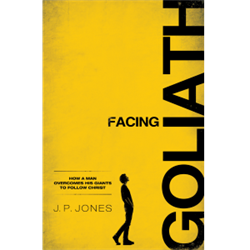
Greg: What a great message for all of us today. Pastor JP provides us with great insight. That is why we'd like to make it available to you on CD. Just get in touch and mention today's date. We'll send it your way for just $5. Or if you'd like to support this ministry, you can write us at Truth that Changes Lives, 233 31 Molten Parkway, Laguna Hills, California 92653 or give us a call at 949 916 0250. That's 949 916 0250. For your gift of $25 or more, we will send you a signed copy of JP's new book Facing Goliath.
Please join us every Sunday at 9 or 11:00 a.m. at Crossline Church in Laguna Hills. The address is 233 31 Molten Parkway, Laguna Hills, California 92653. Or check us out on the web at crosslinechurch.com. We're going to get to the address and phone number again in a moment, but before we do that, Pastor JP, do you have any insight from today's message?
JP Jones: Thanks, Greg. We're talking about the person of Jesus Christ and what does it mean to believe in Jesus Christ? The Bible tells us that Jesus is the unique God man. He's fully God and fully man. The great mystery of scripture is that in the one person of Jesus Christ, there are two natures, one being fully divine and one being fully human. The relationship between the two natures, that's a mystery. It's inscrutable. It's incomprehensible. But the reality of the mystery is this. The Bible presents Jesus as God and man, the unique God man. And as the God man, Jesus Christ is the only savior.
He claimed to be able to forgive our sins. He claimed to be the way, the truth, and the life and that no one comes to the father but through him. And he backed up that claim through his death and resurrection. The resurrection of Jesus authenticates all the claims of Jesus that he is the unique God man. The issue for us is what is our response? To the believer, it's to worship Jesus and follow Jesus. For the seeker, it's to confess Jesus Christ as Lord. Today in your own heart, if you know God already through Jesus Christ, thank God that Jesus is your Lord and savior.
If you've yet to come to know God, realize that salvation is in no one else. It is only in Jesus Christ. And today, call on the name of the Lord and be saved. Would you pray with me? Lord Jesus, we thank you that you are the unique God man and that salvation is in you alone. We confess that you died for our sins, rose from the dead, and that you alone are the unique God man. And so right now, we thank you for forgiveness, for salvation, and for the gift of eternal life through believing in you.
In Jesus' name, amen.
Greg: We want to help you in your relationship with Christ. Please get in touch with us at Truth that Changes Lives, 233 31 Molten Parkway, Laguna Hills, California 92653 or call us at 949 916 0250. On the internet, you'll find us at crosslinechurch.com. We hope to see you at one of our services every Sunday at our new campus in Laguna Hills. For more information and directions, please go to crosslinechurch.com. Please join us next time on Truth that Changes Lives.
Featured Offer
Past Episodes

Featured Offer
About Truth That Changes Lives
About JP Jones
JP Jones is the founding Senior Pastor of Crossline Church in Laguna Hills, CA. Beginning with 16 people, Crossline has grown to a congregation of over 2,000 in 10 years. This growth has come largely through people receiving Christ and joining the church. JP is a dynamic and articulate Bible teacher with a passion to see people come to Christ and grow into being multiplying disciples for Jesus. JP began his ministry career with Campus Crusade for Christ and continues to have a heart for the Great Commission. Traveling on mission trips all over the world, JP preaches the gospel and trains pastors to be reproducing spiritual leaders.
For the past 25 years, JP has been an Adjunct Professor of Theology and Biblical Studies at Biola University and Talbot School of Theology. A published author, JP has written Facing Goliath by Baker Books and the discipleship curriculums, Transformed and Livin’ Large by Life Together. JP is a popular speaker at Men’s Retreats and Couples Conferences. JP is married to his wife Donna and they have 3 children. JP loves family vacation, the beach, Ultimate Fighting and a good cup of coffee.
Contact Truth That Changes Lives with JP Jones
info@crosslinechurch.com
http://pastorjpjones.com/
23331 Moulton Parkway
Laguna Hills CA 92653
(949) 916-0250