
Your Last Words pt.2


Outro voiceover and music.
Guest (Male): Welcome to The Word Made Plain with senior pastor Tony Clark of Calvary Chapel Newport News in Virginia. Currently, Pastor Tony is teaching a study in the book of Acts. Please open your Bible to Acts chapter 20, verses 28 through 31.
Tony Clark: So let's not delay. Let's dive right into the word of God. Turn with me in your Bibles to the book of Acts, chapter 20, as we continue our verse-by-verse study of the book of Acts on Sunday mornings. And as you know, we're in the book of 1 Samuel on Wednesdays, going through the Old Testament on Wednesdays and the New Testament on Sundays. And so here we are in Acts chapter 20, looking at verses 28 to 31.
And Father, we do thank You for this tremendous honor to sit at Your feet and learn from You. Lord, we have been talking to You through worship and now, Lord, give us ears to hear from You through Your Word. Oh God, we pray that Holy Spirit would teach us today. In Jesus' name, Amen.
Acts chapter 20, looking at verses 28 to 31. The title of this message is "Your Last Words Part Two." Now, in part one of this study, we saw how Paul told the Ephesian elders in verse 25 that they would see his face no more. Then he told them that he was innocent of the blood of all men, and then he told them why in verse 27: because he had not shunned to declare to them the whole counsel of God.
Then he instructed them in verse 28 to take heed to themselves and to the flock. And we're going to pick it up in verse 28 so we can finish up this verse. Notice what he said. He said, "Therefore take heed to yourselves and to all the flock, among which the Holy Spirit has made you overseers, to shepherd the church of God which He purchased with His own blood."
I want to draw your attention to the phrase in this verse, "among which the Holy Spirit has made you overseers." Now, in this last part of Paul's final message to these Ephesian elders, the verbs change from "I did" and "we do" to "go do." He reminds them who made them overseers. The Holy Spirit did. God is the one who chooses and calls those who are to be overseers of His churches.
Paul said to Timothy in 1 Timothy 1:12, he said, "And I thank Christ Jesus our Lord who has enabled me, because He counted me faithful, putting me into the ministry." Paul acknowledged that it's God is the one who put him in the ministry.
Do you want to know how God calls His people? How does God call overseers to be in His ministry? When we're doing ministry in a small capacity. For example, Moses in Exodus 3, verses 1 through 10, was called to oversee the Israelites, which were a congregation of approximately three million people, when he was being faithful on the back side of the desert watching his father-in-law's sheep. And God called him to shepherd or lead His people, Israel.
It's not on the screen for you note-takers. Zechariah 4:10 says, "Don't despise the day of small beginnings." "Don't despise the day of small things," the Old King James says. Why is that? Because God is seeing if we can be faithful in the small things that He's given us before He will even begin to give us more.
Can you be faithful in the small task that God has given you? Can you be faithful over your department at the job? Can you be faithful over your family at home? Can you be faithful? God will never give you more until you are faithful over the small things that God has given you.
People come in here and they see the crowds here and they're like, "Ooh, aah, that's a big church." But see, I remember when there were six people on a Sunday night. When there were eight to 12 people on a Wednesday. When we used to meet in this guy's garage, he had a one-car garage, and we used to meet there on Wednesday nights. And then when we used to meet in my living room. And then to my two-car garage. Ooh, we were really growing then.
Don't despise the day of small beginnings. Because God is trying to see if He can trust you with more by being faithful over what is least. And here it is, here. Moses called to shepherd God's people, approximately two to three million people. But first He saw him being faithful over his father-in-law's little sheep on the back side of the desert.
You may be in the back side of the desert right now, but you be faithful. God will give you more. No matter what it is He has planned for you, God will give you more if you can just be faithful over the least. This is why the Bible says those who call to ministry, they have to first be a pastor at home before they ever try to be a pastor at church. Can you shepherd those little kids at your house and that wife of yours? Or single parents, those kids at the house? He's trying to see if you can be faithful in what is least. Can you be faithful when no one else sees you?
People see that God has graciously allowed for me to speak around the world, several places around the country. But see, the things that I'm telling them around the country, I've been saying to you here when it was just a few little people here called Calvary Chapel Newport News. And God has just seen can you be faithful in the private? Can you be faithful when no one else sees you? Can you be faithful in the back side of your desert? When you're not getting the recognitions or the pats on the back or the "at-a-boys," can you still be faithful before He ever, ever will give you more?
And so, the thing about shepherds... the thing about shepherds... they're always around the sheep. See, if you're that type of person, "Oh, I can't stand people. Look at all these people in here. That's why I sit in the overflow because I'm the first one out. I can't stand all these people." You'll never shepherd anything God wants you to shepherd. Because God's shepherds are always with the sheep. They're always around the sheep.
And if you're the type that... then God won't have you do anything for Him until you change that attitude. Until you get the screwdriver and adjust that "tude" you got. Not until then. Because God's people, His shepherds, are always around the sheep. Notice he says, "among which the Holy Spirit has made you overseers." The Greek word for overseer is *episkopos*. It's where we get our English word Episcopalian from, and it means supervisor, it means ruler or overseer over a church or congregation.
So we see that we're called to be a supervisor, an overseer of a church, for those who are called to the church life. But here's the thing. Parents, you're called to the church that's in your home. And as I mentioned before several times, how is church at home?
How's your church, men, at the house? Single parents, how's your church doing? Is your church a hot mess? How's your church? Because you're called to be an overseer, a pastor at home. "I'm no pastor." The devil is a lie. Yes, you are. If you're a man, if you're a single parent, you're the pastor of your home. And once again, I have to ask, how's your church?
See, this is our function. We function as overseers. Overseers of the home. This is why if the home is falling apart, I'm looking at you men, I'm looking at you single parents. Because you're the overseer of the home. If a company goes down, the company that swoops in to rescue it, the first thing they do is fire the CEO. They don't bring him on and say, "Okay, be a part of the team here." No, they don't bring him home. They say, "Get out of here. You're gone. You're the first one gone. Because this company went down on your watch." And they get rid of them.
So we function as overseers. Now, what are our duties? He says, "to shepherd the church of God." Now the Greek word for shepherd is *poimen* and it speaks of the tending, the feeding, and the protecting of God's flock. We were already told in verse 27 that we were to feed them the whole counsel of God, which is God's word from Genesis to Revelation. Now that they are fed God's word, this shepherding is speaking of how God's flock is to be tended to and protected.
Watch this. Because if I just fed you and not protected you, you know what I'd be doing? I'd be just fattening you up for the kill. See, I must protect you as well. Now, we are told who the church belongs to in the last part of verse 28. Notice he says, "which He purchased with His own blood." The church belongs to God. Notice how in verse 28 it's called the church of God. The church belongs to God. He is the one who purchased it, notice, with His own blood. So God paid a great price to purchase the church.
This is not my church. I didn't die for anyone. I didn't shed a single ounce of blood for this church. You've heard me say many times, I always cringe when I hear my pastor friends around the country say, "You know, my church, at my church, and you know, my people." I didn't die for anyone. The church belongs to God and you are the people of God. That's why it's called the people of God. You belong to Him.
So with this in mind, don't mock, bad mouth, belittle, or talk bad about the church. Because God paid a great price to purchase it. It cost Him the life of His Son to purchase the church. Also, the church is called the Bride of Christ. So when you mock, make fun of, talk about in a negative way the church, you're talking about another man's bride.
And let me tell you something. You talk about my wife, you'll see a side of me you won't ever want to see again. The church is the Bride of Christ. "Well the church is full of hypocrites." Well I always tell people, "Why don't you come here and show us how to live this thing out and we can watch you and follow you?"
See, the people always try some kind of way to talk about the church. The church is not for people who got it all together. The church is for us to come here to get it together. We're a hot mess. We got hang-ups, hassles, and situations. I told you on Tuesdays at our Celebrate Recovery, we all need to show up because we all got something going on.
But the ones who come out for Tuesday's Celebrate Recovery, they're the ones who are brave enough to come out and admit it. We all are a hot mess. We all got mess and hassles and hang-ups and issues and stuff going on. Don't think that the church is for people who got it all together. We're trying to get it together. This is why we come.
"The church is full of hypocrites." And then once I tell them, "Why don't you come and show us how to do this thing and we'll follow you seeing that you're the example?" Then the second thing is a hypocrite is not even a Christian. Did you know that? Hypocrite, *hupokrites* is the Greek word. It meant in Greek culture it was an actor. It was an actor who wore masks. It was in the Shakespearian time, it was an actor who wore masks who had very exaggerated expressions on them so the people in the back can know the emotion they're trying to act out.
So they just wore masks. They were an actor. When they take off the mask, they were someone different. A hypocrite is someone who put on the mask of a Christian. They're not a Christian. They're trying to act out the role of one.
Oh, I just taught you something, didn't I? Some of y'all just got taught something. Because you thought that a hypocrite was a real Christian doing bad things. Oh well, in a sense, yeah. But in the truest sense of the word, a hypocrite is not even a Christian. He's just playing the role of one, putting on the mask.
And so, the thing is that when we talk about the church... and the church is a mess, you know why? Because the church is filled with people. People just like you, like me, a mess. And so we're here trying to learn God's word to get it together. That's why we're here for. We don't come in because we got it together, come through the door, "Yes, that message was just for you because I have it together." No. We're trying to get this thing together. We all got mess going on.
So, remember how Paul said in the first part of verse 28, "Therefore take heed to yourselves" and then he says, "and to all the flock." Now why did he say this? Look at verses 29 and 30. Look what he says there. "For I know this, that after my departure savage wolves will come in among you, not sparing the flock. Also from among yourselves men will rise up, speaking perverse things, to draw away disciples after themselves." Oh, really Paul?
In these verses, we see how Paul goes into more details on the protective duties of those overseeing God's people. Paul said in verse 29, "after my departure savage wolves," notice he calls them that, "will come in," notice "among them." I believe that Satan, even though there's a guy in 1963 who is said to have coined this phrase, but I think this phrase really got coined by Satan himself. I believe he was the first one to say, "if you can't beat them, join them."
Satan knew that he could never defeat God's church from the outside. Because Matthew 16 and verse 18 says the gates of hell shall not prevail against the church. So he decided, "Okay, if I can't beat them, I might as well join them." He decided to sow tares among the wheat, like Matthew 13, verses 24 to 30 teaches. Now tares are weeds that look just like wheat.
So Satan secretly plant his people into the church and they look, act, and talk like real believers. But they are sent just to masquerade as Christians and to give Christians a bad name. That's what Satan does. He plants them in churches all around. Secretly plants. He says, "Okay, let's study them. Christians like to smile a lot, so..." And they practice saying Hallelujah and Praise the Lord and Amen a lot. "Okay. Hallelujah. Praise the Lord. Amen. Hallelujah."
And they come in and they're tares among the wheat. And this is what they do. And they masquerade. And then they go out and live whatever kind of way out there and they say, "I'm a Christian." And all they are are tares among the wheat masquerading, putting on a mask that they are a believer.
Satan has ministers. Did you know that? 2 Corinthians 11, verses 13 through 15 says, "for Satan can transform himself into an angel of light. Therefore it is no great thing if his ministers also transform themselves into ministers of righteousness, whose end will be according to their works." If he has ministers, then Satan has a teaching. In 1 Timothy 4:1 it says, "now the Spirit expressly says that in the latter times some will depart from the faith, giving heed to deceiving spirits and doctrines," or teachings, "of demons."
What does their teaching look like? Or how can we recognize it? Well, let me just start off with this. This is not on the screen. 1 Timothy 6:10 says, "for the love of money is the root of all kinds of evil, for which some have strayed concerning the faith and in their greediness pierced themselves through with many sorrows." Now, five verses before this, in 1 Timothy 6:5, it says "useless wranglings of men of corrupt minds destitute of the truth, who suppose that godliness is a means of gain. From such withdraw yourself." Or using godliness as a way of making money for themselves.
Peter backs this up. Peter says in 2 Peter 2, in verses 1 to 3, he says "but there were also false prophets among the people, even there will be false teachers among you, who will secretly bring in destructive heresies," or teachings, "even denying the Lord who bought them, and bring on themselves swift destruction. And many will follow their destructive ways, because of whom the way of truth will be blasphemed. And by covetousness," which means greedy for gain, "they will exploit you with deceptive words; for a long time their judgment has not been idle and their destruction does not slumber."
A main characteristic of a false teacher sent by Satan into the church is this main characteristic: instead of feeding the flock, they seek to fleece the flock. That's one main characteristic. They surround their teachings, don't miss this, they surround their teachings... time to wake up... they surround their teachings around one thing: money. Money. They teach godliness is a means of gain or making money.
They seek to exploit you for money. And I'm going to take some of y'all back. Some of y'all ain't going to have a clue of what I'm talking about, but some of y'all, y'all going to be, "Ooh, that took me back." They will exploit you, say, "Give me my hundred-dollar line over here. Give me my fifty-dollar. Give me my twenty-dollar over here. Well if you only got a dollar, you bring up the rear." But I need my hundred-dollar line over here. They seek instead of feeding the flock, they seek to fleece the flock. And they leave those churches with a bag, a grip full of money, and they go off to the next church to give them another hundred-dollar line, fifty-dollar line, twenty-dollar line.
It's just a sad thing. Or, "Sow this," let me get my little jingles ready, "sow this financial seed into this ministry financially and you will be blessed to get some holy water, or some holy towel, or some holy handkerchief that they prayed over." It's... we see it's unfortunate. And you would think that people would see through it, but remember what Peter said: "many will follow their destructive ways."
And it says and the way of God will be blasphemed. See, what I'm teaching here will be blasphemed by them because I'm calling them out. See, Paul told Timothy, "from such people withdraw yourself." So Paul told these Ephesian elders that these... he called them "savage wolves" will come in from the outside in verse 29. But there's another group from within the church, in verse 30, who will rise up speaking perverse things to do what? To draw away disciples after themselves.
You will always have people trying to make a name for themselves. Try to get people to follow them. I see this all the time. Coming in thinking they're impressing me with a bunch of titles and letters in front and behind their name and I'm just... you know... I've been in ministry well over three decades and I'm not impressed by any of that stuff. I'm not impressed by that stuff.
But they think they're going to come in and impress me with what they are doing. And what they will try to do... watch this... they'll try to slither their way in to some Saturday men's group or some small home study. And they'll try to slither in there in order to do what? Draw away disciples after themselves. You will always have people trying to make a name for themselves. And Paul warns Timothy, notice he warns Timothy by naming names of men causing the trouble in the church.
Guest (Male): If The Word Made Plain has been a source of inspiration and encouragement to you, why not consider becoming a Word Made Plain giving partner to keep this listener-supported program on the air? As a giving partner, you join forces with Calvary Chapel Newport News' kingdom vision of spreading the Gospel of Jesus Christ. You can make your tax-deductible gift online at CalvaryNN.org or send your gift of any amount to 15553 Warwick Boulevard, Newport News, Virginia 23608 and receive a gift from Calvary Chapel Newport News as our thank you.
In addition to your financial support, we ask that you pray for The Word Made Plain broadcast, that it touches hearts and generates change in the lives of people around the world. We pray you've been blessed by God's word today and hope you'll tune in next time to hear The Word Made Plain.
Featured Offer

In his three part series entitled, “When God Gives Up,” Senior Pastor Tony Clark of Calvary Chapel Newport News Virginia focuses on God’s limitations in regard to sin. Is there a limit to God’s patience? Join us, as Pastor Tony answers this vital question in this must hear series. Download your copy today!
Past Episodes
This ministry does not have any series.
Featured Offer
In his three part series entitled, “When God Gives Up,” Senior Pastor Tony Clark of Calvary Chapel Newport News Virginia focuses on God’s limitations in regard to sin. Is there a limit to God’s patience? Join us, as Pastor Tony answers this vital question in this must hear series. Download your copy today!
About The Word Made Plain
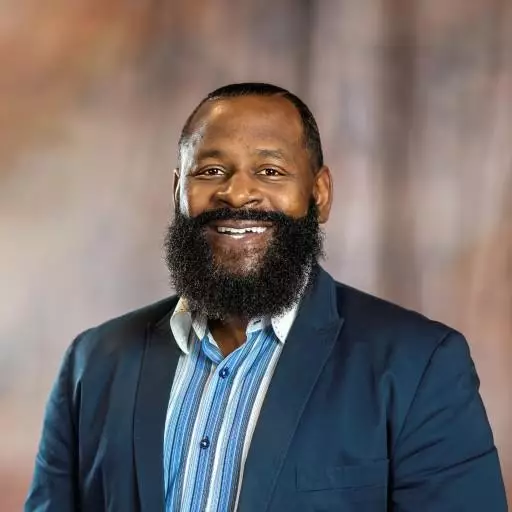
About Tony Clark
Born and raised in the steel town of Gary, Indiana, Tony lived life “his own way” Monday through Saturday. However, Sundays were different because that was the day he would go to church. And even though he attended church, Tony had no idea what it meant to have a relationship with Jesus Christ.
After his first year in college, Tony decided to marry his high school sweetheart, Jenise, and join the United States Marine Corps. After boot camp, instead of starting a life with his new bride, Tony received military orders to be stationed in Okinawa, Japan. Going to this foreign land was more than an overseas adventure because it was here that he made a life-changing God commitment. He thrived in this newfound relationship and began learning about the Bible. It was in Okinawa that the Lord revealed to Tony that one day he would become a pastor.
When Tony returned to the states, he continued in his walk with the Lord and became an assistant pastor with a local church. Over time, Tony grew increasingly interested in the “new” teaching style of Calvary Chapel and began attending Calvary Chapel Vista. After a few years at Calvary Chapel Vista, Tony began thinking about the idea of pastoring a church. However, where would it be? Only God would know!
Even though Tony had never been to the East Coast, he decided to visit Virginia. After much prayer, Tony knew for certain that Newport News, Virginia was the place that God would have him to be a pastor. The desire of Tony’s heart is to see the community of Newport News and the Hampton Roads area transformed by continuing to preach the Good News of Jesus Christ. Tony continues to heed the call by passionately studying God’s Word, prayerfully seeking the Lord’s direction for His church, and vigorously pouring love into the lives of the people God leads his way – persevering until He comes!
Contact The Word Made Plain with Tony Clark
ccnn@calvarynn.com
http://www.calvarynn.org
Mailing Address:
The Word Made Plain
Calvary Chapel Newport News
15553 Warwick, Blvd Suite K
Newport News, VA 23608
757-886-5012