
Shake it Off


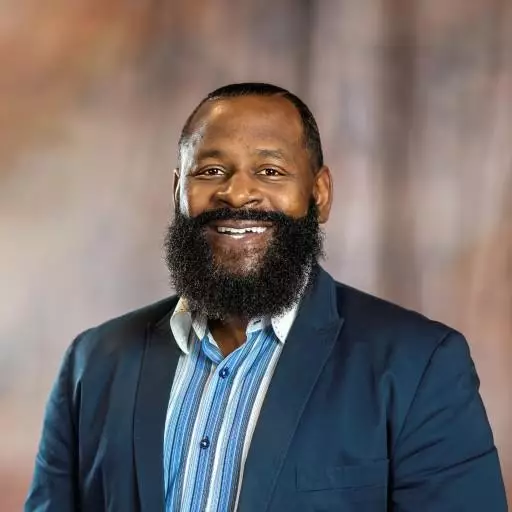
Welcome to The Word Made Plain with Senior Pastor Tony Clark of Calvary Chapel Newport News in Virginia. Currently, Pastor Tony is teaching a study in the book of Acts. Please open your Bible to Acts chapter 28 verses 1 through 6.
Tony Clark: Alright, let's dive into the Word of God together. Turn with me in your Bibles to Acts chapter 28. We're going to be looking at verses 1 through 6.
Father, we are so thrilled that we consider your feet now and learn from you. We pray that your Holy Spirit would enlighten us to the truths in your word. God, we pray that you will soften hearts, prepare hearts, Lord, to receive with meekness this implanted word, which is able to save our souls. We pray that your Holy Spirit would open up our comprehension that we might understand the scriptures. And so, Lord, thank you so much for this time. Give us your word, we pray, in Jesus' name. Amen.
Acts chapter 28, as we continue to go verse by verse through the book of Acts, as you can see, we're toward the end in the last chapter of Acts. And as you know, we're in the book of First Samuel on Wednesdays and having a glorious time going through the Old Testament and studying the life of David, as we make our way verse by verse and chapter by chapter through the Old Testament as well.
And so, here we are, Acts 28, verses 1 through 6. The title of this message is "Shake It Off." Shake it off. Now, long before Taylor Swift made this a popular song, the Apostle Paul was the one who made this phrase popular, as we're going to see in these verses here.
Now, this phrase "shake it off," by way of definition, it means an act or instance of getting rid of what is unpleasant, undesirable, or unwanted. And this is what we will see in the life of the Apostle Paul. This will be a valuable lesson for us to learn because there will be unfortunate things that will happen to us as believers in Jesus Christ that we will need to learn how to shake off and keep it moving in our walk with the Lord.
Now, the last time, by way of background, the last time we were together, we saw how Paul and 276 people on the ship crashed on a certain island. After battling a terrible storm for two weeks, they finally safely found themselves safely on land, according to verse 44. Let's see what happens next. Look at verses 1 and 2.
Now, when they had escaped, they then found out that the island was called Malta. And the natives showed us unusual kindness, for they kindled a fire and made us all welcome because of the rain that was falling and because it was cold.
Now, in 14 days, this powerful storm that they were in had taken them 470 miles west of Fair Havens Creek. Once the crew had gotten their bearings, they realized that they were on the island of Malta. See, even though many of the Roman soldiers had been to the island because many soldiers would go to this particular island of Malta in order to retire, they didn't know this side of the island. Most of the traffic to Malta came to the port on the other side.
However, the natives, which comes from the Greek word *Barbaroi*, is where we get our English word barbarian from. And it's not used here in a derogatory way. It just means that the people there didn't speak either Greek nor Roman. The people spoke a Phoenician dialect. The word Malta is a word that means refuge, a very fitting place to be coming out of a powerful storm that almost took their lives. It was truly a place of refuge for these passengers.
Now, I am sure that Paul had Psalm 46 verses 1 through 3 on his mind at this time, which says, "God is our refuge and our strength, a very present help in trouble. Therefore, we will not fear, even though the mountains be carried into the midst of the sea, and though its waters roar and be troubled, and though the mountains shake with swellings."
I want to draw your attention to the word refuge. The Hebrew word is *Maise*, and it means a shelter. And the Hebrew word used for troubled is *Tsara*, and it means distress or tightness. So, this verse is saying, "God is our shelter and our strength, a very present help for when we are distressed or in a tight spot." Oh, that's a beautiful, beautiful thing that we see about our God, the awesome God we serve, that He is there to help us when we are distressed or when we find ourselves in a tight spot.
Now, who is a shelter for us from the storms of life? We see it's God. God is our refuge and our strength. He shelters us. When we find ourselves in the storms of life that we just finished spending three weeks talking about. So here is Paul on the island of refuge, or Malta, which was approximately 60 miles south of Sicily and 320 miles from Rome.
Oh, I love how verse 2 said that the natives showed them notice unusual kindness. The Greek word for kindness is *philanthropia*, and it means love of mankind. The word unusual is *tuchano*, is a word that means to hit the mark. So, the Maltese people showed Paul and these 276 people a love of mankind that hit the mark for them.
Now, to me, this is what the church should be doing for the communities that they're in: showing them unusual acts of kindness that hits the mark. So often, the church is scratching where their communities they're in aren't itching, failing to hit the mark for them, disconnected from the communities that they're called to serve.
And Paul would later say in Titus 3 in verse 14, it says, "And let our people learn to maintain good works." Watch this: "to meet urgent needs that they may not be unfruitful." So, what were the urgent needs of the people who had just crashed on their island? Well, verse 2 said, they kindled a fire and made them all feel welcomed. Oh, this is how each person should feel when they come crashing on the shores of our church. We should make them feel warm and make them feel welcomed.
Look at verses 3 through 6. But when Paul had gathered a bundle of sticks and laid them on the fire, a viper came out because of the heat and fastened on his hand. So, when the natives saw the creature hanging from his hand, they said to one another, "Hey, no doubt this man is a murderer, whom though he has escaped the sea, yet justice does not allow him to live." But when he shook off the creature into the fire and suffered no harm. However, they were expecting that he would swell up and suddenly fall down dead. But after they looked for a long time and saw no harm come to him, they changed their minds and said, "Look here, this dude is a god."
Now, as the natives were scurrying to make a fire for Paul and the other passengers, because the last part of verse 2 said, "because it was cold," who started helping them? I want you to notice, it was Paul. For him, no task was beneath him. This speaks of the humble character of the Apostle Paul. It is what it means to be like Jesus. In Mark chapter 10 and verse 45, it says, "For even the Son of Man did not come to be served, but to serve, and give His life a ransom for many." He demonstrated this in John chapter 13 when He stooped down and washed His disciples' stinking feet. Talk about Jesus did this.
So, men, single parents, are we servants at home? See, being like Jesus at home is not only quoting Bible verses to our families, but it is also washing their feet. Or to bring it home a little closer, being like Jesus is also washing a dish, or washing a load of clothes, or washing a window. No task should be beneath us.
Now, I'm going to let the cat out of the bag and share some things that happened in my home growing up, as well as my home when my children were younger, because I struggled. I struggled with this when my children lived at home, because in my mind, and I was raised to believe, the children should be doing these things in the house all in the name of doing their chores around the house. Which is them showing their gratitude to us for providing food, clothing, and shelter for them. Also, it was teaching them responsibilities.
When my boys were old enough, they cut the grass and took the garbage out. I wasn't going to do that anymore. I'm done with that. You're old enough, you need some chores. You got to earn your keep at the house. And then my daughter and my boys shared the kitchen duties. And I was raised to believe, as men, this is what you have children to do these tasks around the house.
This is why, this is why the early part of our country, they had large families because we were an agricultural country, and the more children you had, the more help you had. You know, "Now, you go get those eggs from the chickens and you go milk that cow over there. You help me bale this hay." It was just what we did. This is why the kids used to get off two months in the summer so they can work the fields and stuff with their parents. This is just what it was.
Now, do you think these kids need to be still getting off two months in the summer? No. I had a teacher, a teacher last service who said, "Pastor Tony trying to take my summers away." Hey, I'm just, we're not that anymore. We're a technological country now. We're not an agricultural country, because if you off the kids off two weeks in the summer, then the teachers are going to have to spend September, October, November, and right before Christmas, trying to reteach them what they forgot over the summer. They don't need to be out that long anymore. No. They don't need to be out that long anymore. But we're not that kind of country anymore either. We're more technological.
So, the more kids you had, the more kids you had to help you around and do these things. However, I have a wife with the love language of acts of service. And she was hot as I sat around while the children did their chores. Even though I was training my children that they had to work in life, that nothing is handed to them, nothing is free, you have to work. I was not being like Christ.
Now, your kids got to work. You got to teach them that they got to work. Now, now, I mean, there's no such thing, I mean, it shouldn't be like this. You're doing everything around the house. And all of a sudden, you see, you see where, you know, somebody lift up their foot so you can vacuum up under their feet, and your kids are doing that as you vacuum, sweating, and they're laid up watching TV or playing some video game. And you got to, "Hey, put your feet up." And you vacuum.
That should not be. Shame on you parents if you're doing that. Shame on you, you new parents. I'm talking to you, online, you new parents. You're doing all the work and kids playing video games. Shame on you. Shame on you. Especially they've been out. They've been out for two years from school. Ain't going to school in two years. Some of them in high school, they really need to go back to elementary because they've forgotten everything. They've been out for two years. And so you got, and you doing all the work, that shouldn't be. That shouldn't be. I wasn't raised like that. I wasn't raised like that. I was raised, you have kids, they have chores, they have responsibilities. And you're teaching them that they have to work for things.
And so, that's what I was teaching them. But I have a wife that loves to see me doing those things. I said, "Now, as I'm doing these things, what are they doing?" Sitting around watching dad. I said, that, that, so I had to learn a balance in that. You got to learn a balance in those things. And like I said, shame on you new, newfangled parents. Especially if you're still have a job that you have to leave the house. You know, that's a new concept, a job where you leave the house, and you come back, your kids are still doing what they're doing? House looking a mess, all kind of mess going on and you, and then you, you come home and do your second job. Shame on you new parents. Shame on you. And they just, "What you been doing all day?" "Well, you know, I just had virtual learning," and you know they ain't doing nothing but doing this. Ain't doing a thing, virtual learning. I, I was just talking to somebody before service. I just say, I feel, I feel sorry for our kids. They're going to be so behind. They're going to be just behind. So give them some chores. You better, you better teach them how to work.
This school thing, I don't, I don't even know what in the world is happening with that. I, I, I, I don't know what in the world is going on. I'm telling you, I'm just as lost. I don't know how they're going to get you back into a building to work. You're going to, first, first couple of days, you're going to be coming in pajamas. They're going to be like, "Whoa, whoa, whoa. You're not home?" "Oh, oh, oh, alright, I'll be back." I'm telling you. Hey, Paul humbly started gathering sticks to put on the fire to keep it going. So while gathering sticks, it is obvious that one of those sticks was a snake. It was a viper. And because of the heat, it came out and bit Paul on the hand, according to verse 3.
Now, please understand, precious people, this is how Satan works. There are times that he will come at us with huge storms to try to wipe us out. And other times, he will come like a slithering, hissing snake. I want you to notice the time that it was given. Notice when he struck Paul. It was when he was gathering sticks and helping others. And this is always when Satan will strike us, when we're helping others, serving others, and loving on people. So from out of the heat, when you are on fire for God, Satan strikes.
Notice the location of the attack was the hand, the hand. Satan will always strike us on the hand to keep us from serving other people. Strike you and try to poison you with gossip about the church you're serving in, about others serving in ministry, or strike you with the poison about those not serving in ministry. Poison you to the point where it kills your joy for serving like venom, and you stop.
Many of you, listen to me, online as well, many of you are on the sidelines who once served because Satan bit you on your hand and now you're on the sideline. No longer serving because you allowed the venom to course through and it killed your joy for serving. And then when he gets you on the sideline, Satan will give you every excuse not to get back in the game. Every last one. And guess what? They will be legitimate excuses. Satan ain't going to come and give you some lame excuse, because you know we'll see through that lameness.
But he gives you something legitimate. And you find yourself on the sidelines. Here's the question: How did Paul handle this situation? This is so important for us to see because the Maltese people have seen plenty of their relatives and loved ones go through the pain of seeing what happens when these vipers bite someone. See, God allows for us to go through poisonous things and be bit by slithering serpents. Why? So the Maltese people around us will see how we deal with the poison and change their minds and end up believing in our God, like the Maltese people did in verse 6.
Do you remember what Jesus said to Thomas in John 20 and verse 27? He told him, "Come, touch, touch my wound in my side. Touch my hands and and and see the nail prints in my hands." See, the world around us are rarely impressed with our prosperity, but they are impressed with how we navigate through suffering, poisonous hard times, and hardships. Oh, it is times like this that the Maltese people around us change their minds about Christianity. Oh, not while you are praising God for your new house or new car. No, but by seeing how you handle, watch this, how you handled the snakes in life.
That's when they're going to be impressed with your God. Not when you're praising the Lord and putting on social media about your new this and new that, they could care less about your prosperity with your God. They want to know how you handle by being bit by a serpent. How do you handle the snakes that slither into your life? Then when they see you handle it like Jesus, is when they're going to now begin to be open to your Christianity.
See, many people think, "I'm going, oh, look, I'm boasting in the Lord. Look what the Lord." They could care less about your boasting, about what your God has done for you. Ah, but how do you handle the snakes? Because snakes come in everybody's lives, slithering. But what separates us from the world is we will handle it in a biblical way. We will handle it the way that Paul is doing here.
See, I want to draw your attention to what the Maltese people thought in verse 4. I want you to notice something. As soon as they saw the viper hanging from Paul's hand, they thought, they thought the worst. They really did. They thought that Paul must have been a murderer. Though he had escaped the Greek goddess Nemesis, which was the Greek goddess of retribution. She must have orchestrated this viper as a means of punishing Paul. Or they could have been referring to the Greek goddess Dike, which was the Greek goddess of justice. Seeing that the last part of verse 4 said, "yet justice does not allow for him to live," referring to justice as a person. And it could be a reference to the Greek goddess Dike.
Let us not be like the Maltese people thinking the worst about people. It reminds me of the disciples in John chapter 9 and verse 2 when they asked Jesus, notice, I want you to notice what they asked Jesus. They said, "Who sinned, this man or his parents that he was, watch this, born blind?" You have to understand the Jewish mentality is they believed that you can sin in your mother's womb. You remember, you know, when Jacob and Esau was, you know, their mom was was struggling, they were like, you know, she prayed, "Lord, what's going on? I'm I'm pregnant and I'm struggling." And the Lord spoke and said, "Oh, you got two nations in you fighting." So they believed, the Jewish people believed that you can actually sin in the womb. So that's why they asked, "Who sinned, this man in the womb?" Notice, because he was born blind. "Did he sin in the womb or did his parents sin?" Always thinking the worst.
But here's the thing. I love what Jesus said. He said, "Neither one of them." I love that. We so often are ready to jump to conclusions when we hear of some tragedy people go through. "What did they do wrong? What happened to them? I know what it was because their kid was bad and now they're getting it back." We always doing that. This is the Maltese mentality. And let us not fall into this trap.
Now, although Paul was a murderer before he came to Christ, you remember he consented to the the stoning of Stephen in Acts 7 and verses 58 and 59. He wasn't one now. And according to verse 5, he calmly shook off the creature in the fire and suffered no harm. This is how we're called to deal with Satanic bites. We shake it off. We shake it off before the poison goes through our bodies and kills us spiritually.
Remember how I said Satan bites us on the hand to try to kill our service to God and to His people. I believe that there are many people who didn't shake it off and didn't shake off Satan's bite, and the poison has made its way through you and killed your service to God and to His people. Now, you're on the sidelines, doing nothing for the Kingdom of God. And you know who you are. You've allowed that. Instead of shaking it off, you allowed the the venom to course its way to your heart and killed your joy and killed your service to God.
As soon as Satan bites, you need to shake it off. Shake off the poison of gossip. Shake off the poison of slander. Shake off all of this. Shake it off before the poison makes its way through you and kills your marriage, kills your friendships, kills your desire to serve God and His people.
Featured Offer

In his three part series entitled, “When God Gives Up,” Senior Pastor Tony Clark of Calvary Chapel Newport News Virginia focuses on God’s limitations in regard to sin. Is there a limit to God’s patience? Join us, as Pastor Tony answers this vital question in this must hear series. Download your copy today!
Past Episodes
This ministry does not have any series.
Featured Offer
In his three part series entitled, “When God Gives Up,” Senior Pastor Tony Clark of Calvary Chapel Newport News Virginia focuses on God’s limitations in regard to sin. Is there a limit to God’s patience? Join us, as Pastor Tony answers this vital question in this must hear series. Download your copy today!
About The Word Made Plain
About Tony Clark
Born and raised in the steel town of Gary, Indiana, Tony lived life “his own way” Monday through Saturday. However, Sundays were different because that was the day he would go to church. And even though he attended church, Tony had no idea what it meant to have a relationship with Jesus Christ.
After his first year in college, Tony decided to marry his high school sweetheart, Jenise, and join the United States Marine Corps. After boot camp, instead of starting a life with his new bride, Tony received military orders to be stationed in Okinawa, Japan. Going to this foreign land was more than an overseas adventure because it was here that he made a life-changing God commitment. He thrived in this newfound relationship and began learning about the Bible. It was in Okinawa that the Lord revealed to Tony that one day he would become a pastor.
When Tony returned to the states, he continued in his walk with the Lord and became an assistant pastor with a local church. Over time, Tony grew increasingly interested in the “new” teaching style of Calvary Chapel and began attending Calvary Chapel Vista. After a few years at Calvary Chapel Vista, Tony began thinking about the idea of pastoring a church. However, where would it be? Only God would know!
Even though Tony had never been to the East Coast, he decided to visit Virginia. After much prayer, Tony knew for certain that Newport News, Virginia was the place that God would have him to be a pastor. The desire of Tony’s heart is to see the community of Newport News and the Hampton Roads area transformed by continuing to preach the Good News of Jesus Christ. Tony continues to heed the call by passionately studying God’s Word, prayerfully seeking the Lord’s direction for His church, and vigorously pouring love into the lives of the people God leads his way – persevering until He comes!
Contact The Word Made Plain with Tony Clark
ccnn@calvarynn.com
http://www.calvarynn.org
Mailing Address:
The Word Made Plain
Calvary Chapel Newport News
15553 Warwick, Blvd Suite K
Newport News, VA 23608
757-886-5012