
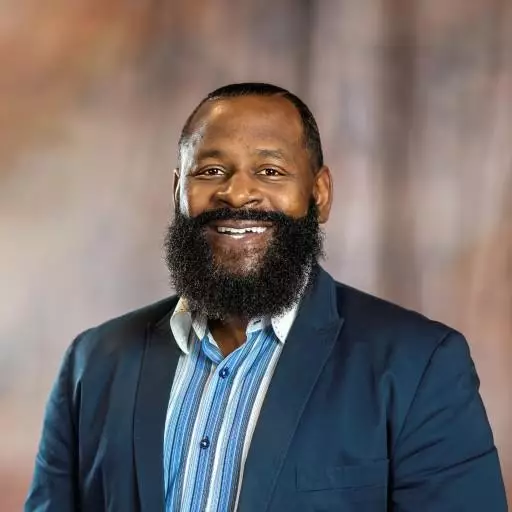
Making Peace pt.3


Guest (Male): Welcome to The Word Made Plain with Senior Pastor Tony Clark of Calvary Chapel Newport News in Virginia. Currently, Pastor Tony is teaching a study in the book of Acts. Please open your Bible to Acts chapter 21, verses 33 through 40.
Tony Clark: God bless you. We’re so thankful to be able to bring you church and bring you God’s Word right into your living room, family room, office, or wherever you are watching us around the world. We’re just so thankful to be able to bring you the Word of God.
So, let's dive in. Turn with me in your Bibles to Acts chapter 21. We’re going to be looking at verses 33 to 40, and we’re going to finish up this chapter as we continue to go verse by verse through the book of Acts on Sunday mornings. And here we are in chapter 21, making our way through the Word of God. Hopefully, we can get back together and we can dive back into the book of 1 Samuel on Wednesdays, but as of right now, we’re in Acts chapter 21, looking at verses 33 to 40.
Father, thank You again for this tremendous honor to open up Your Word to the hearts of Your people. We pray that Your Holy Spirit would teach us this morning. In Jesus’ name, amen. Acts 21, we’re going to finish up this chapter. We’re going to start in verse 33. The title of this message is "Making Peace Part Three."
Now, in part two of this study, we saw how Paul submitted to a type of Nazirite vow to appease some of the Jewish Christians who heard some bad rumors about him. They were told that Paul was telling all the Jews around the world not to keep the law of Moses nor circumcise their children, which was not true. So he submitted to some Jewish rituals in order to show these Jewish Christians that he still walked orderly and kept the law, according to verse 24.
He didn’t have to do this, but he did if it would bring peace between him and his Jewish brothers and sisters. The real question is, did it work? Well, not really, as we’re going to see because when they heard another rumor that Paul brought a man named Trophimus the Ephesian into the temple, they had had enough of this Paul. So they ran to the temple to kill him. They dragged him out of the temple in verse 30 and started beating him.
As they were seeking to kill him in verse 31, news got back to Rome that Jerusalem was in an uproar and that an angry mob was, that the whole city had gone crazy. So what he did was the Roman commander, he brought soldiers. As soon as the soldiers came there, the people saw them and they stopped beating Paul.
So what happened next? Look at verses 33 to 36. It says, "Then the commander came near and took him and commanded him to be bound with two chains. And he asked who he was and what he had done. And some among the multitude cried one thing and some another. So when he could not ascertain the truth because of the turmoil, the commander commanded him to be taken into the barracks. And when he had reached the stairs, he had to be carried by the soldiers because of the violence of the mob. For the multitude of the people followed after crying out, 'Away with him!'"
Now, in these verses, we see that Paul was very fortunate to be arrested. The close proximity of the fortress of Antonia—which happened to be built by Herod the Great and housed 1,000 Roman soldiers—being nearby actually saved Paul's life because this angry mob wanted blood. Luke, the author, who happened to be a medical doctor and being into the details, mentioned in verse 33 that Paul was bound with two chains.
This meant that he was chained between two Roman soldiers. With the plural use of the word "chains," which happened to be the normal treatment for a criminal, it was fulfilling the prophecy of Agabus in chapter 21 in verses 10 and 11. You remember when the prophet came, he took Paul's belt and bound his own hands and feet and says, "So shall they do to the man when he gets to Jerusalem." And thus, the prophecy being fulfilled here.
After this, the commander—who we know is Claudius Lysias from chapter 23 and verse 26—wanted to know who Paul was and what he did to incite the crowd in such a way. Some in verse 34 cried out one thing and some another, and he could not get a clear answer because of the uproar. Claudius Lysias commanded Paul to be taken to the barracks that happened to be nearby. It was on the northwest side of the temple.
The Jewish mob, seeing their enemy just taken away by these soldiers, grew even more enraged and followed after them. They became so violent that the 200 soldiers had to carry Paul over their heads to keep the mob from getting to him in verse 35. As they were going up the stairs of the Antonia fortress, the mob shouted, "Away with him!" which was a term which meant, "Kill him, kill him!"
I just have to pause right here and just ask us, have you been so angry with someone that you wanted blood? That the very sight of them easily caused you to gnash your teeth at them? In your heart, maybe you didn’t say it out loud, but in your heart, you said, "Kill him, kill her." This was the scene of this angry mob. Paul endured all of this in order to make peace.
The question is, did it work? No, not really. But that doesn’t mean that he didn’t try. He had to try. Paul knew that he had to try. Paul would later write in Romans 12 and verse 18, "If it is possible, as much as depends upon you, live peaceably with all men." Paul, who wrote Romans, lived this out in these particular verses.
He was only trying to make peace, but it didn't work. Sometimes our efforts of making peace with people may not work, but we must try. This verse says, "If it is possible." Sometimes, like here, it won’t be possible, but Paul had to try to make peace with them. They still wanted him dead.
However, we must try because Jesus said in Matthew 5 and verse 9, "Blessed are the peacemakers, for they shall be called the sons of God." One of the characteristics of being children of God is that we will seek to make peace with people. Sometimes it is possible and sometimes, like here, it is not possible.
What happened next? Look at verse 37 and 38. "Then as Paul was about to be led into the barracks, he said to the commander, 'May I speak to you?' He replied, 'Can you speak Greek? Are you not the Egyptian who some time ago stirred up a rebellion and led the 4,000 assassins out into the wilderness?'"
The Apostle Paul had been silent up until this point. When he reached the top of the stairs of the Antonia fortress, he politely asked Claudius Lysias in verse 37, "May I speak to you?" He was shocked that Paul spoke Greek because those who spoke Greek were considered cultured and educated and not the common criminal they assumed he was.
Claudius Lysias's next question in verse 38 shows their wrong assumption of Paul. He said, "Are you the Egyptian who some time ago stirred up a rebellion and led 4,000 assassins out into the wilderness?" Josephus, a first-century Jewish historian living at this particular time, wrote about an Egyptian who led a revolt of 30,000 Jews in Jerusalem in the year AD 54, which was just three years prior to this incident here with Paul.
His fanatical followers accompanied him to the Mount of Olives. He told them that at his command, the walls of Jerusalem would collapse and this miraculous event would bring the destruction of the Roman Empire. The governor, Felix, at the time dispatched troops to deal with this insurrection. Hundreds of Jews were killed or captured and the Egyptian ringleader disappeared into the desert with approximately 4,000 followers, just like these verses are talking about. Claudius Lysias was assuming that Paul was this Egyptian leader coming back to stir up more trouble.
Paul cleared up the confusion in verses 39 and 40. Look what he says there. "But Paul said, 'I am a Jew from Tarsus in Cilicia, a citizen of no mean city. And I implore you, permit me to speak to the people.' So when he had given him permission, Paul stood on the stairs and motioned with his hand to the people. And when there was a great silence, he spoke to them in the Hebrew language, saying..."
Paul answered Lysias in verse 39 and said, "No, I am not this Egyptian. I am a Jew from Tarsus." In other words, Paul was showing Lysias that he had every right to be at the temple being a Jew where the people were beating him. Then he showed this commander that he was also a Roman citizen. He was from Tarsus of Cilicia. Paul describes that Tarsus was not an insignificant city. It was a cultured center as well as with a university that rivaled the one in the city of Athens and Alexandria.
Being from Tarsus showed the commander how Paul knew Greek. After this, Paul begged Lysias to permit him to speak to the people. I say "begged" because the Greek word for "implore" is deomai, and it means to petition, to make a request, to actually beg. Claudius gave him permission because I believe that he was convinced that Paul was innocent and if the people only heard his story, they would be at peace and go home quietly.
At least, that’s what he was hoping. Being at the top of the stairs of the fortress of Antonia created an amphitheater effect with the people down below in the open market atmosphere. Paul motioned with his hand in verse 40. I can see him saying, "Shh," as he motioned with his hand to quiet the crowd. When there was a great silence, he spoke to them in the Hebrew language. It was actually in Aramaic, which was a kind of slang of Hebrew, or Aramaic falls under the category of the Hebrew language.
I believe that Paul teaches us a powerful principle here. He spoke Hebrew to the Jewish leaders, he spoke Greek to the commander, Claudius Lysias, and he spoke Aramaic to the common people. He understood to have an effective ministry requires that we speak the language of those who we are trying to reach.
We may not know another language, but it is wise to stay abreast on popular terms and phrases because so often we use phrases that only Christians and church people know inside of the church, and those outside of the church are clueless. They don’t have a clue of what we’re talking about. Effective communication would require that we seek to bridge the gap with those we’re trying to reach. This doesn’t mean that we need to talk like them, using profanity and vulgar language and telling bad jokes and stuff to try to relate to them. We don’t have to do that.
I bring that up because I've had people that I know that when they get around their unsaved friends, they curse like them and all that. You don’t have to do that in order to relate to them. Just using phrases and terms that builds a bridge to them in order to share the gospel with them. I'm amazed at how Paul looked out at this mob who just tried to kill him, gave him a few knuckle sandwiches, and beat him up pretty good, and his heart broke for them.
He saw them as lost and confused and I'm sure that he saw a mob of people just like himself. He used to be just like them. In Acts chapter 8 in verses 1 to 3, it talks about how he had Stephen stoned to death and how he made the church and Christians his number one object of persecution. He went crazy imprisoning Christians and putting them to death. In Acts 9 and verse 1, it says, "Then Saul, still breathing threats and murder against the disciples of the Lord." So he could relate to their madness and his heart broke for them.
Where did he get this kind of heart? That he would have compassion for those trying to kill him? I believe he got it in prayer. You remember in Romans chapter 10 and verse 1, it says, "Brethren, my heart’s desire and prayer to God for Israel is that they may be saved." Notice how he said his heart’s desire and prayer to God for Israel.
I believe that his heart's desire was birthed in prayer. It is in prayer that God gives us His heart for lost people. In Luke 19 and verse 10, it said that Jesus came to seek and to save the lost. So as we spend time with Him in prayer, He gives us His heart for lost people, His heart. He prayed for his people, the Jews, and his heart broke for them. He looked out at them as he was at the top of the stairs of the fortress of Antonia and all those Jews, that angry mob giving him the eye and looking at him and some of them probably turning their face, gritting their teeth, and his heart broke for them.
He was just living out what Jesus taught us in Matthew 5 and verse 44, which says, "Love your enemies, bless those who curse you, do good to those who hate you, and here it is, pray for those who spitefully use you and persecute you." When we pray for those who are persecuting and trying to kill us, either on the job or social media, it keeps bitterness and anger from entering and dwelling in our hearts.
It is hard to be angry and bitter towards those we are praying for God to save and for God to bless. Prayer is the key to us having compassion and love towards those crucifying us. Isn’t this what Jesus did on the cross? He said in Luke 23 and verse 34, "Father, forgive them, for they do not know what they do." This is the heart God wants us to have towards those crucifying us.
Stephen, that Paul was very instrumental in putting to death before he became a Christian, said in Acts chapter 7 and verse 60, "Lord, do not charge them with this sin." Without prayer, we will be angry, bitter, and even harbor hatred towards the very people God wants us to reach for His kingdom. We can’t do this on our own.
We need God’s help because the natural reaction towards those persecuting or crucifying us is anger, bitterness, revenge. This what ends up happening, we end up murdering these people in our hearts. Or we wish that they were dead. We see them or hear their name mentioned and we wish that they were dead. "This person is dead to me." Well, hey, what about this person? You remember this person? "That person is dead to me." There are a lot of people who have not pulled a physical trigger, but spiritually in their heart, they pulled the trigger and killed these people in their heart.
I know that you’re out there right now because the very thought of this has brought back memories of that particular person. The Lord wants to set you free from that because you have murdered them in your heart. To the Lord, you’re a murderer at heart. You didn’t pull a trigger, no, but you’ve wished they were dead for the last five or 10 years.
The Lord wants to heal that. He wants to heal that in your particular heart that you’ve been harboring there. You think you’ve gone on. It’s just like it's been rightfully said, unforgiveness is like drinking poison and expecting the other person to die. All the time, they have gone on with their life and you have drunk that bitterness, you’ve drunk that poison. You’re the one that’s actually dying and that person is gone on, but in your heart, you’ve murdered that person. You wish that they were dead. To you, they are dead. This is the kind of stuff that the Lord wants to deal with our hearts about.
This is why the Christian life is a supernatural life to be lived out through the supernatural power of the Holy Spirit. God’s Holy Spirit empowers us to do the impossible, which is to forgive the very people we have murdered in our hearts, who have crucified us, who have done us wrong. This is key here. Let me tell you something, I’m living this out with you right now.
I don’t like mess with people. I don’t like mess. I try to make wrongs right. If someone has something against me, I’m going to try to get it right. If it is possible to live peaceably with all men, I try to do that because I don’t want to hinder what God wants to do in our church, I don’t want to hinder what God wants to do in my own life. If there's mess, I try to get it right. I don’t care whether they were the ones who did it, I try to get it right. So, I’m living this out right now.
I’m praying for that person. Praying for them, constantly praying because I don’t want bitterness and anger and resentment to be in my heart. I don’t want to wish them dead in my heart. There are a lot of people that this has happened to and the Lord wants to deal with that. He wants to deal with that sort of stuff.
This is where I believe those who came up with the chapter and verse division in the 11th and 13th century made a little boo-boo. Why would they end chapter 21 with, "He spoke to them in the Hebrew language saying"? Chapter 22 should not have started until we heard what Paul had to say in verses 1 to 21. Really, chapter 22 should have started in verse 22. This is only my humble opinion that many others have shared as well. Chapter and verse division were not inspired by God; they were only added to help us find passages easily. I’m so very thankful for them for what they did. There's only a few places that I think, and some others think as well, where they cut off the chapter too soon or too late or whatever. It’s a minor technicality, but food for thought.
What did Paul say? Well, you know you’re going to have to wait until next time find out what he said because we want to take our time and listen to what Paul said to show his heart. How his heart had been touched by God and that God can use him to speak to the multitudes of people.
There are multitudes of people that God wants to use you to speak to, but He cannot use you if you’ve got anger, bitterness, unforgiveness, and resentment in your heart. Nowadays with social media, nowadays with online stuff, you can speak to multitudes of people—hundreds and thousands and even millions of people through social media—but God will not use you. He will not use me if we’ve got that stuff in our hearts. When we speak, it’ll be filtered through anger, bitterness, resentment, unforgiveness, and it will pepper our speech and what we say, and God can’t use that.
He can't use that kind of speech. He cannot use that kind of, even though you may be trying to give the Word, trying to give encouragement, He can’t use that because it will end up poisoning the people that you’re trying to minister to. I remember a time, it was about a decade ago, where I was dealing with a whole bunch of this stuff.
If you heard the messages I gave during that time, you can hear the anger, the resentment, the unforgiveness, the anger towards God, the anger towards these people. You can hear it in the messages. That’s why when we put messages on the radio and on social media from years ago, those are messages that I’m glad are not on there because they were peppered with unforgiveness and peppered with anger and resentment. When I really thought a point was hitting them, oh, I’d really give it some great emphasis and it was just... I’m glad we don’t use those messages because those messages are not good because they were given with anger and resentment.
In part three of these messages called "Making Peace," we saw how Paul was willing to be beaten and arrested in order to make peace with the Jewish people.
Guest (Male): If The Word Made Plain has been a source of inspiration and encouragement to you, why not consider becoming a Word Made Plain giving partner to keep this listener-supported program on the air? As a giving partner, you join forces with Calvary Chapel Newport News's Kingdom vision of spreading the gospel of Jesus Christ.
You can make your tax-deductible gift online at calvarynn.org or send your gift of any amount to 15531 Warwick Boulevard, Newport News, Virginia, 23608, and receive a gift from Calvary Chapel Newport News as our thank you. In addition to your financial support, we ask that you pray for The Word Made Plain broadcast, that it touches hearts and generates change in the lives of people around the world. We pray you've been blessed by God's Word today and hope you'll tune in next time to hear The Word Made Plain.
Featured Offer

In his three part series entitled, “When God Gives Up,” Senior Pastor Tony Clark of Calvary Chapel Newport News Virginia focuses on God’s limitations in regard to sin. Is there a limit to God’s patience? Join us, as Pastor Tony answers this vital question in this must hear series. Download your copy today!
Past Episodes
This ministry does not have any series.
Featured Offer
In his three part series entitled, “When God Gives Up,” Senior Pastor Tony Clark of Calvary Chapel Newport News Virginia focuses on God’s limitations in regard to sin. Is there a limit to God’s patience? Join us, as Pastor Tony answers this vital question in this must hear series. Download your copy today!
About The Word Made Plain
About Tony Clark
Born and raised in the steel town of Gary, Indiana, Tony lived life “his own way” Monday through Saturday. However, Sundays were different because that was the day he would go to church. And even though he attended church, Tony had no idea what it meant to have a relationship with Jesus Christ.
After his first year in college, Tony decided to marry his high school sweetheart, Jenise, and join the United States Marine Corps. After boot camp, instead of starting a life with his new bride, Tony received military orders to be stationed in Okinawa, Japan. Going to this foreign land was more than an overseas adventure because it was here that he made a life-changing God commitment. He thrived in this newfound relationship and began learning about the Bible. It was in Okinawa that the Lord revealed to Tony that one day he would become a pastor.
When Tony returned to the states, he continued in his walk with the Lord and became an assistant pastor with a local church. Over time, Tony grew increasingly interested in the “new” teaching style of Calvary Chapel and began attending Calvary Chapel Vista. After a few years at Calvary Chapel Vista, Tony began thinking about the idea of pastoring a church. However, where would it be? Only God would know!
Even though Tony had never been to the East Coast, he decided to visit Virginia. After much prayer, Tony knew for certain that Newport News, Virginia was the place that God would have him to be a pastor. The desire of Tony’s heart is to see the community of Newport News and the Hampton Roads area transformed by continuing to preach the Good News of Jesus Christ. Tony continues to heed the call by passionately studying God’s Word, prayerfully seeking the Lord’s direction for His church, and vigorously pouring love into the lives of the people God leads his way – persevering until He comes!
Contact The Word Made Plain with Tony Clark
ccnn@calvarynn.com
http://www.calvarynn.org
Mailing Address:
The Word Made Plain
Calvary Chapel Newport News
15553 Warwick, Blvd Suite K
Newport News, VA 23608
757-886-5012