
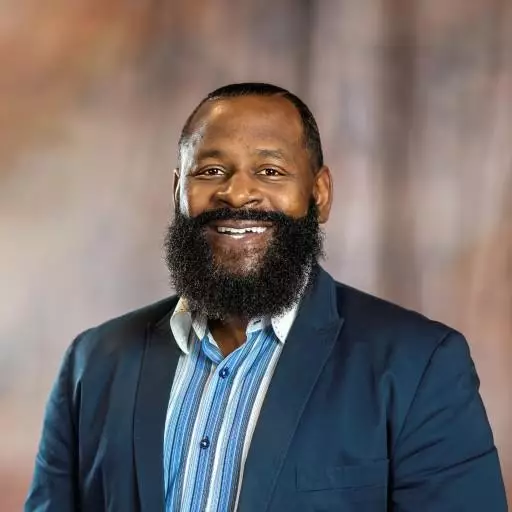
How is Your Conscience Pt.2


Guest (Male): Welcome to The Word Made Plain with senior pastor Tony Clark of Calvary Chapel Newport News in Virginia. Currently, Pastor Tony is teaching a study in the book of Acts. Please open your Bible to Acts chapter 23, verses 6 through 14.
Tony Clark: God bless you. Good morning and welcome to Calvary Chapel. We are thrilled to have you here to worship our Lord and to study the word of God. It is good to see you. God bless you online as well. We love you out there and we are so thankful that you have tuned in with us once again. Let us know where you are watching us from in the comment section. We would love to be in touch with you and see if we can serve you in any kind of way. We are thankful.
We are back in the book of Acts. Turn with me to the book of Acts chapter 23. We are going to be looking at verses 6 through 14 as we continue going verse by verse and chapter by chapter through the book of Acts on Sunday mornings. We will try to get back and start going through that Old Testament and going through the word of God, but most importantly, we want that word to go through us.
Father, thank you so much for your many blessings. You allow for us to be here, Lord. Thank you for those online. We are so thankful for them as well. Dear God, we just pray that your Holy Spirit would teach us this morning the truth of your word. Help us, Lord, to know you and to make you known in a world that so desperately needs you in Jesus' name, Amen.
Acts chapter 23, we are going to be looking at verses 6 through 14. The title of this message is How is Your Conscience Part 2. In part one of this study, we saw how Paul told the council members in verse 1 how he lived in all good conscience before God. I wonder if we can really say that? During this pandemic and during this crazy time in our world, have we lived in all good conscience before God? I know I can't say it. I wish I could.
We talked about the conscience. Conscience is a word that comes from two Latin words: "con" which means "with" and "science" which means "knowledge." Everything we do, we do it with the knowledge that it is either right or wrong. That is the conscience to let us know. The beautiful thing about it is that God has written the Ten Commandments on every man's conscience, accusing him or else excusing him.
This is why you can go into South America, you can go into the jungles of South America, you can go to the Amazon, you can go to the pygmies in Africa, and everyone knows that it is not right to steal or to lie. Why? Because the Ten Commandments is written on every man's conscience, accusing or else excusing him. Here is Paul saying that he lived in all good conscience. He is before a trial right now and he is saying that he lived in all good conscience before God.
When they heard this, the council members, the high priest, who is Ananias, commanded those in verse 2 to strike Paul on the mouth. Of course, Paul didn't take too kindly to this. He said in verse 3, "God will strike you, you whitewashed wall." After giving them this tongue-lashing, those who stood by said, "Do you revile God's high priest?" Paul apologizes in verse 5. Now we pick up the story in verse 6.
When Paul perceived that one part were Sadducees and the other Pharisees, he cried out in the council, "Men and brethren, I am a Pharisee, the son of a Pharisee; concerning the hope and resurrection of the dead I am being judged." Paul, seeing that he would not get a fair trial by the way that Ananias the high priest had them strike him on the mouth in verse 2, changes the focus of the trial and put it on an age-old debate between the Sadducees and the Pharisees.
The Sadducees were the liberal religious leaders who only believed in the first five books of Moses: Genesis, Exodus, Leviticus, Numbers, and Deuteronomy. On the other hand, the Pharisees, who were the conservative religious leaders, believed in the first five books of Moses and the writings of the prophets. They believed in what we call the Old Testament. Paul shifts the focus off of himself and cried out to the council. He says, "I am a Pharisee, the son of a Pharisee; concerning the hope and resurrection of the dead I am being judged."
Why would Paul do this? He did it to gain the favor of the Pharisees in the room. The question is, did it work? When he had said this, a dissension arose between the Pharisees and the Sadducees, and the assembly was divided. The Sadducees say that there is no resurrection, no angel or spirit, but the Pharisees confess both. Paul's tactic worked because it threw the whole trial off.
Verse 7 says a dissension arose between the Pharisees and the Sadducees. The Greek word for dissension is "stasis," and it means there was an uprising, an insurrection, or an uproar. As a result, the assembly was divided. Just in case his readers forgot what the debate was about, Luke, the author, in verse 8 reminded them that the Sadducees say that there is no resurrection, no angel or spirit, but the Pharisees confess both.
What gave Paul the wisdom to go in this direction? Verse 6 says that Paul perceived. The Greek word for perceive is "ginosko," and it means to know, to be aware of, or to perceive. It is the knowledge that can only be given to us by God. It is knowledge that you cannot get from books or in schools. It is not academic knowledge. "Oida" would be that Greek word. It is "ginosko," intuitive knowledge that you can only get from God. It comes to us by the Holy Spirit.
Jesus promised us in Mark 13:11, "When they arrest you and deliver you up, do not worry beforehand or premeditate what you will speak. But whatever is given you in that hour, speak that; for it is not you who speak, but the Holy Spirit." We see this taking place with Paul. He, knowing that he would not be given a fair trial, turned the focus off of him and put it on an age-old debate. We see that it did work.
Verse 9 says there arose a loud outcry, and the scribes of the Pharisees' party arose and protested, saying, "We find no evil in this man; but if a spirit or an angel has spoken to him, let us not fight against God." We can see that it did work because there arose a loud outcry, and the Pharisees immediately came to the defense of Paul. They said, "We find no evil in this man; but if a spirit or an angel has spoken to him, let us not fight against God."
Paul knew that the resurrection was the cornerstone of the Christian faith and he knew that he would get the support of the Pharisees. The Bible records Pharisees becoming Christians like Nicodemus in John 3:1 and several others according to Acts 15:5. The great New Testament scholar F.F. Bruce notes that a Sadducee could not become a Christian without abandoning the distinctive theological position of his party.
Remember, the Sadducees only believed in the first five books of the Old Testament. They didn't believe in angels and spirits. They didn't believe in the writings of the prophets. For a Sadducee to become a Christian, he would have to abandon everything that he held true to previously. But a Pharisee could become a Christian and remain a Pharisee in the early decades of Christianity. They believed in the resurrection, which is the cornerstone of the Christian faith.
Once again, this debate was so intense that the Pharisees were willing to defend Paul in this trial. It became so heated that verse 10 says when there arose a great dissension, the commander, fearing lest Paul might be pulled to pieces by them, commanded the soldiers to go down and take him by force from among them and bring him into the barracks. I can imagine the Roman commander, whose name is Claudius Lysias, looking in disbelief as this debate was heating up.
He brought Paul to these religious leaders to try to find out why the Jews at the temple wanted to kill Paul, why they were so enraged against him. He brought Paul before these religious leaders hoping to find out what was this man's crime. He was no closer to finding out the truth about Paul than at the beginning. When there arose a great dissension, it was a standoff, the Pharisees against the Sadducees. They were just in a standoff.
Unbelievers look at us, the church, in disbelief as we fight and squabble over theological issues. We are willing to pull each other apart because they don't agree with our position. We see this lived out on TV and social media in light of the racial unrest in our country. The church, which is made up of blacks and whites and browns and all kind of folks, should be united, but instead we are siding with the position of the group that looks like us.
The church is supposed to be different. The church is supposed to be on the side of righteousness. But instead, the church is siding with the position of the people who look like us. Therefore, people's political positions and their racial connection is even dividing people in the church who are supposed to know better and who are supposed to be united. I knew from day one what God wanted to do. God wanted to use our church to show people a taste of heaven.
I wanted to show them what heaven is supposed to be like, to show them what the kingdom of God on earth is supposed to look like. As folks come in and see all races and colors and folks and stuff here, it's supposed to be a testimony. Technically, this is how the church is supposed to be around the world. It's not like we get to heaven and say, "Okay, the black section is over here and here's the suburbs of heaven for you over here."
That's not how it's going to be. The church is supposed to be different. We are supposed to act different, talk different, walk differently. We are supposed to be different, but instead we sound just like the world. Instead of voting or even thinking about things from a biblical Christian perspective, we vote and think about things based upon the group that looks like us and the political position that the people who look like us support, no matter whether it's biblical or not.
We are supposed to be different, but instead we are not. This is why in many cases I stopped fighting with other believers on social media because I know that there are many people just like Claudius Lysias who are watching in disbelief as we squabble over theological terms and words, putting scripture against scripture. There are the Claudius Lysiases of the world looking in disbelief. So here is Paul in the Antonia Fortress in prison. Surely he is discouraged and depressed.
How do I know? Verse 11 says the following night, the Lord stood by me and said, "Be of good cheer, Paul; for as you have testified for Me in Jerusalem, so you must also bear witness at Rome." The Lord has always been with Paul, but now He knew that he needed to literally stand by him. The Lord knew that Paul needed Him to stand a little closer that night. Paul was in protective custody, discouraged and bummed out.
He was probably thinking, "Why did I say that word 'Gentiles' to the crowd in Acts 22:21 that started all of this mess?" Or, "Why did I call the high priest a whitewashed wall?" in verse 3. That term means nothing to us. Over in that part of the world, they would have sepulchers. They would bury people, put the dead bodies in, dead bones in there and all kind of stuff. If a Jewish person would walk on these sepulchers, they would be ceremonially unclean.
They would have to go through a whole process in order to be cleansed. So what they would do is whitewash these sepulchers so when you are walking over the hillside or the countryside, you see these whited sepulchers to let you know that's a tomb and bones are inside to go around. Paul, when Ananias had him slapped on the face, said, "God will strike you, you whitewashed wall."
He said you look all good and pretty as a high priest on the outside, but inside you are just as dead as some dead bones. That's what that term meant. To us, whitewashed wall just goes in one ear and out the other, but that's what it meant. He said that you look pretty on the outside. There are a lot of people who look pretty on the outside, but on the inside they are dead. They are dead spiritually. They are dead like a whitewashed wall or whitewashed tomb.
So here is Paul, bummed out, discouraged after that little exchange. So often we sink into the mire of despair by the "why did I's" of life. "Why did I do this?" "Why did I do that?" "Why did I say this?" I have been there before. We sink into despair, we sink into depression. I have been here several times almost through the whole time of this pandemic. "Why did I say this?" "Why did I say that?" "Why didn't I say this?" "Why didn't I say that?"
I have needed the Lord to stand a little closer by me too, because it is during those times of regret that you sink into despair because Satan comes along and then he condemns you. He lures you into saying and doing a certain thing, then he condemns you after you do it, after you take the bait. My precious wife so many times has kept me out of so much trouble. "Don't say that." "I'm saying it anyway."
Then I find myself here. I need the Lord to stand a little closer by me because I will have the regret and the despair of the "why did I" say this or say that. We have all been here. Notice how the Lord doesn't rebuke him and say, "Yeah, I want to know why you said that too." The Lord wasn't up there saying that. He wasn't saying, "Paul, I was just like this when you were about to say it. Please don't say it. Please don't say it."
The Lord doesn't rebuke him or land into him, but he encouraged Paul by coming alongside of him and saying, "Be of good cheer." Then the Lord praises his faithfulness in ministry with the statement, "for as you have testified for Me in Jerusalem." Then He gives Paul a word of promise, "so you must also bear witness at Rome." God rewards faithfulness. In 1 Corinthians 4:2, it says it is required of stewards that one be found faithful.
God rewards faithfulness. We can never bear witness for Jesus in our Rome, which is a larger audience, if we have never testified for Him in our Jerusalem, which is our home. Luke 16:10 says he who is faithful in what is least is faithful also in much, and he who is unjust in what is least is unjust in much. Are you faithful in the little things God has given you? Are you faithful to testify about Jesus in your home, your Jerusalem?
Have you allowed Disney and Disney Plus to testify to your children during this pandemic? I know many of us are thanking God for Disney, Disney Plus, Nickelodeon, Netflix, and all other stuff that has helped babysit those kids during this pandemic. Have you testified of the goodness of God to your children? Have they heard you testify of the goodness of God or have they just heard you moan and bemoan the pandemic?
I am thankful that my family didn't hear much of that. My wife did, but my family didn't, because when I go through a depression I get very, very, very quiet. I am not talking much. I am in a funk. It was in that time God started the surgery on my heart that I have today. God had to stand a little closer to me during this particular time because it rocked everybody's world, especially pastors and churches. It rocked our world to the core.
Pre-pandemic, do y'all remember those days? People gave the sorriest excuses for why they couldn't come to church. "I was tired this weekend." "The kids got a game." "My toe was hurting." Very sorry excuses. But now Satan, in all of his cleverness, has given people a legitimate excuse to not come to church. I sat back and I went into a funk, a depression because I said, "God, I know You know Your people, but I know Your people too. This is a blow."
God began to do surgery on my heart. I needed the Lord to stand a little bit closer by me. We would never testify of the goodness of God to our Rome, which is a larger audience, if we haven't been faithful to testify of the goodness of God to our Jerusalem, which is our home. You're the greatest Bible teacher your children will ever know. You are with them. Don't leave it to us. We do what we can to come alongside of you as a supplement, like a vitamin.
Guest (Female): If The Word Made Plain has been a source of inspiration and encouragement to you, why not consider becoming a Word Made Plain giving partner to keep this listener-supported program on the air? As a giving partner, you join forces with Calvary Chapel Newport News's kingdom vision of spreading the gospel of Jesus Christ. You can make your tax-deductible gift online at calvarynn.org or send your gift of any amount to 15553 Warwick Boulevard, Newport News, Virginia 23608, and receive a gift from Calvary Chapel Newport News as our thank you. In addition to your financial support, we ask that you pray for The Word Made Plain broadcast, that it touches hearts and generates change in the lives of people around the world. We pray you've been blessed by God's word today and hope you'll tune in next time to hear The Word Made Plain.
Featured Offer

In his three part series entitled, “When God Gives Up,” Senior Pastor Tony Clark of Calvary Chapel Newport News Virginia focuses on God’s limitations in regard to sin. Is there a limit to God’s patience? Join us, as Pastor Tony answers this vital question in this must hear series. Download your copy today!
Past Episodes
This ministry does not have any series.
Featured Offer
In his three part series entitled, “When God Gives Up,” Senior Pastor Tony Clark of Calvary Chapel Newport News Virginia focuses on God’s limitations in regard to sin. Is there a limit to God’s patience? Join us, as Pastor Tony answers this vital question in this must hear series. Download your copy today!
About The Word Made Plain
About Tony Clark
Born and raised in the steel town of Gary, Indiana, Tony lived life “his own way” Monday through Saturday. However, Sundays were different because that was the day he would go to church. And even though he attended church, Tony had no idea what it meant to have a relationship with Jesus Christ.
After his first year in college, Tony decided to marry his high school sweetheart, Jenise, and join the United States Marine Corps. After boot camp, instead of starting a life with his new bride, Tony received military orders to be stationed in Okinawa, Japan. Going to this foreign land was more than an overseas adventure because it was here that he made a life-changing God commitment. He thrived in this newfound relationship and began learning about the Bible. It was in Okinawa that the Lord revealed to Tony that one day he would become a pastor.
When Tony returned to the states, he continued in his walk with the Lord and became an assistant pastor with a local church. Over time, Tony grew increasingly interested in the “new” teaching style of Calvary Chapel and began attending Calvary Chapel Vista. After a few years at Calvary Chapel Vista, Tony began thinking about the idea of pastoring a church. However, where would it be? Only God would know!
Even though Tony had never been to the East Coast, he decided to visit Virginia. After much prayer, Tony knew for certain that Newport News, Virginia was the place that God would have him to be a pastor. The desire of Tony’s heart is to see the community of Newport News and the Hampton Roads area transformed by continuing to preach the Good News of Jesus Christ. Tony continues to heed the call by passionately studying God’s Word, prayerfully seeking the Lord’s direction for His church, and vigorously pouring love into the lives of the people God leads his way – persevering until He comes!
Contact The Word Made Plain with Tony Clark
ccnn@calvarynn.com
http://www.calvarynn.org
Mailing Address:
The Word Made Plain
Calvary Chapel Newport News
15553 Warwick, Blvd Suite K
Newport News, VA 23608
757-886-5012