
Heavenly Minded Earthly Good pt.1 (cont'd)


Guest (Male): Welcome to The Word Made Plain with Senior Pastor Tony Clark of Calvary Chapel Newport News in Virginia. Currently, Pastor Tony is teaching a study in the book of Acts. Please open your Bible to Acts chapter 3, verses 1 through 10.
Tony Clark: Why has he always taken them? Because he wanted to, as simple as that. So they made up this inner circle of the 12. Now, the imperfect tense of the verb translated "went up" is *anabaino*, and it suggests that it was their custom to go to the temple frequently. My desire for us as a church is that we have a custom of prayer as well.
We have a custom to go to work, we have a custom to go to the gym, we have a custom to go to the beauty salon, but do we have a custom of prayer? Peter and John had such a custom. Notice how Peter had John, and John had Peter. They had a person to keep each other accountable.
We need this as well. I say this because it is when we allow ourselves to be isolated that we become an easy target of the enemy. We already saw that last Wednesday when we were in the book of Deuteronomy, how the Amalekites picked off those who were stragglers, and those who were weary, and those who were hanging in the rear. Like we used to say in the Marine Corps, "in the rear with the gear." When you find yourself in the rear with the gear, you are an easy target.
When you find yourself pulling away from other believers in church, you will be a target for the enemy. Notice how these verses say they went up together to the temple at the hour of prayer, the ninth hour, which is 3:00 PM. Remember I said last week that the hours of prayer that they attended at the temple were at 9:00 AM, 12:00 noon, and 3:00 PM.
So as they were going up to the temple at the ninth hour, verse 2 says that a certain man, lame from his mother's womb, was carried, whom they laid daily at the gate of the temple which is called Beautiful. Here is this man in a hopeless condition and had to depend upon the generosity of the people for his survival and for his transportation.
The imperfect tense of the verbs used in this verse indicates that it was his daily routine to beg at this location. The first thing I want you to see is how someone had cared enough for this man to physically carry him to this particular location. There are crippled people all around us, whether you believe it or not, unable to walk physically and especially spiritually, just waiting for someone to care enough to carry them to church like we see in these verses here.
Not just one time, but they laid him at the gate daily. When was the last time that you brought someone lame or crippled to church? Someone crippled, unable to walk with God because they have been lame from birth, born into sin, crippled, stumbling through life. When was the last time we brought someone like this to church?
Verse 2 also says that they laid him daily at the gate called Beautiful. It was the perfect site to beg for alms of those entering the temple. The Beautiful Gate was located inside the Temple Mount area on the eastern side that separated the court of the Gentiles from the court of women. According to the Jewish historian Josephus, he said that this gate was made of Corinthian brass and it was so large that it took 20 men to close it.
So here is this lame man positioned perfectly to be in the pathway of Peter and John who, seeing them about to go into the temple, asked for alms or for money. Look at what it says there in verses 4 through 6: And fixing his eyes on him, with John, Peter said, "Look at us." So he gave them his attention, expecting to receive something from them. Then Peter said, "Silver and gold I do not have, but what I have I give to you. In the name of Jesus Christ of Nazareth, rise up and walk."
In these verses, we see that Peter and John were so heavenly minded that they were all the earthly good. Even though they were going up to the temple at the hour of prayer, they took the time to minister to this crippled man. As this man was begging for alms, verse 4 says that they fixed their eyes on him.
The Greek word for "fixed" is *atenizo*, and it means to fix one's gaze upon. It is the same Greek word that is used in Acts 1, verse 10, when Jesus ascended into heaven and it says, "And while they looked steadfastly towards heaven as he went up." This is the same Greek word that is used in this verse.
So when they fixed their eyes on him, Peter said, "Look at us," at the end of verse 4. No doubt this crippled man looked upon them with great expectation, expecting to receive something. We know this because verse 5 says, "So he gave them his attention, expecting to receive something from them."
He was expecting to receive money. Then Peter said in verse 6, "Silver and gold I do not have." No doubt this man was very disappointed at this particular statement. Maybe he was even numb to the point where he felt that he's heard this every day, because he's sat at this gate every day begging for alms and maybe when they said silver and gold I don't have, maybe he was disappointed or maybe he was just so numb to the statement because he hears it every day.
But then Peter continues, "But what I have I give you." Surely he was thinking what is better than money? Peter continues, "In the name of Jesus Christ of Nazareth, rise up and walk." These verses teach us some valuable lessons. Peter and John were able to say this to this crippled man because they were men of prayer. They had a custom of prayer.
Often times we are confronted with an opportunity to touch someone that they might walk or take steps physically or spiritually, but because we don't have a custom of prayer, we're powerless and we miss the moment of the miraculous. I just wonder how many moments of the miraculous we missed out on because we were not prepared or had a custom of prayer in our lives.
I believe that Peter and John were used because they had a custom of prayer and because they learned from Jesus to be prepared. In Matthew chapter 17, after the disciples couldn't cast out a demon out of a boy, they pulled Jesus aside and asked him why they couldn't cast out the demon. Jesus said in Matthew 17:21, "However, this kind does not come out except by prayer and fasting."
I'm sure that the disciples were scratching their heads and saying, "How were we supposed to know that a demonized boy would be brought to us?" I'm sure they were scratching their head looking at each other. "John, how do you know? James, I don't know." I'm sure that they were wondering how they were supposed to know that this demonized boy was going to be coming their way.
I'm sure they probably said, "We didn't even have time to fast." So what is Jesus talking about? I believe Jesus, with a smile on his face, would have said, "That's my point. You can't wait to begin fasting when confronted with something demonic. You need to live a life of prayer and fasting so when you come across anything demonic, you will be prepared to deal with it."
When moments of the miraculous open up before us, it's too late to say, "Boy, I better get my faith together and better get my walk with God together." That's too late. Unless we have a reservoir of prayer and the word of fasting and prayer, it will be too late. This was not the case with Peter and John, and God used them.
These men were also used by God because they were flexible. When they saw this man, they could have easily of said, "We don't have time for this guy. We got to get the prayer meeting started." But they realized what we all must learn—and this is a hard lesson for me as well—interruptions are often divine opportunities.
For most of us, life is one bother after another. I say amen to that. Yes, and I have found that when I start a day saying nobody better bother me today, I find myself having interruption after interruption. But if I expect to be interrupted and remain flexible, I allow the Lord room to work in moments of the miraculous.
This was the case with Peter and John, and this is why it is not the case with many of us. Because you got your five year plan and you got everything planned out and scheduled: you're going to do this at this time, do this at this time, eat lunch, then come home then fix dinner, eat dinner and go then take this and run this, and you got everything planned out to the very T. There's no room for God to work in the miraculous in your life unless he schedules an appointment with you.
Maybe he needs to schedule an appointment with you and say, "Tomorrow at around 3:00, Tony, be prepared for the miraculous." God doesn't work like that. We have to be ready and stay flexible, and this is why they were used. They could have easily said, "We don't have time for this guy. We got to go get the prayer meeting started in a few minutes," and they could have felt justified.
And I'm sure they could have felt justified and went right on in and thought nothing of it. But they remained flexible, and you see what happened; God used them. Now in verse 6, when Peter says "silver and gold I do not have," what's so amazing about a story is told that the Pope was counting the silver and gold coins when Thomas Aquinas walked in.
"Greetings, Thomas," he said as he happily held up some coins for Thomas to see. He said, "We can no longer say silver and gold have I none, now can we?" Thomas looked at the Pope and said, "And neither can we say in the name of Jesus Christ of Nazareth, rise up and walk." Throughout history, whenever the church has traded purity for prosperity, she has lost power.
What happened next? Look at what it says there in verse 7: And he took him by the right hand and lifted him up, and immediately his feet and ankle bones received strength. And Peter took this crippled man by the right hand and lifted him up, and immediately his feet and ankle bones received strength. This took faith on Peter's part.
This took supernatural faith that comes from God for supernatural moments like this. Peter could not be second guessing in his mind saying, "What if I lift him up and he falls back down? What would the people think of me?" First of all, it's not about you. That's the first thing. God gave him the supernatural faith to believe that the supernatural could take place.
These are the type of people God uses. He infuses them with supernatural faith. Not this faith like, "I wish I can, I wish I can, I hope it happen, I hope it happen." We're not talking about that. It's supernatural faith that God infuses in a moment's time to do a supernatural thing. That's the kind of faith we're talking about, not the faith you hear folks rattling off and silliness that they're believing.
It is supernatural faith that God infuses in us for a supernatural moment like this. We see that God gave it to him. He wasn't second guessing. I wonder how many times the Lord wanted to move in our lives in the area of the miraculous, but we second guessed, and doubted, and refused to move out in this area because of unbelief and because of fear.
"What if it doesn't happen? What if he falls back down? What if nothing happens to the person?" And then next thing you know you've what-iffed yourself out of stepping out and seeing what God may want to do. Sometimes I cry out, "Lord, help us to see that you're the same yesterday, today, and forever," like Hebrews 13:8 says.
"Lord, help us to take you at your word." I cry out just like in Mark's version of this particular story. In Mark chapter 9 and verse 24, the father of this boy cried out, "Lord, I believe, but help my unbelief." Many times I'm crying out like this man.
So did this man stand up and walk? Look at verses 8 through 10: So he, leaping up, stood and walked and entered the temple with them, walking, leaping, and praising God. And all the people saw him walking and praising God. Then they knew that it was he who sat begging alms at the Beautiful Gate of the temple, and they were filled with wonder and amazement at what had happened to him.
In these verses we see what happens to a person when God has done something miraculous in their lives. When Peter pulled him up by the right hand, verse 8 says that he, leaping up, stood and walked, praising God. The picture is of a child that jumps up and down when he receives a new toy.
He didn't do what most people would do today and go on with his life. No, he entered the temple with Peter and John, no doubt going in to praise and thank the Lord who graciously did this for him. So often we see people crippled by some sin, and God does the miraculous for them, and we don't see them in church jumping and leaping and praising God.
No, we don't see them until they are in another crippling situation; then that's when we see them again. Why is it that we have to wait until we're crippled by some sin before we can praise and thank God for what he's done in our lives? It is so appropriate how we treat God like a spare tire.
We don't think about that spare tire until we get a flat. Then we're like, "Oh, okay, I hope it's all in good condition and everything." Many people treat God like a spare tire. They don't call upon him or look to him until they get a flat in life, then that's when they're crying out to God. Then when their flat is fixed and the spare is back in the trunk, then they just go on with life until the next flat.
And many people use God. You all ought to thank God I'm not God. I'd be like, "You ain't using me like that, no. Get on, get on. You ain't gonna use me like that." But how many people use God like that? You see them, and then when you see them, you're saying in your mind, "There must be another flat in their life. That's why we see them."
But then when things are going good and the kids are in their sports and you got the thing going on and you're out doing your thing, we don't see you. But soon as a flat comes, then you come trucking on up in church. Why is it that we have to wait until we're crippled by sin before we can come and praise and thank God?
This guy could have easily just jumped up, leaped, and just ran out the Beautiful Gate and just went on with his life. But no, the first thing he did was jump, leap, and he went into the temple to praise and thank the Lord who was so gracious to him. Can we come to church healed and whole so we can praise and worship God for the miraculous things he's done for us?
Can we come and praise him as we're whole? Do we always have to come to God when we're broken, when we're crippled, when we are spiritually on crutches? Do we always have to come to God like that? Can we not come with a smile on our face saying, "I just couldn't wait to get here because I want to thank the Lord for how good he's been in my life."
Can we not come to church like that? I just wonder about these things. I look at Christianity today in America and I'm baffled. I'm baffled by Christian life today in the 21st century. I'm baffled by it. We see here in this story the quiet atmosphere of the temple area suddenly interrupted by the worship and praising that this guy was doing.
When God has done something for us, we can't help but to praise him. Everyone should know what God has done for us. Verse 9 says all the people saw him walking and praising God. Do the people around you know what God has done for you? How he's healed you from the crippling condition of your sin?
They should. Verse 10 says that they knew that it was he who sat begging alms at the Beautiful Gate of the temple. The people around you should see a difference in your life. You were once crippled and now you're jumping, leaping, and praising God. They should see the difference.
Here you are, crippled. You have an encounter with the Lord, and now you're jumping and leaping, praising God. There should be a difference in our lives if we're making a claim to be a child of God. This was my life, crippled by sin. I had an encounter with the Lord, repented of my sin, and now this is my life.
Many people: "My life is crippled by sin. Who cares? Let me add a little Jesus to it." And this is life today. I tell you, daily it's getting harder and harder to read some people's posts on Facebook and social media because I listen to the things that come out of their mouths and then the next moment they're saying "praise God," "praise the Lord," and "Jesus," and "God is so good, isn't he good?" "Can I get a witness?"
And I'm like, do you not know James chapter 3 and says out of the same mouth proceed blessings and cursings? These things are not to be so. When you go to a fountain, is there a button for sweet water and a button for bitter? The Bible says out of the same mouth you cannot, God's word says you cannot bless God with this mouth and then curse man who's made in the image of God out of the same mouth.
You can't do it. But what we see today, people doing it. And then in my mind: do they not know James 3? And then it came to my mind: no. You know why? Because many of them either are not going to church, number two, not reading, or they're going to a church that's not teaching. So they don't know. They don't know. So I just said, okay, I give them a little pass.
Featured Offer

In his three part series entitled, “When God Gives Up,” Senior Pastor Tony Clark of Calvary Chapel Newport News Virginia focuses on God’s limitations in regard to sin. Is there a limit to God’s patience? Join us, as Pastor Tony answers this vital question in this must hear series. Download your copy today!
Past Episodes
This ministry does not have any series.
Featured Offer
In his three part series entitled, “When God Gives Up,” Senior Pastor Tony Clark of Calvary Chapel Newport News Virginia focuses on God’s limitations in regard to sin. Is there a limit to God’s patience? Join us, as Pastor Tony answers this vital question in this must hear series. Download your copy today!
About The Word Made Plain
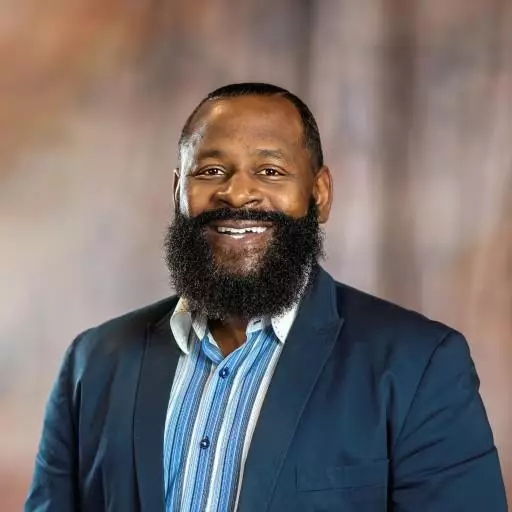
About Tony Clark
Born and raised in the steel town of Gary, Indiana, Tony lived life “his own way” Monday through Saturday. However, Sundays were different because that was the day he would go to church. And even though he attended church, Tony had no idea what it meant to have a relationship with Jesus Christ.
After his first year in college, Tony decided to marry his high school sweetheart, Jenise, and join the United States Marine Corps. After boot camp, instead of starting a life with his new bride, Tony received military orders to be stationed in Okinawa, Japan. Going to this foreign land was more than an overseas adventure because it was here that he made a life-changing God commitment. He thrived in this newfound relationship and began learning about the Bible. It was in Okinawa that the Lord revealed to Tony that one day he would become a pastor.
When Tony returned to the states, he continued in his walk with the Lord and became an assistant pastor with a local church. Over time, Tony grew increasingly interested in the “new” teaching style of Calvary Chapel and began attending Calvary Chapel Vista. After a few years at Calvary Chapel Vista, Tony began thinking about the idea of pastoring a church. However, where would it be? Only God would know!
Even though Tony had never been to the East Coast, he decided to visit Virginia. After much prayer, Tony knew for certain that Newport News, Virginia was the place that God would have him to be a pastor. The desire of Tony’s heart is to see the community of Newport News and the Hampton Roads area transformed by continuing to preach the Good News of Jesus Christ. Tony continues to heed the call by passionately studying God’s Word, prayerfully seeking the Lord’s direction for His church, and vigorously pouring love into the lives of the people God leads his way – persevering until He comes!
Contact The Word Made Plain with Tony Clark
ccnn@calvarynn.com
http://www.calvarynn.org
Mailing Address:
The Word Made Plain
Calvary Chapel Newport News
15553 Warwick, Blvd Suite K
Newport News, VA 23608
757-886-5012