
Civil Rights (cont'd)


Guest (Male): Welcome to the Word Made Plain with senior pastor Tony Clark of Calvary Chapel Newport News in Virginia. Currently Pastor Tony is teaching a study in the book of Acts. Please open your bible to Acts chapter 22 verses 22 through 30.
Tony Clark: Remember Paul addressed the crowd in the Hebrew language, more specifically it was Aramaic, a language the commander didn't speak. And so as he observed the angry crowd quiet down to listen, then erupt in anger, throwing dust in the air and ripping off their clothes, he said, "Look here, let's examine this man by scourging him and really get to the bottom of why this crowd is reacting the way that they are towards him."
We know that the scourging process is a very cruel and bitter method the Romans used to get information out of people. It used to be called the third degree. And they used an instrument as I mentioned previously in the past called a flagellum, which was a wooden handle with 9 to 12 leather straps with balls on the end of each strap.
The balls consisted of every sharp object embedded in them for the purpose of ripping the skin from the body of the victims. Also a scribe would be there to write down the crime that he would confess to have committed. Oftentimes people died under scourging because of the blood loss and from the infection that would set in.
And this is what Jesus went through in John 19 and verse one. So they were about to examine Paul under scourging to see why the crowd reacted towards him as they did. And as they bound him with thongs in verse 25, which meant that they would stretch out the arms so the skin of the back would be tight.
So when that flagellum hit it, it would just break through the skin and rip the skin from the body. So they bound him in thongs in verse 25 and stretched out his arms. And Paul speaks and said to the centurion, who was a captain over a hundred soldiers. He said, "Let me ask you something, bro, is it lawful for you to scourge a man who is a Roman and uncondemned?"
Paul, who was a Roman citizen, knew Roman law and knew how to use it. This is key for us to understand. I wonder how much of the law we know. If we don't know the law, how can we really tell whether our civil rights are being violated or not? As Christians, we really need to know the law because it is changing all of the time.
And the changes are not favorable towards our Christian views. Many of you really don't even know that in the past, there used to be laws against blaspheming God. There were blasphemy laws. If you were convicted of it, you were fined $500 and could go to jail up to three years. Blasphemy laws. And we all know there used to be sodomy laws on the book.
And now all of these things have been removed. They like to change the law at night when we're asleep and pass these laws, and then we wake up and look up and say, "Guess what? This is changed now." When did that happen? Nine out of ten, many of them while we were asleep.
So you need to know the law, know the history of the law, and know what is still on the books and what is not on the books. You need to know the law. And Paul knew Roman law. See, you could go to jail if you would bind a Roman citizen without following the proper legal procedures. And you could get capital punishment if you scourged a Roman soldier without going through the proper proceedings, which they were about to do.
Paul had them right where he wanted them. And we have already said that Paul knew the law and we will see him use it to his advantage. So the question is: Should a Christian stand up for his civil rights? Should we use the judicial system? I believe that Paul is showing us that we should use it when our civil rights are being taken away from us.
The bible is very clear in First Corinthians six and verses one through eight that we're not to go to court against another Christian. But if it is the world or the world of the unbeliever, Paul gives us an example that it is not only appropriate but sometimes it's very necessary to use the judicial system.
We see this here. I have a pastor friend in Maine who is taking the governor and all that sort of stuff to court that forbidden them to meet as a church. There was a church not that long ago, over a month ago, over in Chincoteague, over in Eastern Shore. They had 16 people. 16 people in a church service. They got arrested and all that kind of stuff.
They took it to court and won! And won and said, "You can't stop these 16 people. You can't stop these folks from meeting." Won the case. Then, this is no coincidence. Then, there's a pastor friend of mine in North Carolina. He went online and said, "Hey, guess what? May 31st is Pentecost Sunday. We're meeting." North Carolina was closed at the time.
He said, "We're going to meet because we obeyed the laws of the land for two months. And we see places, abortion clinics, the liquor store, all that is necessary, but we can't meet? No." And guess what? All of a sudden he posted breaking news about five hours later.
Breaking news: two churches, pastors took the governor's thing to court. The judge said, "Governor, you can't stop these churches from meeting if they're practicing social distancing and all that. You can't stop them from meeting." And all the churches in North Carolina said, "Amen!" And that's what it was.
It's happening around the country. There's been arguments on both sides of the issue. But here it is here. They are taking these folks to court and the judges are siding with the churches. That should tell you a whole lot. It's one thing, yes, we're called to obey the laws of the land. But this has gone beyond obeying just the laws of the land.
Now it's coming to a point where now our civil rights as citizens here are being violated. And to show you, the judges are siding with the churches. That should tell you a whole lot because there's a lot of arguments, please don't get me started. I can be with 500 people in Walmart and half of them don't even have a mask on, but I can't come to church?
Don't get me started on that, please don't. I've been in too many arguments over that, and it don't take much to get me going again. But I will just say, judges in courts are siding with churches. So that goes to show you there's one thing, okay, we'll be good citizens and we'll obey the laws of the land and we'll quarantine, we're good.
And it's another thing to where now we're telling you not to gather together. That's a whole different thing. Thank God our governor said 50% we can have. Okay, I'm good with that. But I was letting you know May 31st, I was going to have church too. I'm just letting you know I was. Thank God our governor kept me from exercising my civil rights.
But I'm telling you, there are times by which we need to use the judicial system and many of my brothers around the country are doing it and winning in court. So that goes to show you there's a difference here. Total difference. Yes, we'll do what everybody else is doing, we'll quarantine. But now you can say these folks can open, but churches you all keep your doors closed.
Judges around the country are saying you can't do that. And this is a case where Paul is showing us how this is done. And we're going to get more into that. Look at verses 26 through 28. When the centurion heard that, he went and told the commander, saying, "Hey, bro, you better take care what you do, for this man is a Roman."
Then the commander came and said to him, "Tell me, are you a Roman?" He said, "Yes." The commander answered, "With a large sum I've obtained this citizenship." And Paul said, "I was born a citizen." Once the centurion heard what Paul had to say, he went in verse 26 to the commander and said, "Take care what you do, for this man is a Roman."
The Roman law that was called the Lex Julia allowed citizens to appeal to Rome if they felt that their civil rights were being violated. The ancient Appian and Valerian laws forbade such ill treatment of Roman citizens. So Paul being schooled in Roman law, being from the city of Tarsus, he asks, "Is it lawful for you to scourge a man who is a Roman and uncondemned?"
He knew the law and the answer to this rhetorical question. It was not lawful nor legal. There had not been a trial, a hearing, nor any formal charges presented against Paul. Now, the question becomes this: Why didn't Paul submit to the beatings like he did in the city of Philippi?
Paul told the church in Philippi, the Philippian church in chapter one and verse 29, "For to you it has been granted on behalf of Christ, not only to believe in him, but also to suffer for his sake." So why didn't he endure this brutal scourging process? Let me tell you why: because there was nothing fruitful that would come out of it.
In the Philippian jail that Paul was in, Philippians chapter 16 and verses 16 through 34, the Philippian jailer, his entire family, and the other prisoners were all set free and soundly saved as a result of the beatings Paul endured. Here in these verses, Paul decided to use his Roman citizenship.
Did it work? It sure did because the commander said in verse 27 and asked, "Tell me, are you a Roman citizen?" Paul said, "Yes." Then the commander said in verse 28, "With a large sum of money I've obtained this citizenship." Let me give you the history behind that.
The history is that the wife of the emperor Claudius encouraged him to raise money for their personal treasury by selling Roman citizenships. The commander Claudius Lysias took advantage of this kind of bribery because you had to bribe them, the more money you gave that's how you got your citizenship.
And he was not ready for Paul's response at the end of verse 28 when he said, "Guess what, bro? You bought yours, I was born a citizen." Meaning that Paul's father was a Roman citizen, so he was born into that citizenship. And those who were born citizens of Rome had a higher status than those who bought their citizenship.
I'm sure that the commander was thinking that they had badly misjudged their prisoner Paul. They first thought that he was an Egyptian assassin that came in town to stir up trouble. Then Paul spoke Greek to Claudius Lysias, which meant that he was a cultured, an educated man. Now they find out that he was a born citizen of Rome. They really misjudged old Paul.
Let us not be like the commander Lysias who badly misjudged Paul. We can start to think that a certain group of people are beneath us in our hearts. But when we take the time to talk and hear their story, like they heard Paul's story, you will see that you badly misjudged them. This can happen when we see people standing on the corners with their signs asking for food or money.
Yes, some of them are scammers, we know that. But some of them have fallen upon hard times. Some of them have lost very important jobs because of substance abuse. Some of them are like many of us, one paycheck away from holding up our own sign on some corner.
And since the pandemic, there's going to be a lot more people on a lot more corners holding up a lot more signs. Let us learn from this story here and not turn up our noses at those who are out there holding up signs. I'm telling you not to do it because the pandemic will have a whole lot of people out there.
And let us not find ourselves turning up our noses. "Oh, they're scammers." Let me tell you something: if you only heard their story, many of them just got caught up. They got caught up not only with the pandemic, but they got caught up with substance abuse. They fell upon hard times.
And if you just took the time to hear the story instead of looking at them and just rolling your eyes and lifting your, hey, let me tell you something, don't misjudge those people. You never know what kind of jobs they had, what kind of career they had, what kind of lifestyle they were living before they started holding up signs.
And I'm telling you, mark my words, there's going to be many more corners with many more people holding up many more signs because of this pandemic. And you better do all you can to give. It's more blessed to give than receive. Yes, some of them are scammers, but some of them are just falling upon hard times, lost jobs that they can't even get back anymore.
And we just better watch our little hearts that we don't just immediately just turn our head as if we're in disgust of them being out there like that. I told you before, just for them having the courage to stand out there and look like a fool, I would give them money just for that. But I'm telling you, some of them are just falling upon hard times. They're just struggling, having a tough time.
And if you got it, you better give it, because you'd want somebody to give it to you when you're out there holding up your sign. Just be careful because they misjudged Paul. They thought Paul was just this troublemaker. And when they heard all this about Paul, when they got his story, this man was cultured, educated in Tarsus.
He can speak Aramaic and Hebrew and Greek. This man was an educated man. He was not only, he didn't buy his citizenship, he was born a citizen of Rome. They misjudged this dude altogether, and we can be the same way if we don't watch it. Let's see what else happened in verses 29 and 30.
Then immediately those who were about to examine him withdrew from him and the commander was also afraid after he found out that he was a Roman and because he had bound him. The next day, because he wanted to know for certain why he was accused by the Jews, he released him from his bonds and commanded the chief priests and all their council to appear and brought Paul down and set him before them.
Claudius Lysias the commander knew that he was in big trouble. And this is why in verse 29 he commanded those who were about to examine him under scourging withdrew from Paul and was afraid. Why? Because under Roman law the commander's military career could be over and he could actually get capital punishment for treating a Roman citizen the way he treated Paul.
And so they couldn't get to the bottom of why the angry crowd reacted to Paul the way that they did. So in verse 30 they released Paul of his bonds and commanded the chief priests and their council, the Sanhedrin or the Jewish Supreme Court, to appear and they brought Paul down and set him before them.
I'm sure that Paul saw this as another chance to speak to this council that he used to be a part of, seeing that his last speech before the crowd ended with a riot in Acts 22 and verses 22 to 23. Like I mentioned before, Paul was a very unique person.
He was educated, intelligent, he was a devout Jew who was also a Roman citizen. Very unique skill set there. Very unique resume. And God used his unique background in a special way even as he wants to use your unique background or your education or lack thereof, your culture environment.
He wants to use it for his glory. He wants to use your economical status, whatever that might be. God can use you in a unique and special way to minister to the people he has allowed for you to be around. So instead of looking at yourself as being inadequate or underqualified because many people, "I can't talk to people. I'm just, I don't know enough."
Hey, just look at ways on how God can use you for his glory. Use your unique abilities to bring glory to his name. And we will see what happened when Paul stood before the very group that he used to be a part of. And we will see that God's will next time. Let me conclude with this.
Civil rights. In this message we saw how Paul used his Roman citizenship when his civil rights were being violated because he knew the law. He used it to defend his civil rights. And so too we can use the judicial system when we feel like our civil rights are being violated as American citizens or as Christians living in America.
The only time we're not to use the court system is when another Christian is involved. And we also saw how we can make the same mistakes as Claudius Lysias did by misjudging Paul and thinking that he was a person beneath them. And we need to guard our hearts. Guard our hearts in this area.
And let us make sure that we aren't looking down on people because once you hear their stories, you may be surprised at what status they had in life before they got caught up in some substance abuse or before they were down on their luck or, and I had to add this, or before the pandemic hit.
You'd be surprised at the people and what they have done. And for us to look down upon them because your job continued and to look down upon them because these folks trying to get their hustle on and all this sort of stuff and you got your nice paying job through the pandemic. Let me tell you something, don't look down on these people.
Don't misjudge them. You'd be surprised at what they were doing before the pandemic. This is what they did to Paul and this is what we can do to people so often that stand on the corner. So when you see them going to Walmart around the corner, remember seeing the guy with a trombone, he out there getting his hustle on, you know, get him few dollars, get out there and play, do your thing.
But don't look down on these people. We're living in some different times now. And we need to reflect Jesus in the midst of these different times that we're living in. So there are times by which we should use the judicial system or the court system when our rights are being violated.
Just know when I started the book of Acts back in 2016, I said some of the things that we're seeing that we're going to study is going to start happening in America. And they're here. They're here right now. And there are brothers and sisters around the country taking these folks to court and winning.
And winning. That tells me a whole lot. So that doesn't mean we be foolhardy and be foolish. No, we mask up, we do what we're supposed to do. But if they're going to try to take advantage, then there's times by which Paul showed us we have to definitely use the court system and winning. That part right there is what I love to hear the most. And winning. Judges are saying you can't do that to the church and I won't let you. And I'm just like God bless you court, God bless you judge. And I love it.
Let's pray. Father, thank you. Thank you so much for your word. We pray, God, that your spirit will move in our midst. And Lord, we pray that you would write this word upon our hearts. Lord, I pray, oh God, that you would comfort us and comfort your people. There are some who are still afraid and I just pray that you comfort them. Bring your peace to them.
And dear God I just pray, Lord, that you would just meet your people. Be in the midst of us, oh Lord. Oh Lord, thank you for this example that Paul has given us in this word here. And Lord we just pray that you'll give us the wisdom on how to navigate through this time that we're living in.
And Lord I pray if there is any wickedness, any racial wickedness in people's hearts, Lord, I pray that they would confess that today. Oh the Jews that could not take just even the word Gentile. Oh God, I just pray if we have that in our hearts, forgive us.
Have mercy upon us, Lord, for racial issues in our hearts. Lord, forgive us, forgive us as your people, forgive us. And Lord I pray if there's anyone there who is out there who has not repented of their sin and accepted Christ as their Lord and Savior, I pray today would be the day of salvation. I pray that they would just pray a simple prayer. Just say, "Lord Jesus, forgive me of my sin. I believe you died on the cross and was buried and rose again. Come into my heart. I make you my Lord and Savior. Help me to live for you from this moment forward. In Jesus's name. Amen."
Guest (Male): If the Word Made Plain has been a source of inspiration and encouragement to you, why not consider becoming a Word Made Plain giving partner to keep this listener-supported program on the air? As a giving partner, you join forces with Calvary Chapel Newport News's kingdom vision of spreading the gospel of Jesus Christ. You can make your tax-deductible gift online at calvarynn.org or send your gift of any amount to 15553 Warwick Boulevard, Newport News, Virginia 23608 and receive a gift from Calvary Chapel Newport News as our thank you. In addition to your financial support, we ask that you pray for the Word Made Plain broadcast, that it touches hearts and generates change in the lives of people around the world. We pray you've been blessed by God's word today and hope you'll tune in next time to hear the Word Made Plain.
Featured Offer

In his three part series entitled, “When God Gives Up,” Senior Pastor Tony Clark of Calvary Chapel Newport News Virginia focuses on God’s limitations in regard to sin. Is there a limit to God’s patience? Join us, as Pastor Tony answers this vital question in this must hear series. Download your copy today!
Past Episodes
This ministry does not have any series.
Featured Offer
In his three part series entitled, “When God Gives Up,” Senior Pastor Tony Clark of Calvary Chapel Newport News Virginia focuses on God’s limitations in regard to sin. Is there a limit to God’s patience? Join us, as Pastor Tony answers this vital question in this must hear series. Download your copy today!
About The Word Made Plain
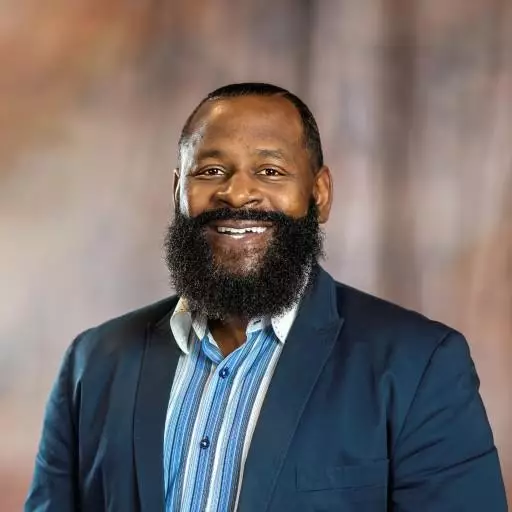
About Tony Clark
Born and raised in the steel town of Gary, Indiana, Tony lived life “his own way” Monday through Saturday. However, Sundays were different because that was the day he would go to church. And even though he attended church, Tony had no idea what it meant to have a relationship with Jesus Christ.
After his first year in college, Tony decided to marry his high school sweetheart, Jenise, and join the United States Marine Corps. After boot camp, instead of starting a life with his new bride, Tony received military orders to be stationed in Okinawa, Japan. Going to this foreign land was more than an overseas adventure because it was here that he made a life-changing God commitment. He thrived in this newfound relationship and began learning about the Bible. It was in Okinawa that the Lord revealed to Tony that one day he would become a pastor.
When Tony returned to the states, he continued in his walk with the Lord and became an assistant pastor with a local church. Over time, Tony grew increasingly interested in the “new” teaching style of Calvary Chapel and began attending Calvary Chapel Vista. After a few years at Calvary Chapel Vista, Tony began thinking about the idea of pastoring a church. However, where would it be? Only God would know!
Even though Tony had never been to the East Coast, he decided to visit Virginia. After much prayer, Tony knew for certain that Newport News, Virginia was the place that God would have him to be a pastor. The desire of Tony’s heart is to see the community of Newport News and the Hampton Roads area transformed by continuing to preach the Good News of Jesus Christ. Tony continues to heed the call by passionately studying God’s Word, prayerfully seeking the Lord’s direction for His church, and vigorously pouring love into the lives of the people God leads his way – persevering until He comes!
Contact The Word Made Plain with Tony Clark
ccnn@calvarynn.com
http://www.calvarynn.org
Mailing Address:
The Word Made Plain
Calvary Chapel Newport News
15553 Warwick, Blvd Suite K
Newport News, VA 23608
757-886-5012