
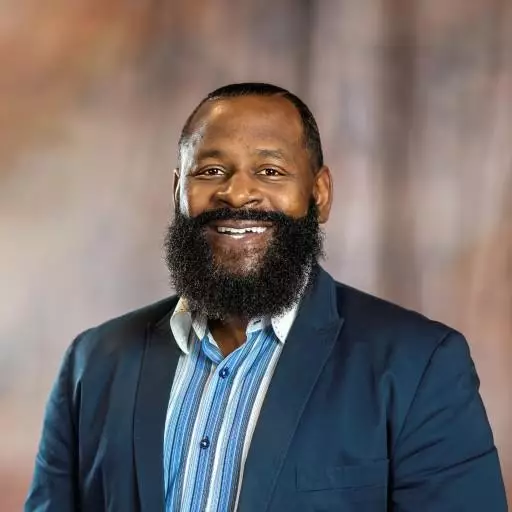
Church Hurt (cont'd)


Guest (Male): Welcome to The Word Made Plain with Senior Pastor Tony Clark of Calvary Chapel Newport News in Virginia. Currently, Pastor Tony is teaching a study in the book of Acts. Please open your Bible to Acts chapter six, verses one through seven.
Tony Clark: And seeing that they were the minority, you can see why the Hellenistic widows and their needs were easily, let's just say, overlooked. Care for widows was traditional in Jewish society. We know this from the Old Testament in Deuteronomy 14, verse 29, and Deuteronomy 16, verse 11.
Later the Apostle Paul said that it was something that the church should look after. It should look after the widows after their families took care of them first. Then the church was to step in, in 1 Timothy 5, verse 3. Discrimination had crept into the early church. It has been in the church since the very beginning.
During the early stages of the development of our nation, racism and discrimination have been a part of it. Why? Don't miss this point. Why? Because it is a sin of the heart. Racism and discrimination is a sin of the heart. We bring our hearts with us when we come to church. Therefore, it creeps inside of the church.
We bring our views, our prejudices, our racism, our discrimination. We saw it with our church in the early days of our church. When our church was 98% white, the majority said everything is fine. I bet it was. When we were 70% white, 20% black, 5% Korean, and 5% Hispanic, everything was still okay.
When we moved from York County to Newport News, many people said, "I ain't going over there. I'm not going over there." Then the church was 60% to 65% white and about 30% black and climbing. Then we saw what we commonly say back in the community I grew up in, and many of the communities you grew up in as well: we saw what is called white flight take place.
Word got back to me because everything that goes on is going to get back to me. Little birdies come and just start chirping in my ear. It gets back to me. Word got back to me that, "Well, we're leaving because the church is too black." Oh, I heard it. I heard it. Racism and bigotry and discrimination is still in the church today.
Like I said, it is a sin of the heart and we bring our hearts with us when we come to church. So we bring that mess in the church with us, like we see in these verses. What happened next? Look at what it says here in verse 2: "Then the twelve summoned the multitude of the disciples and said, 'It is not desirable that we should leave the word of God and serve tables.'"
Now the complaint of the Hellenists got back to the twelve, which is a reference to the twelve apostles, which also shows how legitimate their complaint was at the time. It was so serious that the twelve summoned the entire congregation to seek a solution. Although the apostles recognized the legitimacy of the problem, they understood that they were not the ones to handle it.
They didn't have time to deal with it. However, we must note not that the task was beneath them. No, they said it was not desirable that we should leave the word of God and serve tables. We have to go a little bit deeper here. The Greek word for tables is trapeza and it can mean an eating table or counter, or actually a counter for handling money.
To involve themselves in the details of serving meals and handling money matters would take them away from their calling, which is the word of God and prayer. The apostles knew what they were called to do. They were called to preach, they were called to teach, to pray, to study the word of God. It was like they were saying, "You serve the tables and we will serve the word."
I believe that this is the problem with many churches today. Many pastors are so caught up in administrative duties and other things that they have no time to study, to pray, and to seek the face of God. So their congregations get half-baked, diluted sermons and wonder why there's a lot of diluted, half-baked Christians coming from them.
These churches are expecting the pastor to preach, teach, pray, study, visit the sick at home, make hospital calls, marry and bury their loved ones, and the list goes on and on. Then he stands up before the church on Sundays half dead and he gives them sermons that lack content, context, and continuity.
He may read a verse, never come back to the verse, give you a song and dance, tell some good stories, and get you fired up a little bit, and then that's it. You leave out and say, "Oh, the pastor preached today." "What'd he preach about?" "I don't know, but it was exciting." That kind of mess goes on in churches across this nation.
I'm so thankful for this church that allows me to give myself to the word of God and prayer. So when I stand before you, I can say, "Thus saith the Lord," and thunder it from Mount Zion and say God has a word for you today and give you a well-prepared, diligently prayed-for message from the word of God and the heart of God.
What did the apostles tell them? Look at verses 3 through 5: "Therefore, brethren, seek out from among you seven men of good reputation, full of the Holy Spirit and wisdom, whom we may appoint over this business; but we will give ourselves continually to prayer and to the ministry of the word. And the saying pleased the whole multitude. And they chose Stephen, a man full of faith and the Holy Spirit, and Philip, Procorus, Nicanor, Timon, Parmenas, and Nicolas, a proselyte from Antioch."
Now the word "therefore" that starts verse 3 takes us back to what was previously said. The apostles said in verse 2 that they could not leave the word of God and serve tables. Therefore, brethren, or because of this, brethren, seek out from among you seven men. The Greek word for seek is episkotonomi and it means to look, to select, oversee or supervise.
The congregation were told to look over the church and select men to appoint over this business. The question is: what kind of men were they? It tells us. Number one, they were men among you. Not only does this mean that he is a believer, which is very obvious, but he is in the church. He is among us. He's in the church. Churches should be raising up leaders from within.
I've been pouring into men, different men that felt called to some kind of leadership or teaching or small group or whatever, for 20 of the 23 years I've been here. This is just a great thing and this is normally how we do it. We hire from within the church. We bring you on and pay you for what you have been doing as a volunteer the whole time.
We hire from within because these people are among us. This is very key. Why do we do that? Because they already know our church's DNA. I don't have to teach them the culture of our church; they know the culture. They have already accepted me as their pastor. People from without, what happens is I'm either their boss or somebody they work for; I'm not their pastor.
They don't know me like that. They know me as maybe a boss or whatever. But from within, they've already settled that thing. I've been their pastor for X amount of years. So we hire from within because these people are among us. Number two, men of good reputation. This means men of integrity. They're above reproach, like 1 Timothy 3 and Titus 1 refer to.
This was important for the seven to have because they would be handling large amounts of money and purchasing food. Remember, there's 20,000 people. So money that people sold their homes and land for brought to the apostles at the time, now these seven men are handling this and they needed to be men of integrity because they're handling large amounts of money and food.
So they couldn't be fooling around, sticking their little paw in and getting caught with their paw in the cookie jar, taking some of the money, sliding it in their back pocket. No, they had to be men of good reputation. Number three, full of the Holy Spirit. This is vital. Men who were yielded to the Spirit of God in their lives, sensitive to receiving a word of knowledge, a word of wisdom, having discernment to detect when people come to them lying about their situation.
Like Peter had with Ananias and Sapphira in chapter five. They tried to come and say, "Here you go, Peter. What's this? This is the money of the land we sold." God gave him a word right there and said, "Peter, why is it that you lie to the Holy Spirit like this? When you had the money in your hand, it was yours. So why do you think you need to lie about it?"
The Spirit of God quickened him to let him know that Ananias and Sapphira were fooling around with the price of the money and being deceptive. This is why these men needed to be full of the Holy Spirit. Number four, full of wisdom. They must have theological and biblical knowledge, but wisdom to apply it to the proper context.
It's one thing to have knowledge; wisdom gives you the understanding of how to apply that knowledge in the proper context. So they needed to be full of wisdom. Or like the sons of Issachar in 1 Chronicles 12:32, who had understanding of the times to know what Israel ought to do. After the qualifications were given in verse 3, the apostles reiterated in verse 4.
Let me just say this: why were there seven men? Many scholars believe there were seven men, one for every day of the week. So one of these guys can oversee Monday and Tuesday and Wednesday, and so on and so forth. So, after the qualifications were given in verse 3, the apostles reiterated in verse 4: "We will give ourselves continually to prayer and to the ministry of the word."
I'm saddened by the fact that many pastors have left the word of God and prayer to instead get themselves involved in the business of the church. No longer are there shepherds and pastors feeding and tending to the flock of God and feeding the flock of God the word of God, but now they're CEOs making millions of dollars on the business side of the church.
They are more involved in marketing themselves than giving themselves continually to the word of God and prayer. Now, if God has given you a book to write or you're given a platform where you're getting invited places and conferences to speak, great. However, we must not get involved in the business. That is for men like verse 5 is describing for us here.
Now, who were these men? Notice how all seven of them had Greek names. All of them were Hellenists. Seeing that the Hellenists felt slighted, they appointed seven Hellenists to be over the business. How loving and wise of the apostles for doing this. They were sensitive to the neglect of the Hellenists by choosing Hellenists to oversee this business.
That was brilliant by them. Brilliant. Now, who were they? Stephen was full of faith and the Holy Spirit, whom we will see more about him, God's will, next week when we get to verse 8. And he became the first martyr of the church. Philip will play a major role and become an evangelist and raise four virgin daughters that prophesied or spoke forth the word of God.
So he raised his children correctly according to Acts 21, verse 9. Now, not much is known about the other five. Procorus, tradition says that he became the secretary to the Apostle John. Following John's death, Procorus became the bishop of Nicomedia, a large and growing church, before being martyred himself.
It is believed that Nicolas went astray after serving here and started a sect known as the Nicolaitans, mentioned in Revelation chapter 2, in verse 6. What happened next? Look at verses 6 and 7: "Whom they set before the apostles; and when they had prayed, they laid hands on them. Then the word of God spread, and the number of the disciples multiplied greatly in Jerusalem, and a great many of the priests were obedient to the faith."
When they set these seven men before the apostles, I want you to notice how the apostles had the last word and not the congregation. The apostles had the last word. So they prayed, they laid hands on them and prayed for them in verse 6. This laying on of the hands is only confirming what God has already done in their lives.
We see this throughout the Scriptures in Acts 13:3, 1 Timothy 4:14, and chapter 5:22, and then 2 Timothy 1:6. What were the results of this? Verse 7 said that the word of God spread because now the apostles could give themselves to the preaching and teaching of the word of God and not have their hands in money matters and food distribution.
They could give themselves to the word of God. Now watch this. We have a saying within Calvary Chapels: healthy sheep reproduce. When sheep are healthy, they will automatically reproduce or evangelize and tell others about Jesus Christ. Now the apostles can give themselves to the word of God and prayer. They can teach and so the sheep can mature.
Unhealthy sheep do not reproduce. That's why one denomination reported that their people invited someone to church once every 12 years. Now, that's unhealthy sheep. When you're being fed and taught the pure milk of the word of God, the Bible says you'll grow thereby. When you grow and you're all of a sudden like, "You know what? You've got to come here to this. You've just got to come here to this."
Healthy sheep reproduce. The natural byproduct of healthy sheep is evangelism, it's reproduction. Now watch this. When a shepherd is over the sheep, it's not like he is awakened at night and he's like, "What's that noise? Oh, that's sheep reproducing." No, it's a natural thing that takes place.
He doesn't have to force the sheep to reproduce. He doesn't have to go to the sheep and say, "Now reproduce! Reproduce!" It will be a natural thing. It's natural for them to reproduce. So the apostles gave themselves to the teaching of the word and prayer. They didn't have their hands in money matters and food distribution and all that kind of stuff.
Throughout church history, people of my ilk have been known to get their little grubby little paws in the food with the money and it's caused major problems and issues and folks to run from church. All kinds of stuff. The apostles, this is our model, folks. The model is the book of Acts. Not church history.
The model is the book of Acts right here. People of my ilk, we must give ourselves to the word of God and prayer. Then we appoint these kind of folks to handle those money matters and food distribution. We're not fooling around with that kind of stuff. Because of this, a number of the disciples multiplied greatly in Jerusalem.
Healthy sheep reproduce. When you're excited about your church, you tell others about it. When you're embarrassed, all of a sudden your coworker says, "Hey, you go to church, right?" "Yeah, yeah." "I want to come Sunday." "No, don't come. Don't come. Sister so-and-so may get up and do something foolish. I don't want you to come."
They're embarrassed. They don't want you to come. "Maybe not this Sunday. I'll let you know." That's fooling around. What was more incredible: a great many of the priests were obedient to the faith. Now let me conclude with this: church hurt. As long as people make up the church, you will have church hurt.
No church is exempt. No church is exempt. None. There's not a perfect church. Did you know that? Stop looking for it. Because if you hear that there's a perfect church, as soon as you go there, you ruin it. You ruin it because church is made up of people. People are a mess. People are a messy group.
Now folks can hide behind phone screens and computer screens and just let you have it. People are messy. They're cowards in person, but they get behind a screen and just blast you to kingdom come. People are messy. But this is the bride of Christ, messy and all.
We need to bring our church hurt to Jesus and allow him to heal us because it's people. They're just people. They mean well. They're jacked up. They need the Lord. They need to be taught and fed how to walk with God. Many churches are not teaching how to walk with God, so they don't know how to walk with God.
They just think church is this thing we do on Sunday and then Monday through Saturday I get to just live my life. This is what they think. And they don't know how to walk with God, so they're messy. They're just messy. So we need to allow God to heal our hurt.
Because there are many people who give this as the reason why they don't go to church: "Because I've been hurt there." Hold up. You got into it with somebody at the parking lot at Walmart, but you still shop at Walmart. They took your parking space and y'all got out shouting and carrying on, but you still shop there.
But we do this with the church. You ought to just go ahead, ask God to heal your hurt because most of these people that you can't stand and get on your nerves, they're going to be in heaven with you. So you're not going to heaven? Well, that's just a thought. And they're going to be in heaven with you for a long time. So it's best that you get this right now. Get it right right now.
Let us pray.
Guest (Male): You've been listening to Pastor Tony Clark, Senior Pastor of Calvary Chapel Newport News in Virginia. For more of Pastor Tony's teaching, please go to our website: ccnn.org. That's C-C-N-N dot org. We invite you to join us for our next study right here on The Word Made Plain.
Featured Offer

In his three part series entitled, “When God Gives Up,” Senior Pastor Tony Clark of Calvary Chapel Newport News Virginia focuses on God’s limitations in regard to sin. Is there a limit to God’s patience? Join us, as Pastor Tony answers this vital question in this must hear series. Download your copy today!
Past Episodes
This ministry does not have any series.
Featured Offer
In his three part series entitled, “When God Gives Up,” Senior Pastor Tony Clark of Calvary Chapel Newport News Virginia focuses on God’s limitations in regard to sin. Is there a limit to God’s patience? Join us, as Pastor Tony answers this vital question in this must hear series. Download your copy today!
About The Word Made Plain
About Tony Clark
Born and raised in the steel town of Gary, Indiana, Tony lived life “his own way” Monday through Saturday. However, Sundays were different because that was the day he would go to church. And even though he attended church, Tony had no idea what it meant to have a relationship with Jesus Christ.
After his first year in college, Tony decided to marry his high school sweetheart, Jenise, and join the United States Marine Corps. After boot camp, instead of starting a life with his new bride, Tony received military orders to be stationed in Okinawa, Japan. Going to this foreign land was more than an overseas adventure because it was here that he made a life-changing God commitment. He thrived in this newfound relationship and began learning about the Bible. It was in Okinawa that the Lord revealed to Tony that one day he would become a pastor.
When Tony returned to the states, he continued in his walk with the Lord and became an assistant pastor with a local church. Over time, Tony grew increasingly interested in the “new” teaching style of Calvary Chapel and began attending Calvary Chapel Vista. After a few years at Calvary Chapel Vista, Tony began thinking about the idea of pastoring a church. However, where would it be? Only God would know!
Even though Tony had never been to the East Coast, he decided to visit Virginia. After much prayer, Tony knew for certain that Newport News, Virginia was the place that God would have him to be a pastor. The desire of Tony’s heart is to see the community of Newport News and the Hampton Roads area transformed by continuing to preach the Good News of Jesus Christ. Tony continues to heed the call by passionately studying God’s Word, prayerfully seeking the Lord’s direction for His church, and vigorously pouring love into the lives of the people God leads his way – persevering until He comes!
Contact The Word Made Plain with Tony Clark
ccnn@calvarynn.com
http://www.calvarynn.org
Mailing Address:
The Word Made Plain
Calvary Chapel Newport News
15553 Warwick, Blvd Suite K
Newport News, VA 23608
757-886-5012