
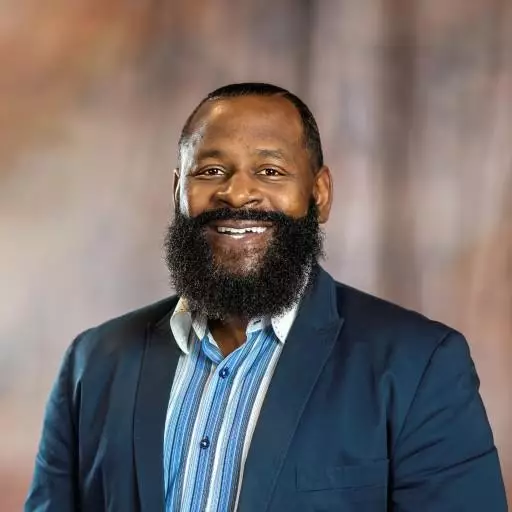
Angel Face


Announcer (Male): Welcome to The Word Made Plain with senior pastor Tony Clark of Calvary Chapel Newport News in Virginia. Currently, Pastor Tony is teaching a study in the book of Acts. Please open your Bible to Acts chapter 6, verses 8 through 15.
Tony Clark: Let's dive into the Word of God together. Turn with me in your Bibles to Acts chapter 6. We're going to be looking at verses 8 through 15 as we finish up this chapter. God has some great things to say to us as we continue to go verse-by-verse and chapter-by-chapter through the book of Acts on Sunday mornings.
And as you know, we're making our way through the book of Joshua on Wednesdays. We've got the New Testament on Sundays, the Old Testament on Wednesdays, just going through the Word of God. Father, thank you so much that You have brought us to this place here to feed and feast upon Your Word.
We pray that Your Holy Spirit would prepare our hearts and our ears, Lord, to receive with meekness this implanted Word, which is able to save our souls. We pray, God, that the secrets of our hearts would be revealed, and Lord, so everyone here would know that You are in this place. Thank you, Lord, for this time in Jesus' name. Amen.
Acts chapter 6, looking at verses 8 through 15. The title of this message is "Angel Face." Angel Face. Now, what a beautiful term of endearment to say about your wife. And what you're saying is that looking into your face is like looking at an angel from heaven. However, today we're going to see that all of us can have the face of an angel. All of us can have an angel face, and we're going to see how.
The last time we were together, we saw the apostles deal with a racial problem that took place in the early church between the Hebrews and the Hellenists about the daily distribution of food, according to verse 1. They called the 12 apostles to see what they would say about the situation, and they said in verse 2, "It is not desirable that we should leave the Word of God and serve tables."
Then they said, "Seek out seven men of good reputation, full of the Holy Spirit and wisdom that we should put over this business," according to verse 3. And they said, "We must give ourselves to the Word of God and prayer." So they chose seven men with Greek names in verse 5, and the Word of God spread, and the number of the disciples multiplied in Jerusalem, and even a great many priests were obedient to the faith.
So what happened next? Look at verse 8: "And Stephen, full of faith and power, did great wonders and signs among the people." Now, here is Stephen, who was chosen in verse 5 as a man full of the Holy Spirit, and now we see him here full of faith, grace, and power.
The Greek word for "full" is pleres, and it means to be filled up. He was filled to the brim, and because he was, this verse goes on to say he did great wonders and signs among the people. Stephen is a beautiful example of what Jesus taught in Matthew chapter 25 and verse 21, when He said, "He who is faithful over a few things, I will make him ruler over many things."
See, this shows us that if we want to be used by God, we must be faithful in whatever it is God has given us to do in ministry. Whether that is helping people find a parking spot, greeting someone at the door as they come in, or loving on some babies in the nursery. Zechariah 4:10 says, "Don't despise the day of small beginnings."
Yet there are many people who are reluctant about doing what they think are small and insignificant things. They are thinking, "Don't you guys know who I was in the military?" Yes, we do know who you are: a servant of Jesus Christ. So teach those four-year-olds, pick up that trash in the parking lot, or play with some toddlers in the children's ministry.
And when you show the Lord that you can be faithful in the small and insignificant tasks, God will give you more. In other words, the reward for faithfulness in service is greater service. Moses is a beautiful example of this principle when God saw that Moses was—don't miss this word—content with tending his father-in-law's sheep on the backside of the desert.
God gave him a greater ministry of leading His people out of slavery in Egypt to freedom, according to Exodus chapter 3. So here is Stephen, chosen to hand out food to widows in verse 5, now doing great things among the people. What about you today? Can you be faithful in the small, insignificant things?
You will not get greater ministry or greater things done until you can be faithful in the small things. Zechariah 4:10 says, "Don't despise the day of small beginnings." Don't despise those days. I was telling a group of men up in Fredericksburg just yesterday, I was saying how I honed in a lot of my teaching skills when I used to do children's church.
I had three-year-olds in the front and third graders all the way to third graders in the back. I had a little puppet and you're just talking "Hey kids," and I would change voices and things. I do that now. I learned all that in children's ministry. You be faithful in the small things, and God will give you greater ministry.
Can you be faithful in picking up the trash in the parking lot, or are you like, "Don't they know who I am in the military?" Yes, we do. And that's why we got you in the parking lot picking up trash, so you can learn some humility. Be humbled. That's why. So be faithful in the small things.
Look what it says there in verse 9: "Then there arose some from what is called the synagogue of the Freedmen (Cyrenians, Alexandrians, and those from Cilicia and Asia), disputing with Stephen." Now, in this verse we see when God starts to move in a mighty way, opposition will arise as well.
This opposition came from at least three groups: the synagogue of the Freedmen, Cyrenians, Alexandrians, and those from Cilicia and Asia. Now, the Greek word for "arose" is anistemi, and it means to stand up or arise. And this word doesn't just mean to get out of a chair, but they were moved into action against Stephen.
No doubt they were fueled by their hatred of Jesus. Now, who are these three groups? Number one, it was the Freedmen. These Freedmen were descendants of Jewish slaves captured by Pompey in 63 BC, and they were taken to Rome. They were later granted their freedom and formed a Jewish community there.
The second group is the Cyrenians and the Alexandrians. They were from two major cities in North Africa. Both cities had large Jewish populations. The third group was from Cilicia and Asia. These were Roman provinces in Asia Minor that also had a large Jewish population. Men from all three synagogues came together disputing with Stephen.
Now, you've got to understand the Greek word for "disputing" is suzeteo, and it doesn't just mean to argue, but it refers to a formal debate. Luke the author doesn't record for us the content of the debate, but from the rest of the chapter and into chapter 7, the debate centered around the death and resurrection of Jesus Christ.
It also centered around why the law of Moses and the temple rituals could not save a person. Now, I brought all of this out because I want you to see where the attack came from against Stephen. It was religious people. The attack came from religious people, people from potentially three synagogues.
The attacks I have gotten over the years have come from other Christians and pastors. Not from atheists, agnostics, or unbelievers. No, other Christians. Nasty attitudes, ready to dispute with me on every little issue. And the same thing will happen to you too. The debates you will encounter will come from other believers, from other churches.
Oh sure, you will have some from atheists, but the nasty debates, like we see in this verse here, will come from religious people. Now, the question is, were they able to dispute with Stephen? Look at verse 10: "And they were not able to resist the wisdom and the spirit by which he spoke."
They were unable to defeat Stephen in a fair debate. Their human reasoning was no match for Stephen's divine wisdom that verse 5 said that he had. And I want to encourage you to read and to pray and study this book here. And no one will be able to resist the wisdom and the spirit by which you will speak.
Why? Because your wisdom will not come from human logic or human wisdom, but from God and His Word. And because they were unable to defeat Stephen in a debate, look at what they did. Look at verses 11 and 12. It says: "Then they secretly induced men to say, 'We have heard him speak blasphemous words against Moses and God.'
And they stirred up the people, the elders, and the scribes; and they came upon him, seized him, and brought him to the council." Unable to defeat Stephen's divine wisdom, they secretly induced men to say, "We've heard him speak blasphemous words against Moses and God."
The Greek word for "secretly induced" is hupoballo, and it means to suggest or to prompt with an evil motive. These religious people from these three synagogues recruited and coached along false witnesses to accuse Stephen. And this was the same tactic they used against Jesus, according to Matthew 26 and verses 59 to 61.
These false witnesses accused Stephen of speaking blasphemous words against Moses and against God. They were so zealous for the law—I want you to notice this—that they put Moses before God. A little detail that most people miss. This is a dangerous place to be in when you're putting your will and your way and your denomination before God.
Many people will argue you down to defend their denominational beliefs. You show them scripture after scripture, but their way and denomination will be placed before God, like we see here. When you are in this condition, you will go to great lengths to keep your way of life, even if you have to secretly induce people to argue with you, like we see in verse 11.
To us this doesn't mean a thing, but to blaspheme God was a very serious crime punishable by death, according to Leviticus 24 and verse 16. And these accusers were saying that Stephen blasphemed Moses, meant that he was saying that the law of Moses could not save a person, and this was a serious crime.
You tell a person that Mary and rosary beads and praying to saints cannot save you, and they will accuse you of blasphemy. You tell a person that Allah is not the same God of the Bible and going to Mecca and praying five times facing the east will not save you, and they will accuse you of blasphemy.
You tell people that knocking on doors and pushing the Watchtower and Awake magazine or the Book of Mormon will not save you, and they will accuse you of blasphemy. You tell people that the Honorable Elijah Muhammad and his teachings cannot save you, and they will accuse you of blasphemy.
These are just a few of the religious people who will attack you for making a stand for Jesus Christ like Stephen was doing here. Now we see in verse 12 that they were able to stir up the people with these false charges with the elders, the scribes, and they came upon him and seized him and brought him, Stephen, to the council.
Oh, I have to bring this out. The Greek word for "seize" is sunarpazo, and it's an amazing word. It means to drag away or to seize with violence. This same Greek word was used in Luke chapter 8 and verse 29 referring to a man seized by an evil spirit. It's also used in Acts 19 and verse 29, the same Greek word referring to Paul's friends; they were seized by an angry mob of people.
Oh, look what else happened in verses 13 and 14. It says: "They also set up false witnesses who said, 'This man does not cease to speak blasphemous words against this holy place and the law; for we have heard him say that this Jesus of Nazareth will destroy this place and change the customs which Moses delivered to us.'"
Now, in these verses we see these false witnesses repeated their charges that stirred up the people to the Sanhedrin, saying that this man does not stop speaking blasphemous words against this holy place, referring to the temple, and the law, referring to the law of Moses. They continued their lies in verse 14: "For we have heard him say that this Jesus..."
Oh, you can hear the derision in their voice. This phrase shows their contempt and hatred for Jesus: "This Jesus." They continued on with: "He will destroy this holy place," which is a reference to what Jesus said in John chapter 2 and verses 19 to 21 when He said, "Destroy this temple and in three days I will raise it up."
But He was talking about the temple of His body. Their claims of Stephen trying to change the customs of Moses is a reference to Stephen and the other apostles teaching that Jesus is the fulfillment of all of the rituals of the Old Testament. And this infuriated them, and all of these false claims were hurled at Stephen.
But how did he react? Look at verse 15: "And all who sat in the council, looking steadfastly at him, saw his face as the face of an angel." As Stephen is on trial for his life, being accused of blasphemy against Moses, his law and against the temple and God Himself. Instead of being angry for being lied upon like we would have—"They're lying on me!"—the angry council looks steadfastly at him, saw his face as the face of an angel.
How could Stephen have such peace, such tranquility at a time where almost 100 people were falsely accusing him? We say almost 100 people because you had 70 that was part of the Sanhedrin, the Jewish Supreme Court. You had the accusers there. You had the false witnesses. You had the chief priest and elders.
Almost 100 people hurling accusations, false accusations against Stephen. How was he able to maintain such a tranquility, such a peace in the midst of such a chaotic situation? Oh, it's an amazing thing because this terminology of his face being as the face of an angel is because he was a man of prayer.
This same terminology is used one other time in connection with Moses in Exodus 34 and verses 27 to 35, when he spent 40 days and 40 nights in God's presence. And it says that his face was glowing. 1 John 1:5 says God is light, and in Him is no darkness at all. So when we spend time in prayer with God, who is light, some of that light rubs off on us, and we too will have an angel face like Stephen and like Moses.
How much time do you spend in prayer? How much time do you spend with God? Oh, I'm telling you, the joy of being in the presence of God. How much time do you spend? I can tell you you don't spend much. The average American watches seven to eight hours of TV a day. And that's not counting the time spent on social media.
You're not spending time in prayer when you're caught up in those things. You can't have an angel face if you don't spend time in His presence. Some of you ought to see the countenance you have on your face. It's from not being in the presence of God. You don't spend time with Him.
You spend time watching filth on TV for hours on top of hours. You spend time watching filth on your phone. And then you come here and you lift up what you think are holy hands to the Lord, but they're filthy because you've been watching filth all week long.
Some of you are at the point now where you cannot even lift up holy hands anymore because of the filth that's upon them. Because of spending all week long basking in the filth of this world. And no wonder you don't have an angel face.
Featured Offer

In his three part series entitled, “When God Gives Up,” Senior Pastor Tony Clark of Calvary Chapel Newport News Virginia focuses on God’s limitations in regard to sin. Is there a limit to God’s patience? Join us, as Pastor Tony answers this vital question in this must hear series. Download your copy today!
Past Episodes
This ministry does not have any series.
Featured Offer
In his three part series entitled, “When God Gives Up,” Senior Pastor Tony Clark of Calvary Chapel Newport News Virginia focuses on God’s limitations in regard to sin. Is there a limit to God’s patience? Join us, as Pastor Tony answers this vital question in this must hear series. Download your copy today!
About The Word Made Plain
About Tony Clark
Born and raised in the steel town of Gary, Indiana, Tony lived life “his own way” Monday through Saturday. However, Sundays were different because that was the day he would go to church. And even though he attended church, Tony had no idea what it meant to have a relationship with Jesus Christ.
After his first year in college, Tony decided to marry his high school sweetheart, Jenise, and join the United States Marine Corps. After boot camp, instead of starting a life with his new bride, Tony received military orders to be stationed in Okinawa, Japan. Going to this foreign land was more than an overseas adventure because it was here that he made a life-changing God commitment. He thrived in this newfound relationship and began learning about the Bible. It was in Okinawa that the Lord revealed to Tony that one day he would become a pastor.
When Tony returned to the states, he continued in his walk with the Lord and became an assistant pastor with a local church. Over time, Tony grew increasingly interested in the “new” teaching style of Calvary Chapel and began attending Calvary Chapel Vista. After a few years at Calvary Chapel Vista, Tony began thinking about the idea of pastoring a church. However, where would it be? Only God would know!
Even though Tony had never been to the East Coast, he decided to visit Virginia. After much prayer, Tony knew for certain that Newport News, Virginia was the place that God would have him to be a pastor. The desire of Tony’s heart is to see the community of Newport News and the Hampton Roads area transformed by continuing to preach the Good News of Jesus Christ. Tony continues to heed the call by passionately studying God’s Word, prayerfully seeking the Lord’s direction for His church, and vigorously pouring love into the lives of the people God leads his way – persevering until He comes!
Contact The Word Made Plain with Tony Clark
ccnn@calvarynn.com
http://www.calvarynn.org
Mailing Address:
The Word Made Plain
Calvary Chapel Newport News
15553 Warwick, Blvd Suite K
Newport News, VA 23608
757-886-5012