
American Idols pt.3


Guest (Male): Welcome to The Word Made Plain with Senior Pastor Tony Clark of Calvary Chapel Newport News in Virginia. Currently, Pastor Tony is teaching a study in the book of Acts. Please open your Bible to Acts chapter 17, verses 26 through 29.
Tony Clark: All right, let's dive into the word of God today. Turn with me in your Bibles to the book of Acts. Acts chapter 17. We're going to be looking at verses 26 to 29 as we continue to go verse by verse and chapter by chapter through the book of Acts. On Sunday mornings, you know we're in 1 Samuel on Wednesdays, but that's being punted. Maybe that is pun intended for some of you football enthusiasts. We're going to punt that until September and we're going to get back to going through the Old Testament.
And Father, thank you so much for this glorious word that you've given us, Lord, to lead us, teach us, and guide us. And so, Lord, we pray that your Holy Spirit would take the truths of your word and engrave it upon our hearts. Lord, that you would change us. Make us more like Jesus. We pray God that your Holy Spirit will move today. Give us understanding today. In Jesus' name, Amen.
Acts chapter 17, looking at verses 26 to 29. The title of this message is American Idols part 3. Now, in part one of this study, we saw how Paul was provoked as he walked through the city of Athens, how they were given over to idols in verse 16. In part two, we saw how Paul had the opportunity to speak to the Athenians in verse 23 about one of their altars to the unknown God.
He used this altar to introduce them to the God of all creation in verse 24. In the midst of this sermon, he defeated the two main philosophies of the time: the Epicureans and the Stoic philosophers. Paul continues to speak to them about the God of creation. Look at verses 26 to 28. It says, "And He has made from one blood every nation of men to dwell on all the face of the earth, and He has determined their pre-appointed times and the boundaries of their dwellings, so that they should seek the Lord, in the hope that they might grope for Him and find Him, though He is not far from each one of us; for in Him we live and move and have our being, as also some of your own poets have said, For we are also His offspring."
Now, in verse 24, we saw how Paul introduced them to, number one, the greatness of God—He is Creator. And number two, the goodness of God—He is Provider in verse 25. Now in these verses, he will show them number three, the government of God—He is Ruler. The government of God, He is Ruler. Now this is so important to point out because the gods of the Greeks were distant beings who had no concern for the problems and needs of man.
Paul tells them in verse 26 that from one blood, or one man (which is a reference to Adam, the first man), God made every nation of men to dwell on all the face of the earth. So we are all from one man, Adam. And seeing that God made us all, we are obligated to Him. Remember, Paul is addressing their worship of the unknown God. He is saying that this unknown God is not only our Creator, but He cares about us because He made us all.
And not only that, not only did He make us all, but He cares and knows when we will be born. We get this from the phrase "and has determined their pre-appointed times." And He cares enough about where we live. We get this from the phrase "the boundaries of their dwellings." Now this is so mind-blowing to me that the God of creation cares so much about us that He knows the day of our birth, our pre-appointed times, and where we live to this day, the boundaries of their dwellings.
And God has—hold your seat—God has, watch this, He's ordained our neighbors, the people we live near. Now, I know some of you are saying, "I just can't stand the sight of my neighbors." Well, God has pre-determined that you live near them and them near you. Now, why would God do such a thing? Verse 27 tells us. We see Paul telling them "so that they should seek the Lord."
This is why God has allowed for us to be alive today and to live by the people we live next to. Why? So that they, your neighbors and your co-workers, might see your Christian life and cause them to seek the Lord. Let's go a little bit deeper here. The Greek word for "seek" is *zetēō*, and it means to worship, to desire, to seek. Paul is saying that God has placed us next to people so that they might see us worship and seek our God, and it will cause them to want to seek and worship Him too.
When people look at your life, can they see and tell that you're a worshiper of God? Those who work with you and are related to you, or live next to you, as they observe your life, does it cause them to want to seek after the God of creation? This is so important because the last part of this verse says, "in hope that they might grope for Him and find Him." The Greek word for "grope" is *psēlaphaō*. It's a great word and it means to search for, to feel after.
The idea is a vivid picture of the way a person in darkness is searching for the light switch. This is how we were before Christ, and this is how many of our friends and our co-workers and relatives are now. Like blind men searching and feeling and groping for the purpose of life. They're looking all around, stumbling over each other because they can't see; they're in the dark. This is the idea of that Greek word here, trying to find the meaning of life.
Jesus told Paul in Acts 26:18, the purpose of this is to open their eyes, in order to turn them from darkness to light, from the power of Satan to God, that they might receive forgiveness of sins and an inheritance among those who are sanctified by faith in Me. These are the words of Jesus to Paul when he was first converted to Christ. So it is our job as Christians to turn on the light so that they can see Jesus. They don't need to see us. They've seen enough of you. They've seen enough of me. Now they need to see Jesus.
The light of a godly life, like 1 John 2:6 says, says that we will walk as He walked. And using the light of God's word, Psalm 119:105, "Your word is a lamp unto my feet and a light unto my pathway." So this one-two punch, this dynamic duo, God will use to deliver many people we know from the power of Satan to God so that they might receive forgiveness of sins. I just have to lay some truth on you right here.
Did you know that those who have not repented of their sin and accepted Christ as their Lord and Savior—do you know, and maybe some of you are here today—do you know that you're under the power of Satan? See, this is mind-blowing because many people in this super-duper sensitive, "I'm offended" kind of world say, "I'm offended by such a statement." You know, I don't care about that. I'd rather gently tell you the truth and see you in heaven than pat you on the back and see you bust hell wide open.
The thing is, if you are not a Christian, you have not repented of your sin to ask Jesus Christ to forgive you and to come into your heart, then you're under the power of Satan. This is how we were before Christ. We thought we were just doing our own thing. "I'm my own man." No, no, no. You were doing the will of Satan, and you didn't even know it. And this is how many of our relatives, our co-workers—they don't even realize it.
But if you're here today, let me say this as humbly as I know how: you're under the power of Satan. And the Lord wants to turn the light switch on for you. He wants to use us to turn the light switch on. This is why we keep coming after you, because God is pleading through us to be reconciled to God. The Bible says we're ambassadors of Christ, as though God was pleading through us to be reconciled to God. Get right with God, because eternity is a long time.
I didn't say this the other two services; somebody in here needs to hear this today. I'm pleading, God is pleading through me to you. Be reconciled to God. Get right with Him before it's too late. You're under the power of Satan that God wants to rescue you from, because He loves you. He cares for you enough to tug on your heart to be here today. "No, I'm here because my friend invited me." No, you're here because God used your friend to invite you to get here. Because this is the word that God wanted you to hear.
No, see, I was just going through stuff and I just needed to—well, see, God got you here to lovingly hear. You need to be reconciled to God. You need to get right with Him. Stop playing around with God, doing your own thing, because you're not doing your own thing. You're doing the will of Satan. What a mind-boggling idea. But that's how we were before we were in Christ.
And Paul also told them that this God that he is telling them—it's a God that He's not far from each one of us, the end of verse 27 says. This flies right in the face of the Greeks. The Greeks believed that the gods were unknowable and that they were far away. That was the mindset of the Greeks. All the gods that they worshiped, they believed that they were unknowable and that they were far away. Paul said, "No, He, the God of creation, is not far from each one of us." I just gotta pause here.
Please keep this in mind: the God we serve is not far from us. In other words, don't allow your circumstances or your misfortune to cause you to have a Greek mindset that God is far from us and He doesn't care, nor get involved in the affairs of man. No, no, no, no, no. So often we allow our circumstances to cause us to have a Greek mindset about the God of all creation.
Because in our minds, if He really cared, if He's close by us, He would do something. The disciples felt the same way. You remember they were crossing the Sea of Galilee. A storm hit and water was coming into the boat. They couldn't bail it out fast enough. They were starting to sink. The Bible says Jesus was on a pillow sleeping. And they went and woke Him up. Listen to the phraseology. They woke Him up and said, "Master, Master, don't You care that we're perishing?"
In other words, if You care, You will get up and do something. But because You're still sleep on this pillow, it's obvious that You don't care. Somebody is feeling that way right now because of whatever it is you're going through. Whatever it is that you're thinking you're going to perish. You're wondering if God is really near like Paul is saying. If He's really close, doesn't He see that I'm perishing? Doesn't He care about that? Doesn't He care that I'm about to get the lights and things turned off? Doesn't He care that I can't pay my car note, and all of a sudden, guess what? They're going to come and get my car any moment now.
Because if He cared like you said, if He loves us like He does, well, He would do something about it. So He's not doing anything about it; it's obvious that He doesn't care. That's the Greek mindset, that God is a distant God and that He doesn't care about the affairs of man. Paul said, "No, no, no, no, no. Let's not get it twisted. He is not far from each one of us." Paul goes on to say in verse 28 that the God of creation is so involved with us, His creation, that in Him we live and move and have our being.
Paul is quoting from the poet Epimenides, who was from the island of Crete and lived in 600 BC. Paul also quoted Epimenides in Titus 1:12. Titus being the pastor on the island of Crete, by him quoting Epimenides, the people there would have been very familiar with the quote because they were very familiar with Epimenides being one of the heroes from the island of Crete. Paul is saying that the God of creation is so involved in our lives that we cannot live, move, and be who we are without God.
We owe our very existence to God. Every day He allows us to live, we should look up and thank God. Every time we can move our limbs, we should look up and thank God. Every time we can have our being and our mental capacities, that we merely exist, we should look up and thank God. Every time you open up those two eyeballs that you look through, you should—the first thing out of your mouth is "thank You, Lord."
I just wonder if that's our mindset today, or are we so concerned with who liked or disliked something we said on social media? That's the first thing we grab is our phones. Or are we worried about was the timer set for our coffee to be ready for us when we got up? Are we so concerned about "he made me mad last night and I'm waking up and I just thought about it and I'm mad all over again"? Is that what we're thinking about?
When we wake up, we should be giving thanks. The Bible says, "In everything give thanks, for this is the will of God in Christ Jesus concerning you." We should be giving thanks to God. You want to know God's will? Well, one is to give thanks. We owe our very existence to God. To be able to move and sometimes I just—I just wake up and just say, "Lord, thank You. Thank You that You have allowed for me to see a new day."
God, thank You that I can get up out of the bed and I can place my feet down and I got balance. And I can walk and go and read Your word and go. And I'm thankful. I said, "Lord, look at the house You've allowed me to live. Look at—God, thank You. Look at the car You've allowed me to drive. Look at the things, just these material things You've allowed. Look at the blood that's running warm in my veins and the breath in my lungs." And I'm thankful.
I just wonder how thankful we are. I just wonder how thankful we are. And we're so concerned with life and the mess going on in life that we forget to be thankful for all that God is doing in us. The simple things we take for granted. I say, "Lord, I can hear. I can see out of these eyeballs."
You know, and we're so materialistic in this world. It's been said—a story told, it's been said—that what would you give and what would you do to have $10 million? And somebody said, "Totally, you name it." And then the person went on to say, "Well, would you give one of your eyes for 10 million? How about for 100 million? Would you give both of your eyes?"
But these eyes, these things that we look out to this world—not even 100 million would you—if you're sane. Somebody said, "I can be blind, but I can—" You materialistic American. But we owe our very existence to God. Then Paul said, "Even your own poets agree with what I am saying: For we are also His offspring." Now Paul is quoting from Aratus, who lived from 315 BC to 240 BC.
He was from Paul's region. Paul was from the area of Cilicia and so was Aratus. Quoting these secular poets was Paul's way of showing that this God of creation that he is speaking of is a universal truth. He said, "I'm not only saying it, but even your own poets have said this." That God is a Creator, He's a Provider, He's a Ruler. Now Paul could have easily have used Old Testament Scripture to prove these things.
Such as he could have used Genesis 1:1 and 2 to prove that God is a Creator. "In the beginning God created the heavens and the earth, and the earth was without form and void, and darkness was upon the face of the deep, and the spirit of God moved upon the waters." He could have easily have used Genesis 1 to prove that God is a Creator. He could have used Genesis 22:14 to prove God was a Provider, when Abraham called God Jehovah Jireh, the God who provides.
He could have used Psalm 97 to prove that God is a Ruler, He's a Ruler over His universe. However, Paul chose to quote secular poets instead of Old Testament authors because the Greeks would have related more to the secular poets. They were totally ignorant of Jewish Scripture and Jewish prophets. They didn't know anything about those guys. So why would he quote them?
See, this is a word for us here: know the audience that you're talking to. If they are a believer and have fallen away, then you use Bible verses to bring them back. If they're not saved—see, this is how it normally goes for some of us who are trying to reach our unsaved co-workers and family members and friends. It goes something like this: "Well, you know, the Bible says blah, blah, blah, X, Y, and Z." And they say, "I don't believe the Bible." And then you're stumped right there.
"Okay, I was told that to use the Bible. Okay. Well, the Bible also says—" "Didn't I just tell you I didn't believe the Bible?" And you're like, "Oh yeah. It sure is hot out here today. Yeah." We have nothing. We have nothing. You gotta know your audience. We're living in a time where people are ignorant of biblical truth; they're illiterate of biblical truth. Even people who are in the church, illiterate of biblical truth.
So you—if you go around saying, "Okay, the Bible says," nine out of ten they've been on the internet and they've gotten some news about how the Bible is by man, written by man, and got problems and here contradictions and all this sort of stuff. So for you to say the Bible says, 50, 60 years ago, that held some weight. "The Bible says—" "Whoa, whoa." But today it don't mean a thing. So how can we talk to people? Remember I said know your audience.
You gotta understand, you gotta touch ground with—there's some universal truth that is common to all people. The Ten Commandments, the Bible calls the law. The Ten Commandments, that's universal truth. No matter where you live, no matter what your belief system, what religion you're of, everybody respects and honors to a certain degree the Ten Commandments. Why? Because the Bible says, Romans 2:15 and 16—or 15 and 16 should I say—it said that God has written the law, the Ten Commandments, on every man's conscience to accuse him or else excuse him.
You can go to the jungles of the Amazon and they know it's not right to take that person's tomahawk or his axe. They know it's not right. Why? Because thou shalt not steal is written on their conscience. They know it's not right—everybody knows it's not right to lie. Everybody knows that. Everyone knows it's not right to murder. Everybody knows that. Why? Because thou shalt not murder, thou shalt not commit adultery, thou shalt not lie, all those things is written on every man's conscience, accusing him or else excusing him.
This is where we start. We start here. See, you gotta understand the law, the Bible says, the law brings a knowledge of sin. And when you use the law, the Ten Commandments, to bring a knowledge of sin, now, now, now you can introduce them to the Savior. And the way that it is done, because they are non-Christians, the way that it is done, you start off in the natural and you move to the spiritual. This is how it is done.
Jesus taught us this. He taught us this in John 3:6. He said, "That which is born of flesh is flesh, that which is born of spirit is spirit." You start off—people are fleshy, they're of flesh. So you gotta start off using fleshly things to move to the spiritual. Jesus, who said this in John 3:6, He illustrated it when He moved into chapter 4 with the woman at the well. And He talked to the woman about natural water, and then He moved to talk about spiritual water.
And then it got to the point, after they finished talking about water, she tried to turn it into a theological debate: "Well, our fathers said that we're to worship on this mountain, but you Jews"—a term of derision—"you Jews say that you ought to worship in Jerusalem. Which is it?" And Jesus dealt with that. And then He said, "Let's get to the heart of the issue. You want to get to the heart of the issue? Go get your husband."
"Huh, excuse me?" "Yeah, go get your husband." "I don't have a husband." "That's right, you don't have a husband. You've had five husbands, and the man you're living with right now is not your husband." She said, "I perceive You're a prophet." That ended the debate. But see how Jesus started out in the natural and he moved it into talking about the spiritual. He talked about natural water, moved to talk about spiritual water, and then he moved it to get to the nail the issue. And guess what? This woman who had a problem with men and relationships, once He reached her, God used her to reach the city. Because then she went on and said, "Hey, come on guys. Come see a man who told me everything I did."
Guest (Male): If The Word Made Plain has been a source of inspiration and encouragement to you, why not consider becoming a Word Made Plain giving partner to keep this listener-supported program on the air? As a giving partner, you join forces with Calvary Chapel Newport News's kingdom vision of spreading the gospel of Jesus Christ.
You can make your tax-deductible gift online at CalvaryNN.org or send your gift of any amount to 15553 Warwick Boulevard, Newport News, Virginia 23608, and receive a gift from Calvary Chapel Newport News as our thank you. In addition to your financial support, we ask that you pray for the Word Made Plain broadcast, that it touches hearts and generates change in the lives of people around the world. We pray you've been blessed by God's word today and hope you'll tune in next time to hear The Word Made Plain.
Featured Offer

In his three part series entitled, “When God Gives Up,” Senior Pastor Tony Clark of Calvary Chapel Newport News Virginia focuses on God’s limitations in regard to sin. Is there a limit to God’s patience? Join us, as Pastor Tony answers this vital question in this must hear series. Download your copy today!
Past Episodes
This ministry does not have any series.
Featured Offer
In his three part series entitled, “When God Gives Up,” Senior Pastor Tony Clark of Calvary Chapel Newport News Virginia focuses on God’s limitations in regard to sin. Is there a limit to God’s patience? Join us, as Pastor Tony answers this vital question in this must hear series. Download your copy today!
About The Word Made Plain
About Tony Clark
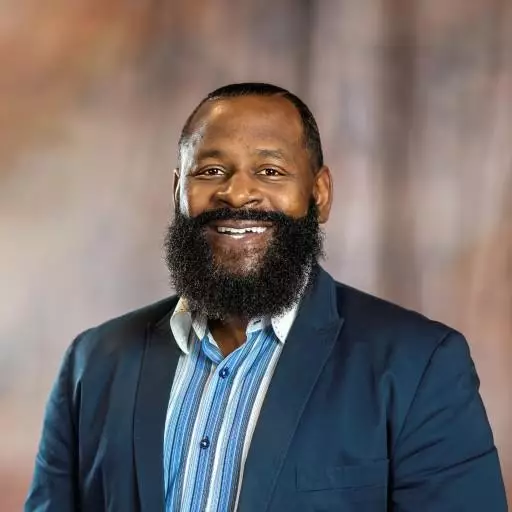
Born and raised in the steel town of Gary, Indiana, Tony lived life “his own way” Monday through Saturday. However, Sundays were different because that was the day he would go to church. And even though he attended church, Tony had no idea what it meant to have a relationship with Jesus Christ.
After his first year in college, Tony decided to marry his high school sweetheart, Jenise, and join the United States Marine Corps. After boot camp, instead of starting a life with his new bride, Tony received military orders to be stationed in Okinawa, Japan. Going to this foreign land was more than an overseas adventure because it was here that he made a life-changing God commitment. He thrived in this newfound relationship and began learning about the Bible. It was in Okinawa that the Lord revealed to Tony that one day he would become a pastor.
When Tony returned to the states, he continued in his walk with the Lord and became an assistant pastor with a local church. Over time, Tony grew increasingly interested in the “new” teaching style of Calvary Chapel and began attending Calvary Chapel Vista. After a few years at Calvary Chapel Vista, Tony began thinking about the idea of pastoring a church. However, where would it be? Only God would know!
Even though Tony had never been to the East Coast, he decided to visit Virginia. After much prayer, Tony knew for certain that Newport News, Virginia was the place that God would have him to be a pastor. The desire of Tony’s heart is to see the community of Newport News and the Hampton Roads area transformed by continuing to preach the Good News of Jesus Christ. Tony continues to heed the call by passionately studying God’s Word, prayerfully seeking the Lord’s direction for His church, and vigorously pouring love into the lives of the people God leads his way – persevering until He comes!
Contact The Word Made Plain with Tony Clark
ccnn@calvarynn.com
http://www.calvarynn.org
Mailing Address:
The Word Made Plain
Calvary Chapel Newport News
15553 Warwick, Blvd Suite K
Newport News, VA 23608
757-886-5012