
Writing a Mission Statement Part 1


We open the book of Ecclesiastes today. And we pick up in chapter three where we’re reminded that living for things can lead to great loss of what matters most.
Announcer: Warning of the very real and present danger of the ultimate disaster, here's Pastor Thom Keller.
Thom Keller: The only ultimate disaster that can befall us is to feel ourselves to be at home here in this world. And sadly, Solomon lived out this ultimate disaster, as do we if we spend our lives chasing after the material dream and miss God and heaven in the process.
Announcer: It's been well said that we are to use things, not people, and we are to love people, not things. You see, it's not true that he who dies with the most toys wins. Yet too many, even in the church, are convinced of precisely the opposite. Hello and welcome to Study the Word with Pastor Thom Keller of Calvary Chapel, Lebanon. We open the book of Ecclesiastes today, and we pick up in chapter 3, where we're reminded that living for things can lead to great loss of what matters most. Here with today's lesson to help assure we don't make that mistake is Pastor Thom.
Thom Keller: We're in Ecclesiastes chapter 3, and as you're turning to that, once a doctor and an engineer entered a chocolate store. As they were looking around, the doctor stole 3 chocolate bars and stuck them in his pocket. As they left the store, the doctor bragged to the engineer, man, I'm the best thief ever. I stole 3 chocolate bars and no one even saw me. The engineer replied, you want to see something even better? So they went back into the store, and the engineer walked up to the counter and said to the young man behind the counter, son, would you like to see some magic? The shop boy said, sure.
The engineer said, okay, give me a chocolate bar. The shop boy gave him a chocolate bar, and the engineer ate it. The engineer then asked for a second chocolate bar, and he ate that bar as well. He then asked for a third chocolate bar and finished that one off too. And then the engineer just stood there smiling at the young man behind the counter. The young man waited a while and then said, okay, well, where's the magic? The engineer said, well, check my friend's pockets, you'll find all three of them. That man was set up. And do you know the enemy of our souls sets us up too? Do you know how?
By keeping us distracted by the good things in life, so we miss the best things in life. And so, although we're a different bird from the rest of the world, so many times we end up walking down the same line they walk, looking like a dressed up person of the world, where really we're a completely different bird. So let's see how this plays out. In Ecclesiastes 3:19, Solomon speaking again 3000 years ago. For people and animals share the same fate. Both breathe and both must die. So people have no real advantage over the animals. How meaningless. Both go to the same place. They came from the dust, and they return to the dust.
For who can prove that the human spirit goes up and the spirit of animals goes down into the earth? So I saw that there is nothing better for people than to be happy in their work. That is our lot in life, and no one can bring us back to see what happens after we die. Now, we looked at these verses briefly some weeks back to make a point, but today, while we're in these, we want to look at these closer. We made the case then that this unbelief by Solomon in a life after this life is the absolute key as to why Solomon arrived at his conclusion that all of life is pointless and meaningless. It is a fair conclusion if there is no life after this life.
But now, as we study these verses, let's look a bit deeper. A good question to begin with is, what did the Jews believe about life after death? Well, let's begin with today. Many Jews today do not believe in a life after death. In fact, many Jews today don't put much stock in religion, period, even their religion of Judaism. In a recent poll, when asked, how important is religion to you? 50% of all Jewish men said, not at all. To the question, do you believe in a God or a universal force, as general as a universal force? 20% of the Jewish men said no. Another 39% said they're not sure. 59%, 6 out of 10 Jewish men said there is no God or they're not sure if there is.
What do Jews believe about heaven today? Well, one rabbi from Boston wrote this. He says, first, let me distinguish between what Jews believe versus what Judaism believes. Quite often, one has nothing to do with the other, and this is a perfect example. Jews may not believe in the afterlife, heaven and hell, but Judaism unequivocably does. Growing up, still quoting, growing up, I was told that Jews don't believe in the afterlife. No heaven, no hell, no nothing. Although there are strains of modern Judaism that would argue against life after death, the vast majority of Judaism, Jewish history, Jewish theology believed in the world to come.
Still quoting, in Judaism, there isn't one definitive understanding of life after death or heaven and hell. As the saying goes, two Jews, three opinions. It's pretty cute. Two Jews, three opinions. He ends by saying this, so believe what you want, because ultimately Judaism doesn't care about what you believe, but rather about what you do. So, like so many religions, it's a religion of works today. Confirming this modern day school of Jewish thought, which denies life after death, James Rocheford writes this. He says, quote, most of the scholarly world agrees that there is no concept of immortality, of life after death in the Old Testament.
He says, with these words, George Mendenhall summarizes the consensus of critical academics concerning the afterlife in the Hebrew Bible. Even many Jewish thinkers deny an afterlife. Still quoting. For instance, in a 1991 interview, Jewish professor Yeshua Leibowitz said, quote, death has no significance, only life matters. In the entire Torah, the first five books, in the entire Torah, there is not the slightest suggestion that anything happens after death. All the ideas and theories articulated on the subject of a world to come and the resurrection of the dead have no relationship to religious faith.
It is sheer folklore, he says. He ends by saying, after you die, you simply do not exist. Again, written by a Jewish professor. Well, what did the Jews believe about life after death during Jesus's time, 2000 years ago? Well, again, the same idea, two Jews, three opinions. The Pharisees believed in life after death, heaven and hell, angels and demons. Whereas the Sadducee, another group of Jewish leaders of the day, denied all of this. They did not believe in heaven and hell, life after death, angels or demons, and yet the Sadducees were in charge of the temple and temple worship. How interesting.
But what about a thousand years before that, before Christ, during Solomon's time? Their understanding was very different from what they believed during Jesus's time. William Barclay writes this, quote, the Jews had a very shadowy conception of life beyond the grave. They did not think in terms of heaven and hell, but instead of a shadowy world where the spirits of men moved about like gray ghosts in an everlasting twilight, and where there was neither strength nor joy. Such was Hades, into which the spirits of men went at death. Continuing, Barclay says, quote, the Jewish conception of the world after death was this gray world of shadows and forgetfulness, in which men were separated from life and light and God.
Now, some might say, but there are some rather convincing passages in the Old Testament that clearly speak of life after death. As an example, you could bring this up, Isaiah 26, strong passage. But those who die in the Lord will live, their bodies will rise again. Those who sleep in the earth will rise and sing for joy. For your life-giving light will fall like dew on your people in the place of the dead. Well, what about Daniel 12:2? Even stronger. Many of those whose bodies lie dead and buried will rise up, some to everlasting life, and some to shame and everlasting disgrace. Well, the difference here is that Jesus and that era had access to these, but those two verses were written after Solomon died.
Remember, these two books, Isaiah and Daniel, were written long after Solomon died. Solomon died in 931 BC. Isaiah was written about 250 years after his death. Daniel was written about 300 years after Solomon's death. So remembering William Barclay's comment that the ancient Jewish conception of the world after death was this gray world of shadows and forgetfulness, in which men were separated from life and light and God, listen once again to what Solomon said in that light. For people and animals share the same fate. Both breathe and both must die. So people have no real advantage over animals.
How meaningless. Both go to the same place. They came from dust and they return to dust. For who can prove that the human spirit goes up and the spirit of animals goes down into the earth? So I saw there is nothing better for people than to be happy in their work. That is our lot in life, and no one can bring us back to see what happens after we die. Solomon's premise argues against our modern day notion that he who dies with the most toys wins. Because Solomon had played world Monopoly and ended up with all the Monopoly pieces, Boardwalk and the whole state of New Jersey, Park Place and the whole state of New York, and yet without a belief in an existence beyond this life, Solomon called it all vanity of vanities.
In Hebrew, the word is hevel. It means emptiness, something transitory and unsatisfactory, meaningless, futile, absurd. Malcolm Mugdridge echoed this sentiment, saying this, quote, the only ultimate disaster that can befall us is to feel ourselves to be at home here in this world. And sadly, Solomon lived out this ultimate disaster, as do we if we spend our lives chasing after the material dream and miss God and heaven in the process. The ultimate disaster. Moving on, chapter 4, verse 1. Again, I observed all the oppression that takes place under the sun. I saw the tears of the oppressed with no one to comfort them.
The oppressors have great power, and their victims are helpless. The Hebrew for oppression here is ashukim. It means oppression, extortion, tyranny, violence, exploitation. This verse deals with the exploitation of the powerless by the powerful. And take note that Solomon says he encountered this by observation. He denies being a partner in it. He just observed it, and yet he was a partner in the oppression. How do we know that? Because as soon as Solomon died, the people that he had ruled over said this. In 1 Kings 12, when Solomon died and his son Rehobom greeted the people, they said this, he was heir apparent.
They said this to Rehobom, your father Solomon was a hard master. Lighten the harsh labor demands and heavy taxes that your father Solomon imposed upon us, then we will be your loyal subjects. So Solomon said he observed the exploitation, but actually he was a part of the system that exploited the poor. How about you and me? Do we see ourselves as simply observers of the exploitation of the poor, or are we in actuality a part of the machine that takes advantage of them? How does our system take advantage of the poor constantly pushing their heads beneath the water. Well, let's look at a couple areas.
First, consider apartment rents. These are my rough numbers, but in Lebanon, a one-room rental unit, no bathroom, no kitchen, shared bathroom down the hall, 450 dollars a month. However, a two-bedroom, full bath and kitchen you can get for 650 a month. 3 times the square footage for only 200 dollars more. Who pays the most for that? The poorest of the poor. Or consider interest rates. I went online and checked this out. If you have good credit, you can get a 2.7% mortgage rate. If you have good credit, you can get a 3.25 home equity loan. Bad credit, this is what the internet said, the national average for bad credit is 23.46%.
Who does that hurt? The poor. Who does that benefit? The wealthy. It helps keep their head underwater. Or consider bad check fees. Did you ever think about this? A bad check can cost up to 75 dollars per bad check just in fees. So someone writes a 35 dollar check to the power company, that somehow the money's not in their account, they end up costing them 110 dollars. Who does that hurt? The poor. Or what about check cashing services? Do you know they charge up to 5% per payroll check cashed? So they work, in essence, 2 and a half weeks per year just for the right to get their check cashed. Who does that hurt?
The poor. Or consider the lottery. Did you know that US citizens with a total yearly income of $13,000 per year or less spend 9% of their yearly earnings in the lottery? 9%. 13,000 and under. The lottery hurts who? The poor. In fact, 38% of those earning under 25,000 dollars per year said that the lottery is their most effective and practical strategy to accumulating several hundred thousands of dollars. So, are the rich observing all of this? Yes. Are we participating in it? Well, I guess we need to answer that question for ourselves. It is interesting, however, that the Hebrew word for oppression includes violence in its definition.
Gandhi said, quote, poverty is the worst form of violence, or poverty is the worst form of oppression. I wonder if the violence that's occurring across our country these days is related to poverty. I doubt that there's a single one of us that would try to deny that. It has a peace in it. Poverty is the worst form of oppression. What can we as Christians do to try to correct this? Well, God gives us a solution. He really does. And my guess is if we follow this, we find that the numbers work out exactly right. Deuteronomy 14:28 says, at the end of every third year, bring the entire tithe of that year's harvest and store it in the nearest town.
Give it to the Levites who will receive no allotment of land among you, as well as to the foreigners living among you, the orphans and the widows in your towns, so they can eat and be satisfied. And if we do that, if you're grumbling about it and say, I really don't want to do that, he puts in the next sentence. If you do that, then the Lord your God will bless you in all of your work. Of course, if you do the math, every third year is the same as giving one third of your entire tithe to the poor and the needy and the foreigners among us. That's the statistic. Deuteronomy 15 says this, give generously to the poor, not grudgingly, for the Lord your God will bless you in everything you do.
He knows us so well, doesn't he? He knows we're going to bellyache about it. So the second part of the sentence, for the Lord your God will bless you in everything you do. There will always be some in the land who are poor. That is why I'm commanding you to share freely with the poor and with other Israelites in need. You know, this all reflects the upside down economy of God. We think we prosper by holding on to our wealth, whereas God says that we will prosper as a nation when we help the foreigners, the strangers, the widows, and the orphans, and the poor among us. And I believe we should pray that God would give us hearts after his own heart in this matter.
And the proof that you have received this heart is that if you have, you will pray about, seek ways to help the poor, feed the poor, clothe the poor, house the homeless. Remember, Jesus said, in as much as you have done it to the least of these, my brethren, you have done it to me. As I came in this morning, a man shared this story with me. It fits perfectly here. He said, I live in 700 dollars a month disability, and he said, my car needed a 500 dollar repair. It's out of commission. He said, I don't have any of that money. And he said, I went to the Lord in prayer and said, God, I need this money.
If I ever needed help, I need it now, because I don't have this money. He said, the same day I got a phone call from a woman in the church, and she said, God has prompted me to call you and say that I have a gift for you. And so they got together, she gave him an envelope. She knew nothing about this, nothing. He went home, opened the envelope, it's 500 dollars in cash. She was listening to God. She had a heart to want to hear what God had to say related to that need. Because her heart was open to it, God spoke to her, she responded, and two people got blessed. Well, now all of you got blessed as well through hearing the story.
When we have a heart for the poor, we have a heart for God's heart, because that's where his heart is. Going on chapter 4, verse 1. Again, I observed again from that perspective, I observed all the oppression that takes place under the sun. I saw the tears of the oppressed with no one to comfort them. The oppressors have great power and their victims are helpless. So I concluded that the dead are better off than the living, but most fortunate of all are those who are not yet born. They have not seen all the evil that is done under the sun. And Solomon's conclusion here is that because these victims are helpless and die, never having received justice, it would have been better had they never lived at all.
And without any belief in a life after this life, it follows that justice and recompense will never take place. And because of that, his conclusion is a fair one, without life after life where there's a balancing of that. You know, Sue and I have often said there's some group homes around here that have some women living in them, women that have been in horrific accidents, car accidents and others, and their minds just aren't right, and they've been so taken advantage of by men. But we often say we're so glad there's going to be a day where all that gets balanced out. Do you know what I mean?
Where that's all going to fade into nothingness beyond the eternity of blessings that are ahead for them. But if there was no life after death, what's the point? Solomon's conclusion then would be right. It would be better had they never been born, but that is not the case. That is not the case. From Solomon's point of view, if you live a miserable, hard life at the hands of cruel oppressors, and then you die, and that's it, why live at all? But the truth is that the oppressed will one day receive justice. In Luke 16, the story of the rich man and Lazarus, the oppressor and his oppressed. When Lazarus finally dies in abject poverty, we read in Luke of what happens in the heavenly scene.
Luke 16, verse 24. The rich man shouted from hell, from Hades, Father Abraham. He looks across the gulf and sees Lazarus with Abraham. He says, Father Abraham, have some pity. Send Lazarus over here to dip the tip of his finger in water and cool my tongue, for I'm in anguish in these flames. When people say, I don't believe in hell, I don't believe there's fire in hell, I don't believe people would be consumed by fire in hell. Jesus told this story. You have to do something about that. But Abraham said to him, son, remember, here it is, remember that during your lifetime you had everything you wanted.
Here's a balancing. Here's the correction. Here's the justice. And Lazarus had nothing, so now he is here being comforted. I'm thinking of those women. So now he is here being comforted, and you are in anguish. Abraham says, at one time you had everything, and Lazarus, the man you oppressed, had nothing. But finally, at last, justice is being doled out, and he is now here in heaven being comforted.
Announcer: Pastor Thom Keller considering the cruelty and injustice in our world today, but the tables will be turned. There will be ultimate justice. The Lord will see to it. Today on Study the Word, we've been covering Ecclesiastes 3. It's a message we've called Writing a Mission Statement. To hear this message again, log on to our website at CCLEB.com, and under resources, you'll find all of Pastor Tom's studies in Ecclesiastes. You can also call and request a CD copy at 717-273-5633. That's 717-273-5633. When you get a chance, add the Calvary Chapel Lebanon app to your mobile device. This is another great way to study the Word with Pastor Tom.
If you've benefited in some measure as you've studied the Word with us, we'd appreciate your support. Please visit CCLEB.com, where you can make a secure donation to the ministry, or call 717-273-5633. If you'd prefer to write, address your envelope to Study the Word, 740 Willow Street, Lebanon, Pennsylvania, 17046. We love it when a radio listener visits us here at Calvary Chapel Lebanon. For more information on service times and upcoming events, visit CCLEP.com. There's much more wisdom to take in and apply to our lives from Ecclesiastes. We'll have that for you next time on Study the Word with Pastor Thom Keller.
Past Episodes

About Study the Word
Study the Word is a radio ministry of Calvary Chapel Lebanon, Pennsylvania. It features the teaching ministry of pastor Thom Keller. As we go verse by verse through the Scriptures, our hearts desire is to encourage you to not only Study the Word, but seek to follow God and obey His Word.
About Pastor Thom Keller
Prior to pastoring, Thom was president and general manager of Keller Brothers Ford, a third-generation family business that began in 1921. After 8 years of bi-vocational ministry, in 2009, Thom sold the business and became a full-time pastor.
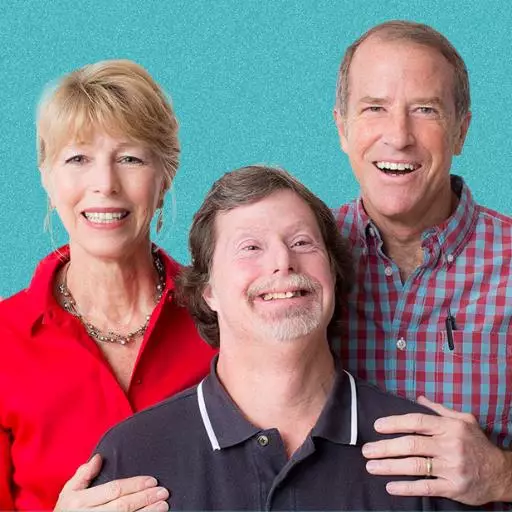
Thom and his wife, Sue, live near Schaefferstown. Thom and Sue enjoy snow skiing, mountain biking and motorcycle rides. Thom has often said that he loves performing weddings because he loves being married!
Ted, pictured above is Sue’s brother who has lived with Thom and Sue since 2001.
“It has been an absolute joy to see the changes God is bringing about in the lives of individuals, marriages and families at Calvary Chapel. God’s word does not return void!”
Currently we have worship services Sunday morning at 8:00 AM, 9:30 AM and 11:00 AM at our church located at 740 Willow St. Please introduce yourself when you stop by!
Contact Study the Word with Pastor Thom Keller
http://ccleb.com/
Study the Word
740 Willow Street,
Lebanon, Pa. 17046