
The Resurrection of the Believer Part 2


Have you ever had someone say to you, “I have good news, and I have bad news”? Today on Study the Word we’ll look at the resurrection of Jesus Christ, and it’s nothing but good news!
Guest (Male): On the significance of the resurrection, here's Pastor Tom Keller.
Pastor Thom Keller: Jesus defeated death. He defeated the power of Satan. He made a spectacle of Satan at the cross, but he defeated him at the resurrection. And at the resurrection, God deals with our sin nature. It's distinct and different from the cross. At the cross, he deals with your sins everyone singularly, past, present, and future. But if it wasn't for the resurrection, all we would do is we would be the same man, the same woman forgiven and certainly going to heaven, but no power over sin.
Guest (Male): Have you ever had someone say to you, I have good news and I have bad news? Well, today on Study the Word, we'll look at the resurrection of Jesus Christ and it's nothing but good news. Jesus indeed rose from the grave and the proof was there for anyone to see, anyone that is who sought the truth. Yes, Jesus is alive and because of that, we have hope beyond the grave. Picking up in Mark 16 verse 9, here's Pastor Tom Keller.
Pastor Thom Keller: Verse 9, some of your Bibles have a footnote at verse 9 that this may be the right ending or maybe it really ends at verse 8. There's a footnote in many of them saying they're not sure whether the rest of this chapter was in the original writings. I just want to address that briefly cuz it matters. You're going to you could run across this and say, well, that doesn't make sense. It's what's that all about? The two oldest existing Greek manuscripts are dated 325 and 340 AD. Okay? The two oldest intact manuscripts we have of Mark are dated 325 AD and 340 AD.
They do not include just those two scripts do not include verses 9 plus. So, on the basis of that is the footnote. But here's the reason why we should believe that they do exist because very many early Christian writers refer to these verses in writing and in years much earlier than 325 AD. Papias, a writer from around 100 AD, refers in his writings to Mark 16 verse 18. Get it? Someone who someone who wrote 100 years after death of Christ versus 325 years after death of Christ, he already is referring to Mark 18. Verse 18, Mark 16 verse 18.
Justin Martyr in 151 AD quotes Mark 16:20 161 AD. Irenaeus in 180 AD quotes Mark 16:13. Hippolytus, who lived in around 198 AD, quotes Mark 16 verse 19. And the overwhelming majority of ancient manuscripts do include these verses. So, although the two complete intact manuscripts we do have from past 300 AD do not have it, earlier writings support that it was there. So, in in all probability is almost certainly was a part of the original writing. Let's go on. We're going to start verse 9. It says it was early on Sunday morning when Jesus rose from the dead and the first person who saw him was Mary Magdalene, the woman from whom he had cast out seven demons.
She went and found the disciples who were grieving and weeping. Can you imagine why they're grieving and weeping? Remember what happened in the garden? They all deserted him. Remember? They all fled. They all ran away. Well, when she told them that Jesus was alive and that she had seen him, they didn't believe her. Now, this again is significant. The women show up with the disciples and they say he's alive. We've seen him alive. They didn't believe the women. Now, the reason that's significant is Jesus had been prepping them for about the last year that he's going to die and arise from the dead.
He said it over and over over and over. Now, the women come and say, well, okay, don't you think they would have got it at some point? They would have thought, now wait a minute, he's he's he said he's going to die and arise from the dead. Okay, he's dead. Okay. The women come back and say, he's risen from the dead. I don't believe it. Why didn't they put that together? Does that make sense? I don't get that at all. It just too much like me, I think. They didn't believe her. Afterwards, he appeared to two who were walking from Jerusalem into the country, but they didn't recognize him at first because he had changed his appearance.
He had changed his appearance. This is really uh a very significant that Jesus didn't look the way he looked before. He didn't look the way that he looked before. He had a different face. In Isaiah, it says that there was nothing attractive about Jesus, nothing that would make us want him. Uh it says this Isaiah 53 says there was nothing beautiful or majestic about his appearance, nothing to attract us to him. So, if you picture Jesus during his 33 years as being an attractive, handsome, you know, well-proportioned man, that's probably not who he was. There was nothing attractive about him.
There was nothing that made us want him. So, that's in all probability what what he looked like. I mean, something like that. But when he came back in his resurrected body No. And my guess is that's one of the reasons that the disciples so doubted it was him. I pictured her like an I mean, this is a little blown out of you know I'm like an Arnold Schwarzenegger, you know, saying I'm back. You know, this strong strong face, you know, chiseled chin, you know, strong cheekbones, deep-set eyes, you know, full locks of hair. You know, I that's a vague memory for me, but but but imagine that.
And and they they think of this this guy that really wasn't very attractive, maybe kind of on the weekly side. And now this guy comes back and says he's Jesus. You know, man, you're not I don't know. You look awfully strong to me. You know, I remember Jesus and you don't And you know, put yourself in in the same category. Let's say that let's say that a friend of yours dies and somebody says that they they've risen. They've come back from the dead. You say, ah no way. No, really they come back. I I really I am telling you they've come back.
No way. They did. They did. And they say, come here, I'll I'll introduce you to him. You walk around the corner, there's this guy that looks completely different. You know, the other guy was 5 ft, this guy is 6 ft 2. The other guy was thin, this guy is big. You know, you say, oh yeah, that's him, sure. Right. Well, it's the same kind of a thing. It didn't look like Jesus. But there's another hint in that for your resurrected body. Your resurrected body won't look like this body. Is that good? Yeah, that's good. And that's good.
And he says in when he comes back, it says still later he appeared to the 11 disciples as they were eating together. He rebuked them for their unbelief, their stubborn refusal to believe those who had seen him after he had risen. Isn't it interesting he he rebukes them? What do you think the disciples thought he was going to rebuke them for? For denying him, right? For fleeing, for running away cuz they all fled. They're in in misery over the loss of Jesus. They think they've denied him. Peter, like I said, I don't think he thought he was off the list.
There's no point even trying to get back in God's graces. But what he rebukes them for instead is their unbelief. You know, it's the same thing with you. It 's the same thing with every person that ever lives is that when you die, you're not going to be rebuked because you denied him. You're not going to be rebuked because you sinned. You 're not going to be rebuked because of all that you've done in your life. You know, a person is not sent to hell because of their sin. That's not what sends a person to hell.
Do you know that? What sends a person to hell is the fact that God made a provision for you to find forgiveness of your sins and you rejected it. That's what sends a person to hell. Now, the basis of that conviction will be the sins that you've committed, but that is not what sends you to hell. What sends you to hell is that God made a plan, a way, a provision through his son for you to find forgiveness of your sins and come into the the kingdom of God. And you rejected it. You wanted another way.
I don't want to do it that way. I want it on my own terms. How can it be that narrow? What about all the other other religions and yada yada yada yada for which there are explanations for all? And so same is true here. He rebukes them for their unbelief, not their sins, not their denial, not their turning away that they don't believe. Same with us. And then he told them, go into all the world and preach the good news to everyone everywhere. Anyone who believes and is baptized will be saved, but anyone who refuses to believe will be condemned.
These signs will accompany those who believe. They will cast out demons in my name. They will speak new languages. They will be able to handle snakes with safety. And if they drink anything poisonous, it won't hurt them. They will be able to place their hands on the sick and to heal them. So, it says that this is uh these are the signs that are going to accompany those uh at the end. Anyone who believes and is baptized will be saved. Now, that could lead you to think that it says that if you're not if you don't believe and are baptized, you're not going to be saved, right?
Listen what it says. But anyone who refuses to believe will be condemned. Anyone who believes and is baptized will be saved. Anyone who believes and is baptized will be saved. So, does that mean you must believe in Christ and be baptized or you are forever lost? Some say that and there are many cults today that practice that, but it's heresy. It's heresy. We must not be baptized in order to be saved. Our salvation is in Christ alone. We can't add to our salvation. Just think about it. For us to say we have to be baptized in order to be saved is to say this.
God, your provision, your atoning provision for me is not sufficient. On top of that, I must do something. I must perfect what you began and I perfect it through baptism. That's heresy. We cannot add to his atoning work. And it's heretical even to think anything we could do could add to that. And also in the second part of that it says anyone who refuses to believe will be condemned. It doesn't say refuses to believe and be baptized will be condemned, just refuses to believe. So, why are we baptized? We're baptized because of Jesus said it's it he said I must do all things that are right.
He was baptized as a sign to us that it is the right thing to do. We're baptized in obedience to what God said to do, a believer's baptism. There's another small point here that fits, but what about the thief on the cross? Was he baptized? No. Did he get to heaven? Yeah. Jesus said, today you will be with me yet in paradise. There's one more piece of that. If you ever get in an argument with someone, just say this. You know, if what you're saying is true that I have to be baptized, that means and I'm wrong, that means when I get to heaven and I stand before God and he's going to damn me to hell forever, I'm going to have I'm going to be able to say, Jesus, I trusted in you and you alone for my salvation.
And he's going to have to say, it wasn't enough. You had to be baptized. That's never going to happen, right? Never. If I trust in in Christ's shed blood to save me, it's all there is. It's all I need. Now, here he says that they will cast out demons in my name. That continued. Read the book of Acts, you see that. Speak in new languages. In Acts 2 that happened, they spoke in new tongues. The word Greek word for new is freshness. Uh the word tongue is a the physical tongue. When they talk about a tongue in the Bible, the same Greek word, the physical tongue, there could be three meanings there and probably all have some uh validity.
One is a fresh tongue, a new tongue, a new a new language, a new speech. For a lot of us when we came to Christ, our language changed. There was a freshness, a newness in our speech. I know people that gave up profanity like that and some that didn't but but knew they had to and worked with it. They had a new tongue, a new physical speech. In Acts 2, the second meaning is it was a known tongue. In Acts 2, when they spoke in tongues, they spoke known languages to the people that were there.
It was understood. And then also uh Paul talks about it in 1 Corinthians chapter 12 and 14 uh the unknown uh tongue as well. Then it says that they will handle snakes with safety. If you remember Paul shipwrecked on the island of Malta, it says that a snake came out and fastened itself in his arm and the people on the island said he must be a criminal no doubt and God has brought justice. He shakes the snake loose and goes on and the people say he must be a God. Well, that did happen. I wouldn't suggest you run out and go find a snake.
Jesus said, you if you if you the faith of a mustard seed, you can speak to this mountain and make it move, right? You can go over into the sea. Here's the uh condition for that. It has to be what God wants to happen at that time. Look, if God wants you to have the faith to pray a mountain into the sea, it'll it'll go into the sea. If a snake attaches to your arm and God wants you to be freed from the effects of that, you'll be freed from the effects of that. If he doesn't, you're going to die or something like that.
But in this case, he was freed from the effects of that. And then it says place hands on the on the the sick and heal them. And of course, you see that in Acts all the time. And then between verse 18 and 19 there are 40 days. It just goes right into the next sentence, but there are 40 days that take place. Verse 19 says when the Lord Jesus had finished talking with them, he was taken up into heaven and sat down at the place of honor at God's right hand. And the disciples went everywhere and preached and the Lord worked with them.
Isn't that beautiful? And the Lord worked with them, confirming what they had said by many miraculous sign. Couple thoughts. Jesus came for three primary reasons. The first was to show us what God looked like. In the first 14 chapters, that's the reason that those first 14 chapters are written to let us see what God looks like, what his heart is like, his compassion, his gentleness, his kindness, his love. He said, I did not come to be served but to serve and give my life a ransom for many. He came to serve. He he carried children.
He he wept when people died. I mean, that's God. Andrew came and said, uh show us God and we'll be satisfied. And he said he said, if you've seen me, you have seen God. That the photograph we get in those first 14 chapters of Jesus is the exact likeness of the unseen God. That compassion, that kindness, that gentleness, that desire to be in a relationship with you, that's God too. It's exact likeness of God. You want to know what God looks like? He looks like what Jesus looked like. You want to know what Jesus looked like?
Look at the first 14 chapters. But there are two other primary reasons why he came. He came to die on the cross to pay the penalty for your sins and my sins. And when he died on that tree, he died for every sin you would ever commit, past, present, and future. Every sin you would ever commit, he died on that cross for your sins, plural, sins. But the third event that happened was the tomb, the resurrection. And at the resurrection, Jesus defeated death. He defeated the power of Satan. He made a spectacle of Satan at the cross, but he defeated him at the resurrection.
And at the resurrection, God deals with our sin nature. It's distinct and different from the cross. At the cross, he deals with your sins everyone singularly, past, present, and future. But if it wasn't for the resurrection, all we would do is we would be the same man, the same woman forgiven and certainly going to heaven, but no power over sin. The same defeated person day after day that I was before I ever came to Christ. But what happened at the resurrection was the new life in Christ. The cross dealt with my sins. The resurrection deals with my sin nature.
It's like this. You have an assembly line that pushes off sin, this big machine, and and it has a conveyor belt. And off the back of the line, your sin keeps dropping off. It's been producing sin since you started knowing how to produce sin. They drop, they drop, they drop. There's a pile. You came to Christ. He forgave you of all of that sin. That that assembly line keeps producing sin. God continues to forgive you. Jesus doesn't need to be crucified over and over to forgive you for those sins. That's a part of the deal.
But it deals with your sins, but the resurrection deals with the machine. That machine that's producing and pushing the sin off the line, the resurrection is to destroy that machine that's creating the sin. It's your sin nature. That's why the Bible says in Galatians, I no longer live but Christ liveth in me. See, what Jesus wants to do is live inside of you. In Romans it says in the flesh there is no good thing. There's not one good thing in you. There's not one good thing in me, not one. Everything we do, everything we do, our motive must be suspect to get what I want, to manipulate life, to get what I want out of life.
That's our nature. That's our human fallen nature. But the new nature that is in us, when you accepted Christ, God gave you the capacity to have that new nature inside of you. That's why every morning our prayer should be is we wake up, Jesus, I pray that you would live your life in me and through me today. I can do this. I've done this for for 52 years. I'm a failure. The more I try not to sin, the more I do, the more I focus on not, the more I'm drawn into it. I can't do this wretched man that I am.
And Jesus said, I'll do it for you. Just let me live my life in you and through you. Every day that's why Paul says, I crucify my flesh daily. Every day the old man dies. That 's why the Bible says that that we we're to live the resurrected life. That's what baptism symbolizes, the old man going down. He dies. And the new man coming up alive in Christ Jesus, that's the resurrected life. We would be the most miserable all creatures waiting for our eternal destiny if we did not have the promise of victory over the sin nature.
And that happened. That happened at the tomb. When he conquered death and he conquered sin and he conquered Satan, that's when that happened. That's why you can live that resurrected life. But it won't be you. It will be Christ living in you. I want to close by making a parallel. There's a beautiful tradition in Judaism that when a young man and a young woman want to marry, they would bring the young man and the young woman together and the fathers of the woman and the man, they'd bring them together. The four would come together. And then the fathers would negotiate the price for the bride.
And it wasn't the father wasn't selling a bride. He was being recompensed for the this great loss of this daughter that he treasures so much. And so the two fathers would come to a price and it was a great price along the lines of the price of a house to us today. Tens of thousands, maybe hundreds of thousands of dollars, it was a huge price. They would agree in that price. And when it was agreed upon, the father of the to be groom, the father of that boy would take a wine and pour it into a glass and give it to his son.
His son would then take that glass of wine and take it to his hopefully to be bride. And he would give it to her. And he would say this. This cup is a token of my covenant to you, my blood which I offer to you. This cup is a new covenant in my blood which I offer to you. He would take that cup and offer it to her. And she now had a choice. She would either take that cup and drink from it or she would turn aside and refuse it. Either way she wouldn't say a word.
It was just rich in symbolism. If she took that cup, what she was saying is, I accept your offer. I accept that your offer to spend your rest of your life with me and your blood for me. Well, when Jesus performed the Last Supper, the Upper Room Seder service, in the Seder service there are four cups of wine that are poured. The last two cups are poured after the meal. The meal is again full of symbolism. So, the Seder service all takes place really before the meal. They then have the meal. And at the end of the meal, the only thing that remains at the end of the meal are two cups of wine are poured out.
The first cup of wine during the meal is a cup of freedom. The second cup of wine is a cup of deliverance. The third cup of wine is a cup of redemption. The fourth cup of wine is a cup of release. So, Jesus goes through the Seder service. The disciples knew it well. They knew the routine. They were kosher Jews. They they knew everything he was going to say. Everything was done as Jesus would, kosher and by the code until he got to the wine after the meal. And Jesus goes off script. He goes right off script.
He was supposed to say this, blessed are you Hashem our God, king of the universe, who creates the fruit of the vine. That's what you're supposed to say. Then they drink the cup, but instead he said this. He held the cup out and he held it to the disciples and he said, I offer you this is the wine. This wine is a token of God's new covenant with you in in agreement sealed with the blood I will pour out for you. He went right off script. He left everything. And the disciples who were probably just sitting there like it's like the Pledge of Allegiance.
I pledge allegiance to the flag of the United States of America and if I ever get hungry, I'll go to McDonald's and eat hamburger. You say, whoa, you're off script. That ain't the Pledge of Allegiance, buddy. What? Where? What have you been doing? You know? So, he goes off script and they got it. And not only did he go off script, he drops into a wedding proposal. He holds a cup of wine out and he says, this is my covenant. I'm inviting you into the most personal, sacred relationships that a man can have. That is with his precious bride.
And he's saying to these disciples, will you be my bride? Will you be my bride? Will you marry me? They must have been incredulous at what he was saying, but that's what he said. You know, God saying that same thing to you this morning. He held that cup out. Will you be in that relationship with me? Will you be in the most intimate, personal relationship with me? Will you?
Guest (Male): Fascinating insight Pastor Tom Keller has given us on the New Covenant and the New Life we have in Christ as his bride. Don't hesitate in accepting his invitation. You're listening to Study the Word and our final study in Mark. To hear this message again, simply go to ccleb.com and look under resources. We're at ccleb.com. If you'd rather have a CD copy, call 717 507 7862. That's 717 507 7862. And for those that give to the ministry this month, we'll say thanks by sending you Pastor Tom's entire study of Daniel. It's called Lions, Tigress, and Scares.
Oh my. There are 22 messages in all. We put them onto a flash drive. Get the entire study of Daniel for a gift of any amount by calling 717 507 7862 or write Study the Word 740 Willow Street, Lebanon, Pennsylvania 17046. And if you live close by or will be visiting the area soon, drop on by. For service times and more information about Calvary Chapel Lebanon, turn to ccleb.com and download our free Android app. Search Calvary Chapel Lebanon in the Google Play Store. With that, we'll say goodbye, but join us here next time when Pastor Tom Keller will again Study the Word.
Past Episodes

About Study the Word
Study the Word is a radio ministry of Calvary Chapel Lebanon, Pennsylvania. It features the teaching ministry of pastor Thom Keller. As we go verse by verse through the Scriptures, our hearts desire is to encourage you to not only Study the Word, but seek to follow God and obey His Word.
About Pastor Thom Keller
Prior to pastoring, Thom was president and general manager of Keller Brothers Ford, a third-generation family business that began in 1921. After 8 years of bi-vocational ministry, in 2009, Thom sold the business and became a full-time pastor.
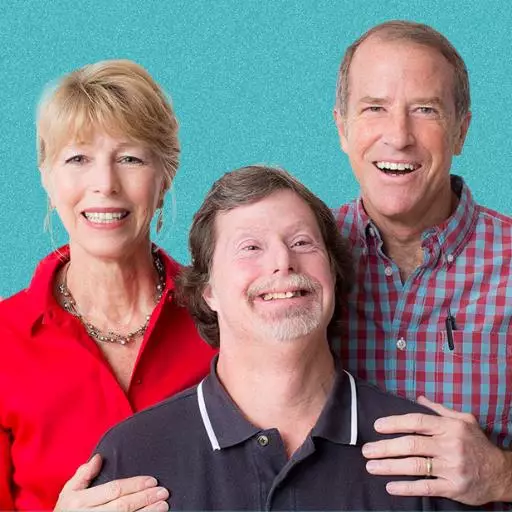
Thom and his wife, Sue, live near Schaefferstown. Thom and Sue enjoy snow skiing, mountain biking and motorcycle rides. Thom has often said that he loves performing weddings because he loves being married!
Ted, pictured above is Sue’s brother who has lived with Thom and Sue since 2001.
“It has been an absolute joy to see the changes God is bringing about in the lives of individuals, marriages and families at Calvary Chapel. God’s word does not return void!”
Currently we have worship services Sunday morning at 8:00 AM, 9:30 AM and 11:00 AM at our church located at 740 Willow St. Please introduce yourself when you stop by!
Contact Study the Word with Pastor Thom Keller
http://ccleb.com/
Study the Word
740 Willow Street,
Lebanon, Pa. 17046