
Friends You Can Count On Part 2


In Colossians chapter four we’ll consider the value of friends in the ministry. As we conclude this section of scripture – we’re reminded that even the best of friends face challenges.
Guest (Male): Speaking of one of the challenges that Christians faced back in the day, here's Pastor Tom Keller.
Pastor Thom Keller: Remember that from the time of Nero in 64 AD until the conversion of the Emperor Constantine in 313 AD, Christianity was illegal and deemed to be by the Roman Caesars a quote religio prava, which means a depraved religion. So it really was not until the early 4th century that Christians even had the option to meet in public buildings, much less build them.
Guest (Male): Christians faced many challenges in times past, as we still do today, but we're not meant to do it alone as we'll hear on today's Study the Word with Pastor Tom Keller. In Colossians chapter 4, we'll consider the value of friends in the ministry. As we conclude this section of scripture, we're reminded that even the best of friends face challenges. Starting on that very point, here's Pastor Tom Keller.
Pastor Thom Keller: Paul said to Barnabas, let's go back to visit each city where we previously preached the word of the Lord to see how the new believers are doing. Barnabas agreed and wanted to take along John Mark, his nephew, but Paul disagreed strongly since John Mark had deserted them in Pamphylia and had not continued with them in their work. Their disagreement was so sharp that they separated. Barnabas took John Mark with him and sailed for Cyprus. Now this just might be the strongest disagreement we see among the 1st century church fathers, so much so that they divided over it.
And yet here again, we see Paul's character leading him to reconciliation and restoration because we find this again in verse 10, Aristarchus, who is in prison with me, sends you his greetings, so does Mark, Barnabas's cousin. So apparently, Mark is with him because he sends his greetings. As you were instructed, Paul turned the corner, make Mark welcome if he comes your way. And then verse 11 mentions Jesus or Justus. Jesus, the one we call Justus, also sends his greetings. These are the only Jewish believers among my co-workers. They're working with me here for the kingdom of God, and what a comfort they have been.
Of this man, we know nothing. Jesus called Justus. I'm going on to verse 12 and 13. Epaphras, a member of your own fellowship and a servant of Christ Jesus, sends you his greetings. He always prays earnestly for you, asking God to make you strong and perfect, fully confident. Listen how he prays. He prays always, prays earnestly for you, asking God to make you strong and perfect. This is how he prays for his church. He's the pastor. He always prays earnestly for you, asking God to make you strong and perfect, fully confident that you are following the whole will of God.
I can assure you that he prays hard for you and also for the believers in Laodicea and Hierapolis, where he also had his charge. Now this Epaphras was apparently the overseer of the Colossian church as well as the churches in Hierapolis and Laodicea. Colossians 1:7 says you learned about the good news from Epaphras, our beloved co-worker. He is Christ's faithful servant, and he is helping us on your behalf. And note what Paul highlights to the members of Epaphras's churches, verse 12 and 13. He says, second sentence, he always prays earnestly for you, asking God to make you strong and perfect.
This is how he prays for his fellowship, fully confident that you will be following the whole will of God. And I can assure you that he prays hard for you and also for the believers in Laodicea and Hierapolis. And you know this is one of the primary roles of a pastor, of an under shepherd, to pray for the flock that God has entrusted to his care. Now as a pastor, I do see this as a part of my calling. I do pray for many of you by name. I've been doing that for 20 years. And after two decades of doing this, if you would let me, I'd like to share just some impacts that I've seen in my own life from praying for you.
Number one, and this is so clear, it makes me love you more. It just does. You know I was asked to talk to some new pastors one time, and they said, what are some of the keys in being a pastor? I said, here it is. Number one, remember people's names. Number two, pray for them. Start there. Teach. Start there. It makes me love you more. Number two, it makes me more aware of my responsibility to care for you personally and individually. It makes me more aware of my responsibility to teach you carefully, personally, and individually.
You know it's like the difference between a shepherd who has a thousand sheep and never goes into the sheepfold, never takes time to take the sheep or picture them taking the sheep to the doctor. All he is ever going to see his sheep as is a group, a flock of 1,000 sheep, one unit. Prayer individualizes that relationship. It does. Number three, God uses his prayer time to prompt me to call you, to text you, to pray specifically in certain times and certain areas. I can't tell you how many times when praying for the flock God has prompted me to call someone.
And many, many times when I call, I can And this is not a surprise to you, but God shows me why. I have He just prompts. I call it a tickle. He tickles you. And many times when I did not respond, and I do that way too often, it is very common, very apparent in a day or two, why it was that he prompted me and that I blew it. I pray a few select prayers over you as a group, uh binding Satan being one of them as your one of your spiritual authorities. But my favorite prayer for this flock, and I've shared this before, is Colossians 2:2 and 3.
This is my life verse for this church. I want them to be encouraged knit together by strong ties of love. What I hate about this COVID thing, I hate that about it. I want them to be encouraged and knit together by strong ties of love. I want them to have complete confidence that they understand God's mysterious plan, which is Christ himself, in him, in Christ. By hitting all the treasures of wisdom and understanding, that's so beautiful. I want them to be encouraged and knit together by strong ties of love. I want them to have complete confidence.
And that's through the study of the knowledge of the getting to trust the word of God, to have complete confidence that they understand God's mysterious plan, which is Christ himself. In him lie hidden all the treasures of wisdom and knowledge. And because of Epaphras's faithfulness and prayer for his flock, I have great respect and admiration for Epaphras as a fellow under shepherd. Going on to verse 14. Luke, the beloved doctor, sends you his greetings, and so does Demas. Doctor Luke, it is from this one single verse alone that we find in the Bible, the only one in the whole Bible where we discovered that Luke was a physician.
If Paul had not included that in this verse, we would not know that. This is the same Luke that will go on to write the Gospel of Luke and the Book of Acts. Luke was a mature, gifted, and devoted friend of Paul's, devoted to Paul to the very end. And at the very end, he was right before Paul was martyred. We read this in 2 Timothy. Timothy, please come as soon as you can. Demas has deserted me because he loves the things of this life and has gone on to Thessalonica. Crescens has gone to Galatia, Titus has gone to Dalmatia.
Only Luke is with me. Bring Mark with you when you come. He for he will be helpful to me in my ministry. While in prison during Paul's final imprisonment, right before he was martyred, only one remained by his side, only one, his faithful friend Luke. And in the same verse, Paul mentions Luke, his arguably most faithful friend. He also mentions in a positive light one who was soon going to desert him. Colossians 4:14. Luke, the beloved doctor, sends his greetings, so does Demas. In Philemon, Demas is mentioned in with a group of men who are described as Paul's fellow laborers.
Here in Colossians, he's simply mentioned as Demas. And in Demas's final mention in the Bible, Paul describes Demas as one who had forsaken Paul because he loved this present world. 2 Timothy 4:10. Because he loved this world, has deserted me and gone to Thessalonica. It's a sad commentary. I remember years ago, sometimes you hear a message that impacts you for the rest of your life. This is over well over 20 years ago. I heard a pastor give a message and his What he said in the message is, don't go to the bench early. Don't go to the bench early.
You know look at the kings. Some kings were faithful early on and deserted God in the end. Some were unfaithful beginning and ended well. Some started well, ended well. Some started horribly, ended horribly. But no matter where you are now, no matter if you're faithful or unfaithful, make it a determination, I am not going to go to the bench early. I'm not going to give up. I'm going to pursue this faith to the very end. You know some of those people. I mean in the good way. You know some of those people, 70s, 80s, even 90s, so in love with Jesus, so in fire for the Lord, determined to be one of those people.
Colossians 4:15 going on. Give Please give my greetings to our brothers and sisters at Laodicea and to Nymphas and the church that meets in her house. Now Paul issues greetings to the believers in Laodicea as well and specifically mentions a woman named Nymphas. In Greek, the root word here is a bride, a young wife, a young woman. Lexicon adds and will give the reason why. It says a wealthy and zealous Christian woman in Laodicea. And to support that idea, her being wealthy, back in chapter one, we said that Laodicea was an extremely wealthy city with a huge Jewish population, estimated at 50,000, whereas the entire Jewish population of the city at Rome at that time was only 40 to 50,000.
Huge Jewish population. So Nymphas, a woman, maybe a woman of great wealth, hosted a house church in her home, probably a large home. They all met in her home. This next picture is a picture of Peter's house in Capernaum, and you can see it's concentric circles. The original home was a small home in the middle, but as the home church got larger and larger, they kept adding walls to that. Now the case that I want to make is for house churches in the early church. Remember that from the time of Nero in 64 AD until the conversion of the Emperor Constantine in 313 AD, Christianity was illegal and deemed to be by the Roman Caesars a quote religio prava, which means a depraved religion.
So it really was not until the early 4th century that Christians even had the option to meet in public buildings, much less build them. Now some today will try to make the case that house churches are the model that we should follow, not big buildings meeting in individual churches, citing the early church model that they met in small homes. But the truth is as soon as Constantine ended the persecution, the Christians started building churches. Again, Saint Peter's Basilica or the next picture is Santa Pudenziana, which that middle section, that middle section, they say goes back to the year 430 AD.
So when you someone encounters you and says a church is a wrong model, we should follow the 1st century church that was only by necessity. When they could build churches, they started building churches to meet. So do you host a home Bible study that meets in your home? If you do, then you share in Nymphas's calling and God's recognition of what you've done as she's recognized here. Going on to verse 16. After you've read this letter, pass it on to the church at Laodicea so they can read it too. And you should read the letter I wrote to them.
Now Paul letters are known as circulars or circular letters, meaning that they were shared among all of the churches of that general area. And here in verse 16, Paul says to share this letter with the church in Laodicea. And then he mentions the letter that we don't have in our Bible, the letter that he wrote to the Laodiceans that he says to share with the Colossians. That letter's lost. We know nothing about them. And then going on to verse 17. Says to Archippus, and say to Archippus, be sure to carry out the work of the the Lord gave you.
Be sure to carry out the work that the Lord gave you. In Philemon, Paul mentions this Archippus as a fellow soldier. Paul mentioned him in Philemon verse one, and so many believe that he was a member of Philemon's family, generally thought to be Philemon's son. All we know about him is that Paul encourages him and reminds him to carry out the work, which means he probably needed a bit of reminding. An application for you and me. Do you ever need to be reminded to carry out the ministry, to do the ministry? Maybe we're getting off track a bit.
Take heed to the ministry you received from the Lord. If so, do you have someone in your life that will do this for you, that will bring you back to remember the work that you've been called to do? You know if you don't have anyone, I'd encourage you to pray about that and find that person. And in your bulletin this morning, there's this little piece of paper, and it says, I, you fill in your name, I, Tom Keller, on this date, October the 10th, 2021, being of sound mind, do hereby request and fully release you and then their name goes there to come and talk with me in love.
Should my actions or attitude ever reflect that I am involved in a sin that you as a loving, caring brother or sister in Christ are concerned for my spiritual well-being. You fill this out, you give it to them, and I suggest you say, would you stick this in your Bible? Just stick in your Bible. And if anything ever happens where you see I'm getting involved in some sin, at that moment, I'm not going to want to hear from you. But now on this date, when I'm in reasonably sound mind, I mean this. I mean this.
And I'm trusting you to love me enough that when if that happens, you'll look me up and challenge me in that. I'm giving you license to do that. I really suggest you do this. I have some of these in my Bible. You know I'd encourage you to find other people just to help set accountability be on a more personal level. All uh but please, please, please do this. And then Paul ends with these words in verse 18. Here's my greeting in my own handwriting. Paul. Remember my chains. May God's grace be with you in my own handwriting.
With most of Paul's letters, he dictated the letters to a secretary or a scribe. Some believe it's because his eyesight was bad, his thorn in the flesh. But it was his custom to sign his letters and to end them in order to one make them more personable, but also to authenticate that the letter truly was from Paul. Apparently, there were letters going out that people said Paul wrote and he did not write, and that was his proof. And he ends by saying, remember my chains. The commentator offered says this movingly, listen quote, when we read Paul's chains, we should not forget that they moved over the paper as he wrote.
His hand was changed to the soldier that kept him. But Paul's references to his sufferings are not pleased for sympathy. They are his claims to authority, the guarantee of his right to speak. It is as if he said, this is not a letter from someone who does not know what the service of Christ means or someone who is asking others to do what he is not prepared to do himself. It is a letter from one who has himself suffered and sacrificed for Christ. My only right to speak is that I too have carried the Lord's cross.
So how does today's lesson apply to me? Number one, your homework for this week, the only homework you have is pray about who to fill that sheet in with. Listen, that could be a lifesaver, a game changer. Cuz there are some friends of yours that you would be a little hesitant to go see, even though you think you should. You just might hold back thinking, you know what? I'm not sure he'd receive this. But if you have that in your Bible, cuz it's I've happened with me. It's given me license to go talk to people earlier on that I would not have gone to see that earlier on.
That's your homework. And the second question is what kind of friend are you? What kind of friend are you? This is called a kid with cerebral palsy. I was asked to be a counselor in a junior high camp. Everyone ought to be a counselor in a junior high camp just once. A junior high kid's concept of a good time is picking up in people, making fun of people. And in this particular case, this at this particular camp, there was a little boy who suffered from cerebral palsy. His name was Billy, and all they picked on him.
As he walked across the camp with his uncoordinated body, they would line up and imitate his grotesque movements. I watched him one day as he was asking for direction. Which way is the craft shop? He stammered, his mouth contorted. And the boys and mimicked in the same awful stammer, it's over there, Billy, and then laughed. I was irate. But my furor reached his highest pitch when on Thursday morning, it was Billy's cabin's turn to give devotions. I wondered what would happen because they had appointed Billy to be the speaker. I knew that was just because they wanted to get him up to laugh at him.
As he dragged his way to the front podium, you could hear giggles rolling over the crowds. It took Billy almost 5 minutes, 5 minutes to say seven words. Jesus loves me and I love Jesus. When he was finished, there was dead silence. I looked over my shoulder and I saw junior high boys balling all over the place. A revival broke out in that camp after Billy's short testimony. And as I travel all over the world, I run into missionaries and preachers who say to me, do you remember me? I was converted at that junior high camp.
We counselors had tried everything to get those kids interested in Jesus. We even imported baseball players whose batting average has gone up since they started praying. But God chose not to use the superstars, used the kid with cerebral palsy to break the spirits of the haughty. He is that kind of God, and we should be that kind of friend.
Guest (Male): Moving story there from Pastor Tom Keller. As we wrap up today's Study the Word, trust you're moved by it to be a friend as well. And with that, we've made it through Colossians. We hope you got a lot out of this study, and if so, we'd like to know. Email us through the website at ccleb.com. That's also the place to hear this program again, ccleb.com. Today's message is called Friends You Can Count On. If you'd rather have a CD copy, call us at 717 273 5633 or write to Study the Word 740 Willow Street, Lebanon, Pennsylvania 17046.
Study the Word is made possible through the generous support of listeners just like you. And thank you for helping us reach out with the love and truth of Jesus Christ at a time in human history where people really need biblical encouragement. You can give online at ccleb.com or call 717 273 5633. And we hope you'll visit us sometime here at Calvary Chapel Lebanon. For our service times and more information, go to ccleb.com on the web. You can also watch our live stream there at ccleb.com or on our YouTube channel at Calvary Chapel Lebanon. Hey, thanks again for taking part in today's Study of Colossians.
Join us again next time when we'll again open and study the Word with Tom Keller. And this program is brought to you by Calvary Chapel Lebanon.
Past Episodes

About Study the Word
Study the Word is a radio ministry of Calvary Chapel Lebanon, Pennsylvania. It features the teaching ministry of pastor Thom Keller. As we go verse by verse through the Scriptures, our hearts desire is to encourage you to not only Study the Word, but seek to follow God and obey His Word.
About Pastor Thom Keller
Prior to pastoring, Thom was president and general manager of Keller Brothers Ford, a third-generation family business that began in 1921. After 8 years of bi-vocational ministry, in 2009, Thom sold the business and became a full-time pastor.
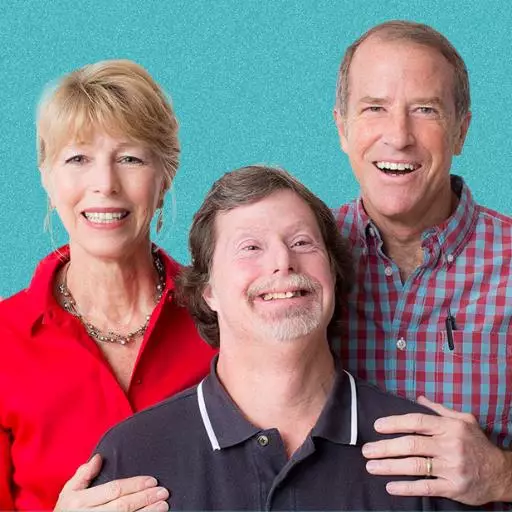
Thom and his wife, Sue, live near Schaefferstown. Thom and Sue enjoy snow skiing, mountain biking and motorcycle rides. Thom has often said that he loves performing weddings because he loves being married!
Ted, pictured above is Sue’s brother who has lived with Thom and Sue since 2001.
“It has been an absolute joy to see the changes God is bringing about in the lives of individuals, marriages and families at Calvary Chapel. God’s word does not return void!”
Currently we have worship services Sunday morning at 8:00 AM, 9:30 AM and 11:00 AM at our church located at 740 Willow St. Please introduce yourself when you stop by!
Contact Study the Word with Pastor Thom Keller
http://ccleb.com/
Study the Word
740 Willow Street,
Lebanon, Pa. 17046