
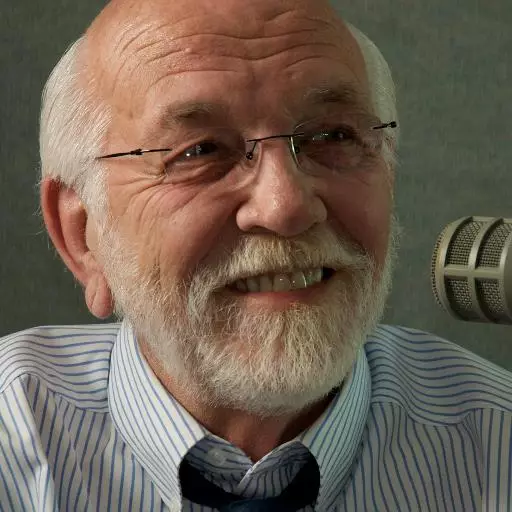
Valentin Syniy | An Update From Ukraine | Steve Brown, Etc.


It's been 4½ years since the start of the Russo-Ukrainian war – so what's happening NOW? This week, Steve and the gang talk to Valentin and Luba Syniy, a couple in Ukraine living faithfully through wartime on a daily basis.
The post Valentin Syniy | An Update From Ukraine | Steve Brown, Etc. appeared first on Key Life.
Steve Brown: Four and a half years since the start of the Ukrainian war. So what's happening now? Let's talk about it with Valentin Syniy on Steve Brown, Etc.
Hey, we're so glad you're here. We recognize the gift you're giving of time to us. Please recognize that we're giving you a gift too. So this is a mutual giving program, in case you're wondering. I'm Steve, the aforementioned old white guy. Matthew Porter is our executive producer, and he's here. Matthew, lately you've been trying intermittent fasting?
Matthew Porter: Yes, intermittently. Between lunch and dinner. Once a month, religiously.
Steve Brown: Our producer Jeremy's in the little glass booth. I don't want to say Jeremy feels overwhelmed, but his new hobby is rocking back and forth and staring off into the distance. I don't know if that's a new hobby. We call that Tuesday.
And our one-man IT department John Myers is in the tech bunker. John didn't blow off any fingers with 4th of July fireworks, so that's a win, right?
John Myers: Yeah.
Steve Brown: And Dr. George Bingham is the president of Key Life. George says it's so hot, the Mormons have started loosening their ties. And Kathy Wyatt is the soft feminine side of the program. Kathy grew up in Connecticut, so it makes sense that she ended up at Key Life. It's about the same population. Oh my.
Hey guys, you're going to love this program because it's a catch-up program. We have interviewed Valentin Syniy before about his book. If George will pass it to me, I'll hold it up. It's called *Serving God Under Siege: How War Transformed a Ukrainian Community*. And I hold it in my nicotine-stained fingers. But that's been a while ago.
As the war in Ukraine heats up and goes back and forth, Ukraine kind of has been put on the back burner in this country. And things are still happening there, and they're still scary. So we thought we would talk to Valentin again. And by the way, Luba, his wife, is here, and she adds a lot of depth and beauty to this interview.
Valentin holds a master's degree in theology and history and a doctorate in theology. Since 2006, he's been the president of Christian Institute, an evangelical seminary in Ukraine. Valentin is also the author of the book I mentioned to you, *Serving God Under Siege: How War Transformed a Ukrainian Community*.
You guys, it's good to have you with us again. And I'm glad to see you're healthy. I'm glad that a bomb hasn't fallen on your house yet. I'm glad that you're still faithful. I'm glad that you're still teaching the truth. But what is happening? Is the war over and everything is fine, or what?
Luba Syniy: The war is going on. In the area where we live in Kyiv, a house was ruined by a missile, and 24 people were killed.
Steve Brown: Oh man.
Valentin Syniy: Yes. Usually, Russia destroyed different parts of Kyiv, and maybe you hear because maybe five, seven days ago, Russia destroyed one of the oldest Orthodox churches in our country, destroyed in Kyiv. It's a part of this historical area, Kyiv Lavra. And this was destroyed maybe one week ago. Because of this, the war is not finished. It's going on.
And this is hard because if Christians are not strong in God, relationships with God, some people lose faith. If we talk about our family, I don't remember if I told you before, but our son-in-law is now in the army, and he is a combat medic. Maybe in our previous podcast, he was in the army, maybe not, because this is for us—
Steve Brown: Yes, he was. And he's still there?
Valentin Syniy: Yes, he's still.
Steve Brown: He's a brave pastor, and you are brave too. Do you ever think about just leaving and going to a safe place somewhere in the world?
Luba Syniy: It is a difficult question for me because as a minister, I always think about where I am and I think through my mission. And my mission is preparing new leaders for churches. And that's why I am supposed to be where I am now.
Steve Brown: Wow. I'm not surprised. That's what I expected you would say, and I would be very surprised if you did run, because that's not a part of your nature. How is the church doing? How are Christians doing? Are they remaining faithful?
Luba Syniy: The majority of churches have a lot of people, maybe a lot of new people coming to the churches, and they stay faithful. But a lot of people migrated from January until now. And people are leaving Ukraine, and this is really a huge challenge for our community, for our church.
Steve Brown: I can imagine that that's difficult. Do you see any lessening, or do you see an end to this? Do you feel that someday it's going to, like soon, come to an end, or are you stuck with this forever?
Luba Syniy: It's a hard question for us because we don't know, because the future is not in our hands. On the other hand, I do understand the words that Jesus said. He said that you will live in this world and you will have grief. And it doesn't mean that only some of you will be grieving; all of us will have this grief in our lives.
And this is something that we have in our everyday lives. Of course, we would rather not have these challenges in our lives, but it's a part of life. One more thing that I've come to understand during this war is that one of the names that Jesus has is a man of sorrows. And we can be coworkers with Jesus in his ministry if we understand the strength of his resurrection.
Steve Brown: Oh man. I'll tell you, I can't tell you how much I admire you. We're in a relatively safe place. We got a lot of bad politicians, but so far they don't have guns. And I would hope that if I were in your situation, I would do and say exactly what you're doing and you're saying.
I admire you much. I pray for you, and I'm so thankful for the witness that you're making in a very dark situation. Hey guys, we're going to take a break, but we're going to come back and we're going to find out some more about Ukraine, about Russia, about what's happening. And if you go anywhere, you're crazy.
Hey, thanks for joining us. We're talking to Valentin Syniy, who is the president of an evangelical seminary in Ukraine and has a unique perspective on what's going on in Ukraine. And if you think of it, you pray for these guys. You pray for Luba too. This is not an easy place to serve, and they're not leaving.
They know that Jesus said to expect this, and they expected it, and they're standing strong and their witness is strong. So if you think of it, say a prayer for them.
Matthew Porter: Valentin, in reading through some of your recent writings, you've noted that the apostles gave special attention to immigrants and people who have been displaced, specifically 1 Peter. In the ordeal that you guys have gone through in the last four and a half some odd years, has that changed the way that you look at some scripture? Maybe not your interpretation, but you kind of see it through new eyes?
Luba Syniy: During this war, I started looking at some passages of scripture in a different way. I've read several times the same passages, and since the war started, I saw a different meaning in these passages. For example, when we read from Matthew chapter seven, it talks about two builders building a house. And we know that the main topic is that we need to build our house on a solid rock, on Jesus.
But there is yet another topic that I found for myself in this passage, that all of us sometimes face the storm. Steve said there are no problems in America. I believe that we all have problems. We may have different challenges. Maybe a person is not facing a war; maybe someone's child started using drugs, or a young girl in a family got pregnant. And all of us have to go through storms.
So another passage of scripture that I would like to mention is about Ruth and Esther, and these are the books that talk about the life of people. And God is not visible in these passages. He is somewhere outside of the story. And this is the world that we live in, that we live in a story where God is somewhere outside of this history. We don't see a miracle happening every day.
But although we don't see God, he is not visible in the book of Esther or Ruth, but he is working through the hands of people. And this is what supports me a lot.
Steve Brown: If we talk about immigration, we can also continue talking about this topic after the break, or I don't know if you've had enough time for this topic?
Sure. I think continue with immigration.
Valentin Syniy: For me, it's very important to understand the balance between hospitality, because the Bible teaches a lot about hospitality and the importance to accept different people with different traditions. But if you see the same Bible, and for me this is now a theological question, everyone remembers stories about Solomon or different stories how people who start using traditions of different nations lose the faith and lose national identity.
And because of this, if talking about migration, it's very, very important to understand the balance between hospitality and our face, our language, and our tradition. This is what I understand about migration in this time because Ukrainian churches pray a lot about our brothers and sisters in different countries to be saved.
And on the other hand, for us with connection with different nations, it's very important for Ukrainians in different countries to understand how to be Ukrainians after migration and same for the countries that accept Ukrainians, how to build these relationships.
Steve Brown: That is so wise and balanced and biblical. You guys blow me away. And you're right, we have our stuff too. Everybody does. But nobody's shooting at me. And different than you, I carry a gun, so I would shoot back, especially if it was random, if they did it because I was a Christian. I might still shoot back, but I would repent after I did. I just want you to know.
We're talking to Valentin Syniy, and Luba is such an asset. We're glad she's here. She's a lot better looking than he is too. Don't go anywhere.
Valentin, we were talking some about immigration and the experience with that and the challenges with that. You've learned a lot about comparing or understanding what when the Bible deals with things like immigration and sojourners and those kind of things, the context of that or the situation versus the situation that you're seeing there. Can you talk some about that, how they compare?
Valentin Syniy: Yes, thank you for this question. And by the way, TCI has an American nonprofit, TCI Foundation, in case you want to talk with our organization in the United States. This organization helps us in our humanitarian work on the front line or in occupation areas and helps with our academic work.
But if talk about migration and compare migration in the Bible and compare modern migration like Ukrainian migration, I see a couple differences. First, in the Bible, we see group migrations. It happens more often. And when we talk about individual migration, it's probably only when we talk about Joseph. When the war started and people started moving out of the country, it was a family migration or individual.
And it's probably one of the differences. It's because the Bible was written at the time when the culture itself was collective and modern culture is more individual. Also, when we consider migration in the Bible, we find that a man would be leading a migration group. Two cases were different, though, it's the case of Naomi and Ruth.
In Ukraine, when this migration due to the war started, the majority of men went to serve in the army, and the majority of migrants were women and children. And because of the fact that the economy changed and education changed, the women that left Ukraine could find jobs and work in the countries where they moved to.
Another thing that is different with Ukrainian migrants is that our people, when they migrate, they try to find an official status, which probably never happened in the previous migrations. Even when we talk about the previous migrations in Europe, people when they migrated, they didn't pay attention to the official status. For our nation, it's very important to have official status, and this is the difference between modern Ukrainian migration and previous migration in the Bible.
Steve Brown: That's helpful. It'll help understand what's going on. We've got more of this coming up. These are our heroes, both of them. They stay when a lot of people are immigrating out to get to safety. These people aren't even thinking about it. So be sure and pray for them. Guys, there's more of this, but it's very hard work, so we have to rest up. But like Jesus, we're coming back.
Hey, thanks for spending time with us here. By the way, if you haven't signed up for our free weekly email—emphasis on free, so don't complain. It's good. Anyway, it's free. We've gone too far. We'll do that one next week. Anyway, go to keylife.org/subscribe to try it today.
Now you got everybody wondering what's on for next week. It's a great way to get people to come back. Or then again, maybe not. You guys, I wanted to ask you, we heard about the loss of the library, like 30,000 volumes. I mean, I can't even comprehend that.
I wanted to know as it relates to that, how do you go about in the situation where you are trying to replace that? I mean, do you go out and do fundraising, or do you write letters and say, "Hey listen, we need books"? Obviously, you need to replace those. But also there was a story about the soldiers and telling people to step on the Bibles and that kind of thing. So it's kind of like a twofold question.
Luba Syniy: When I think about our library, it reminds me of this Japanese technique when broken pieces of a thing are glued together. It's called Kintsugi. And this is for me God's Kintsugi because a lot of people heard about our story with the library and they started helping us. First, it was Lincoln Christian University that heard this and they donated a little bit less than 30,000 books.
Valentin Syniy: Yes. And then there were a couple more organizations that got together in order to help us ship the books. It's Theological Books Network, Scholar Leaders, and a couple churches. One church, Valley View from California, and one church in Illinois together sent this book for us. And of course, Scholar Leaders and Theological Books Network helped a lot in this area.
And one more organization, EMI organization, which works with architecture and engineering, made the architecture design for the first floor of the building TCI now used. They sent people who volunteered to visit us, make drawings and designs of this first floor, and help us in this project. After this, Ukrainian people from different churches helped rebuild this first floor, and many American churches support us to have money to buy this material.
And in August last year, three librarians visited us, one lady from Austria and a couple from Texas, to catalog these books. And in June of this year, five people visited us—a couple from Washington state, the same couple from Texas, and a lady from Austria visited us and helped catalog this library again. Now it's approximately 12,000 books cataloged from this less than 30,000.
And one more group will be in August; three librarians will work again. And now TCI thinks about people who are interested to visit us. It's possible only in summertime to finish this cataloging. And this is really interesting because librarians are working with us for cataloging, people from architecture and design help us in this first floor, and some organizations help to send books. It's a miracle how God uses different people with different gifts.
Luba Syniy: And this reminds me of a text from the Bible. I just recently read this text, and it's where Paul says that we're different members of the body. He writes a letter to the church in Corinth, and he says that there are some parts of the body that we cover; they are not so meaningful, and we protect them.
And I read this text recently and I heard this question from the Holy Spirit, "Which parts of the body do you need?" I say, "I want the pastor to talk to me. I want to be friends with successful businessmen." And the Holy Spirit gave me this answer through this text, "For your spiritual life, you need those parts of the body that have to be covered. This will help you in growing."
Sometimes we wish to be surrounded by people that are important in the church, but God made it so that we are a body.
Steve Brown: You guys, we're out of time, and we're going to do this again soon. You guys are heroes, and we're praying for you. And we'll talk again and get caught up on what God is doing in Ukraine. Meanwhile, God bless you and anoint you and continue to use you.
You know, we could have spent a lot more time with him. We had a lot more questions, but there's going to be other times. We do a lot of this, don't we, Matthew?
Matthew Porter: As we were talking to them, I started reflecting back to some recent guests where we're talking to people who are literally in the middle of a war in Ukraine, on the other side of the world. We've had ongoing conversations with people in Israel, another active war. We've talked to people who have been involved in actively smuggling illegal Mexican immigrants and so regardless of how we feel, this is somebody who's also on the front line of that.
We've interviewed somebody who's very involved in politics and influencing policy and dealing with politicians. So, one, kudos to our guest relations coordinator Kathy, and two, this is the place to be. We want to be connected to what's going on.
Steve Brown: And you know, that's just something when Valentin was talking about Christians stepping in and making a difference with the loss of the library and some of the other things. I was just blown over and remembered that there is a sense when a Christian cries, the brothers and sisters should taste salt.
We're literally one family, and it's over all the world. And when they suffer, we suffer. When they're afraid, we're afraid because we're a part of the same family, the same body of Christ. And that's an important thing to remember, especially after this kind of discussion where you see that reality fleshing itself out in real life, in real sorrows, in real difficulties. And that's certainly what's going on in Ukraine. Good hour. I'm glad we did that. I learned a lot. Okay, how are you going to teach me next week?
Matthew Porter: I don't know if we can top that. Listen to them and when he gets to a point where he feels like he can't communicate it well in English and she jumps right in.
Steve Brown: That's another thing. It's like jazz.
Matthew Porter: Yeah, exactly. And yet she's done it so much that it's almost like she can read his mind. Every once in a while you can tell she's thinking, "What?" but then she comes right back with it. Anyway, next week we're just back with us Americans. Scott Sauls is going to be with us. He has a new book out called *Mercy King*, which I think will be an interesting interview. He's gone through a very difficult period of time in his life and ministry, and so this will be interesting to see how his thought processes have changed.
Steve Brown: So we're going to talk about dark things.
Matthew Porter: No, no, no, we're going to end up well.
Steve Brown: Oh, okay. You join us. We'll be here same time, same place. Between now and then, don't do anything we wouldn't, and that gives you a wide, wide berth.
Featured Offer

A companion booklet to Steve’s classic overview study of the New Testament. How did the early church get its start? Leadership, the Pentecost, the fellowship of believers, and persecution...it’s all there. In addition, Steve’s overview of Romans—What is the “Roman road to grace”? Highlights of both Acts and Romans, including introductory comments, major themes, and important teaching. Helpful as you read and study.
Past Episodes
This ministry does not have any series.
Featured Offer
A companion booklet to Steve’s classic overview study of the New Testament. How did the early church get its start? Leadership, the Pentecost, the fellowship of believers, and persecution...it’s all there. In addition, Steve’s overview of Romans—What is the “Roman road to grace”? Highlights of both Acts and Romans, including introductory comments, major themes, and important teaching. Helpful as you read and study.
About Steve Brown, Etc.
Key Life exists to communicate that the deepest message of the ministry of Jesus and the Bible is the radical grace of God to sinners and sufferers.
Because life is hard for everyone, grace is for all of us. And grace means that because of what Jesus has done, when you run to him, God’s not mad at you.
All of the radio shows, sermons, books, and videos we produce work together toward one mission: to get you and those you love Home with radical freedom, infectious joy and surprising faithfulness to Christ as your crowning achievement.
Learn more: http://www.keylife.org
About Steve Brown
At Key Life, Steve serves as Bible teacher on the radio program Key Life and the host of the talk show Steve Brown, Etc. Prior to Key Life, Steve served as a pastor for more than thirty years and continues speaking extensively.
Steve has also authored numerous books, including How to Talk So People Will Listen, Three Free Sins, Hidden Agendas and his latest release, Talk the Walk: How to Be Right Without Being Insufferable (now available as an audiobook).
Contact Steve Brown, Etc. with Steve Brown
steve@keylife.org
https://www.keylife.org
P.O. Box 5000
Maitland, FL 32794
In Canada, send requests to:
Key Life Canada
P.O. Box 28060
Waterloo, Ontario N2L 6J8