
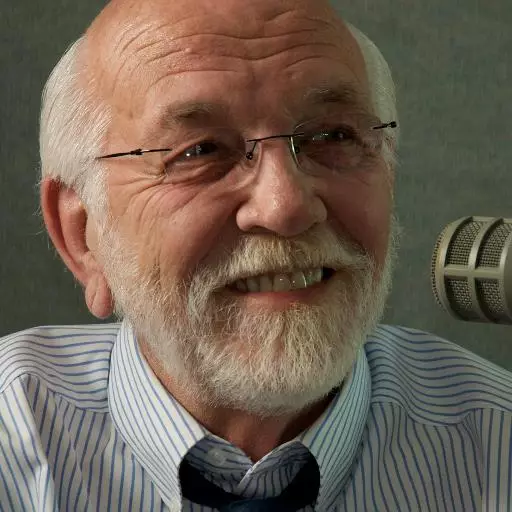
Scot McKnight & Adrienne Gibson | Traumatized Church | Steve Brown, Etc.


Did the Apostle Paul suffer from PTSD? This week, Steve and the gang have an important conversation with Scot McKnight and Adrienne Gibson about making people feel heard and safe through an unexpected lens: Paul's relationship with the Corinthians.
The post Scot McKnight & Adrienne Gibson | Traumatized Church | Steve Brown, Etc. appeared first on Key Life.
Male Voiceover: Is your church a place of healing or a place of hurt? Let's talk about it with Scot McKnight and Adrienne Gibson on Steve Brown, Etc.
Female Voiceover: He's an old white guy, an author, broadcaster, and seminary professor who's sick of religion. And he's brought friends. Please welcome Steve Brown, Etc.
Steve Brown: Hey, we're so glad you're here. We're glad that you're giving us the gift of an hour of your day to learn some very important things. So we're giving you a gift too, and we're equal. In case you're wondering, I'm Steve, the aforementioned old white guy.
Matthew Porter is our executive producer, he's here. Matthew says that next time someone claims you stole French fries when you bring back takeout, just remind them of 1 Timothy 5:18, "A worker deserves his wages." That's just scripture.
Guest (Male): That's right. Always quote scripture even if it doesn't work as you eat your French fries.
Steve Brown: Our one-man IT department, John Myers, is in the tech bunker. John says one time in youth group he twisted his ankle while he was dancing. John, that's not what we mean when we say "church hurt." And our producer, Jeremy, is in the little glass booth. Jeremy is so well connected he's one degree from Kevin Bacon.
Guest (Male): That's actually true.
Steve Brown: I know he was there when you were there.
Guest (Male): I was going to high-five him, but he kind of...
Steve Brown: I'm impressed. I have no idea who he is. I just read these things. Dr. George Bingham is the president of Key Life. George is so smart he plays six degrees of Francis Bacon. Now I know who that is.
Guest (Male): Matthew Porter, that's funny. You had me at bacon. Actually, I'm hungry now.
Steve Brown: Speaking of bacon, Kathy Wyatt is the soft feminine side of the program. Kathy says Matthew's jokes are like bacon. When they're good, they're really good. When they're half-baked, you feel queasy.
We have a couple of great guests for you today. Scot McKnight has a PhD from the University of Nottingham. He's served as a professor of New Testament for more than four decades, and he has authored 90 books. That means every time he burps, they publish it.
And Adrienne Gibson is a licensed professional counselor and the owner of Valor Counseling. She also holds a master's degree in counseling and New Testament. And the book they've written together, which I hold in my nicotine-stained fingers, is titled—and they had to make it bigger than it was to get the whole title on the cover—*Traumatized Church: What Paul's Relationship with the Corinthian Church Teaches Us About Helping Those Who Are Hurting*.
Guys, this is a really different book. I always, when I read both First and Second Corinthians, recognize that these are crazy people. I mean, you name it, church problems are defined by the Corinthian church. I mean, if you can do anything wrong, they did it all wrong.
Paul had to defend himself, he had to admonish them, he had to be kind like a father, and other times he had to be harsh like a slave master. And if Paul were here, we would say, "All right, what was your favorite church?" That would be Philippi. "What is your least favorite church?" And it would be the church at Corinth.
As some of you and as Scot knows, we're missing some of the original Corinthian letters, and the scholars, including Scot, will tell you why that is so. And so there are times when the pieces are pieced together. The reason we're missing them is because Paul was so frustrated, there's unchristian language in the parts that we lost.
Adrienne, when you were working on a degree and Scot was your kind of professor overseeing that, did you see the problems in Corinth as you worked on it? I was kidding about a lot of things I was just saying, of course, but there's some truth in the foundation.
Adrienne Gibson: As Scot and I worked on the book, yes. Scot was really excited to delve into Second Corinthians after realizing that there might be a different way to view Paul in this letter after us talking about how to work trauma into this to something that we could write together.
And so when Scot was working on this and sending some of the stuff over that he was seeing in Paul's life, it was a really different way to view the life of Paul, the words that he was choosing to use, the critique that he was having to handle, that there was definitely something very different going on in this letter.
Steve Brown: There really is. In fact, in all of Paul's writings, he is not nearly as authentic and childlike as he is, for instance, in Second Corinthians. We always make excuses for him, and he says, "I'm foolish. I can't believe I'm saying this," and he keeps on saying it. Then he says it again, "This is dumb. What am I doing?" and then he goes on and does it even more.
All of a sudden, you see this childlike man saying profound things and knowing his own need. Is that an important part, Scot, of how we deal with trauma in the church? I mean, does it have to do with the leaders being somewhat authentic about their own stuff?
Scot McKnight: Well, I would say definitely we see this in the Apostle Paul, a side to Paul that just isn't present, say, in Romans or Philippians or the Thessalonian letters. But in First Corinthians, there's glimpses of this, but Second Corinthians just comes out completely vulnerable.
And Paul, sometimes I compare Second Corinthians, especially chapters 10 through 13, which are the heart of the case I make for him, it's like someone has gotten into his home and stolen his daily journal. Because these are some, in some ways—Steve, you'd like this—some unsanctified thoughts that end up in scripture. Because as you're right, he defends himself, but he tells people, "I'm not defending myself," and you're going, the minute you say you're not defending yourself, you probably are.
And the Greek grammar and the Greek syntax of Second Corinthians 10 through 13 is really unlike anything. Paul is battling inner struggles with the Corinthians, and he unmasks for us his true face and reveals to us his thoughts, even though they're incomplete.
So I really do agree with you that this is a model for, let's say, pastors, leaders in churches who are talking to their therapist. But pastors or leaders who talk to their congregation or their classes like this this often and this much would probably get themselves in trouble, if not be looking for a new job. Because he's accusing indirectly, sarcastically, ironically; he's using all the standard forms of communication, but he's revealing his inner heart and his inner problems with these people.
Steve Brown: I fell in love with Paul reading these two books that he wrote. I'd always said when we get to heaven, I'm going to have a beer—I don't drink beer, but I am in heaven—and then I'm going to drink a beer with Peter, and I'm going to listen to Paul teach, but I don't want to be his friend. And then I read these books and began to see his childlike, human, authentic heart.
We're going to talk about him because he's got a lot to say about trauma in the church, and you don't want to miss a bit of this because, as Augustine said, the church is a prostitute, but she's my mother. And we're going to look at how you look at trauma and do something about it. The book is *Traumatized Church: What Paul's Relationship with the Corinthian Church Teaches Us About Those Who Are Hurting*. Don't go anywhere. Like Jesus, we're coming back.
Male Voiceover: Welcome to the Vault, your home for classic sermons from Steve from the '90s, the '80s, even all the way back to the early '70s. The Vault is a one-of-a-kind online experience where you can explore more than three decades of grace-filled messages. Get the details and check out our free audio sample at keylife.org/vault. That's keylife.org/vault.
Steve Brown: Hi, this is Steve Brown. In case you didn't know, one of the main reasons Key Life exists is to remind believers that God isn't mad at his children. Why am I telling you this? Because our weekly email, Key Life Connection, takes the best of the videos, articles, and puts them right in your inbox. We'd love for you to try it. It's free. Go to keylife.org/subscribe.
Hey, we're talking with Scot McKnight and Adrienne Gibson about a new book that is really interesting and is going to be a gift to the church. The title is *Traumatized Church*, and listen, every pastor who is listening to the sound of my oral cavity needs to get this book and read it and then share it with your leadership and then have Bible studies around this book. The title is *Traumatized Church: What Paul's Relationship with the Corinthian Church Teaches Us About Helping Those Who Are Hurting*.
Adrienne, on this show, we talk to a lot of authors about a lot of books, and actually the subject of trauma has come up fairly frequently in the last several years, which leads to me being able to say I still don't actually have a great working knowledge of what that means for the book, for your context, what you're talking about. What do you mean by the word trauma?
Adrienne Gibson: I'm glad you asked. I think it actually is, it's a word that we throw around, but the concept of it sometimes does really elude us when we're trying to break down what is this, what do people actually mean?
The simplest definition that Scot and I came up with to put in the book was: it's an event or an experience that overwhelms our capacity to cope. So a lot of people will put trauma in the category of the event. "I lived through a traumatic event: there was a hurricane, my house caught on fire, I got in a car accident."
Trauma is not the event. It's an event or experience that overwhelms our capacity to cope. It is what is left within our bodies when we experience an event that we don't think we might live through or we don't know what life will look like on the other side when I come out of it.
So trauma, then, is the calling card. It's an embodied experience that is left within us because our body had to survive or cope through something. And so trauma is the experience that we are left with.
Steve Brown: That's so good. People come to church because they have experienced trauma outside the church and then find that it's not that great inside either.
Guest (Male): Not always.
Steve Brown: Yeah, and I guess following up on that, Adrienne, I guess you say there's a lot of study on the top-down type of abuse leading to trauma from spiritual authorities or whatever. Working with Steve for so many years and his counseling with so many pastors, we've gotten a lot of insight or stories of the bottom-up type trauma that you indicate is not as well studied. Talk some about that in terms of congregations and the direction of the bottom-up type trauma.
Adrienne Gibson: I'm glad that you bring that up because Scot and his daughter wrote a phenomenal book, *A Church Called Tov*, where what it really addressed was it addressed the top-down, bringing to light that, yes, the leaders in our churches, the leaders in our ministries hold that position of power, and when they hold it incorrectly, it can harm people.
But when Scot and I were writing this book, it really spoke to me that what we were bringing out was it does, it goes the other way sometimes. Congregations can be abusive to their pastor. They can be unmet expectations. It can be not wanting the pastor to have any boundaries in their life.
And so what they don't realize it is slowly eroding someone's personal, private life. It can come from elders or just the board of directors to pastors where then you've got this bottom-up. So the person then that is trying to oversee the ministry or be in charge or manage the ministry is then showing up every day to come to work or to come to volunteer from this mindset or worldview that they're being traumatized from the very people that they're actually trying to minister or help or lead. And that also then is very traumatizing to be in that situation.
Steve Brown: Oh yeah. Scot, you're not nearly as old as me, but you've been around a long time. Did you, when you were working on this book and with Adrienne, begin to see new things in the Corinthian church and the writings that Paul gave them that you had not seen before?
Scot McKnight: Oh yes. In fact, that's the origin of my contribution to this book. But let me just say this. I know a pastor who was pastoring a rural church, and he left to go to another church—better church.
And he learned in the process that a man across the street had set up a rifle with a sight on it and was waiting for him to walk out the front door in the day that he would have walked out the front door they were going to shoot him. Nobody ever shot him. He said it was the Lord's work that I went out the back door that day. But I mean, this is just an extreme case, obviously.
But there are a lot of issues with congregations and pastors and how they treat leaders. And I don't just mean senior pastors who preach sermons. It can be Sunday school teachers, it can be anybody on the worship team, it can be anybody who gets on that platform.
So, here's what happened. When Adrienne wrote her thesis, I realized that this thesis said things that needed to be published. But I've been publishing books for a long time, and I know it's very difficult to get published, especially if you're not on a mega-church platform.
So I remember thinking, I want to work with Adrienne on getting this book published, but I didn't know at that time what contribution I would make. But I wrote a series of books with Zondervan Reflective, or Harper Christian Resources—sorry, they all blend into one for me.
Steve Brown: They'll do that.
Scot McKnight: It's called the *Everyday Bible Study*. And when I wrote the one on Second Corinthians, because I had Adrienne's thesis in my head, I began to see in Paul signs of trauma that I thought, I wonder if anybody's talking about this.
Well, I did find an academic article by a professor who had a PhD in both psychology and biblical studies who had studied the Apostle Paul, particularly in the Corinthian epistles, and diagnosed him. Now, only psychologists can really do the diagnosing.
And he realized that he was limited because all he had was what Paul said, he didn't have personal conversations. But he diagnosed Paul with PTSD. And that's what I was seeing. And it helped me, and Adrienne's categories helped me search out the categories that we find in the book of seven signs of trauma or seven criticisms of trauma in Second Corinthians.
Steve Brown: Oh man. Guys, you need to read this book, *Traumatized Church: What Paul's Relationship with the Corinthian Church Teaches Us About Helping Those Who Are Hurting*. The church can be a very unsafe place. But to put this in a more positive way, I'm looking at a lot of churches, and there's a change taking place has to do with Jesus.
Hey, thanks for spending this time with us. If you know that right now I'm about to tell you about our free weekly Key Life email, Key Life Connection, that's a sign from God that you should sign up. Try it today at keylife.org/subscribe, and it's free, so you can't complain.
Hey, we're hanging out with author Scot McKnight and Adrienne Gibson. You can keep up with Adrienne at adriennegibson.com, and you can keep up with Scot at scotmcknight.substack.com. And he is Scot with one T.
Scot McKnight: Amen. Which is a little unusual. If you put in two Ts, you'll go to a pornographic site. Just want you to know that. Well, my grandpa was from Scotland, and Scotland only has one T. That's why. Perfect logic in that. I hope you got people like me who stayed for years misspelling my name. I bet.
Steve Brown: You guys, I kind of got stuck in a good way in Chapter 4 listening to a backstory. And in that chapter, you talk about the important element in a backstory, that being listening. And then you list some things that are involved in listening: attunement, empathy, etc., etc.
When I was a whole lot younger than I am now, I remember somebody—and it was probably somebody either in a church service or some kind of conference because I think that's all I ever went to; I didn't go to fun stuff, I just went to church stuff—and they tried to explain the difference between sympathy and empathy.
And they said sympathy is just basically you hear somebody say something really sad, and so you say, "Oh, I'm so sorry to hear that. I feel really badly for you." But you can't really use the term empathy unless that is something that you have also gone through yourself. Then you can be empathetic toward their situation.
So anyway, all that to say, when I was reading the book, I found it interesting because I'm sure this came from you, Adrienne, because you said the art of listening also involves empathy. Empathy, similar to attunement, involves listening to another person's story, but in showing empathy, we also strive to hear their story not through our ears but through theirs.
Empathy seeks to feel what the other person feels and connect with the experience, which is in sort of a roundabout, weird way is what whoever that was that said the difference between sympathy and empathy. But they said, unless you've been through it, you can't understand it. But you're saying in order to demonstrate empathy, you have to listen to them and what they're saying and understand it through their experience. Was I walking down the right road here?
Adrienne Gibson: Beautifully, yes. Because empathy is—what's interesting is when you say, "I can't feel compassion or fully understand what it is you've been through unless I've walked through it," that also isn't to say true because what empathy means is you get to be the expert of your story and your experience.
Even if you and I have walked down similar paths and I can have empathy for you because I've been through it similarly, that doesn't mean that my experience is going to be exactly the same. I'm going to bring in really unique and different things from my life story, from my past, that is going to affect and influence how I handle that situation or how I viewed it.
So empathy is truly trying to remove yourself from the situation and say, "I need to understand it from your perspective, what this was like for you, and how this really affected you." I let you be the expert in this experience. And so when I'm understanding it, I'm trying to fully understand it through your eyes.
Steve Brown: That's really helpful to me. I've just recently come in contact with a neighbor who's been, in my judgment, as been through some significant trauma over the last 35 years of her marriage, and she's going to a—finally going to a counselor, and I've taken her to a couple of her appointments. And both times when she came out, she made the statement, "He's such a wonderful listener." And so I got gravitated to this chapter on listening because it's huge, just huge.
Adrienne Gibson: And listening creates the safety that most people need and they don't know that they need. When we do active listening or listen to someone's story, the safety that is built in that experience means I'm not going to decenter you and your story and try to center myself. I'm going to let your experience be the center of attention.
And safety is built through that experience because then it means I'm not going to be grabbing the attention, I'm not going to be grabbing the focus, and I'm going to be fully listening to you and then you get to share what it is—what do you need? What do you need to process? What part of this story do you need to bring out?
Because what trauma steals from people is their feeling of safety. That's what often gets taken away: their sense of safety in their world, their sense of safety in their body, their sense of safety with their feelings, their sense of safety with their trust. And when we can actually listen to someone and listen to their story, we're slowly letting them feel safe in their environment again and safe with another person.
Steve Brown: There's a sense in order to do that, we do it as someone who has our own trauma, our own sins, our own hurt, our own failure. And you can't be speaking from Sinai or even listening from Sinai. There's a sense in which AA is true when they say it takes a drunk to help a drunk. Takes a human being to help a human being, and the identity or identification is possible because it takes a drunk to help a drunk. I'll let our guest correct me, but not now, when we come back.
Scot, as we're entering this last segment of the program, we're talking about Paul. I want to circle it back to him. All these significant figures in the Bible, very easily we can just—they're just kind of a—they're a painting, a sculpture or something. They're not people; they're icons.
But he was a really real person, and he's somebody whose heart God changed, but his personality didn't change. He's a person. He's got quirks, he's got proclivities towards this and that. Tell us again a little bit more about Paul and the role of trauma in his life, in his writing, and in his ministry.
Scot McKnight: Yes, and I think people should read what we say about trauma and then read Second Corinthians 10 through 13 and just start listing the oddities of this section in Paul's letter and list the criticisms that the church has made of him.
A leader in a church, a leader anywhere, is vulnerable because all of a sudden they're on a platform at some level, whether it's a small group or whether it's a classroom or whether it's a mega-church. You're up there, and people can think what they want.
And the Corinthians thought what they thought. And probably a group of people in that church were totally opposed to the Apostle Paul. They preferred Peter and Apollos and maybe some others whose names are not even mentioned.
But they criticized Paul for things like that he was fickle. "You told us you were going to come, then you said you were going to do this, and by the time you had changed your plans two or three or four times and it didn't happen. You're fickle. We can't trust you." And that's not a good trait of someone who's leading.
Then they said that Paul—they say this, this is an amazing statement: "His letters are weighty. You read Romans and you think that guy knows what he's talking about, and forceful. But in person, he's unimpressive." Ouch.
So I mean, this is like saying, I thought you were going to be a big strong character, and then you get here and you've got a squeaky voice and you don't sound like anybody that I'm going to listen to. But one of the most fascinating things that I've come upon lately is—it says you're judging me by my appearances.
And we do know this: that Paul did not live up to the expectations of Romans and Corinthians. Now, what I mean by Romans is people who saw the culture of Rome as powerful, and the Corinthians were those kinds of people. They were Roman wannabes.
And Paul did not have the physical stature of someone who could be respectable somehow. Now, here's a couple things. The name Paul in Greek, Paulos, as it's pronounced today, means small. And in the second century, there's a text called the *Acts of Thecla and Paul*.
This is a statement that is made about someone who saw Paul: "Then he saw Paul coming, a small man with regard to height." Now the word used "small" is *mikros*, and that means micro. We use that: little, tiny. Bald on the head—thank you—curved in the legs.
There's a scholar by the name of Isaac Soon who has investigated this very expression, and almost always in the ancient world it describes someone with dwarfism. And then we learn that in Second Corinthians 11 and also in Acts Chapter 9 that Paul was let down from a wall in Damascus in a basket.
Now, he uses two different Greek terms for the basket, and this guy Isaac Soon has examined these baskets. So we have traces of them, we have signs of them, we have descriptions of them. And his estimation is that Paul couldn't have weighed but about 100 pounds, and he was probably about 4'6" to 4'8".
So, now you're expecting this apostle to show up and preach a sermon on Romans—actually, the Corinthians had it at this time. So you expect him to come in, and you're used to Roman orators and Greek orators who wander through Corinth on the public stage, and they know how to speak.
They are the people who have the great voices, they have the great skills, they know how to use a story, they know how to move an audience. If they want them to cry, they can tell that story; if they want them to clap hands, they can tell that story. And Paul shows up, and he's a squirt. He's a little guy, and he evidently didn't have very good speaking skills. And that's another criticism: they basically said he's a mediocre talent.
Now, what happens if you wake up on Monday morning and these are the first four things you read in your inbox: you're fickle, there's two Pauls, your appearance doesn't match, and you can't preach very well.
Then they're irritated—and Steve brought this up, I can't remember if it was on the show or not—is that he refused to brag about himself, which was a demand of public speakers in the ancient world. You advertised. You didn't let the person say how many books you wrote; you announced how many books you had written.
The Corinthians thought he played favorites, and he liked those people from Thessalonica and from Philippi a lot more than they liked him, and they're basically saying, "You don't love us." And basically at the end, their last criticism is they didn't think Paul was a special leader. He planted the church, he was the one who fathered them into the faith, and now they like Peter and they like Apollos and they like these interlopers who've come in. And you wake up on Monday morning and you see this in your inbox, and if you're not traumatized, you have no business being in this world.
Steve Brown: And that was the source of his power and the source of your power as a Christian: a recognition that you're no big deal but that Jesus is a very big deal. Hey guys, Scot and Adrienne, you did a really good thing. Keep writing, and we'll keep having you on this broadcast.
This was a great discussion, and I've thought thoughts I haven't thought before, gone places I've never gone, and seen things I've never seen because of you guys. And I rise up and call you blessed. Thank you for being with us. Okay, who's going to be here next week?
Guest (Male): Next week we have another duo. I don't know how this happened, but we have another dynamic duo: Kelly Kapic and Ty Kaiser. This is going to be interesting. Did you know who John Owen is?
Guest (Male): Oh, true confession time. I had never heard of John Owen.
Guest (Male): You don't know who John Owen is?
Guest (Male): No, I don't. Have you?
Guest (Male): I don't either, but I just like to use that tone of voice. Anyway, their book is titled *Owen Among the Theologians*, and the subtitle—again, we're in that period of time with long subtitles—"Conversations Across the Christian Traditions."
But anyway, when I found out that he was like really popular in the 1950s, I thought, well, I don't have any excuse. I was born before that, so I should have at least known who he was.
Steve Brown: So I'm looking forward to this. I went to grammar school with John Owen.
Guest (Male): You did not.
Steve Brown: He was... well, one was named that, and he was weird. I just want you to know. Guys, we've got to go, but we're going to come back and try again next week. Same time, same place. Hope you'll join us. Between now and then, don't do anything we wouldn't, and that gives you a wide, wide berth.
Featured Offer

A companion booklet to Steve’s classic overview study of the New Testament. How did the early church get its start? Leadership, the Pentecost, the fellowship of believers, and persecution...it’s all there. In addition, Steve’s overview of Romans—What is the “Roman road to grace”? Highlights of both Acts and Romans, including introductory comments, major themes, and important teaching. Helpful as you read and study.
Past Episodes
This ministry does not have any series.
Featured Offer
A companion booklet to Steve’s classic overview study of the New Testament. How did the early church get its start? Leadership, the Pentecost, the fellowship of believers, and persecution...it’s all there. In addition, Steve’s overview of Romans—What is the “Roman road to grace”? Highlights of both Acts and Romans, including introductory comments, major themes, and important teaching. Helpful as you read and study.
About Steve Brown, Etc.
Key Life exists to communicate that the deepest message of the ministry of Jesus and the Bible is the radical grace of God to sinners and sufferers.
Because life is hard for everyone, grace is for all of us. And grace means that because of what Jesus has done, when you run to him, God’s not mad at you.
All of the radio shows, sermons, books, and videos we produce work together toward one mission: to get you and those you love Home with radical freedom, infectious joy and surprising faithfulness to Christ as your crowning achievement.
Learn more: http://www.keylife.org
About Steve Brown
At Key Life, Steve serves as Bible teacher on the radio program Key Life and the host of the talk show Steve Brown, Etc. Prior to Key Life, Steve served as a pastor for more than thirty years and continues speaking extensively.
Steve has also authored numerous books, including How to Talk So People Will Listen, Three Free Sins, Hidden Agendas and his latest release, Talk the Walk: How to Be Right Without Being Insufferable (now available as an audiobook).
Contact Steve Brown, Etc. with Steve Brown
steve@keylife.org
https://www.keylife.org
P.O. Box 5000
Maitland, FL 32794
In Canada, send requests to:
Key Life Canada
P.O. Box 28060
Waterloo, Ontario N2L 6J8