
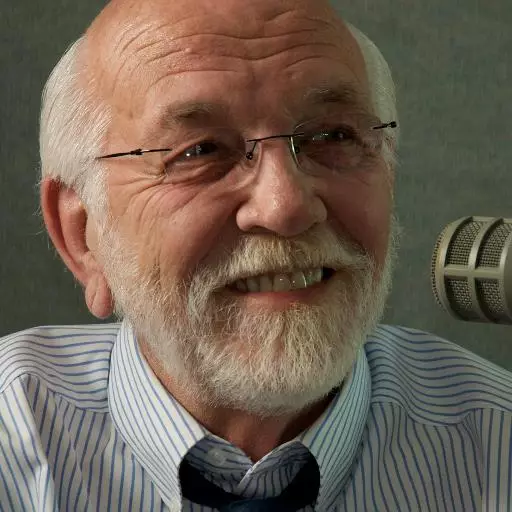
Rick Pacanowski | The Least Of These | Steve Brown, Etc.


It's a novel about love – but the real-life love story BEHIND it is even more compelling. This week, Steve and the gang chat with Rick Pacanowski about his late wife's novel.
The post Rick Pacanowski | The Least Of These | Steve Brown, Etc. appeared first on Key Life.
Steve Brown: Hey, we're so glad you're here. We recognize that we live in a busy time and that giving an hour to people like us that you're not sure about is a major gift, and we continue to count it as a major gift.
If you're wondering, I'm Steve, the aforementioned old white guy. Matthew Porter is our executive producer, and he's here. Matthew once thought he had a novel in him. Turned out to be indigestion.
Matthew Porter: They feel the same. I don't know.
Steve Brown: Our producer Jeremy is in the little glass booth. Jeremy is about to fly to LA for the Grammy Awards again.
Jeremy: That's true. Listen, he's on the board of that. That's something else.
Steve Brown: And Jeremy, if you run into Johnny Mathis, get an autograph for me.
Jeremy: That's funny. Do I need a time machine for that?
Steve Brown: Yes, you do. Our one-man IT department, John Myers, is in the tech bunker. John fixes everything. He doesn't even like the phrase spring break.
Matthew Porter: Six out of ten. C-minus. Not going to win them all.
Steve Brown: Dr. George Bingham is the president of Key Life. George reminds the guys that Valentine's Day is next week. So pick out something nice or pick a comfortable place on the couch to sleep.
And Kathy Wyatt is the soft feminine side of the program. Kathy says muffins are just the socially acceptable way to eat cake at breakfast.
Kathy Wyatt: That's true. You just leave off the frosting, and it's perfectly fine. It doesn't matter what's inside of it.
Steve Brown: We have a great guest, and he's my friend and a new friend. We became friends. We met for lunch to talk about his late wife, to talk about a book that he was trying to get published, and to talk about the things that were really important.
Sometimes you meet somebody and you think this will be the last time. Other times you meet somebody and you think we're going to be friends for the rest of our lives. And that is true about Rick.
I love this guy. I love his tenacity. I love the way he stuck with a project that was difficult. And I love the book, which I hold in my nicotine-stained fingers, that came out of his continuing to not give up.
It's called—Joel Hunter says it's gripping and releasing, and that's true. It's called *The Least of These: Finding Forgiveness, Healing, and God's Redeeming Love*.
And it's not a book that Rick wrote. Sherry, his wife, wrote it. Rick, I was saying off the air that the thing that impressed me about you is that people threw all kinds of roadblocks in your way and you said, "I don't care, this book is going to be published."
People said, "Are you crazy?" and you said, "Maybe, but this book is going to get published." People wondered what in the world was wrong with you and you said, "A lot, but this book is going to be published." And you stuck with it. You told us you weren't a writer. What in the world got into you to work on this?
Rick Pacanowski: Well, first of all, thank you all and thank you to our Lord Jesus Christ. After my wife passed suddenly in April from pancreatic cancer, we were going through the grieving process. Every morning I would get up at four in the morning, go outside, and I always had one-on-one time with the Lord, just silence waiting on His word.
As clear as somebody was sitting behind me, I just heard, "Rick, just do it." I'm like, "Okay, I've not really heard it that loud or direct." And it was like, "Do what, Lord?" And again it came, "Just do it." And I knew in my spirit I had to take Sherry's manuscript, which she labored on for over 15 years.
She threw it away, never thought it was good enough, and rewrote it. She just could not get past the point of getting it published, getting it read, and affecting people. She was just very insecure, and fear, unfortunately, robbed her from seeing its completion.
I'm just the opposite. I don't care what people think. I've been in sales for 48 years. I can read personalities, I can read people. My pride got put on a shelf because all those things I did in my career were not me, it was God.
It was the Holy Spirit. He gave me orders in business when I never deserved it, never got it. So it was like, "I don't know how to do this, Lord. I'm Moses, I stumble. I don't know how to do it." And that's the part that really inspired me was He does. He'll open the doors, He'll close the doors, and He'll give me direction.
And the first two things He gave me were Joel Hunter and Steve Brown. Joel being my former pastor—we moved around quite a bit. I heard Steve speak at Northland Church a few times. My wife fell in love with him. She loved his sarcasm, she loved his realism. You two were kindred spirits, Steve. She is Steve Brown with a skirt.
Matthew Porter: Well, Steve often—when he talked about the skirt thing—oh, we're not supposed to say that on the air anyway.
Steve Brown: Rick, you loved her a lot, didn't you?
Rick Pacanowski: I was in love with her, Steve, totally from the beginning. The way we met, it was ordained by God. It's a long story that we can go into it and I think it's great. But we had a 43-year-long marriage.
Like she said in her final letter to me—I think I gave you a copy of that, Steve—we had good days and we had rainy days. But we were survivors. Like in any marriage, you work on things. We had four kids, we had two foster kids, and my wife had such a passion for family, Christ, and writing.
She was a very gifted writer. I have piles and piles of her stuff: unpublished notes, short stories. But she had the manuscript. She rewrote it, I know, at least a dozen times because she made me shred it every single time because it wasn't good enough. I'd have to take it into work to our industrial shredder, shred it, and I'd have to bring the bag home to prove to her that I shredded it.
Steve Brown: This was a difficult project for you, wasn't it? Grief work is what the psychologists call what happens to us when somebody we love dies. This must have been hard for you to do, wasn't it?
Rick Pacanowski: It was, and I saw a message from Joel Hunter on the five stages of grief. He preached on the sixth stage. He said, "If you don't know what it is, I just made it up." But it's basically moving forward. You have to have a purpose and you have to move forward.
Steve Brown: Oh man, hard place to be. Listen, guys, you don't want to leave. There is so much profound truth in this book and in Sherry's story that's going to blow you away. It affected me when I read it. Sometimes I laughed, sometimes I cried, sometimes I said, "You've got to be kidding," and ultimately I said this is important, and it's important for people to read.
The book is *The Least of These: Finding Forgiveness, Healing, and God's Redeeming Love*. Hey, this is hard work. We need to rest up and we're going to do that, but then like Jesus, we're coming back.
Steve Brown: Rick Pacanowski is our guest, and he is, I guess, the editor, the main editor of this book, *The Least of These: Finding Forgiveness, Healing, and God's Redeeming Love*. It's a novel, and it's a novel you're going to love.
Matthew Porter: Rick, I enjoyed the book. So glad that you shepherded this thing to completion. Having done some writing, you know when you dive into a book, you really immediately know if you're in good hands or not. One or two pages and you're like, "Okay, this person knows how to write a story. Their prose is dialed in."
Just because it's such an important part of this larger story, take a minute to introduce us to Sherry. Tell us what she was like, how did you meet her, and what animated her?
Rick Pacanowski: Well, I really don't know where to begin. I can go on for hours, but she was a gift from God. I met her when I broke up with a girl I was engaged to. It's not funny, but it's God at work when we don't really see it. I wasn't a Christian that knew Christ at the time, but she did.
So we had a Christmas party at work and the guys wanted to go out drinking and partying. I'm like, "No, I'm still grieving this girl I met at school and was going to get married and that didn't work out." I prayed that the Lord would show somebody, and I would know it.
So I reluctantly agreed to go out with the guys. We went to a disco club where Sherry and her roommate would go to dance. She loved to dance. She had a beautiful voice, could dance like crazy, drop-dead gorgeous. We were in the club and my friend goes over and starts bothering her, playing with her hair. She had beautiful long brown hair.
I could see that he was going to get bounced. So I went over, interrupted, and then I just started talking to her. And then she started talking and I just fell in love with her voice, her energy, her everything. I thought it was going real well and then she looked at her watch and said, "I'm sorry, I have to go." I'm like, "Oh God, I blew this. I said something stupid." And I said, "Well, have a good evening, maybe I'll see you around," and I started to walk away.
Right behind me I feel this tap on my shoulder, and it was her. She said, "Here's my number, would you please give me a call?"
Steve Brown: Not bad.
Rick Pacanowski: And I did. Like she said in one note to me, it was honestly—and I never believed this—it was love at first sight. There was something about the chemistry. She was in a bad part of her life. She was recently divorced with two small kids, and that was what really, once I got to know her and her kids, really made the attraction even stronger.
It gave me a chance to see what kind of woman she was and what kind of mother she was. She was selfless, caring, and self-sacrificing all the time. But she had that good old Irish-Italian temper that if you walked the wrong walk, she'd put you back in line gracefully.
Steve Brown: At our lunch I always say to couples that come to me to do the marriage ceremony, "Tell me ten things you don't like about your fiancé." And if they can't, I refuse to marry them. So I said something like that to Rick. He brought up her temper. Listen, this is not a saint before whom you worship and to whom you pray.
She was a real flesh-and-blood person. And she had passions for strange people. Talk to us about that.
Rick Pacanowski: She—and the center of the book was my brother Stan. I'm the oldest of seven. Sherry's a middle child of three and we both grew up in very harsh, dysfunctional families. Religion was weaponized. She grew up in a very strict Pentecostal church and thought God hated her, only heard that nobody was going to heaven. As a four-year-old hearing that, it left a scar on her.
I had different kinds of scars. So between the two of them was the center—it was my brother Stan. Stan was the third born. Stan was gay. When she met him, she looked at me and said, "Rick, why didn't you tell me your brother was gay?" And I told her, "What are you talking about?" And this was when I was 27 and she was 22. And she said, "Rick, your brother's gay." I said, "No way." She said, "Trust me." I said, "How do you know?" She said, "I have this thing called gaydar."
She said, "I can read people. But don't get me wrong, I love him. He's great, he's fantastic." And those two formed the 17-year bond, which, to be honest with you, I was envious of. But Stan filled a role and helped Sherry and actually me through her heal a lot. And it went back and forth between the two of them.
Steve Brown: And she—that morphed, didn't it, to reaching out? And we've got to get into the story of the novel, but that morphed into her caring for people who are on the outside. In fact, she was passionate about that, wasn't she?
Rick Pacanowski: Very much so. She was not afraid to challenge anybody if they were under attack. Never.
Steve Brown: So she pulled for the underdog?
Rick Pacanowski: She was a pit bull for the underdog.
Steve Brown: Now, we're running out of time in this segment. When we come back, I want to hear kind of a synopsis of the novel and the story that you're telling because it is a great story and it's one that once you start, you're going to have trouble putting down. The name of the book is *The Least of These*. You said earlier that you had more pages to this than have been published in the actual book. How many pages were in the original manuscript?
Rick Pacanowski: 530.
Steve Brown: How many in the book now?
Rick Pacanowski: 392.
Steve Brown: Wow. That's kind of like cutting up your baby after the baby's born. You don't necessarily want to do that. That must have been hard. We'll talk about writing, but mostly the story and the importance of the story in living out the Christian life. I think sometimes we Christians want to hang out with our own. When somebody's out of the box, like somebody is gay or somebody doesn't believe what you believe politically, you have a tendency to reject them and walk away.
Sherry was drawn to them. And in that being drawn, she touched a whole lot of lives. We're going to hear the story of the novel on the other side of the break. Don't go anywhere.
Steve Brown: Rick Pacanowski is our guest and his book—not his book, his wife's book published after her death—is a novel and it's titled *The Least of These: Finding Forgiveness, Healing, and God's Redeeming Love*. By the way, if you haven't yet subscribed to the weekly Key Life email, you're missing something really great. So while you're thinking about it, go to keylife.org/subscribe. And it's free, so if you don't like it, just keep quiet about it.
Jeremy: Rick, in addition to being able to tell a great story, Sherry has a real sensitivity, it seems, to people's insights. And it's not a sort of an easygoing story. The book actually starts with a fairly significant warning, sort of like you'd see on a movie or TV series or something like that, that warns about—not graphic, but that the book contains references to abuse, family abuse with kids, and so on and so forth.
There are several members of the family and so forth without trying to get into the story before you summarize it. But did Sherry have—I mean, you talked about yours and her experiences—but was there additional study or counseling or any kind of insight that she gained to get these kinds of almost archetypal characters, experiences to an abusive-type family?
Rick Pacanowski: There wasn't any help other than prayer. We both grew up in, by today's terms, abuse and neglect families. By the grace of God, we got through it, as our many families have and are currently doing. And she had a heart and a passion to make a difference.
Before I get into the book real quick, I can remember she's the one that led me to the Lord. And I just love that about her. I went to church, took our newborn baby, and I said, "Well, they have a nursery, why don't I just take Ashley to the nursery?" She said, "No, I want you to hold her during the service." I said, "Sure, I'll do that." I said, "Why?" She said, "Just trust me."
So they start praying and singing and oh my God, these people are raising their hands and they're singing loud and everything. After it was over, she told me, "I wanted you to have something to do with your hands and hold our daughter." And I just looked over at her and I saw her crying, praising the Lord, lifting her hands in full praise and worship and the Holy Spirit just working in her life. And I said, "I want that."
And I accepted Christ then and there. Although I was raised Catholic and loved it—loved the Stations of the Cross, Rosaries, stained glass windows—I didn't have that passion. So that's how it started. It is a true story for the most part. Names and faces have changed to protect the innocent, if there are any.
We just live in a pretty tough time and a rough time, a lot of stress, large families, and alcoholism and abuse was rampant. It became a life of survival. How do you survive one day to the next to the next? Find good hiding places, stick together as siblings. There were good times, but they were fleeting.
Once she saw that and saw what we went through as siblings, she wanted to write my brother's story. Because what she really felt an urge to do was to reach him. She reached me very easily. Stan was a 17-year project, and she was successful and genuine.
It's in the book. It's a real tear-jerking chapter. But through wedding soup and chocolate cake and her tenacity, she didn't give up. She just constantly shown my brother, who was very argumentative himself and very well-educated, she just allowed the Holy Spirit to do His work.
And that's kind of it in a nutshell. That you can be loved regardless of what you went through, but more importantly, God loves you just the way you are, exactly the way He made you. And don't let anybody rob that.
Steve Brown: Oh man. We'll talk a little bit more about the story on the other side of the break. But this is a moving book. And if you're conservative the way I am, to the right of Genghis Khan, you're going to wince some as you read this book. But it's a good kind of wince because the Holy Spirit will be in it.
If you don't have some friends who are different politically, if you don't have some friends who are gay, and if you don't have some friends who drive everybody else nuts, then you're probably not doing it right. But we'll get into that on the other side of the break. So don't go anywhere.
Steve Brown: Rick Pacanowski is our guest, and the book is *The Least of These: Finding Forgiveness, Healing, and God's Redeeming Love*. It's difficult to do a novel on a program like this. You're just going to have to trust me when I say this is an amazing story. It will offend you, but it'll also challenge you.
Jeremy: Rick, you mentioned in the last section about the fact that your brother had a significant part in the developing of this story, and I'm sure obviously that there were a lot of other factors that were involved. But did she reach a particular point—we want to know about the story, obviously—but did she reach a point where she said, "Okay, I just have to write this," or was it a long process where she said when I start writing I'm going to write about this? Tell us about the story.
Rick Pacanowski: The story, I guess, started with their relationship, my brother's relationship with Sherry. Stan was so afraid of being rejected when he came out. We were the first people he came out to—actually, my sister was when she was in high school. But Stan and I were so close that he valued that relationship so much.
I, like Steve, am now an old white-haired conservative but Christian. And I always had a love for that. So they formed this bond and this relationship that fueled both of them. And when Stan finally told us he was, we reassured him that we loved him, and we knew it, and nothing he could say would change that.
It was like she stole my brother. They talked on the phone constantly about everything: politics, love, left, right. My brother was a Republican at the time, and my wife was a Democrat, but they had one item they 100% agreed on, and that was love. And as that relationship got better, she would fly to the West Coast every year for a vacation without me, which is fine. Somebody has to watch kids.
Stan lived in Malibu, which was not a bad place to visit. She always went in February when it was beautiful there and I was shoveling a driveway. But she always came back inspired, and my brother realized her deep-down talent and he challenged her like Coach Saban did at the national football conference. He made her perform and he made her believe in herself when she never did.
So it went both ways. It was a two-way street. She would call him five minutes to five when we had landlines, and he would hang up on her and say, "Don't you know if you wait five more minutes and call, the rate is 70% less?" And she'd call him right back two minutes before five and say, "You don't understand, brother, I have four kids to take care of. My time is limited. So I don't care about the money. Time is more precious to me."
And then she would hang up on him. So that's how it went. When he got really sick, he wanted Sherry to take care of him. And she went out and took care of him for the last month of his life, which was brutal. Dying is not easy. And we got, unfortunately, the chance to do that again in April when she was diagnosed and passed in three weeks.
So that's kind of like the relationship. The book itself, real quickly, you could divide it maybe into three sections: our childhood, what we went through, and how we survived; and then how my brother dealt with coming out in college and the therapy he had to go through and the struggles he had; and then eventually making his way as a vice president of a big advertising company on the West Coast. We were there to support him, and Sherry was there to support him every step of the way. The rest of the family, not so much.
Steve Brown: You know, Rick, this morning I was reading Hebrews, and there's a passage that talks about people in the church who are discouraging rather than encouraging. And I'm reading this passage and thinking there are some friends I need to get rid of. Some remind me of Jesus and some remind me of Judas.
But the point that I saw in that text as I was reading through it was that it's important to have friends who believe that God unconditionally, sin and all, loves them more than they could imagine. And not only that, but to have a friend who believes that God unconditionally loves you no matter the sin or what's going on.
If you get that part right, you end up having some weird friends and they get to have you as a friend, and you're the weirdest of the bunch. Sherry would agree with that, wouldn't she?
Rick Pacanowski: She would take it hook, line, and sinker. She thrived in that: parties, events that we would go to. She pushed the envelope, but always very respectfully. She'd send you off with an old saying, "You think about that."
Steve Brown: You and I know that if there's anything good about her death—and this is true of my brother who was a Democrat—they now know the truth. Listen, we've got about 30 seconds, Rick. You want to summarize what you've been telling us and what this book does in a poignant and short way?
Rick Pacanowski: Who's this book for? I would say for everyone. Because everyone knows someone, whether you're going to carry the message or receive the message, but just remember God loves you just the way you are. It's fun and it's enjoyable. There are funny parts in it and there are sad parts in it. You'll cry, you'll laugh, and you'll be a better person. And this isn't ever about the money, this is about reaching as many souls as we can. We want to make the road to heaven a superhighway.
Steve Brown: Rick, thank you for this hour. God bless you and God bless you for your perseverance in making sure this book gets published. I rise up and call you blessed. Hey folks, we'll be back for a second, so don't go anywhere. We'll tell you who we're going to do it unto next week.
Matthew Porter: Next week our friend Jonathan Feldstein is going to be back with us. He was with us a year or so ago and really got us caught up to date with a lot that's going on over the Middle East, Israel and everything. He's our Jewish friend, so he's coming back. And he lives in Jerusalem and it'll be an interesting interview to find out what's going on there.
Steve Brown: Hey, we're going to be here next week, same time, same place. I hope you join us. Between now and then, don't do anything we wouldn't, and that gives you a wide, wide variety. Before you guys take off, Jeremy, I want to do something new that's really cool. Sixty seconds. Ready? Go.
Featured Offer

Are you feeling guilty? Maybe it’s what you said to your husband or wife last night...what you did years ago…the places where you’re struggling right now. What do you do with your guilt? Ignore it or bury it? Or is there another way, one that can handle guilt for good? Guilt can lead us back to Christ to find true and lasting forgiveness. His death paid the debt for all our sins. He loves us that much.

Featured Offer
Are you feeling guilty? Maybe it’s what you said to your husband or wife last night...what you did years ago…the places where you’re struggling right now. What do you do with your guilt? Ignore it or bury it? Or is there another way, one that can handle guilt for good? Guilt can lead us back to Christ to find true and lasting forgiveness. His death paid the debt for all our sins. He loves us that much.
About Steve Brown, Etc.
Key Life exists to communicate that the deepest message of the ministry of Jesus and the Bible is the radical grace of God to sinners and sufferers.
Because life is hard for everyone, grace is for all of us. And grace means that because of what Jesus has done, when you run to him, God’s not mad at you.
All of the radio shows, sermons, books, and videos we produce work together toward one mission: to get you and those you love Home with radical freedom, infectious joy and surprising faithfulness to Christ as your crowning achievement.
Learn more: http://www.keylife.org
About Steve Brown
At Key Life, Steve serves as Bible teacher on the radio program Key Life and the host of the talk show Steve Brown, Etc. Prior to Key Life, Steve served as a pastor for more than thirty years and continues speaking extensively.
Steve has also authored numerous books, including How to Talk So People Will Listen, Three Free Sins, Hidden Agendas and his latest release, Talk the Walk: How to Be Right Without Being Insufferable (now available as an audiobook).
Contact Steve Brown, Etc. with Steve Brown
steve@keylife.org
https://www.keylife.org
P.O. Box 5000
Maitland, FL 32794
In Canada, send requests to:
Key Life Canada
P.O. Box 28060
Waterloo, Ontario N2L 6J8