
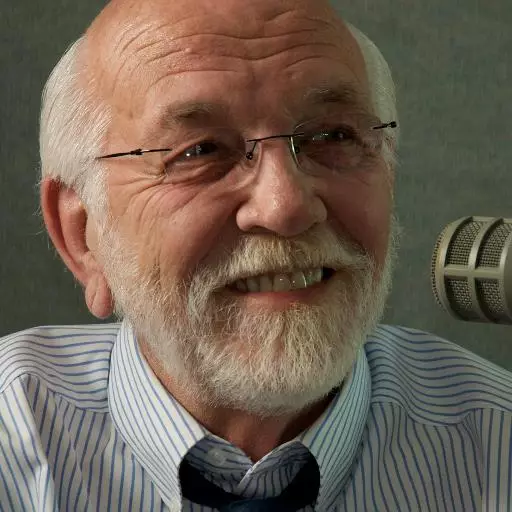
Pat Morley | What If Christianity Is True? | Steve Brown, Etc.


He's written 23 books, but NEVER one like this. This week, Steve and the gang chat with best-selling author Pat Morley about 'evidence beyond a reasonable doubt' that God is who He says He is.
The post Pat Morley | What If Christianity Is True? | Steve Brown, Etc. appeared first on Key Life.
Steve Brown: Hey, you believe Christianity is true, but why? Let's talk about evidence beyond a reasonable doubt with Pat Morley on Steve Brown, Etc.
Kathy Wyatt: He's an old white guy, an author, broadcaster, and seminary professor who's sick of religion. And he's brought friends. Please welcome Steve Brown, Etc.
Steve Brown: We're so glad you're here, and you always have a seat at our table. In case you were wondering, I'm Steve, the aforementioned old white guy. And our executive producer, Matthew Porter, is here. Matthew says we should get major holidays off from work, holidays like Taco Tuesday.
Matthew Porter: I agree. I'm down with that.
Steve Brown: And our producer, Jinx, is back. He's been gone for a long time. He's in the little glass booth. Jinx, long hair, no see.
Jinx: I've gotten it cut since then. I don't talk about your hair, either.
Steve Brown: Our one-man IT department, John Myers, is in the tech bunker. John secretly wishes the Amish built computers, the Tobias 3000. I could see that.
John Myers: It'd be pretty reliable. Horse-drawn.
Steve Brown: And Dr. George Bingham is the president of Key Life. George says beards and coffee don't make America great, but they don't hurt the cause, either.
George Bingham: Try not to mix them. Wait, did you say beards and coffee or beers and coffee?
Steve Brown: And Kathy Wyatt is the soft feminine side of the program. Easter is next weekend. Is your church doing Easter service in the cemetery again?
Kathy Wyatt: Absolutely, every year. I think that is so cool. We used to do sunrise services out on the water over in Biscayne Bay, which was absolutely lovely, too. But I'll tell you, when the sun rises in the cemetery and you're taking communion, it's like, "Okay, I can go. I can go right now." It just doesn't get any better than that.
Steve Brown: I have a friend who's a missionary and they built their church in the cemetery. It was called the Church of the Resurrection, which I thought was cool, too. Pat Morley spent his life helping people, especially men, wrestle with life's biggest questions.
He's written 23 books, including *Man in the Mirror*, named one of the 100 most influential Christian books in the 20th century. His latest book is different, but really good. *What If Christianity Is True? Evidence Beyond a Reasonable Doubt*. What caused you to write this? This is not your normal book. It's good, but it's not where you usually go. What prompted this?
Pat Morley: I'm a men's author, so that's my lane. There are three forces in the world. Everybody knows about good and evil, but there's a third force at work in the world, too, and that's futility—just the things that seem pointless. So many of the men that I work with and have worked with over the years ask me all the time, "What's the point?" It's following in the footsteps of Solomon. Meaningless, meaningless, vanity, vanity, futility, futility. Everything is meaningless, a chasing after the wind.
Over a period of decades, I wanted to pull together what I would consider my apologetic, which is the evidence for the Christian faith based on how it solves this problem of futility. I'm sure somebody else has written an apologetic on futility. I'm just not aware of it. But this is my apologetic.
This is my argument for the truth of the Christian faith, and how it resolves the problem of futility. All of my other books have been written on the basis that I've done my homework and you can trust me. Here's what you need to know. But in this book, I took a different approach: don't take my word for it. Here's the evidence, and then you decide for yourself.
Steve Brown: I think it's important because it's so basic. The Christian faith isn't true because it works; it works because it's true. There's a major difference, and it is appropriate for you to go back to the beginning and just say, "All right, let's get down. Let's find out if this stuff is true." If it's true, it's the most amazing remedy for futility the world has ever seen. You've done that. That's a good apologetic. You write about four belief systems. Why don't we start where you start? What are those belief systems?
Pat Morley: The starting point is this feeling that people have that life is pointless. Our belief systems or worldviews are what cause us to have the restless heart and the different thoughts about what is the meaning and purpose of life. There are four different belief systems that exist, and there are people in the past who have talked about them. I call them the secular, the moral, the religious, and the Christian belief systems.
C.S. Lewis had his paradigm for it. Kierkegaard had his paradigm for it. The Apostle Paul talks about these different belief systems as well. There is a progression that takes place for the average person. For most of us, the secular belief system or worldview is our starter kit.
I know it was for me. I grew up in a Christian home that didn't know Christ, if that makes any sense to you. I decided that I wanted to make a lot of money. Money is a very seductive God. My first worldview was that money will solve my problems and success will make me happy. It was a very secular approach to life. I did pretty well, but here's what I discovered: success didn't make me happy. It made me miserable.
It mirrors the exact experience of Solomon. He said everything he set his heart to, he achieved. He was the greatest architect, greatest developer, builder, farmer, rancher, king, and accumulated great wealth. He was a patron of the arts, poet laureate, and CEO of the biggest company. Everything. He said when he looked at all that he had achieved, he found it was meaningless. In one of the verses, he said, "So I hated my life." That's exactly what happened to me. I hated my life. I got everything I ever wanted only to be disappointed with it.
Steve Brown: My mentor said that people who have everything are not miserable because everything makes them miserable, but because they got everything and it didn't do what they thought it would.
Pat Morley: Exactly. I tell a story in the book I call the Rogers Curvin story. Rogers built a big company. He had spent several years as a consultant helping other people get rich, and he decided he wanted to get rich, too. So he did. He was in his late 30s and he had an opportunity to sell his company.
He's a thinker, so he invited three friends who had also built big companies to dinner. He had a couple of questions for them: what was your main purpose in selling, and what happened to you after you did retire and sell your company? All of them basically said that they wanted to have more time for their soul, more time to work on their family, and maybe more time to do things like buy a toy and travel a little bit.
At the end of it, all three were divorced. They had all bought a bigger toy, which lasted for about 18 months, and then they were all in a crisis of meaning.
Steve Brown: Man, that doesn't have a happy ending. I wish you'd think of another story then. The name of the book is *What If Christianity Is True? Evidence Beyond a Shadow of a Doubt*. This is hard work, and occasionally we have to rest, but we're coming back.
Welcome to the Vault, your home for classic sermons from Steve from the 90s, the 80s, even all the way back to the early 70s. The Vault is a one-of-a-kind online experience where you can explore more than three decades of grace-filled messages. Get the details and check out our free audio sample at keylife.org/vault.
Hi, this is Steve Brown. In case you didn't know, one of the main reasons Key Life exists is to remind believers that God isn't mad at His children. Why am I telling you this? Because our weekly email, Key Life Connection, takes the best of the videos and articles and puts them right in your inbox. We'd love for you to try it. It's free. Go to keylife.org/subscribe.
Thanks for being with us. We're talking to my friend Pat Morley, and his latest book is titled *What If Christianity Is True? Evidence Beyond a Reasonable Doubt*. You were talking before the break about the four belief systems. I asked you to delineate it a bit, and you got through the first one. We've got three more. Would you continue with your lecture?
Pat Morley: I hope it's more story than lecture. I would say most secular people are really wonderful human beings. When you get to know them, we're all sinners, so we have that part of us. But most secular people pursuing a secular belief system are trying to raise families, do good work, be good citizens, and pay their taxes on time. We're not throwing any of these people under the bus.
What we're saying is that there is a developmental process in belief systems. There is a graduation at some point where people do come to this point where they say this isn't enough. It happened for me when I was in the army. I was doing the things young soldiers shouldn't do and woke up in a ditch one morning. It was an inflection point. I said I need to do something here.
I enrolled at NC State University night school. They had a campus on Fort Bragg where I was stationed. I was reading for an English literature test one night—Shakespeare's *Hamlet*, to be specific. I read this verse: "This above all: to thine own self be true, and it must follow, as the night the day, thou canst not then be false to any man." I remember thinking that is the most noble thought that I've ever heard uttered.
That day, I made a decision to become a moralist, to move from secular to moral. I was going to try to do the right thing by every person I met every day. That's how I would find the secrets of meaning and purpose in life. Anytime you join a new group, you begin to meet the other members. Once I became a moralist, I began to meet the other members of the Moralist Club. I quickly realized all of them basically had one thing in common: none of them have any money.
That's when I decided to also become a materialist. I was a moral materialist, or maybe a material moralist. I thought I'd really arrived with this moral system and trying to do the right thing by every person. But there was this ache in my soul. I was laying on a blanket staring up into the sky. There was a pretty girl next to me laying on the blanket. It was a beautiful night.
All of a sudden, the idea that for this to exist, there is necessarily an intelligence behind this hit me. Because I grew up in a Protestant tradition, the exact thought was that for this to exist, there must be a God. It sounds simple, but if you've been through that yourself, you know the emotional gravitas of that moment. That was the moment that I moved from secular to moral and then to a religious belief system.
I began to blend together the idea of trying to do the right thing by every other person with the idea of doing them to please God. In religious systems, all religious systems except Christianity are based on performance. Basically, you're trying to do something to make God happy or maybe avoid His wrath. That's the way that you work your way to God. The Christian system, of course, is very different.
Eventually, through my wife's prayers and some young men at Asbury United Methodist Church right across the street from your office, I reached out for the front door handle of the church with my wife in tow. To be honest, I was taking my frustrations out on my wife. I said some things that a man shouldn't say. My wife looked at me with tears rolling down her face and she said, "Pat, is there anything about me that you like?"
I felt like I'd been tasered. I remember wandering off to the office and staring out the window for the rest of the morning. I thought, "Morley, you're still just a nobody headed nowhere. You're still in that ditch in North Carolina." That was when I decided that I needed to reinvestigate Christianity to see if Jesus, the person my wife emulated and followed and was very attractive, if that might be an answer for me.
I reached out for the door handle of this church. Apparently, there had been some men in that church prior to my arrival who had sat around a table and asked questions like, "When a young man comes to our church with his wife and maybe some kids, why did he just do that? What are the problems that he's trying to solve? What does he need from us? How can we give it to him?" They were like special covert operators, Seal Team Six, but actually, they were insurance salesmen and landscapers who just loved Jesus.
Steve Brown: That's a good story. That's the story in which all of us, in one way or another, find ourselves. This will put some meat on those bones, this book. You ought to get it. It'd be a great Bible study or study for a small group. It'd be a great book to give to your friends. *What If Christianity Is True? Evidence Beyond a Reasonable Doubt*.
Hey, thanks for listening to Steve Brown, Etc. If you're enjoying the show, would you help us let others know about it? You can share a link, click subscribe on our YouTube channel, or drop us a review on your favorite podcast platform. Thanks much.
Hi, this is Steve Brown and I'm excited to tell you about a new offer from Key Life called Living with Steve. I travel with you wherever you go. If you need an entertaining conversation or even a sermon, there I am. That's the good news. The bad news is that it costs a million bucks. But wait, there's good news. You can get everything I've just described with the Key Life app, and for a limited time, it's not a million dollars—it's free. Try it now at keylife.org/app.
We're hanging out with Pat Morley. You can keep up with him at patrickmorley.com, on Instagram, and X @patrickmorley. If you're a pastor or church leader, listen up. This is a good deal. Pat is offering a case, and that includes 48 copies of this book, for $95 plus shipping. That really is cheap. These are the kind of books you want to keep around and to give out on occasion. It could make a difference. We'll include a link to that offer in the show notes on YouTube.
Pat, when people are beginning to examine the Christian faith, or when we are perhaps in position with someone that we know who's not a believer and we're trying to lead them in that particular direction, I think it's inevitable that the subject of suffering comes up. Sometimes it's in a very hostile manner, or sometimes it's a very cogent question. I'm interested in you going into that a little bit. What do you say when that subject comes up? Because I think it's inevitable that it will.
Pat Morley: Our audience today are primarily people who are looking for encouragement and hoping to grow, to get a little nugget to grow in their faith. Most of you who are listening are followers of Jesus. Some of you are not. Either you stumbled on the program or you've been listening for a while and you're investigating.
People who are suffering, I have a principle for that: if you're in the middle of suffering, never try to teach a broken heart. When someone's heart is breaking, you sit with them and you identify with them. You validate them. You don't try to instruct them. You don't try to fix them.
This book is a good tool for you, or for you to give to someone. For example, pastors, you can give this to church visitors when they come on Sunday. When somebody finally works their way to church, they've processed enough of this futility and pain and this restlessness that they're actually looking for an answer. When somebody is ready for the answer, we should be ready to help them.
With regard to the suffering issue, the interesting thing about Christianity against all other religions is that the Bible declares that suffering is an integral part of the Christian faith. God, for reasons mostly only known to Him, has allowed suffering and futility to enter the world. I think there's one verse that tells us exactly why futility exists. In Romans 8:20-21, it says the whole creation has been subjected to futility. That word that Paul uses for futility is the same Greek word that the translators of the Old Testament used for Solomon's word, vanity or meaningless.
It's the same thing. So the whole creation has been subjected to futility or vanity or meaninglessness by the one who subjected it—God. Why? So that the whole creation might be liberated from its bondage to decay and brought into the glorious freedom of the children of light. I realize this is a little complex, but it's a very satisfying answer once you understand it. In the book, I delve far enough into this in layman's terms so you can actually understand it.
Futility then is the chief tool by which God draws us to Himself of our own free will. It actually explains the relationship between the sovereignty of God and free will. In other words, God allows life to become so uncomfortable for us that the ache becomes so big in us that we seek God.
I realize that this is not going to satisfy the person whose child just died because a drunk driver ran a red light and killed their child. But the unique thing about the Bible is that it does not promise a utopian world. It describes the exact world we live in and gives us this hope that Jesus, the God who understands exactly what we're going through because He reduced Himself to human flesh for a season so that we might be able to comprehend Him.
Steve Brown: So Jesus, in the midst of the worst suffering, can say, "Been there, I've done that. I get it. I understand and I love you." Is that okay? Guys, there's going to be more of this, I promise, on the other side of the break. The book is *What If Christianity Is True?*
Hello, this is Pastor Jerry Cuparies again, and I'd like to take a moment to ask you to pray for and give to Key Life. When you pray, ask for wisdom and blessings and that Key Life will continue to spread the message of God's grace for many, many years to come. And if you can give, please give as generous as you are able, and you know that we will be faithful with every gift, big or small. Thank you.
When Christ promised we could live life to the full, He didn't just mean eventually in heaven, because Jesus didn't come to save us from our humanity, but to restore it. Life with a capital L. Find it now at keylife.org/store.
What if you could start your day by hanging out in God's word and with some of the most significant theologians, authors, and pastors ever? That's the idea behind the one-year devotional, *God With Us*. Find it now at keylife.org/store.
Thanks for spending time with us. By the way, if you haven't subscribed to the weekly Key Life email, you're missing out. It's free, so you can't complain. Wait till this show is over, then go to keylife.org/subscribe.
Pat, one idea you explore in the book is this idea that sometimes people think they are rejecting Christianity when all that they have encountered and are actually rejecting is just a bad knock-off version of Christianity. They've got a knock-off version of Christianity that's not real. They encounter that and they're like, "Check. Thanks. No." What do we do in that situation?
Pat Morley: You've just hit on one of my favorite parts of the book and one of my favorite parts of working with men. Women are reading this book, too. I wrote it so women can read it, too. Good move. C.S. Lewis started a group called the Socratic Club at Oxford, where they would debate atheists—Christians and atheists would debate. He made the comment that the atheists had to first correct what seemed like their almost bottomless ignorance of the faith they supposed themselves to be rejecting.
Pascal said many people have said similar things. This is what I've found to be the case, too. About a year ago, I felt God leading me to become as good at selling books as writing them. There are reasons for that. Twenty-five, 35 years ago, an author would write a book and sell a million copies. But now with Amazon and so forth, you have a million people writing a book and selling one copy. How do you get your message out if you really believe that God's given you something to disseminate?
I've been advertising this book on Facebook, and it's so fascinating because there are people that really want to know more. And then there are Christians who are calling me a grifter and trying to make money off the gospel and things like that. And then you have the hardcore atheists—and I'm not sure they're not bots, but maybe they're probably mostly real people—and they're telling me to eff off. They're telling me "BS." I'm getting a lot of those comments.
What I wish I could tell people is that I have no objection if someone has truly understood what Christianity is, thought about it, and decided it's not for them. That meets every test of intellectual integrity I can think of. But the people I feel so sorry for are the people that you've talked about who have only heard bits and pieces and little soundbites and caricatures of Christianity and decided that Christianity is not for them when they have not properly understood it to begin with. This breaks my heart.
Matthew Porter: You had the good fortune, when you came to your point of futility, to walk into a church where people had prepared and were looking to welcome you. But it seems like a hurdle for a lot of people, and maybe it's more people that have grown up in a church, is that they feel like they've had a bad experience with church or a bad experience with believers. What's a response to that?
Pat Morley: Church hurts are huge and everybody has church hurts. By the way, some of the people on my Facebook who post these things are church people. Well, just get over it. You don't just get over that. I feel like part of the mission of the church needs to be more of this. Last year we all did an interview on my book, *From Broken Boy to Mended Man*.
It's important to disciple people into the future, but I think it's equally important to disciple people out of their past. I don't think we've done a good enough job on that, and I think we can do better. It doesn't make any difference how much you love God or how much you want to love God. It's hard to move forward if you're stuck in the past. We do need to give some honest attention to that. Lottie Hillard, who is now deceased but used to house right there in the Key Life offices, she was my counselor when my mother died. I was 53. I didn't feel any sadness, I didn't miss her, didn't cry. I thought that was pretty odd, which is why I sought counseling. She was able to help disciple me out of the past.
Steve Brown: I've said a lot when I'm speaking at a church: if you're visiting, we're glad you're here, but leave before you get hurt. If you can get over the hurt, you'll find a family that will stand with you. But if you're here because you think we're wonderful people, you're in for a real surprise. Do you feel comfortable with promoting this book to unbelievers?
Pat Morley: I do. In fact, out of 8.3 billion people, there are billions of people who right now are searching for truth. They may or may not know what that truth is, or they may have some idea of what that truth is. So absolutely, selling it directly to non-believers, but also to believers to read and give to friends. I think that's probably the more viable way that this works: someone giving it to someone they know and care about and saying, "Hey, I wonder if you'd read this and maybe give me your opinion on this."
Steve Brown: Pat, you've done good. Thank you for spending this hour with us. You're my friend, and you're one of the friends I can brag on and do it fairly safely because of your honesty. You all get this book, *What If Christianity Is True? Evidence Beyond a Reasonable Doubt*. And when you get it, get two of them. You read it and give the other to somebody else.
Next week, Dr. Michael Guillen is going to be here. He's got a documentary coming out called *The Invisible Everywhere*, which is inspired by a book that he wrote a few years ago. You know the old saying seeing is believing? Well, his book is titled *Believing is Seeing*, and the subtitle is *A Physicist Explains How Science Shattered His Atheism and Revealed the Necessity of Faith*. Physics! Brush up on your physics this week, people.
Kathy Wyatt: Physicist! Physics I can do, but physicist? You have to turn some letters at the end. I think you have to do some flip. It's going to be a great program. You ought to join us same time, same place next week. Between now and then, don't do anything we wouldn't, and that gives you a wide, wide berth.
Steve Brown: I don't think I even know how to spell physicist. One more time. Physicist!
Pat Morley: Physicist.
Steve Brown: Wait, how do you say it? Physicist. Okay, I'm done. See you guys next week.
Featured Offer
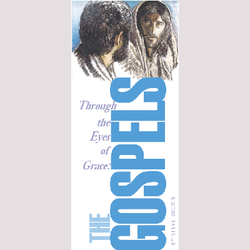
A companion booklet taken from Steve’s classic overview study of the New Testament. Highlights of the Gospels—Matthew, Mark, Luke, and John—including introductory comments, major themes, and important teaching. This is great preparation for Key Life’s Gospels broadcast series this year that begins this month.

Featured Offer
A companion booklet taken from Steve’s classic overview study of the New Testament. Highlights of the Gospels—Matthew, Mark, Luke, and John—including introductory comments, major themes, and important teaching. This is great preparation for Key Life’s Gospels broadcast series this year that begins this month.
About Steve Brown, Etc.
Key Life exists to communicate that the deepest message of the ministry of Jesus and the Bible is the radical grace of God to sinners and sufferers.
Because life is hard for everyone, grace is for all of us. And grace means that because of what Jesus has done, when you run to him, God’s not mad at you.
All of the radio shows, sermons, books, and videos we produce work together toward one mission: to get you and those you love Home with radical freedom, infectious joy and surprising faithfulness to Christ as your crowning achievement.
Learn more: http://www.keylife.org
About Steve Brown
At Key Life, Steve serves as Bible teacher on the radio program Key Life and the host of the talk show Steve Brown, Etc. Prior to Key Life, Steve served as a pastor for more than thirty years and continues speaking extensively.
Steve has also authored numerous books, including How to Talk So People Will Listen, Three Free Sins, Hidden Agendas and his latest release, Talk the Walk: How to Be Right Without Being Insufferable (now available as an audiobook).
Contact Steve Brown, Etc. with Steve Brown
steve@keylife.org
https://www.keylife.org
P.O. Box 5000
Maitland, FL 32794
In Canada, send requests to:
Key Life Canada
P.O. Box 28060
Waterloo, Ontario N2L 6J8