
Michael Guillen | The Invisible Everywhere | Steve Brown, Etc.


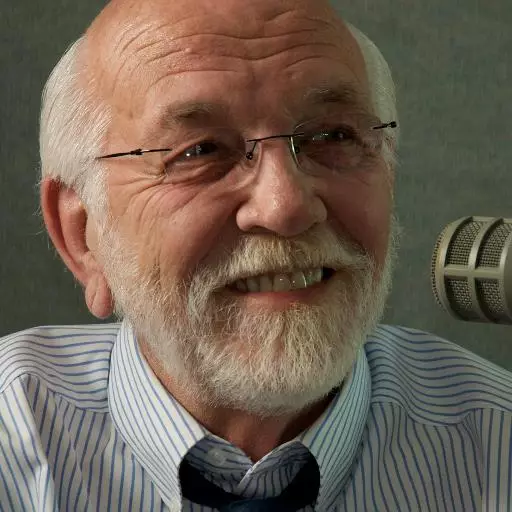
He was an atheist and science devotee – then that science led him to God. This week, Steve and the gang chat with author and former ABC News Science Editor Michael Guillen about why "believing is seeing."
The post Michael Guillen | The Invisible Everywhere | Steve Brown, Etc. appeared first on Key Life.
Guest (Male): Michael Guillen, an atheist follows science, then science leads into God. Let's talk about it on Steve Brown, Etc.
Voiceover: He's an old white guy, an author, broadcaster, and seminary professor who's sick of religion. And he's brought friends. Please welcome Steve Brown, etc.
Steve Brown: Hey, we're so glad you're here. We recognize that you give us a gift of your time. We also, I might say, give you a gift of our time. So it's copacetic and it's all good. In case you're wondering, I'm Steve, the aforementioned old white guy. Matthew Porter is here. He's our executive producer. Matthew, are you into science?
Matthew Porter: Well, let me say this: I want a whole bunch of Pop Rocks and then chase it with Coke to see what would happen. That's not not science.
Steve Brown: Where did you publish this study, Doctor?
Matthew Porter: And he began to see subatomic particles.
Steve Brown: Our producer Jeremy is in his little glass booth. Jeremy plays bass in an Elton John cover band. Jeremy, don't let those pagans lead you astray. Saturday night is not all right for fighting.
Jeremy: Well, there goes my plans for the weekend. Dang.
Steve Brown: Our one-man IT department John Myers is in the tech bunker. John says we've had AI Steve for years, if by AI you mean always irritated. That gets kind of personal.
John Myers: And Dr. George Bingham is the president of Key Life. This week was opening day for Major League Baseball, though George says the term national pastime should be reserved for slowly sliding into soul-crushing debt.
George Bingham: And Kathy Wyatt is the soft feminine side of the program. This past Monday, Matthew started working out again. And as if sensing that in the air, Kathy showed up the same morning with homemade chocolate cupcakes.
Kathy Wyatt: It never fails.
Matthew Porter: And cake today, Matthew. I know. You brought in reinforcements.
Kathy Wyatt: It's my kryptonite. Do we get to vote? I got to ask one question: Do we get to vote on the AI thing about Steve? About the irritating part?
Steve Brown: I'm the boss. You don't. Just forget it.
Kathy Wyatt: Just wanted to ask.
Steve Brown: We have a great guest today. He's a scientist, an author, a film producer. He is quite intimidating, frankly. He holds degrees from UCLA and Cornell, was a physics instructor at Harvard for eight years. He served as the Emmy Award-winning science editor for ABC News for 14 years and he's written numerous bestselling books. His latest project is a documentary that is going to blow you away. *The Invisible Everywhere: Believing is Seeing*.
That's an Augustinian quote, by the way. I think you should have given credit to him in your title. I feel kind of like a mosquito in a nudist colony. I have so many questions and so much to do, I don't even know where to start. So, Michael, why don't you give us something of your story? Most of us, when we think science, think pagan. And when we think of clergy, we think of God. And never shall the two meet. Something happened to you, so tell us a little bit about you and your story.
Michael Guillen: Boy, isn't that the truth. Thank you for the very gracious introduction, Steve. I'm still thinking of Kathy's chocolate cupcakes. I haven't eaten lunch yet, so I'm kind of hungry. I'll try to focus on your question. They don't do well in the mail.
I was born in East Los Angeles and fell madly in love with science in the second grade. I have a very clear recollection of that. At that time I thought to myself, well, any decent would-be scientist should live by a very pragmatic motto. And so I adopted the motto "seeing is believing." It's that kind of prove-it-to-me, I've got to see it to believe it.
So that was a motto that carried me through to my teenage years. I also along the way felt that logic and reason was superior to faith. So the whole idea of having faith in some invisible God was just not at all on my radar. I wasn't hostile about it, I just didn't care. Science at that point was my god and continued to be my god for quite a number of years.
Then by the time I got to grad school, Steve, I found out I was dead wrong on both counts. Because I remember taking a class in astronomy and one of my professors was Carl Sagan, a very famous astronomer. I just happened to be at the right place at the right time. It was really kind of dumb luck.
But I learned about something called a missing mass problem. To keep it simple because I know our time is limited, it hearkens back to 1933 when an astronomer named Fritz Zwicky—do you love that name or what? Fritz Zwicky. He was studying groups of galaxies that kind of spin very slowly like a slow-moving merry-go-round.
What he discovered is that they're spinning way faster than they should be. And the question was why? What's driving that extra spin? And when he did a calculation, he found out that these groups of galaxies had some kind of invisible material within them, permeating them, that was causing it to spin faster than normal.
He didn't know what that invisible material was, but he gave it a name in German, *dunkle Materie*, which is German for dark matter. And of course, we now know many years later that dark matter represents more than a quarter of the universe, or what we call the universe. What we call the universe is not the entire enchilada.
We now know that there's dark energy. So when I was this young 20-something grad student at Cornell, I realized wait a minute, I've been living by the motto "seeing is believing," but here I'm learning that most of the universe, or what we call the universe, is not visible to me. I can't see it. So I had to ditch that motto because otherwise, I couldn't believe in most of the universe that's out there. And the question was, well, what motto do I live by? That's a story we can explore.
The other thing I discovered was faith is not a mental weakness. And it's not inferior to logic, quite the opposite, actually. I discovered that faith is an absolute prerequisite, a necessary prerequisite to any healthy life, including being a scientist. I have to have faith in the scientific method in order to be a scientist. So, anyway, my whole life was turned upside down in grad school. That for me, I think, was when everything started changing.
Steve Brown: Did you encounter—were you censored? I mean, that kind of sticks out like a sore thumb in that particular community, at least I think so. And did that cost—no, obviously it didn't cost your career-wise. You've done quite well. But did you find people thinking, well, he's okay, he's just a little crazy in this one area?
Michael Guillen: Well, the short answer is yes. Without getting into too much detail, yes, all through grad school and even at Harvard, I encountered this attitude of it was kind of just assumed that you don't believe in God. If I'd go to parties—you don't want to ever go to a party of physicists. Trust me. They don't serve chocolate cupcakes.
They've got to be the most boring thing in the world because all you do is talk shop and God forbid you should raise the issue of the three-letter word, G-O-D, because then you're looked at like you have two heads. I remember a story once at Harvard, a gentleman who ended up actually winning the Nobel Prize and I taught with him at Harvard, and we were having a discussion about Robert Millikan, who was a very famous physicist, ended up winning a Nobel Prize himself for something called the Millikan oil drop experiment.
But he happened to also be a Christian. And I remember when the subject came up, my colleague at Harvard kind of snooted and said, yeah, he was smart, but he was a Christian, a real lowbrow. And that was the word he used: "lowbrow." So, yeah, I encountered that and honestly, Steve, and I look back and I'm ashamed of it. I kind of went along to get along. And now I don't care. I'm completely candid about what I believe, and I'm fine. As you say, my career has not been hurt one iota. Just the opposite, actually. It's pretty amazing.
Steve Brown: Oh man, good story. And good for you. I'm all for "what the hell" attitude and not caring. It's surprising what God can do with somebody. Latin for that is *quid inferora* and it means what the hell. And God has gifted you with that. Guys, we're going to give you some details about where you can see this documentary. It's what I've seen of it is incredibly amazing. It's going to blow your world apart and you're going to love every second of it. Don't you touch the dial or the screen because you don't want to miss a minute of this interview. We're going down roads you haven't gone down before and you're going to hear things you never heard before. But we got to rest. This is hard work. We'll have some milk and cookies and then, like Jesus, we'll come back.
Guest (Male): Welcome to The Vault, your home for classic sermons from Steve from the '90s, the '80s, even all the way back to the early '70s. The Vault is a one-of-a-kind online experience where you can explore more than three decades of grace-filled messages. Get the details and check out our free audio sample at keylife.org/vault. That's keylife.org/VAULT.
Steve Brown: Hi, this is Steve Brown, and in case you didn't know, one of the main reasons Key Life exists is to remind believers that God isn't mad at His children. Why am I telling you this? Because our weekly email Key Life Connection takes the best of the videos, articles, and puts them right in your inbox. We'd love for you to try it. It's free. Go to keylife.org/subscribe.
Dr. Michael Guillen is our guest. Thanks for joining us. He's a scientist, an author, a producer. His new project, write this down because you don't want to miss it, is a documentary called *The Invisible Everywhere: Believing is Seeing*.
Matthew Porter: Michael, in the last segment we talked about your motto of "seeing is believing" and how as you investigated further that kind of started to fray and not be a tenable life motto. But off-air a second ago, you were saying there was a specific moment where your life really radically changed and I would love to hear what that was about.
Michael Guillen: It was when I graduated from Cornell and I was heading up to Cambridge. I decided to take a little detour to Washington, D.C., to the Smithsonian because I heard there was a seminar going on based on the novel *1984*, and I was just very interested in that. And so I went there and the event at the Museum of American History was being hosted by Fred Graham.
You may remember Fred. He was a Southern gentleman, real strong Southern accent, and he had curly white hair. He was the legal editor for CBS News and I had seen him on TV. And so after the event, there was a reception in the rotunda of the museum and I saw him standing there by himself next to a really pretty woman.
I've never been shy, even though I've been a kind of lifelong nerd, but I've never been shy. And so I just decided, well, I'm just going to go introduce myself. So I said, Mr. Graham, I'm Michael Guillen and I've seen you on TV. I'm just honored to meet you, sir. And so he said, oh, well, thank you. He said, what do you do? I said, well, I just graduated from Cornell. I'm heading up to Harvard to teach physics.
He said, oh, you're a scientist. I said, yes, sir. And he said, well, maybe you can settle an argument I'm having with my producer here. And I'm thinking, oh Lord, what have I stepped into? I wasn't bargaining for this. But then he said, well, you know that big pendulum that's out there on the rotunda? I said, yes, sir. That's called a Foucault's pendulum.
He said, yes. He said, well, she thinks that once you get it going back and forth, it'll just keep going back and forth forever. You don't even have to push it ever again. I think you have to push it quite often. So I'm always the diplomat. I'm thinking, okay, how can I resolve this war without hurting anybody's feelings?
And so I said, well, you're kind of both right. I said, there's not a lot of friction, just where the metal cable attaches to the ceiling. I said, there is a little bit of friction there, so once you get it going, yeah, every month or two you do have to keep it moving on. Whatever I said, however I said it, to this day I don't know, but oh, Mr. Graham just lit up and he said, would you think—that was the best explanation—would you think about going into television?
And I'm thinking, what? I'm on my way to Harvard to teach physics. And he says, well, you know Jonathan Katz over at CBS Morning News is looking for his science and technology editor. He says, do you mind if I put your name in the ring? I said, no, sir, I don't mind. And so then I got to Cambridge and I didn't think about it, but like a month or two later, sure enough, CBS News hired me to be their science and technology editor for the CBS Morning News.
That was really the beginning of my television career. Came out of the nowhere, but I do believe that it was God. It was definitely the most obvious first time that God's hand intervened in my life. Because at that point I wasn't a Christian yet. I was seeking, but I hadn't decided yet what I wanted to be.
I think that was the first time that the good Lord put me on the path that he wanted me on. And here I am with you talking. I don't think if that single event had not happened—and it seemed random, but I don't think it's random—I wouldn't be here talking with you right now. I'd probably still be holed up in a lab somewhere just being a scientist and nothing more.
George Bingham: It was really the attractive woman that took you over there, right? We got your number, Michael.
Michael Guillen: I confess, I confess. Well, I married a pretty sorority girl, so I do have an eye. There you go. Established the pattern early.
George Bingham: Michael, the documentary is just fascinating. You're a physicist, and you really take the approach of the unseen, or the "believing is seeing," from kind of the physics and the discovery standpoint, discovery in physics. Can you give kind of a quick overview of what people would see in the documentary?
Michael Guillen: Yeah, I'd be happy to, George. I think the documentary is meant to recreate basically my journey from atheism to believing in God. And the agent of that change was science, my beloved science. And it was completely unexpected because as I said, since the second grade, I just not only loved science, I worshipped science. I thought science would answer all the questions I ever would have in my life.
So this movie, *The Invisible Everywhere*, I want to take the viewer on that journey that I took and start out by saying, okay, this is who I was. I was a kid who was in love with science and I believed that seeing was believing. And then I take them on a journey and I think there are like eight or nine legs to the journey.
Each leg of the journey reveals something new that I discovered on my journey from atheism to believing in God. And I just want people—I don't preach to people, I'm not trying to convert anybody, I'm just trying to chronicle, if you will, the journey I took in life. And it was a profound life-changing journey.
And I do believe that people who will see it will also have their minds changed. If they're believers already, I think they'll find a good deal of evidence to support, to validate their belief in God. If they're seekers, then I think it will give them some guidance as to how science points towards God, not away from God.
Every leg of the journey in this movie takes you deeper and deeper and deeper into the unknown, deeper and deeper into the invisible universe that's out there, but also the universe that's within us. I often say that there are a lot of documentaries on the visible universe. Pretty galaxies, pretty stars, pretty solar systems. That's great.
What I wanted to do with this movie was to show people the invisible universe they've never seen before, beyond us and within us. I often say it like this: yes, we inhabit a mostly invisible universe, but we are also inhabited by a mostly invisible universe. I'm talking about the human mind and the human spirit.
And I talk about all that in the movie. I go stage by stage and by the end of it, you can see clearly, any viewer, whatever, whoever they are, wherever they are, whatever they believe or don't believe, they will clearly see the transformation I underwent from atheism to believing in God. I think it's pretty compelling, again, without preaching to anybody. I don't want to preach.
Steve Brown: Well, I'm glad. I'll do that part. And I'll pick up the collection. Right. I know he's not going to be preaching, but let me give you a good bit of advice from the old guy. Find every unbelieving pagan you can and suggest strongly that they watch this documentary. And then for God's sake, just get out of the way.
We got more and if you miss any of this, you're absolutely crazy. The documentary is called *The Invisible Everywhere: Believing is Seeing*. You're going—if you're a believer, you're going to go, "Yeah!" If you're not, you're going to go, "Oh."
Steve Brown: Hey, thanks for listening to *Steve Brown, Etc.* and if you're enjoying the show, would you help us let others know about it? You can share a link, click subscribe on our YouTube channel, or drop us a review on your favorite podcast platform. Thanks much.
Hi, this is Steve Brown, and I'm excited to tell you about a new offer from Key Life called *Living with Steve*. Let me tell you the way it works: I travel with you wherever you go. If you need an entertaining conversation or even a sermon, there I am. That's the good news. The bad news is that it costs a million bucks. But wait, there's good news. You can get everything I've just described with the Key Life app. And for a limited time, it's not a million dollars, it's free. Try it now at keylife.org/app.
Dr. Michael Guillen is our guest. We're hanging out with him and it's lots of fun and we're learning all kinds of neat stuff. If you want to kind of check in with him, write this down: michaelguillen.com. That's G-U-I-L-L-E-N dot com. And you can follow him on Substack: morethanmeetstheiq.com.
Matthew Porter: That's a good one. Dang it. Gosh, who's the clever person that writes all that stuff? Michael, we've referenced, and you referenced, that you had the good fortune actually to study with Carl Sagan. I think a lot of people would recognize that name and probably as among those sort of renowned atheists that got into debates and so forth. You mentioned you had an interesting story with interaction with him. Can you tell us that?
Michael Guillen: Yes. It was I think maybe about the second year into my grad studies. I was asking some pretty deep questions and one of them was, where did the universe come from? And I had already learned from my professors at Cornell that the answer science provided me is called the Big Bang theory. Now we have different flavors of Big Bang theory, the inflationary Big Bang theory right now is the preferred flavor, but it's basically the same idea that there was nothing and then there was something that exploded into being.
I was young and I was in love with science, but it just didn't satisfy me. And if I'm anything, I'm an intellectual. And my motto has become: ask tough questions, demand honest answers. Ask tough questions, demand honest answers. So I was asking a tough question: where did the universe come from? Where did we come from? And I was not satisfied with the answers that I was getting from my beautiful beloved science.
So I dared to do something I would have never thought I'd do in my life, and that is to step outside the scientific sandbox or the scientific playground and explore the religious world. I'd never even considered that. But then here I am in Ithaca, New York, a young 20-something, and where do I even begin?
And that's where Carl comes in because at that time he was just becoming famous. He was on the *Johnny Carson Show*. He was getting ready to do the *Cosmos* series. In fact, I had a front-row seat on the making of *Cosmos*. I got to know the executive producer, Adrian Malone. He and Carl kind of locked horns, but that's another story.
But every time Carl would be interviewed by reporters, I noticed that he would refer to something called the Vedas. The Vedas this, the Vedas that. He was an unbelieving Jew, but he would talk about the Vedas, the Vedas. And I thought, well, if the Vedas are important to Carl and he's a famous astronomer, maybe that's where I should start.
This was before Google, so I had to go to the Olin Library, which is the grad student library at Cornell. I went into the stacks and I looked up the Vedas. Sure enough, it's the Hindu religion's sacred literature, the sacred literature of the Hindu religion. I thought, okay, well, this is as good a place as any to start.
Then I ran across Hermann Hesse, who is the Nobel Prize-winning German novelist. And he wrote all these novels: *Siddhartha*, *Narcissus and Goldmund*, *Beneath the Wheel*. I started reading them as well, and I was fascinated by them because most of the time his protagonists were these tormented intellectuals, in search for the answers to their deep questions.
I thought, well, that's me! I'm one of those tormented intellectuals looking for answers to my deep questions. So I related very strongly to Hermann Hesse's characters and many of them were Hindu, so it went beautifully with my study of Hinduism. Then a friend of mine at Cornell gave me a copy of the *I Ching*, so I started looking into Chinese mysticism, Confucianism, then transcendental meditation was a big thing back then.
A guru was making the rounds of college campuses back then, and the reason I liked that is because the guru said, listen, if you become a devotee of transcendental meditation, you can levitate. Well, for a nerd like me, I'm thinking, wow, if I can violate the laws of gravity, I'm in. That's for me.
And so I explored that and then my thesis advisor, Richard Liboff, may he rest in peace, was Jewish, and so he would start taking me to Shabbat services on Friday night. I say that's where I learned how to love chopped chicken liver because after every Shabbat service, he would take me home for a little *oneg Shabbat* and he would serve me his mother's chopped chicken liver.
I said, you know, Richard, my mom tried to fatten me up with liver when I was a kid. I don't like it. He said, "No, no, no, try it. This is my mom's recipe." I tried it, and I actually loved it. So I say on my way to Christianity, I learned how to love chopped chicken liver. And Islam and the whole nine yards. It really wasn't until one Valentine's Day something happened to me in Valentine's Day.
When I look back, Carl's constant reference to the Vedas, the Vedas, is what launched me on this spiritual journey of mine that ultimately ended me up as a Christian, which is what I am right now.
Steve Brown: Boy, that's circuitous. I love it. In the South, we call that "the vapors." You know, I'm thinking more kindly of Carl Sagan than I did before. If he weren't dead, I'd be praying for his death, but I wouldn't now that I have seen the great impact that he had on Michael. Listen, we're going to have him finish that story when we get back, so you don't want to go anywhere. This is really good stuff. And in the next segment, we're going to tell you where you can see the documentary *The Invisible Everywhere: Believing is Seeing*. You ought to look at it and you ought to get every friend you've got to have a pizza party in your living room and watch it together. You'll all have a worship service.
Guest (Male): Hello, this is Pastor Jerry Q-Parry's again and I'd like to take a moment to ask you to pray for and give to Key Life. When you pray, ask for wisdom and blessings and that Key Life will continue to spread the message of God's grace for many, many years to come. And if you can give, please give as generous as you are able and you know that we will be faithful with every gift, big or small. Thank you.
When Christ promised we could live life to the full, He didn't just mean eventually in heaven, because Jesus didn't come to save us from our humanity but to restore it. Life with a capital L. Find it now at keylife.org/store.
What if you could start your day by hanging out in God's Word and with some of the most significant theologians, authors, and pastors ever? That's the idea behind the one-year devotional, *God with Us*. Find it now at keylife.org/store.
Dr. Michael Guillen is our guest. Michael, give us some information about where people can see this documentary. It's dynamite. *The Invisible Everywhere: Believing is Seeing*. And I want to get to your Valentine Day story, but first tell us how this is going to be seen by the people who are listening and watching this program.
Michael Guillen: I think this is one of the exciting things, Steve, about this movie is that we are going to premiere the movie worldwide on April 8th on theinvisibleeverywhere.com. Theinvisibleeverywhere.com. When I say worldwide, it's because it's online, whether you're in Bangkok or whether you're in London or whether you're in Sydney, Australia, because I have people following me from all over the world, they're going to be able to participate in this worldwide event.
I'm really excited about that because otherwise, we thought about distributing it theatrically, but then you have to think, well, what theater is it going to be at and when is it going to be there and oh, I can't make the 2:00 showing but maybe I can make the 6:00 showing. No, April 8th, it's right in your home. You can show it on your big LED screen or on your phone or on your computer screen and everybody will be able to see it starting April 8th. When you log in, you'll see the box office and you'll take it from there, just like you would a normal movie. I'm really, really excited about that.
Steve Brown: Okay, tell us the Valentine's Day story.
Michael Guillen: I've already explained to you how Carl Sagan's reference to the Vedas launched me on my spiritual journey and I explored all these world religions. Now I have to tell you one more thing, and that is, during my years at Cornell, what I would typically do is work about 20 to 21 hours a day, seven days a week.
I would get up at 6:00 in the morning, I would get back to my dorm room about 3:00 in the morning, and then I would spend the whole time in my basement lab. I didn't know if it was day or night and I didn't particularly care. I was on top of the world. I was becoming a scientist. It was my dream since the second grade.
One particular night, it was about 3:00 in the morning, I'm walking across campus. I always loved walking across campus at that hour of the night because everybody was asleep and it was quiet and I love that. I go to my dorm, the tiny little dorm room in Sage Hall. I open the door and I hear a scraping sound under the door.
I look down and I see a white envelope with my name on it. I was just kind of puzzled. I opened the envelope. It was a Valentine's Day card from a gal named Laurel. I'm thinking, Laurel, Laurel. I remember teaching a Laurel physics about two years earlier. We called it physics for poets.
Sure enough, that was her. Some days later, I chased her down or I ran into her in front of the bookstore and I thanked her. Then we got to know each other. She was a lapsed Catholic. As we got to know each other, she said to me one day, she says, "You know, I'm a lapsed Catholic. I'm seeking for answers. You seem to be seeking for answers. You've explored all these exotic religions, Hinduism, Buddhism, all the rest. Have you ever read the Bible?"
It was like a penny dropped. It was like, no, and probably for two reasons. Number one, my impression is that Christians hate science. Science is the love of my life. So why would I want to read the Bible? And the other reason is because I grew up hearing about the Bible and I just didn't feel like it would have anything to teach me. Kind of been there, done that, seen that, even though I had never read the Bible. I had just growing up in a Christian environment, I just thought it was boring.
But then she said something, Steve, that changed my life forever, just like Mr. Graham did at the Smithsonian with the pendulum. She said this to me. She said, "Well," she says, "I haven't read the Bible either, but if you read it, I will read it with you."
You know what? I wasn't as dumb as I looked and I never had a girlfriend before in my life, and she was a pretty sorority girl, Kappa Kappa Gamma. It was like Beauty and the Beast, and I'll leave it to you to decide who was who here. I think it's pretty easy to figure out. I mean, if you see pictures of me in grad school, ooh, pretty scary.
I didn't even have to think about it very much. I said, okay. I didn't really care about the Bible. I just figured, hey, that'll give me an excuse to spend a little more time with this pretty girl. It was a whole novel thing for me to have a girlfriend.
We took two years to read the Bible. I remember the Old Testament quite honestly didn't make a big impression on me. To me, it was very logical, an eye for an eye, hate your enemies, love your friends, and all that sort of thing. But I'll never forget the day we turned the page on the Old Testament and started the New Testament.
This character, Jesus, started speaking in a way that I now call "translogical," where he turns logic upside down. The first shall be last. Love your enemies. You have to die in order to live. The reason that made an impression on me, the reason his upside-down logic or what I call translogical reasoning made an impression on me is because bingo, it exactly sounded like quantum mechanics.
Because what we've discovered in quantum mechanics is the most profound truths of the universe are not logical. They're actually anti-logical, they're translogical. So in my little 20-something, scientific nerdy brain, when I listened to Jesus talking like this, I said, "Wow, no sacred person of any religion I've ever studied talks like this."
It just was enough to catch my attention. It didn't make me drop to my knees. I didn't go, "Praise Jesus, I've become a Christian." No, I'm a hard-headed intellectual, so it took me decades, really, to become a Christian, to surrender my life to Jesus, for him to become my Lord and Savior. But it was enough that the hook was in. I look back at that moment and I think again like I did with Mr. Graham, what are the odds that I would get that Valentine's Day card and that it would lead me to reading the Bible and then eventually becoming a Christian? It's really amazing to me. Beautiful.
Kathy Wyatt: Michael, I just want to make just one comment. I was going to ask a question, but just one comment. I can barely spell physics. I come from and I grew up in the church, etc., Christianity, etc. So I'm coming from a polar opposite place where you came from.
But the reason why I'm really having enjoyed this movie so much is because I've always sensed as a kid growing up in the church that there was always this conflict between science and faith. In the church, we get to a point and the only science that you ever really heard in the church was God created the heavens and earth in seven days and then after that nobody would talk about it.
I think the thing that's so great about your movie that I hope people will watch is there really is the beginning of what so many of us never really got to see, that you really can bring those two things together. I never, ever would have learned that or been able to do that. So thank you for doing it. Thank you for doing this.
Steve Brown: And Michael, thank you for spending this hour with us. I wish we had three or four hours, or maybe three or four days to spend with us. You get three free sins for spending this hour with us and I have it on good authority you're way behind, so use them very carefully. Michael, you're a gift. Thank you very much. Guys, we're going to come back and we'll tell you who we're going to do it unto next week. And you're going to be real amazed.
Hey, thanks for listening to *Steve Brown, Etc.* and if you're enjoying the show, would you help us let others know about it? You can share a link, click subscribe on our YouTube channel, or drop us a review on your favorite podcast platform. Thanks much.
What if you could start your day by hanging out in God's Word and with some of the most significant theologians, authors, and pastors ever? That's the idea behind the one-year devotional, *God with Us*. Find it now at keylife.org/store.
This is Pete Alwinson and if you're a guy, I want to show you how to recover and reclaim an intimate growing relationship with your Heavenly Father. Check out *Like Father Like Son: How Knowing God as Father Changes Men*. Available now at keylife.org/store.
Believer, I want you to remember that where sin abounds, grace does much more abound. And you will run out of sin before God runs out of grace. *Grace: The Real Good News of the Gospel*. Find it now on keylife.org/store.
What a great hour. We just took a vote and we decided to have Michael back once this thing gets going and kind of see, hear some of the stories of what God's going to do with this documentary. Be sure and watch it. Everybody here has seen it except me. Kathy sent it to me three or four weeks ago and I was doing something else and deleted it.
I tried to get it back this morning and you couldn't. So I haven't seen it. I'll be watching it with you and rejoicing in what Michael will be teaching all of us about the connection between science and faith. Jesus did say that he was the truth. He didn't just speak truth, he was the truth.
Wherever truth is spoken, Jesus is there because he is truth. And in a documentary like this, all of a sudden we're hearing truths we haven't heard before. We're thinking thoughts we haven't thought before, and they're true. They bring together science and faith in an amazing way, and Jesus is going to show at the same time.
So what was the date again? April 8th. Theinvisibleeverywhere.com. Check it out, because Jesus will meet you there. Because he doesn't just speak truth, he is truth. Jeremy, you were going to say something.
Jeremy: I had one real quick thing to say. I wanted to say it earlier, but that's okay, I'll mention it now. Werner Heisenberg, super famous. Sounds like a made-up name. Not a real person. He said, "The first sip of science will make you an atheist. But at the bottom of the glass, God is waiting for you."
That is basically Michael's story. So often we hear stories of scientists, very famous ones, who are atheists, but frequently there's some very serious people who are like, yeah, not only is God real, but this is how I found him through the scientific method. I couldn't deny that fact. So I have really enjoyed this whole study.
Kathy Wyatt: It's like Dr. Hugh Ross, the same thing.
George Bingham: Who's going to be here next week?
Kathy Wyatt: Well, speaking of heady material, and weren't we? Next week, your friend Dr. Michael Horton. And we love Michael because he really does know how to get things down where we can understand. But catch this, okay? This is his new book. It's part of a trilogy. This is the second one. *Magician and Mechanic: The Root of Spiritual but Not Religious from the Renaissance to the Scientific Revolution*.
Steve Brown: You know how to pick them, Kathy. Light reading.
Kathy Wyatt: He's your friend.
Steve Brown: Well, that doesn't mean—yeah, he's my friend. I know. It'll be good, trust me on that. Join us, same time, same place, and don't do anything we wouldn't do before next week.
Featured Offer
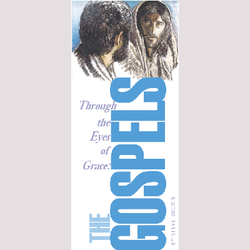
A companion booklet taken from Steve’s classic overview study of the New Testament. Highlights of the Gospels—Matthew, Mark, Luke, and John—including introductory comments, major themes, and important teaching. This is great preparation for Key Life’s Gospels broadcast series this year that begins this month.

Featured Offer
A companion booklet taken from Steve’s classic overview study of the New Testament. Highlights of the Gospels—Matthew, Mark, Luke, and John—including introductory comments, major themes, and important teaching. This is great preparation for Key Life’s Gospels broadcast series this year that begins this month.
About Steve Brown, Etc.
Key Life exists to communicate that the deepest message of the ministry of Jesus and the Bible is the radical grace of God to sinners and sufferers.
Because life is hard for everyone, grace is for all of us. And grace means that because of what Jesus has done, when you run to him, God’s not mad at you.
All of the radio shows, sermons, books, and videos we produce work together toward one mission: to get you and those you love Home with radical freedom, infectious joy and surprising faithfulness to Christ as your crowning achievement.
Learn more: http://www.keylife.org
About Steve Brown
At Key Life, Steve serves as Bible teacher on the radio program Key Life and the host of the talk show Steve Brown, Etc. Prior to Key Life, Steve served as a pastor for more than thirty years and continues speaking extensively.
Steve has also authored numerous books, including How to Talk So People Will Listen, Three Free Sins, Hidden Agendas and his latest release, Talk the Walk: How to Be Right Without Being Insufferable (now available as an audiobook).
Contact Steve Brown, Etc. with Steve Brown
steve@keylife.org
https://www.keylife.org
P.O. Box 5000
Maitland, FL 32794
In Canada, send requests to:
Key Life Canada
P.O. Box 28060
Waterloo, Ontario N2L 6J8