
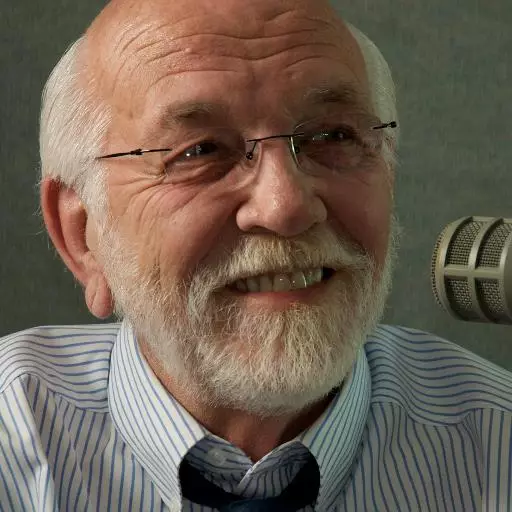
Mary DeMuth | Restory Your Life | Steve Brown, Etc.


You can go from a life of woe to a life of WHOA… How? By letting Jesus rewrite your story. This week, the Etc. gang chats with Mary DeMuth about […]
The post Mary DeMuth | Restory Your Life | Steve Brown, Etc. appeared first on Key Life.
Matthew Porter: You can go from living a tale of woe to a tale of whoa. How? By being restoried. What does that mean? Let's talk about it with author Mary DeMuth on Steve Brown, Etc.
Kathy Wyatt: He's an old white guy, an author, broadcaster, and seminary professor who's sick of religion, and he's brought friends. Please welcome Steve Brown, Etc.
Matthew Porter: Yeah, that's the name of the show, Steve Brown, Etc. Welcome. My name is Matthew Porter. I am your humble guest host today. Never fear, Dr. Brown will return next week. So excited for our show today, and I'll explain why in just a moment.
Our producer, Jeremy, is in the little glass booth just back from a band gig in Nevada. You know, Jeremy, a lot of people make fun of bass players. Our one-man IT department, John Myers, is in the tech bunker. Speaking of stories, John actually wrote a novel. It starts out like this: "It was the best of times, it was the worst of times. Just kidding, it was the worst of times because everyone's computer was broken." That is a story of John's life.
George Bingham: Have they tried turning it off and on? That's the plot twist.
Matthew Porter: That was Dr. George Bingham. He is the president of Key Life. George just watched the Oscars and yet again, no lifetime achievement award for Chuck Norris. What's wrong with that? Tragedy, scandal.
And Kathy Wyatt is the soft feminine side of the program. And just so I don't forget, Kathy, an early happy birthday to you. You really were low on copy today, weren't you? Is it September? August. But it's close enough. With kids, it's the vacation month. Exactly right.
Guys, so stoked for today's show. As somebody who has spent the last 30 years doing writing, directing, producing, I am super excited about what we're going to talk about today, which is basically Jesus and story.
Our guest is Mary DeMuth. She is an international speaker, a literary agent, podcaster, and the author of nearly 50 books. Not even 50, Mary? Really?
Mary DeMuth: Actually, it's now 53. I need to change my bio.
Matthew Porter: Nearly 55. She's probably going to finish another one before the show is over. Prolific. Her writing has been featured in Christianity Today, The New York Times, and the Washington Post. Mary's latest book is called Restory Your Life: How Jesus Reframes Your Past, Rewrites Your Present, and Redefines Your Future. Mary, thanks for joining us today.
Mary DeMuth: This is a delight to be here. Thank you for having me on.
Matthew Porter: Awesome. So, as is often the case, a writer's background informs what inspired them to set out to write a thing. Your story started out unbelievably hard. I was reading about it, seeing a video about it, and just almost teared up on some of those things. What should people know about your backstory just as a way of context for what we're going to talk about?
Mary DeMuth: I definitely score high on childhood adverse experiences. One time I took that test and it was like, oh, I really got an A on this. I should no longer be here, broke the curve. To give a rundown, there were multiple divorces. There was the death of a parent. My father took his life when I was 10 years old. Drugs in the home, unsafe environment, lots of neglect, abuse. And then a year-long sexual assault, sexual abuse by teenage boys in my neighborhood.
All of those things added up to—and I was an only child, so there just wasn't another sibling to process all of that trauma with—it was really extreme. That kind of brought me to a crisis point, as you can imagine. When my biological father died, who was also a predator—a sexual predator—I didn't realize he was because I was a kid. In retrospect, I realize all the grooming that was taking place now. But he was my hero. Everything was thrown onto him as like, my hero just died.
So from that point on until about the ninth grade, I was really brokenhearted and really didn't know why I was on the earth. I didn't know the Lord. I just thought I was on the earth to be exploited, abused, or neglected.
Matthew Porter: There was a plot twist there. Tell us about that. When did that happen? What were the circumstances?
Mary DeMuth: It began to happen in the eighth grade where I really was falling apart. My mom was going through a third divorce and I was losing another father. I was just a little girl that needed a daddy. There was a man that stepped into that place. He was a counselor at my junior high, Mr. Thompson. He gave me a hall pass that allowed me to get out of class at any time when I would cry. I was a good little student, so I wasn't taking advantage of it.
And then in the ninth grade, he really saved my life by just listening to me and being a good counselor. In the ninth grade, I had a friend who invited me to Young Life and I just began hearing about Jesus every week. The one story that stuck with me through the summer of my ninth-grade year was, "Who is this that even the wind and seas obey him?" As a sophomore, I went to a weekend retreat for Young Life and heard the whole gospel in one sitting.
I gave my heart to the Lord at that point. It wasn't because I felt like I'm such a sinner, although of course that would come, but it was like, I just need a dad who's not going to leave me. That's how I met Jesus. We've been on an adventure of a long-term healing from that point on.
Matthew Porter: The way you lay out the stories is so evocative, describing the circumstances and being out in the woods. Very powerful. So what led to this idea of being restoried? What does that mean?
Mary DeMuth: I spent a lot of years healing in a variety of ways. I just want to stop in this moment and say if you're in that place where you're in the slog of it and you think it's never going to end, I just want to tell you there is hope. For a long time, all I thought was all that can be good is just being healed. I don't know that I'm fully healed until I'm on the other side, but I definitely am a lot more healed than I used to be. I realized that I got to that point and I was like, there's got to be more than this.
The Lord, about 10 years ago, dropped in that little idea of restory. We are healed to become agents of healing in the kingdom. We are set free to become emancipators. So there's this, yes, you're going to be healed, but there's a "so what" to it. It fits into the topography of the kingdom. There's this beautiful thing that happens that I can't even explain, the joy that happens when I get to stand alongside a person with a hard story and just listen, bear the weight of their story, and pray for them and watch them be set free.
Not only are you healed and you're set free so you have this flourishing life, but now there's this task that's given to you, this holy task of intervening in people's lives. There's nothing better than that.
Matthew Porter: Reminds me of something Steve says of when you have a broken heart, God will heal it 95% because you need that 5% to connect with the other people who have not started healing at all. You can speak to them and meet them on level ground. Talk about who the book is for. Paint the picture of your audience here.
Mary DeMuth: It's really for anyone who wants to exegete their story. They want to go and dig in and figure out what does this all mean. As a storyteller myself—I'm a novelist as well as a nonfiction writer—I try to help people. I walk them through the story structure, the story arc, the hero's journey, and help them identify the characters in their lives, the pain points that they've gone through, the climax of their story. What does the denouement look like, which is the working out of the climax of the story? I help shepherd people through their own stories.
Matthew Porter: Reading the book, you definitely touch on the academic points but toward the end of getting to a very practical, very actionable process. We'll get into that a little bit more on the other side. But the way you invite the reader in and explain like a good guide, you just point out the features and suggest the way.
We'll get into that a little more on the other side of the break. We are talking to Mary DeMuth who we just learned has finished another book while we were talking just now. I don't know how she does it. It's a gift. I'm amazed.
Guest (Male): Sam look at Dexterous. Is that it? And a silent keyboard. I am impressed.
Matthew Porter: The book is called Restory Your Life: How Jesus Reframes Your Past, Rewrites Your Present, and Redefines Your Future. If you are somebody who is having trouble making sense of the events of your life—and I'm going to say that's all of us at a certain point—if you haven't yet, just hang around. It'll get there. You need an outside perspective to make sense of things. This book is going to help. Coming up, we're going to dive into what this process looks like and get into some of the specifics. You're listening to Steve Brown, Etc., and we will be right back.
Kathy Wyatt: Whoa, this place is huge. Welcome to the Vault, your home for classic sermons from Steve from the 90s, the 80s, even all the way back to the early 70s. The Vault is a one-of-a-kind online experience where you can explore more than three decades of grace-filled messages. Get the details and check out our free audio sample at keylife.org/vault. That's keylife.org/vault.
Steve Brown: Hi, this is Steve Brown. In case you didn't know, one of the main reasons Key Life exists is to remind believers that God isn't mad at his children. Why am I telling you this? Because our weekly email, Key Life Connection, takes the best of the videos and articles and puts them right in your inbox. We'd love for you to try it. It's free. Go to keylife.org/subscribe.
Matthew Porter: Thanks for joining us on Steve Brown, Etc. We are talking to Mary DeMuth and her latest book is called Restory Your Life: How Jesus Reframes Your Past, Rewrites Your Present, and Redefines Your Future. Mary, before we get into some really deep stuff, I wanted to touch on something that was in the first chapter that just jumped out at me. I think a lot of people, as you well know because it's your field, do as much as they can to avoid dealing with the stuff.
I found this paragraph just fascinating. You're referring to these two doctors, Duke and Fivush. You talked about some studies that they did with children and families and psychological tests. The result of that was that children who knew more about their family's history exhibited far greater control over their lives and they had far greater self-esteem.
Could you elaborate on that a little bit? I'm asking this in quite honesty because I recently have begun to develop a relationship with a sister that I never knew that I had. I'm finding out all of this stuff that she knows about our mutual parent. I feel like I'm off in la-la land someplace. I have no framework or anything. I'd like to be more well-whatever than what I probably am.
Mary DeMuth: I think that hits back to this idea of family secrets. Obviously, there must have been a secret held from you because you found that out later in life. I know for me, at least when I'm raising my own kids, there was this struggle of "Do I tell them my story?" Of course, there's an age-appropriateness to that. Eventually, as I prayed through it and counseled through it, I realized they need to know the truth. I don't want to be a family that hides things. They're smart and they were figuring it out anyway.
So I think we do as parents need to be truth-tellers and say, "Yeah, grandma was an alcoholic and it was hard, and it made it hard for the rest of us." Whatever it is. Or even telling—this particular study was about telling family history like great-great-grandfather flew in the war or whatever. Those kinds of things connect us to the larger story of our heritage and ground us. I think that's why it gives us more control and resilience because we have this idea of where we came from, which is also why there's all trauma that's involved in adoption because you see kids wanting and longing to know where they came from. That's where this is all coming from.
Matthew Porter: That makes a lot of sense because obviously we have our own individual stories, but to know our past, it helps us understand the context of being a smaller part of a larger story. I could see how that could ground you. Give us a broad view of your approach to the book, Mary. We have more segments we can dive into the particulars, but give us the snapshot because it is so cool.
Mary DeMuth: It's really about unearthing your story and being willing to share it. I often tell audiences an untold story never heals. So half of the work is that willingness to share that story for the first time to a safe person. It's important that it is a safe person. I actually told my sexual abuse story to a parent and it was after I met Jesus. I was not heard and not believed. So I do know how hard it is. I had to share the story like seven, eight, nine times to convince the parent that that was what had happened.
So I do know the devastation of that. Telling the story is the first part. Then how do you walk that out? How do you work through different things to find the golden thread of redemption or the red thread of redemption? What is this "so what" based on? These things happened and now I've got this unique story and how I can take this unique story out into the world.
Matthew Porter: There's a quote I came across years ago from a Jewish historian. He says the only thing that can replace a story is a story. I thought that was really powerful. So along those lines, is the process of combating bad narratives, or is it more of revisiting and redeeming past stops in your life? Or is it all of the above?
Mary DeMuth: I think it's all of that. At different times at different parts of my life, I was revisiting. Now that can be really traumatic. If you have a traumatic story, be gentle with yourself and maybe have a mental health professional walk you through some of those darker things or if you're doing something called EMDR or brainspotting, some of those therapies that they have now to help you through your trauma. It's really important. I would say that you have to visit it at least once. You have to talk about it at least once.
From that point, it is about unlearning some things. I don't think that we can do it on our own. My friend Jim talks about the fact that we are all salad dressing bottles with ingredients. We are inside with olive oil and the balsamic, the salt, pepper, garlic, all of that. We're the ingredients inside. But we actually need someone from the outside to read our label.
A lot of times we're not even able to discern what the lies are that we've believed in our lives. We need someone on the outside. This is why community is so important. Most traumatic things that happen and most hard things that happen to us are not like a house fire. They're usually involving other people. A relational wound requires a relational cure. If you've been harmed in bad community, the Lord often uses good community to heal you, for people to read your ingredients on your salad dressing bottle. That's the process. It involves other people because we cannot heal in isolation.
Matthew Porter: So would this work in conjunction with like a group Bible study? Would this go hand in hand with counseling, I would guess? It could apply to a bunch of different contexts, I would think.
Mary DeMuth: It can. In fact, there's questions at the end of every chapter so that if you were interested in taking a group of people through the book, it would be a pretty easy study to do because you could just get together, read the chapter, and then ask the questions. They're provocative questions at the end to prompt you to share your story. I think that would be a good way to use the book.
Matthew Porter: I think it goes without saying just ignoring the hard parts of our stories or avoiding them, it probably works for a limited amount of time. But it's not a sustainable, tenable plan. There's a natural end to that and what's after that is nothing good unless you reengage your story through fresh eyes.
That's what this book is about. It's called Restory Your Life: How Jesus Reframes Your Past, Rewrites Your Present, and Redefines Your Future. We are just getting started on this. When we come back, we're going to get into the specifics of the different chapters and the process. We'll have her tell us about it on the other side of the break.
If you're somebody who has gone through some trauma or you're just somebody who is trying to make sense of what has gone on in their life, this book is really going to help. It's called Restory Your Life and we're talking to the author, Mary DeMuth. I want you to take a break, get a glass of water, rest up. We'll meet back here in just a few minutes on Steve Brown, Etc.
Steve Brown: Hi, this is Steve Brown and I'm excited to tell you about a new offer from Key Life called "Living with Steve." Let me tell you the way it works. I travel with you wherever you go. If you need an entertaining conversation or even a sermon, there I am. That's the good news. The bad news is that it costs a million bucks. But wait, there's good news. You can get everything I've just described with the Key Life app. And for a limited time, it's not a million dollars, it's free. Try it now at keylife.org/app.
Matthew Porter: You are listening to Steve Brown, Etc. and we are hanging out with author Mary DeMuth. Keep up with her at marydemuth.com. I'll spell it for you. Mary, M-A-R-Y, DeMuth, D-E-M-U-T-H.com. And on X and Insta, @marydemuth. Sounds like a bass player.
Guest (Male): Wow. Correct, yeah. It's a fishing thing.
Matthew Porter: So, yeah, I think this is a real fascinating subject because I've had some trauma in my life and I've been seeing a therapist on a regular basis these days. The idea of reframing is important. So I guess I would just like to throw that to you is how do you reframe stuff that has happened in a biblical context and the context of God being omnipresent and being with you in that trauma but also with you today and healing? How do you grapple with that and move forward?
Mary DeMuth: I'll answer with a story since the book is about story. When I was in college—I grew up in the Pacific Northwest, lots of rain and everything—I was a runner, a bad runner, but I was a runner. When it would rain, I was a fair-weather runner, so when it would rain, I would go in the field house and I would run laps. It would be an eighth of a mile per lap. What I did at first was every lap I would recount that year of my life. Lap one, year one; lap two, year two, all the way up to—I was probably 19 at the time.
That was good. It was a good practice just to recount the story. But eventually, I realized it would be more interesting if I could try to find the intersection of God in that story. So I would go around lap one and I would think, you know what, my parents were divorced by the time I was one and my father was a predator. That's probably a little bit of rescue right there. I would hit five and be like, oh, those abuses were horrid, but we moved away at the end of the year and I can see God's hand.
I also noticed every Christian crossover song in the 70s and 80s—and this'll date me—that I wasn't a Christian, but if there was a Christian song that crossed over into normal radio, it was always my favorite song. It was like God was wooing me all along. He wanted me to be his child. So just that kind of recounting of just looking back and just asking the question: Where were you, Lord? How can I find you in the story?
That doesn't mean that you don't have difficult questions because all of us can obviously say, "Why did you let that happen if you are a good God?" He already knows we have those questions, so it's better for relationship's sake to just voice them. You slowly work through the answer to that, but we won't really fully know until the other side. But you learn to live a little bit more in the tension of that unfinished story.
Matthew Porter: It's so interesting because we can get buried in the plot, but with a little perspective, you start to pull out and start to see themes. You start to see, like you said, that wooing. That really does take some work and effort to get into that beyond the mechanics of the things that have happened to you, both good and bad. Somebody's listening to this episode and this is landing for them big time.
I know that with all of my heart, that somebody's listening to this and you've got their number on this and they may be in a positive way but still feeling overwhelmed. For that person who realizes, "Shoot, this is it, this is the entry point to the healing that I have been needing," what does the next step look like for them, apart from buying the book obviously?
Mary DeMuth: Yes, buy my book. We gotta sell product here, baby. I think it actually starts with a conversation with a safe person and beginning to just share with that person how you want to be set free. That's the beginning part of it. Some of you out there are in the "want to want to." You need to pray the "want to want to" prayer. Like you know that you're terrified and you don't want to uncover the big hairy monster inside, but you want to want to. I think the Lord loves to answer that prayer. Bring me to the place of wanting to.
And if you're having a hard time wanting to want to, then consider this: One time I had this woman come up to me and she said, "My mom had a story like yours, sexual abuse. She finally this year told me about it. She's in her 70s." And I said to her, "Would it have been a gift for you if she would have worked with her stuff earlier?" And the lady just burst into tears.
So my point is, if you cannot heal for yourself because you think it's narcissistic and it's only for you, your family needs a healed you. A healed you is the best gift you can give your loved ones. So if you cannot do it for yourself, please do it for your children, for your spouse, for your aunts, uncles, friends, neighbors, because they need you healed and it's not selfish to pursue it.
Matthew Porter: Indeed. Listening seems to be a critical part of this. It feels like listening is really sacred work when it comes to these kinds of things, both providing and doing that work and finding somebody who will provide that.
Mary DeMuth: I agree. Sadly, we're in a place in time where we have lost the ability to listen. We have the cacophony of our phones at all times. We don't ever confront anyone anymore. We're avoidant because our devices keep us avoidant. We have not been trained to have difficult conversations and we certainly have not been trained to have a holy curiosity about others. I believe having that kind of holy curiosity gets down to our theology, which means every person that you meet is made in the beautiful image of God and therefore they are worthy of being dignified and they are worthy of being listened to, not just you plotting what you're going to say next, but truly listen to them. You're going to change the landscape of the kingdom of God if you can learn how to listen.
Matthew Porter: Before we go, just have like 30 seconds left. Just give us a broad view again of the power of story. Help us to understand this is not just like kids' stuff, this is really deep heart stuff.
Mary DeMuth: When I was in college, that's how I started to heal. I just told my story over and over and over to safe people and they prayed and they prayed and they prayed. A significant point of healing happened to me without counseling—I'm not against counseling, I needed it later—but just simply the act of sharing it with good people is going to change your life forever. So I just encourage you to be brave and begin to share your story.
Matthew Porter: That's great stuff. I wish we had more time, Mary. This is amazing. Ultimately, Jesus is the one who heals, but the way that we can start that process with him is the stuff that Mary covers in this book. It's called Restory Your Life: How Jesus Reframes Your Past, Rewrites Your Present, and Redefines Your Future. Again, if you're somebody who's trying to make sense of what's going on—and I'll tell you what, these days that's all of us—try to make sense of what's going on in the world, going on with your external relationships, with your family, with yourself, inside your own heart.
That's a lot of work and the structure that Mary has created here is really going to help with this. Guys, we have one more segment on the other side of the break. You'll want to stick around for that. Thanks for hanging out with us today. We had a good time. Hope you did too. Join us next week and until then, be safe and stay dangerous.
Jerry Cuparys: Hello, this is Pastor Jerry Cuparys again and I'd like to take a moment to ask you to pray for and give to Key Life. When you pray, ask for wisdom and blessings and that Key Life will continue to spread the message of God's grace for many, many years to come. And if you can give, please give as generously as you are able, and you know that we will be faithful with every gift, big or small. Thank you.
Guest (Male): When Christ promised we could live life to the full, he didn't just mean eventually in heaven. Because Jesus didn't come to save us from our humanity, but to restore it. Life with a capital L. Find it now at keylife.org/store.
Guest (Female): What if you could start your day by hanging out in God's word and with some of the most significant theologians, authors, and pastors ever? That's the idea behind the one-year devotional God With Us. Find it now at keylife.org/store.
Matthew Porter: Thanks for spending an hour with us here on Steve Brown, Etc. By the way, if you haven't subscribed yet to our free weekly Key Life email, man, let's make this happen. Every Monday morning, 9:30 Eastern time, right there in your inbox is just a little dose of grace and encouragement. If you're the kind of person who could use a little grace and encouragement—I know I could—let's do this. While you're thinking about it, go to keylife.org/subscribe, give it a try.
So, Mary, I'm really enjoying this conversation and all the jokes about me being a bass player aside—
Mary DeMuth: I'm sorry, I even contributed.
Matthew Porter: You're going to need this book after this show. Oh, I'm going to, oh, for sure. Cathy, who do we have joining us next week on the show?
Kathy Wyatt: Our good friend, long-time friend Pat Morley. Another one who's written 9,000 books in his lifetime, but his latest book, which is different than a lot of his previous ones, which of course dealt with men's ministry, is "What If Christianity Is True?: Evidence Beyond a Reasonable Doubt."
Matthew Porter: Love it. #Apologetics. Be sure to join us for that. And thanks for hanging out with us today. We had a good time, hope you did too. Join us next week and until then, be safe and stay dangerous.
Featured Offer
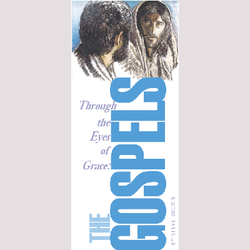
A companion booklet taken from Steve’s classic overview study of the New Testament. Highlights of the Gospels—Matthew, Mark, Luke, and John—including introductory comments, major themes, and important teaching. This is great preparation for Key Life’s Gospels broadcast series this year that begins this month.

Featured Offer
A companion booklet taken from Steve’s classic overview study of the New Testament. Highlights of the Gospels—Matthew, Mark, Luke, and John—including introductory comments, major themes, and important teaching. This is great preparation for Key Life’s Gospels broadcast series this year that begins this month.
About Steve Brown, Etc.
Key Life exists to communicate that the deepest message of the ministry of Jesus and the Bible is the radical grace of God to sinners and sufferers.
Because life is hard for everyone, grace is for all of us. And grace means that because of what Jesus has done, when you run to him, God’s not mad at you.
All of the radio shows, sermons, books, and videos we produce work together toward one mission: to get you and those you love Home with radical freedom, infectious joy and surprising faithfulness to Christ as your crowning achievement.
Learn more: http://www.keylife.org
About Steve Brown
At Key Life, Steve serves as Bible teacher on the radio program Key Life and the host of the talk show Steve Brown, Etc. Prior to Key Life, Steve served as a pastor for more than thirty years and continues speaking extensively.
Steve has also authored numerous books, including How to Talk So People Will Listen, Three Free Sins, Hidden Agendas and his latest release, Talk the Walk: How to Be Right Without Being Insufferable (now available as an audiobook).
Contact Steve Brown, Etc. with Steve Brown
steve@keylife.org
https://www.keylife.org
P.O. Box 5000
Maitland, FL 32794
In Canada, send requests to:
Key Life Canada
P.O. Box 28060
Waterloo, Ontario N2L 6J8