
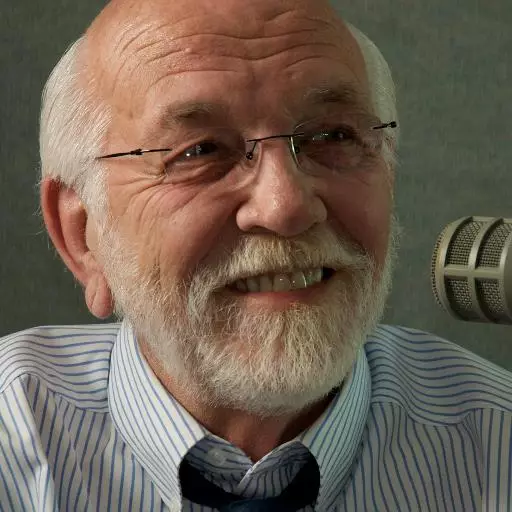
Kelly Kapic & Ty Kieser | Meet Theologian John Owen | Steve Brown, Etc.


He’s the theologian we’re still discussing 400 years later. This week, Steve and the gang chat with authors Kelly Kapic and Ty Kieser about the enduring work of John Owen. […]
The post Kelly Kapic & Ty Kieser | Meet Theologian John Owen | Steve Brown, Etc. appeared first on Key Life.
Matthew Porter: The theologian everybody still discussing some 400 years later. Talk about him with Kelly Kapic and Ty Kieser on Steve Brown, Etc.
Kathy Wyatt: He's an old white guy, an author, broadcaster, and seminary professor who's sick of religion. And he's brought friends. Please welcome Steve Brown, Etc.
Steve Brown: We are so glad you're here. We recognize the gift of time that you give to us during this show, and we try to give back to you a gift of sterling and profound thoughts that will last you the rest of the day. If not, take a nap.
I'm Steve, the aforementioned old white guy. Matthew Porter, our executive producer, is here. Matthew knows it's unlikely he'll get cast as the next James Bond. However, with today's DEI standards, who knows?
Matthew Porter: Got a shot.
Steve Brown: Our producer, Jeremy, is in the little glass booth. Jeremy's a world-class bass player and a big MAGA guy. That stands for Make America Groove Again.
Jeremy: Oh man, I am stealing that. That is the name of my next album.
Steve Brown: When this show is over tomorrow, Jeremy's getting on a plane and going to California. He is playing with the band out there. He's going to make a lot of money and give 10% of it to Key Life. I just want you to know that.
Our one-man IT department, John Myers, is in the tech bunker. John says the best time to plan a summer family trip to Disney is after you become independently wealthy. Dr. George Bingham is the president of Key Life. George reminds the guys that the 4th of July is 42 days away, you know, since men aren't always great at remembering anniversaries.
Kathy Wyatt is the soft feminine side of this program. Kathy says that earlier this week, it was Talk Like Yoda Day.
Kathy Wyatt: What? Matthew, where did that come from? Wait a second, I paid for a punchline.
Matthew Porter: I didn't get to that. She interrupted me. Very silly, that is. That's the punchline the way Yoda would say. Never mind.
Steve Brown: Stellar radio right here. I love it. Wow, that just went right... yeah, anyway. Okay. Did we really pay money for that?
Matthew Porter: I think we did. We'll fix this in post.
Steve Brown: Guys, we have a great program for you today. Kelly Kapic holds the honorary chair of theology and culture at Covenant College, where he's taught since 2001. He's also an author and editor of more than 15 books.
Ty Kieser serves as assistant professor of theology at Criswell College. He also serves as the program director of the MA in Theological and Biblical Studies and the MA in Christian Studies program. They have written a book. If you've ever tried to read John Owen and found yourself confused, overwhelmed, and decided you're going to use the book by John Owen that you're reading as logs for your fire, this book is going to change everything.
The Father is Love for you to get some good stuff from John Owen. The title of the book, which I hold in my nicotine-stained fingers, is *Owen among the Theologians: Conversations Across the Christian Tradition*. I've been reading books, three or four a week, for a long, long time. I have a very large library, both here and in my study at home.
In fact, there is no room for any more books, except this one. Kathy says I'm tired of organizing your dumb library. But I've never read a book like this. I thought I was going to read a book about John Owen, and I read a book about Martin Luther, Karl Barth, Aquinas. It goes on and on. The conversations are profound and different. Where in the world did you guys... Kelly, I'll ask you first. How did this book come about?
Kelly Kapic: I'd love to tell you. You just saying that intro reminded me, back in the '90s when I was a student of yours at RTS, you would talk about having a book with you even when you're driving at stoplights. I thought, what a terrifying idea.
Steve Brown: And he's still a scary driver. He doesn't just read at stoplights.
Kelly Kapic: I'm sure he's pointing to your book. That's all. I did my PhD on Owen at University of London a long time ago. I've been writing on Owen some. As you say, Owen is really hard to read. Even though he writes in English, 17th-century English, it's just very hard. I think you should get credit for another language.
In more recent years, I was an external examiner for Ty in his PhD, which was on Owen. A fantastic academic work. It developed a relationship. One of the things we both are committed to is Owen has a lot of insights, but they're really hard for people to get to. We wanted to introduce a wider audience to Owen.
But then we thought a nice way to do it would be have him in conversation with theologians through the tradition and then pick one idea maybe for each one and explore it. It's a good way to get people thinking about theology while also introducing them to some key people in the tradition.
Steve Brown: Ty, would you like to add anything to that?
Ty Kieser: My original idea was actually to have an edited volume. I didn't really want to do that much work. I wanted to invite 10 people to do the work for us. Kelly said, "No, why don't we just do the work of 10 people?" I said, "Okay, fine."
Steve Brown: That's great. You were going to say something.
Kathy Wyatt: I was just going to say, isn't it interesting that Ty's dissertation was read by Kelly, and hence a book came? Last week we did an interview with Scott McKnight and Adrienne Gibson, and her dissertation was read by Scott, and a book came from that too. It just shows you that you can be the really smart one, the teacher, and you can learn something from a student.
Steve Brown: Amen. Profound.
Kathy Wyatt: I thought so too.
Matthew Porter: And the professor gets another easy way to be part of publishing a book.
Kelly Kapic: When Ty says we did the work of 10 people, that probably means he did at least seven of those.
Steve Brown: Most of the people who are listening or watching right now have no idea who John Owen is. So maybe you guys, before we go anywhere else, ought to spend a little bit of time introducing him to us. We only have a couple of minutes in this segment, so we can start the introduction and on the other side of the commercial break we'll continue with it. But who in the world is John Owen, and why should I care about anybody who lived in the 17th century?
Kelly Kapic: That's a great question. I'm going to start this one so you can ask the hard question to Ty later. Owen lived 1616 to 1683. To give people a sense, this is basically when Shakespeare dies. Part of the reason that people are still reading him, especially given the fact that he's hard to read, is because Owen was both a brilliant theologian who really understood scripture and God, but he was also what I would call an early modern psychologist.
He was a student of the human person. So when he is talking about theology, he is also really applying it in very practical ways to the way we live and how we're wrestling. We think of God like the Father is very angry with us. He has really profound things to say about that. Really profound things to say about our psychology and how we deal with temptation.
So I think that combination of rich theology and really insightful early modern psychology—they wouldn't have called it that, but that's what's going on—is part of what makes him still appealing to this day.
Steve Brown: He doesn't talk hardly at all about himself or personal things. But I think he had 10 or 11 kids and all of them died. One lived a little bit longer and died in her youth. That'll make you profound. Or it'll make you an atheist. One of the other. For John Owen, it was the profundity that came from all of his writings, his political involvement, his being wrong about church polity but right about theology. He's a good man.
The name of the book is called *Owen: Conversations Across the Christian Tradition*. Don't go anywhere. Like Jesus, we're coming back.
Steve Brown: We're talking to Kelly Kapic and Ty Kieser. Their new book is called *Owen among the Theologians: Conversations Across the Christian Tradition*. Don't let that title fool you. There are diamonds to be mined here. If they had taken my advice, they would have titled it *Sex, Power, and Money*, but they would rather go with this academic kind of thing. But it is an absolutely great book.
Ty Kieser: Your title would have been very helpful, I'm sure.
Steve Brown: The title doesn't have to say what the book's about. You do a title to sell the dumb book. That's in the Bible.
Ty Kieser: I'm sure it is in yours.
Kathy Wyatt: Gentlemen, before we get into real deep conversation about this particular book, I just want to ask you as someone who is not all that familiar with Owen, to say the least, is this a good book to start with? Or are there others, obviously because he was a prolific writer, is there some place else for somebody that's listening? Where should they start, or should they just go ahead and say, "Here it is," and start with this one?
Steve Brown: Start with his children's catechism.
Kathy Wyatt: I'm asking them.
Kelly Kapic: He's showing off. He really did read the book. I'm impressed.
Steve Brown: When you've got an answer to her question, she gets angry when you don't jump in.
Ty Kieser: As a secondary source, I hope this is a good place to start. We really wrote it to be something of a sampler to get into Owen so that you can figure out what of Owen you're most interested in because Owen's writing is really broad. Current publication covers 24 volumes. The future publication is going to cover almost 40 volumes.
If you want to look at Owen's Christology, pneumatology, trinitarian theology, or ecclesiology, his view of baptism, his view of ministry, or how to think about eldership and the pastoral role, you can get small snippets in this book and then from there follow the footnotes into a primary source. My preferred primary source is probably *Communion with God*, which he originally preached as chapel messages to a bunch of 15-year-old college students. I love that text and it's a really meaningful, rather short primary source.
Kelly Kapic: Part of what's interesting about that book... he also has a volume on temptation, which he preached to a bunch of Oxford students in their teens and it's super insightful. But his volume on *Communion with God* is very interesting because he says we commune with God, but the God we commune with is trinitarian. So there's no communion with God that's not communion with the Father, the Son, or the Spirit.
Part of what he explores there is what does it mean to commune with the Father? What does it mean to commune with the Son? What does it mean to commune with the Spirit? Take the Father as an example. Owen talks about how we kind of think of the Father as just angry. It's as if Jesus is like, "Hey, I really love you," and the Father's like, "Ugh, I hate them."
The Father's like, "I want my wrath on them," and Jesus is like, "No, no, I'll love them, I'll die for them." The reality is, that pits the Trinity against... you divide God. Owen does a beautiful job to show, no, the cross is not what makes the Father love us. The cross is the fruit of the Father's love for us. So there's very beautiful treatments of these kinds of things.
Steve Brown: That's good. That the cross of Christ was secured by the love of God. The cross of Christ did not cause the love of God. Good stuff. Ty, I had Kelly introduce us to John. Did you have something else to add to that before we move on?
Ty Kieser: I think Owen, because of his unique historical situation where he's this early modern thinker, he has some meaningful, contemporarily relevant biblical exegesis that is compelling to modern thinkers. But he's old enough and he's reliant on historic figures like Augustine and Aquinas and Calvin enough that he gets some of the pre-modern exegesis also.
As we think about examples of what it means to be faithful Bible readers, I think Owen is a great test case about what it means to read the scripture faithfully. He engages scripture carefully and very thoroughly.
Kathy Wyatt: You juxtaposed him being born right as Shakespeare died. Okay, cool. That really grounds it that this came from a long time ago. Older than Steve. Barely. He had a class with him in high school. We had second-period chemistry together. What is it about his writing... there's been so many people who have come and gone and left writings behind and thoughts, but to endure this long that we're still talking about him, what did he tap into? What was it that has such a timeless appeal and value to us?
Kelly Kapic: I personally think a lot of it has to do with that combination where he is this really brilliant theologian, deeply well-read in the tradition and biblical studies, but he's also a student of humans. The reason people read C.S. Lewis... he was a great writer, but Lewis studied people and brought the faith to bear on what does it mean to be human? How do we think about that?
Owen is bringing this rich theology with really basic pastoral concerns. So he doesn't go for cheesy answers. This is not plastic Christianity. This is a Christianity that says humans have this great dignity and are really screwed up. And God is really good, but if you want to know what God is like, don't go philosophical; look into the eyes of the human Jesus. There's something about that kind of combination.
Ty Kieser: I think I would say his connectedness to the tradition. He's reliant on these historic figures in ways that are substantive and meaningful. His attention to scripture is really helpful. His pastoral concern is meaningful. And then the way he's engaging issues of his day that in some ways kind of become issues of our day. So say something like Socinianism. Owen takes on Socinianism and this idea of a...
Steve Brown: Before we leave, define that term. Or maybe after. Even pronounce it. What does it mean?
Ty Kieser: After Faustus Socinus, who's a guy that views Jesus as fundamentally a guy. It's rationalism. He views Jesus as fundamentally a guy that gives us a model of obedience that if we follow, then we bring ourselves in some sense to God. And so Owen encounters his view of Jesus and by encountering his view of Jesus, opposes his view of what it means to be saved and brought near to God.
Steve Brown: I don't know why you just couldn't say works salvation. But listen, we're talking to professors. Hey guys, don't go anywhere. We're coming back.
Steve Brown: We're talking to Ty Kieser and Kelly Kapic about a great book that is quite unusual. You not only find the leading character in the book, John Owen, what he thought about a lot of things, and he was prolific, but also his interaction with great thinkers throughout the ages. So you get a double whammy when you get this book. It's called *Owen: Conversations Across the Christian Tradition*.
If you want to keep up with Kelly, you can go to kellykapic.com. K-A-P-I-C. Kelly is with a K. If you want to keep up with Ty, go to tykieser.com. K-I-E-S-E-R. Kieser. I told you I'm old. I'm doing the best I can. Ty Kieser. K-I-E-S-E-R.com.
Okay, talk to us about Aquinas and Owen.
Kelly Kapic: Aquinas was a medieval theologian, 1,000 years ago. Part of what's interesting is Aquinas drew on this tradition and he would talk about the idea of divine simplicity. To call God simple seems offensive. We lived in the UK for a while; if you called someone simple, that's not a compliment. But to say that God is simple is to say that he's not made up of different parts.
This all sounds abstract, but to make it really pastoral and help see the consequences, sometimes when we say "Who is God?" it's like we're making a recipe and we say, "Well, put a lot of love in there, maybe a little bit of justice, a little bit of righteousness." Depending on your personality and your tradition, you'll decide how much of each ingredient you put into it. But Aquinas and then Owen were really thought it was really important to stress: No, God is one.
When we say that God is just and we say God is holy, we're not talking about different parts of God. The problem is not that God has these different chunks in him; it's that we can't comprehend God's fullness. In other words, God never... you never encounter God when he's not being loving. His justice is always a loving justice, and his love is always a loving justice and a just love. He's not partly wise; he's fully wise. And that starts to have big implications for how you live and think about the Christian life.
Matthew Porter: As you guys were researching the book, so many things that we're talking about here are things that he got right and it resonated not just with the Bible but other theologians. Just pure curiosity, is there any other subjects or topics where you're like, "Love him, but yeah, he's off base on that one"? Steve in passing mentioned church polity. Is there anything where you're like, "Yeah, love him, but he swung and missed on this one"?
Kelly Kapic: That's like asking somebody who just got married to tell me the bad things about the guy you just married. But we could talk about Luther, there's you know... maybe John was gay? Was he? Not that I'm aware of. To two women, so... go ahead. I know you're struggling to find something.
I'll give you one example. For example, one of the things that Owen defended at the time, 17th century, is what you call Hebrew vowel points. He thought not one jot or tittle can be taken away from scripture and people were saying those weren't in the original, and he defended it. And now we all pretty much know he was wrong. Just as one example.
Ty Kieser: If Kelly's going to punt, then I'll punt too. The way to punt to the book is the last chapter, so Owen and Barth. Owen says some things in that chapter that I don't know if I'm confident enough to say are wrong, but they are strange. They are peculiar. For example, Owen will read what we'll often call anthropopathism. Like God regrets or God gets angry.
If God is simple and God is who God is, says Exodus 3, then God doesn't fluctuate. He's not moody. So he doesn't get angry like you and I get angry where we feel it in our belly, because God doesn't have a belly. And so Owen will say, "Hey, that's true. God is angry. And when we say that's true in Exodus, we mean that's true because God will have a body and will have a belly and can get angry in Jesus in the New Testament."
And you're like, "Wait, this is true about God in Exodus because God the Son will have a human nature over 1,000 years later?" That's weird, man. At minimum, it's weird. At maximum, it's probably heresy.
Steve Brown: While we're talking... well, we've only got a little over a minute, but can you just very quickly tell us a little bit about Luther and Owen? What is it that we're looking at in that combination?
Ty Kieser: The Luther and Owen connection... there's this critique of Luther by contemporary New Testament scholars that says Luther tried to go from the problem of sin and then force us into the solution of justification. But the critique is that's too one-directional. So we look at how Luther and Owen use this critique. Have you ever heard someone say you have to get them lost before they can get saved?
Kathy Wyatt: Yes.
Ty Kieser: That's the idea that people will pull from Luther and Owen, that you have to recognize the problem of sin before you can appreciate the goodness of justification. We engage the critique and respond to the critique that it's overly reductionistic and it's bad for the gospel and it's bad for people. And say, no, Luther and Owen are actually doing this for really robust, really affectionate reasons. It's about love of God and love of what God has done for us.
Steve Brown: Guys, we are out of time. I hate that. I've just got so many more questions for you guys. And I'll bet you, if you're watching or you're listening, you've got a bunch more questions too. So I have a suggestion for you. Go to Amazon or Barnes & Noble or your local bookstore and get this book. It's called *Owen among the Theologians: Conversations Across the Christian Tradition*.
And if you do that, you'll rise up and call these two guys blessed, as I do. Guys, thank you so much for giving us an hour of your time, and thank you so much for writing this book.
Kelly Kapic: Thanks for having us. It's been great.
Steve Brown: Hey guys, don't go anywhere. We'll tell you who we're going to do it unto next week.
Kathy Wyatt: Next week we're going to do something a little bit different. Our good friend Drew Hensley is going to be with us. But he doesn't have, surprisingly, he doesn't have a new book out right now. But he just started a podcast. We're moving in that direction here with podcasts and stuff, so we thought it would be fun to talk to Drew. We love talking to Drew anyway, but we thought we'd talk about his podcast and what's going on and how he's moving forward and all that fun stuff.
Matthew Porter: No book to read. That's a nice refresher. It's on the Key Life Podcast Network right now.
Steve Brown: You ought to check that out, the podcast network. We're uptown. We're going places. Right now we're going out the door, but we'll come back through it next week, same time, same place. Hope you join us. Between now and then, don't do anything we wouldn't, and that gives you a wide, wide berth.
Featured Offer
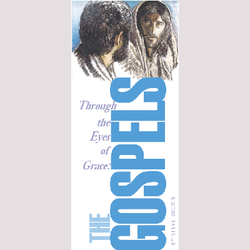
A companion booklet taken from Steve’s classic overview study of the New Testament. Highlights of the Gospels—Matthew, Mark, Luke, and John—including introductory comments, major themes, and important teaching. This is great preparation for Key Life’s Gospels broadcast series this year that begins this month.

Featured Offer
A companion booklet taken from Steve’s classic overview study of the New Testament. Highlights of the Gospels—Matthew, Mark, Luke, and John—including introductory comments, major themes, and important teaching. This is great preparation for Key Life’s Gospels broadcast series this year that begins this month.
About Steve Brown, Etc.
Key Life exists to communicate that the deepest message of the ministry of Jesus and the Bible is the radical grace of God to sinners and sufferers.
Because life is hard for everyone, grace is for all of us. And grace means that because of what Jesus has done, when you run to him, God’s not mad at you.
All of the radio shows, sermons, books, and videos we produce work together toward one mission: to get you and those you love Home with radical freedom, infectious joy and surprising faithfulness to Christ as your crowning achievement.
Learn more: http://www.keylife.org
About Steve Brown
At Key Life, Steve serves as Bible teacher on the radio program Key Life and the host of the talk show Steve Brown, Etc. Prior to Key Life, Steve served as a pastor for more than thirty years and continues speaking extensively.
Steve has also authored numerous books, including How to Talk So People Will Listen, Three Free Sins, Hidden Agendas and his latest release, Talk the Walk: How to Be Right Without Being Insufferable (now available as an audiobook).
Contact Steve Brown, Etc. with Steve Brown
steve@keylife.org
https://www.keylife.org
P.O. Box 5000
Maitland, FL 32794
In Canada, send requests to:
Key Life Canada
P.O. Box 28060
Waterloo, Ontario N2L 6J8