
Just Us: Summer Edition | Steve Brown, Etc.


We only do it a few times each year – an episode with no guest, just Steve and the gang sharing a few stories and a LOT of laughs. So pull up a chair, pour some lemonade, and hang out a while.
The post Just Us: Summer Edition | Steve Brown, Etc. appeared first on Key Life.
Steve Brown: Hey, we’re so glad you’re here to join in the conversation. In case you were wondering, I’m Steve, the aforementioned old white guy. Matthew Porter, who’s our executive producer, is here. Matthew, you just got back from a vacation where you drove five miles into the wilderness and then walked two miles to see a waterfall, all because of online reviews?
Matthew Porter: And you know who was writing those reviews? I'm convinced it was the black bears that live in the area because they're like, "They'll walk out there. By the time they get to the waterfall, they're exhausted. They can't run." So these bears are just going, "Guys, I know it's hard typing with these claws, but if this works, we are going to eat like kings."
Steve Brown: Our producer Jeremy's in the little glass booth. Jeremy is a rock musician, so there's a real chance he may lose all of his hearing before I lose all of mine.
Jeremy: You know my wife said that. She would often come on Saturday nights at the radio station where I was working, and she'd go back in the kitchen in the building and make pizza, and we would enjoy it.
Then I'd have the speakers turned up about as loud as you could get them. And she said to me a hundred times, "Honey, you're going to lose your hearing." And now she says to me a hundred times, "I told you so."
Steve Brown: And you say, "What?" Exactly. Our one-man IT department, John Myers, who refuses to talk, is in the tech bunker. Every year on Amazon Prime Day Eve, John leaves dollar bills on the front porch.
And Dr. George Bingham is the president of Key Life. George says Father's Day didn't become an official holiday until 58 years after Mother's Day, and even then, we still have to share International Yoga Day.
And then there's Kathy Wyatt, the soft feminine side of this program. Kathy says getting older is great. The soreness you feel after working out, now you don't have to work out. You don't have to do that part. You go straight to the pain.
Kathy Wyatt: You couldn't even look at me and say it.
Matthew Porter: I’m trying to make up for some of the recent ones. Let’s not ruin the nice moment, Kathy.
Steve Brown: Say something. This is radio, and it doesn't work if we just sit around and look at each other. Of course, we have the video side of it, so we could do that, but I don't think that's going to work.
Kathy Wyatt: You know what always surprises me? Seriously, no joking around, we get really nice comments when it's just us. Not that we don't get good comments about our guests, because we do.
We get some great comments about guests, but every time we get really nice and affirming comments about us, I think, "Why?"
Matthew Porter: Why?
Steve Brown: George and I both spend every morning just chit-chatting, and we did—I’m doing—we don't know for sure if we’re going to post it, but I’m doing a podcast called, or at least putting 10 of them in the can, called Lunch with Steve.
This was the second one we recorded, and George and I sat down and looked at each other and just did what we always do: started talking. I might say that at least George and I are incredible guests. I thought it went well. We even got a little bit political.
George Bingham: And we didn't forget that we knew each other, so it wasn't like a guest appearance or anything like that.
Steve Brown: That was fun. I don't know what we're going to do with that podcast. But you know what is fun? When we sit in this studio, we have screens—three screens surrounding us. In the control room, they have about 30 screens surrounding them.
All of them have the time on it and how much time we've got left so I can end at the proper time and we can sell product because it's all about money. It's not about God and stuff. So I have to end at the right time. But on a podcast, there's no end. If you want to talk all day, you can talk all day.
Matthew Porter: When are we done? You don't have the restrictions, and the restrictions are gone, and you're like, "Somebody stop this conversation!"
Steve Brown: Now, you and Jeremy are doing a podcast. Have we aired any of those yet?
Jeremy: Yes, that is on the Key Life Podcast Network at keylife.org/podcastnetwork and on all of your favorite podcast platforms. We had the same thing. We love talking, but how deep is a hole kind of thing?
Could it be 10 minutes? Yes. Could it be an hour? Yes, I guess, if you want. The weird thing is we kind of find ourselves at what feels like a stopping point around 40 to 45 minutes.
Steve Brown: We went about 35 when we did this one, and we’re already posting those. What’s it called?
Jeremy: It's called This Is the Show. Search for This Is the Show in podcasts, and you'll probably find it.
Matthew Porter: We're going to add a lot of other podcasts as we go along to this platform. We already have seven or eight of them out there right now, but we have so many guests that have podcasts that would be delighted, I suspect, to be featured.
We talked to Drew Hensley about his, called Still Becoming, and Pete—everybody knows Pete—Pete has The Forge. It's a really great collection of like-minded, grace-oriented but different focus.
This one's on men's issues, this one's on Christianity and the history of the country's founding, and whatever show that we're doing, whatever that's about.
Steve Brown: And me, whatever that’s about.
Jeremy: I was here for the first one where it was just you and you were just sharing stories. Something about that format is really appealing and freeing for the person who's doing it because you have a very good ability—you're telling this story and then there's this point and that's going to relate to this story.
I can almost see it visually, you telling the story and then reaching back on the shelf, and then here's this one. It's very enjoyable to be in that unstructured, untimed format where there's an idea and I'm just going to pursue this and then I can tell this story.
I don't have to do the short version of it. In a sermon, you don't have unlimited time, or a radio show's not unlimited time. I think people are really going to like the Lunch with Steve podcast. It's you in a different light.
Steve Brown: It was Matthew and George who told me to do this.
Matthew Porter: I thought the one you just did with George was great, too, because like I said, you by yourself, you kind of have a sense of what you want to do and there's a freedom to take your time to do it.
But with George, who has said he doesn't want to have to be that guy, George was even comfortable in that format. You guys knowing each other for so many decades, you were able to play off each other very comfortably. I was surprised at how interesting the stories were, how detailed they were, and the directions they took. I thought it was very cool. Let's do some more.
Steve Brown: I have never listened to a podcast. My grandchildren do. They listen—that's all they do is listen to podcasts. Thankfully, some of them are Christian, but I've never done that.
Kathy Wyatt: That's the way it is already and the way it's moving. Everybody has their podcast that they listen to in at least one, probably two and three generations past us. It's just the wave of the present moving into the future.
That's what everybody does. They sign up for these and then they get in the car and they listen to their podcast. They don't listen—sorry, but they don't listen to that much actual radio anymore.
They don't plug in CDs, as we all know, because you can't get a CD player in your car, as you discovered a number of years ago and were quite profound in your expression about that situation.
Steve Brown: I had to go back and apologize to the salesman. I said what I said was true, but you don't run the company. When I told you where to go, that was not appropriate for a preacher.
We appreciate your joining us for this hour. We’re talking to us. What was your favorite broadcast?
Jeremy: It's funny you should ask because I made a complete list of all the SBE shows for this year for some six months. I really liked the episode with Kevin Burrell, who wrote a whole book about illustrations from birds.
Here's this bird and here's what it does, and there is baked into how this bird lives and works and all this stuff, a surprising little lesson about God's character or something we can learn.
It's very almost childlike and didactic, but it reminds me of some of the devotionals my dad read. He really loves birds and he loves God and he's brought these things together. That was a great program. It was just so sweet.
Steve Brown: And did you see Robin DeMurga, who works for us, is a potter? Didn’t she do—we had it in here for when we talked with him on the phone, a special kind of bird that had a story to it. I never thought about that.
George Bingham: I’m not sure I’d use “baked into” the thing with birds. They get nervous, I think.
Jeremy: All of my idioms relate to food. Unless the bird’s a chicken or a turkey.
George Bingham: Well, they get even more nervous.
Steve Brown: Denise Gatcham was good about how to talk politics without killing your family or your neighbors.
Jeremy: Or them killing you.
Steve Brown: Do you guys, when you’re with people, have to be careful about saying anything political?
Jeremy: I don't circulate with enough contrasting points of view. I wish I did.
Steve Brown: I don't either. I do some, but I don't much. I have a friend who’s a professor at a major university, a philosophy professor, and we have—I’ve known her since she was a teenager.
We write pretty often and disagree about everything and are still friends. We're intentional about that. We say to each other, "This doesn't happen very often. You can't do this with your other friends," and she can't either, and have a civil conversation.
So that's the reason I like that. I just think we've got to learn how to do that. It's not the disagreement because I'm secure enough to know I'm right and they're wrong and don't mind hanging around with them anyway.
If you know you're right, it's a place of great security. You can let them blather on about the lies they believed.
Jeremy: There's a guy I grew up with, and we're friends just in the most tenuous sense of Facebook. His name is Jeremy too. Atheist. In my brain, I'm like, I would love to call him up and go, "Hey, I want to take you out to dinner.
I want to have a conversation with you. Would you be open to walking me through, show me the math of how you arrived there?" And that's going to be enough. I'm going to ask you questions.
If you're curious about something, that's great. Really and truly, I'm curious. But it's one of those things of like, sure, you've got lots of extra time to reach out to this person who is in your life not one iota.
Steve Brown: They live here?
Jeremy: Somewhere in Central Florida. I could. I should. I won't.
George Bingham: Remember, it's related to food.
Steve Brown: This is true. You make a good point, George. But with that approach, I wrote a book once when I was teaching communication and preaching. I thought I ought to write something that had to do with the discipline, and I wrote it in two or three weeks.
It was How to Talk So People Will Listen. As soon as it came out, friends said that it should be How to Listen So People Will Talk. And that's what you're proposing to do with the atheist.
Jeremy: I'm just a big fan of the idea that understanding is not agreement. I think there's something to, whether if I had this conversation with him if he becomes a Christian or not a Christian, it's outside of my control.
But I'm genuinely curious, and I feel like curiosity can lead to some good conversations and at the very least back out some of the noise and the friction between people.
Steve Brown: I had a Jewish man say we—I was a part of a group that did ask our Jewish friends to forgive us for what had been done in the name of Christ. One guy at one of those dinners broke down and started crying, and I thought, "I didn't say anything to cause anybody to cry."
And he said, "I want to thank you." He said, "Whenever Christians say something like what you said this dinner was going to be, there's always a kicker. And you didn't have a single kicker here."
And that's what you're proposing doing. I'm not bringing a kicker to make you become a Christian. I'm not your mother, but I'm curious and I don't understand. I really don't understand a lot of people who disagree with me. Sometimes it just seems crazy, and I know they're not crazy, so if somebody would explain it to me, who knows? I might become an atheist, be convinced by their arguments.
George Bingham: Do atheists have potluck dinners?
Jeremy: No, that wouldn't be worth it. That's your biggest argument against it. Like, not even potluck dinners? I know you don't build hospitals, but you don't even potluck? How are you drawing followers?
Kathy Wyatt: We had a staff member at a church where we were at one particular time who was very, very reformed and was not pleased that we referred to dinners as potluck dinners. We had to call them "pot providence" dinners.
Steve Brown: I was the pastor of that church and fired him, if I remember correctly. Man, I've got to take a breath after that. Truly reformed. Thoroughly reformed.
Kathy Wyatt: Pot providence dinners. You think she's joking. No, she's not joking. She's talking about a guy. I had an elder come to me and said this guy wanted everybody to take intensive courses in theology and Westminster standards, and this elder came in with his calendar, opened it—this was Charlie—opened it on my desk and said, "All right, I want to be faithful and I want to be committed, but you show me where I can have time to do this, and I'll do it." And that's when we had a come-to-Jesus talk about it.
George Bingham: Does he eat providence cookies at the Chinese restaurant? Oh my goodness. You know, pot providence, if the dish ends up being bad, then it's your fault.
Kathy Wyatt: Yes, see, and that was my thinking through the whole thing was, how do you tell whether or not something that's there on the table is providentially supposed to be there if you know it's going to be really bad?
Steve Brown: Once you get it, you understand that it's God's fault. There you go. He burned the cake. He screwed up the casserole. He's the one. If you're going to be ticked with somebody, be ticked with God because it's a providence supper. I'm going to repent during the break. Don't go anywhere.
We appreciate your joining us today. We’re just hanging out. By the way, if you’re hitting the road this summer and need something to listen to, try that podcast network we were talking about, the Key Life Podcast Network.
There are a whole bunch of different broadcasts and it’s growing. Sort of a something-for-everybody kind of thing, and you can find that by just going to keylife.org/podcastnetwork, and you’ll rise up and call me blessed for having recommended it to you. Other broadcasts you particularly liked?
I liked the Michael Guillen—am I pronouncing that right?
Jeremy: Yeah, I was going to mention that one, too. He was the guy that was the former science editor for ABC. Some amazing stuff. The nice thing about him, obviously his years in broadcast helped him to make it accessible for people.
He was covering some really esoteric, obscure kinds of stuff and making it very understandable and in a winsome way. I could see why ABC hired him and then fired him because he was a Christian.
Kathy Wyatt: Well, you can’t have everything.
Steve Brown: And we had Hugh Ross to talk about UFOs. He’s coming back in a few weeks.
Jeremy: Is he? Sweet.
Kathy Wyatt: What, a new book?
Matthew Porter: Actually, it came out a few months ago, but it’s Noah’s Ark Revisited. Noah’s Flood Revisited, sorry.
Steve Brown: Hugh Ross is brilliant, and he’s kind of our science guy. We didn’t find out until—we had him on to debate—he’s an old earth person and a lot of Christians are young earth persons.
If you don’t know what that means, forget it; it doesn’t matter. People kill and die over that particular argument. So we brought him in to debate a young earth person. And that young earth person was a jerk.
Went after Hugh, and Hugh was gentle and kind and civil and ate his lunch. I said, “Hugh, you amaze me.” He was in studio for that thing, and I said, “You amaze me.” And that’s when I found out he was autistic. He’s on the spectrum.
He said it makes you nice because you’re trying to think of something to say. That’s a part of his humility. But this last thing, he’s not big on aliens visiting this planet and demonstrates almost beyond a shadow of a doubt—I read every word of that book, by the way—how impossible it is to have life on those other planets.
And so he says there’s something supernatural about the things that we observe, and not in a good way. But I read into that, maybe some of them are angels too. Now if we just knew which was which, we’d be in.
And then who knows? Maybe there’s somebody that really is a little green man who lands on Mother Earth and his colleagues get off and start looking around. He says, “What are you looking for?” and I can’t believe this. They’re looking for little green women.
Larry Dixon’s Job and Religious Foolishness was a delight. You know, we haven’t had any bad—well, I really can’t think of any bad guests. It’s been good things.
Kathy Wyatt: I checked off three on my list. One, of course, was Kevin Burrell. I found him absolutely fascinating talking about the birds. And I always like it when we have—we've had him on two or three times—Jonathan Feldstein, because he's living it over in Israel.
He's our Jewish friend, and when he comes and talks to us, it's not like listening to network news or listening to Fox News or listening to any kind of news; it's listening to the real deal, who's got his own children that are serving in the Israeli military and the work that he does. I love him.
But I think my favorite one was Stephen McWhirter because in researching on him a little bit, when I found out that he's—I mean, he has a great story. He comes from a really, really not great background, and he's a great musician.
But he wrote the song "Come Jesus Come," which has become, in the last year or so, my new favorite. If you haven't heard CeCe Winans sing "Come Jesus Come," go to YouTube. There's about 400 million different shots of her doing that, and it's just a remarkable, remarkable song.
I loved hearing his testimony, too. It was fun. I loved hearing him when he talked about it. He said that her agent or whoever it was that took it to her, she didn't want to do it. It just didn't kind of wind her toy or whatever, but she agreed.
He said, "This is going to be really big, you need to do this." And it's been huge for her. She was like, in recent K-Love Awards, she won Singer of the Year and all that kind of stuff. So "Come Jesus Come" has been pretty good to CeCe Winans.
Steve Brown: Hope she gave her agent a raise. You need to reward people who make you rich. And depending on how rich you get, you ought to reward them, compensate them adequately for that.
Matthew Porter: Well, we're good here then because you're not making us rich. I was going to say, is there some consequence for making us poor? That's the next question. Before this gets worse, we're out of here.
Steve Brown: We’re so glad you’re spending this hour of just chit-chat and fun discussion with us. By the way, if your last picnic got rained out, that’s God. He’s mad at you because you haven’t subscribed to the weekly Key Life email.
You would have better picnics if you—so if you just for the sake of your burgers and hot dogs, go to keylife.org/subscribe and try today. You'll be glad for the sunshine that you will see in your life and also talking about not mad at you, Key Life Books is publishing a book that I wrote which is truly one of the great works of Christendom.
It will be remembered. It'll be one of those ancient libraries if Jesus doesn't return by then, and they'll find my book and it'll bring revival and awakening. And that's all nonsense what I said, but I'll do anything to sell books. I just want you to know that. I don't even remember the title. It's God's Not Mad at You.
Matthew Porter: God's Not Mad at You: Confronting the Lies of Guilt, Shame, Fear, and Regret.
Steve Brown: That's a lot. Last night, I was at dinner with our daughter and son-in-law, and he's a professor. We were talking about AI and the implications of that in academic circles. I never thought about it, and they are very big in academics.
What's ethical? What's not? Can you ethically have your paper outlined by AI? Obviously, you can't have AI write your paper—that's cheating. But what about in research, and how far can you go? We were talking about it a lot.
And then our daughter Robin said that we had created here at Key Life an interview about that book. Had you all listened to it?
Kathy Wyatt: Yes, it’s great.
Steve Brown: Well, I didn’t listen to much. I listened to a little bit at the beginning, and there’s this fake guy talking to this fake lady about a book that hasn’t been published yet and nobody’s read but me.
Matthew Porter: AI read it.
Steve Brown: Yeah, like in five seconds, and they created that. That’s creepy.
Jeremy: Yeah, that one is—it used to be you can kind of peg AI voices and images pretty quick. We have gone past that turnoff to where the cadence, the tone, the content, you're like, it sometimes takes a couple minutes to go, "Oh, wait a second. This is AI generated." We've gone past the uncanny valley to where it's almost indistinguishable sometimes.
Kathy Wyatt: I honestly thought when I listened to it because I know this is one of your favorite lines, but when I say AI, I've told you everything I know about AI and that's the truth. Very difficult to spell, too. Not good.
If you weren't good in fifth-grade spelling, you're lost. But when I listened to it the first time, I thought, "Okay, AI did whatever AI does and spit out information about the book, and then these two people sat down and they talked about the book and they obviously had really good—in our day, we would have call them Cliff Notes—really good Cliff Notes in order to be able to do this interview."
Then is when I found out, no, no, no, them ain't no people. That's AI. And I mean, they really—they were real. So real. That was—and I use the word creepy when I heard that. I thought, "This is really good." I mean, it was really good, but it was creepy.
Steve Brown: Well, I didn’t listen to much. I just listened to—
Kathy Wyatt: You should listen to the whole thing.
Steve Brown: Maybe I will. I think as long as we tell people this was AI created, that we might even post it.
Matthew Porter: It's probably a good time to say this whole episode has been AI generated. None of us are real. We're in the Bahamas.
George Bingham: I would think with an AI thing, I would look a lot better.
Steve Brown: Yeah. You know what some of the guys on the staff did to me one time? They created me with horns and had me saying things that I would never say in my voice.
Matthew Porter: That was Batman. I love Barbara Streisand. This is AI. This is fake.
Steve Brown: That book comes out when? September?
Matthew Porter: September 14th. Pre-order it now.
Steve Brown: Do we have something on the website?
Matthew Porter: If you go to keylife.org/notmadbook, we'll take your American dollars and send you the book when it comes out mid-September.
Steve Brown: And we’re going to price it reasonably, too. Are they going to be on like Amazon or Barnes & Noble, Kindle and those things?
Matthew Porter: It'll be on Amazon, the Prime shipping, the super-fast shipping, or you can order it from us. All the normal things. And there will be e-books so people can download them to their phone or devices.
Steve Brown: Good. I might even get one. I wrote it so long ago, I have no idea what I said.
Kathy Wyatt: Will you autograph it for yourself?
Steve Brown: And I’ll autograph it for myself: “To Steve, from your biggest fan.”
Kathy Wyatt: AI Steve.
Steve Brown: Listen, we’ve got a minute and 40 seconds, and I’ve run out of things to say. Do you want to sing? Matthew’s shaking his notes again. Would you rather relive your favorite summer from childhood or experience your dream summer?
Kathy Wyatt: Favorite, favorite summer. Childhood.
Steve Brown: Yeah. I think people like to have something—people say they have a bucket list of something that they want to do. And I think that those are great, but I don't know that I think that anything that you think about doing in the future can equal something that has stayed with you for 50-plus years or whatever and has such incredible memories, because you can't repeat that.
Kathy Wyatt: Well, I have some that aren’t that incredible.
Matthew Porter: Well, that’s what we’re talking about. He said, “Would you rather remember your best one in the past?” And that, I say yes.
Jeremy: I'd say that one, too, except I can't—I'm not ready to—I've heard a definition of being older is when your memories are more important than your plans and goals. I'm not ready to—my answer is yes, I would rather relive my ideal, but I've got to willfully choose I would rather have a new experience. But I'm getting there.
Steve Brown: What about you, George?
George Bingham: There's not enough time for George to think that one through. Well, I'm just not sure that I have what I would say, "Oh, this was my ideal summer when I was a kid." There were certainly events that I would place, but a whole summer? Our winning season when I was nine years old for baseball.
Steve Brown: Jeremy?
Jeremy: Yeah, I've got to agree with George on that. I can think of fun events and certain things, but it's hard to put a blanket statement on like 90 days of time to be like, "This whole thing thusly was great or not great." But I also agree with Matthew that I'm still holding on to the idea that I'm young enough to still have things I'm looking forward to.
Steve Brown: You know what was great about summers? The last day of school. Oh, those were always good. Man, I feel like that when I leave the office every day. Guys, don't go anywhere; we're coming back.
Welcome back to Key Life. I generally preach here, but enough is enough. Matt brought up something that's good. How about finishing the sentence "I would rather"? All right, what would you rather do?
Matthew Porter: Do you guys want a silly one or a thoughtful one?
Kathy Wyatt: Thoughtful one.
Steve Brown: Both.
Matthew Porter: One that I thought was silly: Would you rather have a perfect summer alone or a mediocre summer with your favorite people?
Steve Brown: Mediocre.
Kathy Wyatt: Yeah, me too. Mediocre with people. I would.
Jeremy: Jeremy'd rather be alone.
Steve Brown: The question is, would all the other people rather you be alone? They don't want to spend time with me anyway.
Kathy Wyatt: All right, so what's the funny one?
Matthew Porter: That was the funny one. Get Jeremy's answer.
Jeremy: Oh, I was going to say, I think I would say maybe alone just to be a contrarian voice.
Kathy Wyatt: You always have been that.
Matthew Porter: Would you rather sneeze sand or sweat lemonade?
Steve Brown: Lemonade.
Kathy Wyatt: Lemonade. I told you ahead of time it was silly, I don't want to hear nothing. Lemonade.
Jeremy: Do bees start buzzing around you if it's lemonade? I've got a feel like you can't avoid sugary consequence for that. I'm going sand. I think if you sweat lemonade, then it says more about your diabetes than it does anything else. So I'm going to say sneeze sand.
Kathy Wyatt: Thanksgiving I sweat gravy.
Matthew Porter: How did you get the—I mean, did you do a face plant on the beach or something? How did you get the sand to sneeze? We don't know the origin. Do you have one other one there that's a little bit more—
Steve Brown: Listen, I lived on the beach for years and there was sand in everything.
Kathy Wyatt: Wait a minute, let's see if he has another one there because we're almost done.
Matthew Porter: All right, here's one specific to you guys: Would you rather have the pool always the right temperature or never have to experience mosquitoes again?
Kathy Wyatt: Always have it at the right temperature. From somebody who swims laps in the morning, don't give me an 86-degree pool when it's supposed to be 90. Just don't do it.
Steve Brown: I smoke a pipe, and mosquitoes hate nicotine, so I don't have a problem with that. I'll stick with the pool. Do you want to know who's here next week? Hugh Ross. I just mentioned it. Noah's Flood Revisited. That should be great. UFOs or—just we've got to go quick before this gets worse.
We're going to come back next week with Hugh Ross, and our fond hope is that you join us. Between now and then, don't do anything we wouldn't, and that gives you a wide, wide berth.
Featured Offer
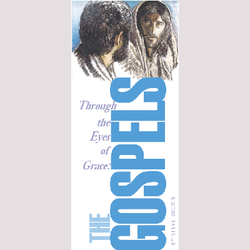
A companion booklet taken from Steve’s classic overview study of the New Testament. Highlights of the Gospels—Matthew, Mark, Luke, and John—including introductory comments, major themes, and important teaching. This is great preparation for Key Life’s Gospels broadcast series this year that begins this month.

Featured Offer
A companion booklet taken from Steve’s classic overview study of the New Testament. Highlights of the Gospels—Matthew, Mark, Luke, and John—including introductory comments, major themes, and important teaching. This is great preparation for Key Life’s Gospels broadcast series this year that begins this month.
About Steve Brown, Etc.
Key Life exists to communicate that the deepest message of the ministry of Jesus and the Bible is the radical grace of God to sinners and sufferers.
Because life is hard for everyone, grace is for all of us. And grace means that because of what Jesus has done, when you run to him, God’s not mad at you.
All of the radio shows, sermons, books, and videos we produce work together toward one mission: to get you and those you love Home with radical freedom, infectious joy and surprising faithfulness to Christ as your crowning achievement.
Learn more: http://www.keylife.org
About Steve Brown
At Key Life, Steve serves as Bible teacher on the radio program Key Life and the host of the talk show Steve Brown, Etc. Prior to Key Life, Steve served as a pastor for more than thirty years and continues speaking extensively.
Steve has also authored numerous books, including How to Talk So People Will Listen, Three Free Sins, Hidden Agendas and his latest release, Talk the Walk: How to Be Right Without Being Insufferable (now available as an audiobook).
Contact Steve Brown, Etc. with Steve Brown
steve@keylife.org
https://www.keylife.org
P.O. Box 5000
Maitland, FL 32794
In Canada, send requests to:
Key Life Canada
P.O. Box 28060
Waterloo, Ontario N2L 6J8