
Joel Muddamalle | The Unseen Battle | Steve Brown, Etc.


Do you know about the ‘Three Rebellions’? What about the Nephilim? This week, Steve and the gang dive into the subject of spiritual warfare with author/speaker Joel Muddamalle. Joel’s new […]
The post Joel Muddamalle | The Unseen Battle | Steve Brown, Etc. appeared first on Key Life.
Voiceover: What is spiritual warfare, and what role are we supposed to play in it? Let's talk about it with Joel Muddamalle on Steve Brown, Etc. He's an old white guy, an author, broadcaster, and seminary professor who's sick of religion, and he's brought friends. Please welcome Steve Brown, Etc.
Steve Brown: We're so glad you're here. In case you're wondering, I'm Steve, the aforementioned old white guy. Matthew Porter is our executive producer, and he is here. Women often cite childbirth as the pinnacle of physical pain, but Matthew once watched a full episode of Grey's Anatomy and his wife watched it with no anesthesia.
Matthew Porter: I had no anesthesia. I sat through the whole thing.
Steve Brown: Which itself is anesthesia. Our producer Jeremy's in the glass booth. Jeremy is about to play a gig in Miami. The last time he went, I said, "Be sure and bring me back a Cuban."
Jeremy: That's how I met Ernesto.
Steve Brown: Our one-man IT department, John Myers, is in the tech bunker. John says no one has ever tried hacking the Key Life website, and he's starting to feel slighted. Dr. George Bingham is the president of Key Life. George recently spilled coffee all over a book. The book was about stoicism, and he didn't care.
Kathy Wyatt is the soft feminine side of the program. Stoicism is when you feel pain, but you just keep smiling, much like Kathy does with these intros. We have a great guest who is going to be tasked with keeping the fodder down low enough that we can understand it.
I spent most of this morning, Joel, with your book. By the way, he's the Director of Theology and Research at Proverbs 31 Ministries and a co-host of the Therapy & Theology podcast. He also frequently speaks at churches, conferences, and events. Joel's new book, which I hold in my nicotine-stained fingers, is titled The Unseen Battle: Spiritual Warfare, the Three Rebellions, and Christ's Victory Over Dark Powers. Joel, next summer I'm doing a seminar at the Billy Graham Training Center, and the subject is going to be spiritual warfare.
The dragon has been slain, but his tail still swishes. I want you to know I'm going to quote you a lot when I'm there. I was reading this morning and thought I had to go back over my research because this book has gone in directions that I haven't gone before. Let's start at the beginning. This is a big topic. Where do we start? In the garden? At conversion, maybe?
Joel Muddamalle: Where I would start is the garden. I think we should start where the Bible starts. A lot of times what ends up happening for us as we're reading through the Bible, we can take our 21st-century understanding of the world, creation, and science, and we often want to impose that onto ancient texts. One of the things that I wanted us to do through The Unseen Battle is to retrieve how an ancient reader would have first understood these words, ideas, and topics.
Particularly, how the biblical authors were trying to communicate their intended meaning of what's taking place. Genesis chapters one, two, and three present to us something very important. I would define the story of Scripture simply as this: it's a simple statement, but it's far from being simplistic. It is the story of a good Father who's the cosmic King of heaven and earth, who's determined to have His family back together.
In that statement, you have so much nuance because you have the idea that God is a Father, He's also royalty, He's King, and not only that, but He loves His family and wants to have His family back together. So how in the world did the family first get divided? It happens in Eden. A couple of really important details: Eden is on a mountain. We know this because there are rivers that are coming down off of that mountain.
In both Ezekiel and Isaiah, Eden is referred to as the garden of God on the holy mountain of God, which is an important detail. In the ancient world, these gardens were the place where kings would plant in order to hang out with their families. This is exactly what God does. He places Adam and Eve in a royal garden, gives them an incredible task of vocation, and then we get cosmic conflict.
There's this serpent. The Hebrew word for serpent is nachash. It can mean three things: it can mean a fiery bronze image, a guardian cherubim, or it can mean a literal snake. I think that the biblical author here intends for us to see all three of these things. What is so interesting to me is, have you all ever wondered why Eve does not freak out when this serpent starts to speak?
That little detail is just bypassed completely. They just go into a conversation. So why doesn't Eve freak out? I actually think that this is a big part of spiritual warfare. The issue is not the appearance of the serpent; the issue is the substance of the words that come out of the serpent's mouth. You see right at the end of Genesis 3, two guardian cherubim are actually placed to protect Eden from evil.
In Isaiah and Ezekiel, we actually get this indication that Lucifer, that Satan, was a guardian cherub in the garden of God on His holy mountain. So what you find is the presence in the Garden of Eden that it was routine for cosmic beings and God's human family to be in interaction with each other. But what was not common was for anybody to dare question the sufficiency, the supremacy, and the goodness of God.
This is what the serpent does. The serpent suggests, "Did God say?" That little deception leads into a whole compounding chaos for you and me that we're living in right now. So when we look at spiritual warfare and we look specifically at the cosmic battle that takes place in Genesis chapter 3, you find a spiritual reality and an earthly reality.
There's rebellion in both spheres of existence, which creates chaos for all of humanity. Honestly, it helps to make sense of Romans 8 that says all of earth is groaning because of the impact of sin and God's desire to have the new heavens and new earth in and through the resurrected Son, Jesus Himself, to restore His family back to Himself. Cosmic conflict starts right off the bat in Genesis chapter 3.
Steve Brown: Let me ask you something. There are two more rebellions that we're going to examine as we go along. Are you infra or supra-lapsarian? In other words, was God surprised? Did He plan this? Is there perspiration on His upper lip? Is the end in doubt? Was this a surprise to God?
Joel Muddamalle: No, I don't think it was a surprise to God, but I do think that there was genuine freedom in Eden for Adam and Eve to live out their royal vocation. You can't have a truly loving God without the absence of actual choice in Eden. After the fall, then humanity is fallen truly. Luther and Calvin have this statement in Latin, homo incurvatus in se, which means the heart bent in on itself.
This is what the Spirit of God does. Apart from the kindness of the Spirit of God, we can't be even aware of God's kindness and His grace. So God moves first in order to lead us back to Him. But right off the get-go in Genesis 1, 2, and 3, I don't think that God is surprised, but I also don't think that this is a huge setup just waiting for all the failure to take place.
I think that this is evidence of a Father who desires to have His human children be in an honest and authentic relationship with Him. For instance, I've got four kids, my three boys are now teenagers. It's a hugely different thing from them wanting to hang out with Dad and go to the gym versus me being like, "You've got to come, you don't have a choice." I can feel it in their response to it. So I think that family term really matters there.
Steve Brown: You know those two things don't work. We're talking about God, but as a matter of fact, God was not surprised. He didn't say to Adam and Eve, "You have disappointed me. I had such high hopes for you, and you screwed it up. And now my whole plan is in shambles, and I am worried about the outcome of this." God in a sense really is sovereign over it all, but without the interference of the responsibility and the freedom on our part and the part of Adam and Eve.
Voiceover: Welcome to The Vault, your home for classic sermons from Steve from the '90s, the '80s, even all the way back to the early '70s. The Vault is a one-of-a-kind online experience where you can explore more than three decades of grace-filled messages. Get the details and check out our free audio sample at keylife.org/vault. That's keylife.org/VAULT.
Hi, this is Steve Brown, in case you didn't know. One of the main reasons Key Life exists is to remind believers that God isn't mad at His children. Why am I telling you this? Because our weekly email, Key Life Connection, takes the best of the videos and articles and puts them right in your inbox. We'd love for you to try it. It's free. Go to keylife.org/subscribe.
Steve Brown: We're hanging out with author and speaker Joel Muddamalle, and his latest book is titled The Unseen Battle: Spiritual Warfare, the Three Rebellions, and Christ's Victory Over Dark Powers. Joel, as I just said, the subtitle speaks to this. The three rebellions. Obviously the garden we know; we just talked about that. What are the other two? What are the three rebellions?
Joel Muddamalle: The next one that's important is Genesis 6. Right off the bat, some people are like, "Wait a minute, three rebellions? I've never even heard of this." Well, my doctoral advisor, my second reader, was a guy named Dr. Michael Heiser. Mike passed away literally three years ago a couple of days ago from pancreatic cancer. I was the last PhD student that he supervised through.
I remember Mike made a statement to me once years and years ago where he said, "You know, if you ask somebody today why is there so much evil in the world, they'd be like, Genesis 3. But if you asked an ancient Israelite, somebody who came up in the time period of the second temple where the New Testament is coming on the heels of, they would say, 'Well, yeah, Genesis 3, but don't forget Genesis 6, and for sure don't miss Genesis chapter 11 and the whole issue with the Tower of Babel.'"
The three rebellions is really three climactic moments in the early tradition of human history that sets in momentum a series of separations. So in Genesis 3, you've got this separation between God and humanity. In Genesis 6, which is kind of funny you guys, I grew up in the church. My grandparents were missionaries in India. They've been in ministry for over 65 years.
So I'm a church kid through and through, which is odd for an Indian kid to always have known the name of Jesus from birth. And yet, in all of the vacation Bible schools, I think like the top three VBS themes is Noah and the flood, right? Arguably maybe number one; maybe David and Goliath beats it out. How come we always skip Genesis 6:1-4?
Nobody wants to deal with that. We jump right to the flood in vacation Bible school. I think it's because we're uncomfortable with it. Genesis 6:1-4 tells the story of the sons of God who see the daughters of men. They see them, they desire them, they take them for themselves, and the outcome of this unholy union are these Nephilim. The Septuagint, the Hebrew Bible translated into Greek, translates that Hebrew word Nephilim into gigas, which is giants.
This is where we get the whole genealogy for Goliath and the giants that David has to deal with and the giant clans of Joshua. So now we have this question. Some would be like, "Well, Joel, the sons of God in Genesis 6 are human rulers." There's this view called the Sethite view, and I used to hold this view for years. But the question is coherence.
A hermeneutical principle is we want to take the clear areas of Scripture in order to interpret the confusing or obscure passages of Scripture. So that Hebrew phrase, Bene Elohim, where is it clearly seen? Actually in Job chapter 1, Job chapter 2, and Job 38. In each of these instances, that Hebrew word Bene Elohim is referring to supernatural beings.
So it's like, oh, we have to go through a lot of theological-linguistic gymnastics to get to a Sethite, a human ruler view. One, the children of Seth, the sons of Seth, are never referred to as Bene Elohim in the Hebrew Bible. The other issue is you've got these daughters of Cain, but once again, that whole idea has to be imposed into this passage of Scripture. It's not explicitly stated there or elsewhere.
And then you have another big issue. How do you get giants, these massive destructive beings, that come out of human-to-human relationships? So for me, it's been like, well, I'd rather just opt for a natural reading of it. In fact, it's not a new or novel idea. This is the view that was held from the earliest church tradition. The philosopher Philo, a contemporary of Jesus, he held to an angelic view.
Early church fathers like Justin, Origen, Irenaeus, Tertullian, Ambrose, they held to an angelic view. The human ruler view doesn't come into existence probably until Julius Africanus or Augustine much later. So it's like, oh, so what happened? Why is there so much evil? What necessitates the flood? Genesis 6 lets us know that these Nephilim create havoc. There's an intertestamental book called the Book of Enoch.
I probably don't have enough time to jump into that; we can if you guys want to. But the Book of Enoch is actually three books. The second two books are super, in my opinion, unreliable, way later dating. But the first book, the Book of the Watchers, is more reliable. I'm not saying it's canon; you should not read it as canon. But it is helpful historical-contextual background because both Genesis 6 and the Book of Enoch are actually drawing us to an existing story that the people would have already known about in the ancient Near Eastern world.
Genesis 6, Genesis 3, and Genesis 11 are what is referred to as a polemic: an argument against these competing stories of the time. Instead of this belief in the Apkallu, these sages, divine sages, that spread information to the world that create chaos and destruction, Genesis 6 gives us a different story that says, actually, these sons of God produce these Nephilim, and then all this chaos erupts. This is what necessitates the flood.
God, in the midst of chaos, is always working miraculously in order to bring about renewal and restoration, not in the absence of these things, but in the very midst of it and often all the way through it. That's what we kind of come out on with the other side. But for an ancient Israelite in the Second Temple period or around the time of Jesus, all of this, while it feels like, "Whoa, that's a lot," for them they would have been like, "Oh yeah, that's a pretty common story. We've heard about a lot of this already, and Enoch is just expanding on what the Genesis 6 story was already telling."
Matthew Porter: So we have the garden, rebellion one; the Nephilim, rebellion two in Genesis 6. And then Genesis 11 is the third?
Joel Muddamalle: The Tower of Babel, yes. In the Tower of Babel, you've got the people that get to a plain. The problem with the plains are they're not mountains. But we talked about earlier, mountains are actually the place where God and humanity meet. God's command to the people was, "Hey, go out into the world and make my name great by spreading out."
The people go into full-on rebellion. Instead of going out, they want to go up and force God to come down. If you read the text very closely, it says they want to make a name for themselves, which is directly opposed to what God wants them to do, which is make His name great. This is pride and rebellion, all deeply rooted in the unseen battle. The enemy loves to work in these ancient vices.
The backdrop of Genesis 11 is what's called Deuteronomy 32:8-9, these passages where God disinherits the nations for their rebellion. He keeps Israel as His own. In keeping Israel as His own, this is where you get Abraham and the whole Abrahamic Covenant and the promise that God has to bless the nations and bring them back to Himself, which is what Jesus accomplishes in the New Testament.
Steve Brown: The title of the book is The Unseen Battle: Spiritual Warfare, the Three Rebellions, and Christ's Victory Over Dark Powers. I suspect if you're sitting there and you're listening, you're going, "I never heard this before." Well, it's time you heard it, but you've got to get the theology and the exegesis down to where you're living.
Voiceover: Hey, thanks for listening to Steve Brown, Etc., and if you're enjoying the show, would you help us let others know about it? You can share a link, click subscribe on our YouTube channel, or drop us a review on your favorite podcast platform. Thanks much.
Hi, this is Steve Brown, and I'm excited to tell you about a new offer from Key Life called Living with Steve. Let me tell you the way it works. I travel with you wherever you go. If you need an entertaining conversation or even a sermon, there I am. That's the good news. The bad news is that it costs a million bucks. But wait, there's good news. You can get everything I've just described with the Key Life app. And for a limited time, it's not a million dollars; it's free. Try it now at keylife.org/app.
Steve Brown: We're hanging out with author and speaker Joel Muddamalle, and his latest book is titled The Unseen Battle: Spiritual Warfare, the Three Rebellions, and Christ's Victory Over Dark Powers. You can keep up with Joel at joelmuddamalle.com. That's M-U-D-D-A-M-A-L-L-E. And on Facebook, Instagram, and X @joelmuddamalle.
Kathy Wyatt: I probably should have been the one that asked this question at the very end because it's kind of a summation sort of question. But if a skeptic or a believer wanted to ask you the question, "Why does all of this, why does this unseen battle matter for me right now in my life today, this week?" How would you answer that? How do you bring all of this together to answer a question like that? Practical application is a better term for all of this.
Joel Muddamalle: I want to go a couple of places with this. The first is a question for all of you. I would argue that this statement is the core of what we believe as Christians, and I'd love for you guys to try to identify what part of this is not cosmic or supernatural in nature: that we as Christians believe that Jesus is the Son of God, ontologically God Himself, that in the incarnation He takes on humanity without losing an ounce of His divinity, that He's literally born through immaculate conception, literal virgin birth, comes into human history, lives a literal life sinless, and then He defeats sin and death through death itself, rises again on the third day, hangs out for a period of 40 days to prove the point, and then literally ascends to the right hand of the Father. What part of that isn't cosmic?
All of it is. So my question is, if all of that is cosmic in nature, why would we want to demythologize or strip the spiritual cosmic reality out of the rest of the Bible? Maybe there's something here that is for our good. That's one part of the answer. The second part is highly practical. I'm with my daughter, MJ, in Atlanta. We live in Charlotte, but I was speaking at a church in Atlanta with my entire family, and we're at this place called Ponce City Market.
At the bottom is like these really cool food spots, and at the top are all these boutique stores and stuff. My little girl is in the Barbie and Lego stage, and so there's this really cool toy store. We wanted to go to the toy store. I'm walking up, and I have a background in sales early on in my career. We know the most important place is like the glass display in the front.
I'm walking up, and there's a dad with his teenage daughter. The teenage daughter goes, "Hey, Dad, what's that?" And the dad kind of starts to fumble. I'm like a people-watcher, so I'm trying to pay attention to what happened, and he looks over and he points at a Ouija board. A Ouija board. I'm talking about Legos, Barbie, Ouija board. This isn't Hot Topic. This is like just in, you know?
And I remember the branding underneath it was something like "Get the answers to the questions you've always wondered" or something like that. This secret knowledge kind of idea. And at that point, it hit me that the question of the supernatural is not a question of if this is going to impact our world; it is that it is impacting our world.
It's breaking out into mainstream everyday life, and I feel like we have become the frog. We're the frog in the water that's on a burner, and that burner's turning up, and the water is heating up, and we're becoming desensitized to the cosmic realities around us until eventually we're just going to burn alive. And yet we as Christians have the most coherent answer to the things of the Spirit. 1 Peter 5:8 calls us to be sober-minded.
The enemy wants us to be intoxicated in mind, to be compromised in mind, to lose all sense of rationality. And yet the Lord wants us to have a sobriety of mind so that we can rightly know Him. The Greek word there for sober, the antonym, the opposite of that, was the common term that was used in the temples of Delphi. The oracles would use it to create intoxicated moments in order to experience spiritual beings.
This is why in John it tells us to test the spirits because there are other spiritual beings out there that are absolutely opposed to the ways of God. I would say this so clearly: why does this matter? Because these dark forces hate you. They hate you. And the way they deceive you the most is by actually presenting to us the very things that we love that become vices to our hearts, that exchange dependence.
God wants us to have a dependence on Him. So much of spiritual warfare is about the enemy presenting us all kinds of vices of the flesh that exchange dependence on God into self-dependence. Any neutral thing that becomes an ultimate thing always becomes an idolatrous thing. You and I are in the midst of this cosmic battle. If we are unaware, we'll become vulnerable, and vulnerability is the scariest place to be on a battlefield.
Voiceover: Hello, this is Pastor Jerry Queper's again, and I'd like to take a moment to ask you to pray for and give to Key Life. When you pray, ask for wisdom and blessings and that Key Life will continue to spread the message of God's grace for many, many years to come. And if you can give, please give as generous as you are able. And you know that we will be faithful with every gift, big or small. Thank you.
When Christ promised we could live life to the full, He didn't just mean eventually in heaven because Jesus didn't come to save us from our humanity, but to restore it. Life with a capital L, find it now at keylife.org/store.
What if you could start your day by hanging out in God's word and with some of the most significant theologians, authors, and pastors ever? That's the idea behind the one-year devotional, God With Us. Find it now at keylife.org/store.
Steve Brown: We're hanging out with the author and speaker Joel Muddamalle. If you haven't subscribed to our weekly Key Life email, I've got some good news. Sign up today, and Joel will give you a high five in person. Just go to keylife.org/subscribe. They will actually both go there. Joel, you've laid out the case clearly, the references to what you referred to as God's two households, the earthly household and heavenly household, and the importance of knowing that.
People can get kind of freaked out with this thought of spiritual beings that are on the evil side, the dark side, versus on God's side. Talk about, and maybe start with, you referenced the C.S. Lewis quote related to dealing with spiritual forces. Talk about that.
Joel Muddamalle: I want people to walk into this conversation and walk out of reading through my book really with awareness, but rejecting two extreme responses that is what Lewis gets at in this incredible quote in Screwtape Letters. I'm going to summarize what Lewis says. Basically Lewis says that the enemy absolutely loves us taking one of two approaches: absolute obsession with the supernatural and spiritual.
Like we see demons around every corner; it just consumes us. The other one is total neglect, like we act like there is no spiritual war out there. The enemy loves playing in these extremes. I love the language that Lewis uses. One he calls materialists, the ones that demythologize everything, and the other is like magicianship; you just see this obsessive nature for it.
So in The Unseen Battle, the reason why in the subtitle the very last thing in there is Christ's victory over dark powers, is because you and I get to approach this conversation today with two things: posture and perspective. This is my heart for what I want you to come into the opening pages of my book and leaving the book with. Posture is humble confidence.
The first book I wrote, I was on with you guys talking about it, is the virtue of humility. And we come into this with humble confidence because we recognize that none of this is dependent on our own power, our grit, picking ourselves up by the bootstraps. If anybody's ever tried to do that, you'll know how insane that whole concept even is. Instead, it's like, oh, we are keenly aware of what Christ has done.
This is why Ephesians 6 places you and I as passive participants of a divine action. And yet we have responsibility to put on the full armor of God, to stand in the truth of His word, to put on righteousness, all of that. The second thing is perspective, that we look at this conversation and we perceive it through the perspective of an empty grave, a cross that was defeated that was once a symbol of total defeat that's now a symbol of victory.
You don't even have to be a Christian and you can get jewelry that has a cross on it. People get tattoos on their body, and they're not even believers, but it is a symbol that has transcended time and space. That by itself is an apologetic for the truthfulness of King Jesus. I would want people to leave with that perspective. I think of a passage like 1 Corinthians 2:8.
It says this, "None of the rulers of this age understood this, for if they had, they would have never crucified the Lord of glory." When Paul uses terminology, and I get into this in my book in the second half on Pauline theology, Paul uses terms like powers, principalities, authorities, thrones, dominions. He's using those terms to describe cosmic spiritual beings who are working in and through human systems and structures.
Cosmic beings that are working through systems and structures. So imagine this, that these dark spiritual beings are so stressed out about the Protoevangelium, the first glimmer of the gospel in Genesis 3:15, that one day the seed of the woman, the Messiah, the anointed One, would come and that the serpent would strike at the heel, but the heel would crush the head of the serpent.
It's like, how do we stop from being crushed? And it's like, oh, the cross. The cross will be the means of total defeat. And here these dark powers, and they're marching Jesus to the cross, and they're using human systems and structures, the Roman Empire, the Pharisees and the Sadducees, even the crowd at the time where Jesus is like, "Give us Barabbas." All of this.
So why do we separate these? We shouldn't separate these. We should see this as a "both and," the reality of supernatural forces that are evil working in and through human systems and structures. And Jesus is going to the cross, and little do these dark powers know that what they thought was going to hang Jesus in defeat actually ends up becoming the very thing that hangs themselves in defeat.
I actually think that this is a reversal of the story of Haman and Mordecai. Remember Haman builds the gallows, he's like, "I'm about to get Mordecai, I'm about to crush him," builds this gallows, and in the end, Haman hangs on the very gallows that he himself built. So as you and I kind of enter this conversation about spiritual warfare, what is it?
Spiritual warfare is ultimately about deception, about division, and about destruction. I think typically the enemy wants to work in that pattern. The enemy doesn't just start full-out with destruction; the enemy starts with a deceitful thought. "Does God really love you? Does He really care for you? Does He have His best for you? Maybe you got to do this on your own."
Maybe other people, regardless of who they are, and the division politically, ethnically, racially, I mean, you want to just see the chaos of our world right now. It's dividing image-bearers of God. And then in the midst of all this division, we're isolated and there's self-destruction that takes place. But then you have Ephesians 2:18-22, which says those who were far apart have now been brought close together.
They are citizens and saints of the household of God, the holy temple of God being created. So it's like, oh, how do we show the dark powers that they truly have been disarmed and stripped? That's what Colossians 1 says. We show it through the proclamation of the gospel. While some people would be like, "Well, you got to do demon exorcisms and deliverance," I'm not saying that those things are not at times necessary.
I would just probably argue those things are not normative. You know what is normative? Preach the gospel. Share the good news of Jesus. That is the core of spiritual warfare. And by the way, when the light goes into dark places, demons freak out, dark spiritual forces react. You're going to encounter that stuff anyways. You don't need to seek it out. Just preach the gospel.
And as you preach the gospel, the good news of the victory of Jesus over sin and death, just watch how the enemy shrieks and withdraws.
Steve Brown: That's a good way to land this plane. I feel a lot better. I was suicidal halfway through this. I'm thinking I can't do this. You've got to get this book, The Unseen Battle: Spiritual Warfare, the Three Rebellions, and Christ's Victory Over Dark Powers. And then underline and memorize what Joel just said: you don't have to be afraid. You've got an amazing weapon, and that is to speak the truth of the gospel everywhere you go to everybody you know. Joel, thank you for being with us. We rise up and call you blessed.
Voiceover: Hey, thanks for listening to Steve Brown, Etc., and if you're enjoying the show, would you help us let others know about it? You can share a link, click subscribe on our YouTube channel, or drop us a review on your favorite podcast platform. Thanks much.
What if you could start your day by hanging out in God's word and with some of the most significant theologians, authors, and pastors ever? That's the idea behind the one-year devotional, God With Us. Find it now at keylife.org/store.
This is Pete Alwinson, and if you're a guy, I want to show you how to recover and reclaim an intimate growing relationship with your heavenly Father. Check out Like Father, Like Son: How Knowing God as Father Changes Men, available now at keylife.org/store.
Believer, I want you to remember that where sin abounds, grace does much more abound. And you will run out of sin before God runs out of grace. Grace, the real good news of the gospel, find it now on keylife.org/store.
Steve Brown, Etc. is a production of Key Life Network. For more information, visit keylife.org.
Steve Brown: Man, we were just talking. That was a great hour. Joel has some insights that we need to pause sometimes and think about. It is so easy to be laid back and to forget about the reality of the battle in which we are engaged. And that's because we forget that the battle has already been won. That phrase I use a lot, that the dragon has been slain but his tail still swishes, is true.
Almost every day of our lives, whether it's on television or whether it's in relationships or whether it's in academia or whether it's in what we read and where we go and what we say, there are supernatural overtones that are a part of that. There is the good side and there is the bad side, and as Joel said, they hate us. If you're a believer, this is not negotiable.
They want you dead. They want you to give up. They want you to walk away. Don't do it because every time you stand and you pour truth on the lies, the lies wither. And every time you take the mask off a demon, the demon withers. This is a real battle. It really is. And we can't, as C.S. Lewis said, we can't obsess on it all the time or it'll drive you nuts.
But don't forget, remember what Joel was teaching because he was teaching what the Bible teaches. That this whole thing is a lot more supernatural than we think. I believe that if you had stood on Calvary when Jesus was crucified and your spiritual blindness had been removed, you would have seen some amazing fireworks far beyond a little rabbi hanging on a cross.
It was big, it was scary, and it was final. Hey, who are we going to have next week?
Matthew Porter: Well, next week we're going to have our friend Jim Stout with us, and I'm thinking maybe I'm going to have a sick day that day because he's going to be talking from his book about boundary setting. Yeah, I know, I just, yeah.
Steve Brown: You show, okay.
Matthew Porter: I don't know. You know, every year, it's like those blasted, you know, New Year's resolutions. You just say, "This is the year, it's going to happen." And then...
Steve Brown: Listen, if you have trouble setting boundaries, you show next week. You'll find what Jim has to say very helpful. And between now and then, don't do anything we wouldn't, and that gives you a wide, wide range.
Featured Offer
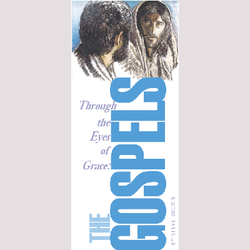
A companion booklet taken from Steve’s classic overview study of the New Testament. Highlights of the Gospels—Matthew, Mark, Luke, and John—including introductory comments, major themes, and important teaching. This is great preparation for Key Life’s Gospels broadcast series this year that begins this month.

Featured Offer
A companion booklet taken from Steve’s classic overview study of the New Testament. Highlights of the Gospels—Matthew, Mark, Luke, and John—including introductory comments, major themes, and important teaching. This is great preparation for Key Life’s Gospels broadcast series this year that begins this month.
About Steve Brown, Etc.
Key Life exists to communicate that the deepest message of the ministry of Jesus and the Bible is the radical grace of God to sinners and sufferers.
Because life is hard for everyone, grace is for all of us. And grace means that because of what Jesus has done, when you run to him, God’s not mad at you.
All of the radio shows, sermons, books, and videos we produce work together toward one mission: to get you and those you love Home with radical freedom, infectious joy and surprising faithfulness to Christ as your crowning achievement.
Learn more: http://www.keylife.org
About Steve Brown
At Key Life, Steve serves as Bible teacher on the radio program Key Life and the host of the talk show Steve Brown, Etc. Prior to Key Life, Steve served as a pastor for more than thirty years and continues speaking extensively.
Steve has also authored numerous books, including How to Talk So People Will Listen, Three Free Sins, Hidden Agendas and his latest release, Talk the Walk: How to Be Right Without Being Insufferable (now available as an audiobook).
Contact Steve Brown, Etc. with Steve Brown
steve@keylife.org
https://www.keylife.org
P.O. Box 5000
Maitland, FL 32794
In Canada, send requests to:
Key Life Canada
P.O. Box 28060
Waterloo, Ontario N2L 6J8