
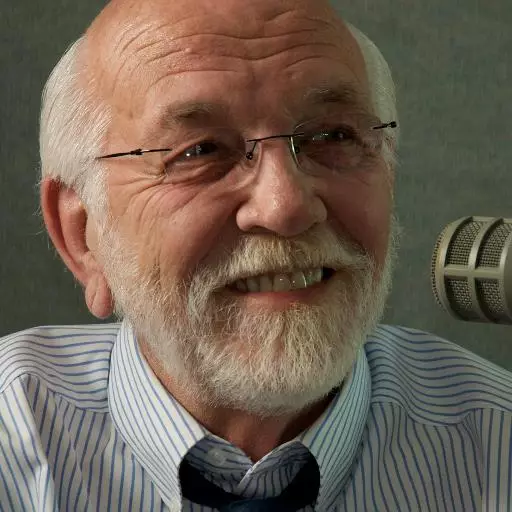
Jim Stout | How To Set Boundaries | Steve Brown, Etc.


Do you have trouble setting and maintaining boundaries? This week, Steve and the gang chat with pastor/author Jim Stout about this skill that is so important for healthy relationships.
The post Jim Stout | How To Set Boundaries | Steve Brown, Etc. appeared first on Key Life.
Guest (Male): This one thing can make you more effective and improve your relationship. What is it? Let's talk about it with Jim Stout on Steve Brown, Etc.
Guest (Female): He's an old white guy, an author, broadcaster, and seminary professor who's sick of religion. And he's brought friends. Please welcome Steve Brown, Etc.
Steve Brown: Oh, we are so glad you're here. You give us a gift with your presence, and we give you a gift with our presence. So it's mutual, in case you were wondering. I'm Steve, the aforementioned old white guy.
Our executive producer, Matthew Porter, is here. Matthew says he used to be indecisive, but now he's not sure. We got you. We've got to get a drumroll.
Matthew Porter: We used to have a drumroll.
Steve Brown: That's true. Budget cuts. Our producer Jeremy is in the little glass booth. Jeremy's officially a part of a reporting group that is loud, crazy, and a little edgy. True. But enough about me. He also joined a music group. He's going to be doing an Elton John thing in California.
Jeremy: Well, I'm heading out to Pittsburgh shortly, but I'll be doing a whole bunch of things all over the country.
Steve Brown: Our one-man IT department, John Myers, is in the tech bunker. It's his birthday today. John, to celebrate, no tech questions from me today until after the show. I offered to bake him a cake or sing happy birthday, and he said, "No, I don't think so."
Matthew Porter: I want to see a next birthday.
Steve Brown: Dr. George Bingham is the president of Key Life. George never shies away from asking the hard questions, like, "Why did I walk into this room?" And Kathy Wyatt is the soft feminine side of the program. I've only known her for 300 years. I'd think I'd get her name right. 50 as of this.
Kathy Wyatt is the soft feminine side of the program. She says there was a holiday earlier this week called Old Stuff Day. Don't look at me like that. I am very, very sensitive.
Kathy Wyatt: What are you supposed to do with old stuff?
George Bingham: Did you make that up, Matthew?
Matthew Porter: Absolutely true. I would never lie about that. Old Stuff Day.
Steve Brown: I'd hide out if I were you.
Kathy Wyatt: Well, I'm thinking about the old stuff that I know.
Steve Brown: We have a great guest today. Talking about old stuff, he's an old friend of mine. We go back a lot of years. Dr. Jim Stout is an ordained Presbyterian minister. He's a speaker and an author. He got his Master of Divinity from Gordon-Conwell Seminary and his Doctor of Ministry from Fuller Theological Seminary. So he's covered both coasts.
Jim has pastored five churches and taught and written about stress, burnout, depression, and other emotional and mental issues. And the book we're going to talk about today, which I hold in my nicotine-stained fingers, is called Boundary Setting: A Practical Guide.
Jim is also one of the funniest guys that I know about. And I want to read to you how he introduces himself in some of his publications. Jim Stout, AKA Fast Freddy Fleet Foot, at 81 with Parkinson's disease on two out of his five total knee replacements and a heart stent, completed in California, Nevada National and World Senior Games one, two, and three miles in men's power walking. And it was timed with a calendar.
That is funny, man. Jim, you know, because I know your story and I know where you've been and I know what you've done, it always surprises me that in the darkest times, you were still funny. You were still telling jokes. I can remember meeting with you a couple of times close to that time, and I laughed more than I cried. I did cry a lot because you've been to some dark places.
You know, we don't have three or four hours, so you can't go the whole route. But kind of give us an overview of some of the things that make you so sensitive to hurting people.
Jim Stout: Wow. I grew up at State College, Pennsylvania. That's the home of Penn State. I turned down a full scholarship for football there, went to Pitt. Broken home. Mother left 18 times before I was 21. Each parent left for a year. Long story short, I was sexually abused by my mother and grandmother starting at age four, developed bulimia. Let's see.
Went to the University of Pittsburgh. They were nationally ranked in football and wrestling, of which I did. Did won Golden Glove heavyweight championships in Pennsylvania and Ohio. And I have to drink a lot of tea, honey, and lemon now because in my last fight after the Golden Gloves in AAU, I got hit in the throat, detached one of my two vocal cords. So I can go from alto to bass in seconds.
And they could do a surgery repair, but I'm a devout coward. Had a lot of I started out in pre-med at Pitt, and chemistry and I didn't get well, but I did scrub in with a general surgeon for almost two years, a day or two a week. So I've had more surgery background than most people through three years of med school. And I'm one or two courses shy of another PhD in psychology. So enough of that. I'm not much, but I'm all I can think about. I'm a legend in my own mind.
Served five churches. One in Texas. Long story short, about 2,000 members, senior pastor. Long story short, their leadership was more Presbyterian than Christian. And I had my life, my wife's life, and my two young sons' lives threatened multiple times. So it was pretty threatening.
Then we went to a church that was just the opposite, 120 years old, geriatric, very judgmental. There were some wonderful people in each of those churches, but it only takes a few. And then I whacked out my knee, so I've had quite a bit of surgery background. I've fallen five times in the last two years. Most recent time was in the bath on a loose rug last week. So I'm just kind of a walking psychological and physical miracle.
Steve Brown: After that church in Texas, you kind of crashed and burned, didn't you? Weren't you sleeping in your car for a while?
Jim Stout: After that, I took this church in Pennsylvania and then came out here to California, where I was associate pastor working with men and families. And everything was going beautifully. And I had I crowded about 850 the top movers and shakers in Orange County into a one-hour breakfast called The Gathering USA. We're in about 94 cities now. It's an evangelistic outreach to reach non-Christian businessmen and leaders. And a lot of pro athletes. My ministry over the years has been mainly with athletes, businessmen, and clergy.
Anyhow, I got some criticism by a jealous pastor, which threw me into a tailspin. I was set up because of my family background, that church in Texas, and crashed and burned, spent five months in the hospital, out a month where I lived out of my van because the Presbyterian insurance company basically betrayed me and didn't live up to their promises and so forth and was continually harassed by them. Just continually.
And let's see, was suicidal many times. I was saved by a prostitute one time. I was in a motel, and I had a loaded .357 Magnum, Colt Python, and a bottle of rum, and I was getting ready to do it. And knock on the door, it was a prostitute making rounds. And for some reason, I got ticked off and called the manager and for whatever reason it broke things.
And a lot of other things. The bottom line is weekly, I spend, excuse me, every month, every week, I probably counsel one or two suicidal people every week. Like on Super Bowl Sunday, I counseled a pro basketball player in the hospital who just tried to take his life. And then an eighth-grade boy that'll be this week. So that kind of background, I work a lot with depressed people and a lot of work with Special Ops, Navy SEALs, and so forth. And they have a high suicide rate too. So I have a therapy dog who used to go to visit many times, different places.
Steve Brown: Jim, that gives you an idea of the man we're going to be talking with and the reason he cares about broken people. And I suspect the reason that he's able to reach them so deeply and so profoundly. He is the illustration of the term wounded healer. And we're going to talk about something different, but it applies. Boundary Setting: A Practical Guide. Don't go anywhere.
Guest (Male): Whoa, this place is huge. Welcome to the Vault, your home for classic sermons from Steve from the '90s, the '80s, even all the way back to the early '70s. The Vault is a one-of-a-kind online experience where you can explore more than three decades of grace-filled messages. Get the details and check out our free audio sample at keylife.org/vault. That's keylife.org/V-A-U-L-T.
Steve Brown: Hi, this is Steve Brown, in case you didn't know. One of the main reasons Key Life exists is to remind believers that God isn't mad at his children. Why am I telling you this? Because our weekly email, Key Life Connection, takes the best of the videos, articles, and puts them right in your inbox. We'd love for you to try it. It's free. Go to keylife.org/subscribe.
Hey, we're so glad you're here. We're talking with pastor, speaker, and my friend, Jim Stout. And if you listened in the last segment, you're going to listen very carefully the rest of the time. By the way, there's a lot more than we can cover in his ministry and his life. So write this down, rebuildingyourlife.com. Rebuildingyourlife.com.
Jim, we're talking about setting boundaries, and I think in my mind, I think I know what that means, like being able to say no. But can you flesh that out for us a little bit? What does that look like in practice when somebody has trouble establishing boundaries? Where do you see that in play?
Jim Stout: Well, first of all, the origin, I never heard the word until about 30 years ago, and I certainly didn't practice it very well, obviously in my home background. And that came out of a three-hour seminar I taught at Fuller Seminary. And I've been told that it's used that and this book that you've got I've got a parallel book called Boundary Setting for Clergy and Ministry Professionals. It's used in the training part of all the chaplains in federal prisons. Just that little dinky part.
And what are boundaries? Boundaries are little ways to protect your priorities, the way you use your time, your relationships. And if you can learn how to set them, I'm counseling a number of right now burned-out doctors, psychiatrists, and psychologists who are absolutely burned out. And because that's been the number one issue for clergy and in my experience with a lot of people, when they don't set good boundaries, they set themselves up for a fall.
Steve Brown: Now, it's more complicated than that, isn't it? I mean, it's more complicated than saying, "Hell no, I won't do it." I mean, it goes deeper. Talk to us about that.
Jim Stout: Well, some people want to please everybody. They don't want to upset anybody, let anybody down, and so forth. But you can't. And whenever you try to enforce a boundary that you've set, like if you're on a diet or an exercise program or you don't go to a certain meeting, you're going to get either the bad look or words like, "You shouldn't do that" or whatever. So you need to get every time you set a boundary, 90% of the time, you're going to get negative feedback. Somebody will try to shame you or blame you or just step right over it. I can go into different kinds of boundaries that are helpful. You have to sort of have to know when to hold them, when to fold them, and when to walk away.
Matthew Porter: That sounds familiar. Our pastor this weekend was talking about early on 12 years ago when they started the church and they this family went to the grocery store, just regular grocery and he said, no exaggeration, nine different conversations. It was just a quick grocery trip and you run into a congregant, you run into somebody else and they talk and he goes it was an hour and a half to do this quick trip.
And there's part of my brain going, "Well, that's a part of being a pastor is you have this connection that you want to have." The other part of my brain's going, "You need to just say you'll see them next time." Are the boundaries something that you set up ahead of time and these are my yeses on this side, nos are on this side? Or is it something you have to kind of feel out and figure out in real time in a specific context? Is it more about learning to say no when you know to say no?
Jim Stout: Yes and yes. You sort of have to if you're going into an interview for a job, you sort of have to mentally rehearse things that'll come up. As an athlete, you had to anticipate certain things would come your way. So I learned about boundaries not only from Henry Cloud and John Townsend, who are colleagues of mine, about their famous book on boundaries, but I taught for them in the past for follow-up sessions.
I learned from an alcoholic friend of mine who was a professional who taught me this. He'd gone to a big dental conference and here's what you say. Here's the formula. "I'd love to, sorry but I can't." That way it affirms somebody while telling them you can't. And the moment you start debating it with somebody, like taking the extra piece of chocolate cake or by going to that party, you're going to get negative. So you have to repeat it.
And so that's a good formula that really works. I can give you some examples. Shakespeare long ago and Henry V said, "Nothing is so vile as self-neglect." So you have to protect yourself. One of the Ten Commandments is love God as you love yourself. You love your neighbor as yourself. And so love of yourself is setting boundaries to protect yourself.
If you look at 1 Corinthians 11:17, here's a quote. "Your meetings do you more harm than good." And there are some relationships and some meetings, however religious they may be, that are just simply toxic and you can roll the dice. My dice, I may make a one out of four or five, and then it really hurts. So you have to know when to do things and I can give you some examples of that.
Steve Brown: Just while you're looking, I think all meetings are toxic. And if I get to heaven and Jesus calls a meeting, man, I'm in the other place.
Jim Stout: I'm with you.
Matthew Porter: My favorite thing is, "Oh, I wish I could, but I don't want to." So I think you're ugly.
Jim Stout: "I wish I could, but sorry I can't." That's the more polite way. But you've got to expect 90% of the time, you're going to get pushback. So you have to have the moxie, the courage to say, and the minute you start arguing with them, you've lost.
Jeremy: And I would imagine that's something that like any kind of other athletic stuff, you kind of have to get you're going to get better at it. You've got to keep at it and you're going to get more comfortable and eventually you're like, "No, next question."
Jim Stout: Then you become a bad, mean SOB like me.
Steve Brown: We used to teach an assertiveness section in the Born Free seminar. And one of the exercises that we suggested is when you're asked to serve on a committee or go to a meeting or be involved in a ministry, say no. And don't say anything more. Just no.
And when you do that, you'll bite your tongue trying to keep yourself from explaining why you're saying no. And the person to whom you say no will look at you puzzled, like you idiot. But say, "What is it about no that you don't understand?" And so we have people in the seminar who tried it and lost all of their friends.
Boundary Setting: A Practical Guide by Dr. Jim Stout. This is really important material, and we don't think about it very often. People really are burned out doing stuff they shouldn't do, going places they shouldn't go, and being the person they're not even called to be. And we're going to talk about it on the other side of the break. But for now, this is hard work and we have cupcakes to eat. So we're going to rest up and come back.
Kathy Wyatt: Hey, thanks for listening to Steve Brown, Etc. And if you're enjoying the show, would you help us let others know about it? You can share a link, click subscribe on our YouTube channel, or drop us a review on your favorite podcast platform. Thanks so much.
Steve Brown: Hi, this is Steve Brown. I'm excited to tell you about a new offer from Key Life called Living with Steve. Let me tell you the way it works. I travel with you wherever you go. If you need an entertaining conversation or even a sermon, there I am. That's the good news. The bad news is that it costs a million bucks. But wait, there's good news. You can get everything I've just described with the Key Life app. And for a limited time, it's not a million dollars. It's free. Try it now at keylife.org/app.
Hey, we're hanging out with Dr. Jim Stout. And I've mentioned this before, but you never listen to me. Would you you need to go to this website. This book is a great book, but he's written a bunch of others and touched a bunch of different lives in some very difficult circumstances. And you'll get some help at this website. It's rebuildingyourlife.com. Rebuildingyourlife.com.
George Bingham: Jim, I really appreciate your book and especially because it's so concise. I mean, it's a relatively short book. You can tell you do ministry with men. They don't have long attention spans, but 87% of all books are read by women.
But it seems almost like and it sounds like you often are dealing or maybe most of the time are dealing with people that have gained a degree of success in their lives and are struggling with boundaries because they're sort of in demand. It almost seems like there's something in our society that selects out the people that have boundary problems initially. I mean, if you're good at setting your boundaries, say, early in your career, you may get picked over because somebody else is going to say yes no matter what's going on with them. Does that make sense?
Jim Stout: Yes, yes.
George Bingham: And why are we drawn to not you mentioned that we like to please people. Is that one of the primary reasons we have problems with boundaries, would you say?
Jim Stout: I don't know if it's a primary one, but it's certainly one of them because a lot of people know they can always count on Sister Sue or Jeremy George because he'll do it. Just give it to him because he can't say no or she won't say no. Well, that's maybe the reason he became the president of the company. Yeah, and it's not worth the price, is it? Is it, Jim? Well, it leads us at a price sooner or later.
Steve Brown: Jim, I also want to echo what George said there. This has been a really good conversation already. And I am a recovering people-pleaser myself, and I have just recently realized how much I have said yes to stuff and then kind of been bitter or resentful about it later. And then I'm like, "Oh, right. That's because I probably should have said no. Why did I say yes?"
And do you have any advice for someone who has been stuck in that? And just on a side note, I'll throw a little story my therapist told me. He said if you are in a friendship, relationship, business, whatever with someone and you've never put a boundary up before, it's like you're living in a neighborhood and your neighbor and you have never had a fence and all of a sudden you put up a fence, they're going to be like, "Hey, my property line went all the way over there, didn't it?" Because they don't know that the property line's right there, you just never put the fence up. Any advice for somebody like me or all the many, many thousands of people listening who are in the same boat?
Jim Stout: You talking about resentment when you look back or just boundaries?
Steve Brown: How to get no, how to get over the saying yes to the thing you probably should have said no how to get into that place where you can start saying no, I really don't want to do that, so I'm going to say no.
Jim Stout: Well, I think the first step is that congratulations, you at least recognize that. I mean, you recognize that's an issue, that's a problem. Some people are so caught into it as a lifestyle that they don't it's a knee-jerk reaction to say yes. So at least that. And then the trick will be to learn and you can learn that because I'm a former people-pleaser too. So you can learn to be an SOB like me.
Steve Brown: That's the dream.
Jim Stout: But you have to learn how to forgive yourself and learn because it's a practice thing. And so I can give some real specific things on self-care and self-protection as we go along if you want that I've learned. My books and everything come out they're basically sermons to me. And I share them with other people.
If you want to bring them up later on, I'll go with some specific. I'll tell you one thing on my writing, would that help? Robert Frost is one of my favorite poets. And he has a poem called Stopping by the Woods on a Snowy Evening. And here's one of the little lines. "The woods are lovely, dark and deep, but I have promises to keep, and miles to go before I sleep, and miles to go before I sleep." This helped me more than anything else in my writing. I lost some friends over it. I'll tell you how I applied it because I didn't return their calls or their emails or letters. I had to cut down on appointments in order to steward that time. So here's my little take on that.
The world is full of hurt and strain that none can fully assuage again. God help my set goal to gain and avoid distractions that only drain. Each day brings folks who cry and weep, but I have promises to keep and a short time before I sleep and a short time before I sleep. And so it is so easy for me, obviously, as anybody, certainly in the clergy profession or the shrink profession or the doctors' profession just to burn out. So there'll always be out there. They'll always be there.
Steve Brown: Jim, this is good stuff, but you can't keep talking in the break. Speaking of boundaries, so I've got to say no to you, just shut up. And we'll talk about it on the other side of the break.
Guest (Male): Hello, this is Pastor Jerry Cuparies again, and I'd like to take a moment to ask you to pray for and give to Key Life. When you pray, ask for wisdom and blessings and that Key Life will continue to spread the message of God's grace for many, many years to come. And if you can give, please give as generously as you are able. And you know that we will be faithful with every gift, big or small. Thank you.
Guest (Male): When Christ promised we could live life to the full, he didn't just mean eventually in heaven because Jesus didn't come to save us from our humanity but to restore it. Life with a capital L. Find it now at keylife.org/store.
Guest (Male): What if you could start your day by hanging out in God's word and with some of the most significant theologians, authors, and pastors ever? That's the idea behind the one-year devotional, God With Us. Find it now at keylife.org/store.
Steve Brown: Hey, we're hanging out with Dr. Jim Stout about his book Boundary Setting: A Practical Guide. And it is that. Hey, by the way, if you haven't heard, the latest edition of our print magazine is now available. You can get your copy whenever you want it by going to keylife.org/freemagazine. And keep your mouth shut. You can't complain when it's free. Order extra, we'll charge you for those. Well, you could, but it wouldn't accomplish a thing.
Jim, we talked about the fact that setting boundaries can obviously be problematic and what kind of issues occur, what kind of dangers there are in not setting boundaries. And I would just like to set the record straight that I have absolutely no problem whatsoever in setting boundaries. None whatsoever. I just don't keep them. I set them on a regular basis, daily. And sometimes they're the same ones every day, day after day after day. And you know, I think we sort of tend, at least let's not make it plural, let's just make it singular.
I tend to think that I'm somewhere along the way missing the mark. There's something I've missed that will take me from being such a superb and diligent boundary setter to a total flunky in carrying them through. There's something if I could just find that one thing that would help me to do it consistently and I haven't found it. And so help.
Jim Stout: Well, Kathy, a journey of a thousand miles starts with the first step. And your first step is recognize that's a problem. A lot of people just keep on going, lockstep. And I don't have any easy answer for it, I wish I did. The only thing that comes to mind is just take one of those boundaries, just one. And share it with somebody else.
Steve Brown: Oh, okay. And let them hold her accountable.
Jim Stout: Where James is bear one another's burdens. And another thing Alcoholics Anonymous talks about, I do a lot of 12-step stuff. If I feel scratchy, I'll go to an AA meeting even though I'm not an alcoholic. But they have what they call bookending. If you're going into a meeting or a relationship or whatever and you figure your boundary's going to be tested, not to take a drink or not to eat a piece of chocolate cake, whatever, you tell your partner, your friend, "Please pray for me because I don't know if I can hold this boundary. And as soon as I get done, I'll call you back and report the good, bad, or the ugly."
Steve Brown: That's good. That's helpful. That's bookending. Yeah, that's a good idea.
Jim Stout: So that might be a way of as you start to have somebody that knows that and I think it'll just be helpful to it's good practice in forgiving yourself because you're human.
Matthew Porter: Jim, as we're talking about setting boundaries, my brain goes to the context of somebody who's busy and successful and maybe worst-case scenario kind of strung out and stressed because they're saying yes when they should be saying no. But you also say that this applies to people who are being abused or in danger of being abused. That feels like a completely different scenario. How does this concept apply to those people?
Jim Stout: The people who are being abused?
Matthew Porter: Yeah, being abused or in an environment where they could be abused. How does boundary setting help them? What are their first steps?
Jim Stout: Yeah, that's a very good issue. I'm in contact with a number of people. One's a female who's been in multiple abusive relationships with men who use her and abuse her. And bosses who do the same thing, who yell at her and scream at her, make threats and so forth. Again, you have to basically here's where you say. "I'm sorry you feel that way." That acknowledges that other person's upset. "I'm sorry you're upset. But if you're going to keep talking that way, I'm going to leave right now."
Steve Brown: Gives them a choice.
Jim Stout: And do it. I'm going to leave right now. That means if I have to call an Uber to go, that's okay.
Steve Brown: That's good stuff. Jim, wait, I've got another question. There and this is a question I suspect a lot of our viewers and listeners have in their minds if they're believers. What about being a servant? What about 1 Corinthians 13? What about the put it in that context so we can hear I get what you're saying, but don't become an SOB who is never reaching out and helping and serving others, right?
Jim Stout: That's a tough thing. It's a tough balancing act, it really is. I acknowledge that right off the bat, but it's sometimes it comes down to it's you or me. And today it's not going to be me that suffers. I've got to look out when you're in the airplane if you're with your kid, they say the oxygen mask comes down, put it over yourself first, then your kid. If you go down trying to help somebody, you're going to be no good to your family or other people. So you need to cut down instead of answering somebody's call every day, twice a day, every day of the week, say, "I'd like to talk with you but only on Thursdays in the afternoon."
And that sets certain protected things to protect yourself. In marriage, it's the same way. You need some protection. Sometimes I've discovered my wife kind of has meltdowns after a while, she needs some space. Kahlil Gibran, the Eastern prophet, said, "Let there be spaces in your togetherness." So sometimes you need some me time, away from the kids, away from your spouse to protect yourself. Just go out in the woods and listen to trees don't talk back.
Matthew Porter: But you just should come back eventually, right? Lots of space.
Steve Brown: Did that help, Kathy?
Kathy Wyatt: Yes, absolutely.
Matthew Porter: So last minute, here's an example. Tell me if this was boundary setting. Last week, I was doing a lot of pickups of kids to take them to an event and they're like, "Hey, this person wants to come too." And I'm like, "You know what? I will gladly take them, but they have to meet me at a place I'm already going. I'm not willing to add another 30 minutes." And I felt like that was reasonable. It's not that I'm not willing to serve, it's like I can help you a lot. Can you help me a little bit in this odyssey that I'm on?
Steve Brown: So you put some boundaries around that. That's a good move. It felt good. Does that apply to what we're talking about?
Jim Stout: Exactly. That's exactly.
Steve Brown: Winner. Jim, we're out of time. And I don't know where it went. I love talking to you. I learn stuff and sometimes become a better person, other times a little worse. But you're funny. Hey, great book. Be sure and go to the website rebuildingyourlife.com. Jim, God bless you. I'm so glad that God created you. Hopefully, we can do this again soon.
Jim Stout: You guys have a wonderful ministry together. Wonderful. I tell people about you every week.
Steve Brown: Hey guys, we're out of here. But we're going to come back and tell you who we're going to do it unto next week, and you're going to be surprised.
Kathy Wyatt: So you said before the last break, we're going to let you know who we're going to do it unto next week and you're going to be really, really surprised. Well, so are you because I have no idea.
Steve Brown: Excellent. Thanks for just leaving me to swing in the wind here. No idea. Just you know, there's just a lot of people out there clamoring to get on this program and we just haven't worked out some details. And we have set the boundaries. Some boundaries. And if nobody shows, we'll just sit around. It'll be us. It'll be us. And we'll go around the table and we'll each set boundaries for each other. That sounds like really fun. Give people an hour of quiet time. Hey guys, we will be here if nobody else does. Next week, same time, same place. Hope you'll join us. In between now and then, don't do anything we wouldn't. That gives you a wide, wide berth.
Featured Offer
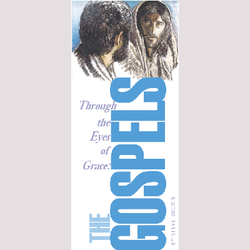
A companion booklet taken from Steve’s classic overview study of the New Testament. Highlights of the Gospels—Matthew, Mark, Luke, and John—including introductory comments, major themes, and important teaching. This is great preparation for Key Life’s Gospels broadcast series this year that begins this month.

Featured Offer
A companion booklet taken from Steve’s classic overview study of the New Testament. Highlights of the Gospels—Matthew, Mark, Luke, and John—including introductory comments, major themes, and important teaching. This is great preparation for Key Life’s Gospels broadcast series this year that begins this month.
About Steve Brown, Etc.
Key Life exists to communicate that the deepest message of the ministry of Jesus and the Bible is the radical grace of God to sinners and sufferers.
Because life is hard for everyone, grace is for all of us. And grace means that because of what Jesus has done, when you run to him, God’s not mad at you.
All of the radio shows, sermons, books, and videos we produce work together toward one mission: to get you and those you love Home with radical freedom, infectious joy and surprising faithfulness to Christ as your crowning achievement.
Learn more: http://www.keylife.org
About Steve Brown
At Key Life, Steve serves as Bible teacher on the radio program Key Life and the host of the talk show Steve Brown, Etc. Prior to Key Life, Steve served as a pastor for more than thirty years and continues speaking extensively.
Steve has also authored numerous books, including How to Talk So People Will Listen, Three Free Sins, Hidden Agendas and his latest release, Talk the Walk: How to Be Right Without Being Insufferable (now available as an audiobook).
Contact Steve Brown, Etc. with Steve Brown
steve@keylife.org
https://www.keylife.org
P.O. Box 5000
Maitland, FL 32794
In Canada, send requests to:
Key Life Canada
P.O. Box 28060
Waterloo, Ontario N2L 6J8