
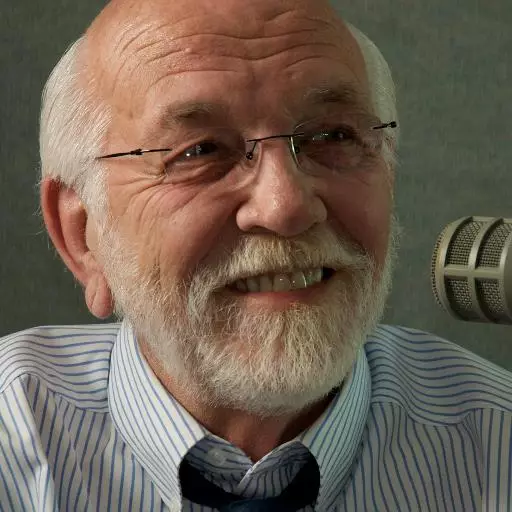
Hugh Ross | Noah’s Flood Revisited | Steve Brown, Etc.


When it comes to Noah's ark, does science back up scripture? This week, Steve and the gang reconnect with Dr. Hugh Ross to learn about exciting recent discoveries and what they mean for believers.
The post Hugh Ross | Noah’s Flood Revisited | Steve Brown, Etc. appeared first on Key Life.
Voiceover: When it comes to Noah's Ark, does science back up Scripture? Let's talk about it with Dr. Hugh Ross on Steve Brown, Etc.
He's an old white guy, an author, broadcaster, and seminary professor who's sick of religion. And he's brought friends. Please welcome Steve Brown, Etc.
Steve Brown: We are so glad you're here. We realize it's a gift for you to give your time to a program like this, and we try not to waste it. Whenever we have Hugh Ross, it is never wasted. If you're wondering, I'm Steve, the aforementioned old white guy. Matthew Porter is here. Stephen Spielberg said his new alien movie would have Christians questioning God. Matthew, are you still a Christian?
Matthew Porter: Well, I left the movie theater questioning God. I said, God, how could you let my favorite director make such a dumb movie? I started questioning the existence of Stephen Spielberg, didn't I?
Steve Brown: Our producer, Jeremy, is in the little glass booth. Jeremy's glad that we're talking about Noah during June, which of course is Flood Awareness Month. You can tell by all the rainbows that you see everywhere. Our one-man IT department, John Myers, is in the tech bunker. John likes to think that he would have built the Ark in just ten years.
And Dr. George Beam is the president of Key Life. Tomorrow is George's birthday. So happy birthday, George. I almost forgot. My gift to you is that I'm not going to sing that to you. And I'm not going to make a cake. Either one would be a disaster. And Kathy, of course, is the soft feminine side of the program. Kathy says we should—I can't believe you wrote this. We're committed. Kathy says we should bake America great again. Maybe a birthday cake for George.
Dr. Hugh Ross is the founder and senior scholar of Reasons to Believe. You ought to have a pen or your phone or a pencil, and I'm going to tell you how to get to that website during this program. He's an astrophysicist and pastor. You don't get them together very often. He has spoken at hundreds of universities, conferences, and labs around the world. He's written a bunch of books, and his latest, which I hold in my nicotine-stained fingers, is called *Noah's Flood Revisited: New Depths of Insight from Science and Scripture*.
Did the flood really happen? Say yes, and we'll end this program. I just want you to know that. Is it just a story? It is a nice story. When I was in graduate school, it was a school of theology at Boston University, and they said, of course it didn't happen, but it teaches nice principles that we can apply to our life. Now, I knew that was nonsense even then. I just didn't have an alternative, so I bought into the nonsense. And then Hugh, I met you. Tell us it really happened, and tell us a little bit about it.
Hugh Ross: Well, I think your professors had a point. There is an allegorical message in the Genesis flood account, but it's not just an allegory. It actually is literal history, and the latest scientific discoveries back that up. But I think it's crucial to look at all the biblical texts relevant to the flood, not just those in Genesis, and interpret them all literally and consistently.
Steve Brown: And we do that once we assume that we're talking about history. Allegory is no good if it doesn't have any basis to it, right?
Hugh Ross: That's what makes the allegory so strong is the fact that it is based on literal, actual history. And how can you deny it? I mean, there's literally hundreds of flood stories in the different cultures of the world, and they have remarkable similarities what we see in Genesis.
But what I noted in looking at all of them, only in the book of Genesis do you get a story, an account that is scientifically and historically credible. All the other ones, especially the ones you see in Mesopotamia, they're not scientifically credible.
Steve Brown: You have written so many books answering so many questions. Is this a major deal with most people? I mean, why did you decide on the flood and dealing with that in a full-sized book?
Hugh Ross: Well, I spend most of my time sharing my faith with adults who don't have a Christian background, have not read the Bible. And what I notice is they all think that the Genesis account of the flood is utter nonsense, so they don't even bother picking up the Bible. It literally ranks as the number one reason why people reject the Bible as the inspired, inerrant Word of God.
So that was my motivation. And I wanted to write this book ten years ago, but I knew that scientists were on the verge of nailing down with precision the events we see described in Genesis 10 and 11. And so I said, I'm going to wait until that research is done because it's going to allow me to make a much stronger case that the one we see in the book of Genesis is credible and accurate.
Steve Brown: You know, I don't want to ruin the rest of the program, but tell us some of the newer research that has backed up what you knew to be true and caused you now to produce this book.
Hugh Ross: Well, in Genesis 10 and 11, it describes a great migration event that took place after Noah's flood and describes it in significant detail. And these events are recent enough that we can employ scientific tools to determine when these events happened and where they happened.
And so the latest is demonstrating that you've got Northern Europe settled and colonized at the same time as Southern Europe. And that struck me as rather strange. If it's being naturally driven, you'd expect the more clement places to be settled first and the harsher places later. But they're both settled at the same time.
And they're settled at the same time that Australia is settled, that Japan and Borneo are settled, that Western Africa is settled. So the fact that we see these great migration events all happening simultaneously gives credence to what you see in the Bible, that God forcibly scattered humanity over the whole of Asia, Australia, Africa, and Europe, and later into North and South America. And did so to prevent humans from repeating the errors of what happened before the flood.
Basically, what we see in Genesis 10 and 11, it's not good that one government and one nation rule over all the peoples of the world. That's going to be a monopoly, and whenever you've got a monopoly, you're going to get oppression. So on purpose, God scattered humanity to prevent a repeat of what happened in the days before the flood. But the good news is we now have really reliable, multiply independent dates establishing when that occurred, which puts Noah's flood before those great migration events.
Steve Brown: That's interesting. Is the flood universal? I mean, I grew up in the mountains of North Carolina. Was it really wet there at one time?
Hugh Ross: Well, it's still pretty wet there, but not that wet. It's a universal flood in that all of humanity was wiped out. But given the early date we now have for Noah's flood, we're back at a time when humanity was in a region. They were not yet globally distributed. That didn't happen until the events of Genesis 10 and 11.
So the flood is worldwide, the whole world of humanity and their animals were wiped out. But given that humanity and their animals had not yet migrated into Greenland, Antarctica, or Australia, or Europe, there was no need for God to flood the entire world to wipe out the whole world of human beings.
Steve Brown: Now, I realize this isn't what we're going to talk about for most of this program, but how does the Tower of Babel play in this? It kind of deals with the same problem of human depravity and one people speaking one language and the dangers of that sort of thing.
Hugh Ross: Well, notice you've got God telling Adam, multiply and fill the earth. He repeated the command twice. Adam and his descendants did not do it. After the flood, God repeated the command to Noah, multiply and fill the earth. But we see at the Tower of Babel, humanity was resolute in staying in one place, having one government, one capital city. And this is against God's will.
God knew if he got one nation, one government, one capital city, it's a prescription for the widespread multiplication of evil, and he wanted to put a stop to it. And he did.
Steve Brown: Hey guys, we've got a lot of stuff to talk about during this hour. But you can start with the realization that human beings are fallen, they're screwed up, they're sinful. If you give them too much power, they'll misuse it every time. That has implications, political implications, which we won't go into during this broadcast, but maybe in the future.
Hey, the book—you're going to love this book, *Noah's Flood Revisited* by Dr. Hugh Ross. We've got so many questions. If you go anywhere, you're just plain crazy.
Matthew Porter: Whoa! This place is huge! Welcome to the Vault, your home for classic sermons from Steve from the '90s, the '80s, even all the way back to the early '70s. The Vault is a one-of-a-kind online experience where you can explore more than three decades of grace-filled messages. Get the details and check out our free audio sample at keylife.org/vault. That's keylife.org/VAULT.
Steve Brown: Hi, this is Steve Brown. In case you didn't know, one of the main reasons Key Life exists is to remind believers that God isn't mad at his children. Why am I telling you this? Because our weekly email, Key Life Connection, takes the best of the videos, articles, and puts them right in your inbox. We'd love for you to try it. It's free. Go to keylife.org/subscribe.
Hey, thanks for joining us. We're talking with Dr. Hugh Ross. I don't know if you remember this, Hugh, but years ago, we had you on with a Young Earth evolutionist, and he didn't like you very much and made that very, very clear. And you—and I'm not being facetious—Hugh was kind and gentle and smiling and spoke quietly and absolutely kicked his posterior. I mean, he ate his lunch, to mix the metaphor. And at the end, there was no doubt that one guy was dead and the other one was still speaking truth. And that one would be you, Hugh. Do you remember that? No, you don't.
Hugh Ross: Oh, I definitely remember that.
Steve Brown: Oh, good. That's great. I just want one clarification before I ask him my question. George and his wife and I were on a little road trip this weekend, and we were reading your book out loud. And one of the things that came up in one of the earlier chapters was where people would talk about how on earth could Noah have gotten penguins on the Ark because penguins were in Antarctica and all? I had never thought about that. I mean, I grew up in the church, and you know, the animals came two by two. Never thought to wonder how the penguins got there.
But anyway, I think you alluded to that just before the break when you were talking about how the migration happened after the flood. And not only did people begin to move, but is that when the animals began to go to areas that were more specific to their—I mean, you don't really think of penguins in the equator.
Hugh Ross: Yeah, I mean, the animals really didn't move much. What happened was humanity moved. They went from inhabiting one locale to literally occupying all the world's land masses. But given that they were only occupying a portion of the world's land masses, there would be no need for God to wipe out the sloths in Brazil. There's no humans there to ruin them with their sin.
And this is a principle you see in the book of Leviticus. It's only the soulish animals, the birds and mammals that are in relationship with human beings, that can be damaged irreparably by human sin.
Steve Brown: Okay. All right. Well, then my—well, that was a question, so I'm going to take two. Do you think that there is a possibility that we may ever find any remains of the Ark? I mean, years and years ago, we remember when the Dead Sea Scrolls were found. What's the likelihood as far as the Ark?
Hugh Ross: Yeah, I don't think so, because the Bible tells us it's made of gopher wood. And we don't really know what gopher wood is, but the Old Testament mentions 21 different species of hardwoods. And some of them are very hard, like acacia and algum. Evidently, this is even a harder, higher-strength index wood than algum and acacia, in which case that wood would have been far too valuable for people to leave lying around.
I believe that shortly after the flood, the Ark was taken apart, and the wood was used to build the cities of the plains. So I think the only hope we have for finding the remains of Noah's Ark is to go into the ruins of, say, Nineveh and look for the charred remains of wood because that city got burned to the ground a few times. So yeah, I don't have any hope that we're going to do that. And as far as that structure they found in Turkey, it's a natural geological incline. You see them all over alpine mountain regions. I've personally seen ones that look more like Noah's Ark than the one that they claim is the remnants of Noah's Ark in Turkey.
Steve Brown: I had dinner with an astronaut one time who was really sold. In fact, a good portion of his time was given to the discovery of Noah's Ark. I wish you'd been there because he needed to spend more time with his family.
Matthew Porter: I'm still digesting the idea that Noah's Ark got stripped for parts. That's just so cool. It's like up on blocks. Yeah, it's like, did Mount Ararat in a bad neighborhood? You're like, hey, hey, where's my Ark? All right, that's for another thing.
Hugh Ross: Well, the text says it came to rest in the mountains of Ararat. That's probably the lower foothills of the Ararat range, which would have made it relatively easy for people to say, hey, there's valuable lumber there, we better go get it. Waste not, want not, I guess. That's the bad neighborhood.
Matthew Porter: So I know when Steve alluded to it, the Young Earth versus New Earth, and you're not a Young Earth guy. Does that factor into our understanding or misunderstanding of why Noah's story is really real and not made up and squares with what we know as science?
Hugh Ross: It definitely does, because when people say that Genesis is teaching nonsense about the flood, they're responding to the Young Earth interpretation of the flood. And they put it at about 2500, 2400 B.C. And it's like, if it's that recent, then clearly we would have evidence that the event really happened.
But it's not that recent. I also show even by the Young Earth calculations, they can't get a date for Noah's flood. If you start from Moses and work backwards, you get a different date than if you start with Adam and go forward. So even if you're assuming that the genealogies are able to give you a date, they don't give you a date, which is clear evidence the genealogies are not clocks. You can't use them to come up with dates. Generations are dropped.
Matthew Porter: And at this time, you can look at the globe and you're like, clearly this used to fit with this, and this piece of land used to fit with this. That continental drift is—was everything more kind of jelled together, obviously, during this period of time?
Hugh Ross: Well, that's another reason for why it's ridiculed because Young Earth creationists will claim that you got Rodinia, a supercontinent, splitting apart during the flood, coming back together to make Pangaea, and splitting apart again. Well, now you're talking about 20,000 kilometers of plate tectonic movement happening within one year. If that were really the case, all the water would be evaporated, all the life forms would be instantly vaporized. Clearly, Genesis doesn't teach that, and there's zero scientific evidence for that occurring.
Steve Brown: You know, I know it happened on May the 24th. What year was that? What are we talking about here?
Hugh Ross: Well, that's what's interesting. You look at the events of Genesis 10 and 11, science now dates those great migrations to have occurred 40,000 to 50,000 years ago. Which means that Noah's flood must predate that, and if it predates that, there is no genetics challenge to all of humanity being descended from eight people that were on board Noah's Ark. So given that early date for Noah's flood, we really can scientifically demonstrate that what we see in Genesis is eminently credible.
Steve Brown: Wow. Yeah. I feel that way every time we talk to you. I say wow more than I do Jesus. It's—Hugh, you're amazing. Don't go anywhere. We've got a lot more questions to ask you.
By the way, you can keep up with Hugh at reasons.org. That's reasons.org. And on X @RTB_HRoss. The book is *Noah's Flood Revisited: New Depths of Insight from Science and Scripture*. Go get it. This is the kind of book you read to each other on trips to Atlanta.
Hey, thanks for listening to Steve Brown, Etc. And if you're enjoying the show, would you help us let others know about it? You can share a link, click subscribe on our YouTube channel, or drop us a review on your favorite podcast platform. Thanks much.
Hi, this is Steve Brown, and I'm excited to tell you about a new offer from Key Life called *Living with Steve*. Let me tell you the way it works. I travel with you wherever you go. If you need an entertaining conversation or even a sermon, there I am. That's the good news. The bad news is that it costs a million bucks. But wait, there's good news. You can get everything I've just described with the Key Life app. And for a limited time, it's not a million dollars, it's free. Try it now at keylife.org/app.
We're talking with Dr. Hugh Ross and his new book, *Noah's Flood Revisited: New Depths of Insight from Science and Scripture*. Hugh, you talk about—and people probably have commonly heard in many cases—that many of the different civilizations of the world have flood stories, flood myths. And I think I read or I think I heard as Kathy was reading it from the back seat that you kind of identify some of those, and it sounded like that those that come from civilizations closer to the occurrence have more commonalities with the Genesis account. And as you get geographically further away, they get more differences. Is that right? Did I hear that right?
Hugh Ross: That's correct, and that's why historians think there had to be an actual major flood event that impacted early humanity, because you do see this growing distortion of the story as you move out from the Middle East area. You also see increasing distortion as you move forward from the event in history.
And the fact that there are literally hundreds of flood legends—there's 300 flood legends in North and South America alone and another 300 in the Old World. So the fact that we see so many stories, there's more than double the flood stories than there are creation stories. This is why historians say, on historical evidence alone, there had to be a major flood that wiped out humanity. And that essentially all the resulting populations, civilizations, had heard about it at some point.
Steve Brown: Well, they took the story with them when they migrated out from the Middle East and began to settle all the land masses of the world. And that's where the stories became distorted as they were passed along. I didn't realize there were 300 in the Old World and 300 in the Americas of flood stories. That ought to give you an indication, even if they're messed up, that something happened.
Hugh Ross: Obviously something happened to explain all those stories.
Matthew Porter: Hugh, a lot of it, it seems like there's kind of two categories of the thinking on this. One is the deductive, kind of like what we were just talking about, like given this and this and this, the only rational explanation is this historical event. So there's the deductive stuff, and then, you know, I think of more the inductive where you find archaeological clues or these kinds of things. Where does it come down? Is it mostly one or the other, or it's kind of both?
Hugh Ross: It's a combination. It's both. And I think that's why we can now get a secure understanding of what the Bible and the science is really saying about the flood and the amazing concurrence we see between the scientific evidence and we see recorded in the different books of the Bible.
Steve Brown: Hugh, talk about the importance of cooking. You said that—you were telling us off-air, and I found that fascinating, and I'd like to share that with our audience.
Hugh Ross: Well, it's something I put in a previous book called *Rescuing Inerrancy*. What distinguishes us human beings from the Neanderthals, the Denisovans, Homo erectus—they were eating raw food. And so God created them with the anatomy that they could actually consume raw food and get the calories they needed.
We humans are not like that. We have rather weak jaw muscles and our jawbone structure also is much weaker, which means we have to get our calories from preparing and cooking our food. But by doing so, we get more calories. So for example, we now know that early humans were gathering vetches, which are poisonous in their raw form, but when we grind them up and roast them and boil them, they become good to eat.
And so in humans, even though we have a smaller body than the Neanderthals, we need more calories because of our brain. Our brain just needs a lot of energy. But the fact that we were cooking our food, eating soft food, means that we can get the calories we need in a few minutes per day, whereas the Neanderthals are probably chewing their food for four to six hours. So it explains why we humans were able to, basically, set our bodies free to do other things than just gathering and eating our food.
Steve Brown: So it's significant when you began to see human beings cooking.
Hugh Ross: Well, this is how we know, for example, we see evidence that people in Europe were cooking their food 40,000 years ago. So it's one reason we know that humans migrated from the Middle East into Europe. We can see the evidence of cooking. We see that evidence in Australia, we see it in Eastern Asia. So this is part of the evidence for this very rapid simultaneous migration and colonization of all these parts of the world. And it's backed up by other dates, the fact that we have human remains, the fact that we have artifacts, are all giving us the same dates.
Steve Brown: Oh man. I was at a restaurant the other night, took me six or seven hours to chew the steak. I want to try some woolly mammoth tartare. I didn't understand the scientific implications of that. I've got Neanderthal blood in me, or the chef at the restaurant didn't know how to deal with steak so it was edible. Well, that's why you're smoking tobacco rather than chewing it. Exactly.
Guys, we're talking to Dr. Hugh Ross. And this book is insightful, *Noah's Flood Revisited*. Hello, this is Pastor Jerry Kupers again, and I'd like to take a moment to ask you to pray for and give to Key Life. When you pray, ask for wisdom and blessings and that Key Life will continue to spread the message of God's grace for many, many years to come. And if you can give, please give as generous as you are able. And you know that we will be faithful with every gift, big or small. Thank you.
When Christ promised we could live life to the full, he didn't just mean eventually in heaven, because Jesus didn't come to save us from our humanity, but to restore it. Life with a capital L. Find it now at keylife.org/store.
What if you could start your day by hanging out in God's Word and with some of the most significant theologians, authors, and pastors ever? That's the idea behind the one-year devotional, *God With Us*. Find it now at keylife.org/store.
Hey, thanks for spending some time with us. By the way, if you haven't subscribed to our weekly Key Life email, get on the boat, as it were. And no, I'm not—did you write that, Matthew? "Get on the boat"? Watch your step. The smell shows the strings, and the animals have been there a while. Yeah, that's not a boat I want to be on. Go to keylife.org/subscribe and try it today.
Hugh, we've talked about some of the objections non-Christians have, like, "Oh, what about this? What about that?" But it occurs to me that there's also some Christians that are like, "Yeah, it totally happened." But they still have some fundamental misunderstandings about it. And they're like, "Oh, yeah, it's worldwide." They don't really have any equipment for addressing the skeptics and unbelievers. And they might read the Bible and go, "Yeah, worldwide. Like, the whole flipping planet." What are some basics that you could pull back the curtain and explain that a little bit better to believers?
Hugh Ross: Well, the problem in the 21st century, people think worldwide and global are both the same. But notice how frequently the Bible talks about worldwide events where the context makes it crystal clear it's not global. So for example, when Paul said of the Roman Christians, "Your faith has been heard throughout the whole world," he meant the Roman world. He wasn't claiming that the Aborigines in Australia had heard about the faith of the Romans.
Or when it says that Joseph fed the whole world, he's referring to the world of the Egyptian Empire. And you can find another dozen examples where the Bible does that. And what I find interesting reading the history of what Christian scholars said about the flood, no one explicitly states that the flood is global until the late 17th century, and only in Holland and England.
But Holland and England were the first nations to have a global navy, and so that's when people began to think global and worldwide are one and the same. But the Bible makes a distinction. As you see in 2 Peter 2:5, it's the world of ungodly people that was wiped out. And the very fact that Peter qualified the word *kosmos*, and he does it twice—in 2 Peter 3, he says, "The world that existed at that time." Now, if he meant the whole globe, there'd be no qualification. But in both cases, he qualifies the Greek word *kosmos* to indicate it's less than the entire globe of the earth that was covered.
The other confusing part is people read Genesis chapter seven and says, "Hey, the text says all the high mountains were covered with 22 feet of water." Well, they may not be aware that the Hebrew word for mountain also means hill, it also means mound. And the word for high can mean elevated. So it could be referring to the elevated hills that were covered with water.
And I think what really nails that down is that you have the floodwaters receding in Genesis 8:5, and Noah can actually see the distant hills because of the receding waters. But then he releases later in the text a dove, and the dove was flying low over the water. And what it tells us in Genesis 8:9, in the context of the dove, "Water covered the whole face of the earth." It's the same phrase you see at the height of the flood where Noah's on the Ark and it says, "Water covered the whole face of the earth."
Well, it's the whole face of the earth from Noah's perspective, meaning all he could see was water from one horizon to the other horizon. Now, that tells us the flood had to be more extensive than just Mesopotamia. If only Mesopotamia was flooded, he'd be able to see distant hills and mountains. But the fact that he couldn't tells us the flood was very extensive.
And because it happened during the last ice age, you could have the floodwaters be much more extensive than would be the case today. It also explains why you have the flood lasting for a whole year. If you've got the flood occurring during the last ice age, during that ice age, there are these major rapid melt events. It wasn't just ice permanently covering the earth. What we have is ice forming thousands of feet thick, you get a melt event, thousands of feet disappear, a freezing event, thousands of feet of ice go up, and then disappear again.
I think Noah's flood happened during one of the rapid melt events, which would explain why the flood lasted 375 days. The liquid water from the rain and underground aquifers would flow into the ocean within a few weeks. But the water that flowed out was being replaced by rapidly melting ice. Would also explain why people couldn't run to the mountains. If you've got rapid melting ice off the mountains, that's the last place you want to go. It's certain death if you head to one of those high places.
So it explains why the flood wiped out all of humanity, all of their animals. Also explains why we have no physical evidence of the flood because if it happened during the last ice age, those rapid melt events would have erased away all the geological evidence.
Steve Brown: So bottom line, it's not necessary that we hold to a total worldwide flood. It can be worldwide, it doesn't have to be global. It's the world of humanity and their animals were wiped out. And if you don't have any humans living in Antarctica, there's no need for God to kill off all the penguins.
Matthew Porter: There you go. Going back to your original question of the penguins. Do—can I ask you a really quick question? We know there were eight people on the Ark. Do we—when I say "we," I really mean you. Do we know how many—obviously, the animals were born, some were born while they were on the Ark—but do we know how many species there were? Is there any way to know that in terms of the quantity of animals?
Hugh Ross: Yes, there is. Well, in Genesis, it uses seven different Hebrew words to describe the animals that were on board the Ark and the animals that were wiped out. The keywords are *bassar* and *nephesh*, indicating it's the animals that are capable of an emotional relationship with human beings, that were close to human beings, that were wiped out.
So if humans had no contact with polar bears, no need for God or Noah to take onboard a pair of polar bears. They'd be untainted by human sin. And we're not talking salamanders either because they can't form relationships with human beings. Therefore, I think a high number for the number of species onboard Noah's Ark would be two or three hundred, probably more reasonable somewhere around 150. Which means eight people could literally take care of all those animal pairs for a whole year.
Matthew Porter: And you said, I believe, in the book you said that the—which I never thought about this either—the animals actually came to Noah. It wasn't like Noah said, "Okay guys, we got to go out and find all these animals." They came.
Hugh Ross: Well, they came because the flood wipes out the animals that are in relationship with human beings. So the animals that were not being damaged by human sin, they would have naturally gone to Noah.
Steve Brown: There you go. Hugh, you caused us to think thoughts and go places we've never gone before. You keep writing books and we're going to keep talking to you because we learn so much when you spend time with us. Hugh, thanks for taking time out of a very busy schedule to be with us, and thanks for writing this book too.
Hugh Ross: Yeah, it's my pleasure.
Steve Brown: Okay guys, we are going to come back and tell you who we're going to do it unto next week. And as always, you're going to be amazed with Kathy.
Hey, thanks for listening to Steve Brown, Etc. And if you're enjoying the show, would you help us let others know about it? You can share a link, click subscribe on our YouTube channel, or drop us a review on your favorite podcast platform. Thanks much.
What if you could start your day by hanging out in God's Word and with some of the most significant theologians, authors, and pastors ever? That's the idea behind the one-year devotional, *God With Us*. Find it now at keylife.org/store.
This is Pete Alwinson, and if you're a guy, I want to show you how to recover and reclaim an intimate, growing relationship with your Heavenly Father. Check out *Like Father, Like Son: How Knowing God as Father Changes Men*, available now at keylife.org/store.
Believer, I want you to remember that where sin abounds, grace does much more abound. And you will run out of sin before God runs out of grace. *Grace: The Real Good News of the Gospel*, find it now on keylife.org/store.
You know, one of the things that sometimes causes Christians to be silent in their witness is because we feel inferior to the learning and the sophistication and the knowledge of those who aren't believers. And that causes us to say, "I think I'm just going to keep my mouth shut."
You don't have to do that. And Hugh Ross, and there are others, but Hugh comes to mind right quickly when I think about it, that when you pick up the Bible, you're picking up truth. And it's not only verifiable truth in your heart, it's verifiable truth in your head.
And Hugh Ross, whenever he talks and in his books, and in between during the breaks we talk and think, "I never thought of that before," and everything begins to make sense and come together scientifically. So don't let them intimidate you. Read Hugh's books, or if you don't want to do that, keep a few of them around and when the subject comes up—these are just myths, they're not true—give that person one of Hugh's books and tell them, "Put that in your pipe and smoke it," because you stand on firm ground as a Christian. Philosophically you're on firm ground, sociologically you're on firm ground, and no matter what anybody tells you, scientifically you're on firm ground. So don't let them do that to you. I let them do it to me on occasion, but I have this gift of gab, so I just keep talking till something comes to mind, and I have a deep voice and people think I know what I'm talking about. That's a dangerous combination.
Who's going to be here next week? Well, unless you've been living under a rock, next week is the 4th of July, and it is the 250th anniversary of this great country that we live in. And we are so excited because we have with us a man whose name you've probably never heard before, Dietrich von Hogstrayten, and he is the screenwriter for the movie *Young Washington*. If you haven't seen it yet—actually, I think it doesn't release until July the 3rd. We got to see it early. But don't miss it. It is a wonderful, wonderful movie. And so Dietrich's going to be with us and talk about the movie.
And that's going to be a fun hour, and you don't want to miss it. We won't. We'll be here same time, same place next week. Join us. And between now and then, and I've got a cough—don't do anything—don't do anything we wouldn't. The coughing's okay? Yeah, the coughing and that gives you a wide, wide berth. Do you want to know who's here next week? Yeah, who? Hugh Ross. I just mentioned it. Noah's—speak of UFOs. Noah's flood revisited. That should be a great guest, Hugh Ross. Or Jeffrey Dahmer? Yeah, who? Guys, we got to go quick before this gets worse. We're going to come back next week with Hugh Ross and our fond hope is that you join us. Between now and then, don't do anything we wouldn't. And that gives you a wide, wide berth.
Featured Offer
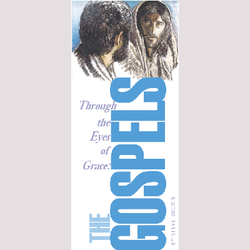
A companion booklet taken from Steve’s classic overview study of the New Testament. Highlights of the Gospels—Matthew, Mark, Luke, and John—including introductory comments, major themes, and important teaching. This is great preparation for Key Life’s Gospels broadcast series this year that begins this month.

Featured Offer
A companion booklet taken from Steve’s classic overview study of the New Testament. Highlights of the Gospels—Matthew, Mark, Luke, and John—including introductory comments, major themes, and important teaching. This is great preparation for Key Life’s Gospels broadcast series this year that begins this month.
About Steve Brown, Etc.
Key Life exists to communicate that the deepest message of the ministry of Jesus and the Bible is the radical grace of God to sinners and sufferers.
Because life is hard for everyone, grace is for all of us. And grace means that because of what Jesus has done, when you run to him, God’s not mad at you.
All of the radio shows, sermons, books, and videos we produce work together toward one mission: to get you and those you love Home with radical freedom, infectious joy and surprising faithfulness to Christ as your crowning achievement.
Learn more: http://www.keylife.org
About Steve Brown
At Key Life, Steve serves as Bible teacher on the radio program Key Life and the host of the talk show Steve Brown, Etc. Prior to Key Life, Steve served as a pastor for more than thirty years and continues speaking extensively.
Steve has also authored numerous books, including How to Talk So People Will Listen, Three Free Sins, Hidden Agendas and his latest release, Talk the Walk: How to Be Right Without Being Insufferable (now available as an audiobook).
Contact Steve Brown, Etc. with Steve Brown
steve@keylife.org
https://www.keylife.org
P.O. Box 5000
Maitland, FL 32794
In Canada, send requests to:
Key Life Canada
P.O. Box 28060
Waterloo, Ontario N2L 6J8