
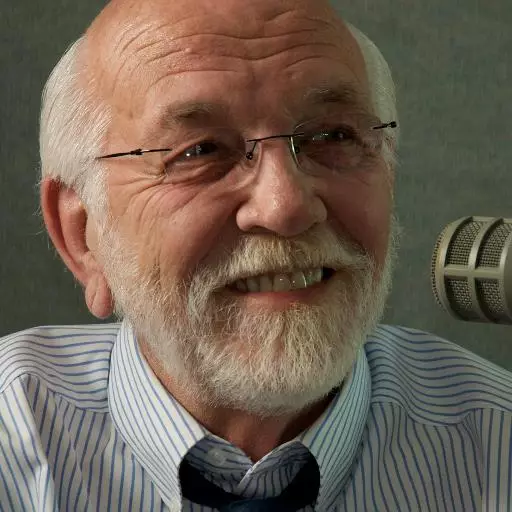
Eric Metaxas | Revolution | Steve Brown, Etc.


What makes America so special? Eric Metaxas has some ideas. This week, Steve and the gang chat with the author and commentator about the country's upcoming 250th anniversary and its remarkable founding.
The post Eric Metaxas | Revolution | Steve Brown, Etc. appeared first on Key Life.
Voiceover: Why is America the greatest nation in history? Eric Metaxas knows. So let's talk about it on Steve Brown, Etc. He's an old white guy, an author, broadcaster, and seminary professor who's sick of religion, and he's brought friends. Please welcome Steve Brown, Etc.
Steve Brown: Hey, we're so glad you're here. We recognize that it is a gift for you to give your time to us, and it is a gift to you for us to give our time to you. So it's copacetic. We have a great guest during this program. By the way, I'm Steve, the aforementioned old white guy.
Our executive producer isn't here. There was a major birthday in his home. Was it his mom?
Kathy Wyatt: His mother. Big birthday. For her sake, we won't tell you what it is, but big birthday.
Steve Brown: Our producer Jeremy is here. He's in the little glass booth. Jeremy says they should have kept the penny and put Nancy Pelosi's face on it because you'll never get change from her.
Jeremy: Whoa, Nancy Pelosi cannot be not present for those terrible jokes. They fit with never making change. Oh my goodness.
Steve Brown: Our one-man IT department, John Myers, is in the tech bunker. John tells me, "I'm not forgetful. I'm just deleting old data to make room for new data." Dr. George Bingham is the president of Key Life. Since it's summertime, George reminds you that our bills here at Key Life do not take a vacation. They don't even take a three-day weekend, so keep that in mind.
George Bingham: That's true. They're still showing up.
Steve Brown: Kathy Wyatt is the soft feminine side of the program. Kathy says that the Declaration of Independence is basically the world's most famous breakup letter. "Dear George, I think we both know this isn't working."
Kathy Wyatt: But it's not you, it's me.
Steve Brown: Eric Metaxas is our guest. He is, as you know, the number one New York Times bestselling author of *Bonhoeffer*, as well as six other bestsellers. He's the founder and host of *Socrates in the City*, as well as the *Eric Metaxas Show*.
His latest book, which I can barely pick up but which I hold in my nicotine-stained fingers, is titled *Revolution: The Birth of the Greatest Nation in the History of the World*. Eric, thanks for being with us. I appreciate that. Were you surprised in your research with what you found? Not amazed, I say. Probably not surprised. But did you learn things you didn't know before?
Eric Metaxas: Oh my gosh. Oh my gosh. Listen, everybody flatters me and thinks, "Eric, you're a smart guy and you know all this stuff and you write these books." I know nothing, but I am enough of a Christian to be publicly humble enough to say I know that I know nothing and that I'm ignorant.
When I go to write a book like this, I know just enough to say I want to write a book. But then when I do the research, I discover all this stuff that I had no clue about. I'm scandalized, embarrassed that I didn't know it before. Then I have this profound urgency to get it out to everyone else who doesn't know about it. There's stuff that I discovered—I'll tell you, Steve, it sounds like I'm making it up. I had some inkling of a lot of the stuff in the book, but no idea.
What happened to me over and over is when I finally decided I'm going to write a book on the American Revolution—I never had a dream or a thought of writing a book on the American Revolution ever. About two years ago, a very good friend of mine read the first chapter of my book *Seven Men*, which is about George Washington. This friend, whom I trust very much, said, "Eric, I love that so much, but you need to write the whole story. You need to write the story of the whole Revolution."
When he said that, I thought, "You've got to be crazy. That never even occurred to me ever to do that." But it was one of those things I thought, "Gosh, I wonder maybe, maybe Lord, you want me to, I don't know." You do your market research and you look around and you think, "Is there a book that tells the whole story of the Revolution so if somebody says, 'Hey, what happened 250 years ago? What's the whole story?'" I thought, "You know what? There kind of isn't."
How strange. Then you talk to people and you realize that everybody's like me. They sort of know some of this stuff, but they don't know most of it. I thought we need a book for the 250th anniversary that tells the whole story of the American Revolution, the birth of this nation. When I decided to do it, people always asked me the same question. I got this a bunch of times. People said, "Hey, what's your angle?" Because they just assume you're writing about the Revolution, there's been zillions of books written on the subject, so what's your angle?
I said I have no angle. I just want to tell the story because I don't think the story's been thoroughly told from the beginning to the end, from before it starts—how does it start, why does it start—all the way through to the glorious Treaty of Paris in 1783 when we officially win. Nobody's really told that story, at least not recently. I just want to tell the story because I believe every American is responsible for this information. I'm not kidding. We need to know this.
If you put a microphone to somebody's face in 1960 on Main Street America, they all knew this stuff. Somehow it's evaporated out of the culture. That's a scandal. If we want to know why we're in a mess, it's because we don't know this stuff. So I said I just want to tell the story, and it is a story of stories. There's many stories and many figures and many amazing stories and incredible heroes and some real villains. I just want to tell the story.
But when I did the research, when I started reading and reading and reading like a lunatic, a bunch of stuff popped up at me that I had never guessed at. I thought, "How do I not know this? How have I never heard this?" At the heart of it is the spiritual nature of this conflict. I had never seen that or heard that. The summation of the whole thing is the British were wicked. They weren't just our enemies in this conflict. They were wicked in how they fought the war. They were barbaric. I never heard this.
The Americans were the exact opposite. The Americans went out of their way to fight the way they believed God would want them to fight, to treat their enemies with dignity. I never heard any of this. The more I read, the more that clarified itself more and more and more. I hadn't known this story. This was a battle between people that earnestly believed God was with them in the sacred cause of liberties coming from him that they must defend, and on the other side, the British elites who not only didn't believe that, but they mocked it. They mocked God and they mocked these—at some point, somebody calls them the bible-faced Yankees. They just kind of had contempt for the Christians of particularly New England. I never heard any of that. So it's not like the book is about that, but boy oh boy, that's a big part of the story.
Steve Brown: There are people who would say, "Well, every nation has their story. We're not any different than anybody." But you discovered this is really unique. It's different. We're going to get into some of the reasons why as we talk during this hour, but the uniqueness of America really is that, isn't it?
Eric Metaxas: Look, it's not deniable. You always have to clarify when you say something like that. You're not saying we're better. We're not better. We're sinners. We're broken. We're no different than any people on the planet. But our form of government and how it came into being is unique in world history. Not rare—unique, one of a kind.
In fact, the big headline news for me is that all of these revolutionaries, especially Samuel Adams—every American is responsible to know these names. I say this unapologetically. We need to know who these men were. These are heroes. These are amazing heroes. Many of them were just dramatically godly people. They knew, all of them—I'll get to this in future segments, but just to sum it up—they knew that what we were trying to do had never been done before and what they're trying to do is reestablish the Sinai Covenant.
We're going to do what's never been done. We're going to throw off this king and we're going to have no king but the Lord in heaven. We're going to look directly to God and we're going to govern ourselves in a covenant relationship with the Lord. That—they all talked about it, even Franklin and Jefferson. So I've got to say, we haven't heard that. It's dramatic and it's why we came into existence.
Voiceover: Whoa, this place is huge! Welcome to the Vault, your home for classic sermons from Steve from the '90s, the '80s, even all the way back to the early '70s. The Vault is a one-of-a-kind online experience where you can explore more than three decades of grace-filled messages. Get the details and check out our free audio sample at KeyLife.org/vault. That's KeyLife.org/VAULT.
Steve Brown: Hi, this is Steve Brown, in case you didn't know. One of the main reasons Key Life exists is to remind believers that God isn't mad at His children. Why am I telling you this? Because our weekly email, Key Life Connection, takes the best of the videos and articles and puts them right in your inbox. We'd love for you to try it. It's free. Go to KeyLife.org/subscribe.
Hey, thanks for being with us. We're talking to Eric Metaxas, and his new book is *Revolution: The Birth of the Greatest Nation in the History of the World*. This is a book you've got to read. There are things that are going to blow you away. And if you're an American, you're going to be proud of that fact. Maybe become a Christian nationalist, who knows? Don't go anywhere.
George Bingham: Eric, I've really been enjoying your book. You take it through chronologically the different events associated around that time of the Revolution. As we've talked about, you bring out all kinds of things. The events a lot of people think they're familiar with, but you really go in depth in a whole lot of stuff that people aren't familiar with.
I wanted to start with—you quote John Quincy Adams 45 years after the events of the time. He said the highest glory of the American Revolution was this: it connected in one indissoluble bond the principles of civil government with the principles of Christianity. You see that theme that you carried through throughout the book. But one question kind of in the early stages: you chose not to title the book *American Revolution*. You chose to title it just *Revolution*. Can you talk a little bit about what was behind that?
Eric Metaxas: Well, first of all, you say I go through it chronologically sort of. I mean, there's no sort of. It's chronological. I just wanted to tell the whole story. So it is chronological. I want anybody who reads this book—and I wrote this book for everybody, this is not a Christian book. This is an American history book. I hope it's very readable with all the fun, crazy stuff that some of us didn't know, some of us knew.
Mainly it's a history book and it tells all this stuff. But I wanted it to be a definitive book so that everybody says, "What book can I read? There's all these books on the Revolution. What can I read?" I want people to say, "Okay, here is the book that tells you the whole thing." Anything you need to know is in here. I haven't left anything out. I left a lot of stuff out because it could be 1,200 pages, but nothing that's important. Everything in there that's important, I put in there.
So I wanted to be definitive, so I wanted it to be titled just *The American Revolution*. But why didn't I title it *The American Revolution*? Why did I title it *Revolution*? The answer to that is it came to me that the American Revolution is the only revolution that was a real revolution that succeeded. Every—nothing else compares to it.
The clearest example of that is the French Revolution, which is a joke. It ends in a bloodbath. They kill the king. What do they replace the king with? Well, the Americans replace the king with God, that we're going to turn to God and we're going to govern ourselves. But we have to be godly, otherwise there'll be anarchy and then some strongman will come in and he'll govern us again. So we've got to govern ourselves.
The French Revolution, they kill the king. What do they do? There's a bloodbath and then they get Napoleon, who's a dictator who crowns himself Emperor. So all these things we say, "Oh, the American Revolution, the French Revolution, the Soviet Revolution." These are mockeries of true revolution. All this utopianist stuff they promise, "We're going to have liberty, egalite, fraternite." They've got nothing. They've got a dictator.
Our revolution is unique because it is the only true revolution since the Sinai Covenant, since the Israelites in the wilderness said that our king is the Lord. This is the first time in history that people said, "Yes, we're going to throw off an earthly king and we're going to replace him with the sovereign capital 'S', the Lord." Now that is something I never really understood.
Then you see Samuel Adams, who is—boy, he's the big deal. He is the father of the Revolution and he's all through the, especially the first part of the book. He's an amazing, incredible Christian. He gives a speech the day before they sign the Declaration of Independence—so the official version is signed August 2nd, 1776. On the steps of Independence Hall in Philadelphia, he gives a speech to Congress, not to his Christian friends. To Congress, because they were all Christians.
What does he say? He says, "We have this day restored the sovereign, capital 'S'." This was not like a couple of Christians had some weird ideas. They all understood what they're doing. They are doing something that's never been done in history since the Israelites governed themselves without a king. They knew this is a big deal. They knew this is connected to their Christian faith. There's nobody who didn't know it.
The least religious, Jefferson and Franklin, they knew it. When they were asked, Franklin and Jefferson were asked to come up with a seal for the new nation, Franklin comes up with a picture of the Israelites going through the Red Sea—Franklin! Jefferson comes up with a picture of the Israelites in the Sinai wilderness with the pillar of fire and the cloud. Everybody understood the narrative.
We are leaving Egypt. We are leaving Pharaoh. We are leaving this false oppressive king and we've been enslaved and we are now free, and to be free is to turn upwards to the Lord. They all understood this. That's why our revolution succeeded and the French Revolution, which kicked God out big time, went down in flames. That's why the Soviet Revolution is a demonic parody of revolution. You promise the people utopia and you give them an oppressive totalitarian state. That's the story over and over.
The American Revolution is the only real revolution, and I have to say we as Americans need to understand this and appreciate this. This is big news. The fact that most people my age and younger didn't get this in school—this used to be sort of understood by every American, but it's drifted away over the years. You get this anti-American view and honestly, the link between Christian faith and the founding of this country is inescapable.
You don't need to be a Christian, you don't need to like it, but it's historically factual. The reason I wrote this book is I said I want there just to be a straightforward account. It's not a Christian account. It's a straightforward account. But if you're looking at Ken Burns or PBS, you're not going to get any of this stuff. They're missing it, or some of them are just uncomfortable with it, so they push it out or they just pretend it doesn't exist.
This is the true story. It's not particularly religious. It's just the true story of how we came into being. This was understood by George Washington, who was no deist—if you read the book, boy you'll see that real clear. He was a Christian. John Adams ends up being kind of the unsung hero of the book. He is just an amazing figure. He should be ten times more famous than Thomas Jefferson. They all understood this. They wrote about it. They were making a covenant with the Lord basically. They knew this and they talked about it. I didn't know this stuff, but now I do and now I want to tell the world.
Voiceover: Hey, thanks for listening to Steve Brown, Etc. And if you're enjoying the show, would you help us let others know about it? You can share a link, click subscribe on our YouTube channel, or drop us a review on your favorite podcast platform. Thanks much.
Steve Brown: Hi, this is Steve Brown, and I'm excited to tell you about a new offer from Key Life called Living with Steve. Let me tell you the way it works. I travel with you wherever you go. If you need an entertaining conversation or even a sermon, there I am. That's the good news. The bad news is that it costs a million bucks. But wait, there's good news. You can get everything I've just described with the Key Life app. And for a limited time, it's not a million dollars—it's free. Try it now at KeyLife.org/app.
We're talking with Eric Metaxas. Not everybody likes Eric. He's one of my favorite people because he's still there, he's still making an obscene gesture, he's still standing and he's not going to back off. And you're going to love this book, *Revolution: The Birth of the Greatest Nation in the History of the World*. By the way, you can keep up with him at EricMetaxas.com and on X @EricMetaxas.
Kathy Wyatt: Eric, I was just when I started out and I was going through the listing of all the chapters and all the information, before that prior to that I'd been thinking, "Well, I want to ask him if there's like one or two particular stories from this whole founding that kind of stick out in his mind or that we kind of tend to forget or even that we never even have been taught."
Then as I'm going through just through the table of contents, I thought, "Good grief. I mean, that's like a ridiculously stupid question because there are so many of them." But sort of leading into that, I just wanted to make a reference to—on your acknowledgments page, the very last person to whom you refer is Mr. McDevitt.
The thing I loved about this, when you mentioned Mr. McDevitt and how in the fifth grade for 180 afternoons, how he changed you and other students because he made all of that come alive. When I was in the seventh grade, and that was a lot more years ago than when you were in the fifth grade, I had Mr. Curioli. He was determined that that bunch of 12-year-olds were going to know American history.
We learned the Preamble to the Constitution. We learned the Declaration of Independence. We learned the Gettysburg Address. After we got past the first couple of months and we all knew them, every single class one of us was called on and Mr. Curioli would say, "Kathy, would you do the Gettysburg Address this morning?" or "So and so, would you do the whatever?" That was throughout the entire year and it gave me such a deep appreciation for—back then it was called US History. Our kids are just not getting this.
I think this book needs to be—seriously, I'm not blowing smoke—I think it needs to be a textbook for high school because these kids don't know anything anymore. With all of that being said, did you find things that even with Mr. McDevitt in the fifth grade, did you find stuff that you never heard? So obviously you haven't even remembered.
Eric Metaxas: Oh, absolutely. Absolutely. No, listen, I could go on and on for more than an hour. I was, first of all, I say this to entice people to read the book. There is a lot of funny, crazy stuff in here. Anytime I find something—it's like catnip—I find some crazy, weird thing, I've got to put it in the book. There's stuff in here that is hilarious and I had to put it in because I said I can't leave this out, this is funny.
But there's some stories that are so beautiful. I mean, the story of Nathan Hale. Ken Burns' PBS series on the Revolution gave about four hours to the Native American tribes that worked with the British. It's the most bizarre—in a 12-hour series, it's the most bizarre thing. It gave 12 seconds to the story of Nathan Hale. That tells you everything you need to know about the PBS view of the world. It's crazy. It's flat-out crazy.
Nathan Hale is one of the greatest heroes in the history of our nation. Every American should know him and his story. I'm telling you, since our childhood this stuff has not been taught and it is a scandal. There are so many stories. Mr. McDevitt, you mentioned at the end of the book in my acknowledgments, I acknowledge him. He was my fifth-grade teacher in the school year '72 to '73. I didn't know it at the time. I knew that I loved him. Sometimes as a boy you just look up at a figure like that and you just say, "I just respect and love this man. I want to be like this man." He was a great man and he was humble.
Every day after lunch he taught us about the American Revolution, fifth graders. I'm nine years old during that school year and I'm sitting there and I'm taking this in. He managed somehow to plant these things in me, because I don't remember the details, I just remember the names and I remember the emotional reaction to Baron von Steuben and Henry Knox making this tremendous adventure in the snow and ice to retrieve the cannon from Fort Ticonderoga—this amazing adventure. I remember just the term Ticonderoga.
Somehow he managed to do something to a nine-year-old boy that I never forgot. Over 50 years later, I start writing about this and this stuff comes back to me. Actually, every time I think of him, I get tears in my eyes because this great teacher, just doing his job with a bunch of kids half listening, whatever it was—he didn't know that one of them is just taking this in and 50 years in the future is going to write a big book on the American Revolution. I'm just in awe. It makes me think of all those people doing their duty, teachers or whoever, just serving, doing the right thing. Years later stuff happens and we'll know about it in heaven. But it moves me deeply that he so imprinted on me a love of the nation at age nine. It's amazing to me.
Steve Brown: Was that a public school?
Eric Metaxas: Public school.
Kathy Wyatt: Mine was too. Public school.
Steve Brown: I got the same thing, although I don't have a name particularly. I would never forget him. Those are great memories. I have good memories of good teachers and their sadness when they said, "You're not living up to your potential." I'd get irritated when I think... Listen, we've got more of this. If you miss any of it, you're going to be really sorry. So hang in.
Pastor Jerry Q. Parries: Hello, this is Pastor Jerry Q. Parries again, and I'd like to take a moment to ask you to pray for and give to Key Life. When you pray, ask for wisdom and blessings and that Key Life will continue to spread the message of God's grace for many, many years to come. And if you can give, please give as generous as you are able, and you know that we will be faithful with every gift, big or small. Thank you.
Voiceover: When Christ promised we could live life to the full, He didn't just mean eventually in heaven. Because Jesus didn't come to save us from our humanity, but to restore it. Life with a capital 'L'—find it now at KeyLife.org/store.
Voiceover: What if you could start your day by hanging out in God's word and with some of the most significant theologians, authors, and pastors ever? That's the idea behind the one-year devotional, *God With Us*. Find it now at KeyLife.org/store.
Steve Brown: Hey, thanks for spending time with us here. By the way, if you haven't yet subscribed to the weekly Key Life email, you're missing out. So while you're thinking about it, when this program is over, go to KeyLife.org/subscribe. And the best thing about it is it's free, so we don't have to listen to your complaints.
Eric, you talked about, and so many come to mind for me of what I've read, but you were talking some about the story of Nathan Hale and that sounds like a good place to add some detail. Tell us more about his story.
Eric Metaxas: Since we don't have a lot of time, I'll give you the super short version. This was one of the finest Christian young men that has ever lived. When you read about him, you get choked up. He volunteers to General Washington to go on a spy mission. He is a profound Christian, this young man. Super smart, admired by everyone. At age 21, he's captured by the British. He's hanged. His famous last words are, "My only regret is that I have but one life to give for my country."
He is one of the great heroes of America, and everybody needs to know his story. So there's a chapter in the book on the whole story, which every American needs to know him. But there's so many things like that that I think people need to know the story of Henry Knox getting the cannon from Ticonderoga. You've got to know about it. If you're an American, you've got to know this amazing story.
You've got to know how independence happened. John Adams, he's the hero. He needs to be infinitely more known than he is. He is the great hero of the Revolution that is not as known as the only one who could be compared to him is George Washington. George Washington is so great and so amazing, but Adams is a very close second and needs to be known. He's the man that pushed for independence more than anybody.
I write a lot about Benjamin Franklin. There's some crazy stuff about Franklin that I didn't know. But what I was saying earlier is the godliness of the Americans. Not all of them, but most of them, knowing that they're involved in a sacred cause. Their willingness or their dedication to trusting the Lord in this conflict—that needs to be known. When we say "In God We Trust," they did. Like, they actually did, and not sort of, but totally.
The British were the opposite. There was a level of godlessness and irreligiousness and decadence that is amazing in the British elites. I mean, Washington was known to be upright and to demand that his officers act in an upright way. He would not tolerate even cursing. He just said, "We've got to honor God so God will honor us in this." John Adams writes about that over and over and over again.
The British were the opposite. I mean, the British were mocking of that. Basically George Washington's equal on the British side, General Howe, was openly known to have a mistress all the time that he was in America. He had a mistress even though he's married, and it's not just that he had a mistress. He was known. Everybody knew it. The decadence of the British elites is a big part of the story.
At one point I write about Valley Forge and what that was like, the hell of that. We owe them our gratitude for the rest of our lives for Valley Forge. While Valley Forge is going on, 20 miles away in Philadelphia, the British put on a party. The British elites put on a party for the outgoing General Howe that was the most extravagant, decadent party. It would take more than a hundred years to equal it in the Gilded Age in the 1880s.
In 1778, they have a going-away party that you can't even—you think I'm making it up. I put a whole chapter in the book on that because I said people won't believe it unless they get the details. A level of decadence while soldiers are dying in Valley Forge 20 miles away, that they're having this party to send off the failed General Howe. Because General Howe blew it, after Saratoga. His brother Admiral Howe, they blew it. So Britain's like, "Okay, you've got to come home, boys."
Their officers want to do this outrageous, luxurious—extravagant is not even the word—party for them. So I write about it because the contrast between the humble, godly Americans and the British... You think I'm making it up? I'm not making it up for the miniseries. This is actual history here. This is like real. I hadn't known that.
To me, just that contrast between what was going on over here, how most Americans understood that "We have an opportunity to do something that hasn't been done since Sinai, to turn to God, to trust God, to govern ourselves and to look to the Lord." The British were really all about power. This idea that our rights come from God—I mean, John Locke writes about that in 1688. There were many in England who knew that, but the King and most of the Parliament, which was quite corrupt, they were like, "Yeah, we don't think so. We think Parliament has the power to compel you to pay taxes, so you just shut up and do as you're told. We're the mother country." They had contempt for these noble ideas.
The Americans were like, "No, no, no. we really actually believe in these ideas. We're not going to sort of abide by them. We're compelled by God to stand up for these ideas." So it's so beautiful and we need to know it. Again, that's why I wrote the book. I said, where is the book where it's all in there? There's all kinds of books on the Revolution, but something that tells from the beginning to the end.
By the way, in case anybody thinks there's no humor in the book, if you've read the book, you know the first sentences of Chapter 1 are about the grandfather of King George III going to the bathroom, or rather the origin of the term "stool." The origin of the term stool is in the footnote, along with Sir Thomas Crapper. Honestly, there's crazy stuff in here. Some of it is fun, but it is a story that—I say this again, if guilt works, I don't care. I will happily guilt-trip people and say, if you're an American, you're responsible for this information.
In the 250th year of our birth, you need to sit down and read this or find something better than this. But this is beautiful, it's important, and it's on the test. So you need to know this information. All the stories of Lexington and Concord, the story of the Battle of Bunker Hill—these are amazing stories that I, Eric Metaxas, did not really know until I did all this research. Once you get it, you think, "I've got to tell everybody." This is the story of the Boston Massacre, the story of the Boston Tea Party. These are amazing stories that every American used to know. I've got all the details because I think you've got to get the details right. This is not sort of. This is like let's get it right. It just makes me proud and honored to be an American. I beg every everybody to read it and give it to your father for Father's Day. It's our story. Let's put it that way. This is our story, and because it's our story, we're responsible for this. It will inspire you because it's true and you get to be an American.
Voiceover: Hey, thanks for listening to Steve Brown, Etc. And if you're enjoying the show, would you help us let others know about it? You can share a link, click subscribe on our YouTube channel, or drop us a review on your favorite podcast platform. Thanks much.
Voiceover: What if you could start your day by hanging out in God's word and with some of the most significant theologians, authors, and pastors ever? That's the idea behind the one-year devotional, *God With Us*. Find it now at KeyLife.org/store.
Voiceover: This is Pete Alwinson, and if you're a guy, I want to show you how to recover and reclaim an intimate growing relationship with your heavenly Father. Check out *Like Father, Like Son: How Knowing God as Father Changes Men*, available now at KeyLife.org/store.
Voiceover: Believer, I want you to remember that where sin abounds, grace does much more abound. And you will run out of sin before God runs out of grace. *Grace: The Real Good News of the Gospel*, find it now on KeyLife.org/store.
Steve Brown: Well, great hour. I really do love Eric and not everybody does. Every time we have him on, we get negative comments from people. But if you could see his heart, it's legitimate and it's real and he's transparent about his walk with Christ. He walks with some very famous people and he never changes. Sometimes we do change, don't we, depending on the person we're with. If it's somebody with whom we disagree, we talk about sports and the weather. And if it's somebody with whom we agree, we get into serious, profound conversation.
Maybe we ought to reverse that. Eric is who Eric is, and he's in your face and he's controversial and he's kind and he's merciful and he's gifted. That's one of the things that drive his enemies crazy. If you've ever read his material, he's an amazing writer. You'll look at this book and I can hardly pick it up, it's so thick. And you'll think, "I ain't doing that. I mean, I've got some important things to do." But this book is fun. You'll love it, and I'm going to get to it this weekend. And I'm going to laugh and learn and then feel self-righteous because I did it.
You know, one of the things we talked about during the break is the fact that even though it's a really big book, really thick, there's so many chapters. Each of the chapters are fairly short, so it's like you can read a chapter in just a very few minutes. Then it's like, if you think you're bored, which you won't be, you can set it aside, but I don't know that you'll be able to do that. I think after one, you're going to want at least two and then maybe three. Anyway, all right.
Who's going to be here next week? Next week our friend Drew Hensley, who is a regular contributor to Key Life and we've interviewed him before on our program for his books, but he recently started a podcast. We actually talked to him yesterday and got some really great things to talk about, so we're talking about his podcast. He's amazing. Yeah, his podcast is going to be on our platform as well as some other places, and you'll enjoy that interview.
He's a different guy and he says things—I learn things every time we talk to him that I didn't know. I can't do that two weeks straight without getting a headache. So we're going to come back next week, same time, same place. It's our fond hope that you join us. Between now and then, don't do anything we wouldn't, and that gives you a wide, wide berth.
Featured Offer

A companion booklet to Steve’s classic overview study of the New Testament. How did the early church get its start? Leadership, the Pentecost, the fellowship of believers, and persecution...it’s all there. In addition, Steve’s overview of Romans—What is the “Roman road to grace”? Highlights of both Acts and Romans, including introductory comments, major themes, and important teaching. Helpful as you read and study.
Past Episodes
This ministry does not have any series.
Featured Offer
A companion booklet to Steve’s classic overview study of the New Testament. How did the early church get its start? Leadership, the Pentecost, the fellowship of believers, and persecution...it’s all there. In addition, Steve’s overview of Romans—What is the “Roman road to grace”? Highlights of both Acts and Romans, including introductory comments, major themes, and important teaching. Helpful as you read and study.
About Steve Brown, Etc.
Key Life exists to communicate that the deepest message of the ministry of Jesus and the Bible is the radical grace of God to sinners and sufferers.
Because life is hard for everyone, grace is for all of us. And grace means that because of what Jesus has done, when you run to him, God’s not mad at you.
All of the radio shows, sermons, books, and videos we produce work together toward one mission: to get you and those you love Home with radical freedom, infectious joy and surprising faithfulness to Christ as your crowning achievement.
Learn more: http://www.keylife.org
About Steve Brown
At Key Life, Steve serves as Bible teacher on the radio program Key Life and the host of the talk show Steve Brown, Etc. Prior to Key Life, Steve served as a pastor for more than thirty years and continues speaking extensively.
Steve has also authored numerous books, including How to Talk So People Will Listen, Three Free Sins, Hidden Agendas and his latest release, Talk the Walk: How to Be Right Without Being Insufferable (now available as an audiobook).
Contact Steve Brown, Etc. with Steve Brown
steve@keylife.org
https://www.keylife.org
P.O. Box 5000
Maitland, FL 32794
In Canada, send requests to:
Key Life Canada
P.O. Box 28060
Waterloo, Ontario N2L 6J8