
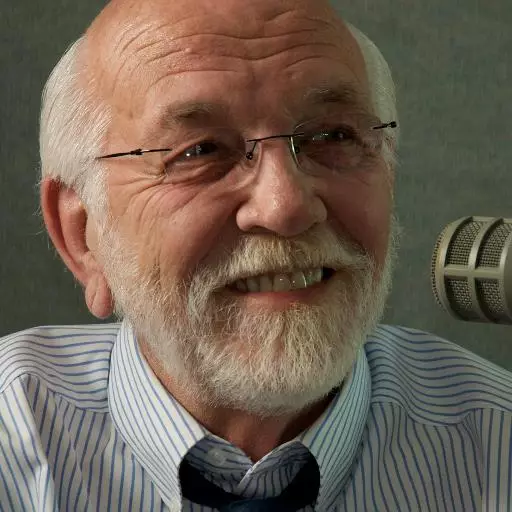
Drew Hensley | Still Becoming | Steve Brown, Etc. (Re-air)


Tired of pretending you have it all together? So is Drew Hensley. This week, Steve and the gang chat with the author/pastor about living between what we thought life would be and what it actually is.
The post Drew Hensley | Still Becoming | Steve Brown, Etc. (Re-air) appeared first on Key Life.
Voiceover: Are you tired of pretending you have it all together? Then you're in the right place. Let's talk about it with Drew Hensley on Steve Brown, etc.
He's an old white guy, an author, broadcaster, and seminary professor who's sick of religion. And he's brought friends. Please welcome Steve Brown, etc.
Steve Brown: Hey, we're so glad you're here. In case you're wondering, I'm Steve, the aforementioned old white guy. Matthew Porter is our executive producer, and he's here. Matthew says processed meats were just classified as Group 1 carcinogens. So if you see him outside the office a few times a day, he's on a bacon break.
Our producer, Jeremy, is in the little glass booth. Jeremy trusts that the wedding supper of the Lamb will be catered by Chick-fil-A. And our one-man IT department, John Myers, is in the tech bunker. John says Gen X is the only generation that has to explain computers both to parents and to their kids.
Dr. George Bingham is the president of Key Life. George asks you to give extra to Key Life because it's summertime and Matthew buys a lot of sunscreen and needs your help.
Matthew Porter: This is bad material, Matthew.
Steve Brown: I know, and we're not even laughing.
Matthew Porter: I need the money. SPF 99.
Steve Brown: And Kathy Wyatt is the soft-feminine side of the program. Kathy does the Lutheran Old Folks' Home. They have a pickleball court. I think you would be good at that, Catherine.
Kathy Wyatt: We don't have a pickleball court.
Steve Brown: Oh.
Kathy Wyatt: It's a cheap place. We only have shuffleboard. Well, in the pool, we have a nice pool. But we only have shuffleboard. No pickleball.
Steve Brown: We've got a great guest. We've interviewed him about his Invisible Grief book which, by the way, if you haven't bought it, you're crazy. Grief. Invisible Grief. Well, it's invisible grace, too. You should have included it in the title.
Drew Hensley: It's there. It's invisible.
Steve Brown: Drew is a podcaster. This is the first time we've interviewed somebody about a podcast. I do suggest that Invisible Grief should have been a part of the title for his book because the title for his podcast is really, really long. We have to devote on our podcast platform an entire page just to get the title there: Still Becoming: Where Grace Meets the Unfinished Conversations About Faith in Real Life.
Kathy Wyatt: And you have a problem with that?
Steve Brown: No, no. I was just pointing out the separate page we had to use because of the long title. Geez. No respect. Drew, how long you been doing this? By the way, how can people get the podcast platform at Key Life?
Drew Hensley: Go to keylife.org/podcastnetwork. We're increasing those podcasts, so there's some really good stuff. I am, in fact, even though I've protested it repeatedly, working on one. But my title is shorter. It's called Lunch with Steve. We just don't have it yet.
Kathy Wyatt: We're not creative like Drew. We said, what are we going to call it? Oh, let's just do it at noon and call it Lunch with Steve.
Matthew Porter: Hey, are you going to serve like Chick-fil-A or something when we do that?
Kathy Wyatt: Only to the guest.
Steve Brown: Drew, tell us about the podcast, why you're doing it, and what's happening with it.
Drew Hensley: Thanks for having me back on. I doubted that you would. No, I find myself, and I'm sure you guys too, I think everybody does, you find yourself having these conversations with friends or people at your church or other pastors, leaders, but just about faith and not really in a polished way, but in a way that I think matches up with the life that we all live.
As I found myself having more of these conversations and found them interesting and really helpful, I was like, hey, that could be cool for a podcast. Just this idea of we're in process in our faith, we're in process in our journey. People are in different places. But what does it look like to have just conversations that are hopefully helpful, encouraging, maybe challenging, but they really do hit that sweet spot of where grace does meet us right there in the middle, in the mess, and these conversations just about faith as it applies more to our day-in, day-out?
I love Eugene Peterson and I really like his work, A Long Obedience in the Same Direction. He has this line in there that just says, all the persons of faith I know are sinners, doubters, and uneven performers. We're secure not because we are sure of ourselves, but because we trust that God is sure of us. And so my hope with this podcast was just to meet people there, as I'm there, and to have some of these different conversations around different themes and topics, but that matter in your day-to-day.
Steve Brown: That's the basis of some of the teaching at Key Life and all the voices of Key Life. But it's not the basis of a lot of Christianity, or false Christianity. It really has become, because religion does weird things to you, it really does. It's so easy to say God is good and because he's good, I have to be gooder. And I have to do this more perfectly than I have, better and better in every way every day. But it doesn't work like that. And it's got to be refreshing to listen to you in this podcast, not only proclaiming that truth, but putting the whole thing in the title of the broadcast.
Drew Hensley: Yeah, I wanted no surprises. You get everything from the title. I thought, how can I make this so long that I won't have to do a podcast? Just, here's what it is.
Steve Brown: Well, listen, is it a call-in kind of thing where you talk to people?
Drew Hensley: No, so what it is, I actually recruited my good friend, Ryan Kerns. He actually wrote a first article for Key Life a couple months ago. He's a pastor down in Texas. We planted a church together in Seattle. We are really good mutual friends with the, I don't even know his title, I don't even know what to call Justin Holcomb these days. The bishop extraordinaire.
So we're really good friends and I said, hey Ryan, I think you're a great interviewer, also have very wise insight. Do you want to jump in and do this with me? We'll kind of co-host. And so some of the conversations, we plotted out like 10 episodes, some of the conversations are just us having a conversation together on a theme, but then we've invited some great guests.
We've got several pastors, authors, therapists, just trying to hit a myriad of different topics. We just did one with a really good pastor buddy of mine named A.J. Sherrill. We talked about deconstruction and reconstruction of your faith. What's a healthy way to look at that? What's an unhealthy way to look at that? Ryan and I just wrapped up a convo about ambition, platforms, and Jesus. How is that misused? Where does ambition and drive find a healthy place in our faith and in our life and where does it get really unhealthy and messy? So just those types of conversations. No call-in because I know that my mom would call in way too much and it would derail things. She would keep asking me to come back and visit Missouri more, and I just decided against that.
Steve Brown: I don't believe I would have said that. My mother's in heaven and it's okay, but if I'd said something like that publicly on a broadcast, she'd kill me and I wouldn't be here today. By the way, in case you're wondering, Drew Hensley is pastor of One Fellowship in Charleston, South Carolina. He's a former Seattle church planter, and he writes regularly for Key Life with great response from those who read his blogs. XXXchurch, he contributes to Christianity Today and Gospel-Centered Discipleship. His newest book is Invisible Grief. You need to go to our podcast platform. It's increasing and it's really, really good stuff.
Matthew Porter: Keylife.org/podcastnetwork.
Steve Brown: And the title of Drew's, and we're going to talk about it, podcast is Still Becoming: Where Grace Meets the Unfinished Conversations About Faith in Real Life.
Voiceover: Whoa, this place is huge. Welcome to The Vault, your home for classic sermons from Steve from the '90s, the '80s, even all the way back to the early '70s. The Vault is a one-of-a-kind online experience where you can explore more than three decades of grace-filled messages. Get the details and check out a free audio sample at keylife.org/vault. That's keylife.org/V-A-U-L-T.
Hi, this is Steve Brown. In case you didn't know, one of the main reasons Key Life exists is to remind believers that God isn't mad at his children. Why am I telling you this? Because our weekly email, Key Life Connection, takes the best of the videos, articles, and puts them right in your inbox. We'd love for you to try it. It's free. Go to keylife.org/subscribe.
Steve Brown: Hey, thanks for joining us. We're talking with our friend, author, pastor, and podcaster, Drew Hensley. His new podcast is called Still Becoming, with an additional comment, Where Grace Meets the Unfinished Conversations About Faith in Real Life.
Matthew Porter: Steve, you're giving Drew a hard time about the subtitle of his podcast, and you were bragging about your podcast, Lunch with Steve. We didn't tell you yet, your podcast is going to have a subtitle. It's Lunch with Steve: Conversations About Grace and Things That Steve Has Done and People Steve Has Known Throughout the Years and Other Things.
Wait, is Drew on our marketing team now? Listen, if it's good enough for Drew, it's good enough for me. Back on topic, maybe. So I know I have had this moment, and maybe others have as well, where you think, I've been a Christian for X number of years, I should be better than I am, I'm better than I was, but I should be better than where I am right now. I should be further down the road. I shouldn't be dealing with this again, or not to the same degree. Do we have a bad picture of what the sanctification process is and what it involves?
Drew Hensley: Yeah, I think we do. I had that idea or that belief for decades and it was very frustrating. It started to feel more like shame and condemnation, which I knew didn't match up with the gospel, so that was bothering too. But I felt like I would look around and I would see other people, and here's the magic trick if you will, or the illusion when we look around at other people is we only see an exterior version. And so we don't really know everything that's going on in their life or that they're not even sharing. A lot of times we just get this false illusion of, they really seem to have it together. Why don't I have it together like them? And we start this comparison track and it's really unhealthy.
I think I was reading something by Paul Zahl years ago and he actually just had a really good description of sanctification and it shifted something for me where he talked about how we can have this very upward trajectory view of sanctification. You're a little bit better every day. You're getting more like Jesus every day, and it's going to be this clean path upward. And I think we'd love that if it worked like that.
But the reality is, I think the sanctification, the way he describes it, it's a lot of peaks and valleys. And it's all over the place. And that's what I've found true for my life. In some areas of my life, I feel like I've really grown. I would say that if you looked at my life five, 10 years ago and now, it's like, man, there's an area of faith or there's an area of something that's really grown, but there's still areas in my life that I look at and I say, yeah, that one's still pretty rough around the edges. Or man, I feel like I was here and maybe I've even dipped down a little bit for whatever reason. Life hits, circumstances change, our faith gets tested, all of those things.
And so I believe that a healthier view of sanctification is more of this uneven line, but we are becoming more like Christ, just not necessarily holistically all at the same time. There are still all of these edges. And I think that allows us to actually be honest. I think God can only sanctify the real us. He can't sanctify a version of us that's not real. And so only when we're able to be honest and say, all right, I'll bring out my mess, I'll bring out this over here, my anger problem, I'll bring out this thing that's been tripping me up, I'll bring out my lack of patience over here and I'll just put it on the table, then I think God does some of his best work. But if we believe that sanctification is just all upward trajectory, that's defeating before it even gets started. And I think that's why a lot of people feel like they stall out in their faith. They just become overwhelmed with this feeling of almost shame or man, I'm just not going to get there. And so I think if we looked at it differently, I think it's actually much more freeing, honest, and boy, I agree with that.
Matthew Porter: You so often mention those U2 conversations. And doesn't that open up those conversations to go, hey, you've shared some of your mess, I have something similar, and it's encouraging that you're not the only, you're not an outlier, you're not a project that God forgot. We're all kind of stumbling forward.
Steve Brown: And you know the interesting thing, when Matthew said I'm not as good as I thought I'd be, I'm better in some areas, I immediately thought, I think I'm worse. I'm not better. I mean, it's very hard to identify, but what happens as you walk with Christ is what Drew mentioned. You're all of a sudden, you're honest before your creator, really honest. And all of a sudden you see things you never saw before, and it's okay because you're forgiven, you're free, you're acceptable, and that will never change. And so there's a sense in which not only am I not as good as I thought I would be, I'm worse, at least in what I see, and that in itself is a good thing.
Kathy Wyatt: Drew, I remember a specific time when I was growing up and it seemed like everybody had these really amazing testimonies and mine was just really not anything to write home about, literally. I mean, I grew up in the church and every time somebody gave an invitation, I asked Jesus in my heart again just to be sure that it took the first time. And that was about the extent of anything exciting. And it's kind of like needing to have, are there some people who feel like a testimony that's very tidy and easy are the way they're supposed to be?
Drew Hensley: No, I think that we love this idea of polished, buttoned-up testimonies because I think unpolished, messy testimonies make us uncomfortable. And so I think that that is one thing that kind of keeps us sometimes in this isolation or hiding mode where it's just like, well, gosh, I think I need to have this more buttoned up. And it goes back to even what Steve said there and what we've talked about with honesty. That's the word that keeps popping back to me is even if you have a simplistic, what you would refer to as maybe a boring or ordinary testimony, I think that there's much more to it than that.
I'll see you on the other side of the break, though. Why is it that we tend in the church to take the people with the big spectacular ones and put them up on stage then and make a big deal? We'll do that afterwards.
Steve Brown: Just so you know, I have a buttoned-up testimony, too. I have never, not even once in my entire life, killed anybody. One day at a time, but the night is young. But I haven't finished living yet and I've thought about it a whole lot and I've prayed for their death, but I haven't killed anybody yet and I'm quite proud of that. Guys, like Jesus, we're going to return, so don't go anywhere.
Voiceover: Hey, thanks for listening to Steve Brown, etc. and if you're enjoying the show, would you help us let others know about it? You can share a link, click subscribe on our YouTube channel, or drop us a review on your favorite podcast platform. Thanks much.
Hi, this is Steve Brown, and I'm excited to tell you about a new offer from Key Life called Living with Steve. Let me tell you the way it works. I travel with you wherever you go. If you need an entertaining conversation or even a sermon, there I am. That's the good news. The bad news is that it costs a million bucks. But wait, there's good news. You can get everything I've just described with the Key Life app. And for a limited time, it's not a million dollars, it's free. Try it now at keylife.org/app.
Steve Brown: Hey, we're hanging out with author, pastor, and podcaster, Drew Hensley. You can find his podcast and more at drewhensley.com. We would, however, prefer, and I can promise you three free sins when you go to it, that you listen to his podcast on our podcast platform. No, you had a question and Drew's answer was not complete. There wasn't enough time. It was just really bad. Let's try again.
Kathy Wyatt: Yes. Go, Drew.
Drew Hensley: Yes, I believe you asked me, you were talking about, and I think it's a good question, like we tend to prop people up that have these over-the-top testimonies. And that doesn't diminish those big testimonies, but I think as a church, and this is where we've gone a little sideways, I think we've decided somewhere along the way that God is most visible in the dramatic, if that makes sense.
And so, you know, it's the guy who's strung out for 15 years and now he leads worship. The woman who walked away from everything and now she's come back. But I think when those are the only stories that we put a microphone in front of, we're accidentally telling everyone else in the room that their story isn't quite enough.
Kathy, you were mentioning growing up in church, so did I. And I think that most people in church, most, not all, they have what I would refer to as more of an ordinary story. But I think ordinary's great. The older I get, the more I love ordinary. And maybe they grew up in a Christian home, they've had seasons of doubt, but never a rock-bottom moment. Faithful, quiet, nobody's making a documentary about them, right? And all of that. It's not as dramatic of an arc.
But here's what I think. I don't think that's discipleship. I think that's more of a highlight reel. And highlight reels don't make people feel less alone, they actually can make people feel more alone. And I think there's something that's also just a little bit theologically off about it. If the whole point is that Jesus meets us in the ordinary and that he's present in the slow and steady faithfulness as he is in the midnight conversation moment, then this idea of kind of this platform theology is contradicting our sermon theology. We're preaching grace but we're curating spectacle.
So I think that's a big thing. So the person who's been quietly showing up for like 20 years and loving their difficult spouse, wrestling with doubt, not walking away, raising kids in the faith without any guarantees, that story has just as much of God in it. Maybe even more because there was no single dramatic moment to point to, just a thousand small choices to keep following.
Kathy Wyatt: And you know what's really, really cool is the older you get, someday you'll get there, when you get like really, really old, you have all of that history and you go back and you say, God did this then, and then there was this, and then there was this, and then there was this, and you're just like tracing this long lineage of God's faithfulness even in the midst of times when there were struggle. But if you haven't had that, then obviously that's redundant, then you don't have it. And that comes from like what you're talking about, like the ordinary. It's just going through life and watching God orchestrate things for years.
Steve Brown: That is so good. That conversation is, I'm reminded of Martin Luther's comment to his colleague, Melanchthon, who was rather uptight and had a button-down testimony. Luther said to him, "Melanchthon, go out and sin so you have something to repent of." Well, our advice on this program is if you have a button-down ordinary testimony, go do something really bad. No, wait. Come back from the far country after spending all the money and eating with pigs, and we'll give you a platform at Key Life.
Drew Hensley: You know, it's funny that you mention that because with the prodigal, that's where my mind went to last with this, is that when we only celebrate the prodigal coming home, we forget that the older brother was there. And he was there the whole time, too. And what I love is that Jesus didn't ignore that story. He told that one, too.
Steve Brown: Good point. So go sin bad or be a jerk. It's your choice. I think Jesus will love you either way. This is a fun conversation and we knew it would be. If you want more of it, go to drewhensley.com to listen to his podcast, or preferably go to the platform at Key Life and listen to his podcast. The technology will be better and he talks better when he's on Key Life than when he's just on his own. Guys, don't go anywhere.
Voiceover: Hello, this is Pastor Jerry Kupperys again, and I'd like to take a moment to ask you to pray for and give to Key Life. When you pray, ask for wisdom and blessings and that Key Life will continue to spread the message of God's grace for many, many years to come. And if you can give, please give as generous as you are able, and you know that we will be faithful with every gift, big or small. Thank you.
When Christ promised we could live life to the full, he didn't just mean eventually in heaven, because Jesus didn't come to save us from our humanity but to restore it. Life with a capital L, find it now at keylife.org/store.
What if you could start your day by hanging out in God's word and with some of the most significant theologians, authors, and pastors ever? That's the idea behind the one-year devotional, God with Us. Find it now at keylife.org/store.
Steve Brown: Hey, thanks for spending this time with us. That's a gift. By the way, have you subscribed to our weekly email, Key Life Connection? Well, wait until we finish and then you can go to our website. We'll give you 90% off. Actually, it's free. Go out today at keylife.org/subscribe.
Matthew Porter: Drew, an illustration that Steve used to use over the years came to mind. It was like a seminary professor with his class of prospective pastors, and they got word of a terrible earthquake that occurred like in another part of the country and a lot of people devastated and so forth. And one of his students asked him, if you were pastor of a congregation there, what would you say? And he thought for a minute and said, I would hope I wouldn't have to say anything. I would hope that I had prepared them for things such as this.
And it made me think most of our conversation so far about your podcast has kind of leaned toward people that have perhaps been walking for a long time and looking for encouragement of not being there yet. Are there things that you can or that you do say in your podcast directed toward younger believers that maybe can sort of prepare them for some of the struggles and challenges going forward?
Drew Hensley: Yeah, that's a great question. Pastorally, I think that one of the most important things you can do for a younger believer, a newer believer, is tell them the truth before disappointment does. I think that sometimes we can paint things with really rose-colored glasses or we just aren't honest with them. Especially in our day and age here where I think we've leaned heavily in Western church culture toward more prosperity ideas, which will be very disconcerting when the storm comes. It's like, whoa, I didn't know I signed up for this.
So yeah, throughout the podcast, I think that what we try to do, even as Ryan and I prep some of the sessions, is keep everybody in mind. The person who's just going along in their faith and things are pretty even, the person who's maybe really struggling with their faith, but even the person who is either newer to the faith or even outside of the faith.
And I think that's where us not trying to go too high church with the podcast and just try to speak using normal language, it doesn't mean that we're pushing away from depth or still our backbone being God as grace, his word, all of that. But in a way that hopefully taps into people where they are, but also in that sense, I think just being very honest.
Ryan and I do an episode where we just talk about our doubts and man, Jesus never promised that life was going to be easy. What he actually promises is life's going to be difficult, but I'm going to be with you. And so just telling people that, reminding them of that, it doesn't mean that we're having these Eeyore moments, but I think we're actually just being very truthful and loving when we're sharing with people up front, hey, this isn't actually going to be the easiest road. There's going to be stuff that you never expected that gets dropped into your life. Your faith is going to be stretched in so many different ways, but I think if we name that early and we tell them that the Christian life is kind of less like a honeymoon and it's more like a marriage.
There are mornings you wake up and the feeling is just there and it's warm and it's close, and there are stretches when you're choosing faithfulness without any emotional confirmation that it's working, and both of those are the marriage and neither one cancels the other out. And so I think those things are just helpful. And I think that we actually need to be more honest with people about that and not so fearful. Well, if they hear that, they might not stay in the faith. I actually think that's a really dangerous view to even take if we believe that God is the one that's actually keeping them. If God's keeping them and they're secure in the grace of Jesus, we should be all the more truthful about what this faith journey may look like.
Steve Brown: You know, I know your podcast isn't primarily designed for evangelism, but as a matter of fact, the kind of thing you're talking about is probably the most effective evangelism there is. And I know you've addressed people who've been walking it a long time, and to George's question, those who are new at it, but I hope that people who are not believers and don't even want to be will tune into your podcast because that's where evangelism takes place. In the face of amazing and surprising honesty, openness, and understanding of dirt under the fingernails Christian faith. I think that's very attractive to unbelievers too. Do you have that in mind as you talk?
Drew Hensley: Yeah, I think so. In Seattle especially, planting churches, I interacted with so many people, whether it was students or any age, that had not even considered God, or they had kind of fallen away for a variety of reasons. And so I think that's always in the back of my mind. How do we get to those that are on the fringe but Jesus loves just as much, right? And that he cares about.
And so I do, I'm just a firm believer in trying to give people the long view. Show people who are 10, 20, 30 years in to their faith not because they've figured it all out, but because they're still here and they're still following and still imperfect, and yet they're still held. And so that's kind of the whole idea of we're still becoming. None of us have arrived yet and I think that actually takes down a lot of walls, like you're saying, Steve. It's like, oh, okay, you're not pushing something on me, instead you're just inviting me into something that, yeah, I'll talk about that. I'll listen in. So that's the hope.
Steve Brown: Listen, to radically change the subject, are you the founding pastor of that church in Charleston?
Drew Hensley: No, no. So I'm actually in more of a teaching pastor role here. This church was founded around the same time that we founded our church in Seattle. And so I handed that off in Seattle to my good buddy Alex Early, who writes for Key Life. He leads that church. And then I moved down here to Charleston. I partnered up with a pastor down here, his name's Paul Sorenson, and we do shared pulpit and I do a lot of teaching leadership development.
Steve Brown: I think if I lived in Charleston, I would join your church.
Drew Hensley: I think I would let you in, even though you've never killed a man.
Steve Brown: Well, that's why you would let me in. If I'd killed him, you obviously would reject me because the sin would be too big.
Drew Hensley: No, that's an area where this episode is going to pop up on Dateline. Everybody just know this is going to be a Dateline segment down the road.
Steve Brown: Drew, you're a gift. Thanks for spending this time with us. It's been a fun time and a learning time for me personally. I'm going to make sure my guns are clean. We're going to come back, so don't go anywhere.
Voiceover: Hey, thanks for listening to Steve Brown, etc. and if you're enjoying the show, would you help us let others know about it? You can share a link, click subscribe on our YouTube channel, or drop us a review on your favorite podcast platform. Thanks much.
What if you could start your day by hanging out in God's word and with some of the most significant theologians, authors, and pastors ever? That's the idea behind the one-year devotional, God with Us. Find it now at keylife.org/store.
This is Pete Alwinson, and if you're a guy, I want to show you how to recover and reclaim an intimate, growing relationship with your heavenly Father. Check out Like Father Like Son: How Knowing God as Father Changes Men, available now at keylife.org/store.
Believer, I want you to remember that where sin abounds, grace does much more abound. And you will run out of sin before God runs out of grace. Grace, the real good news of the gospel, find it now on keylife.org/store.
Steve Brown: Hey, great hour with Drew. We like him a lot and we like him because he's fun. You know, people liked Jesus because he was fun, too. That's why children were attracted to him. And sometimes we forget that the incarnation was real, very human, very sad sometimes, even filled with pathos, even though he was God. He emptied himself and became a servant.
The good thing about this, and I just thought of it at the end of the broadcast, you know, we are here for them. If eternal security is true, and it is, or if you're Presbyterian you call it properly the perseverance of the saints. Either way, you don't lose your salvation once it's settled, it's settled forever, no matter where you go, no matter what you do or have done, no matter who you hurt, you're still his and he'll never let you go.
The question then becomes, okay, if that's true, as soon as I became a Christian, why didn't God kill me and bring me to heaven? Because of them. That's why we're still here is because of them. And in the latter years of my ministry, God has given me a real concern for the lost. And I think that the way the lost are reached is by sensing the warmth of the fire that we as Christians share with each other. And the warmth of the fire isn't our purity, we don't have much. It isn't our goodness or our righteousness, it's the honesty and the reality of being accepted by your brothers and sisters in Christ because God has accepted the whole bunch despite all that. And that dog will hunt.
So if you're not a believer, we're glad you're watching this broadcast or listening or whatever. Who's going to be on next week?
Matthew Porter: Next week, our good friend Jordan Raynor is going to be with us. And he's written quite a few kids' books, and every time we have him on, it's almost like he's writing a series of books. The new one is called The Spirit in You. But he does such a great job that I always come away thinking, wow, there's some really good stuff in there not just for little people but for us too.
Steve Brown: Great. So that means we'll be back here next week, same time, same place. It's our fond hope that you will join us again then. But between now and then, don't do anything we wouldn't, and that gives you a wide, wide variety.
Voiceover: Steve Brown, etc. is a production of Key Life Network. For more from Steve Brown or to find out more about Key Life, visit us at keylife.org. If you enjoyed the program, why not invite a friend to listen? And consider supporting the work of Key Life. God's grace really can change your world.
Featured Offer

Adapted from Steve’s new book, God’s Not Mad at You: Confronting the Lies of Guilt, Shame, Fear, and Regret. Topics include… Guilt, Shame, Fear, and Regret—what they are (good working definitions) and why we all (universally) struggle so much with them. / No Kickers—Kickers are the, often subtle, “small print,” the 1% lies that foster guilt, shame, fear, and regret. The Christian faith is unconditional in its promises and truths. God’s love, forgiveness, mercy, and grace have no kickers. / We Aren’t Good People (and They Aren’t Either)—It’s assumed that the key to unity in a family, church, or nation is for good people to convince or coerce bad people into being good…then we can walk off into the sunset together. But what if there aren’t any “good people,” just people who clean up better than others? When the church becomes a place of righteous indignation, it misses everything it’s supposed to be. / The Big Lie—the big lie is this, God is angry at you…with reason. Too often, we’ve truncated the Gospel. If you’re a Christian believer, God isn’t angry at you. (And, if you’re not a believer and go to him, he won’t be angry at you, either.) That makes all the difference in our struggle with guilt, shame, fear, and regret.
Past Episodes
This ministry does not have any series.
Featured Offer
Adapted from Steve’s new book, God’s Not Mad at You: Confronting the Lies of Guilt, Shame, Fear, and Regret. Topics include… Guilt, Shame, Fear, and Regret—what they are (good working definitions) and why we all (universally) struggle so much with them. / No Kickers—Kickers are the, often subtle, “small print,” the 1% lies that foster guilt, shame, fear, and regret. The Christian faith is unconditional in its promises and truths. God’s love, forgiveness, mercy, and grace have no kickers. / We Aren’t Good People (and They Aren’t Either)—It’s assumed that the key to unity in a family, church, or nation is for good people to convince or coerce bad people into being good…then we can walk off into the sunset together. But what if there aren’t any “good people,” just people who clean up better than others? When the church becomes a place of righteous indignation, it misses everything it’s supposed to be. / The Big Lie—the big lie is this, God is angry at you…with reason. Too often, we’ve truncated the Gospel. If you’re a Christian believer, God isn’t angry at you. (And, if you’re not a believer and go to him, he won’t be angry at you, either.) That makes all the difference in our struggle with guilt, shame, fear, and regret.
About Steve Brown, Etc.
Key Life exists to communicate that the deepest message of the ministry of Jesus and the Bible is the radical grace of God to sinners and sufferers.
Because life is hard for everyone, grace is for all of us. And grace means that because of what Jesus has done, when you run to him, God’s not mad at you.
All of the radio shows, sermons, books, and videos we produce work together toward one mission: to get you and those you love Home with radical freedom, infectious joy and surprising faithfulness to Christ as your crowning achievement.
Learn more: http://www.keylife.org
About Steve Brown
At Key Life, Steve serves as Bible teacher on the radio program Key Life and the host of the talk show Steve Brown, Etc. Prior to Key Life, Steve served as a pastor for more than thirty years and continues speaking extensively.
Steve has also authored numerous books, including How to Talk So People Will Listen, Three Free Sins, Hidden Agendas and his latest release, Talk the Walk: How to Be Right Without Being Insufferable (now available as an audiobook).
Contact Steve Brown, Etc. with Steve Brown
steve@keylife.org
https://www.keylife.org
P.O. Box 5000
Maitland, FL 32794
In Canada, send requests to:
Key Life Canada
P.O. Box 28060
Waterloo, Ontario N2L 6J8