
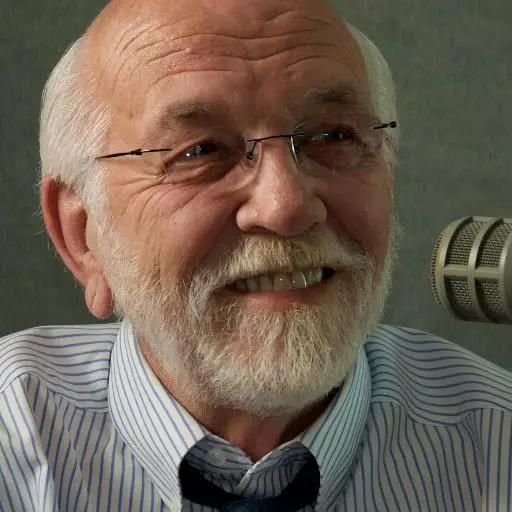
Diederik van Hoogstraten | Young Washington | Steve Brown, Etc.


Our country had a lot of challenges early on – as did our first president. This week, Steve and the gang chat with screenwriter (and new U.S. citizen) Diederik van Hoogstraten about his new film and what's worth celebrating about America.
The post Diederik van Hoogstraten | Young Washington | Steve Brown, Etc. appeared first on Key Life.
Steve Brown: Hey, we're so glad you're here. We recognize that your presence is a gift in a busy culture, but our presence with you is a gift also in a busy culture. If you're wondering, I'm Steve, the aforementioned old white guy. Our executive producer, Matthew Porter, is here, and so is Jeremy. By the way, Jeremy's in the little glass booth. Is your band available for Freedom 250 events?
Jeremy: Oh man, turns out they couldn't book the Banana Splits.
Steve Brown: That's our producer. Our executive producer, Matthew Porter, is here. Matthew, in case you don't know, and Jeremy have a new podcast called "This is the Show." Matthew, can I assume you keep all the funny jokes for that show?
Matthew Porter: Yes. No, he keeps those for his family.
Steve Brown: Our one-man IT department, John Myers, is in the tech bunker. John says Apple is about to introduce a digital assistant that actually listens to you. They're calling it Alexa. And Dr. George Bingham is the president of Key Life. George says that if the proposed $250 bill ever becomes legal tender, we will gladly accept it here at Key Life as a donation, and any other denominations are tainted—just 'tain't enough.
George Bingham: That was great. Quality stuff.
Steve Brown: Of course, I wrote that.
George Bingham: Oh, that was you? Good job.
Steve Brown: And Kathy Wyatt is the soft and inside of the program. Kathy cannot tell a lie; that young George Washington is hot.
Kathy Wyatt: I gotta say, he was pretty stinking cute. And then I looked up his bio; he's 21. I went, "Good grief, he's young enough to be my grandson." It's okay if I say he's pretty stinking cute. It's harmless.
Steve Brown: This is going to be a great program. We talked to Diederik yesterday for a little while and we just thought he was great. You're going to like this program. He began covering entertainment when he moved to Los Angeles as a member of the Hollywood Foreign Press. He has also been involved in the Golden Globes.
Diederik's new project is the feature film—and we've all seen it here and it's amazing—"Young Washington," which opened nationwide on July the 3rd. Diederik, I want you to know that I got a profound insight from watching the film. I was moved deeply with the insight, and it is as follows: You shouldn't tick off George Washington, because if you do, you're going to have a revolution on your hands.
When the girl said no to him and the British said no to him, he made an obscene gesture and started a revolution. So you don't have to see the film; you've got it together now. Actually, it's an absolutely wonderful film.
Matthew Porter: Absolutely. Watched it with the family and they loved it. Diederik, as a writer, director, producer, I'm always interested in the story before the story, the development process. We've had the blessing to chat with the Erwins over the years about a bunch of their different projects. So I'm curious, what was the origin of this? How did this begin and how did you become involved in this?
Diederik van Hoogstraten: Thank you for that. First of all, what a joy to be here. Thanks so much for inviting me. Steve, I loved your summary of the film. I think it should be a tagline. We're just going to go with it on the posters. We'll take care of it.
Matthew, it's a good story. The full story is that back in 2022, Jon Erwin and my wife, my brilliant wife, Kelly Merriman van Hoogstraten, connected to start talking about founding an entertainment studio in Austin, Texas, where we live. Both of them felt there was a great need for a studio producing high-level, high-quality content—HBO level content—without the gratuitous sex and violence and all the other nonsense that we're all so familiar with.
Jon had the vision; he's a visionary guy. Kelly has an incredible background in business. She's been in the leadership of Netflix in the early days, Sony before that, YouTube where she built YouTube TV basically with her team. She had stepped away from entertainment when we left LA in 2021. We were part of the exodus to Texas. Glad we did that; never looked back. Kelly happens to be from Texas, so it made a lot of sense to get here.
That's a little bit of backstory that's needed because we landed in Austin and thought we had parted ways with Hollywood and its darkness. But then Jon Erwin started talking to Kelly and it's very difficult to say no to Jon. Long story short, Kelly said yes; let's build the Wonder Project, which now is the studio behind "Young Washington" but also behind "House of David."
Then he wanted to start writing "Young Washington." He didn't have time to write it and Kelly said, "You need a writer; talk to my husband." That's all she said. Jon and I had met and had hit it off quickly. We started talking and what essentially happened is that we spent the summer of 2023 talking about Jon's vision for this film. He knew exactly what it needed to be like. He felt this urge to tell the origin story of this great man.
So I brought in my friend Tom Provost, another writer who is still stuck in Los Angeles. One day we'll bring him out to Texas. Tom and I essentially set to work to execute the idea for this film that Jon had. He was always going to be involved as a writer, as the director, as the producer on it. Jon Erwin has his hands on every part of the process when he makes something.
It was a great challenge, a great privilege, and a very exciting prospect for me as a new American. I came here in my early 20s. As I've said many times, in many rooms I find myself in, I am the most patriotic person in the room. I find that interesting as someone who didn't grow up here, who wasn't raised with the ideals and values of America. I have embraced them wholeheartedly. We fly the flag every day, also the Texas flag. Kelly makes sure we have both of them side-by-side.
That's a little bit of that origin story and my interest in American history and the early republic, the forming of the Constitution. It all came together in this moment where I was connected to the great Jon Erwin.
Steve Brown: Diederik, you said not gratuitous sex and violence, and that's true; very impressed with the film. But it comes across as a big-budget action-type film and obviously well-researched. Were there parts that really stand out as actual events that people might not be familiar with? And also, what were some of those informed imagination parts that you wrote in?
Diederik van Hoogstraten: I like that term, "informed imagination." I'm going to use that as well going forward. When you look at the great biographies—Ron Chernow, Joseph Ellis, and now the new one by H.W. Brands, a beautiful book called "Patriarch"—the number of pages about his early years, his childhood, and his coming of age is very limited. There's just not that much that we know, and all the historians agree on those facts, on the letters and the documents that have survived.
There's great background information on the battles that we see. As you say, they're violent, they're big. As Jon Erwin always says, life is violent; life is very tough. It's especially so in 1750s Virginia and Ohio. Just as it is in "House of David," you see tremendous violence because that's what life was like in those days.
We always wanted to show these battles and these important moments that helped define Washington in his early days as a soldier, but we never wanted to gratuitously focus in on the gore and the blood. We didn't want to linger on it. We wanted to leave a lot to the imagination. We can get more into the creative license that we had to take because in order to tell a story—a hero's journey, a coming-of-age tale—you need time.
Steve Brown: Diederik, I'm going to interrupt you because we've got to make money in addition to the royalties. I don't want to forget about that. So we'll continue with this soon.
Hey, we're so glad you're here. We're talking with Diederik about his new film, "Young Washington." It opened July 3rd. We here have watched it and have been absolutely... Get your family and everybody you know and go see this.
And then send a contribution to Key Life. I don't want to talk about this all the time, but if we do this for you, you should do something for us. Diederik, we cut you off at the end of the last segment. We were talking about both the big-budget action scenes that are included, but also some of those scenes that might be unknown by people but with very limited research on it and historical information, your informed imagination that went into it. What were some of those efforts like?
Diederik van Hoogstraten: A little fun fact about working with Jon Erwin is that he truly is a dreamer as well. As a writer, I relate to that. When we were writing this, there wasn't really a budget set up yet. There wasn't anything set up, no actors, nothing. So we wrote this on spec. We didn't really know what it was going to be like.
We did call up Jon and said, "What you're asking us to do here, this battle scene at Fort Necessity, that's going to be big and very expensive. Do you know if you'll have the money?" Jon would smile and say, "No limits. Go write. Don't let the reality of filmmaking stop you." I'm grateful he did because it allowed us to really dive deep into these historically accurate battles without worrying too much.
It turned out that the budget got significantly larger than we had initially imagined. Jon also makes use of technology, even including some AI technology, to make the film look even bigger than it is. I went to the set in Ireland and in Virginia. I had the privilege of visiting the set in Ireland where they filmed the opening scene. If you remember, it's pretty dramatic; there's a lot going on. It was very moving for us as writers to see that.
There's a lot known about his life; there's also a lot that we don't know. What we tried to do is really paint a picture of George through the relationships that he forged and had early in life, but also the ones he lost. We open with the loss of his father, clearly a traumatic event for any kid at that age. He was 11 years old. Not long thereafter, his big brother, Lawrence, who becomes a mentor and a father figure, also passes away. Not long after that, his best friend, his fellow soldier on the battlefield, dies because of a decision that he has made.
This sense of George being enmeshed in a community and relationships that fall away—the hardship of that, the struggle, the pain, the incredible anger that we see on the screen—I think some of that might surprise viewers. It certainly surprised us as writers. To know how tough his life was. Jon Erwin would always say, "He was just a kid like all of us."
He was down in the mud. He had to work incredibly hard to make it all come together for him. He had a hard mom; she was amazing and she rescued him, if you've seen the film. But she was grieving. She lost her son and her husband. She had a farm to run. As we have her say, "All of this puts steel in my voice. I am tough and I've been too tough on you," she'll say to George at some point. I think some of those relationships, the people who helped shape him, might be an interesting surprise to some folks.
Matthew Porter: I love how you developed the story. Washington, it's so easy to lionize him because he did... It's hard to overstate the impact he had on our everyday life. So it's so great to see him as a human being and that young man who has to prove something and he gets triangulated into where he can't back down from... You see the tragedy unfolding and it's very compelling, especially for a character who we usually just see as a statue somewhere.
I just wanted to make one other thing. There's a lot of movies that come out and you're like, "Yeah, I'll definitely see that," but we mentally tab it to go, "It's going to be on streaming." This is one that is worth the price of admission to see in the theater. Not every great movie is like, "If you see it on TV, it's not going to lose very much." This one is going to put your butt in the seat because it'll be worth it.
Steve Brown: Don't eat popcorn and watch it on your phone, like we did.
Matthew Porter: Talk a little bit about the casting, because there's a couple of touches that were just very nice.
Diederik van Hoogstraten: First, Matthew, I really appreciate what you just said. Some films can absolutely be seen on your TV or your laptop or your phone; that's fine. But Jon and all of us feel strongly this one was made for the biggest screen you can find with the best sound available and also the best buttered popcorn, if you ask me.
Hopefully, people will go to the theaters. I think he was and is to an extent an enigma. People have said to me, "George Washington is a statue" or "He's a painting." That's all I ever think of, or a name of a street, perhaps, or a city or a state. One of the things that Jon really wanted to do is bring him to life, make him human, relatable, and as he would say, understand him better.
Show him in all his messiness in order to admire him even more, to understand him better. There's always that deep respect. Whenever I say "George" or another term that you might not necessarily use for a president, that's not out of disrespect at all. It's simply that we spent so much time with this character that he's become a friend of ours. He's become a little brother. That's the reason I sometimes slip into that language.
The casting was really interesting. When we wrote it, frankly, I would have thought of a big-name, Oscar-winning young actor who could play George Washington, and everybody else was going to be bonus points. But Jon Erwin, in his brilliance, knew he was going to find a newcomer. He didn't know who it was, but it turned out to be William Franklin Miller.
Kathy, as you said, he's cute. My wife would agree. He's also a gifted actor, and he became to us Washington. He just captured the essence of the man that we tried to create on the page. Then Jon had the insight to ask Sir Ben Kingsley to play this important role of Governor Dinwiddie. Andy Serkis was willing to join, the great Kelsey Grammer, Mary-Louise Parker—one of my favorite roles in the film as the mother. She shines. She's maybe not lovable, but she's extremely important in this film. So I'm so grateful that we got these people to do it with us.
Steve Brown: Matthew and George are going to leave us. If they loved Jesus, they would stay, but they have other appointments far more important than us. But the profound, good-looking ones will remain, and you should too. Like Jesus, we're going to return.
Hey, thanks for spending this time with us here. By the way, if you could use some encouragement in your inbox on Monday mornings, give Key Life Connection a try. It's our free weekly email and it's been universally hailed in the media and everywhere else as "not half bad." You can go to KeyLife.org/subscribe and give it a try today.
Kathy, you were going to follow up on what we were talking about.
Kathy Wyatt: When you ask somebody who George Washington is, if they know, they'll say he was the first president of the United States and that's pretty much all that they know. And we don't even get into that in the movie because obviously with the title "Young Washington" you're looking at his early life and what led him to that point where he had some credentials to where somebody would come to him and say, "George, did you ever think about being president?"
Why did you stop where you stopped? Was it always from the very beginning just the decision to focus on this early time and then have a sequel or whatever at some point? What was the thinking involved in all of that?
Diederik van Hoogstraten: It's a very good question because people might wonder. The film ends when he's about 23 years old in 1755 and we see him for the first time truly leading a large regiment of soldiers, the Virginia Regiment, which is brand new. He's its first commander and they're finally wearing Royal Navy blue instead of the red coats that the British were wearing.
We set him up on his path, on his journey toward 1776 and then his presidency after that. But we and Jon and Tom and I felt strongly that we wanted to really tell the untold story. My kids happen to go to a terrific school here in Austin; it's called Regents. They're being taught history the right way—all of Western civilization, including American history.
They'll learn more than some of their friends, but history is so extremely important. Understanding who this man was, how he became who he was, how he lived, how his ideas about leadership, about politics, about the new country were formed in these early years—we thought was extremely important.
We wanted to show some of the trauma, some of the challenges, some of the deep frustrations and failures that he faced, but then also his continual ability to show resilience, to get back up, to listen to his mother ultimately. That was not easy for him, but he did. I think his mother using godly, biblical wisdom and her faith to help put him back on track is such a big part to me in the film.
She repeats back to him something that he says earlier in the film, "Even a pawn can take the king." That chess metaphor, I think, plants in his head and in our heads some of the notions and ideas and convictions that we'll see come to life later in the 1770s. Kathy, hopefully there will be sequels to this. I'm way above my pay grade.
If I were asked to help write stories about his later life and the other founding fathers, I would obviously be delighted to do it. As Jon would say, "First we gotta get this movie made. Now we gotta get it seen by all of us. Let this unite us. Let's all go see this movie. Faith, people of faith or no faith, left and right, the coasts, the middle. Let's all enjoy this origin story of this terrific man in order to share maybe even some pride in this country again."
Steve Brown: I'm going to follow up on what we were talking about. I don't want to get away from the film because it is so good and I want people to go and see it. You'll thank me for having told you to go to see it. And if you need a little help, if you don't, you'll get the hives. Trust me on this; it's worth every bit of effort you go through to see this film.
But I want to back up because you said something in the last segment about patriotism. I suspect that a lot of those who are watching and listening wince with some of the things that are said about our country, some of the hatred and vitriol that is just dumped on top of our history, our values. You're not from here; you're from another country. You're not joining that, are you?
Diederik van Hoogstraten: Not at all, Steve. Quite the contrary. I feel like some of the greatest days of my life have been my wedding day, the births of my kids, but also September 2nd, 2019, when I had the incredible privilege to become a United States citizen alongside maybe 2,000 people. This was in Los Angeles, from 150 countries, all joined together in a deep admiration and just joy and love for this country.
That showed me, maybe that was the first and only time I witnessed that in Los Angeles, California. It was very special. When we walked out of that auditorium, there was a huge crowd of American citizens, people I don't know where they came from, cheering all of us, holding a little American flag. My wife was there; we both cried. It was very moving.
To back up a little bit, I was raised by parents who remember World War II very well. My mother's father, my grandfather, remembers the liberation by the Americans from the Nazis very well. They brought freedom, they brought gum, and they brought chocolate and tobacco as well. But most importantly, freedom. That did instill in me a deep gratitude for America.
The anti-Americanism that we see everywhere now around the world, as well as in America, was also rampant in my childhood, to be honest. A fun fact that maybe you and your listeners will enjoy is that I started to watch "Family Ties" when it was on Dutch television in the 1980s. I just so related to Alex P. Keaton, the great Michael J. Fox. There was a guy speaking intelligently about values, simple things like liberty, like capitalism, a supporter of Reagan, who was not portrayed in a positive light generally in Europe at that time.
It's funny how a little TV show like that over in Western Europe moved me to think about America in an independent way, totally different than the rest of my family. To this day, I am the black sheep. It really led to me coming to this country in my 20s, first on a visa, then on a green card. It's a tedious, long, difficult process, which I appreciate because it makes you wonder, "Do I really want this? Do I care this much about this country, this culture, the people, its values, its traditions?"
From my perspective, that's the only way to immigrate here. If you don't like it, if you don't want it, don't be here. It's very clear to me. I left a culture and a country that I didn't particularly enjoy and appreciate. People do it all the time.
So to your question, I'm not sure that people realize what they have here. The incredible history of this country, its traditions, and its values are so powerful, so special in world history, and something we need to protect and preserve. It's fragile. Ultimately, it's going to be up to all of us to do that.
Steve Brown: That's so good. I have a suspicion that there are millions and millions of people who say amen to what you just said, who are Americans and are proud of it. But we have media and we have platforms and megaphones that we give to little people who say unimportant things in hateful ways. There are a bunch of us that just say to them, "Shut up. Just go back to your playpen." I appreciated what you just said.
Kathy, we've got two minutes left and I wanted to ask Diederik two really briefly questions and I want to flip back to the film for a second. I want to know when you sat down once it was all done, when the film was all done and you sat down and you saw the whole thing from beginning to end, first time you saw it, I want to know what your reaction was. And secondly, if there was a specific scene all along that just stood out and reinforced the whole reason why you did the film in the first place.
Diederik van Hoogstraten: Thank you, Kathy. Seeing a finished film after you've written it and let it go can be anxiety-provoking; it can be difficult. I did know that in the hands of Jon Erwin, this was going to be good. Seeing it, those actors bringing those characters to life, it was very moving, actually, to me because, Steve, to your earlier point, we want to celebrate this man. We want to celebrate this country, not in a Pollyannaish way. It's real, it's hard. There's nothing shiny or superficial about it, but it is born out of love for this country and its history.
Seeing that was powerful. I think that the scenes between William Franklin Miller (George Washington) and Governor Dinwiddie, played by Ben Kingsley, are very powerful. Writing them was a special experience because through those conversations, we see Washington coming into his own and show that resilience and that integrity, but also that switch to service, to becoming a servant leader.
I think that's what we're trying to capture in those confrontations and conversations with the Governor, where he takes responsibilities for his failures and his mistakes, but he also is able to accept the responsibility that keeps being thrown at him. George could have walked away many times from those responsibilities because his life was so extremely hard, but he never did. So his character shines through that. Seeing it be brought to life by especially Ben Kingsley and Will was just a gift to me. I felt very blessed to be a part of this, to be honest. That's the one way I can put it.
Steve Brown: I agree. I just hate this is coming to an end. I had about 2,000 more questions. Diederik, you've done such a wonderful thing and thank you for taking your time to be with us today.
Guys, we're going to come back in a minute. We met Valentine Synii a number of months ago. He's from Ukraine, lives in Ukraine, and he kind of brought us up to speed on all of what was transpiring over there from the perspective of someone who lives there, who's involved in it, not listening to people talk that don't really know what's going on. So we thought it was kind of time to get a bit of an update and find out what's... He's a great guy, got a great ministry, so it'll be fun to talk to him again.
If you want to know about Ukraine, join us next week. And even if you don't, join us. We'll be here and that should be enough. Between now and then, don't do anything we wouldn't.
Featured Offer

Adapted from Steve’s new book, God’s Not Mad at You: Confronting the Lies of Guilt, Shame, Fear, and Regret. Topics include… Guilt, Shame, Fear, and Regret—what they are (good working definitions) and why we all (universally) struggle so much with them. / No Kickers—Kickers are the, often subtle, “small print,” the 1% lies that foster guilt, shame, fear, and regret. The Christian faith is unconditional in its promises and truths. God’s love, forgiveness, mercy, and grace have no kickers. / We Aren’t Good People (and They Aren’t Either)—It’s assumed that the key to unity in a family, church, or nation is for good people to convince or coerce bad people into being good…then we can walk off into the sunset together. But what if there aren’t any “good people,” just people who clean up better than others? When the church becomes a place of righteous indignation, it misses everything it’s supposed to be. / The Big Lie—the big lie is this, God is angry at you…with reason. Too often, we’ve truncated the Gospel. If you’re a Christian believer, God isn’t angry at you. (And, if you’re not a believer and go to him, he won’t be angry at you, either.) That makes all the difference in our struggle with guilt, shame, fear, and regret.
Past Episodes
This ministry does not have any series.
Featured Offer
Adapted from Steve’s new book, God’s Not Mad at You: Confronting the Lies of Guilt, Shame, Fear, and Regret. Topics include… Guilt, Shame, Fear, and Regret—what they are (good working definitions) and why we all (universally) struggle so much with them. / No Kickers—Kickers are the, often subtle, “small print,” the 1% lies that foster guilt, shame, fear, and regret. The Christian faith is unconditional in its promises and truths. God’s love, forgiveness, mercy, and grace have no kickers. / We Aren’t Good People (and They Aren’t Either)—It’s assumed that the key to unity in a family, church, or nation is for good people to convince or coerce bad people into being good…then we can walk off into the sunset together. But what if there aren’t any “good people,” just people who clean up better than others? When the church becomes a place of righteous indignation, it misses everything it’s supposed to be. / The Big Lie—the big lie is this, God is angry at you…with reason. Too often, we’ve truncated the Gospel. If you’re a Christian believer, God isn’t angry at you. (And, if you’re not a believer and go to him, he won’t be angry at you, either.) That makes all the difference in our struggle with guilt, shame, fear, and regret.
About Steve Brown, Etc.
Key Life exists to communicate that the deepest message of the ministry of Jesus and the Bible is the radical grace of God to sinners and sufferers.
Because life is hard for everyone, grace is for all of us. And grace means that because of what Jesus has done, when you run to him, God’s not mad at you.
All of the radio shows, sermons, books, and videos we produce work together toward one mission: to get you and those you love Home with radical freedom, infectious joy and surprising faithfulness to Christ as your crowning achievement.
Learn more: http://www.keylife.org
About Steve Brown
At Key Life, Steve serves as Bible teacher on the radio program Key Life and the host of the talk show Steve Brown, Etc. Prior to Key Life, Steve served as a pastor for more than thirty years and continues speaking extensively.
Steve has also authored numerous books, including How to Talk So People Will Listen, Three Free Sins, Hidden Agendas and his latest release, Talk the Walk: How to Be Right Without Being Insufferable (now available as an audiobook).
Contact Steve Brown, Etc. with Steve Brown
steve@keylife.org
https://www.keylife.org
P.O. Box 5000
Maitland, FL 32794
In Canada, send requests to:
Key Life Canada
P.O. Box 28060
Waterloo, Ontario N2L 6J8