
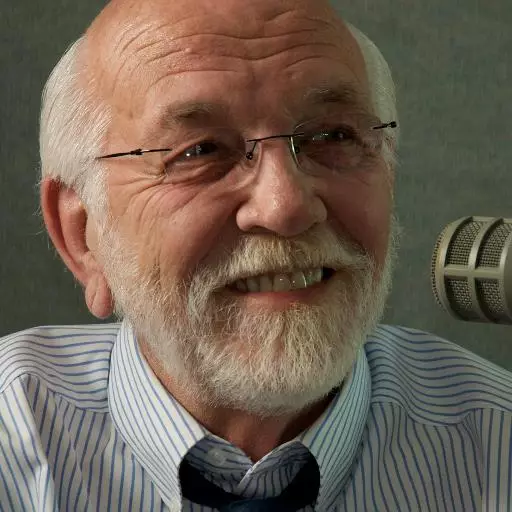
Denise Gitsham | Do You Hate Politics? | Steve Brown, Etc.


Can Christians remain in politics without losing their salvation (not to mention minds)? This week, Steve and the gang discuss a new approach to our national pastime with author and […]
The post Denise Gitsham | Do You Hate Politics? | Steve Brown, Etc. appeared first on Key Life.
Steve Brown: We're so glad you're here, y'all. You've always had a place at our table; we just don't let you talk. In case you're wondering, I'm Steve, the aforementioned old white guy. Matthew Porter is the executive producer. He's here. You know, I like to say I'm to the right of Genghis Khan. Matthew says he's to the right of me.
Matthew Porter: It's true.
Steve Brown: And our producer Jeremy is not here. It was something I said. So we went to our other producer, Jeans, and he refused to come too. So John Myers, our IT genius who's demon-possessed, is here. He feels like a mosquito in a nudist colony, but he will bring us through successfully.
John Myers: There you go.
Steve Brown: Dr. George Bingham is president of Key Life. George says we don't argue about politics. Then if we don't, what are we supposed to do at Thanksgiving? Just be thankful? Good heaven.
George Bingham: Yeah.
Steve Brown: And Kathy White is not here. I offended her too. I'm on a roll. Actually, she's suffering with some pain with a foot problem, and she can't get here, but she'll be here next week.
We have an absolutely delightful guest and we've got a subject that we need to talk. Denise Grace Gitsham is a graduate of Georgetown University Law Center, Bowdoin College. She has worked at the highest levels of federal government, from the White House to the US Senate, as well as in law firms for startups and most recently in politics as a candidate for Congress.
Her new book, which I hold in my nicotine-stained fingers, is titled *Politics for People Who Hate Politics: How to Engage without Losing Your Friends or Selling Your Soul*. I love that title. It's a bit long. You’ve got to stretch it out. You’ve got to have a big cover to put it all on. Denise, I like you a lot, frankly.
Denise Grace Gitsham: Already!
Steve Brown: But I'm a cynical old preacher and I don't know if you can pull this off. I hope to learn from you. I'm either a weenie and I don't say anything, or I say stuff and I have a glib tongue and people get hurt and I lose friends. And this book is going to be a lifesaver for me, unless you screw it up. So first, Denise, tell us a little bit about you and how you came into this, how you got into politics. Most people would say, "I'm not going there," but you did. How did you get there?
Denise Grace Gitsham: Most people would be smart if that's what they said. Let me just level the playing field here. I wrote this book because I'm preaching to myself. These are things that I feel like God has called us to be, and I'm constantly working at living up to the standards, the expectations, and the empowerment that the Lord has actually given us to be able to love even those that sit on the other side of the aisle.
So you and I are very similar in the sense that I say things that people get mad at, and it's just part of being human. Forget about politics. You can talk about religion, you can talk about anything. You can even talk about things with people on the same side as you, and they often get even angrier than the people on the other side of the aisle. You just can't win.
So we're in the same boat. My background is that I am a daughter of legal immigrants, and a granddaughter of legal immigrants. My grandfather actually became a legalized, naturalized American citizen at the age of 80, and he was an incredible man. He’s been fighting for freedom since the beginning of time. He fought against the Communists in China.
My mother ended up moving from China; she barely escaped Communist China, went to Taiwan, and then came to America in the sixties. My father came from—he's also an immigrant, but sometimes we increasingly think of Canada as a foreign country—but he did come down from Canada before that was a reality. He actually joined the US Air Force out of East Orange, New Jersey, to earn the privilege of becoming an American citizen.
So really, from the very beginning of time, my parents instilled in me a deep love for our country and a deep appreciation of the freedoms that we have. It is my honor and privilege to do whatever I can in any room God puts me in to fight for the principles that made America great in the first place.
Steve Brown: And you do have friends on the other side.
Denise Grace Gitsham: Yeah, it's interesting. When you work in Washington, Washington gets a bad rap, and not all of it is unmerited. But I've found that some of the best people that I know are those fighting on the front lines for our nation. We have to believe that as a nation. I'm really not for this language that is sometimes very descriptive, I'll admit, about calling it a swamp.
But I would say that most people at least start going to Washington because they believe in our nation and they're there to fight for us. Remember, whenever you get mad, we're the ones that put them in. So we share as much responsibility for shaping what they say and what's expected of them as we live up to ourselves. We create the country and the leadership that we want.
I've seen great people that I disagree with 180 degrees. We’re on completely different sides of the spectrum, but people who are sincere. I say they're sincere and sincerely wrong. But what I really feel like the Lord has taught me is that just because somebody disagrees with you doesn't mean that they're a bad person.
One of the things I really feel bad about, where our country's gotten to, is that it used to be that I could sit across from a Democrat and say, "I'm right and you're wrong." I feel like what that's morphed into is this actually very unbiblical belief that I'm good and you're bad just because we disagree.
God sits above politics. He's not somebody that says, "Oh, I heard this was said on the news. I think that's a great talking point. That's what I believe." No. He establishes, as a believer, he's the tone setter. He's the principle setter. He's the policy setter. His truth is my guiding light.
I have found that there are believers on the other side of the aisle who hold themselves to the same standard, but because their experience in life is different than mine, they have a different perspective on what's best for the people that share that experience in terms of what policies we should adhere to. Which, again, doesn't make them a bad person. It just means that their experience was different, and I've learned to be humble enough to ask why.
Steve Brown: One of my closest friends was Tony Campolo, who died fairly recently. We did a television show, a syndicated one out of New York for a long time, where we debated these issues. He was my pinko commie friend and we laughed about it, and I was his right-wing reactionary friend. Neither one of us wanted to do that program, but we had our concern, and it was a lot of years ago. It was even beginning then that Christians didn't know how to disagree with each other and still love each other. One of the things that we got during that year across the country was, "You guys really love each other." And we really did. I talked to him the week before he died and wept, and I miss him a lot. I used to think I'm glad for Tony, but I'm glad I only have one friend like that.
So you're going to help me get a lot more friends by telling me—you know, the thing that I like about you and listening to you talk and reading your book is you don't have any self-righteousness.
Denise Grace Gitsham: Oh, that's not true!
Steve Brown: Well, you just saying that means you don't. That's the key. As I read your book, as I think about these issues, there is an incredible amount of self-righteousness in politics. Incredible. And it can be addictive, and it can go crazy and it can kill other people. You start by saying, "This is what I believe, but I've been wrong on previous occasions, so let's talk." That opens all kinds of doors, doesn't it?
Denise Grace Gitsham: It does, because politics is about the art of persuasion. It's not supposed to be a blood sport. If you want to have more people on your side—this is maybe just strategic more than anything. Hopefully it comes from a pure heart; it doesn't always. I am self-righteous inside. I wrote this book, again, because I needed to learn the principles that were in it for myself.
If you want to win, politics is about being additive, not taking people away from your position. So you really have to understand where they're coming from before you can even address their concerns. The more we listen, the more we learn about people, the more capable we are of coming up with policies and ideas. You realize I'm not the only one in this situation or my perspective on it isn't the only experience or perspective to have. So I've learned a lot. I've been smacked down, I've been beat up. It's okay. I've learned what made me through it.
Steve Brown: During the break, we were talking in passing about this idea of trying to be gracious. It's a certain vibe when you're in the minority if you're conservative, but then things kind of shifted and all of a sudden you're on top of the pile to whatever degree. It changes, doesn't it? Because I think back to old Rush Limbaugh books, "I Told You So." It's easy to veer into the lane of "your tears are delicious" kind of thing. How do we handle that? How do we exude Christ's gracious spirit?
Denise Grace Gitsham: Well, we acknowledge that we take great joy in their tears. I will admit to that. I love being right. Look, y'all, I'm human, we're all human. It's right to be right. It's right to be on the side of God. It's right to be righteous. If you have confidence in what God has given you to stand for, and if you know scripture and you know God's truth, then it's good to be convinced of your righteousness.
The problem is what do you do with that? Is there ever enough room to realize that when it becomes self-righteous and judgmental, it's really a shift—it's such a subtle heart posture shift. I really find that it is so much easier, absolutely, to be kind and gracious when you have no choice, when you're kind of just at the mercy of people that you disagree with, when they're in charge.
This happens every two to four years, y'all. It's not like you stay at the top of the mountain for very long. But in a situation like now, where I'm a Republican—I don't agree with everything Trump does all the time. I'm not even really sure what my party stands for. I would say I'm more of a conservative than I am anything else, and I'm more about right versus wrong based on the word of God rather than right versus left because I don't want to tie myself to any partisan agenda that might shift away from the Lord. I don't care what the party says; I care about what God says.
When you are that committed to the truth, it's natural for you to feel like you have the truth and nobody else does. Doesn't that happen in denominations and religion? It's the same. Think about what Jesus warned us against. He said, "Beware the leaven of Herod and the leaven of the Pharisees." What does that mean?
The leaven of Herod is the political spirit. It's not about being righteous in politics that he's warning you from; he wants you to be righteous in politics. What he doesn't want us to be is have a political spirit that transcends even the topic of politics but thrives in that political situation where it's really like an us versus them, a divisive spirit that wrecks everything.
And then the religious spirit. Think about the confluence of the two. It's really like such a powder keg. You feel like when you're convinced that you're right based on the word of God and you're convinced that you're right based on just what you've lived in life and experienced in politics, it can make you intractable in your positions.
It can make you feel like not only, again like we talked about earlier, are you right and they're wrong, but that they're just evil. I've heard so many believers, especially as Trump got elected, just say, "I'm just going to speak the truth and that's it, and basically deal with it, world."
Somewhere along the way, the church—and I'm not saying the church at large—but I find this to be the truth with me and then with a lot of my Christian friends that are really strong conservatives, is that they've lost their ability to do what St. Paul told us to do, which is to speak the truth in love. Because they don't have to. They're just going to say their truth. They no longer have to bring people along with them, they think, at least for the next two years.
And so therefore, they forget that God calls us not only to stand on his truth but to operate in the fullness of his character. One of the things that I struggle with the most, and I talk about this at length in the book, is speaking the truth in love. Paul didn't have to tell us to do that. He could have just said, "Speak the truth," and most politicized Christians would have said, "Thank you and amen."
But when he says to speak the truth in love, he doesn't leave love undefined in scripture. Everyone who's been to a wedding has heard 1 Corinthians 13. But what they don't know is they often skip—they talk about "love is patient, kind." Think about if that's who you—how you are, all those characters when you talk with someone you disagree with. I know it's not for me; I have to ask the Lord to help me.
But then the part of 1 Corinthians 13 that really gets to me is the first couple of verses where he says you can be right on all of it. You can speak with tongues of angels. You can prophesy like no one else. But if you don't have love, you are a waste of space.
That to me terrifies me, because what if you're right on everything and you get before the Lord and you're like, "God, I was right, I stood on righteousness, everything was right, those people were so wrong"? And he's like, "Yeah, but did you love them?" Because love isn't an option.
And it's not an option when you're in the minority; you have to beg for people to listen to you. But when you're in the majority and you're in charge and you have the gavel and the speaker's platform and you have everything and all the votes, that's when you're really challenged to love because you've got to reach down and say, "Listen, I still care about you. I want to know what you think." This is really actually a really smart time to make friends and influence people. You have that power when you're in power. This is a uniquely challenging time, I think, for those of us who claim Christ to say, "How are we acting while we're in this really moment of time, like this narrow window of time where we have power to do something good and to bring people along with us by loving them?"
Steve Brown: I noticed that you had Tim Scott, whom I love, write the forward to the book. I would have voted for him. I really would have and would have gotten all my friends to vote, but he didn't last. Do you think it was because—and he models, more than any politician I've seen in a long time, he refused to go to the dark places, but he didn't compromise the truth. And I would have supported him. Can you get—well, we don't have time to get into it, but a good question. This is good, but can we get elected if we're conservative if we do what Jesus said to do? And is it even important that we get elected? We have about 15 seconds, so you can say yes or no to that.
Denise Grace Gitsham: Yeah. What good is it to win every campaign and lose your soul? I think at the end of the day, we need to use the best of the world's wisdom, obviously operate in excellence, and use all the political strategy that we need to, but we also need to be true to the word of the Lord. And we need to be right before God in how we engage in politics. I wouldn't say one is less important than the other, but at the end of the day, if you're not right before the Lord, that's like the precondition for everything and that's how the Holy Spirit empowers you to win. He can trust you.
Steve Brown: You can keep up with Denise at denisegracegitsham.com. While you're there, you can download a free group study guide for this book. If you're in a church in a small group, I can't think of a better book to spend some time in as a small group. But when you go to that website, make sure you download the free group study guide. Denise, one of the things that I really appreciated, with each chapter you actually included some discussion questions and so forth for people that are engaging with that.
Denise Grace Gitsham: I wish I could give it away for free to everyone. Just so y'all know, I personally paid to at a very discounted rate, thanks to my very generous publisher, to have every member of Congress have a copy of the book. And I wish I could give it free to everyone who wanted one because I got to tell you, I take no credit for what's in this book.
The Holy Spirit did 30 rewrites with me because where I started was not where he wanted me to end up. And so I felt like God constantly checking my spirit as I was writing it and constantly refining my thoughts to make my thoughts his thoughts. And so what you're getting in this book is not Denise Grace Gitsham; it's really Jesus.
Steve Brown: Denise, you made some references even historically to our country, and I think it's easy to make the argument that the United States is one of the great countries in world history, if not the greatest. But even at the beginning, Washington and some of the other founders were warning people about factions and political parties and so forth. And then it took what, a matter of a couple of years and some of them were forming political parties. Why are we drawn to that? Why are we so drawn to the factions and groupings?
Denise Grace Gitsham: I think that because so often and even the most solid believers fall into this camp, when we identify as anything other than ambassadors of heaven, I feel like we forget our identity in Christ. And so we're looking for things that we can add to help us explain ourselves to the world when really, if I was as pure as you guys are so kind to think that I am because you don't know me, you would know that for most of my life the reasons I made so many mistakes in politics, which is really the basis of my book, what I learned from a lot of the mistakes, not nearly all of them.
But was the constant refining of God in reminding me that I'm his ambassador here. Like, I am his daughter. Before I am a conservative, before I'm a wife, before I'm a daughter, before I'm anything else, I'm his child. And so I am a disciple of Jesus. And because so many of us don't really understand that that's our defining characteristic, it's our identity, we look for identity in other things.
And that's why, to answer your question, we love to add things on. We like stickers on our cars. The only sticker I won't put on my car is a Jesus sticker because I don't always drive like a Christian. But I would say that if we're not leading with Jesus, if that's not our intention as believers to always be living out the Great Commission and to be directing people to his truth, there is no salvation in a political platform.
There's no salvation in Trump. There's no salvation in anyone but Jesus. And yet somehow we feel like we have to go through this life explaining ourselves by something other than Jesus. I think that's just a natural human thing to help us orient ourselves in this place where, remember, we're citizens of heaven. We have dual citizenship.
We're citizens of heaven, but God says that we have to be in this world and operate in it, just not of it. So while we're here, our job isn't just to be twiddling our thumbs and counting the days till I get to go be with Jesus. No, Jesus says to bring heaven to earth. And so our job is to bring Jesus and what heaven looks like and the justice and the glory of God into our political system. For me, that's my job is to do that in the realm of politics. Everyone has their own sphere of influence that they're called to bring heaven to earth on. And by participating in this incredible experiment called America in our political system, we're helping to bring heaven to earth by the choices that we make, but it shouldn't define us first and foremost.
Steve Brown: Denise, I want to describe a scenario that I come across fairly often, and I would love to get your perspective on it. So I'm a conservative Christian, I come across somebody who's not a believer and liberal, okay, we can engage that person. And like you've already said, the priority is not winning an argument but presenting yourself properly and all this kind of stuff.
Here's the thing. On Facebook, I come across Christians who have way out there ideas. There's a woman in California I love dearly, and she's posting like, "We shouldn't even have—enforce border laws." And you're like, "Do you want a second take on that?" So if there's a believer, I feel like there's a certain shared foundation that naturally leads to these things, which that's my perspective of where it should lead to. How do you handle those situations?
Denise Grace Gitsham: Actually, you tell her to leave her front door open, because that's what she's advocating. Right? I just think those of us who love politics and do it for a living or just think about it all the time, which is me, we have really evolved thought processes because we're thinking through what the logical extension of a policy might be.
What's the actual impact? Right? If you don't believe in borders, I always thought Joe Biden should just take all the fences around the White House down and let everyone come in, right? Lead by example. So I think when you obviously approach it like that, it's probably not the most thoughtful or even winsome or even effective way to address it, right?
So I think first of all, you have to acknowledge that Ephesians 6:12 says we're not waging against flesh and blood. This is a spiritual battle. There's every one of us has blind spots. So I don't want to just say this woman is blind spotted on this issue. I have blind spots because there are parts of me—I'm not Jesus and I'm not God and I'm not omniscient and I'm not all-knowing.
And so we all have blind spots based on our life experiences or our belief systems. And this woman's blind spot is something that honestly, like what she stands for, you always have to bring it against an objective standard, right? First of all, you have to guard your heart to say this is an Ephesians 6:12 moment. I'm not waging against her. I'm not coming against her.
I'm coming against the spirit of untruth in what she says. But then you have to identify what is a spirit of truth. You can't just say—it's like when Jesus casts out the demons. If you don't have something that comes back in and infills, they bring back seven times and then it's even stronger, the stronghold over their belief system.
So you have to fill it. You have to say first of all, "That's wrong," and then you have to say, "This is why." And if she's a believer, at least with believers, we have a common standard that we say that we all adhere to, right? So let's talk about what the Lord says about immigration.
And then you start saying, "Wow, okay, it's maybe not as black or white on all of the issues that I think that I'm adhering to just because I'm reacting to something that I may have seen, maybe like the fact that 10 million plus people were let in through our border without any tracking and that's a problem under Biden."
But maybe the way that I think about even the illegal immigrants that have come into our country, maybe I'm not seeing the whole picture. And maybe she's not even reacting to the policy; maybe what she's reacting to is how we're reacting to what happened, right? So asking the Lord for just supernatural wisdom. And here's where we have the advantage.
We have the Holy Spirit. I'm reading John Bevere's book right now called *The Holy Spirit*. Because as somebody grew up Baptist, I get God and I get Jesus, but I don't really get the Holy Spirit. It wasn't until I started sort of understanding charismatic world and I'm like, "What is this other part of the Trinity?"
And one thing that he's taught me in reading this devotional is that the Holy Spirit came to be our helper. He literally empowers us to be all the things that we wish we could be for Jesus. Right? We cannot be good or loving or kind or love our enemies or do anything even remotely righteous without the Holy Spirit living inside of us.
And that's why when Jesus died, it was so sad, but he said, "I'm going to bring you someone who's going to enable you to do far more than you've seen me do." And that is something that we don't call on nearly enough because we live in the flesh. And that's true of me. I can just say that any time I get a reaction like that, I know it's a flesh reaction because we're human.
And God is so much more gracious with us than we are, and way more gracious to those we disagree with than we are. But the Holy Spirit can help us be not only effective and wise in our words, but also empowered with supernatural patience and understanding that there's a much bigger issue at play: it's Satan trying to divide us.
He's using these issues in our emotions to divide us. And you have to decide in advance before you engage in a conversation—I'm speaking to myself. I have to say, "Lord, what is the outcome that you want to have here? And is there any spirit in me that is perpetuating a spirit of division?"
Because Satan's only job is to steal, kill, and destroy. And the most effective way he does that is by pitting us against our fellow believers. John 17:21 is always cited as the unity verse, but there's 179 verses in scripture that speak to the importance of unity to the heart of God.
And John 17:21 says, Jesus is saying when people see us, when Jesus and God are united, he asks for unity amongst believers. And he says that our unity is the witness that enables people to understand that he is actually who he says he is. So think about that. When you're tempted to be divisive or just react to whatever stupidity there is out there—and there's a lot of stupidity. There's stupidity on our side of the aisle, there's stupidity on the other side of the aisle. But when we're tempted to react, think about whether that reaction is worth sacrificing your witness for.
Steve Brown: I've learned from her that I don't say you've got to do something about this. I recognize that I've got to do something about this. You know, I can watch television in the evening and I get mad as sand. I find myself being irritated, cussing and spitting. And my wife, who's kind, doesn't say anything, but a look's enough. Like you could be a little bit more kind and loving and understanding. And I was listening to Denise talk, and she said you can't do that except supernaturally. My nature says get those suckers. Jesus says love those people. And that's not as easy as it sounds in our politicized world where everybody's taking sides and they've got guns. But that's where we're called. I really like fighting sometimes, but get the book. It's a very helpful and practical book. One we need to read and underline and memorize the way you do scripture.
Next week, there's a woman named Sherry Pakanowski who wrote a novel over a course of 15 years, a very tender novel about God loving the overlooked kind of people, but sadly she passed away before the novel was published. So her husband took this project on and saw this whole thing through the editing process, the publishing process. And we're going to speak with him about her, about her life, and about this book. It's called *The Least of These*. It'll be a good hour. I had lunch with him not too long ago and we were perfect strangers, but he wanted to talk about his wife and I thought, "Oh, that's just what I need and she's gone." Turned out to be an absolutely great lunch, talking about some great subjects and about this book. So we don't usually do a novel; that's hard to do an interview on, but we decided to do this one because there are some important things that need to be said. So be with us next week. We’re going to be here. Well, not everybody was here this week. But next week, everybody will be here and you should be here too. Same time, same place. Between now and then, don't do anything we wouldn't, and that gives you a wide, wide berth.
Featured Offer

A companion booklet to Steve’s classic overview study of the New Testament. How did the early church get its start? Leadership, the Pentecost, the fellowship of believers, and persecution...it’s all there. In addition, Steve’s overview of Romans—What is the “Roman road to grace”? Highlights of both Acts and Romans, including introductory comments, major themes, and important teaching. Helpful as you read and study.
Past Episodes
This ministry does not have any series.
Featured Offer
A companion booklet to Steve’s classic overview study of the New Testament. How did the early church get its start? Leadership, the Pentecost, the fellowship of believers, and persecution...it’s all there. In addition, Steve’s overview of Romans—What is the “Roman road to grace”? Highlights of both Acts and Romans, including introductory comments, major themes, and important teaching. Helpful as you read and study.
About Steve Brown, Etc.
Key Life exists to communicate that the deepest message of the ministry of Jesus and the Bible is the radical grace of God to sinners and sufferers.
Because life is hard for everyone, grace is for all of us. And grace means that because of what Jesus has done, when you run to him, God’s not mad at you.
All of the radio shows, sermons, books, and videos we produce work together toward one mission: to get you and those you love Home with radical freedom, infectious joy and surprising faithfulness to Christ as your crowning achievement.
Learn more: http://www.keylife.org
About Steve Brown
At Key Life, Steve serves as Bible teacher on the radio program Key Life and the host of the talk show Steve Brown, Etc. Prior to Key Life, Steve served as a pastor for more than thirty years and continues speaking extensively.
Steve has also authored numerous books, including How to Talk So People Will Listen, Three Free Sins, Hidden Agendas and his latest release, Talk the Walk: How to Be Right Without Being Insufferable (now available as an audiobook).
Contact Steve Brown, Etc. with Steve Brown
steve@keylife.org
https://www.keylife.org
P.O. Box 5000
Maitland, FL 32794
In Canada, send requests to:
Key Life Canada
P.O. Box 28060
Waterloo, Ontario N2L 6J8