
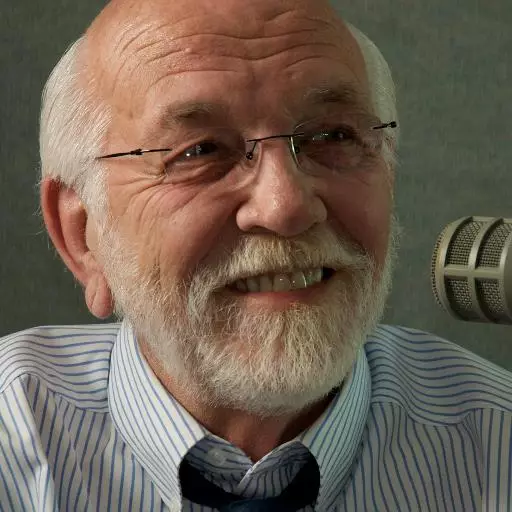
Charles Murray | Taking Religion Seriously | Steve Brown, Etc.


Does God care about over-educated agnostics? This week, Steve and the gang sit down with Charles Murray, a bestselling author and one of the most influential – and controversial – policy analysts of his generation. Discover why each person's path toward knowing God is unique.
The post Charles Murray | Taking Religion Seriously | Steve Brown, Etc. appeared first on Key Life.
Steve Brown: Does God care about overeducated agnostics? The answer and the story behind that answer will surprise you. Let's talk with Charles Murray on Steve Brown, Etc.
Guest (Female): He's an old white guy, an author, broadcaster, and seminary professor who's sick of religion. And he's brought friends. Please welcome Steve Brown, Etc.
Steve Brown: Hey, we're so glad you're here. We understand the gift that you give us by spending an hour with us. And I hope you understand the gift we give you by spending an hour with you.
Guest (Female): Happy to do it.
Steve Brown: If you're wondering, I'm Steve, the aforementioned old white guy. Matthew Porter, who is our executive producer is here. Matthew has lost a few pounds by no longer hanging out with some ladies. Little Debbie, Betty Crocker, Sarah Lee, Aunt Jemima, and Kathy Wyatt.
Guest (Male): Wow. To be amongst such luminaries.
Steve Brown: Yes.
Guest (Female): Wow.
Steve Brown: Our producer Jeremy's in the little glass booth. Jeremy, if we want to market this show, to the young and the cool.
Guest (Male): Yes. Yes.
Steve Brown: The cool kids, maybe we should release episodes on vinyl, you think?
Guest (Male): Oh, I love it.
Steve Brown: Or cassette tape.
Guest (Male): It's coming back too.
Steve Brown: What in the world is a cassette tape? Our one-man IT department, John Myers, is in the tech bunker. The good news is John's Christmas light display has now come down. The bad news, groundhog daylights going up. We visited John's house. Nobody can see his lights because he lives in a gated community. So if you don't live there, you don't get to go unless you know John and he let us go in. And it's amazing. He did it for our flyover. I got a right.
Guest (Male): Get your drone.
Steve Brown: It is visible from a satellite too.
Guest (Female): That's true.
Steve Brown: Dr. George Bingham is the president of Key Life. George says coffee doesn't fix problems, but it doesn't make them worse either. So go ahead.
Guest (Male): Always appropriate.
Steve Brown: Kathy Wyatt is the soft feminine side of the program. Kathy says she's never been to an escape room, but she has been to an IKEA room.
Guest (Female): That is false on both counts. I have been to an escape room, but I've never been in IKEA.
Guest (Male): Showbiz, baby.
Steve Brown: No. Well, I didn't write this.
Guest (Female): I know.
Steve Brown: Matthew wrote it.
Guest (Female): I know.
Steve Brown: Will you try to get your facts right now?
Guest (Male): Yes. I'll try to at least as good as the journalists.
Steve Brown: Guys, we have a great guest during this hour, Charles Murray. He's a policy analyst, educated at Harvard and MIT. He's a best-selling author of great books, including Losing Ground, The Bell Curve, and Facing Reality. He's currently the Haick Emeritus scholar at the American Enterprise Institute, and his latest book, which I hold in my nicotine-stained fingers, is titled Taking Religion Seriously. Oh man, I tell you I've been reading this book this morning, and you have got to get it. If you have an unbelieving friend of any type, preferably highly educated, snooty, and elite, this is their Christmas present for this year. I was interested when and we're going to get into your story. I have an atheist friend that I wrote for years, and we argued back and forth. He was French. He and he married got married during our time of debate back and forth. And his son was born to that marriage. And I have never seen anybody that excited. I mean he was dancing and jumping up and down, he was so pleased. And I wrote him and I said, Jack, who are you going to thank? And that brought him to Christ. That one statement after and I thought I'd been reasonably balanced and profound in my arguments, that one statement, who are you going to thank? You must have felt a little bit about like that. I mean it's obvious you love your wife and your kids, and she was way ahead of you, but who are you going to thank?
Charles Murray: Well, yeah. In my case, I I first thanked my wife because.
Steve Brown: Yeah. That's good.
Charles Murray: She she's the one who got me off dead center. Uh the the story's pretty simple. We are both the uh the overeducated agnostics that you mentioned in the intro. And uh you know, I'm Harvard MIT, she's uh Oxford Yale and and uh we were both in the same place religiously. I'm talking the mid-1980s now. Which is we weren't militant atheists, uh but religion just simply was not an important part of our life, and uh we were happy. We were happy agnostics. And then she had our first child. And after a couple of months, she said to me, I love this child far more than than evolution requires.
Steve Brown: I mean, it breaks down. Yeah.
Charles Murray: Yeah. It it was a great line because she understands that uh people are more likely to pass on their genes. Women are if they love their children. But she said there was something more than that, and it felt like she was a being a conduit for some greater love than that. And that got her going uh on a on a on a journey that took her to uh Quakerism, actually, because she needed a non-doctrinaire place to start to explore all this. And and Quakers are very good at that. And it took many years. And the the book basically is about 30 years long in terms of the time period. Closer to closer to 40, actually. And uh over a long period of time as I watched her develop, I said to myself, I'm missing out here. And so I've started to do my best to catch up.
Steve Brown: Oh man, it's good. You know you could probably sell more books if you told people that you were walking in the woods and you heard the sound of a waterfall and then it turned into a voice and God spoke. You're going to hell or something like something kind like that. You know you're kind of slow on this.
Guest (Female): Wow.
Charles Murray: Well, I have what I call in the book a perceptual deficit when it comes to things spiritual. And I'm quite serious about that. Uh and I I use a comparison with music. I mean there are some people that uh can listen to a Beethoven Symphony and are not not only deeply moved, but intellectually fascinated by and they they hear a completely different thing than what I hear. It's not that I don't like the Beethoven Symphony, they are just way better than I am at perceiving what's going on. And I think the same thing is true of spirituality. I think it's a trait. I think some people have more of it than another through reasons that have to do with who knows what. Genes, environment, I don't know. And I am not good at perceiving a lot of the things that my wife is good at perceiving. So what I did was uh use a somewhat different tack. I am good at analyzing data. I'm good at assessing empirical stuff. Okay, that's not the best way to go about this, but it's sort of the game I could play and and uh that's the route I took.
Steve Brown: And so you came to Christ for the same reason you believe in the multiplication table.
Charles Murray: Yeah.
Steve Brown: It's not very sexy, but listen, it works.
Charles Murray: Actually, what's Steve, one of the most interesting things about this evolutionary process uh is which has I have taken many years, is that I have not had moments in which I consciously changed certain beliefs. It is that after a period of time, I suddenly noticed that I had changed my beliefs. Uh I'll give you an example. Uh which has to do with the forgiveness of sins. I remember back in the '90s, uh thinking about something that I did when I was in my early 20s that I was ashamed of. It was wrong. I said to Donna. And I heard another person in the process and uh and I felt guilty for it. And the concept that I should be forgiven for that by God, I would say to myself, no, I shouldn't be forgiven. I ought to feel you know, I ought to feel miserable about this to the end of my life. And and uh I just realized a few years ago that I now look back on that and thought to myself, how silly that was. The idea that you are the person who is in a position to decide whether it's appropriate to be forgiven or not. Uh you aren't in that position. And out of that, I now say that I have a sense of God's grace, but I didn't come to it in that theological sense. I just suddenly realized that's where I was.
Steve Brown: Oh man, that is so good. By the way, if you haven't had that head thing about coming to a reasonable understanding of the facts and you danced down the aisle at an alter call, you may be ought to go back and do the other because the facts mean you stick when the going goes tough. That's true under the third Reich. Doctrinal Christians who believed the facts never ran. So you're don't if you go anywhere, you're crazy. We're coming back.
Matt Heerdt: Hey Key Life family. It's Matt Heerdt again and we're so grateful for your partnership and if the ministry of Key Life has blessed you, we'd love to invite you to join us by both praying and giving. And as you pray, ask God to guide our decisions so that we can even reach more folks with the message of amazing grace and as you give, we so appreciate your generosity as much as you're able, knowing that Key Life makes each dollar go as far as possible. Thanks so much.
Steve Brown: Hi, this is Steve Brown. In case you didn't know, one of the main reasons Key Life exists is to remind believers that God isn't mad at his children. Why am I telling you this? Because our weekly email, Key Life Connection, takes the best of the videos, articles, and puts them right in your inbox. We'd love for you to try it. It's free. Go to Key Life.org/subscribe.
Matt Heerdt: What is it that you long for, dream about, hunger after? We all desire more than just surviving in the midst of our daily routines, but often we feel limited and stuck like we're merely existing instead of living. And that's not the way it was meant to be. Contrary to what a lot of people in some church circles say, following Jesus is not about denying our humanity, but embracing it under his restorative leadership and grace. We're called and enabled by the gospel to become more fully human and alive. I'm Matt Heerdt, and in my book, Life With a Capital L, I want to take you on a journey to discover that Jesus didn't come to save us from our humanity, but to restore it to what God originally intended. When Christ promised we could live life to the full, he didn't just mean eventually in heaven. Life With a Capital L, embracing your God-given humanity. You can find it now on keylife.org/store.
Steve Brown: Let me give you an actual quote from a boy who was 7 years old who was asked to write what he had learned about Benjamin Franklin. He was born, he wrote. He went to school, but he didn't like it. One day, he found a piece of candy and ate it. A girl saw him and laughed at him. He married her and discovered electricity. You ever wonder what your children will write about you? I don't know about you, but I would be satisfied with he was born, he grew up, Jesus found him and loved him. He's going to live forever. That would be enough. I'm Steve Brown. You think about that. Share what you just heard with a friend. Go to youthinkaboutthat.com.
Steve Brown: Hey, thanks for joining us. We're talking to Charles Murray and his latest book and you're going to love this book. You just can't put it down. It's called Taking Religion Seriously. And it's not what you think it is. It's a testimony, but it's a long testimony. And uh bottom line, we're talking to a man who simply intellectually couldn't run anymore. He faced the facts, he dealt with them and acted accordingly, which I think is cool. I mentioned before that in Germany, it was demonstrably true that those who had this head thing who understood, they didn't run, they couldn't because it was true, because it was true, because it was true. And you don't ignore the multiplication table. You don't ignore science, and that's what that's what Charles Murray discovered. And you got to get the book. It's called Taking Religion Seriously.
Guest (Male): Charles, we were uh talking some off-air and um and I was admiring how you know, while the while the book itself is not overly lengthy or um but it's got uh a huge amount of references in it for that as you referred to it, the overeducated agnostic. And one of the things that you reference um in your discussion on uh the Big Bang and how important uh your investigation of that was in your progression toward uh belief. Uh you mentioned a book called um Just Six Numbers by Martin Reese. Can you talk a little bit about the uh the importance of that book, but also um in general, uh your investigation of the Big Bang Theory? Which is older, it it really is older than I thought. I mean, it's been around a while.
Charles Murray: The uh the reason I wrote I read Just Six Numbers had nothing to do with religion. I I have sort of uh broad interests, and so I read a lot in in in current events in science. And I picked up this book. And this was written by a man who himself is not religious, but he's an astrophysicist, and what he was saying was that there are a variety of things about the Big Bang which are very mysterious. That in the let's put it this way, it's as if at the moment of the Big Bang when the universe appears out of nothing, a singularity. It was as if there was a wall of settings, and all of these settings had to be just right in order for stars to form, planets to form, and thereby enabling life to exist. And the odds against these numbers all being at the right levels was extremely small. Another astrophysicist has calculated there those percentages at one in trillions, okay? Well, if it's the case and by the way, if you're wondering what would have happened if they hadn't been set at the right levels, we would have had a universe full of black holes, no stars. We would have had a universe of radiation, no stars, no planets. Well, you have basically three choices. You can just say, well, we're here, we're alive, and it was a one in a trillion chance, but so what? That is not very intellectually satisfying. The uh the physicists who were faced with this dilemma of do I say God created the universe or do I come up with something else? Guess what? They came up with something else, namely multiverses. That our universe is just one of millions of universes. And they have very interesting theoretical explanations for how that could happen, which I frankly find A, incomprehensible to a non-mathematician like me, but B, really implausible. And the the third alternative is that the universe had an intention behind it. And I've I've finished Just Six Numbers, that book, and I said, I can't believe that I'm saying this to myself, but I think the universe is intentional. And George, once you do that, once you say the universe has an intention behind it, that just opens up uh a whole new way of thinking about God, which if you're an agnostic is definitely pushing you in the direction of I think I've got to believe there is.
Guest (Male): Great.
Guest (Female): Wow.
Guest (Female): Um Charles, I wanted to just for a minute, um switch off of of that subject because I wanted to ask you about I grew up um in a a very very conservative uh conservative Christian background. I mean we you would describe it in definitely an evangelical church and maybe even a little bit on the fundamentalist side. So um things were always very very cut and dry for me until I got older, went to college and started hearing some other things, etc. And so when I when I describe my own personal spirituality at this point in time, I I describe it way differently than I did way back then. And I'm wondering how for you, how do you describe where you are spiritually today? I mean, you came to this personal personal faith of yours through a very very different road, obviously, than I did. Um how how do you how do you describe where you are today spiritually?
Charles Murray: Let let me uh compare it with where my wife is and maybe that'll give you an idea. So in the book, I've spent a lot of time on uh science, on the ways in which science is challenging materialism. Uh I spend a lot of time in the historicity of the Bible and uh and the the interpretability of the New Testament. And my wife just rolls her eyes and says that's beside the point. She is uh.
Guest (Female): I love that.
Charles Murray: She is yeah, she she is uh among other things, she leads contemplative prayer groups. She she uh and and is extremely I don't want to use the word adept because that sounds too clinical, but she's really good at that kind of stuff. Uh contemplative prayer, uh getting at the meaning of of Jesus's life and the meaning of it for hers and for uh thinking about the universe. And the things that I get into, she says, you know, who cares whether the New Testament was written in in 90 AD or whether it was written in the 40s? And who cares whether the Shroud of Turin is real or not? And and uh I not only respect that, I envy that.
Guest (Male): Yeah.
Charles Murray: But but but I I think maybe the best thing I Well, you know what? I'm about to say something I can't finish before I think we're going to have to go on.
Guest (Female): We can pick it up on the other side.
Charles Murray: We we'll pick it up on the other side.
Steve Brown: We'll make this a teaser. That's what it's it's called in uh broadcasting world. Uh you you don't want to miss the next segment. I mean, I have no idea what Charles is going to say, but it's going to be He's probably going to confess what that sin was he committed. Back when he was very young. Guys, this is so good. I can hardly stand it and uh you don't want to miss a bit of it. And then later, once we post it, tell your friends about it. Give them the website or the YouTube channel and ask them tell them they have to pay to do this. It's not free. That's a lie, but listen, we need all the money we can get to keep this thing going. Guys, we're going to back out because this is hard work. We're going to have some cookies and rest up and then we're going to return.
Matt Heerdt: Hello, this is Pastor Jerry Curries again and I like to take a moment to ask you to pray for and give to Key Life. When you pray, ask for wisdom and blessings, and that Key Life will continue to spread the message of God's grace for many many years to come. And if you can give, please give as generous as you are able and you know that we will be faithful with every gift, big or small. Thank you.
Matt Heerdt: When Christ promised we could live life to the full, he didn't just mean eventually in heaven, because Jesus didn't come to save us from our humanity, but to restore it. Life with a Capital L. Find it now at keylife.org/store.
Matt Heerdt: What if you could start your day by hanging out in God's word and with some of the most significant theologians, authors and pastors ever? That's the idea behind the one-year devotional, God With Us. Find it now on keylife.org/store.
Pete Alwinson: This is Pete Alwinson, and if you're a guy, I want to show you how to recover and reclaim an intimate, growing relationship with your heavenly Father. Check out like Father like Son, how knowing God as Father changes men. Get your copy now at keylife.org/store.
Jerry Kuperus: The love God has for you will change your life. God took his wrath for us after sin out on Jesus at Calvary. At the same time, he released all of his love on us. That's the good news of the Gospel of Jesus Christ. The New Testament book of Romans provides evidence that God's grace has been afforded to every believer. This is Pastor Jerry Kuperus and in my book, Grace, the Real Good News of the Gospel, I am going to take you through the book of Romans line by line to demonstrate beyond a shadow of a doubt that God is not mad, angry, or upset with us. God's divine favor and blessings have been released into our lives. Remember where sin abounds, grace does much more abound, and you will run out of sin before God runs out of grace. The real good news of the gospel. Find it now on keylife.org/store.
Steve Brown: Oh man. Sometimes we do programs that we're glad when they're over. Sometimes we do programs that we wish we had hours and hours, and that's true with Charles Murray. And and for all of us, notice how kind he was to those who have an emotional relationship with Christ. He references his wife and he talks about how envious he is of her, but he says, I'm not wired that way. I'm wired to look at facts and to draw conclusions and to act on those conclusions. Now, if you are an evangelical, and I am, if you're big on Billy Graham, and he was a friend of mine, and I am, if uh you believe in the seven great doctrines of the Christian faith because your parents taught you, some of that I am. You need also to get a book like this and to do some research the way Charles did because sometimes when the doctor tells you you've got cancer or you lose a child or you go through a period of clinical depression or things are really messed up, uh the emotion that you had at the moment, which was real and genuine and Christian, is important, and it's good. But it's also to say through the hardest and most difficult things I have to face, this stuff is true. It's just it's true in the same way that 2 + 2 = 4 and not three and five. It's it's it's a group of facts that are simply facts from which one can draw a conclusion. And that is irrelevant to how I uh feel or the motion emotion I've experienced. So this was a good thing and it was a good thing for all of us because he envies those of us who are evangelicals and have the warm uh contemplative walk with Christ. But we should be envious of him because he's got the facts right, and he's never going to run. Who's going to be here next week?
Guest (Female): Next week our good friend Drew Hensley is going to be with us. Um his new book out is called Invisible Grief. If you're not familiar with Drew Hensley, you can go to the Key Life website, type in his name because he's a regular blogger for us and we love him. He's a great great guy, great writer, got a lot of good things to say.
Steve Brown: so next week we're gonna dress in black. Go through an hour of mourning. So you don't want to miss it. Same time. And that'll attract a lot of people. Hey, same time, same place, next week. Hope you join us. And between now and then, don't do anything we wouldn't. And that gives you a wide wide birth.
Jerry Kuperus: Hello, this is Pastor Jerry Kuperus again, and I like to take a moment to ask you to pray for and give to Key Life. When you pray, ask for wisdom and blessings, and that Key Life will continue to spread the message of God's grace for many, many years to come. And if you can give, please give as generous as you are able, and you know that we will be faithful with every gift, big or small. Thank you.
Matt Heerdt: What if you could start your day by hanging out in God's word, and with some of the most significant theologians, authors, and pastors ever? That's the idea behind the one-year devotional, God With Us. Find it now on keylife.org/store.
Pete Alwinson: This is Pete Alwinson, and if you're a guy, I want to show you how to recover and reclaim an intimate, growing relationship with your heavenly Father. Check out Like Father Like Son. How knowing God as Father changes men. Available now at keylife.org/store.
Jerry Kuperus: Believer, I want you to remember that where sin abounds, grace does much more abound. And you will run out of sin before God runs out of grace. Grace, the real good news of the gospel. Find it now on keylife.org/store.
Steve Brown: A saint once prayed, Oh God, let me love you even if there is no heaven, and let me fear you, even if there is no hell. Now, that sounds good, but if it's okay with you, I'm not going to pray that prayer. I want to be a Christian simply because I was drawn to the love of God. But then, knowing about heaven and hell doesn't hurt. I love walking with Christ. And when you add heaven to the mix, it doesn't get much better than that. On the other hand, hell can scare, as it were, the hell out of you. That's why Jesus told us about both. I'm Steve Brown. You think about that. Share what you just heard with a friend. Go to youthinkaboutthat.com.
Steve Brown: Hey uh, we're hanging out with best-selling author and policy analyst Charles Murray. Uh, by the way, you can keep up with him on X at Charles Murray.
Guest (Female): Charles, you were about to finish out your thoughts and uh and we went on into commercial break, which happens on a regular basis. But that's how we keep the audience. So, you go right ahead with what you were talking about.
Charles Murray: Okay. Well, well uh you were asking where my faith was at this point. And in the book, I talk about some specific things uh with regard to my own faith. But the the end of it is, and the way I finish the book, actually, is that I still feel sometimes like a little boy whose nose is pressed against the glass watching a party on the other side that he can't join. And and I because I have not yet had the kind of of deeper spiritual experiences that I think my wife has had, and that I would like to have, and I'm not saying that I won't ever. I'm saying that at this point it is more of uh uh well, it's not so different from C.S. Lewis's.
Guest (Male): Yeah.
Charles Murray: position where where he said that he came to faith largely by being convinced it was true. And and uh whereas he had spiritual experiences, it was an intellectual aspect. And he said that that you if you're your faith, of course, will waver at times. And what you do at those points is, you go back and remind yourself why you decided it was true in the first place. That and you also observe. Uh because being observant is itself a sort of steady reminder. So that's that's.
Guest (Male): You know.
Charles Murray: Go ahead.
Guest (Male): No, go ahead.
Charles Murray: Well, I am stuck where I am. I think uh because of what I referred to earlier as my spiritual deficit. That does not mean that it hasn't all been worth it. It has all been worth it. And so so if if I have a sense of God's grace and that the universe is meaningful in a variety of ways, that's a lot already. And that's much different from living life not believing those things because if you live your life without that kind of confidence, then yeah, you better be scared of death because it's oblivion. That's the end. And that can be existentially really depressing. I'm not saying you ought to believe this to keep yourself happy. I'm just saying that you don't have to be a convinced evangelical Christian before you can take a lot out of Christianity.
Guest (Male): True.
Charles Murray: I was going to say that Lewis, uh in Surprised by Joy, I looked for his testimony thinking that it must be a great emotional. He said this is what he said. When I left for Whipsnade Zoo, I didn't believe that Jesus was the son of God. When I got there, I did.
Guest (Male): I remember that.
Steve Brown: What? Could you give me a little bit more than that?
Guest (Male): I love it. I love it.
Charles Murray: It's pretty mild, you know. Uh and and uh what scared me was not that prayer didn't work, but it did. And uh and so it's uh taken me a long time to come back to that. It's it's uh it's scary. In in some ways, belief can be scary.
Steve Brown: Oh, should be.
Charles Murray: I understood what she said when she said I sometimes I wish it weren't true. But it is.
Guest (Male): Yeah.
Charles Murray: Uh Charles, we were talking off the air and Charles was raised in a Presbyterian church and I said I hoped he had not betrayed his heritage. And I said that because I don't want to suggest that you have to be a Presbyterian to go to heaven, but if I were you, I wouldn't take a chance.
Guest (Male): We're going to come back. This is so interesting, and the reason we keep interrupting Charles is that he creates these ideas, and I've got about four billion things that I want to ask and I want to say and so does everybody else, and there's not room for that and Charles too. So don't go anywhere. Hey, the book is called Taking Religion Seriously. And it's not what you think it is. This is a book you want to give to your friends at Christmas. It is life-changing. Guys, we're going to back out for a little bit, but like Jesus, we're going to return.
Featured Offer

A companion booklet to Steve’s classic overview study of the New Testament. How did the early church get its start? Leadership, the Pentecost, the fellowship of believers, and persecution...it’s all there. In addition, Steve’s overview of Romans—What is the “Roman road to grace”? Highlights of both Acts and Romans, including introductory comments, major themes, and important teaching. Helpful as you read and study.
Past Episodes
This ministry does not have any series.
Featured Offer
A companion booklet to Steve’s classic overview study of the New Testament. How did the early church get its start? Leadership, the Pentecost, the fellowship of believers, and persecution...it’s all there. In addition, Steve’s overview of Romans—What is the “Roman road to grace”? Highlights of both Acts and Romans, including introductory comments, major themes, and important teaching. Helpful as you read and study.
About Steve Brown, Etc.
Key Life exists to communicate that the deepest message of the ministry of Jesus and the Bible is the radical grace of God to sinners and sufferers.
Because life is hard for everyone, grace is for all of us. And grace means that because of what Jesus has done, when you run to him, God’s not mad at you.
All of the radio shows, sermons, books, and videos we produce work together toward one mission: to get you and those you love Home with radical freedom, infectious joy and surprising faithfulness to Christ as your crowning achievement.
Learn more: http://www.keylife.org
About Steve Brown
At Key Life, Steve serves as Bible teacher on the radio program Key Life and the host of the talk show Steve Brown, Etc. Prior to Key Life, Steve served as a pastor for more than thirty years and continues speaking extensively.
Steve has also authored numerous books, including How to Talk So People Will Listen, Three Free Sins, Hidden Agendas and his latest release, Talk the Walk: How to Be Right Without Being Insufferable (now available as an audiobook).
Contact Steve Brown, Etc. with Steve Brown
steve@keylife.org
https://www.keylife.org
P.O. Box 5000
Maitland, FL 32794
In Canada, send requests to:
Key Life Canada
P.O. Box 28060
Waterloo, Ontario N2L 6J8