
Anne Graham Lotz & Rachel-Ruth Lotz Wright | God Won’t Leave You There | Steve Brown, Etc.


Turning trials into purpose; God did it for a guy named Joseph and He can do it for you. This week, Steve and the gang chat with Anne Graham Lotz and Rachel-Ruth Lotz Wright (Billy Graham's daughter and granddaughter, respectively) about a change in perspective that changes everything.
The post Anne Graham Lotz & Rachel-Ruth Lotz Wright | God Won’t Leave You There | Steve Brown, Etc. appeared first on Key Life.
Female Announcer: Turn your trials into purpose. Ask a guy named Joseph. Let's talk about it with Anne Graham Lotz and Rachel-Ruth Lotz Wright on Steve Brown, Etc.
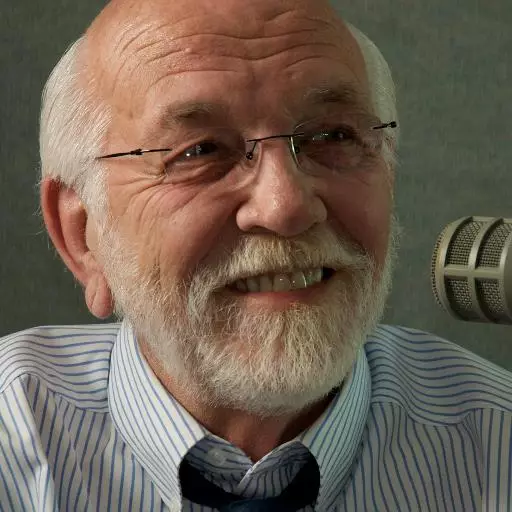
He’s an old white guy, an author, broadcaster, and seminary professor who’s sick of religion. And he’s brought friends. Please welcome Steve Brown, Etc.
Steve Brown: We are so glad you're here. In case you were wondering, I'm Steve, the aforementioned old white guy, and our executive producer, Matthew Porter, is here. Matthew has been wondering about what's the big deal regarding Artemis II. Four people locked into a tiny room going around in circles. We do that every week here on this program.
Matthew Porter: Fortunately, the toilet works.
Steve Brown: And our producer, Jeremy, is in the little glass booth, mission control to our Artemis II. Our one-man IT department, John Myers, is in the tech bunker. Last week, Kathy's laptop was making a terrible noise, and John fixed it by taking out the Barbra Streisand CD she was playing on it.
Kathy Wyatt: Wow. Easy fix.
Steve Brown: And Dr. George Bingham is the president of Key Life. Recently, George was feeling sad, and then he heard Kamala Harris might run for president again, and it lifted you out of your sadness.
George Bingham: Things are looking up.
Steve Brown: And Kathy Wyatt is here. These are quality, by the way. And Kathy Wyatt is the soft feminine side of this program. Kathy, you could run for president, make America Lutheran again.
Kathy Wyatt: You're just never going to let that one go, are you?
Steve Brown: No, man. She left the Presbyterian Church and went to a Lutheran Church, and she's become like a former smoker is about cigarettes.
Matthew Porter: Are you drinking beer yet?
Steve Brown: No, but she keeps nailing stuff on the door. Moving right along.
Guys, we have a great program for you today. Anne Graham Lotz is a bestselling, award-winning author of more than 20 books, and she's president of Angel Ministries in Raleigh, North Carolina. I love Raleigh. I have an uncle who's now dead, who was a bank embezzler and lived in Raleigh, North Carolina. But that's another story.
Anne Graham Lotz has taught scripture around the world and previously chaired the National Day of Prayer Task Force. And Rachel-Ruth Lotz Wright is Anne's daughter and the granddaughter, of course, of Billy Graham. Rachel-Ruth serves as vice president of Angel Ministries and teaches an online Bible study that reaches more than 137 different countries.
Anne and Rachel-Ruth's new book is their third in collaboration, and its title is *God Won't Leave You There: Joseph's Story*. I spent much of this morning and part of yesterday reading that book, and it wasn't what I thought it was going to be. I knew it would be good. I knew it would be biblical. I knew it would be helpful. But I expected those things, but I was blown out of my chair.
This is a get down and dirty kind of book in the sense that it deals with the darkness of a fallen world. And we've all experienced that in one way or the other. And these two women have too. Anne, why don't you start, and then Rachel-Ruth, we'll go to you. You have been in your pits, haven't you, the way Joseph was?
Anne Graham Lotz: Steve, we have, and actually just about everybody I know is struggling in some way, financially or in their marriage, or their church, or business, career, relationships. We're just getting slammed, and it's becoming so intense. I'm not sure that it's been like this in previous generations.
So it's interesting because whenever I wrote one of those 20 books that you referred to, the first people that read them were my husband and my father. And after my father would read one of my books, he would comment on the book, and then he would say, "Anne, next book you need to write is on Joseph."
I never felt the freedom to write on Joseph until Rachel-Ruth said, "Mom, I think we need to write on Joseph." I feel like the Lord withheld that book from me because he wanted me to write this with Rachel-Ruth. She has fleshed it out in a way that makes it almost read like a novel, except it's true. It's not a novel. She's just read between the lines.
Joseph, as you would know, was someone who was doing the right thing and went the extra mile for his father, was betrayed by his brothers, sold into slavery, and found himself, after having been like a prince of the desert, wealthy, elite, with a whole future in front of him, just at his feet, and all of a sudden he's put into slavery in Egypt.
Then from there, he was wrongly accused, went into imprisonment in Pharaoh's prison for 14 years. He was enslaved and imprisoned until Pharaoh caught Pharaoh's attention, and Pharaoh elevated him to second-in-command in Egypt. But it was another seven years, maybe nine, ten years before he ever saw his family again.
So it was a time of long suffering. I've been through long suffering, Rachel-Ruth has been through long suffering, and it's not easy, but God has seen us through. And that's the message of this book. It's a book of hope and a book of comfort, a book of encouragement because no matter what you're going to, God's with you, and he's going to see you through.
Steve Brown: Rachel-Ruth, you want to say ditto, or you want to add something to that?
Rachel-Ruth Lotz Wright: I can say ditto and I can add something. The amazing thing about Joseph is his life did turn upside down in a second. He went from this great situation in a great family to then, like Mom said, being sold into slavery by his brothers.
My life turned upside down four years ago. I don't think the Lord would have ever called us to do this book if we hadn't been through the fire multiple times just to give us a bit of an understanding of what Joseph had gone through.
Four years ago, I ended up having two rare heart attacks called SCAD, spontaneous coronary artery dissection. It just happened. I had a bad stress test, a terrible situation in the room, and walked out with chest pain and ended up four days later going to the hospital. I'm like, "I don't know what's going on," and they're like, "You're having a heart attack."
So I had the first one, which isn't like a normal one, so your artery shreds on the inside of your heart. The second one that I had was the next day in the hospital, and I almost died. They had to rush me to the OR. God saved me because I was dying. They put stents all the way down my heart. I survived, but it left me for three years with just terrible pain. So that's why we wanted to write the book because we've been through it and we know so much of the suffering that's taken place and want to get this message out.
Steve Brown: So good. One of the good things about this book is that you don't cover up the fact of Joseph being a jerk. Art DeMoss, my late friend, he was the first one who said it. And since then, everybody says it. "How you doing?" "A lot better than I deserve." Joseph wasn't this wonderful, pure, sweet person. If I'd been his brother, I would have kicked him in a pit, too. You don't cover that up. You see his growth. You see the changes that begin to take place. You see the person that God is creating.
Rachel-Ruth Lotz Wright: Absolutely, because Joseph started off feeling good about himself as a 17-year-old, and he was having these dreams that made him look like he was going to rule over his brothers. They didn't like this and they didn't like that. They didn't like the coat of many colors.
He was cocky and he was feeling good about himself, but then God used all that. God used all that because he had to use jealous brothers. He had to use a dad that favored Joseph. He had to use Joseph being cocky in order to build the situation where the brothers would throw him in a pit and sell him into slavery because God needed him in Egypt.
Everything that happens to us, if you're in a family where you’re like, "How did I end up in this family?" "How did I end up in this marriage?" "Why am I sick?" God has a reason. That's the huge thing that is shouting from this story is that there is a reason for every single thing we go through. God teaches us. We don't know it all from the beginning. He's got to teach us through life experiences as we grow closer to him. It is a wonderful thing to see the change in Joseph.
Steve Brown: It really is. Toward the end of your book, you have a paragraph where you list what people go through. As I read that, I thought, "Good night. I don't want to go to all those places." But you cover it with a sovereign God who is good and faithful all the time. You've got to get this book. It will change your life. It affected mine. The book is *God Won't Leave You There: Joseph's Story*.
Hey guys, this is hard work and we need to back out, have some cookies and milk and rest up a bit, and then on the other side we will return, just like Jesus.
Male Announcer: Whoa, this place is huge. Welcome to The Vault, your home for classic sermons from Steve from the '90s, the '80s, even all the way back to the early '70s. The Vault is a one-of-a-kind online experience where you can explore more than three decades of grace-filled messages. Get the details and check out our free audio sample at KeyLife.org/Vault. That's KeyLife.org/V-A-U-L-T.
Steve Brown: Hi, this is Steve Brown, in case you didn't know. One of the main reasons Key Life exists is to remind believers that God isn't mad at his children. Why am I telling you this? Because our weekly email, Key Life Connection, takes the best of the videos, articles, and puts them right in your inbox. We'd love for you to try it. It's free. Go to KeyLife.org/subscribe.
Hey, thanks for joining us. We're talking to authors Anne Graham Lotz and Rachel-Ruth Lotz Wright and the new book, and you got to get it. It's the kind of book that's designed for people who are going through hard places. As Anne said, I don't know anybody who isn't or who hasn't or who won't. It's best to have this kind of teaching under your belt when you go through it.
Anne and Rachel-Ruth, right before the break we were talking a little bit about Joseph's life and the chronology of how everything happened. He certainly is a poster child among many for a dysfunctional family. All of us have that. We have dysfunction in our families. What do you take away from Joseph's life about family dysfunction and how to survive that because the effects of that go across multiple generations frequently?
Anne Graham Lotz: I think one of the things we see in Joseph's life which is interesting is ten older sons were born really before he surrendered to God at Peniel. If you remember when he was in exile at Laban's house and then he came back to Canaan, as he crossed into Canaan, he met the angel of the Lord. He wrestled with him all night and the angel finally broke him and he surrendered.
The angel of the Lord was the pre-incarnate Son of God, and he surrendered at that point. His name was changed from Jacob to Israel. It was after that that Joseph and Benjamin, the two younger ones, were born. At least they were at a younger age at that point.
The difference you see in Jacob's family were the ten older sons who were raised with a father who was not surrendered and then the two younger sons raised by a father who was surrendered. I've seen that in my friends. I used to teach a large Bible class and I could see the difference when they came to faith in the class and they began to grow in their faith. The difference in their children, the ones who were small and were raised by a mother now who really had surrendered to the Lord or those who had teenagers or older ones and the children never walked with the Lord, at least not the time they were in the class.
So I think that's part of the dysfunction, that there was a sort of a division in the family between those who really wanted the things of God and wanted to know him, draw near to him, be used of him, and the ten older brothers that were just a mess.
But overall, the blessing to me is that God can use those who come from a dysfunctional family. I remember when God showed me that. I wanted to present him a perfect family. When I realized my family was not perfect, I just crumbled. Then the Lord just picked me up and said it's okay, that we almost bring him more glory when we serve him and our family is dysfunctional or our family is going through some of these dreadful times of rebellion.
In the midst of that, as we seek to stay focused on him, to serve him, to love him, to obey him, to glorify him, then he is glorified. It means more than if our families were perfect and we never had a problem. So Jacob's family is not a pretty one, but it's one that God used. All 12 of those sons, Joseph's two sons and Jacob's, they became the patriarchs of Israel. Those are the 12 tribes of Israel. God used them in an incredible way. The foundation of the Old Testament, the ceremonies, the law, all of that, the fleshly line for Jesus all came from this family.
Steve Brown: I love what you said about those that become Christians and when they do you can see a change in the family. That's called a family covenant and it's supernatural. It really makes a difference. Just as Satan can get his hand in your family and it go through generations, maybe you're the person like Joseph to break that and to see a radical change even in the kinds of things that we're talking about that are terribly dysfunctional. Rachel-Ruth, you want to put in your two cents worth?
Rachel-Ruth Lotz Wright: I think it's so encouraging that God picked a dysfunctional family. He could have picked a perfect family. He picked just ridiculous people. They did so many terrible things. After they throw Joseph in the pit, Judah goes down to Dothen, and he ends up marrying a Canaanite. It's just a tumbleweed of terrible stuff.
But God used Judah. Down the road, he's the one that stepped up and he spoke and he was like, "Please don't take Benjamin. Take me instead," at the very end. God used all these people in this family for his glory.
The thing that I love about Joseph is that he didn't let his family determine the way he was going to live his life. Even though his brothers were ridiculous, Joseph chose the right path. He chose to serve and honor God. So no matter how bad your family is, don't use that as an excuse to be bad yourself. You can rise up and be the one that is going to be the example to the rest of your family, be the one that's going to show forgiveness and try and reconcile and be that light to your family like Joseph was because in the end then Joseph brought them all back to reconciliation. God did a mighty work.
It's an encouragement to all of us that even Jesus' disciples, look at Judas, one of them was the one that betrayed him. So the Lord understands that and has a reason for it.
Steve Brown: One of the most powerful things in the book is toward the end when you're talking about Joseph knowing that they were lying and he could have made an obscene gesture. I mean, he had the power. He could have fixed their wagon right then if he had wanted to. As you pointed out, he didn't do that. He lived in a way that God wanted him to live. I wouldn't have done that. No, man, they would have been in jail the next week. I just want you to know that.
George Bingham: Yeah, I think it's telling that throwing him down the well was like the best of the bad ideas. You're like, it could have been so much worse than that. It's funny you mention the trials that he puts his family through. It always gets me emotionally when he's crying, weeping, and he says, "Oh man, this is so powerful." Clearly God does not shy away from showing the rough parts and the unfinished parts and everything.
I just have one quick question and maybe we'll hit it on the other side of the break. But the idea that Joseph's story is so powerful with so many ups and downs and it is a story, there's a purpose to it, and it feels like the takeaway could be if you just hang on, in the end God's going to elevate you and richly reward you. Is that the takeaway? Is the takeaway even if he doesn't, God is still who he is, God is still good? I think for me, easily like, just hang on, it's going to payoff, and you're like, maybe not in the way you think. Maybe we'll talk about that on the other side.
Steve Brown: I think it was Teresa who said, "Help me to love you if there's no heaven and to follow you if there is no hell." Maybe that inward thing is what really is important because God is worth it. Hey guys, we're going to back up, sell product and return.
Kathy Wyatt: Hey, thanks for listening to Steve Brown, Etc., and if you're enjoying the show, would you help us let others know about it? You can share a link, click subscribe on our YouTube channel, or drop us a review on your favorite podcast platform. Thanks much.
Steve Brown: Hi, this is Steve Brown and I'm excited to tell you about a new offer from Key Life called Living with Steve. Let me tell you the way it works. I travel with you wherever you go. If you need an entertaining conversation or even a sermon, there I am. That's the good news. The bad news is that it costs a million bucks. But wait, there's good news. You can get everything I've just described with the Key Life app, and for a limited time it's not a million dollars, it's free. Try it now at KeyLife.org/app. That's KeyLife.org/A-P-P.
Hey, thanks for joining us. We're hanging out with authors Anne Graham Lotz and Rachel-Ruth Lotz Wright. You can keep up with Anne at AnneGrahamLotz.org. Or you can find Rachel-Ruth on Instagram @RachelRuthLotzWright.
Before the break, we were talking about that Joseph story obviously is illustrative and something to teach us and he went through a lot of ups and downs and in the end, you know, is rewarded, he saves his family and beyond that and is elevated and honored. I think it would be easier for us to go, okay, look, things are tough, but if I persevere, God's going to give me a high five and it's just going to payoff big time, which maybe is not the right takeaway. Would you speak to that?
Anne Graham Lotz: God allows us all to go through hard things, I believe. I've been through some hard things. I found my husband unresponsive in our pool. I got him EMS to the hospital, and three days later, released him to go to heaven. It was very sudden. I never had a chance to say goodbye.
Then three years after that, my father went suddenly. He was almost 100 years old, but we never expected him to go that morning at breakfast. I didn't have a chance to say goodbye. That same year, about six months later, I was diagnosed with breast cancer and went through surgery and chemotherapy, radiation, the whole thing and all the side effects of that.
So I know what it's like to—and those are just some of the things I've been through—but what it's like to go through hard things. Sometimes at the moment, Matthew, we don't know God's presence. God showed me from Moses when he asked to see God's glory and God put him in a hard place. He put him in the cleft of a rock and he said, "You can't see my face, but I'll let you see my backside."
I think sometimes at the moment we're in a hard place, we can't see God's face and we're not aware that he's present. But when you look back, you see, oh my goodness, he was faithful to me, answered that prayer, he brought me through that. So sometimes it's in retrospect that we see what God has done. That was the case especially when my husband went to heaven. At the time you just go through the motions and then I could look back and see oh my goodness how faithful God was to see me through that very terrible dark time.
So God can see us through, not necessarily to Pharaoh's court and prosperity and wealth and health, but he sees us through those hard times. He's faithful to be with us, to teach us, to take us by the hand to lead us. I love Psalm 23, that verse four says that he leads us in paths of righteousness. And then the very next verse says, "Though I walk through the valley of the shadow of death." So you can be on the right path and yet he can lead you through that valley of the shadow of death, but then it says, "He is with us."
You see that with Joseph and I've seen that in my life. Even if our hard place, because the things I've been through, you never get quite your full health back and whatever, whatever. And so maybe I'll never be healthy, strong, all the things that I was. But I know if the suffering that I've gone through lasts a lifetime, Matthew, when I step into eternity, I will step into my father's house, a place that's been prepared for me where there are no more tears, there's no more death, no more sorrow, no more suffering, and I'll be with Jesus forever.
So I think it was Mother Teresa that Steve was quoting, and I don't particularly like that because God has given us the hope of heaven. He talks about heaven, describes heaven, not as fully as we want, but heaven is our home. It's where we're going. And there is a hell and it's everybody else who's not put their faith in Jesus will be going to hell not because God sends them there but their sin condemns them.
My heart is burdened to use my lifetime any which way is possible to reach people with the saving knowledge of Jesus Christ. I felt like he allowed me to have that cancer. I went on social media immediately, I shared it worldwide so that people would know that bad things happen to people that God loved. I knew God loved me and a bad thing happened, several bad things, but and I knew God loved me and I wanted people to know that regardless of the difficulty they're going through, the hard thing, even like Joseph to be sold into slavery by his brothers to his cousins and then sold into slavery in Egypt, that's horrific.
Yet God can use those things to bring a greater platform. He used my breast cancer to give me a greater platform for ministry to identify with a lot of women who've been through something similar and others who have suffered. So I just want to use whatever platform he's given me. If it's suffering, if it's hardship, if it's divorce, disaster, disease, you know, whatever it can be, but to use that for his glory. And that was Joseph's mindset wherever he found himself. He wanted to be used for God's glory and then God brought him through. And we may not get through to Pharaoh's court, but we're going to get through to our heavenly home and all of this will be worth it a hundred times over.
Steve Brown: Good stuff. So good. And he even uses your sin. You know, we can learn that from Joseph, that God takes the dirt and builds a statue of glory to himself. I wouldn't do that if I were God, but he does. And it makes—we're going to talk more about this. This is so good. I can hardly stand it. The name of the book is *God Won't Leave You There: Joseph's Story*. And God is using two women, Anne Graham Lotz and Rachel-Ruth Lotz Wright, to tell this story because they've been there. They've done that. They know what the word says and they know what the word does. Listen, don't you go anywhere because we're going to come back. If you touch that dial, you'll get the hives.
Jerry Quipreys: Hello, this is Pastor Jerry Quipreys again, and I'd like to take a moment to ask you to pray for and give to Key Life. When you pray, ask for wisdom and blessings and that Key Life will continue to spread the message of God's grace for many, many years to come. And if you can give, please give as generous as you are able, and you know that we will be faithful with every gift, big or small. Thank you.
Male Announcer: When Christ promised we could live life to the full, he didn't just mean eventually in heaven because Jesus didn't come to save us from our humanity, but to restore it. Life with a capital L, find it now at KeyLife.org/store.
What if you could start your day by hanging out in God's word and with some of the most significant theologians, authors, and pastors ever? That's the idea behind the one-year devotional, *God With Us*. Find it now at KeyLife.org/store.
Steve Brown: Hey, thanks for spending time with us. By the way, if you haven't subscribed to the weekly Key Life email, you're missing out. Well, maybe not, but it isn't half bad and it's free. So what do you want? You can't complain if it's free. But I think you'll like it. So while you're thinking about—not right now, wait till the program's over—as soon as this is over, go to KeyLife.org/subscribe.
Rachel-Ruth, we were—we kind of referenced it in the break. Certainly among the things that Joseph probably went through, I mean, after all the struggles, and then he was faced with his brothers who could have been—and in a position where he had all the power to do whatever he wanted to do—was easily tempted, I'm sure, or could have been to bring retribution and in a sense justice. But what you saw was forgiveness and just miraculous forgiveness. Can you talk some about that, where that might have come from and how that works in situations where you've been wronged?
Rachel-Ruth Lotz Wright: It is just amazing because it's such a dramatic moment when Joseph has no idea that his brothers are going to show up and his brothers have come to Egypt. And it's the ten that had thrown him into the pit. They left Benjamin at home. So it was the ten that had wronged him.
They come into the room and the second Joseph sees them, he could have just said, "Kill them!" "Send them to prison!" "Hang them!" I mean, and everybody'd be like, "Yeah, okay, makes sense." In Joseph chooses not to, like he waits to bring them through a point of reconciliation, but he had to have forgiven them even before then or else that anger and that resentment and the need for vengeance would have just come out right then.
He didn't, and I think it's just such an example. He stayed true to that the rest of his story. He continued to forgive them. And sometimes it's a daily thing where you have to forgive somebody. I've been wronged in so many ways in the past and just terribly. And that can come back. It can creep back up and I just have to forgive the person because if you don't, it really will eat you alive.
Joseph, because he chose to forgive his brothers, then God was able to use it to change his brothers' lives to the point that then God would use that whole family. We're still talking about that family today. If Joseph hadn't, if he had chosen unforgiveness, if he had chosen vengeance and killed them all, I mean, what a disaster. I don't know where God would have gone from there.
But I mean, it's amazing to see what forgiveness can do. It is not an easy thing to forgive. But once you forgive, it sets you free. And I think that's what Joseph felt. It didn't mean that he was callous to it, like he didn't feel it. I mean, he wept and it talked about that through the scriptures that he wept. It hurt him. It was not easy, but he chose to submit to the Lord and forgive his brothers. And it's a testimony to us that we have got to forgive those who have wronged us. It helps us. It's healing for us, physically, emotionally, when we forgive and not seek vengeance, and we trust the Lord with that vengeance. But Joseph was a beautiful example of that.
Anne Graham Lotz: If I can tuck in, George, that he forgave was a choice that he made. And I think for us it's a choice. We forgive people not because they deserve it. And in my case or Rachel's case, we forgive others not because the person who's wounded us or hurt us very likely doesn't deserve our forgiveness, but we do it because God in Christ has forgiven us.
You think of the wounding, so in Joseph's life, I see shadows of Jesus. Just like Joseph was sent on a mission by his father, Jesus was sent on a mission by his father. When Joseph showed up his brothers betrayed him, sold him into slavery. And when Jesus showed up, he came to his own, his own did not receive him. They didn't sell him to slavery, but they actually took him to the cross. He was persecuted and beaten. Then Joseph who was put in prison and then we see Jesus crucified on the cross.
When he rose from the dead, God put him at his right hand, put all authority under his feet. So Joseph was elevated also. But we forgive because Jesus went through everything he went through to offer us forgiveness for our sin. It's out of our gratitude to what God has done through Jesus Christ that we then in turn forgive others.
We can do that knowing that God holds the accounts. "Vengeance is mine," says the Lord, "I will repay." So we can trust God to deal with that person who's hurt us. We're set free to love them and to work with them and ask God if possible that we could be reconciled. Joseph went through a process with his brothers as he led them to a journey that seemed almost like he was playing a game, but he was leading them to the point they would recognize their guilt, confess their sin, and then they could be reconciled as a family.
So it's a beautiful picture of reconciliation in the end. It may be, you know, I've got relationships where I've not had reconciliation. The other person is not willing to do it. But I want to do everything I can to bring it about. So Joseph did that and then God blessed him with that reconciliation. But reconciliation takes two people. Forgiveness we can do on our own, but reconciliation takes ourselves and that other person.
Steve Brown: I think people—I think we get the ability to do what Joseph did because of what you said, Anne. You know, we've been forgiven freely and at great cost. How in the world can we not forgive them? Real briefly with the minute we have left, you know, the trials that went to Joseph and we have our own, sickness, betrayal, whatever. I think there's sometimes a gravitational pull for believers to go, "Ah, God's punishing me for something. I don't know what, but I'm getting this spanking that I deserve." Would you address that mindset?
Anne Graham Lotz: Well, God doesn't punish us with suffering. God punishes our sin with death and Jesus took the death on the cross for us. So God will never punish me for the guilt of my sin because Jesus has paid that price. And there's some things we do that will have consequences and, you know, we may have to live through the consequences. But even there, in the consequence, God will be with us, he will guide us, and he will bring us through.
So God is a good God. And that may be something people have to settle, to go back and see what they really believe of God. But God is a good God. He wants the very best for us, and he will work in our lives to bring us to the point that we can receive it.
Steve Brown: Guys, we're out of time. I hate it. We just got started. If Jesus loved me, this wouldn't be happening. I just want you to know that. Listen, get this book. It's going to blow you away. *God Won't Leave You There: Joseph's Story*. If you just said, "I know that, I don't need to read the book," you know nothing. Get the book and read it, and it's going to blow you away, and its honesty and its power and its truth. Hey guys, thanks so much for taking some time out of very busy lives to be with us. Let's do it again sometime.
Rachel-Ruth Lotz Wright: Thank you. God bless you.
Matthew Porter: Hey, thanks for listening to Steve Brown, Etc., and if you're enjoying the show, would you help us let others know about it? You can share a link, click subscribe on our YouTube channel, or drop us a review on your favorite podcast platform. Thanks much.
What if you could start your day by hanging out in God's word and with some of the most significant theologians, authors, and pastors ever? That's the idea behind the one-year devotional, *God With Us*. Find it now at KeyLife.org/store.
Guest (Male): This is Pete Alwinson, and if you're a guy, I want to show you how to recover and reclaim an intimate growing relationship with your Heavenly Father. Check out *Like Father, Like Son: How Knowing God as Father Changes Men*, available now at KeyLife.org/store.
Steve Brown: Believer, I want you to remember that where sin abounds, grace does much more abound, and you will run out of sin before God runs out of grace. Grace, the real good news of the gospel. Find it now on KeyLife.org/store.
Hmm, what a great hour. And if you liked it, you'll like the book even more because it's detailed. I mean, they seem so sweet and so nice, and then you pick up this book and all of a sudden, man, you're looking at bad, dark stuff, and you know they're not kidding when they talk about it. And they're right.
You know, I remember one time when I was a young pastor, we had a woman who was dying. And the doctors—I was young, it was my first church, I didn't know—and the doctors didn't think she could take the truth. But they needed her signature so the nurses could be paid. So they got me to hold her up on a pillow and guide her hand to sign the power of attorney. And I did, and I still feel guilty about it.
Because sometimes when we live in the bubble world of Disney Christianity, we get destroyed. And God wouldn't have us that way, and he certainly has, like in the story of Joseph, let us see in the scripture that it doesn't always work out the way we want it to, that there is divorce and cancer and pain. Now there are parties, too, and there's fun and there are blessings, too. I don't want to make it all dark, but they come together in the reality of a fallen world. And God truly won't leave you in the dark. That's a fact. Who's going to be on next week?
Matthew Porter: Next week, Kevin Burrell, whose book is titled *Considering Sparrows*. Yes, that's a bird, sparrows. What birds teach us about who we are, where we're going, and the joy of following Jesus.
Steve Brown: It's for the birds. And everybody at this table was prepared to say exactly that. I just beat them to it. I just know when you get old enough, you get into bird watching. So like, why fight it? Let's just go. Oh, are you smooth or what? Well, you watch chickens and turkeys in the oven. There you go. Okay, yeah, there's that.
Before this gets worse, let's leave. Hey, we're going to come back—I'm not, but everybody else is next week—same time, same place. We hope you'll join us. And between now and then, don't do anything we wouldn't do, and that gives you a wide, wide variety.
Featured Offer

A companion booklet to Steve’s classic overview study of the New Testament. How did the early church get its start? Leadership, the Pentecost, the fellowship of believers, and persecution...it’s all there. In addition, Steve’s overview of Romans—What is the “Roman road to grace”? Highlights of both Acts and Romans, including introductory comments, major themes, and important teaching. Helpful as you read and study.
Past Episodes
This ministry does not have any series.
Featured Offer
A companion booklet to Steve’s classic overview study of the New Testament. How did the early church get its start? Leadership, the Pentecost, the fellowship of believers, and persecution...it’s all there. In addition, Steve’s overview of Romans—What is the “Roman road to grace”? Highlights of both Acts and Romans, including introductory comments, major themes, and important teaching. Helpful as you read and study.
About Steve Brown, Etc.
Key Life exists to communicate that the deepest message of the ministry of Jesus and the Bible is the radical grace of God to sinners and sufferers.
Because life is hard for everyone, grace is for all of us. And grace means that because of what Jesus has done, when you run to him, God’s not mad at you.
All of the radio shows, sermons, books, and videos we produce work together toward one mission: to get you and those you love Home with radical freedom, infectious joy and surprising faithfulness to Christ as your crowning achievement.
Learn more: http://www.keylife.org
About Steve Brown
At Key Life, Steve serves as Bible teacher on the radio program Key Life and the host of the talk show Steve Brown, Etc. Prior to Key Life, Steve served as a pastor for more than thirty years and continues speaking extensively.
Steve has also authored numerous books, including How to Talk So People Will Listen, Three Free Sins, Hidden Agendas and his latest release, Talk the Walk: How to Be Right Without Being Insufferable (now available as an audiobook).
Contact Steve Brown, Etc. with Steve Brown
steve@keylife.org
https://www.keylife.org
P.O. Box 5000
Maitland, FL 32794
In Canada, send requests to:
Key Life Canada
P.O. Box 28060
Waterloo, Ontario N2L 6J8