
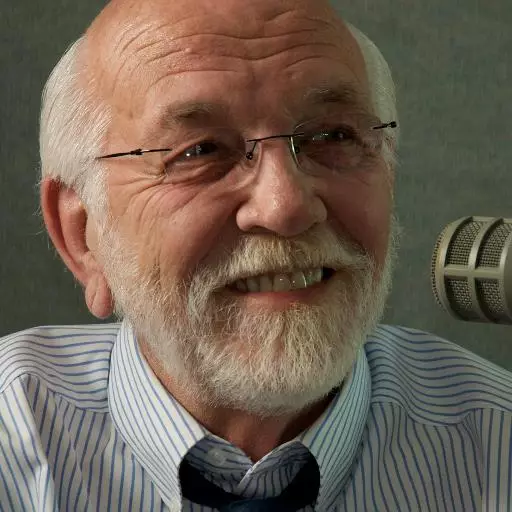
Kevin Burrell | Considering Sparrows | Steve Brown, Etc.


God can speak through a donkey, so why not birds? This week, the Etcetera gang enjoys a winsome and thought-provoking conversation with pastor/author/birder Kevin Burrell about powerful lessons we can learn from our feathered friends.
The post Kevin Burrell | Considering Sparrows | Steve Brown, Etc. appeared first on Key Life.
Voiceover (Male): Birds don't just sing. No, they preach. How? Well, let's talk about it with author, pastor, and ornithologist Kevin Burrell on Steve Brown, Etc.
Kathy Wyatt: He's an old white guy, an author, broadcaster, and seminary professor who is sick of religion. And he's brought friends. Please welcome Steve Brown, Etc.
Matthew: That is the name of the show, Steve Brown, Etc. I am Matthew, your humble guest host. Happy to be here. Dr. Brown will return next week. But we are going to have an unusual show today, and I have really been looking forward to it. We will get to it in just a moment.
Let's first meet the folks who are going to make the magic happen. Jeremy is our producer. He is in the little glass booth. Jeremy, today we are talking about birds, and your last name is Birdsall. Birdsall. I was always told it's Welsh for the guy who sells the birds.
Jeremy: How about that? A bird seller. Amazing. I'm so excited.
Matthew: It sounds a little like a dishwashing soap made from birds. Birdsal. Birdsal? Is that what they wash those little greasy ducks with? That's it.
Jeremy: Oh man, are you saying I should be getting some of that Dawn money? Getting that Dawn money? Oh man, I love it.
Matthew: Our one-man IT department, John Myers, is in the tech bunker. Apple's Tim Cook just announced he is stepping down as CEO, but John, you may not apply for the open position because we need you here. Thank you very much.
Jeremy: He could do it, though. He could totally do it. He's smart enough to do that.
Matthew: Dr. George Bingham is our president here at Key Life. He is the one with the vision, the insights, and the initiative. He is also the guy with the power to order subs every couple of months or so. Respect for the name. The main birdbrain.
Jeremy: But could George be the CEO of Apple? Yes, he could, but no, we need him here. He could absolutely do that.
Matthew: And Kathy Wyatt is the soft feminine side of the program. Kathy, you guys at the Lutheran retirement home just had a spring flea market?
Kathy Wyatt: Can I just tell you something about Lutherans? They know how to raise money. They do it twice a year, and it all goes for wonderful, wonderful causes to help support the ministry over there. $32,000 plus for people's junk. But one person's junk is another person's jewel.
Matthew: I just think it's a genius marketing move that they called it a flea market, not a moving sale. Because we would be moving to heaven and can't take this with us. Get the deals while they last.
Guys, I am so excited for our guest today. Every time in the weeks leading up to this when I have heard about this and I was like, it just puts a smile on my face. We are talking today to Kevin Burrell. He is the co-lead pastor of Stonebridge Church Community in Charlotte, North Carolina. And he has a new book called *Considering Sparrows: What Birds Teach Us About Who We Are, Where We're Going, and the Joy of Following Jesus*. Kevin, thanks for joining us.
Kevin Burrell: It's a pleasure. Thank you.
Matthew: I love it. I heard about the book and I thought, it's going to take details about birds as a jumping off point and then dive into something else. And it's like, no, it is. But we're really going to stay with the birds. That makes me smile so much. It's just such a simplicity and winsome approach to this. So I am excited to dive into this with you. How did you get connected to the world of birds?
Kevin Burrell: Well, they're everywhere. So if you open your eyes for any second, I can think of childhood moments. But I think that where it really captured me, where I was like, I want to keep up with this, I can make a list of birds I've seen. It happened in college. I was on a tropical biology study as a biology major, and we were in Costa Rica. We were in a rainforest, and a keel-billed toucan flew overhead, and I was hooked.
If a toucan does not make you love birds, you've got to check your pulse. It was pretty amazing. And ever since then, that's just been a place where I've gone. And then eventually just noticing my own backyard, I have just grown to appreciate all of God's creation. It is pretty amazing. But it's great when we can get our antenna tuned to maybe just one part of it, and that's been my part.
Matthew: That's neat. Indeed, when you encounter animals, obviously birds are a kind of special place in your heart, but it's just a transcendent kind of thing. So it's cool that this is a conduit where God can speak to you and speak to all of us through that. Tell me about how the book came about. Did you just sit down or was this basically you had been ruminating on this for a while?
Kevin Burrell: No, it's funny. I've learned the term pandemic project. This was a pandemic project. During the pandemic, I'm doing a lot more work on my front porch during the shelter in place. I'm a lot more nature infused in that place, and I started just jotting down some ideas about a couple of posts about birds in my backyard. I'm a pastor. I'm always looking for illustrations. Everything's an illustration. You're trying to find the good ones.
Somewhere along the way, that turned into a blog. I started posting about once a month. The blog is called Ornithology.com. I hope you get the joke there. It's ornithology, but it's theology. That was a John Stott word. He used that. He was a birder.
Somewhere along the way, that turned into a blog. And then I would say a couple years into it, probably with only my mother and a few close friends reading it, Joni Eareckson Tada found it through a friend of a friend. She championed it. She's just a wonderful gift of encouragement. She reached out and said how much she enjoyed this particular post. That turned into one of her radio spots. And then that turned into, if you're ever interested in a bigger project, let me know.
And I wasn't. I was not thinking at all about a book. But maybe a year or so later, I remember telling my wife, I think I'm lazy in calling it humility. Maybe this is a door that really opened that I really maybe should walk through and just see where it goes. So that turned into starting to ruminate on what an outline for a book might look like. And anyway, fast forward to here we are. The book just published last month, March 24th.
Matthew: Terrific. The Bible mentions the birds a lot, doesn't it? I mean, kind of sprinkled throughout everywhere.
Kevin Burrell: Yes. Surprisingly lacking in the book of Philippians, which is what the whole book is about. So I had a friend say, I don't understand, there's no birds in Philippians. I said, I know, I put them there. They're there now.
But it is true. I have a good friend who did write a book about all the birds that are actually in the Bible and the references to them. He came at it in a very systematic approach of the dove is number one and the eagle is number two and just every bird that's mentioned. And yeah, they are. It is a common metaphor that God uses to describe himself or his care or to use his provision. It shows up in so many places when you start to notice it.
Matthew: And you mentioned this in passing, but we'll hit it head-on that the book is kind of a meditation on Philippians. Which I love because you narrowed yourself into a tinier it's like writing a sonnet. You give yourself certain restrictions. A about birds, okay. Birds in the Bible. Birds in Philippians.
Kevin Burrell: I was a little concerned that when I'm trying to pitch this to publishers, they don't even know what shelf they're going to put this thing on. And I didn't either. I hope they figure out what to do with this thing because it is a little unique.
But Philippians is my favorite place in scripture. I've preached through it multiple times in multiple churches. In fact, I'm remembering this one's kind of close to Steve Brown, but when I was in Orlando, I was preaching through Philippians while we were without a senior pastor. So they'd bring in guest preachers and then when they couldn't find somebody, they'd throw me in. But I had preached, I think it was Philippians 2 about humility.
The following week Steve was supposed to preach, and I was laid out because I had just had a knee surgery. So I preached and then I went and had my surgery. When I was listening to the recording of it later, this is what Steve said. It turned out he had picked the same exact passage. And he was told the day before, and he came in and said, well, church, either Kevin was wrong last week and I'm here to set it straight. Or maybe Kevin got it right last week and that'll make up for all the things I'm about to get wrong. Or it could be that in the level of humility, your church is particularly thick and you need to hear it twice. So that was Steve just backing up the truck on Philippians. That was great. That's so Steve.
Matthew: You mentioned that pastors are always on the lookout for sermon illustrations. I remember a cartoon where there was a man looking into a crib and he goes, goodnight, my little sermon illustration. Like kids, animals, history, all that. But more specifically to what this book is about, there's something you mention called creational attentiveness. That feels like a meal. Tell us what does that mean?
Kevin Burrell: Well, that's something that I hope that as a result of the book people might do. And it doesn't mean that they're going to be into birds. But the Lord has revealed himself to us in two places. I mean, there's the special revelation of his word, and then there's his general revelation of his creation that Romans 1 says leaves us without excuse.
I back into places like Psalm 19 where it just says the heavens declare the glory of God, skies proclaim the work of his hands. If that's true, if there's lessons in what he's made, we should be more attentive to it. Outdoors is the place that we go between work and home. We've got the whole heavens before us and we settle for a good HVAC system and a 10-foot roof. Wouldn't it be great if we got out more and saw the lessons in the creation around us?
Matthew: Amen to that. Well, we're talking to Kevin Burrell. The name of his book is *Considering Sparrows: What Birds Teach Us About Who We Are, Where We're Going, and the Joy of Following Jesus*. We're going to be back on the other side of the break with more bird information, and I hope you'll join us. You're listening to Steve Brown, Etc., and we'll be right back.
Voiceover (Male): Whoa, this place is huge. Welcome to the Vault, your home for classic sermons from Steve from the 90s, the 80s, even all the way back to the early 70s. The Vault is a one-of-a-kind online experience where you can explore more than three decades of grace-filled messages. Get the details and check out our free audio sample at Keylife.org/vault. That's Keylife.org/vault.
Steve Brown: Hi, this is Steve Brown, in case you didn't know. One of the main reasons Key Life exists is to remind believers that God isn't mad at his children. Why am I telling you this? Because our weekly email, Key Life Connection, takes the best of the videos, articles, and puts them right in your inbox. We'd love for you to try it. It's free. Go to Keylife.org/subscribe.
Matthew: And thanks for joining us on Steve Brown, Etc. We're talking to pastor, author, and certified bird nerd Kevin Burrell. That's not disparaging. That's a high five, bird nerd.
Kevin Burrell: I take it.
Matthew: His new book is called *Considering Sparrows: What Birds Teach Us About Who We Are, Where We're Going, and the Joy of Following Jesus*. So if you're looking on the bookstore shelves again, it's *Considering Sparrows*. It's not *That's So Raven*. That's a different thing. Kathy?
Kathy Wyatt: That was bad. Okay, in just a minute I'm going to ask you, Kevin, to tell us what the term that you mentioned earlier in the first segment, the ornithology, I'm going to ask you about that. However, in front of me here, we have on our staff here at Key Life, Steve Brown's daughter Robin Demurca, who is a fabulous potter. She's been doing pottery for years, and she did this bird nest which is sitting right in front of me. Now, this is just not an average ordinary everyday run-of-the-mill bird nest. This is a Vogelkop bowerbird nest. Obviously.
Now, just a minute, not to be confused with a satin bowerbird nest. Not that I would know the difference between either one. But anyway, I'm looking in this book that she gave me, and I mean, she's just got it. Put it on camera. Oh yeah, we'll put it on the camera for sure. But she also gave me this, and I wanted to ask if you were familiar with this book, which is called *Nests* by Sharon Beals.
Kevin Burrell: I'm not. Tell me about it.
Kathy Wyatt: Well, I don't know a thing in the world about it. But she being the potter has it, and there's just these great, I mean, these fabulous, fabulous pictures. I'll shoot you an email with some information on it. But actually, I did want everybody to see this, and I wanted you to see this. Are you familiar with this particular bird, Vogelkop? Am I saying it right?
Kevin Burrell: You are, yeah. It's named after a guy named Vogelkop. I bet he had a rough childhood probably.
Kathy Wyatt: Probably. Is there a Burrell bird?
Kevin Burrell: I wish there was. Not yet anyway.
Kathy Wyatt: We should find one. Okay, so tell us about Ornithology.
Kevin Burrell: Sure. Well, that was a word that was coined by John Stott, who was the eminent British theologian, but also I think a lot of people know by now that his passion was birding. So imagine, this has never happened to me, but imagine being invited to speak at some convention or conference or church and then afterwards building in multiple days of birdwatching or having a church of people say, thank you for that wonderful message, now let's take you out back and show you our snowy owls or whatever.
But one of these days, right, it'll be great. But he took a lot of his adventures. He photographed birds, and he wrote a book. It's probably his most unique book. It's called *The Birds Our Teachers*, and it's about 150 photographs that he took over the course of his life of different birds. And then he wrote some analogies and some devotionals that he built into it. Some that made just were really inspiring, others that I think he really wanted to say something about this bird that he had some great pictures of, and so he built it around that. Phenomenal book. So anyway, *The Birds Our Teachers*. And so somewhere in the book he mentioned the term Ornithology just kind of as a passing reference. And I thought, what a great way to describe the gospel according to birds. And so I borrowed that for my blog. And when we were trying to come up with a book title, I had pitched that, and everybody decided it was a really bad idea. So we went with something that people could pronounce and would understand without having to understand the inner bird humor of it.
Matthew: I love it. Mother Internet brings you what you need to know. And I came across a video yesterday about that bird.
Kevin Burrell: Are you serious?
Matthew: Dead serious. Yes. And it's like, this is so interesting because this bird builds this house and they never live in it. It really has no function except to attract a mate.
Jeremy: Then I think it has a function, man. A pretty big one. You know, they don't live in it, that's not the point. The point is he's doing this thing to impress this girl. It's like, yeah, I agree to go to Pottery Barn with the missus. It's the same thing. We have a larger goal in mind. No love language. Thank you.
Kathy Wyatt: So he builds this beautiful thing to trap her and then doesn't let her live in it?
Jeremy: No, to intrigue her, to beguile her, to woo her.
Kathy Wyatt: But then she has no home to live in.
Jeremy: She can live in it if she wants to, man.
Matthew: But he won't be there. They're going to sell it. Make some money. It's a VRBO.
Jeremy: The girl birds are going, okay, this guy's got his life together. He's building stuff.
Kevin Burrell: So that's the thing about the bowerbirds. Each one of them's kind of got their own shtick that they do. And so the Vogelkop, the way that he impresses his mate, he builds this amazing mansion that he doesn't live in, and if he successfully gets a mate, she's going to be the one that actually builds the nest, the functional house.
But then if you look at Chapter 10 of my book, when I was getting into Chapter 3 of Philippians where it says everything that was to my credit I now consider loss compared to the surpassing worth of knowing Christ, I use the satin bowerbird as an example of that. And his shtick is collecting little trinkets that he lays in front of this little picket fence that he makes. And all these trinkets are blue. For some reason his thing is blue plastic or blue trinkets. And so he'll grab blue whatever, pen caps or Q-tips or whatever he can find, and he lays them out in a really methodical pattern.
Nobody understands the pattern to it, and I don't think he does either. He's just trying to do whatever it takes to attract a mate. And these female satin bowerbirds are unbelievably picky. They come and they stare, and if they see something they don't like, they move on. And so I use that to talk about, man, here's Paul laying all of his treasures out, and what's it like to meet with the vacant stare of a derisive lover? What's it like to realize that all the treasure that you've just gathered isn't enough, it's not good enough?
And so that's why Paul calls it rubbish. He calls it loss, he calls it a disadvantage. And what's it look like that you don't always have to live like you're on stage, that you're on display, that you're trying to attract attention and prove your worth? And what if it's a lot better than that? What if your identity's in Christ that you can call all those achievements and all of that, you can call it rubbish and you can have Christ instead?
Anyway, those are all Australian birds. So I haven't seen any of them. I have been to Australia, but I haven't seen any of the bowerbirds. But there's a bunch, it's a whole family of birds and each one of them's got whatever that thing is that they try and put forth to demonstrate their worth to a mate. What a weird bird.
Matthew: What do you take away from, if you're God and you're creating a planet and you've got this animal does this and this does this, it feels like the variety of species is so far beyond what would be necessary functionally. What do you get from that?
Kevin Burrell: God showing off. Right? I mean, that's it. Yeah. No, God could have made one bird, called it bird, it would have had feathers, we would have thought it was amazing. He made 11,000 different species of birds. Yeah, right. It would all have tasted like chicken.
To me that's just another reason for us to lean into the creativity of God. He's given this for us to notice and it gives his glory.
Matthew: There's the proverb that it's the glory of God to conceal a thing and the glory of kings to reveal it. That to me, that's so God. We're so far down the line and yet we're still discovering birds. We're still discovering the Higgs boson. There's so many things he's like, I know you enjoy discovering things and I still have some more presents for you still. Not necessary, but it's like this loving God who delights in us being delighted with him and his creation.
How great is that? So there's so many things that God tells us directly, but there's meaning in how he tells us. We're going to be talking more God and more bird stuff on the other side of the break. We're talking to Kevin and we'll be right back.
Voiceover (Male): Hey, thanks for listening to Steve Brown, Etc. And if you're enjoying the show, would you help us let others know about it? You can share a link, click subscribe on our YouTube channel, or drop us a review on your favorite podcast platform. Thanks much.
Steve Brown: Hi, this is Steve Brown and I'm excited to tell you about a new offer from Key Life called *Living with Steve*. Let me tell you the way it works. I travel with you wherever you go. If you need an entertaining conversation or even a sermon, there I am. That's the good news. The bad news is that it costs a million bucks. But wait, there's good news. You can get everything I've just described with the Key Life app. And for a limited time it's not a million dollars, it's free. Try it now at Keylife.org/app.
Matthew: And thanks for joining us on Steve Brown, Etc. We're hanging out with Kevin Burrell. Keep up with him at Ornithology.com. You got it. O-R-N-I theology.com. And on X @ornithology1.
Kevin, I've always had somewhat of a distant appreciation of mockingbirds, being originally from Tennessee and now in Florida. And they recently tried to change the state bird of Florida to the flamingo, I think. But it remains the mockingbird. I think they voted it down or didn't vote it in. Interesting. So we still have the mockingbird in Tennessee and Florida and a few other states, I think. But talk some about what you learned or what the mockingbird illustrates from Philippians.
Kevin Burrell: They're an amazing bird. And I know that they can be, some people don't like them, they're kind of aggressive at the bird feeders. But around here what I love about the mockingbird, and this is actually this bird is Chapter 14 of the book, is it's a lifelong learner. Like a lot of birds, they've got their one call, they've got their one song. They even learn it in the egg. The parent birds are singing it and they're learning it before they're even hatched or maybe really young.
The mockingbird's always up for a new song. He's always learning. Mockingbirds can imitate up to 150 different sounds. And they do it so well that I don't know if you guys are familiar with this new Merlin app that allows you to identify bird song just off of an app. It's really good. It's put out by the Cornell Lab of Ornithology and it's sharp. It's very, trust but verify, but it tends to be pretty accurate.
But even it gets fooled by the mockingbird. Because the mockingbird will pull out my phone and it'll say that there's 10 different birds out there and it's really just one, it's just the mockingbird and he's really good at it. They can imitate violins, creaking timbers, they can imitate just interesting sounds of waves on the shore. I mean, it's pretty amazing what they can do.
And I love that as a picture of discipleship because I think discipleship is imitation. And so if you're looking for maybe a mascot of what does it look like to learn and then mentor and emulate and mimic, I think discipleship is mimicry and the mockingbird's a great mascot for us.
Matthew: That's awesome. Kevin, I'm sure you've seen this video, but it's a guy outside and he's like, is that a mockingbird? And then it picture cuts to a bird he goes, is that a mockingbird? Well, and do they have their own song? I mean, they are like imitating.
Kevin Burrell: They do have kind of a tell. They've got a couple of sounds where I guess you kind of when you hear that particular sound, it's more of a squawk and you go, okay, that's him. But you can also tell by the fact that he's not going to stay on the same song for very long. He's going to imitate a cardinal for maybe three or five rounds and then he's going to switch to start speaking chickadee or something.
And so when you hear a bird that just keeps rolling from different song to different song and usually three or more repetitions, he's got a cousin called the brown thrasher that does the same thing but he only does it in twos. Always in pairs he'll do chickadee, chickadee, cardinal, cardinal. He just, that's how he breaks it up. And then there's another one called a catbird that does it in ones. He just runs them all together and meows like a cat every now and then. So each one's kind of got their poker tell, you can spot it a little bit.
Matthew: Speaking to the singing, you made this really cool illustration of a bird singing in a cage and Paul singing in shackles. Tell that story because I was like, look at that, that was just this great little portrait.
Kevin Burrell: Well, I love the fact that Philippians is such a joyous book. I think if you were to define Philippians in one word, that would be it. As churches go that Paul's writing to, this seems to be one of the healthier ones, and it's just full of joy.
But he writes the whole thing from prison. And that is a good reminder when you kind of get to the end and you read, wow, he can do all things through Christ who strengthens him. He's not talking about running a marathon or whatever, however we use that verse. He's talking about contentment.
He says, I've known what it's to be in plenty and in want, I can be content in every circumstance through him who gives me strength. And oh, by the way, now I can do all things through Christ. So he's writing that from prison and he's finding contentment there. To me, whatever our situation is, whatever our prison is, this is a good lesson for us. This is a good book for us to camp out in when we're suffering because we recognize that there's joy that's irrespective of our circumstances. It's a joy underneath the suffering.
Paul's in a cage and the cage bird is singing and he is singing with joy. And in fact, it is the cage itself that's amplifying his song that throughout Rome people are coming to know Jesus because Paul's stuck in prison. Not in spite of it, but because of it. And how can God use that?
Matthew: Yeah, and you pulled this thread a little bit further on there where when Paul was in prison, he was being able to expose the gospel to people that he could not have had he not been incarcerated. You're like, wow, that feels like something for us to ponder on when we find ourselves in unfair circumstances. It's like, listen, man, there may be something bigger at play.
Kevin Burrell: We think of it as these guards are that he's chained to these guards. But I think from if you could get the 30,000 foot view from heaven, I think these guards are chained to him. I mean, they're 18 inches from the gospel. And they're captive audience. And that God is intending that for all of these guys on shift hearing the gospel, taking it right back into Caesar's bedroom. He says everybody, even in Caesar's household, knows that I'm in chains for Christ.
Matthew: That is powerful. The lessons we can learn from birds. And we're talking to Kevin Burrell about that. The name of his book, *Considering Sparrows: What Birds Teach Us About Who We Are, Where We're Going, and the Joy of Following Jesus*.
It has kind of a devotional kind of thing and it would be good for families, but at the same time and in the same breath let me say there's a lot of meat here. There's a lot of depth like we've been going over. So yes, definitely great for families, but for adults there's a lot to dig into. And we're going to talk about it more on the other side of the break. You're listening to Steve Brown, Etc. Don't go anywhere.
Steve Brown: Hello, this is Pastor Jerry Kuparys again and I'd like to take a moment to ask you to pray for and give to Key Life. When you pray, ask for wisdom and blessings and that Key Life will continue to spread the message of God's grace for many, many years to come. And if you can give, please give as generous as you are able. And you know that we will be faithful with every gift, big or small. Thank you.
Voiceover (Male): When Christ promised we could live life to the full, he didn't just mean eventually in heaven. Because Jesus didn't come to save us from our humanity, but to restore it. Life with a capital L. Find it now at Keylife.org/store.
Voiceover (Male): What if you could start your day by hanging out in God's word and with some of the most significant theologians, authors, and pastors ever? That's the idea behind the one-year devotional, *God With Us*. Find it now at Keylife.org/store.
Matthew: And thanks for spending time with us here on Steve Brown, Etc. By the way, I heard it from a little bird that if you haven't subscribed to the Key Life email, what's going on with that? It's called Key Life Connection. It's really good. Every Monday morning, 9:00 a.m. Eastern time, you just pop that open. There's some encouraging articles and videos. If you're the kind of person who could use some encouragement at 9:00 a.m. on Monday, then try it out. And who couldn't? Keylife.org/subscribe. Kathy?
Kathy Wyatt: Kevin, I wanted you to give us, if you would, please, a little bit of overview on Chapter 8, which I find really interesting, which is a bird mascot for the church. And you go into some interesting ones that I think you're saying these would not be a good choice. And then you get to one at the end. Can you just share with us a little about that? I found it fascinating.
Kevin Burrell: Sure, yeah. Everybody needs a good mascot, right? So I'll walk through it real quick. But I think when you think about the ways in which historically the church has seen their role in the world, I tried to picture some of those and play it out in bird.
So the first one was the penguin. I love penguins, they're great. But you know, whatever happens with penguins stays with penguins. I mean, they're entirely removed from the rest of the world. And that's probably great for them, they love it that way. But they're irrelevant to what's happening in our life daily lives.
There's an island, St. George, I think island, I can't remember now which one it was, but there's 500,000 penguins on this island. I mean, it's a city of penguins, which is wonderful but entirely irrelevant to us. So a lot of I think a lot of times in the church we have seen a come out and be separate kind of mentality that's been taken to the point of I relinquish my role in the culture. And we lose the opportunity to be salt and light when we do this and we say that we're only going to listen to Christian music and read Christian books and drink Christian milk from Christian cows that we found in the Christian yellow pages. And we become this subculture that is that is really we've surrendered the the role that we're called to play in the world to be a light to the nations.
So that was number one. Number two is a called a potoo. I was told on the audiobook that it's a potoo. I had always had pronounced it pootoo, but but it's this South African bird or Central American bird that is camouflaged. Just amazingly camouflaged. It actually stands on the end of a branch and it sticks its nose out and closes its eyes and you wouldn't know where the branch ends and the bird starts. It's just uncanny how well it camouflages.
And I think that's what happens in the church when we just try and blend in. Like let's get the target off of our back and let's let's take the maybe the aspects of our faith that seem a little edgy or controversial and let's water those things down so that we're not as shocking to the world we don't have to stand out. And so we choose a more palatable position on certain topics and we water down the Bible. When we do this we lose the message of the scriptures.
The first one we lose proximity to people, the second one we actually lose the message itself. And then the third one which is probably the one that I've seen most recently at least on social media and in in my own church experience, not my my current flock, but just it's the blue jay which is a very I love blue jays. They're beautiful, but they're obnoxious. They're mean. They're jerks.
And so how can you have a beautiful you have the capacity to bring something beautiful into the world but you wreck it because you're just you're just picking a fight all the time. And I think that's we love I mean that's what it's almost like that's what Facebook and Twitter were made for, it's just for people to pick fights. And we're not going to win anybody over by just trying to argue down their their petty contradictions on social media.
But I think we take this in it to win it thing. I remember Russell Moore saying we we we treat this like we had the culture then we lost the culture and we have to get the culture back and we'll do it at all costs and we we we just fight our way back in. And I think the message and the the way we communicate the message has to look like the message itself. If the message itself is a message of grace, how in the world is it going to sound like grace when we're being so ornery about it? That's the blue jay.
So I jump to the, you got to have the right the right mascot after you go through all the bad contenders and to me just being inspired by Jesus say, hey, the kingdom of God's like a mustard seed. It's the small thing. The kingdom of God is like yeast, it's like a little pearl of great price. The hummingbird is a beautiful picture of this. And the hummingbird is a picture of our role in the world to transform it. Because the hummingbird is a pollinator.
So as he's buzzing around these flowers he's actually grabbing pollen, he's it's captured in his feathers, he's taking it to the next flower. We think of bees and and butterflies as pollinators, but the hummingbirds one of the best. And so the world is more beautiful because of the hummingbird's presence in it. Like where he comes, he brings life and he brings color and vibrancy. And I want that that's what I want us to be in the world.
I think that whatever position you're in, whether you're you're you're selling widgets or you're a pastor or you're you're a a teacher or a nurse, like those are the places we're called to bring the aroma of Christ, to bring the pollen of another of another world into those places and to transform them. So I hope that it made sense in the chapter at least at the end that maybe we can all aspire to be a bit more transformative and a little bit less either fight or flight or just fight or flight, I guess.
Matthew: That's great, great chapter. That's great. You got to get the right mascot. You don't want to be like my buddy in college who was our our college mascot who got into a fistfight with the other college mascot at a football game during halftime. Really happened. The fighting mascot. That's it. That sounds like a social media post right there. I'm sure that was replayed on the new social media channel called Blue Jay. Nice, right. It was on the news.
Maybe in closing up you could reflect a little on the chapter that matches your title, *Considering Sparrows*.
Kevin Burrell: Yeah. Well, there's that one's from Jesus, right? He says consider the birds. Matthew 6:26. He starts at a low place, something overlooked, and he says now how much more does your Father care for you? Are not two sparrows sold for a penny or he says are not five sparrows sold for two pennies? There might have been a coupon involved there, I'm not sure.
But but he says man, if the Lord knows the falling of a sparrow, like the falling of it. How much more does he does he care for you? And where that enters into Philippians is at that that beautiful part about being anxious for nothing, but with thanksgiving with everything prayer and supplication make your request known to God and there's this peace that passes understanding.
So I think when Jesus is teaching about don't be anxious, he actually uses the bird as a mascot for that. And I think that that helps us know just how wonderful his providence is in our lives.
Matthew: Amazing. I can't let you go without asking you, what is your I know you got to keep you kind of keep a list of birds you've seen. Is there what's your white whale? What's the one that you haven't seen? You got to. So next time we talk to you I'll ask you, hey, have you found the North American Blibbityglob? Which one are we looking for?
Kevin Burrell: Well, if I could get down to Latin American and see a Resplendent Quetzal, that would probably be top of my list. I've been in their in their general area a couple of times and have never seen them, but rumor has it that they're very resplendent. So I'd love to see it.
Matthew: Love it. Love it. Oh man, this has been such a fun show. We've been talking to Kevin Burrell about his book, *Considering Sparrows: What Birds Teach Us About Who We Are, Where We're Going, and the Joy of Following Jesus*. It's not only about birds, it's kind of a meditation on the book of Philippians and larger than that, it's about the joy of knowing God and being forgiven and living in that and sharing that with others. We have one more segment and it's coming up on the other side of the break. Hope you'll stay with us. You're listening to Steve Brown, Etc.
Voiceover (Male): Hey, thanks for listening to Steve Brown, Etc. And if you're enjoying the show, would you help us let others know about it? You can share a link, click subscribe on our YouTube channel, or drop us a review on your favorite podcast platform. Thanks much.
Voiceover (Male): What if you could start your day by hanging out in God's word and with some of the most significant theologians, authors, and pastors ever? That's the idea behind the one-year devotional, *God With Us*. Find it now at Keylife.org/store.
Steve Brown: This is Pete Alwinson, and if you're a guy, I want to show you how to recover and rekindle an intimate, growing relationship with your heavenly Father. Check out *Like Father, Like Son: How Knowing God as Father Changes Men*. Available now at Keylife.org/store.
Steve Brown: Believer, I want you to remember that where sin abounds, grace does much more abound. And you will run out of sin before God runs out of grace. *Grace: The Real Good News of the Gospel*. Find it now on Keylife.org/store.
Matthew: And thanks for spending an hour with us here on Steve Brown, Etc. He could tell us what that bird was if we'd asked him. See, now there's a test. You got to see what's speed round. Hey, in case you haven't heard, we recently launched something called the Key Life Podcast Network. It's a collection of podcasts from Key Life and friends of Key Life that are all about grace. There's a bunch of different subjects, but that's the common thread.
They even let Jeremy and me have a show called *This is the Show*. And a new podcast launched just this week. It's from Drew Hensley. If you listen to this show or watch the show on YouTube, you know him. Great guy. It's called *Still Becoming*. It's talking about, hey, we still don't have our act all together and God has that factored into the plan. So check that out now at Keylife.org/podcastnetwork.
What a fun time with Kevin, right? That was great. And it it is a reminder how much I mean, certainly the gift as part of God's creation that's one of those subtle things that you often don't pay attention to, but there's so much in it. Not only just the beauty of it, but being able to associate it and illustrate and that's cool. He's baked stories into all of these. It's not just a didactic do this, don't do this, this is, but it's just like little packages waiting to be opened. I don't know, which bird that Kevin mentioned would you like to cook up, Kathy?
Kathy Wyatt: I've never had penguin.
Matthew: Oh gosh, can you imagine? From the frozen food. Yes! Yes, yes, yes. It's in the frozen food. Wow. I love it. I just can picture God going, this is going to be hilarious. They're going to love this. Check it out. It's just a joke. It's just up there. Somebody's going to find it one day and you're like, this is you have a whole section of the earth just as a joke just to and there's 55,000 of them in one spot. So many. He's like, and like the angels are like, okay, so they have legs. Should we give them like knees? Like no, no, no, no. No, they're going to fall on their little butts and it is going to be hilarious. And let the fathers carry the eggs around on their feet to keep them warm. It's just a colossal, just love it. And there's so many varieties of them, but none of them can walk, none of them can fly.
He's like, this is going to be gold. And sure enough, sure enough. Where do we learn comedy from if not from our Father? So Kathy, who do we have on next?
Kathy Wyatt: Next time is one of our one of our best friends, Ray Ortlund, who has a new book out that's about five pages long. No, I'm just kidding. It's and it's titled *Eat, Drink, and Be Merry*, and the subtitle, *A Gospel Call to Not Holiness or Whatever, But a Gospel Call to Bold Enjoyment*.
Matthew: Okay, count me in for bold enjoyment and for especially eat, drink, and be merry for any Ortlund that you can round up. I'm down. Well, hope you'll join us for that. And until then, thanks for hanging out with us. Remember, be safe, stay dangerous.
Featured Offer

Are you feeling guilty? Maybe it’s what you said to your husband or wife last night...what you did years ago…the places where you’re struggling right now. What do you do with your guilt? Ignore it or bury it? Or is there another way, one that can handle guilt for good? Guilt can lead us back to Christ to find true and lasting forgiveness. His death paid the debt for all our sins. He loves us that much.

Featured Offer
Are you feeling guilty? Maybe it’s what you said to your husband or wife last night...what you did years ago…the places where you’re struggling right now. What do you do with your guilt? Ignore it or bury it? Or is there another way, one that can handle guilt for good? Guilt can lead us back to Christ to find true and lasting forgiveness. His death paid the debt for all our sins. He loves us that much.
About Steve Brown, Etc.
Key Life exists to communicate that the deepest message of the ministry of Jesus and the Bible is the radical grace of God to sinners and sufferers.
Because life is hard for everyone, grace is for all of us. And grace means that because of what Jesus has done, when you run to him, God’s not mad at you.
All of the radio shows, sermons, books, and videos we produce work together toward one mission: to get you and those you love Home with radical freedom, infectious joy and surprising faithfulness to Christ as your crowning achievement.
Learn more: http://www.keylife.org
About Steve Brown
At Key Life, Steve serves as Bible teacher on the radio program Key Life and the host of the talk show Steve Brown, Etc. Prior to Key Life, Steve served as a pastor for more than thirty years and continues speaking extensively.
Steve has also authored numerous books, including How to Talk So People Will Listen, Three Free Sins, Hidden Agendas and his latest release, Talk the Walk: How to Be Right Without Being Insufferable (now available as an audiobook).
Contact Steve Brown, Etc. with Steve Brown
steve@keylife.org
https://www.keylife.org
P.O. Box 5000
Maitland, FL 32794
In Canada, send requests to:
Key Life Canada
P.O. Box 28060
Waterloo, Ontario N2L 6J8