

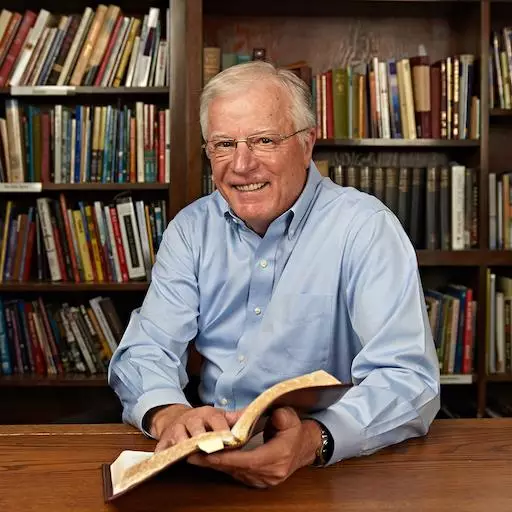
Why Thanksgiving Changes Everything – Part 1 of 2


The Bible tells us to give thanks in everything. Does this mean we must be thankful for illness or loss? In this message, Pastor Lutzer shows why the Bible’s command to be thankful makes sense even when we don’t understand our situation. We can be content with what we have every day of the year.
Announcer: Let us run with endurance, the race that is set before us. Looking to Jesus, the founder and perfecter of our faith. The Bible tells us, in everything, give thanks. Does this mean being thankful for illness or loss? Or being grateful for having no job? Today, why the Bible's command to be thankful does make sense, even when to us, it doesn't. Stay with us. From the Moody Church in Chicago, this is Running to Win with Dr. Erwin Lutzer, whose clear teaching helps us make it across the finish line.
Dr. Erwin Lutzer: Pastor Lutzer, help us celebrate this uniquely American holiday as you speak on why Thanksgiving changes everything, even when things are looking grim. Dave, I have to say that this is a very important message.
And I also want to emphasize that it changed my life. Because when I began to give thanks for everything, I began to put God in every situation. It really does change everything. And so I hope that all who have tuned in today will listen very carefully.
But I'm excited to hold in my hands a brand new devotional entitled Running to Win, written by D.L. Moody, who lived in the 1800s. D.L. Moody and Me. In other words, we took some of the things that D.L. Moody wrote, and I in turn added to what he had written, and as a result, we have this devotional. I think it's going to be a great blessing for you.
At the end of this message, I'm actually going to read a paragraph of what D.L. Moody wrote on Thanksgiving week. You stay tuned.
Announcer: We're so glad that you have gathered together here today. My theme is why Thanksgiving changes everything.
Dr. Erwin Lutzer: At the end of this message, I intend, with God's help, that you would leave here today with an entirely different perspective of your problem, your need, and wherever you are at, because Thanksgiving changes everything.
All of us know that for the most part, we are complaining people. Complaining is a national pastime. We complain about the economy, we complain about circumstances, our health. And most of all, we complain about others who aren't nearly as good as we are, and they are complaining about us. Complain, complain, complain. How do we change that?
One way might be for us to find someone who's worse off than we are, and that's not difficult. You remember the old line: I complained because I didn't have any shoes until I met someone who didn't have feet, and that ended my complaining.
You're in a situation where perhaps you are looking for work and you can't find any, and you're frustrated, and you are tired, and then you're watching television and you see that a tidal wave has come and washed away a village, and you're looking at some children who are newly orphaned. Their mother and father are dead, and they are weeping, and you say to yourself, you know, maybe I still have lots to thank God for. That's one way to become thankful.
But the biblical way is quite different. What the Bible teaches is that we need the faith to believe that there is a plan, and even in the midst of darkness, there's some light, and therefore we can be thankful because the Bible says, in everything, give thanks.
First of all, a word of introduction regarding the meaning of the word Thanksgiving. Thanksgiving and praise are often used interchangeably in Scripture. Enter into His gates with Thanksgiving, into His courts with praise. But there is this difference. Usually, when we think of praise, we think of us doing it together, and we think of praising the attributes of God, His faithfulness and so forth.
Usually, Thanksgiving has more to do with the specificity of our circumstances, what it is that we are enduring in the situations that we find. And it is oftentimes very individual. We individually give thanks.
Now my text today is found in the fourth chapter of the book of Philippians. Philippians chapter 4. I want you to turn to it for these few moments. I want us to see how our perspective can be changed if we understand what Paul is saying here. Remember, he's not in some very good circumstances. He's in prison in Rome, and he's writing an epistle of joy.
But in Philippians chapter 4, verse 4, he says, "Rejoice in the Lord always," and then in case you didn't get it. Sometimes we as preachers are criticized for repetition, but God wants us to repeat it because he knows we need it. Paul says, "Rejoice in the Lord always. Again, I will say, rejoice."
"Let your reasonableness be known unto everyone. The Lord is at hand. Do not be anxious about anything. Wow, but in everything by prayer and supplication with Thanksgiving, let your requests be made known unto God, and the peace of God which surpasses all understanding will guard your hearts and your minds in Jesus Christ."
Three words in verse 6. In everything by prayer. That is the general way in which we voice our requests to the Lord, and supplication. Now that word speaks about you spilling out your soul to God. Hebrews chapter 5, verse 7 says that when Jesus was in Gethsemane, it says that he poured out his soul with prayer and supplication. That's when you are desperate.
And all of us should be desperate, because only desperate people pray, and that's when you spill it all out to God with supplication. But you add Thanksgiving. You add Thanksgiving. And the reason for that is because Thanksgiving is a much broader theme in Scripture, and if you don't add the Thanksgiving, very probably, no peace will come to your heart.
Now, in order for us to understand Thanksgiving, I think I need to spend a few moments giving what I would consider the theology of Thanksgiving. And then we'll see how it changes our perspective, the theology of Thanksgiving.
You see, Thanksgiving honors God because through Thanksgiving, we are affirming the power of God. See, most Christians look at it this way, "I will thank God for the good things, but not the bad things that happen to me. I will thank God when I am promoted, but I will not thank him when I'm demoted. When I walk out of that office and I'm told that my job is over, I'm not going to thank God for that. I'm going to thank him if the boss says you are promoted."
So what we do is we say, "I thank him for the promotions, but not the demotions. I thank him for health, but I will not thank him for cancer. I thank him for good relationships, but I will not thank him for difficult relationships." And so what we do is we have this theory of Thanksgiving that we thank God only for good things.
But that's not biblical. We don't thank God for only good things. George Matheson, who was a Scottish pastor who was blind, imagine being blind, and he's taught by his sister actually, who read all of his books. And so he went to university, and he became a pastor, basically memorized his sermons, memorized all of the songs in the hymnal and wrote some hymns himself.
He said that he was rebuked when he began to realize that he thanked God for his roses, but he didn't thank God for his thorns. He thanked God for the good things, but not the blindness. And then he began to realize he needed to thank God for that too because he says, "It was my tears that brought me to God." And it was he who wrote, "Oh love that will not let me go. I rest my weary soul in thee. I give thee back the life I owe that in thy ocean depths its flow may richer, fuller be." He thanked God also for the blindness.
Now, I'm not saying we should thank God for evil. Last week because I spoke on abuse, several couples came, at least two, and said, "Our children are in an abusive relationship, maybe of an abusive marriage relationship." We don't say, "Oh well, we thank God for that." What we do, though, is we thank God that even in the midst of this, he's going to give wisdom, he's going to give strength, His grace and His mercy is going to come, and like an elastic band, be strong enough to cover the need. And we believe that even here, we shall see the redemptive grace of God. That's the way you give thanks when you're confronted with an issue such as that.
So, Thanksgiving, it extols first of all, the power of God, but also the wisdom of God. It means that we believe God does what is best. Now, here's a challenge. Have you ever wished that you had God's power? Have you ever said to yourself, "I wish I had God's power for 24 hours, what changes I would make in this world. I would eradicate hunger. I'd take care of evil." Imagine being God for 24 hours. That's what we say to ourselves.
But here's something for you to think about. If in addition to having all of God's power, if you also had God's wisdom, you would leave things as they are. Now that takes a lot of faith to believe, but oh the depth of the riches, both of the wisdom and the knowledge of God, how unsearchable are His judgments and His ways past finding out. If you believe in the God of the Bible, you believe that there is a plan. There is a plan. God does not do evil, but God is using evil for an eternal perspective.
And that leads me to the third attribute, namely His providence. Wasn't it even Shakespeare who said that there is a destiny that shapes our ends, rough hue it as we may? In other words, we have some wiggle room within the destiny, but at the end of the day, there is an overriding destiny that shapes our ends. But we don't have to take it from Shakespeare. We have to take it from God who works all things after the counsel of His own will. Wow. You believe that there's a hidden plan. Now, we don't know all the details for sure.
But we don't have to know the details in order to trust that God knows what he is doing. Just because we don't know what the hidden plan is and all of God's purposes doesn't mean that there can't be any. And one of the things that you cannot do is to say that God doesn't care. And we know that that's not an option because when Jesus died on the cross for sinners on behalf of sinners and for us, when Jesus did that, we know that God cares. But we go on believing even though we do not see clearly what his purposes are.
Now, do you understand why whosoever offereeth praise glorifieth me? What we are saying when we praise God is we're thanking him for his power, we're thanking him for his wisdom, we're thanking him for his providence and for his goodness and all of that.
Now, think with me. 16th chapter of Exodus. Don't turn to it because you know the story. The Israelites are there in the desert and they are complaining. They don't like the desert heat. They don't like the food, food, you know, and later on they're going to complain again because they get the same thing: manna for breakfast, manna for lunch, manna for dinner. And then, you know, let's have a bedtime snack. Well, how about some manna? So they are complaining. They are complaining.
And what does God say to Moses? God says that they are not complaining against you, their complaints are against me. Why? God's power led them into the wilderness. It was according to His wisdom, according to His goodness, according to His intentions. They were there by the will of God. And you today, you sought God, he gave you the job that you have, your vocation. He put you in the situation that you are in and you are complaining, and God is saying, "It's not just against your circumstances. I led you into these circumstances." Your complaint, God says, "is against me."
And that's why the Bible says, "In everything give thanks for this is the will of God concerning me," God says. "For this is the will of God." We give thanks to God. And so what we understand is that our complaining, our rebellion is really against God.
Now, you say, "Well, does this mean that we simply collapse into a kind of fatalism, a kind of pacifism that says, well, whatever will be, will be?" No. No, you remember that prayer? Remember that prayer says, "Oh Lord, help me to change the things I can and to accept the things that I can't and to know the difference." That's a paraphrase of a very important prayer that we ought to pray.
We change what we can, but when you're in circumstances that you can't change, when there's nothing that you can do about those circumstances, you accept them, but don't accept them from your boss, don't accept them from your mate. You accept them from God, because God is powerful, God is wise, and God is good, and you believe him. And that's why it says, "Whosoever offereeth praise, glorifieth me."
Now, praise honors God, but look at what it does for us. Now your Bibles are open to the text here. You'll notice it says, and I can't help but begin at the beginning of the section that we read, "Rejoice in the Lord always." Let's pause there. You rejoice not because of what is happening to you necessarily. You don't rejoice in the pain and the hard things. They're not the source of your joy. In fact, as we mentioned, they're often times the source of our complaint.
But rather what you do is you rejoice in the Lord. Now, if you're here today and you're investigating Christianity, or maybe you're a visitor, maybe you're a regular attender, but you do not know Jesus personally. You may be religious, but you don't have a personal relationship with Jesus Christ, you can't understand that phrase. Because it is only when we know him personally, when we can come into his presence, when we connect with him. And we know that we're connecting with him because he's forgiven our sins and we belong to him forever. It is in that set of circumstances, we rejoice in the Lord. We rejoice in who he is. And we rejoice at times when rejoicing seems to be the last thing in the world.
We as Christians should be like an oasis in the desert. I've been in a desert. I've been in the Sinai Peninsula many years ago. You go day after day and then suddenly you see some trees, and because you see trees, you know that there is an oasis there. Because there must be hidden streams feeding that clump of trees, and there are hidden streams feeding it. Very same way. Your circumstances at work in the office are just like everybody else's, but you're not overcome by them. You don't complain like the others. Why? Because you have a hidden source of strength and faith, and you rejoice in the Lord always. That's what the text says.
Now, then also it says, "Let your reasonableness be known unto all men." Reasonableness, we could also use the word patience. Let your patience be known to all men. Because you see, you don't always have to get your way. You don't always have to win. The stress is off because you have resources, inner resources. You know God. And so as a result of that, you can be patient. And then you'll notice it says, "Do not be anxious about anything."
Well, I have to read that again. Does it say that? It does. "Don't be anxious about anything." You say, "Anything?" "I don't know, I'm just reading the text." It includes your circumstances, your health, your relationship, your future. That's what the text says. And then it says, "With prayer and supplication and appreciation, Thanksgiving, let your requests be made known unto God, and the peace of God which surpasses all understanding." It doesn't make sense.
You should be tied up in a knot just like everyone else should be. You should be filled with anxiety like all of the people of the world should be filled with anxiety, and you're not. So it surpasses all understanding, and Paul says, "It may keep your heart and your mind in Jesus Christ." It guards actually. That's the word, it guards it.
Announcer: Well, my friend, I certainly want you to listen to the rest of this message because I believe it'll be a great encouragement for you. But as I mentioned at the beginning, I'm holding in my hands a brand new devotional. It's entitled Running to Win, 365 daily devotions written by D.L. Moody and me. I want to just give you a line of Moody's writing, so that you get some insight into his heart. He said that after he was converted, "I thought that I would have all of my friends converted inside of 24 hours. And I was disappointed when they did not at once see Christ to be the Lily of the Valley, the Rose of Sharon, the Bright and Morning Star. I wondered why it was." "But we need to learn that God alone can do that."
I so much enjoyed the privilege of being able to add to what he wrote, and I think that this devotional will drive you back to a verse of Scripture every single day of the New Year. Here's what you do to receive your copy, and by the way, it would be a great Christmas gift. You can go to rtwoffer.com. That's rtwoffer.com or call us at 1-888-218-9337. Ask for the devotional, Running to Win, 365 daily devotions.
Announcer: It's time once again for you to ask Pastor Lutzer a question about the Bible or the Christian life. When to apply a well-known Bible verse. That's Laura's question today. She says, "I've referenced 1 Corinthians 10:13 in dealing with many of the trials of life. It reads, 'No temptation has seized upon you except what is common to man. And God is faithful. He will not let you be tempted beyond what you can bear. But when you are tempted, he will provide a way out so that you can stand up under it.' I recently heard this passage quoted to a woman whose husband was dying of cancer. Then at a conference, I heard that if we give it to someone who is grieving, it is taking this verse out of context. Can you please elaborate? And in referencing this passage, does it need to be in the context of idolatry only?"
Dr. Erwin Lutzer: Excellent question, Laura.
Featured Offer

This guide to the last days will stoke your trust in God’s glorious plans for the future. You will be empowered to live with boldness and readiness like never before. Click below to receive this book for a gift of any amount or call us at 1.888.218.9337.
Past Episodes
- Changed By The Word
- Children of an Awesome God
- Chiseled By The Master's Hand
- Christ Among Other Gods
- Christ Before Bethlehem
- Christ, God's Gift at Christmas
- Christians In Conflict
- Come and See Jesus
- Cries from the Cross
- Crowning Christ Lord
- Seven Convincing Miracles
- Seven Reasons You Can Trust The Bible
- Seven Secret Snares
- Sharing Secrets With God
- Slandering Jesus
- Suffering Wrong
- Ten Lies About God
- Thanksgiving
- The Battle for America’s Youth
- The Church in Babylon
- The Darwin Delusion
- The Flurry Of Wings
- The High Cost Of Lost Opportunities
- The Invisible War
- The Invisible World
- The King Is Coming
- The Legacy of a Converted Man
- The Man Who Cradled God In His Arms
- The Manger And The Sword
- The Power of a Clear Conscience
- The Triumph of the Gospel
- The Triumph Of Unanswered Prayer
- Till Death Do Us Part
- What Do These Stones Mean?
- What is God Up To
- What Jesus Thinks Of His Church
- What We Believe
- What Would Jesus Do?
- When a Nation Forgets God Interview
- When God Is First
- When God Shows Himself
- When the Spirit Has His Way
- When You've Been Wronged
- Who Are You To Judge?
- Why Good People Do Bad Things
- Why The Cross Can Do What Politics Can't

Video from Dr. Erwin W. Lutzer
Featured Offer
This guide to the last days will stoke your trust in God’s glorious plans for the future. You will be empowered to live with boldness and readiness like never before. Click below to receive this book for a gift of any amount or call us at 1.888.218.9337.
About Running To Win
Running the race of life is hard. But with the Bible front and center and a heart to encourage, Pastor Erwin Lutzer presents clear Bible teaching, helping you make it across the finish line. Since 2011, this 25-minute program has provided a Godward focus and features listeners’ questions.
About Dr. Erwin W. Lutzer
Dr. Erwin W. Lutzer is Pastor Emeritus of The Moody Church where he served as the Senior Pastor for 36 years (1980-2016). He earned a B.Th. from Winnipeg Bible College, a Th.M. from Dallas Theological Seminary, a M.A. in Philosophy from Loyola University, and an honorary LL.D. from the Simon Greenleaf School of Law (Now Trinity Law School).
A clear expositor of the Bible, he is the featured speaker on two radio programs: Running to Win—a daily Bible-teaching broadcast and Songs in the Night—an evening program that’s been airing since 1943. Running To Win broadcasts on a thousand outlets in the U.S. and across more than fifty countries in seven languages. His speaking engagements include Bible conferences and seminars, both domestically and internationally, including Russia, the Republic of Belarus, Germany, Scotland, Guatemala, and Japan. He has led tours to Israel and to the cities of the Protestant Reformation in Europe.
Pastor Lutzer is also a prolific author of over seventy books, including the bestselling We Will Not Be Silenced, One Minute After You Die, and the Gold Medallion Award winner, Hitler’s Cross. Pastor Lutzer and Rebecca live in the Chicago area and have three grown children and eight grandchildren. Connect with Pastor Lutzer on X (@ErwinLutzer) or moodymedia.org.
Contact Running To Win with Dr. Erwin W. Lutzer
media@moodychurch.org
http://moodymedia.org/
Moody Church Media
1635 North LaSalle
Chicago, IL 60614
1.800.215.5001
Monday – Friday
8:00am – 5:00pm CST
Fax Number
1.312.642.4904