

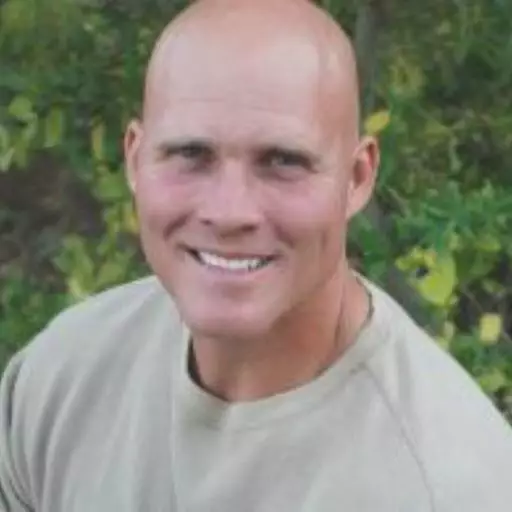
Prophets, Problems & Promises | Pastor Shane Idleman


Guest (Male): Thank you for joining us here at Westside Christian Fellowship, located in Leona Valley, California, one hour north of Los Angeles. Today on Regaining Lost Ground, we hear the third and final part of this clarifying message titled "Prophets, Problems, and Promises."
Puritan preacher and author Thomas Watson once said, "To know that nothing hurts the godly is a matter of comfort, but to be assured that all things which fall out shall cooperate for their good, that their crosses shall be turned into blessings, that showers of affliction water the withering root of their grace and make it flourish more—this may fill their hearts with joy till they run over."
Today, Pastor Shane brings the truth of God’s living word from Acts chapter 15, placing a spotlight on the struggles for most Christians and the promises for deliverance to the faithful. Strengthen your soul and overflow with God’s Spirit in this powerful encouragement to awaken the church and let the fire of God burn deep here on Regaining Lost Ground. You can hear the whole message at Pastor Shane’s YouTube and Rumble channels. Subscribe today. For more information, visit us online at westsidechristianfellowship.org. We also encourage you to hear more truth from Pastor Shane with the Idleman Unplugged weekly podcast. And now, from Westside Christian Fellowship in Leona Valley, California, here is Pastor Shane Idleman.
Pastor Shane Idleman: Even when you’re not sure exactly what to do, as long as it’s a right decision and you’re not sinning, when you step out and trust God, he can direct you. Faith pleases God. The Bible says without faith it’s impossible to please God. Here’s some encouragement: even if you miss it, God can fix it. I tell people that sometimes.
Even if you miss it, God can fix it. Now, this is not permission to go and sin. But somebody will say, "I don’t know if I should take this job or this job. I don’t know what to do. I’m losing sleep." Choose. God can fix it. You’re not going to stay there 45 years if God has other plans. He’ll redirect you in certain areas. Again, as long as it's not—don't go leave your spouse and say, "Shane said he'll fix it." That one you'll get in trouble.
Don’t blatantly sin. But when it’s choices—because when we started the church, I was about 80% sure, I guess. I don’t know. Let’s step out in faith and then God will direct. He directs. It was never even on the radar. Can I tell you a secret? Leona Valley was never on the radar. Lancaster. We’re putting a building in Lancaster. We’re planting a church in Lancaster. I’m going to find a building in Lancaster for years.
Then God said, "You’re close. You just have to drive over this big mountain, this really far away hill." I just laugh because every week I run into people saying, "If you weren’t so far out there, I would be there." No, you just don’t want to go to church, and that’s your excuse. Or my favorite one: "I can’t drive that big hill." Let me tell you a scary one. What’s it called? Tioga Pass? When your brakes are going out in your van. Yeah. We’re going down Tioga Pass from Yosemite and the brakes are heating up.
I’m putting this car in the first gear and just going slow. All these people are honking at me, but I have to get home. Now, that’s a mountain. That’s a hill. You look down, and that’s about a 3,000-foot drop. Anyway, I get on that little rant. It’s just funny because now we drive it like NASCAR. Right over Willow Springs. You get used to it. You know it so well. Where was I? You guys threw me off track here.
Okay, here we go. Division in the church. In Acts chapter 15, after some days, Paul said to Barnabas, "Let’s go. We’re out of here. Let’s go visit the brethren." Great idea. Let’s go. But then Barnabas said, "We’re going to take John, who’s called Mark." Paul said, "No way." In Antioch, he said, "We’re not taking John Mark. No." He insisted that they should not take him because he had departed from them in Pamphylia and had not gone with them to the work.
But the contention became so sharp that they parted from one another. I’m glad this is in here because you know it’s helpful. They had to deal with this stuff. Actually, I think I have the references that they actually mended their relationship. Paul actually mended that relationship. God will use even division. If both people are truly seeking the Lord, sometimes that’s how he breaks off a ministry. It’s sad; we shouldn’t have to do it that way.
But sometimes he’ll use things or he’ll have—"I don’t agree with this. I don’t agree." You work it out; you try to, but sometimes that division—maybe it’s not God’s will to be divided. Maybe they should have done that. I don’t know. I’m only speaking to what the text says. But God used it. They repaired the relationship later. But the contention was so sharp that they actually left. Barnabas took Mark and they went to Cyprus, a way different direction.
Paul chose Silas and they departed. They went their different directions. What did they do, though? In both cases, they strengthened the church. They strengthened the church. I like what John Piper said: "Through Barnabas’s continued mentorship and John Mark’s demonstrated growth, the two successfully repaired their partnership." Obviously, John Mark grew and changed because Paul began to welcome him back. So there was growth.
This is a good reminder for all of us: speaking the truth and learning from it is how we grow and mature. How many people have come through the doors in 16 years? Thousands of people. Talking to thousands. Church hopping and people get offended. Those who grow and mature as strong believers are those who work through the differences. I’ll still run into people who are mad at me from 16 years ago.
Or I run into people who are still mad because we came up here and we didn’t keep a Saturday night service. They’re still holding that in. There must be something nefarious going on. No, I just don’t want to preach on Saturdays and Sundays when I have kids. There’s so much, and I can hold it in, too. I’m not pointing fingers. All of us get hurt. You’re going into Trader Joe’s, you see—"No, time to go do that one later." Because I don’t want to deal with it.
Let’s be real. Or you say, "All right, Lord," and you fix it. "It’s good to see you." But the only way to really grow spiritually is to work through it. Because here’s what happens: "You offended me. The church offended me. I’m not coming back." You’re going to stay stuck in neutral for 10 years. Sorry if that was offensive. Let me go back and rewind 10 seconds. You’re going to stay stuck in neutral. Insensitivity is a pitfall for those with a prophetic preaching style.
He’s right. Absolutely. Because you’re just black and white. There’s no gray area. But on this point, this is how you grow. You work it out. I’m not going to go down a list of things, but there are relationships here that are much stronger. We have much stronger relationships with some people here because we worked through it. You talk. "Man, you offended me when—" "I didn’t mean to do that. Here’s what I meant." "Oh, you meant that?" Because the enemy goes in and plants the seeds.
Doesn’t he? Once you talk, you’re like, "Oh, you didn’t mean it that way," or "Yeah, I’m sorry I did." The enemy’s planting all kinds of seeds. "They don’t like you. They don’t want to use you. They’re holding you back. They’re out to get you. They’re gossiping." None of that happens. So if you’re offended, go to the person. Grow from it. Actually, what’s nice is the relationship actually becomes stronger because you trust them. You’ve worked through it, and it’s stronger.
It’s a wonderful thing, and you grow. That’s how you grow spiritually. The most solid believers you will ever meet have been hurt a lot. Trust me. They’ve been hurt a lot and they grow from it. You don’t want to hold that in, though. You don’t want to hold in the offense. That book, *The Bait of Satan*, became popular because of that. Holding that in hurts you. They’re moving on, but you’re living in that offense and upset. That bitterness is a root of bitterness that grows.
But the other thing is, allow people to speak the truth to you. Don’t always be defensive. Be teachable. Humble. Learn from it. Lord, is there anything I can learn from this? Isn’t that incredible how we grow if we’re not so defensive? 1 Corinthians 11:19—I actually chose the NLT. Do you guys know the difference? NLT is the New Living Translation. What they call it is a dynamic equivalence. It means it’s a thought-for-thought translation.
It’s like a commentary. So I don’t use dynamic equivalence commentary Bibles. I use usually what they call formal equivalence, where they’ll translate the word for word for word. King James, New King James, American Standard—a lot of those are formal equivalence translations. This is like a commentary, but they can be really good. "But of course, there must be divisions among you so that you who have God’s approval will be recognized."
So sometimes we think that a perfect church has no division. Not necessarily. Because we might need to go like, "Hey, we need to talk. You’re telling people this. You’re a gossip. You’re a slanderer. You’re drawing people away." We have to confront. A healthy church has division. But what do you do with the division? How do you handle it is really what sets it apart. Because in a living church that’s moving powerfully with God’s Spirit, guess who else is moving?
The little demons. The demonic realm. There are people who come in—I won’t even get into details—but man, they are hell-bent on causing conflict in the church. They’re not here to be united. They’re here to pick apart and to be critical. But he strengthened the churches. I want to talk about this because I thought it only meant encouragement. But the word actually means to establish, reinforce, and confirm the church in their faith and their doctrinal soundness.
But it implies not just encouraging, but also buttressing. We haven’t heard that word in a while. It means basically to fortify the church against challenges, doctrinal drifts, or opposition. So not only are you encouraging by strengthening the church, you’re not only encouraging, you’re also convicting. How do you strengthen if you’re also not convicting? Because that’s how we get stronger sometimes—to get convicted.
So they would go and they would strengthen the church, and that would mean an encouragement, but it would also be a conviction. Look at some of Paul’s letters. Have you read some of Paul’s letters to the churches? "Man, I wish I hurt your feelings. I hope it did hurt your feelings so you’ll repent." Golly. You guys get mad at me; you should get mad at Paul. I’m kidding. This is a great church, but we all have issues to work on.
Strengthening the church does involve conviction. Here’s where it gets challenging. Every pastor, every lead pastor, is different. They’re uniquely different. How God designed them. Their words. How they speak. I mean, you heard Sean speak. A little bit different than me. We joke a lot. He’s John the Beloved; I’m John the Baptist. But that’s different. That’s how God says, "I’m going to need a Shane for this. I’m going to need Sean or Chris Johnson or Paul out at Lancaster Baptist or Dave Frazer when he did Central Grove."
I know all these guys. They’re different. Instead of judging people, we should say, "Thank God God designed them that way to reach certain people." They’re reaching people I’m not going to reach. This loudmouth bald guy is going to reach certain people. Heck no, they tune me out. But when they can get the loving, quiet monotone—oh, man. But then sometimes some of you need the hammer. That’s why. And so God uses different instruments in the body.
I don’t know why I said that, but it was a good point. Oh, because it’s not just about encouragement; it’s about conviction. So the mark of many ministries will be encouragement, but then others are called by God to convict. And then we wrongly judge: "They’re too encouraging, they’re never convicting." That’s how God designed them. Let them answer to God. Others, their life is about conviction. God called me back to him.
I love our nation. I love revival. I love preaching on repentance. I love calling the church home. My job is to convict until he calls me home. I have no problem with that. But I also know that conviction also encourages. Because the most frequent email we get or in the prayer room: "I’ve been so encouraged." What? How have you been encouraged? Because they got their heart right with the Lord. That’s what conviction does.
So you see how that works? Now, those who are convicted and go home frumpy, yeah, they stay upset. They’ll stay upset for a long time. "I don’t like what that guy had to say. He convicted me. I don’t know who he thinks he is. He doesn’t have to live my life. He doesn’t know who I’m married to. I need that 12-pack to relax. Who’s he think he is?" They’re convicted. But if they repent, then they start—"I’ve been so encouraged."
Encouragement comes after conviction often. Repentance. It’s a beautiful—actually, if you look, I just looked last night for some reason, and it was fitting. The first word, really the first message of the gospel, is repent. John the Baptist came preaching repentance. Jesus said, "Go preach repentance." Peter’s first sermon was on repentance. Paul goes out and preaches repentance. He himself repented. You look at the apostolic church—repentance.
Go out. It’s just the first word of the gospel. It’s what Jesus said: "Go and preach repentance." Peter, very first sermon ever recorded, he said, "You stiff-necked people, you killed Christ. Repent! Repent! Get convicted so then you can be encouraged." Here’s the encouraging thing: many promises in the Bible. We have promises in the Bible that God will fulfill, but it’s often conviction that leads to their fulfillment. Correct?
"If you seek me—" I’m convicted. I’m not seeking him. So I repent, and then I find him. "If you return to me—" Wait a minute, I’m convicted. I drifted from God. So if I respond and return to him, he will lead me back to those still waters. Or an unbeliever, they’re convicted at the gospel that Jesus is the only way, the only life. Nobody comes to the Father except through him. There is no other way at all through him.
They leave convicted and upset, but eventually they fall at the feet of the cross, and then they are encouraged. I’m going to end with a story. It was passed out in 1734 on this note of conviction and saying hard things. In 1734, in a Massachusetts village of Northampton, a black-gowned pastor knelt in prayer. He was burdened for the 1,100 souls of his little town who he was convinced were afflicted with the deadly spiritual disease of the day.
In just a very few minutes, he would be walking up to the pulpit. Should he speak the soft, cushioning assurances that they all wanted to hear—that God selected them for salvation and it is all well with their soul? Or should he tell them what he really believed—that unless they experienced a new birth and faith in Christ, they were headed straight to hell? The decision was made. The tall, thin-faced man arose, adjusted his periwig—those things they wear you saw before—and he entered this little meeting house.
That day in 1734 marked the birth of what many have called the most notable revival in all of American history. The conditions that pressed Jonathan Edwards to his knees that Sunday seemed dark indeed. Gone was the God-fearing generation that had settled the land of America. The new generation had forgotten God. So Edwards said, "The flames of wrath are restrained only by God’s will, and the human strength provide no protection."
His words: "If God should only withdraw his hand from the floodgate, it would immediately fly open, and the fiery floods of fierceness and the wrath of God would rush forth with inconceivable fury." And he said that, "The God that holds you over the pit of hell, much as one holds a spider, is dreadfully provoked." That’s not very encouraging. But boy, was it powerful. That spark is what set the flame for America’s First Great Awakening.
His sermon title was "Sinners in the Hands of an Angry God." So there are times, people, to speak the truth in love and to be bold and be forthright. Because what he said is absolutely true. You are lost without Christ, and you will be destined to hell. That’s the truth. But we don’t want to say it because it hurts people. But sometimes you have to hurt before you help. You have to convict. George Whitefield actually said, "The Christian world is in a deep sleep. Nothing but a loud voice can awaken them out of it."
And of course, with people like him and Edwards and Wesley and other bold people, a nation was awakened. First Great Awakening, Second Great Awakening. That’s our only hope—for us to get back into that position of petitioning God for another move of his Spirit. So if there’s anybody here this morning, listen to that conviction. Listen to the conviction. Don’t ignore it. It’s a wonderful gift from God.
Whether you’re a believer and you’re convicted about certain things or an unbeliever convicted about your lack of knowledge of God and not knowing him, listen to it. That’s a gift from God. It’s the red card in the World Cup. Hello! The referee’s whistle! The conviction, the conviction, the conviction. That means something’s wrong and I need to make it right. Listen to it. Turn and be saved this morning, if that is some of you.
Turn and be saved. Look to Christ and him alone. Or turn—for a believer—turn and be renewed. Be renewed in your faith. That’s all it takes. How many people come to church week in and week out and they’re never renewed because they ignore the conviction? Embrace it today.
Hello, this is Pastor Shane Idleman. I wanted to let our listeners know that due to budgeting issues, we will be removing Regaining Lost Ground from some of the radio stations that we currently air on. Therefore, to continue listening to the sermons, I want to encourage you to follow me and Westside Christian Fellowship on YouTube and Rumble today, as well as other social media platforms.
Again, due to budgeting issues, we will be removing Regaining Lost Ground from some of the stations that we currently air our program on. Therefore, to continue listening to the sermons, I want to encourage you to follow me, as well as Westside Christian Fellowship, on YouTube and Rumble, and also follow us on all other social media platforms as well. If you have questions, please reach out to us at westsidechristianfellowship.org. Again, that’s westsidechristianfellowship.org. Westside Christian Fellowship is located 60 miles north of Los Angeles in Leona Valley, California. Thank you again for listening to today’s message of Regaining Lost Ground, where we are reminded daily: times change, truth does not.
Featured Offer

When I was first diagnosed with cancer, I was amazed at the environment of negativity and fear that encompassed most medical facilities. Not to mention all the well-meaning people who offered tons of advice regarding “what I should be doing” — it was truly overwhelming.
And when YouTube removed my announcement about my diagnosis because I dared to use the word “alternatives,” I said, “Game on!” Their censorship, along with my diagnosis, awakened a renewed fire … a renewed passion for God, truth, faith, trust, and perseverance.
Past Episodes

Featured Offer
When I was first diagnosed with cancer, I was amazed at the environment of negativity and fear that encompassed most medical facilities. Not to mention all the well-meaning people who offered tons of advice regarding “what I should be doing” — it was truly overwhelming.
And when YouTube removed my announcement about my diagnosis because I dared to use the word “alternatives,” I said, “Game on!” Their censorship, along with my diagnosis, awakened a renewed fire … a renewed passion for God, truth, faith, trust, and perseverance.
About Regaining Lost Ground
Today, as we continually drift away in a current of moral decline and relativism, many believe that the battle is too advanced and that we cannot make a difference. Shane, however, believes that we can. He stresses: "If we encourage truth, yet fail to relate to our culture, the church can seem formal and dead. This fact fuels the postmodern movement. But when truth is sacrificed for the sake of relating to the culture, as we see today, the very foundation is destroyed. Truth, the foundational beliefs clearly outlined in Scripture, must remain unmoved and unchanged. Times change, but truth does not!
About Pastor Shane Idleman
Author/speaker, Shane Idleman, has written twelve compelling, biblically-based books, and has obtained quotes from such noted pastors and leaders as Jack Hayford, D. James Kennedy, Tony Perkins, David Barton, Mike MacIntosh, Dr. Peter Lillback, Bob Coy, and Raul Ries, and from organizations such as the National Academy of Sports Medicine, Promise Keepers, American Family Association, and Family Research Council.
What makes this story so inspiring is that Idleman had a promising career as a Corporate Executive, but he left it behind to follow a dream that God placed in his heart after he committed his life to Christ. In his words: "While I had focused on prosperity, wealth, and success, I had starved my soul. I tried everything that the world had to offer, but ultimately, I found that it offered little of lasting value." When asked why he thought that his ministry is being so well received, he added: "The overwhelming response simply reflects the need that we all have for the truths found in God’s Word."
Shane is known for crossing denominational lines. He adds, "We must strive for unity in the essentials, and grace in the non-essentials. We need sound doctrine and the power of the Holy Spirit. It’s possible to be Bible taught, but not Spirit led—straight as a gun barrel theologically, but just as empty. The letter kills, but the Spirit gives life. We desperately need both" (cf. 2 Corinthians 3:6).
Idleman is the founder and lead pastor of Westside Christian Fellowship in Southern California. His sermons, books, articles, and radio program have sparked change in the lives of many. For more, visit WCFAV.org, or ShaneIdleman.com.
Contact Regaining Lost Ground with Pastor Shane Idleman
info@wcfav.org
Westside Christian Fellowship
P.O. Box 3486
Lancaster, California, 93586-3486
(661) 524-6610