

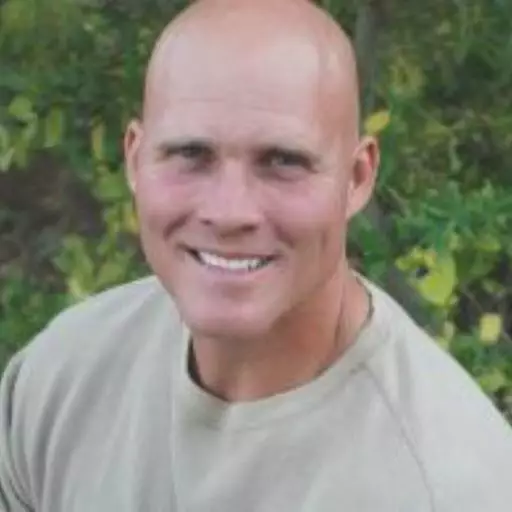
His Love. His Fight! (3 of 5) | Pastor Shane Idleman


Guest (Male): Thank you for joining us here at Westside Christian Fellowship, located in Leona Valley, California, one hour north of Los Angeles. Today on Regaining Lost Ground, we hear the third part of this powerful message of hope titled His Love, His Fight! Christian music artist Phil Wickham starts the song "Battle Belongs," one of his most popular songs, with these lyrics: "When all I see is the battle, you see my victory. When all I see is the mountain, you see a mountain moved. And as I walk through the shadow, your love surrounds me. There's nothing to fear now, for I am safe with you."
Are you going through turmoil, what can only be described as a lifelong battle with sin, depression, or maybe even disease? Do you wake up every day with dread, fear of the unknown, or racked with anxiety by the state of the world? Have you fully surrendered to the love of Jesus? Answer these questions and much more as Pastor Shane gives us the answer to the only way we can navigate all that life has to throw at us.
Are you ready for a change? Are you ready for a spiritual upgrade? Join us right now at Westside Christian Fellowship on Regaining Lost Ground. You can hear the whole message at Pastor Shane's YouTube and Rumble channels. Make sure to subscribe today. For more information, visit us online at westsidechristianfellowship.org. We also encourage you to hear more truth from Pastor Shane with the Idleman Unplugged weekly podcast. And now, from Westside Christian Fellowship in Leona Valley, California, here's Pastor Shane Idleman.
Shane Idleman: One question for you: when was the last time you led somebody to the Lord? I live it out and wait a minute. You're not leading people to the Lord. I don't see any fruit of the Spirit in your heart: love, joy, peace, contentment, long-suffering, gentleness. Don't lecture me because you don't have the fruit of the Spirit. Be careful because you can drift toward modern-day Phariseeism very quickly. It's a slippery slope. We are to be united on the essentials but have grace and love on the non-essentials.
I don't say that in arrogance and wanting to debate and argue. I'm just telling you these are real things that happen at a church. It's sad because the people never grow. They're stuck into the works. So he said, "Here's what I want you to do, Paul: arise and go into the city, and you will be told what you must do." Arise, get up, go into the city, and you will be told what you must do.
Again, he thought he knew God. He actually did doctrinally. Did Saul not know God doctrinally? He knew the Old Testament. He was a Pharisee, a religious teacher, but he did not have a relationship with God. That's the key: having correct theology and doctrine, and also that relationship. But this question comes up often: did Paul have a choice?
How many think Paul had a choice to follow the Lord or not? How many think after that experience and God called him, he did not have a choice? He was called of God. Well, this is going to be interesting. Did God choose Paul? Did God choose for him? Here is why this topic is important, especially as you grow in your faith. You'll see there's division in the church, if you haven't experienced it yet, and it's good to know the different doctrines of the faith that are out there.
You'll often hear even from different religions. Roman Catholics use this a lot: "You guys have so many denominations. We're the true church." The reason there are so many denominations is because there's a lot of freedom. Anytime you look exactly like the same thing in every city and every state, that's more of a cult than a free-flowing move of God's Spirit because we're different. Although there is only one church, the reason for denominations is because people represent themselves differently.
This is one area I want to explain to you, and it's an important question: did God choose Paul? Well, he goes on to say, "You are a chosen vessel." I don't know if John the Baptist had much choice. What happened when he was a baby in his mother's womb? He was filled with the Holy Spirit. Some might say he had to make a decision eventually. Again, I'm just going to present to you both sides. What about the prophets? Jeremiah: "Before you were even born, I formed you. I knit you together in your mother's womb. Why? Because you're going to be a prophet for me to go to the nations."
It focuses on how many of you have heard that term, TULIP? What happened in response to Roman Catholicism? By the way, there have been some Roman Catholics coming to church, and they appreciate when I show the differences. It's not like I'm attacking; I'm just showing people the differences. It's so important.
A quick history lesson: the one true church started with Jesus Christ. First century, second century, third century. Constantine Christianized the Roman Empire. The church would still keep growing, and then they had different councils: Nicaea, Council of Trent—different councils about the Word of God and the canonization of scripture. Then it breaks up: Eastern Orthodox, Western, and different branches.
As it keeps growing, then comes Rome. The actual government of Rome marries the papacy. You can pay to become a Pope. Now the papacy, the Pope, is the final authority and head of the church. Even from the conception, they say, based on—and remember, I was an altar boy, so I was—not now, thank you. But I know a little bit about this. I went to catechism and served under the priest. Apostolic succession: they believe that verse where Jesus said, "Peter, on this rock, you, Peter, I will build my church."
Number one, you know the church is not built on Peter, on man. It's obvious it's built on Jesus. But so Peter is the first Pope, and then so forth to who they have now today. It's called apostolic succession. That took a bad turn again. You can study tenth, eleventh, twelfth, thirteenth century. The Popes, the different things. It became now they decree that papal authority is equal with scripture. And tradition, Catholic tradition, if they vote on certain things, is equal to scripture, and often sometimes above it.
You can just read what they would say: Mary as co-redeemer, immaculate conception, perpetual virginity of Mary. When you're saved, you're not yet out of it yet. You have to go to purgatory. As a Christian, you still have to go be purged of your sin. To me, that's the most blasphemous statement I have ever heard in my life because Jesus said it's done.
What they would do to build St. Peter's Cathedral is they would go around and say, "Hey, put money in this, and your relatives will spring from purgatory." It was something like "when a coin in the coffin springs or sings, a soul from purgatory will spring." So you could actually get your relative out of hell, purgatory, if you paid some money. That sounds pretty bad.
So all this is going on around the 1500s, actually before that. People like William Tyndale, Wycliffe, John Huss, who was burned at the stake. I know you've had a bad day, but they would tie you to a stake like this, and the wood underneath you, and they would burn them on fire in the city square. Why? Because they dared to translate the Word of God into the common tongue of the people. Sounds like the devil's wanting to burn them.
So he tried. Then later on, you'll hear the name Martin Luther from Germany, Ulrich Zwingli in Switzerland, John Calvin in Geneva, John Knox in Scotland. It's this term called Reformers, the Reformation. People say, "That's when you guys started. Protestantism started with the Reformation." No, we actually go back to Jesus' teaching. You want to talk about the one true church? We're trying to follow that. You guys drifted way off course. Mary's not my co-redeemer. I'm not going to pray to Mary. I'm not going to use the Rosary.
By the way, all those people who say Charlie Kirk has become Catholic? They weren't. Erica wasn't holding a rosary; she was holding his necklace. I just talked to the guy who knows them very well yesterday and said not even close. It's a false narrative. But they've got to throw this stuff out there to try to validate. So that's where Protestantism—that's the term if you want to use it. I don't use the term; I just say Christianity from the early church.
Out of this whole thing came TULIP. Something called Calvinism, something called Reformed Theology. What they were doing is they were pulling away from Roman Catholicism, and they became known as Reformed Theology. So they came up with TULIP to help us remember: Total Depravity, Unconditional Election, Limited Atonement, Irresistible Grace, and Perseverance of the Saints.
It's important because Total Depravity: the Catholic Church would say man's kind of good. If you read some of the early church fathers, there are different views, but they would say man is inherently good, where they would say no, man is totally depraved. Unconditional Election, the reason I highlighted these in yellow is they are dealing with Paul. Unconditional election is when God elects you, when God chooses you. It's unconditional; it's not based on anything you do. He says, "I want to take you, you, you, you, and you."
Then Limited Atonement, which is interesting. Not all people who follow Reformed Theology believe in limited atonement because it basically says that Jesus' blood was limited. The reason they say that is because the blood of Jesus is so powerful that if it was applied to everybody, everybody would be saved. And we know that everybody's not saved, so it is limited. I would say it's available for all but limited in its application.
Whoever puts the blood on it, just like they did in the Old Testament, whoever went and put the blood on their door, the death angel passed over them. Irresistible Grace is another interesting concept. When God calls you, like Paul, Jeremiah, John the Baptist, it's irresistible. You can't resist it. And then Perseverance of the Saints: that the true saints of God will persevere. They will not fall away. You cannot lose your salvation. They will never perish. That's Reformed Theology.
Then you have people kind of in the middle who came up with Arminianism. They would question most of those points. Like Total Depravity: yes, man is totally depraved, but God's image in us is not erased; it's effaced, it's damaged. Each extreme, I believe, has some pitfalls when you get to either extreme of these. For example, some Arminians would say God doesn't really know how we're going to choose.
They would say that Jesus' blood is available to all. They would actually say irresistible grace is not taught in the Bible, that we can resist God. Many of them would believe that a person can lose their salvation because of—again, that would take a whole sermon. We've got verses on both sides of that issue, and that's why it's hotly debated. So what do you do with non-essentials? You don't want to argue and fight over it.
You don't want to get—here's the key: trust God and don't get too worked up over the exact details. Take a picture, remember it: trust God and don't get too worked up over the exact details. People fight and they argue over these things. I'm kind of caught. Okay, I see the good points in some of these, and it makes sense that we are totally depraved. But also scripture says repent and believe.
So can I repent and believe? No, you can't repent and believe, a Calvinist would say, because that's something good in you. I've had this discussion. Okay, that's something good in me. So was Adam created with sin? Oh no, of course not. Well, how could he choose evil? He chose to disobey God. So could it be that God gives people the ability to choose, and that choice is neutral? It doesn't mean you've got a good work in you and you're a good person.
But the calls to repentance, the call to believe in Jesus—there are calls out there. I'm not willing that any should perish but all come to the knowledge of God. Repent and believe. So you see that's why there's—and also I found that it will depend on how the person was saved. I've talked to people who like "one day I just didn't like God and he just saved me that day." So they're a Calvinist, of course.
Other people have struggled through it, and the prodigal son story and this, and God finally got me to my rock bottom and I finally said "okay Lord, I repent." So obviously they embrace Arminianism. They believe they had to choose God. So your salvation, the way you were saved, plays a huge role in this as well. Fortunately, what I do is I believe the scriptures that teach we are totally depraved. God is sovereign.
But he calls man everywhere to repent and believe. So I'm going to preach repentance. I'll let him worry about the details. Many of you are so more worried about the me. Let him worry about it. I don't know. Now I also can see though how he does call some people. I don't think John the Baptist had a choice. I don't think Jeremiah had a choice. God might say "I'm putting you, you, you, you, you on my team, and we're going to go against evil."
I can see that as well. It's hard to get into debates on it because you start to go down rabbit trails with any extreme. Because then there's something called double predestination. So if God predestines you to heaven, adoption Ephesians, he predestined you to heaven, that means he automatically overlooks you and doesn't choose you and condemns you to hell.
Personally for me, that's the hardest part for me is when I read that God calls everybody to salvation, people need to repent and believe. Jesus preached repentance. John the Baptist preached repentance. We're all called to preach repentance. We see, but for me to say God only chooses certain people, even though he commands you to repent, you can't repent. So now you're punished because you can't perform what he is asking you to do.
It would be like me punishing a one-month-old child: get up and walk, get up and walk. Oh, you can't get up and walk, so I punish you. So that's the hardest part for me. I don't go to any—I'm not a Calvinist, I'm not an Arminianist or Arminian. Because both are trying to sort through the incredible characteristics of God.
I've got to a point I think I love what Spurgeon said: God's sovereignty and man's responsibility run like two parallel lines, and we don't know where they cross until eternity. Because if I'm going to lean, I'm going to lean toward God's sovereignty, absolutely every time. But I as a pastor, as a preacher, I can't get around the fact that God calls people to repent and believe.
Because of that, here is the weak side of Arminianism: sometimes it can turn into manipulation because they think it's all up to you, all up to you. And so they go "okay, come on, do you want to pray to receive Jesus?" "Not really." "Okay, well, if you don't want to pray, why don't you just—why don't you just hold my hand and squeeze it if you do? Right, just squeeze it." And they're trying to force this salvation because it's all up to them.
However, and I've seen this countless times on the other side, there's really not a motivation to preach. Let's be honest. Whoever's going to get saved today is going to be saved today. You don't need me. So good luck.
Featured Offer

When I was first diagnosed with cancer, I was amazed at the environment of negativity and fear that encompassed most medical facilities. Not to mention all the well-meaning people who offered tons of advice regarding “what I should be doing” — it was truly overwhelming.
And when YouTube removed my announcement about my diagnosis because I dared to use the word “alternatives,” I said, “Game on!” Their censorship, along with my diagnosis, awakened a renewed fire … a renewed passion for God, truth, faith, trust, and perseverance.
Past Episodes

Featured Offer
When I was first diagnosed with cancer, I was amazed at the environment of negativity and fear that encompassed most medical facilities. Not to mention all the well-meaning people who offered tons of advice regarding “what I should be doing” — it was truly overwhelming.
And when YouTube removed my announcement about my diagnosis because I dared to use the word “alternatives,” I said, “Game on!” Their censorship, along with my diagnosis, awakened a renewed fire … a renewed passion for God, truth, faith, trust, and perseverance.
About Regaining Lost Ground
Today, as we continually drift away in a current of moral decline and relativism, many believe that the battle is too advanced and that we cannot make a difference. Shane, however, believes that we can. He stresses: "If we encourage truth, yet fail to relate to our culture, the church can seem formal and dead. This fact fuels the postmodern movement. But when truth is sacrificed for the sake of relating to the culture, as we see today, the very foundation is destroyed. Truth, the foundational beliefs clearly outlined in Scripture, must remain unmoved and unchanged. Times change, but truth does not!
About Pastor Shane Idleman
Author/speaker, Shane Idleman, has written twelve compelling, biblically-based books, and has obtained quotes from such noted pastors and leaders as Jack Hayford, D. James Kennedy, Tony Perkins, David Barton, Mike MacIntosh, Dr. Peter Lillback, Bob Coy, and Raul Ries, and from organizations such as the National Academy of Sports Medicine, Promise Keepers, American Family Association, and Family Research Council.
What makes this story so inspiring is that Idleman had a promising career as a Corporate Executive, but he left it behind to follow a dream that God placed in his heart after he committed his life to Christ. In his words: "While I had focused on prosperity, wealth, and success, I had starved my soul. I tried everything that the world had to offer, but ultimately, I found that it offered little of lasting value." When asked why he thought that his ministry is being so well received, he added: "The overwhelming response simply reflects the need that we all have for the truths found in God’s Word."
Shane is known for crossing denominational lines. He adds, "We must strive for unity in the essentials, and grace in the non-essentials. We need sound doctrine and the power of the Holy Spirit. It’s possible to be Bible taught, but not Spirit led—straight as a gun barrel theologically, but just as empty. The letter kills, but the Spirit gives life. We desperately need both" (cf. 2 Corinthians 3:6).
Idleman is the founder and lead pastor of Westside Christian Fellowship in Southern California. His sermons, books, articles, and radio program have sparked change in the lives of many. For more, visit WCFAV.org, or ShaneIdleman.com.
Contact Regaining Lost Ground with Pastor Shane Idleman
info@wcfav.org
Westside Christian Fellowship
P.O. Box 3486
Lancaster, California, 93586-3486
(661) 524-6610