

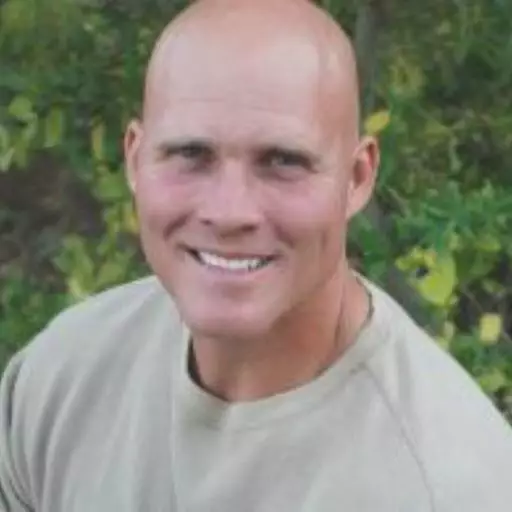
Assessing The Damage | Pastor Shane Idleman


Pastor Shane Idleman: The favor of God, struggle-free. But you'll never see that, especially in Nehemiah. There's two little stink bugs, Sanballat and Tobiah, and they harass him every step of the way. Even when he's building the wall, they said, "Hey, why don't you come down and let us talk?" And he said, "I'm not going to stop the work just to come and meet with you."
So assessing the damage involves taking a hard look and making hard decisions, just like Nehemiah had to do. What do you need to do? What damage do you need to assess? What hard decisions need to be made?
Guest (Male): Thank you for joining us here at Westside Christian Fellowship, located in Leona Valley, California, one hour north of Los Angeles. Today on Regaining Lost Ground, we hear part one of the message titled, Assessing the Damage, and it's from the sermon series Learning from Nehemiah. Reverend and writer John Newton, often known as the author of the famous hymn Amazing Grace once said, "Through many dangers, toils, and snares, I have already come. 'Tis grace has brought me safe thus far, and grace will lead me home."
Today, Pastor Shane encourages us to lift our eyes to heaven, keeping our heart and mind guarded by our loving God the Father. We encourage you to listen to this message of hope, as you present your requests to God, allowing His peace to fill you. That peace that passes all understanding found only in a personal relationship with Jesus Christ.
Regaining Lost Ground is sponsored by the generous supporters of the ministries of Westside Christian Fellowship. For more information, visit us online at WestsideChristianFellowship.org. We also encourage you to hear more truth from Pastor Shane with the Idleman Unplugged weekly podcast, and please be sure to follow us on most social media platforms. And now, from Westside Christian Fellowship in Leona Valley, California, here's Pastor Shane Idleman.
Pastor Shane Idleman: Nehemiah chapter 1. I'm hoping to get through a couple chapters each Wednesday. Nehemiah chapter 1, and it's interesting because the book of Ezra and the book of Nehemiah were both written as one book. And I wish I had time to give the historical background because it's very interesting. The nation of Israel, as most of you know, were conquered. They were taken captive for 70 years.
And what happened is somebody by the name of Zerubbabel went back to Jerusalem to rebuild the temple. And then Ezra went back to rebuild the temple and helped rebuild. And then Nehemiah, where we're at now, went back and helped rebuild the wall around the temple. And all of that was probably about an 80 or 90-year period.
Here's where the reign of the kings started: Saul, David, Solomon, this whole period here. Then it was divided to the northern and southern kingdoms, Israel and Judah, this whole period here. Looks like 300 and what some years, 350 some years. And then Israel, because of disobedience, right here was conquered.
That's that famous verse I like to quote that when God says, "I sent messengers to my people to warn them, rising them up early and sending them, because I had compassion my people, but they did not listen to me." And judgment came. So they were conquered right here. And then they went into exile for 70 years.
But as God promised in in in Daniel and different passages, that they would come out of exile, meaning they were in captivity. So here is where the book of Esther was written. So here is where Ezra got involved and here's where Nehemiah got involved, to rebuild the city of Jerusalem, to rebuild the temple, and the different places. Does that make sense?
Wonderful kingdom here, broke up northern southern kingdoms. They were they were fighting against God. God judged them and they were they were taken captive for 70 years. And then they began to rebuild the city of Jerusalem and the wall here. However, it was never as good as the formal former or the past setup of of Israel. They still were in held by a different nations and different things.
So let's look at Nehemiah chapter 1, and Nehemiah is a cupbearer. And a cupbearer was a very significant role because they would actually check the wine or the drink before the king drank it in many cases. Because how would people die back then often? Through poisoning. So he was a cupbearer, quite a position there, if there's poison in it, you're going first.
So he would take that cup, he would drink of it. Nothing would happen for a little while, and then he would give that cup to the king. And that king then would would drink. Or he would maybe pour it into a different cup, and maybe a pitcher pitcher of of juice and then he would pour the king the rest of it once he verified that it wasn't poisoned. So he's in a very good spot. He's an influencer in the government.
So what Nehemiah is going to do, he's going to assess the damage of what's going on in Jerusalem. And Nehemiah's not even there yet. He's not in the area of Israel. He's he's far away and he's going to ask the king for protection to go and and visit the people. But let's read what what he wrote. Nehemiah chapter 1. Actually it could have been Ezra writing it.
The words of Nehemiah, the son of Hacaliah. Something like that, right? It came to pass in the month of Chislev, in the 20th year, as I was in Shushan, the citadel. A lot of hard words in that first one. That Hanani, one of my brethren, came with men from Judah and I asked them concerning the Jews who had escaped, who had survived the captivity, and concerning Jerusalem.
And they said to me, "The survivors who are left from the captivity in the province are there in great distress and reproach. The wall of Jerusalem is also broken down and its gates are burned with fire." So he's he's asking, "How are the people of of of God doing?" Well, they're not doing good. They're in distress. The the wall is broken down. The the gates representing entrance and, you know, these gates are massive iron gates, all the gates are down, they're on fire. Uh, they've been burned and the city is in disarray.
The survivors who are left from the captivity in the province are there in great distress and reproach. The wall of Jerusalem is also broken down and its gates are burned with fire. So what he saw here was distress, distress and disappointment in what God had done. And that should fuel, that often fuels motivation.
You'll remember the sermon I gave Sunday, seeing America in the state it's in, the distress it's in, the disappointments and things that often fuels motivation to do something. So don't let distress always get you down. Sometimes it's a motivating factor. It can help. Does anybody need any help, need any motivation? Right? And and often it's the distress and seeing things, hey, this isn't right.
I I'm assessing the damage. This is there's something wrong, whether it's your personal life, whether it's your family, whether it's a church, whether it's your workplace. There's a holy discontentment and we and it forces us to do something. That's what Nehemiah did. And the wall that was to protect them is now broken down. The gates were burned. So everything is in shambles.
And gates were actually a place of vulnerability and access. So they could go through the gate or they could close the gate. It was a place of vulnerability in the city. If those gates were down, the enemy could come right in, just like a stronghold in our own lives. So what gates, vulnerable access points, have been breached in our own lives, is the question we might want to ask. Are is there access points? Is there is there is there any area where we're vulnerable, where the enemy's coming in, where he's the gates have been burned and there's a there's a place of entrance for a stronghold?
That's where we have to reassess the damage, like Nehemiah. We have to say, okay, there's some damage here. The enemy's coming against me in this area. I need to make some radical changes in order to prevent this. And they had the temple built at this time, but not the wall, the protection. And it's interesting if you read Ezra, the people had outward movement. Have you heard me say before, "going through the motions?"
Or you've heard that, "going through the motions?" It's it's they had outward worship. They were going to the temple, they were worshiping, but there was nothing going on in the heart. The heart was dead and decaying. And that's something all Christians have to be careful of, because usually it's the person who is the last to see the decay in their own lives.
Others see it, right? We see it happening, but usually it's the person if pride comes in, they're the last to see it. And it's an area it's an area of decay that can be that can come in just like it was happening here in in in Nehemiah's time. So it was, verse 4, "When I heard these words, that I sat down and I wept, and I mourned for many days. I was fasting and praying before the God of heaven."
So Nehemiah heard these words. It's like what we see, we see the state of our nation, we see the state of the church, and it should break our heart sometimes. We don't want to live in that state, but there there's there's there's tears, there's there's there's a weeping that should take place, a mourning. And what did Nehemiah do? Well, here's that word again. Let's circle it. Fasting.
Where's this? It's it's everywhere. So that was his response. It's fasting and prayer. Because what fasting does, I'll remind you, it helps to starve the flesh. It gets the fleshly appetites out of the way. It gets and it it begins to starve the flesh and we're filled with the spirit. You you if you marry that with prayer, that's powerful.
And that's one of the things I want to do a little bit as we're praying about the Wednesday night service, what to do in that, is I want to incorporate some fasting and prayer. "Okay, Lord, I'm I'm going to deny myself food, and I want to seek your will in this area." That's all Nehemiah was doing. Because it is hard if we're constantly full and we want to pray, it's hard. It's difficult.
The flesh will prevail. The flesh will say, "No, let's take a nap." "No, let's sit down and and watch a good show." "No, let's just go to bed. It's late." And that's what fullness does. Being full of the spirit and full in the belly is is kind of hard sometimes to have both those operating. Of course, food is good. We need it, we enjoy it. God gave it to us. But if that's the predominating influence in our life, then it's going to be harder to hear from God.
Especially when you want direction. Is anybody wanting direction? I'm guessing probably everybody in this room. Fasting and prayer. Fasting and prayer will open that door. So assessing the damage, what's happening and how can I correct it, is what Nehemiah was doing. That was the title of the message, assessing the damage. So Nehemiah heard about the damage. He went to God in prayer and fasting. He assessed everything. He said, "Okay, how can I make a difference?"
And then verse 5, "And I said, I prayed, 'Lord God of heaven, O great and awesome God, You who keep Your covenant and mercy with those who love You and observe Your commandments. Please, let Your ear be attentive to and Your eyes open, that You may hear the prayers of Your servant which I pray before You now, day and night for the children of Israel Your servants, and confess the sins of the children of Israel, which we have sinned against You. Both my father's house and I have sinned.'"
"We've acted very corruptly against You and have not kept the commandments and the statutes, nor the ordinances which You commanded Your servant Moses." So what he's doing here, and this is a a good part, a good reminder for us when we pray, pray, he's positioning himself to hear to for God to hear him even more so. He's reminding God, "Hey, listen, we are a a a people who have done wrong. We are repenting. I acknowledge this." He's acting as an intercessor. He's interceding on behalf of the people.
"So God, hear your the prayers of your people, intercede for us." He's he said, "You who keep Your covenant and mercy with those who love You and observe Your commandments." So he's acknowledging, "God, we've fallen off course." Been there? Acknowledge it. "Lord, we've fallen off course. I need to get back on course. You're a God of mercy and love. Lord, hear the prayers of Your people." And that's really the prayer that God hears. It's a repentant, broken heart praying out.
And Nehemiah had the heart of an intercessor. If you truly want to pray for your family, if you truly want to see God make a difference, you have to pray as an intercessor. You intercede. You feel the pain. You feel the emotion. It's not just a quick prayer that really doesn't matter to you. I found if it doesn't matter to me, it might not matter to God. Now, of course it matters to God. It's just a play on words.
But if it doesn't matter to me, God sees the sincerity of my heart, or the lack thereof. And when it comes to answering prayers, if it doesn't matter to me, he's not inclined to answer a prayer that I pray half-heartedly. "Well, Lord, do this, it's really no big deal." He hears the groanings of his people. He hears the travailing. He hears the crying out, "Lord, You have to do something. I'm desperate for You. Unless You move in this area, I can't do anything. God, would You move?"
So he's asking, "Lord, what do I do?" And then verse 8, "Remember, I pray, the word that You command Your servant Moses." Now, he's going to remember what God told the children of Israel. "If you are unfaithful," which they were, "I will scatter you among the nations," which he did. "But if you return to Me and keep My commandments and do them, though some of you were cast out to the farthest part of the heavens, yet I will gather them from there and bring them to the place I've chosen as a dwelling for My name."
This is a good reminder for us as well. If you return. If something is not going right, if you're off balance, if if if if the enemy's come in and and begin to do something in your life that you know is against God's will, if you simply return and get back on track, God will honor his commitment. He will honor his word. Verse 10, "Now, these are Your servants and Your people whom You have redeemed by Your great power, and by Your strong hand. O Lord, I pray, please let Your ear be attentive to the prayer of Your servant and to the prayer of Your servants who desire to fear Your name, and let Your servant prosper this day I pray, and grant him mercy in the sight of this man, for I was the king's cupbearer."
Now, here's where it gets gets interesting. Chapter 2. "And it came to pass in the month of of Nisan, in the 20th year of King Artaxerxes, when wine was before him, that I took the wine and gave it to the king. Now I had never been sad in his presence before. Therefore, the king said to me, 'Why is your face sad, since you are not sick? This is nothing but sorrow of heart.'" So he could see that Nehemiah was carrying the pain of the people. He could see that he was upset. He could see that he was he was groaning inside.
Have you ever been that hurt where people can tell, something's wrong? And Nehemiah and the king asked, and this can be scary because you're not supposed to be sad in the king's presence. The king could say, "Off with your head." But he couldn't hide his feelings. "So I became dreadfully afraid and said to the king, 'May the king live forever. Why should my face not be sad when the city, the place of my father's tombs lies in waste and its gates are burned with fire?' Then the king said to me, 'What do you request?'"
So Nehemiah was saying, "Why shouldn't I be sad? Why shouldn't I be sad when the place of my father's tombs lies in waste? Why should we not be sad when our families, when our nation, when we look around? Why why should we not be sad when the place that people died for, for the freedoms that we cherish and we take for granted? Why should we not be sad when this is falling into ruins and we see it before our very eyes?" Because that sadness can prompt action. And I would say the same thing today, wouldn't you? Why should I not be sad?
But see, we don't live in that sad state. We we're not to walk around woe is me and depressed all the time, but that sadness to see holy discontent should make us, actually motivate us to take action on something. "Okay, I'm going to do something. I'm not going to live in this depressed state. I'm going to take action. I'm going to do something. I'm going to make a difference. I'm going to be joy-filled most of the time. I'm going to be seeking God, but there comes a time and a place where we have to say, 'Lord, enough is enough.'"
We need to take action. "Lord, show me what that looks like." "So I prayed to God in heaven and I said to the king, 'If it pleases the king.'" Now this much must have been a very quick prayer. Right? The king said, "So what do you request?" And he said, "Well, I prayed to God and then I said to the king." So it must have been one of those, "Lord, please help me right now. God, please help me, give me the right answer. I need you to speak to me quickly." He didn't have a lot of time.
And he said to the king, "If it pleases the king and if your servant has found favor in your sight, I ask that you send me to Judah, to the city of my father's tombs, that I may rebuild it." "Then the king said to me," the queen also sitting beside him, "How long will you journey? How long will the journey be? And will you when will you return?" "So it pleased the king to send me and I set a time." So he's saying, "Let me go and make a difference." I know this is a lot to read, but I'm trying to trying to get through it so you can see the story in the background.
So he basically said, "Let me make a difference." Then verse 7, "Furthermore, I said to the king, 'If it pleases the king, let letters be given to me for the governor of the region beyond the river, that they may must permit me to pass through till I come to Judah.'" And then I'm just going to skip down verse 9, um, and a nutshell, the governors gave him permission to go through. So here's what happened. He wrote letters to the the governors of the area that he was going to go through. Because I believe if I had a map, I could show you. He's coming down from where he's at to Jerusalem. So he had to get permission to go through all these lands and all this area.
So not only did he have the favor of the king, guess what else he had? He's going to have struggles. Welcome to the Christian life. Any time because we want the we want the favor struggle-free life. That might be a good book title. The favor of God, struggle-free. But you'll never see that, especially in Nehemiah. There's two little stink bugs, named Tobiah and Sanballat and Tobiah. And they harass him every step of the way. Even when he's building the wall, they said, "Hey, why don't you come down and let us talk?" And he said, "I'm not going to stop the work just to come and meet with you."
And then they would tease him later. They said, "Even if a fox runs on your wall, it's going to fall down." Contractors, if you've ever built something and you somebody tease you, say, "That that block wall, it's just going to come crumbling down," it's so as as soon as a fly lands on it. So he they there this is what's happening here. There's favor and there's struggle. It often goes hand in hand. We have the favor of God, we're going in the will of God and then here comes the struggle.
And what's the struggle often designed to do, or the discouragement? It's designed to knock us off track. That's why it comes alongside. It's to knock us off track, but it also strengthens us. The person who's been through a lot of struggles is very strong when it comes to spiritual fortitude. So now Nehemiah is going to view the wall of Jerusalem in verse 11. "So I came to Jerusalem and was there three days. Then I arose in the night and I and a few men were with me. I told no one what my God had put in my heart to do at Jerusalem, nor was there any animal with me except the one on which I rode."
So, what happened here? He told no one what God had put in his heart. I think that's good advice for someone tonight. Right? We don't always have to go around doing this. Look what happened to Joseph. "Hey, I had a dream that all of you are going to submit to me." And it got him thrown into a a pit and sold into slavery. Of course, God was in that in the sovereignty and what they intend for evil. God designed it for good. But this is good advice for us. He goes there, he's looking around, "I'm not going to tell anybody yet what God has put in my heart."
And verse 13, "And I went out by night through the Valley Gate to the Serpent Well and the Refuge Gate, and viewed the walls of Jerusalem which were broken down, its gates which were burned with fire." Now, it's interesting, this Valley Gate would lead to a valley. Um, they would have other gates that would lead to different areas. It's a huge city. And you would go out the different gates to different areas. So all the gates are burned with fire. "Then I went on to the Fountain Gate and to the King's Pool, but there was no room for the animal under me to pass." And then verse 15, "So I went up in the night by the valley and viewed the wall, then I turned back and entered by the Valley Gate, and so returned."
"And the officials did not know where I had gone, nor what I had done." "And I didn't even tell the Jews, nor the priests, nor the nobles, nor the officials or the others who did the work." So assessing the damage involves taking a hard look and making hard decisions, just like Nehemiah had to do. What do you need to do? What what damage do you need to assess? What hard decisions need to be made? Because I I I here here's really the point I want to get to across tonight, that a lot of people need to hear, is when you have to make a hard when you need to make a change. What's when you say, "Okay, this needs to change." Anyone been there? Or just me?
God, this has to change. Hard decisions need to be made in order for that to actually change. Hello, this is Pastor Shane Idleman. I want to tell you about a new booklet I just released, titled The Dark Night of the Soul. This book came from a very challenging season in my own personal life. Dark seasons reveal what we actually believe, not just what we say we believe. The phrase "The Dark Night of the Soul" captures a moment we all dread. It's the moment when the floor drops out from underneath us and we realize that we are not in control and we come face to face with something we cannot fix. Time and time again, God demonstrates that what appears to be the end of something is actually only the beginning. So again, I want to encourage you to take time today and download my new booklet The Dark Night of the Soul for free right now at WestsideChristianFellowship.org. Again, download it for free at WestsideChristianFellowship.org. It is on Amazon, but we're encouraging people to go to our church website where they can actually download the booklet for free, the PDF, and share it with friends and family at WestsideChristianFellowship.org.
Guest (Male): Westside Christian Fellowship is located 60 miles north of Los Angeles in Leona Valley, California. Thank you again for listening to today's message of Regaining Lost Ground, where we are reminded daily: Times change. Truth does not.
Featured Offer

When I was first diagnosed with cancer, I was amazed at the environment of negativity and fear that encompassed most medical facilities. Not to mention all the well-meaning people who offered tons of advice regarding “what I should be doing” — it was truly overwhelming.
And when YouTube removed my announcement about my diagnosis because I dared to use the word “alternatives,” I said, “Game on!” Their censorship, along with my diagnosis, awakened a renewed fire … a renewed passion for God, truth, faith, trust, and perseverance.
Past Episodes

Featured Offer
When I was first diagnosed with cancer, I was amazed at the environment of negativity and fear that encompassed most medical facilities. Not to mention all the well-meaning people who offered tons of advice regarding “what I should be doing” — it was truly overwhelming.
And when YouTube removed my announcement about my diagnosis because I dared to use the word “alternatives,” I said, “Game on!” Their censorship, along with my diagnosis, awakened a renewed fire … a renewed passion for God, truth, faith, trust, and perseverance.
About Regaining Lost Ground
Today, as we continually drift away in a current of moral decline and relativism, many believe that the battle is too advanced and that we cannot make a difference. Shane, however, believes that we can. He stresses: "If we encourage truth, yet fail to relate to our culture, the church can seem formal and dead. This fact fuels the postmodern movement. But when truth is sacrificed for the sake of relating to the culture, as we see today, the very foundation is destroyed. Truth, the foundational beliefs clearly outlined in Scripture, must remain unmoved and unchanged. Times change, but truth does not!
About Pastor Shane Idleman
Author/speaker, Shane Idleman, has written twelve compelling, biblically-based books, and has obtained quotes from such noted pastors and leaders as Jack Hayford, D. James Kennedy, Tony Perkins, David Barton, Mike MacIntosh, Dr. Peter Lillback, Bob Coy, and Raul Ries, and from organizations such as the National Academy of Sports Medicine, Promise Keepers, American Family Association, and Family Research Council.
What makes this story so inspiring is that Idleman had a promising career as a Corporate Executive, but he left it behind to follow a dream that God placed in his heart after he committed his life to Christ. In his words: "While I had focused on prosperity, wealth, and success, I had starved my soul. I tried everything that the world had to offer, but ultimately, I found that it offered little of lasting value." When asked why he thought that his ministry is being so well received, he added: "The overwhelming response simply reflects the need that we all have for the truths found in God’s Word."
Shane is known for crossing denominational lines. He adds, "We must strive for unity in the essentials, and grace in the non-essentials. We need sound doctrine and the power of the Holy Spirit. It’s possible to be Bible taught, but not Spirit led—straight as a gun barrel theologically, but just as empty. The letter kills, but the Spirit gives life. We desperately need both" (cf. 2 Corinthians 3:6).
Idleman is the founder and lead pastor of Westside Christian Fellowship in Southern California. His sermons, books, articles, and radio program have sparked change in the lives of many. For more, visit WCFAV.org, or ShaneIdleman.com.
Contact Regaining Lost Ground with Pastor Shane Idleman
info@wcfav.org
Westside Christian Fellowship
P.O. Box 3486
Lancaster, California, 93586-3486
(661) 524-6610