

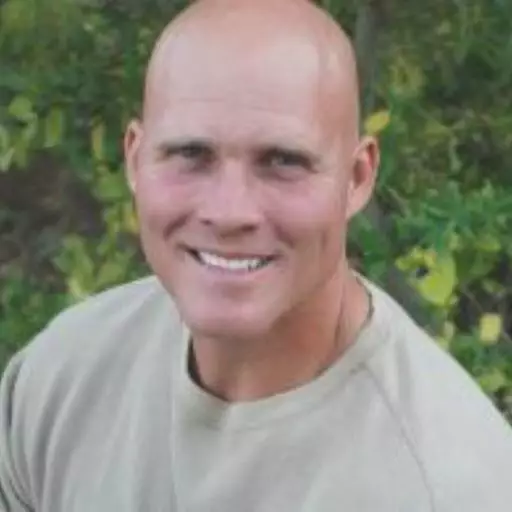
A Fresh Perspective On Healing Part 1 - Pastor Shane Idleman


Shane Idleman: And they'll say, "Pastor, you should never say 'if it's the Lord's will.'" Like that's a bad thing. Like you're saying it's the devil's will, right? No, don't say it's the Lord's will. No, you claim it. You name it, you claim it, you speak it into existence. No, don't say "if it's God's will." That's assuming there can be an out, or that's assuming that might not happen. Don't pray that. Like, where do you come up with this stuff?
So the opposite is, "If it's not according to your will..." Of course, Lord, if this is your will, if you know what's best, if you've accomplished your purpose, and you pray accordingly.
Guest (Male): Thank you for joining us here at Westside Christian Fellowship, located in Leona Valley, California, one hour north of Los Angeles. Today on Regaining Lost Ground, we hear part one of this transparently sobering message titled "A Fresh Perspective on Healing, Part 1."
Theologian A.W. Tozer once said, "There is a difference between the God we think we believe in and the God who actually exists." Do you struggle with prayer? Does it seem like you can't find the answers to why God sometimes heals and other times doesn't? Get those answers and more in this uplifting message from Pastor Shane as he shares a message of truth and hope, a sermon meant for you right now here on Regaining Lost Ground.
You can hear the whole message at Pastor Shane's YouTube and Rumble channels. Make sure to subscribe today. For more information, visit us online at westsidechristianfellowship.org. We also encourage you to hear more truth from Pastor Shane with the Idleman Unplugged weekly podcast. And now, from Westside Christian Fellowship in Leona Valley, California, here's Pastor Shane Idleman.
Shane Idleman: Title this morning: "A Fresh Perspective on Healing." What do I mean by that? Well, we've talked about healing before as a church many times. Obviously, when you go through things, what happens is you don't interpret scripture based on your feelings; you interpret your feelings based on scripture. But as you go through life, you begin to realize the truth of scripture even more profoundly.
So I want to give a fresh perspective on healing. We're already in the book of Acts, Acts chapter 14. It's on healing, and it's an important topic because if you don't need healing now, you will in the future. How many of you are praying for that now? I'm just curious. Anybody in the front area? Okay, there's quite a few balcony as well. You guys are praying for healing as well.
It's a hard topic, isn't it? Because we know that faith plays a big role. But then, with a lot of scripture—what they call doctrines—you have to be careful because you can get too far on the other side. You know what happens to a weight when it gets too heavy. Do you remember those little slides? What are they called when you were kids? Why don't they do those anymore? Is it too dangerous?
But that's what happens. Because the Bible is clear about faith and how important it is, it's also equally as clear on sovereignty. God is sovereign. He's not our butler. We don't tell him what to do. We submit to his sovereignty. Trying to weigh faith versus sovereignty is the challenge before us. That's what I'm going to try to do this morning. First service went well. It is a challenging topic because I'm talking to you about healing, yet, as I mentioned at the first and if you've been following the story, I can still feel the cancer.
So I'm going to talk to you about healing, yet I can feel the area that needs to be healed. It's an interesting spot to be in, and I'm hoping to shed some light on it. I got a lot of great feedback from the first service helping people in this area. Acts 14 is where we're at, verse one. "Now it happened in Iconium that they went together." Remember, the apostles are going into synagogues, they're preaching the gospel, and they spoke to a great multitude of the Jews and even Greeks believed.
So both Jews and Greeks believed in the gospel. But the unbelieving Jews, those who said no, we don't believe your message about Jesus, what did they do? They stirred up the Gentiles and they poisoned their minds against the brethren. Do you know there are still pot-stirrers in the church today? Actually, God says there's six things, seven things, the Lord hates. One of those is somebody who sows discord among the brethren.
So if you are planting little thoughts of gossip and slander, you are an enemy of God in that regard. You are fighting against God. Bring your thoughts into submission. We all have to work on it. Yours truly, but it can be done if we repent and we say, "God, I want to get my heart right before you." But we see this. They stirred the pot, and that's what the enemy intends to do. He poisons the mind.
Do you ever see, especially young adults, you're leading them to the Lord and then they meet an atheist friend or whatever, and they begin to poison their mind? I tell my kids, you can actually—don't make fun of an atheist, but you can ask them, "So everything came from nothing?" I mean, it's really that's what you believe? Like this building? "Oh no, of course a building had a..." Well, the whole world came—all this came from nothing? Like you actually have more faith than me. Faith that there is no God. And of course, we know that there is a God.
But there's always pot-stirrers on social media. Anybody have to block people? Just me? Block, block, block, block, block, block. Social media is not a free press. It's my site so I can say bye-bye, block you. Nobody here, I'm just saying out there there's, like Morgan said a couple weeks ago, there are trolls, and they're not nice, cute little kind ones; they're mean trolls. And they spread division.
But what did they do? They stayed a long time, and they spoke boldly in the Lord. There's always a boldness when you're filled with the Spirit of God. They shoot people straight. It doesn't mean you're mean, it doesn't mean you're loud, but you're a straight shooter. You're not arrogant, but you speak boldly because the opposite of that is not saying something when I need to say something.
So boldness is saying what needs to be said. Cowardliness is not saying it. So they spoke with great boldness and at that time God granted them signs and wonders to be done by their hands. As a church that still believes the supernatural gifts of the Holy Spirit are still active today, we do make a clear distinction that something incredible and more profound definitely happened at that time of church history.
The Bible is pretty clear that he was confirming the word through signs and wonders. You will probably see more of this in the mission field when they haven't heard about the gospel. I've talked about this a lot before, I don't want to go into a lot of details, but we do believe still in the supernatural, but we also know there was a special work during church history where God—was it Peter's shadow would fall on them and they'd be healed? Paul's handkerchief and people would be healed?
So there's—and now you got guys on TV selling handkerchiefs or water. "I prayed over this water, just send me $100." And see, they take it, they become charlatans, and it's sad. And of course, the enemy did not like what they were doing. The whole city was divided. Some sided with the Jews and some sided with the apostles, and there was a violent attempt made by both the Gentiles and the Jews to abuse them and stone them. They were going to kill the apostles.
And we might say, "Wow, that's incredible." It actually still happens today. If you follow the news in Africa, Nigeria, third world countries. I mean, don't test this, but fly to Iraq and Iran and let them know you're a Christian. Try to witness on the street. Guys, we are so blessed and we should be thankful. We are so blessed we should be very thankful. And what were they doing? They were preaching the gospel there.
So they became aware of this and then they fled to places called Lystra, Derbe—you can look those up on a map—Lycaonia. And so they left. They said, "Okay, you're trying to kill us. We're going to go somewhere where they're not trying to kill us. They're at least open." So what did they do? They didn't hide. They didn't find—most people would say, "I'm finding another career. That's not worth it. They're going to stone us."
Have you ever been stoned? Not that kind you're thinking of, but what you would do, you would get the people down on a lower level and you would have big—not little rocks, not like throwing rocks at them. They're actually stoning them. That's how they would kill people and do judgment in the Old Testament. And they fled that area.
And then it goes on to say in verse eight, "And then there was a certain man without strength in his feet." So there was a man sitting there. He was crippled from his mother's womb. He had never walked at all. And this man heard Paul speaking. And Paul observing him intently and seeing that he had faith to be healed, he said with a loud voice, "Stand up straight on your feet." And he leaped and he walked.
So, wow. Is that the standard for all healing? I wish, right? Something's going on here. Well, here's what happens when you take one aspect of scripture and make doctrine out of it. What I told you before, anytime you talk about this type of topic, you have to weigh all the scriptures and balance on this. It's a very important topic.
And we do know that faith plays a very important role. I think if this man was negative and not believing, I don't think there would have been a healing. But Paul saw—he's preaching—he saw, he could see. Maybe in his countenance, maybe in his look, Paul kind of knew. And that's kind of what the gift of faith is too, if you look at the supernatural gifts of the Spirit. One of those is faith. It's that supernatural ability—it's beyond mere faith. We all have faith as believers, but it's like you know that you know. And Paul could have exercised that gift with this person.
And so we do see faith playing a huge role in healing. Matthew 10, they were given authority to heal disease. Luke 10, they were commanded to heal. Mark 16, believers laid hands on the sick. And of course, we all know the parable about the mustard seed, Matthew 17, where if you have faith just as a mustard seed, you can ask this mountain to be moved and God will move the mountain.
So okay, Shane, I hear all this, but why does that not happen all the time? Well, we do know this: you have faith as a mustard seed and if you say to this mountain—it doesn't have to be a literal mountain—but what about if God doesn't want the mountain to move yet? See, that's where the rubber meets the road. God is sovereign, we are not. So we always want healing right now. I don't want another day of this.
But because God is sovereign, faith plays an important role, but also God is sovereign. For example, let's look at a few things when God doesn't heal. Did you know—most people aren't aware of this, well I think most of you are, but a lot of people aren't—unrepentant sin can lead to sickness. Did you know that? Actually, in James it says, "Go to the elders. They'll pray for you. And if there was a sin and you confess the sin, healing can take place."
What about in the Lord's Communion, where Paul says, "Some of you are sick because you take Communion in an unworthy manner." In other words, you mock the grace of God. You continue in the sin. And so it can be a result of that. It can be a result of our fallen nature. Also, God is humbling and breaking the person through the process.
So let's say, okay, I'm sick, I want to be healed this day, but okay, God's not listening to me. Is there a humbling process? Is there a breaking process? Is there a process by which you'll be drawn more closer to the Lord? Is the Lord trying to teach you something? Is the waiting time so important? So you can see why faith is not just—God's not a genie in a bottle.
Or he wants to use the person's experience to bless others, or for his glory later. It's his timing, not ours whatsoever. For example, last three months of sermons would have not been what they were had it not been for a little curveball in my life. And the feedback that we've received has been amazing of people being touched by them. And only God can do that. But something had to happen in order for that to happen. Does that make sense?
And what about if I said, "You know, one day I had this and the next day I'm healed, praise God." What would I tell everybody else that that's not happening to as quickly? Well, sorry. Where's your faith? See, that just doesn't fly in the light of scripture. Again, I'm not minimizing faith. It actually takes more faith to believe God when he doesn't heal you right away. Does it not? That's when faith is really challenged.
God wants us to trust in him as in Paul's case. So let me ask you this question: did Paul not have enough faith? The Apostle Paul, did he not have enough faith to be healed? Do you know he kept praying for healing? How many of you are aware that Paul did pray to be healed? You're just finding out today that the Apostle Paul prayed to be healed and God said no?
Wait a minute. Paul, you just raised people from the dead earlier. You healed people. Where's your faith? Because God said, "I'm doing something different in you. My grace will be sufficient." So as you still have that thorn, Paul, whatever that infirmity is—the Bible says infirmity, it's probably a sickness or something in his health—he said, "That's going to keep you humble as a reminder, and my grace is going to override the healing and it's going to be sufficient. That's what's going to get you through. My grace is going to be sufficient."
So you have to wrestle, because I still get those people: "You just don't have enough faith." Give me a break. I've never had more faith in all my life. And nobody has perfect faith. So here's the question: you need more faith. Okay, at 100% faith? Oh, nobody can have 100% faith. Okay, so if you're at 95%? That's when you get healing? Well, no, not okay. Like, where's your gauge here?
Now, of course, you have to exercise it. You have to believe. You have to have faith. You have to trust God. And like we pray, "Lord, I believe, but help my unbelief." Because as part of our fallen nature, that unbelief creeps in. Usually at very interesting times in your life, it will creep in.
So what is faith? Maybe you're wondering. Hebrews 11, verse one, the English Standard Version says, "Now faith..." Here's the definition of faith. By the way, it's impossible to please God without faith. So also there's faith to salvation. To be saved, you have to believe that Jesus Christ is the Savior, that God raised him from the dead. You have to have faith.
This type of faith, though, for believers, is the type where there's an assurance of things hoped for. Like I know Christ is coming someday. There is a heaven, more than the sun's coming up tomorrow. I have more hope in that, as do many of you. It's the assurance of things hoped for. I know God, no matter what the road is, will be with you, be with me. I have faith in that, as do you. It's the conviction—we know certain things because the Bible says so and we've confirmed it through scripture. The Holy Spirit bears witness of it. And that's what faith is. It's the assurance of things hoped for.
And then Matthew 9:22, Jesus actually said, "Take heart, daughter, woman, I see your faith and your faith has healed you." So often people aren't healed without faith because Jesus rebukes unbelief. So faith plays a very important role. And actually, there's a verse I forgot to include. Many of you have used it before and I've heard it a lot, "By his stripes you are healed."
Contextually, I believe that's dealing with spiritual healing, if you look at the whole Isaiah 53. It's dealing with spiritual healing. But something very interesting in there, he says, "Bore our iniquities and our infirmities." And then Matthew actually quotes Isaiah, and it says Jesus was healing all the sick, thus fulfilling Isaiah 53:4, I believe, that he bore our sickness and he's healing those. And he bore our sickness on the cross. So there is something to that. There is something to that.
But it's a topic that nobody has a perfect answer for. Well, God will do it this way when this happens and this happens and you follow this checklist and if these conditions are right. Because I've seen him do it, it's like it doesn't make sense. The person didn't even have faith, but the intercessor did. Amazing. God will heal unbelievers as a sign to who he is. Is there a checklist we can follow? No, but there's principles that can guide us.
Jesus turned and saw her and said, "Take heart, daughter. Your faith has healed you." And so we rest in that. I don't get negative. I say, "Lord, I'm always praying for that. I'm trusting you, Lord. I have faith, great faith. I believe, but help my unbelief." If any of you have perfect 100% perfect faith, I'd love to meet you afterward. I don't think we'll have anybody turn up.
But so you understand that, don't you? Help my unbelief. Here's what happens as believers: we believe and we have great faith—have you been there? Right? I believe. But then as the day goes by, fiery darts come in. The fallen nature begins to influence you and you're like, "But Lord, I believe, but help my unbelief." That's part of where we're at as fallen humanity.
James 4:15, "Here's what you should say: 'If the Lord wills, we shall do this or that.' If the Lord wills." And this is interesting. This one kind of caught me off guard over the years. I've prayed with people, they've actually stopped me from praying or I've talked to them or they'll email and they'll say, "Pastor, you should never say 'if it's the Lord's will.'" Like that's a bad thing. Like you're saying it's the devil's will, right?
"No, don't say it's the Lord's will. No, you claim it. You name it, you claim it, you speak it into existence. No, don't say 'if it's God's will.' That's assuming there can be an out, or that's assuming that might not happen. Don't pray that." Like, where do you come up with this stuff? So the opposite is, "If it's not according to your will..." Of course, Lord, if this is your will, if you know what's best, if you've accomplished your purpose, and you pray accordingly.
I don't think there's anything wrong with petitioning the Lord's will. I guess maybe they think that you always assume—see, that's another, I think it's heretical doctrine to always assume. There's a church in Northern California that teaches God's will is always to heal. I just don't see that. And I've just shared five points with you why it's not. Now, I know what they're saying, but it goes against other scriptures in the Bible.
In other words, if you're sick, that's not God's will. God's—I don't know how that happened. Because here's the thing with faith: if faith heals you and we should never be sick, why do we die? I mean, once you hit 80, then it's kind of you're out of luck, but before then you're not—like where do they come up with this doctrine? It really confuses people and it hurts people because they're left, "My faith fell apart because I thought God was always going to heal."
And we should be expecting, we should be petitioning, we should be trusting in God. But here's the key: faith doesn't mean that we hold—I, you, I always hold the key that unlocks the door to healing. I hold that key. No, faith means we are trusting the one who does hold the key. That's what the definition of faith really is. Because can you imagine if I'm in my faith is in control? Everybody I pray for is healed. Well, what about if God is doing something different on 90% of those? What about, "Hey Shane, not yet. This guy's got some—I got to humble this guy for a while." But see then I become God because my faith, I speak things into existence. False doctrine.
Guest (Male): You've been listening to Regaining Lost Ground with Pastor Shane Idleman. You can find more information at westsidechristianfellowship.org. That's westsidechristianfellowship.org. And for all the latest on what God is doing with his ministry here, please be sure to follow us on most social media platforms. Westside Christian Fellowship is located 60 miles north of Los Angeles in Leona Valley, California.
Thank you again for listening to today's message of Regaining Lost Ground, where we are reminded daily: times change, truth does not.
Shane Idleman: And they'll say, "Pastor, you should never say 'if it's the Lord's will.'" Like that's a bad thing. Like you're saying it's the devil's will, right? No, don't say it's the Lord's will. No, you claim it. You name it, you claim it, you speak it into existence. No, don't say "if it's God's will." That's assuming there can be an out, or that's assuming that might not happen. Don't pray that. Like, where do you come up with this stuff?
So the opposite is, "If it's not according to your will..." Of course, Lord, if this is your will, if you know what's best, if you've accomplished your purpose, and you pray accordingly.
Guest (Male): You've been listening to Regaining Lost Ground with Pastor Shane Idleman. You can find more information at westsidechristianfellowship.org. That's westsidechristianfellowship.org. And for all the latest on what God is doing with his ministry here, please be sure to follow us on most social media platforms. Westside Christian Fellowship is located 60 miles north of Los Angeles in Leona Valley, California.
Thank you again for listening to today's message of Regaining Lost Ground, where we are reminded daily: times change, truth does not.
Featured Offer

When I was first diagnosed with cancer, I was amazed at the environment of negativity and fear that encompassed most medical facilities. Not to mention all the well-meaning people who offered tons of advice regarding “what I should be doing” — it was truly overwhelming.
And when YouTube removed my announcement about my diagnosis because I dared to use the word “alternatives,” I said, “Game on!” Their censorship, along with my diagnosis, awakened a renewed fire … a renewed passion for God, truth, faith, trust, and perseverance.
Past Episodes

Featured Offer
When I was first diagnosed with cancer, I was amazed at the environment of negativity and fear that encompassed most medical facilities. Not to mention all the well-meaning people who offered tons of advice regarding “what I should be doing” — it was truly overwhelming.
And when YouTube removed my announcement about my diagnosis because I dared to use the word “alternatives,” I said, “Game on!” Their censorship, along with my diagnosis, awakened a renewed fire … a renewed passion for God, truth, faith, trust, and perseverance.
About Regaining Lost Ground
Today, as we continually drift away in a current of moral decline and relativism, many believe that the battle is too advanced and that we cannot make a difference. Shane, however, believes that we can. He stresses: "If we encourage truth, yet fail to relate to our culture, the church can seem formal and dead. This fact fuels the postmodern movement. But when truth is sacrificed for the sake of relating to the culture, as we see today, the very foundation is destroyed. Truth, the foundational beliefs clearly outlined in Scripture, must remain unmoved and unchanged. Times change, but truth does not!
About Pastor Shane Idleman
Author/speaker, Shane Idleman, has written twelve compelling, biblically-based books, and has obtained quotes from such noted pastors and leaders as Jack Hayford, D. James Kennedy, Tony Perkins, David Barton, Mike MacIntosh, Dr. Peter Lillback, Bob Coy, and Raul Ries, and from organizations such as the National Academy of Sports Medicine, Promise Keepers, American Family Association, and Family Research Council.
What makes this story so inspiring is that Idleman had a promising career as a Corporate Executive, but he left it behind to follow a dream that God placed in his heart after he committed his life to Christ. In his words: "While I had focused on prosperity, wealth, and success, I had starved my soul. I tried everything that the world had to offer, but ultimately, I found that it offered little of lasting value." When asked why he thought that his ministry is being so well received, he added: "The overwhelming response simply reflects the need that we all have for the truths found in God’s Word."
Shane is known for crossing denominational lines. He adds, "We must strive for unity in the essentials, and grace in the non-essentials. We need sound doctrine and the power of the Holy Spirit. It’s possible to be Bible taught, but not Spirit led—straight as a gun barrel theologically, but just as empty. The letter kills, but the Spirit gives life. We desperately need both" (cf. 2 Corinthians 3:6).
Idleman is the founder and lead pastor of Westside Christian Fellowship in Southern California. His sermons, books, articles, and radio program have sparked change in the lives of many. For more, visit WCFAV.org, or ShaneIdleman.com.
Contact Regaining Lost Ground with Pastor Shane Idleman
info@wcfav.org
Westside Christian Fellowship
P.O. Box 3486
Lancaster, California, 93586-3486
(661) 524-6610