


The Last Supper Before the First Easter


When God delivered the Israelites from Egypt, He established an annual commemorative feast called the Passover. And the night before He would hang from a cross, Jesus observed one last Passover meal with His disciples. Dr. Robert Jeffress considers how Jesus transformed the meaning of this ancient tradition.
To support Pathway to Victory, go to ptv.org/donate.
Guest (Male): Hey podcast listeners, thanks for streaming today's podcast from Pathway to Victory. Pathway to Victory is a nonprofit ministry featuring the Bible teaching of Dr. Robert Jeffress. Our mission is to pierce the darkness with the light of God's word through the most effective media available, like this podcast. To support Pathway to Victory, go to ptv.org/donate or follow the link in our show notes. Now, here's today's podcast from Pathway to Victory.
Dr. Robert Jeffress: Hi, this is Robert Jeffress, and I'm glad to study God's word with you every day on this Bible teaching program. On today's edition of Pathway to Victory, the message is God in the form of Jesus did die on a wooden cross for the forgiveness of our sins, and he was raised again on the third day. And so today, we're going to look at that last supper Jesus had with his disciples, the last supper before the first Easter. If you have your Bibles, turn to Luke chapter 22.
David: Welcome to Pathway to Victory with author and pastor Dr. Robert Jeffress. When God delivered the Israelites from Egypt, he established an annual commemorative feast called the Passover. And the night before he would hang from a cross, Jesus observed one last Passover meal with his disciples. Today on Pathway to Victory, Dr. Robert Jeffress considers how Jesus transformed the meaning of this ancient tradition. But first, let's take a moment to hear some important ministry updates.
Dr. Robert Jeffress: Thanks, David, and welcome again to Pathway to Victory. To an outsider, Christianity must seem like a strange religion. At the very center of our faith is an instrument of torture, a cross, and a story soaked in suffering, betrayal, and blood. Why would anyone build a life around that? Unless, of course, it means exactly what we claim it means.
Well, with Easter Sunday coming this weekend, I want you to imagine yourself seated at a table in an upper room in Jerusalem. The bread is broken, the cup is poured, and the man sitting across from you knows exactly what dawn will bring. What was said that night? And why 2,000 years later does that conversation still have the power to change everything?
In just a few minutes, we'll turn to Luke chapter 22 because I want you to relive the last supper before the first Easter. After all, what subject could be more appropriate at this time of year? With so much strife in our world and with the forces of evil working to silence Christian voices, now is the time to turn up the volume on the Easter story.
And we're so grateful for your partnership because we couldn't provide these programs without your support. Later on, I'm going to describe a book I've written that I'm prepared to send you in thanks for your generous gift. But right now, let's turn in our Bibles to Luke chapter 22. I titled today's message "The Last Supper Before the First Easter."
The atheist Richard Dawkins, an Oxford scientist and atheist, in his book *The God Delusion*, explains why he can't buy Christianity. He said, "I just don't see Jesus coming down and dying on a cross as worthy of that grandeur. If there is a God, it's going to be a whole lot bigger and a whole lot more incomprehensible than anything that any theologian or any religion has ever proposed."
Dawkins didn't know that trying to make the case against Christianity, he was actually making the case for Christianity. If Christianity had been some manufactured myth, it would have been a lot grander than the idea of God coming down and dying on a wooden cross in some obscure part of the world. But that is the message. And that message is foolishness, Paul said, to those who are perishing, but it's the power of God to salvation for those who believe.
The message is God in the form of Jesus did die on a wooden cross for the forgiveness of our sins, and he was raised again on the third day. And so today, we're going to look at that last supper Jesus had with his disciples, the last supper before the first Easter. If you have your Bibles, turn to Luke chapter 22. Luke 22 records that final week that led up to the crucifixion and the resurrection.
Let's look first at the betrayal preceding the Passover. Luke 22 begins by saying, "Now the Feast of Unleavened Bread, which is called Passover, was approaching." This is probably Tuesday or Wednesday of the final week of Jesus' life. Now verse two says, "The chief priests and the scribes were seeking how they might put him to death, for they were afraid of the people." While the Jews were preparing for Passover, the religious leaders were plotting on how to get rid of Jesus.
They didn't like what he was doing. They didn't like what he was teaching. They wanted to kill him, but they also didn't want to incur the wrath of the people. So they were caught on the horns of a dilemma. How do we get rid of Jesus? And a willing participant volunteered his services. Look at verse three: "And Satan entered into Judas, who was called Iscariot," 'ish' meaning man, 'Kerioth' the village he was from, belonging to the number of the twelve.
It was one of the disciples who would betray Jesus. Now remember back in Luke chapter six that it tells us that Jesus prayed for whom he should select to be an apostle, and then he chose the twelve, the last one being Judas. Now you read that and you think maybe Jesus should have prayed a little longer. That seems like a big mistake. But no, Jesus knew exactly what Judas was going to do, and this was all part of the plan to bring about his death and his salvation for those who would believe.
Notice what it says in verse three: "Satan entered Judas." How did he enter Judas? Through his one weak spot. He probably had many weak spots, but this was the biggest one: his love for money. Look at verse four: "And Judas went away and discussed with the chief priests and the officers how he might betray Christ to them. And they were glad. They agreed to give him money. And so he consented and began seeking a good opportunity to betray him to them apart from the multitude."
People ask the question: was Judas a Christian? Absolutely not. Not at all. He is what Jesus called in his teaching a tare, false wheat. Jesus said there's the wheat and the tares. Tares look like wheat until the very end when they yield no fruit, no produce. And that was Judas. He was a fake Christian. And again, his temptation, his motivation was money.
Now we've looked at the betrayal before the Passover. Now the stage is set for the observance of the Passover. Let's look at the preparation for the meal. Verse seven: "Then came the first day of unleavened bread, on which the Passover lamb had to be sacrificed. And Jesus sent Peter and John, saying, 'Go and prepare the Passover for us so that we may eat it.'" So Jesus and his disciples, they found a place like everybody. They had to rent rooms and find places to have their Passover meal. They found one according to Jesus' direction. They prepared the lamb and now they were ready for the partaking of the meal.
Now Jesus was going to take this 1,400-year ordinance, if you will, and he was going to change the meaning of it. For 1,400 years, the Passover was a reminder of God's physical deliverance of the Israelites from Egyptian slavery. But now Jesus was going to transform the meaning. This meal that we call the Lord's Supper would be to celebrate our deliverance from spiritual slavery through the death of Jesus Christ.
Now look at verse 14: "When the hour had come, Jesus reclined at the table and the apostles were with him." Haven't you seen these pictures of the Passover? People seated banquet style in a U-shaped table, everybody in his chair, smiling for the painter. That's not what it was. In Jesus' day, the tables had no legs. They sat on the floor. And so that's why it says he reclined at the table. They rested probably on their left elbow so that they could partake of the food with their right hand.
And notice what Jesus said in verse 15. He said, "I have earnestly desired to eat this Passover with you before I suffer. For I say to you, I shall never again eat it until it is fulfilled in the kingdom of God." Now Jesus wasn't saying I'll never eat with you again. The fact is, just a few days later, after Jesus resurrected, on three different occasions, he ate with his disciples in his resurrected body. And isn't that good to know since we're going to have bodies just like Jesus, we're going to be eating in heaven.
Did you know that? That's one of the ways we know it. And Paul says our or Jesus' body is a prototype of the body we will receive. He was going to eat with them again. But what he was saying was, "This Passover meal that I've transformed into a remembrance of me, I won't eat that with you again until heaven, until the kingdom of God."
Now, the original Passover meal that Jesus shared with his disciples and transformed was very complicated. It was an elaborate representation of what had happened to Israel during their time in Egypt. This elaborate dinner was built around four cups of wine. Now here's the key thing: verse 19 of Luke 22 takes place between the second and the third cup of the Passover meal. Look at verse 19: "And when he had taken some bread, unleavened bread, and given thanks, he broke it and gave it to them, saying, 'This is my body, which is given for you. Do this in remembrance of me.'"
Why was the bread that Jesus took, why was it unleavened? He said, "This bread doesn't represent any longer what happened 1,400 years ago. This bread is my body." And this bread is unleavened because leaven in the Bible always represented sin. And this means that Christ's body was sinless. And that's what this bread is representing and what we now call the Lord's Supper. When we take that bread or cracker, it is symbolic of the broken body of Jesus on our behalf. Jesus was willing to leave the glory of heaven. He was willing to give up all of the privileges of being the Son of God to come and have his body broken for us.
And then the cup. Verse 20: "Jesus took the cup." This is the third of four cups in the Passover, and he attached a new meaning to that cup as well. Verse 20: "And in the same way, he took the cup after they had eaten, saying, 'This cup, which is poured out for you, is the new covenant, the new agreement in my blood.'"
The old agreement, the Old Testament was this: here is my law, you keep it, and if you keep it, you'll be righteous. The only problem was nobody could keep God's law. So in that Old Testament, that old covenant was a provision for the broken law of God, and that was animal sacrifices. The only problem was they had to keep offering those sacrifices year after year. They were ineffective.
Again, the writer of Hebrews says in Hebrews 10, beginning with verse one, "For the law, since it has only a shadow of the good things to come and not the very form of things, can never by the same sacrifices which they offer continually year by year, they can never make perfect those who draw near. Otherwise, would they not have ceased to be offered because the worshipers, having been once cleansed, would no longer have had consciousness of sins?"
That's a bunch of words. Let me summarize it. The writer is saying if the Old Testament sacrifices were effective, the first time they offered a sacrifice, it would have cleansed them from sin forever. But the fact is they had to keep making the same sacrifices year after year, proving those sacrifices couldn't take away people's sins. Otherwise, people would be clean after one sacrifice.
And that's what verse three of Hebrews 10 says: "But in those sacrifices, there is a reminder of sins year by year, for it is impossible for the blood of bulls and goats to take away sins." The reason God gave the sacrifices and made them do it year after year after year was to create a longing in them for a one-time sacrifice that would satisfy the demands of a holy God forever.
And that's the sacrifice Jesus made. Not of the blood of bulls and goats, but he made a sacrifice of his own blood. And he offered it not to some earthly priest, but to God himself. And he has taken away our sins forever. Aren't you grateful for that? We have a high priest who has offered the once-for-all sacrifice for our sins.
Remember Exodus 12:13, what God said to the Israelites on that night they were getting ready to leave before he sent his tenth and final judgment? He said, "The blood shall be a sign for you on the house where you live. And when I see the blood, I will pass over you." That's where we get Passover from. "I will pass over you and no plague will befall you to destroy you when I strike the land of Egypt."
All God needed to see was the blood of that innocent lamb. But that blood of the lamb only exempted them from God's tenth judgment that night. It didn't exempt them from the future that awaited them if they died without the sacrifice, and that is eternal separation from God. When we trust in Jesus to be our savior, God places his blood on our lives. And when God looks at us, he no longer sees our sin. He sees the blood of his own perfect Son that was shed on our behalf.
And that's why in Romans 8:1, Paul says, "There is therefore now no condemnation awaiting those who belong to Christ Jesus." God passes over us in judgment. We no longer have to feel hell and fear hell. We can know that we will experience eternal life because of what Jesus has done for us. That's the picture of the Lord's Supper.
Now we've talked about the preparation for this last supper. We've talked about the partaking of the last supper. Let's talk about the purpose of this passage, the purpose of Passover. You know, it's so easy to do what I did this week and get caught up in the details of the Passover and the four cups and the seder and what they represent. It's possible to get so tangled up in the details of this passage that we miss the point. We miss the whole purpose of this supper. We miss the purpose of this chapter. We miss the purpose of the Bible. We miss the point of human history when we get lost in the details.
What is the purpose of this Passover? It's found in two words that Jesus repeats. Look at verse 19: "And when he had taken some bread and given thanks, he broke it and gave it to them, saying, 'This is my body which is for you.'" Underline that. "This is my body which is for you." Do this in remembrance of me. And then verse 20: "And in the same way he took the cup after they had eaten, saying, 'This cup which is poured out, there it is again, for you is the new covenant in my blood.'"
That's the purpose of Christ's death for us. "For you, for you." That word "for", that preposition is the Greek word 'hyper', h-y-p-e-r, hyper. Hyper can mean "for the benefit of." That's obvious. God gave his body, he gave his blood for our benefit. But that preposition hyper can also mean "in the place of," in the place of. That's what we mean when we talk about the substitutionary atonement of Christ.
Christ is our sin substitute. That means instead of directing God's wrath toward us, which we deserve, he directed his wrath toward his own Son, Jesus Christ. Jesus is the substitute for us. He is the one who gave his body. He is the one who gave his blood in our place. That's what Second Corinthians 5:21 is all about when Paul said, "For God made him, Jesus, who knew no sin, to become sin for us that we might become the righteousness of God in him."
All of the punishment we deserve was poured out on Christ. All of the righteousness and blessing we don't deserve was given to us because of Christ. That's what it meant. "This body, this bread is for you. It's given for you." You know, we all need to hear that message. But that night in the upper room, there are two men who desperately need to hear that message, that message of forgiveness that Christ was about to make.
One was obvious: Judas. Here's a man that in a few hours after that dinner would betray the Lord Jesus Christ and deliver him over to Jesus' enemies. That's obvious. But there's somebody else who needed to hear the message that night, and that was Simon Peter, the leader of the apostles. Remember what Jesus said to him at that dinner? Luke 22:31. Jesus said, "Simon, Simon, behold, Satan has demanded permission to sift you like wheat."
Literally to put you through the grinder. That's what Satan wants to do. "But I have prayed for you that your faith may not fail. And you, when once you have turned again, will strengthen your brothers." What Jesus was saying was, "Simon, Satan is trying to destroy you. He's trying to destroy you. I'm praying that your faith will not fail, but it is going to fail. And what I'm praying for you is that when it fails, you will turn back to me and give courage to the others."
We know what happened. A few hours later, Judas betrayed the Lord in the Garden of Gethsemane. Jesus was delivered over to his captors. Judas once, never once turned to the forgiveness that God was offering him. And while he was under trial, Peter was in the courtyard. Remember what happened? He denied the Lord Jesus Christ not just once or twice, but three times. And when he saw the face of Jesus, he realized what he had done. He wept bitterly, continually the Bible says, but he turned to faith and received God's forgiveness that Jesus had promised.
Two men who needed forgiveness that evening. Two men who were offered forgiveness that evening. But note their different responses. Judas heard the offer, but he turned away from it. Peter heard the offer, and he turned toward God's forgiveness. This body, this blood is for you. There's some of you here right now this morning, some watching this telecast. You may be saying, "Pastor, you don't understand what I've done. God could never forgive me."
Just think, the apostle Paul was a blasphemer, a persecutor, a murderer of Christians, yet he said, "I found forgiveness." Peter denied Jesus, I bet you've never done that, once, twice, three times. But God forgave Peter, made him the greatest spokesman for the Christian faith ever, made him the leader of the church. If God can forgive Paul, if he can forgive Peter, he can forgive you. And ladies and gentlemen, this is what this book that contains the gospel of Jesus is all about. This body that is broken for you, this blood that has been shed for you, is not just for somebody else. It is for you. For you. For you.
Dr. Robert Jeffress: My hope is that the Lord's table has become an important expression in your life. When we eat the bread and drink from the cup, it becomes a powerful symbol for the power of the cross in our lives. In just a matter of days, Christians around the world will observe Good Friday and then Easter Sunday. These events represent the crux of our faith and the purpose of this ministry.
In these dark and confusing times, people around the world have come to rely on Pathway to Victory as their daily source of spiritual strength and biblical truth. Gratefully, God has provided a tremendous platform on television, radio, and the internet to proclaim the power of the cross and the joy of the empty tomb. And so, we're channeling all of our resources into using this platform to its greatest potential so that more and more people embrace the good news of Jesus Christ as their own, and to do so while there's still time.
Today, when you give a generous gift to support the ministry of Pathway to Victory, I'm going to say thanks by providing my book on spiritual warfare. It's called *The Divine Defense: Six Simple Strategies for Winning Your Biggest Battles*. My book identifies six practical strategies you can use every day to move forward in faith and defeat Satan's destructive plan. And a copy is yours when you give a generous gift to support the ministry of Pathway to Victory. Here's David to tell you more.
David: To request your copy of the bestselling book by Dr. Jeffress called *The Divine Defense*, contact Pathway to Victory with a generous gift. It also comes with a copy of the "Equipped for Battle" brochure. To request these resources, call 866-999-2965 or visit online at ptv.org. You know, another convenient way to give is to text PTV to 78800. And when your gift is $100 or more, you're also invited to request the audio and video discs for this month's teaching series, the companion study guide, and also a book written especially for children titled *Suit Up for Kids*.
This book is designed to help you share these powerful strategies with the kids and grandkids in your life. These resources can be yours today when you call 866-999-2965 or visit ptv.org. You could write to us if you'd like. Here's the address: P.O. Box 223609, Dallas, Texas, 75222. Again, that's P.O. Box 223609, Dallas, Texas, 75222. I'm David J. Mullins. Few things are more painful than being betrayed or abandoned by someone we love. And Jesus knew the pain of betrayal and abandonment better than anyone. Hear a moving message called "The Longest Night." That's Thursday on Pathway to Victory.
Guest (Male): Pathway to Victory with Dr. Robert Jeffress comes from the pulpit of the First Baptist Church of Dallas, Texas.
Dr. Robert Jeffress: Join us on the Pathway to Victory Cruise to Alaska. I can hardly wait to show you Alaska. I've been there before and every time I witness those massive glaciers and towering mountains, I'm reminded of how incredibly creative our God is.
David: The world-class service means you can truly relax and focus on what matters. So reserve your cabin today. Call 888-280-6747 or visit ptv.org.
Guest (Male): You made it to the end of today's podcast from Pathway to Victory, and we're so glad you're here. Pathway to Victory relies on the generosity of loyal listeners like you to make this podcast possible. One of the most impactful ways you can give is by becoming a pathway partner. Your monthly gift will empower Pathway to Victory to share the gospel of Jesus Christ and help others become rooted more firmly in his word. To become a pathway partner, go to ptv.org/donate or you can follow the link in our show notes.
We hope you've been blessed by today's podcast from Pathway to Victory. Oh, and one last thing before we go, have you reserved your spot yet for the 2026 Pathway to Victory Cruise to Alaska? You've been hearing me and Dr. Jeffress mention it, so what are you waiting for? Just picture yourself on the deck of Holland America's elegant Koningsdam and stepping out on deck to witness nature's grandeur. It's beautiful. These moments in God's creation will deepen your faith in powerful ways. It really will. Experience five-star dining, luxurious staterooms, and visiting iconic ports like Juneau, Ketchikan, and Skagway. We're also bringing along our own Christian entertainment. You'll love it. Seats are filling up, so book your spot today at ptv.org.
Featured Offer
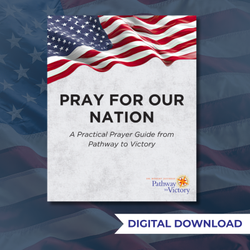
10 Days of Prayer for Our Nation is a devotional resource created to inspire believers to pray for America, its leaders, and future generations. Each day includes Scripture, guided prayer prompts, and encouraging biblical truths that point readers toward God’s faithfulness and promises.
Through this 10-day journey, readers will be reminded that true hope for our nation is found in God. It’s an opportunity to pray with confidence, strengthen personal faith, and seek God’s blessing, wisdom, and direction for the days ahead.
Past Episodes
- Choose Your Attitudes, Change Your Life
- Choosing The Extraordinary Life
- Christmas
- Christmas 2016 Message
- Christmas 2017 Message
- Christmas 2018 Message
- Christmas 2019 Message
- Christmas 2020 Message
- Colossians: Growing Stronger in Christ
- Coming Home to the Father Who Loves You
- Countdown to the Apocalypse
- Courageous : 10 Strategies For Thriving in a Hostile World
- Courageous Living in a Pagan World
- Daniel: Courageous Living In A Pagan World
- Discovering and Using Your Spiritual Gift
- Discovering God's Will
- Divine Defense
- Easter 2013 Sermon
- Easter 2015 Sermon
- Easter 2017 Sermon
- Easter 2018 Message
- Easter 2019 Message
- Easter 2020 message
- Easter 2021 Message
- Experiencing Your New Beginning
- God's Top Ten
- Grace Gone Wild
- Grace Gone Wild: Getting A Grip On God's Amazing Gift
- Grace-Powered Living
- Grace-Powered Living: A Study of Romans 1-4 | Our need — God’s Provision
- Growing Stronger in Christ
- Heaven Can't Wait!
- How Can I Know? Answers to Life's 7 Most Important Questions
- How to Make Wise Decisions
- Leading Your Family from Good to Great
- Living Above Your Circumstances
- Living By Faith: A Study of the Life of Abraham
- Living Without Regrets
- Living Your Dreams: A Study of Nehemiah
- Luke: Developing Your Passion for Christ
- Luke: Reigniting Your Passion for Christ
- Palm Sunday 2017 Message
- Pathway Partners
- Perfect Ending
- Politically Incorrect
- Prayers That Really Work
- Pressing On to Maturity: A Study of Hebrews
- PTV Listener Favorites
- Searching For the Good Life
- Second Chance, Second Act
- Single Messages
- Special Post 2020 Election Message
- Special Programming
- Spiritual Fitness: Strengthening Your Faith in Troubled Times
- Standalone
- Straight Answers to Tough Questions
- Thanksgiving Messages
- The Divine Defense
- The Incomparable Christ
- The Parables: Jesus' Favorite Stories
- The Perfect Ending
- The Solomon Secrets
- Twilight's Last Gleaming

Video from Dr. Robert Jeffress
Featured Offer
10 Days of Prayer for Our Nation is a devotional resource created to inspire believers to pray for America, its leaders, and future generations. Each day includes Scripture, guided prayer prompts, and encouraging biblical truths that point readers toward God’s faithfulness and promises.
Through this 10-day journey, readers will be reminded that true hope for our nation is found in God. It’s an opportunity to pray with confidence, strengthen personal faith, and seek God’s blessing, wisdom, and direction for the days ahead.
About Pathway to Victory
On each daily broadcast, Dr. Robert Jeffress provides practical application of God's Word to everyday life through clear, uncompromised Biblical teaching. Join him today on the Pathway to Victory!
About Dr. Robert Jeffress
Dr. Robert Jeffress is Senior Pastor of the 16,000-member First Baptist Church of Dallas, Texas. Dr. Jeffress is a FOX News contributor and appears regularly on FOX News Channel’s FOX & Friends , FOX News @ Night , Hannity , and The Faulkner Focus and on the FOX Business Network. Dr. Jeffress has made more than 4,000 guest appearances on television programs that include HBO’s Real Time with Bill Maher and Trinity Broadcasting Network’s Praise .
Established in 1996, Pathway to Victory serves as the broadcast ministry of Dr. Jeffress and exists to pierce the darkness with the light of God’s Word through the most effective media available. The daily radio programs air on over 1,100 stations, and the daily television program can be seen on over 11,000 cable and satellite systems, including Trinity Broadcasting Network (TBN), where it has been the #1 most-watched program since 2020. Pathway to Victory broadcasts are translated into seven languages and reach 193 countries throughout the world in addition to all major markets in the USA.
Contact Pathway to Victory with Dr. Robert Jeffress
info@ptv.org
https://ptv.org/
Mailing Address
Pathway to Victory
PO Box: 223609
Dallas, TX 75222-3609
Telephone Numbers
Customer Service: 214.969.2400
Toll-Free Radio Offer: 866-999-2965