
The Bruised Reed and the Broken Heart, Part 2


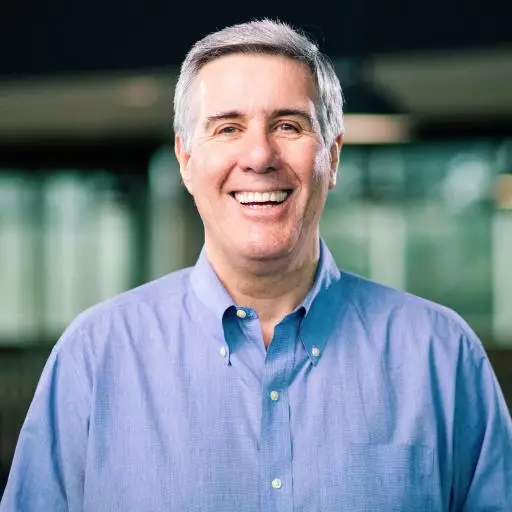
Does the smoke of your failure seem much larger to you than the flame of God’s grace? Sometimes you wonder if there’s any flame in you at all. Pastor Colin talks about why God won’t allow it to be snuffed out.
Colin Smith: Don't you have times when you look at your life and the flame of God's grace seems to be very little in you? And the smoke of your own failure seems to be very obvious to you? And it seems as you look at your own life that there's more smoke than fire? And sometimes you wonder, is there actually any fire in there at all?
Steve: Welcome to Open the Bible with Pastor Colin Smith. And Colin, I want you to explain that a little bit because obviously we're hearing something about smoke and fire. What are you talking about?
Colin Smith: Oh, Isaiah chapter 42 is one of my favorite verses in the Bible. It speaks about the Lord Jesus. It says that a bruised reed He will not break and a smoldering wick He will not snuff out. So, take that picture. Here's the smoldering wick, and you say, is there any fire there? It's just smoke. And you think of a fire that's dimmed down and you wonder if there really is any fire there.
Well, it's a wonderful picture. Sometimes we look at our own lives and we say, is there any real work of the Spirit of God that's going on? It just seems the smoke of my own failure seems to be more than the blazing fire of God's Spirit working within me. Today's message speaks to the discouraged heart, to the person who feels, "I don't know, am I getting anywhere?"
And I want to point you today to the Savior and to the way in which He's not going to snuff out the smoldering wick. He's going to fan you back into flame. There's great hope, encouragement, and comfort in the scripture that we're looking at today, Steve.
Steve: Well, let's get right into it then. We are in Isaiah chapter 42 as we continue "The Bruised Reed and the Broken Heart." Here's Pastor Colin.
Colin Smith: Why is it that in the Bible our hearts are described as hard ground and God's word is described as a plow that plows up hard ground? Why is it that conversion is compared to the grafting of a tree? That's a very powerful picture.
When you graft a stem onto a root—I used to watch my grandfather doing this in his allotment—he would take roots of roses and stems and he would hybrid them together and so forth. And the way you do it, as many of you know better than I do, you cut into a part of the root and you cut into part of the stem, and then you bind these open wounds that you have created together. And then you plant the root and the stem so bound, and then the sap from the root penetrates the stem, bringing it life and imparting its character.
Now, if you just take a stem and a root unwounded and bind them together, nothing happens. No life, nothing grows. And you know, I think that helps us understand why some people profess faith and have no spiritual life in them.
We have reduced conversion to a human decision. We live in a world of accepting Jesus. We have become used to professions of faith without repentance. And that is unbiblical, isn't it? What that's like is it's like binding an uncut stem to an uncut root, digging a hole in the ground and sticking them there, and you know what happens? Absolutely nothing.
You end up with people who think themselves Christians and yet have no awareness of sin in their lives, no sorrow over it, no great sense of gratitude to God in worship, no evidence of the presence or the life of God within them or the fruit that comes from that life. Now friends, this is not true Christianity, is it? And that's not where one of us wants to be.
The broken heart is an excellent thing in the eyes of God. It is the wound into which new life can flow. And without it, our faith will always be artificial. So if your heart has been broken over your own sins, if you are seeing a sense of your own need and feeling that, far from discouraging you, I want to say that is a sure evidence of God's grace in your life. Thank Him for it. If God does not despise the broken heart, neither should you, neither should I, neither should we.
God lives in you. Christ is sent for you, and heaven belongs to you. And when your heart is broken, then you have found the hidden path to a transformed life. This is so much of the Christian faith; it's just the opposite of the wisdom of the world. It is counterintuitive, and yet it's so clear and so plain right there in the scriptures.
God will not despise a broken heart. Second, God will not break a bruised reed. Now we're looking here at Isaiah chapter 42 and verse 3. And you'll notice that the chapter begins with God speaking about the character and work of the Messiah, who will be God's servant, God's chosen one, God's delight. He will be filled with God's Spirit, and He will bring justice to the nations.
Then Isaiah says in verse 3, "A bruised reed He will not break, and a smoldering wick He will not snuff out." God will not break a bruised reed. Now will you think with me for a moment about this picture? You're walking along the side of a river, and on the bank there are tall reeds and they have been blowing in the wind. And you notice that some of these reeds have been bent over. A strong wind has caught them or people have trampled on them.
And these reeds are bruised; they are weakened. They do not support their full height; they are bent over. And another trampling, another gust of wind, and they could easily be gone. Now maybe you can relate to that picture this morning. You have been trampled. You have been bruised. You have been wounded.
Strong winds that have blown into your life have taken the strength from you. You don't feel you're able to stand up, as it were. And now you feel vulnerable, like a bruised reed. One more trampling, one more gust of wind, and you think, "I could easily be gone."
Now that's the picture, and here's the promise: "A bruised reed He will not break." We had a group of women in the church I served in London who for some time met to talk and to sew and to prepare banners which were hung in the church. They depicted various scenes from the scriptures. And one of them, my favorite actually, was based on this verse.
It showed a stalk that was bent over and almost broken, but it did not break because a hand held its weight. And that, I think, catches exactly what is being said here. That the bruised reed that otherwise would be broken and trampled over and finally gone is sustained because of the hand of the Lord Jesus Christ on it and around it. A bruised reed He will not break.
Now that is a wonderful promise, and will you allow the Holy Spirit to settle it in your mind and in your heart? Your life is in the hands of Christ, and with all the bruising that you have experienced, He will hold you in your weakness. Not only is your life in His hand, but even the winds that blow are in His hands.
And the people who walk on the path are in His hands. He's not only in control of you; He's in control of everything that happens to you and everything that will happen to you. And He gives you this promise: that He will not allow you to be tested beyond what you can bear, but He will make a way for you so that you can stand up under it. A bruised reed He will not break.
So you may be bruised, but the promise of Christ to you as His child is you will not be broken. You may be wounded, but the promise of Christ to you as His child is you will not be destroyed. Paul, one of the greatest Christians surely who has ever lived, knew all about this in his own life. Do you remember how he expressed it?
"We are hard pressed on every side, but we're not crushed. We are perplexed, but not in despair. We are persecuted, but we are not abandoned. We are struck down, but we are not destroyed. We always carry about in us the death of Jesus in our body so that the life of Jesus may be revealed in our body also."
And there's a beautiful statement in Psalm 103 where we're told that God knows our frame and He remembers that we are dust. God knows the limits of our own strength. He knows the kind of reeds we are. We are reeds, not trees. And we're bruised reeds at that.
And the Savior not only knows that we are dust, He has entered into human experience. He knows what it is to be tired. He has experienced what it is to be misunderstood and lonely. He knows what it is to be tempted and wounded. He knows what it is to be—think about this—abused. Horribly abused. He has been wounded. He has been bruised. And so He has a special sensitivity to bruising. A bruised reed He will not break.
Now your accuser Satan may come to you when you begin to be stirred up by the Spirit of God to some kind of hope and he will say to you, "Oh, your wounds are too deep. The hidden path to a transformed life, it'll remain hidden to you. It's well beyond what you can find in your life after all that has happened to you." And you need to say to him, "No, not true because of Jesus."
Steve: You're listening to Open the Bible with Pastor Colin Smith. We have to pause the message right here, but we'll get back to it in just a moment. Our message is called "The Bruised Reed and the Broken Heart." It's the final in our series on the topic of repentance, which Pastor Colin is calling "Repentance: The Hidden Path to a Transformed Life."
And if you've missed any of the broadcasts in our series, you can come and listen online. Just stop by openthebible.org. You can stream the program or download an MP3 for free. Again, that's at openthebible.org. You can also listen to Open the Bible on demand as it fits your schedule if you have the Open the Bible app, which you'll find for free at your App Store. Or you can order a copy of this entire series on CD. Ask about "Repentance: The Hidden Path to a Transformed Life" when you call 1-877-OPEN-365. That's 1-877-673-6365. Or you'll find ordering information at openthebible.org. Back to the message, here's Pastor Colin.
Colin Smith: God will not despise the broken heart. And God will not break the bruised reed. Ready for one more? God will not snuff out a smoky fire. The phrase that's used here is a smoldering wick. I'm going to refer to it as a smoky fire, which I think catches best the picture that Isaiah is using. The Authorized Version says a smoking flax He will not quench. The NIV, a smoldering wick He will not snuff out.
Now the picture here is very simply the picture of starting a fire. And imagine yourself out camping, or remember a time when you've been out camping, and you have to start a fire using only a few leaves and twigs and a damp box of matches. You know that deal?
You've got this little pile of twigs and of leaves and a couple bits of straw and whatever. The problem is that they seem to be a little damp, and so as you begin to get the fire going, what's it like? There's more smoke than fire. And you look at this smoking, smoldering kind of pile of twigs and you don't want to poke it or disturb it, but you're saying to yourself, "I'm not sure if there's any fire going in there at all."
And that's the picture here, and it is a wonderful picture of what we sometimes feel about God's work in our own lives. Let's face it, when we look at our own lives sometimes, even after all the years that you may have been a Christian, don't you have times when you look at your life and the flame of God's grace seems to be very little in you? And the smoke of your own failure seems to be very obvious to you?
And it seems as you look at your own life that there's more smoke than fire? And sometimes you wonder, is there actually any fire in there at all? Now using that picture, I think it's helpful to remember that smoke and fire always exist together in the life of a Christian believer. In differing degrees, but in the life of a Christian believer, they always exist together. You see it all the way throughout the Bible as well as in our own experience.
Peter says to Jesus, "You are the Christ, the Son of the living God." That's fire. Then Jesus says, "Well, just so you know, I'm going to go to the cross." "Not so, Lord!" That's smoke, right? Thomas: "Unless I see the nail prints in His hand and put my fist into His side, I will not believe." That's smoke. He sees Jesus and he falls on his face: "My Lord and my God." That's fire.
The man comes to Jesus and he says, "Lord, I believe!" That's fire. "Help my unbelief!" That's smoke. "The spirit is willing." That's fire. "The flesh is weak." There's the smoke. "O wretched man that I am! Who will deliver me?" There's the smoke. "Thanks be to God, who gives us the victory through Jesus Christ!" There's the fire.
Back in the 17th century, a man called Richard Sibbes wrote a whole book on this one verse in Isaiah, and he called it "The Bruised Reed." It's a wonderful and very insightful book. And he says there—I want to quote one or two things that he says that I found so very helpful. He says, "Grace does not do away with corruption all at once in the Christian believer. Some is left for believers to fight with."
From this mixture, he says, arises the fact that God's people have different judgments of themselves. Because we're fire and smoke together, you see. We have different judgments of ourselves, looking sometimes at the work of grace and sometimes at our remaining corruption. And when we look upon that, we may think that we have no grace at all. You know that experience? You look at the smoke, and you say, "I really, really wonder if there's any fire."
It follows, he says, and this I think is brilliant, that Christians must have two eyes. One to see imperfections in ourselves and the other to see what is good. See, don't be a one-eyed Christian who only sees smoke and cannot detect the evidence of God's grace. Or who only sees that oh, God's doing wonderful things in my life, but cannot really see what remains yet to be changed. Too many one-eyed Christians. You never grow that way.
No, we must have two eyes, one to see the imperfections in ourselves, the others to see what is good. And we must beware, he says, of false reasoning such as: because our fire does not blaze as others, therefore we have no fire at all. We must look to grace in the spark as well as in the flame. Learn to discern the fire in the smoke.
And you know, isn't it an amazing thing that the Holy Spirit would start His fire in smoky souls? Indeed, there is no smoke without fire. And when you see and feel your own failure, you can be confident that the spark of God's grace is present in your life. And here's the promise: God will not allow it to be extinguished.
He will not allow this smoldering wick to be snuffed out. He'll not allow this smoky fire to come to nothing. Because even the spark is the spark of His Holy Spirit, and what His Holy Spirit does is never abandoned and never ultimately fails. I love this from Sibbes; these guys could really write with style.
"Oh, what a confusion is this to Satan, that he should labor to blow out a poor spark and yet should be unable to quench it! That a grain of mustard seed should be stronger than the gates of hell!" Don't you thank God for that? This little fire that sometimes seems so pathetic to you, and it's such a big frustration for Satan because he cannot blow it out because it is ignited by the Spirit of God.
And the commitment of Jesus Christ is that every spark in the human soul will be fanned into flame. Every work of God's grace begun will be brought to completion. One more quote from Sibbes. He says, "Learn to see a flame in the spark and a tree in the seed. See great things in little beginnings. Look not so much to the small beginning but to the perfection of that which is completed. And so we shall be in some degree joyful in ourselves and thankful to Christ."
Now when you look at your Christian life, you will often feel, as I often feel, that you're not what you ought to be, that you're not what you want to be. It's good to remember then that you're not yet what you will be. What we will be is yet to be made known. And in the grace and mercy of God, you're not what you used to be either.
And when the accuser tells you that your sins are too great, you tell him that God will not despise a broken heart. And when the accuser tells you that your wounds are too deep, tell him that God will not break a bruised reed. And when the accuser tells you that your faith is too small, tell him that God will not quench a smoky fire. And may God strengthen our hearts as we pursue the hidden path to a transformed life.
Steve: What a great way to wrap up today's message and this series called "Repentance: The Hidden Path to a Transformed Life." When Satan, the great accuser, comes at us with his lies, how do we respond to them? And I hope this message today has been helpful in showing you how to do just that.
You know, our message about repentance is showing us how real and lasting change can happen in our lives by the grace of God. As Pastor Colin has said, repentance is the hidden path to a transformed life. And if you want to get a copy of today's message or the larger series that it comes from, come to our website, openthebible.org, or ask about "Repentance" when you call us at 1-877-OPEN-365. That's 1-877-673-6365. Or you'll find ordering information online at openthebible.org.
Well, we're able to bring you Pastor Colin's teaching because of your financial generosity. We really are a listener-supported ministry, and as you give a gift of any amount this month, we'd love to send you a copy of Pastor Colin's brand-new 30-day devotional. It's called "Grow in Hope," and Colin, why did you write this book?
Colin Smith: Well, "Grow in Hope" is the second of three books that we are putting out from Open the Bible this year: "Grow in Faith," "Grow in Hope," and "Grow in Love." And the reason for all three is that as Paul says in 1 Corinthians chapter 13, everything else will pass away. I mean, that's quite a statement, isn't it?
Everything else will pass away, but these three things will remain: faith, hope, and love. So, these are things of supreme importance. I'm absolutely persuaded that our greatest need is to have a stronger faith, to have a more certain hope, and to be renewed in a resilient kind of love. You know, if that happens in the lives of Christian believers, some very, very good things will follow.
Steve: Well, we'd love to send you a copy of this book. Again, it's called "Grow in Hope," and it's our thank you for your financial support this month. You can give at our website, openthebible.org, or when you call 1-877-673-6365. That's 1-877-OPEN-365. And again, the website is openthebible.org. For Pastor Colin Smith, I'm Steve Hiller. Thanks for listening, and I hope you'll join us next time. This program is a listener-supported production of Open the Bible.
Who in your life needs to know the God of the Bible and might be willing to open the Bible with you if you asked them? Most people can think of someone, and many are finding that someone in their life is open to this invitation: "Would you be interested in opening the Bible with me?"
"Fly Through the Bible" is a short, simple, and shareable book that will help you open the Bible with a friend, a neighbor, or a loved one who needs to know Jesus. It's also freely available online. "Fly Through the Bible" has 15 short sections, each with five discussable questions that will open conversations around the word of God. For more information, visit openthebible.org/fly. That's openthebible.org/fly.
Featured Offer

“Brad Wetherell has written a clear and compelling introduction to what may be the least understood and most vital reality of the Christian life. Union with Christ makes progress in our battle against sin possible, and any teaching that misses this dynamic will only be another version of self-help. This book will deepen your appreciation of all that is yours in Christ. It will give you hope, and it will spur you on in the pursuit of a holy life.”-Pastor Colin
Past Episodes
- 10 Distinctives of a Gospel-Centered Church
- 10 Greatest Struggles of Your Life
- 10 Keys to Unlock the Christian Life
- 180: How God Changes His People and His Church
- A Father's Wisdom
- A Generous Life
- A Tale of Two Kings
- Anatomy of Faith
- Apostle's Apprentice
- Authentic Discipleship
- Battles From the Boardroom of the Soul
- Be Yourself
- Be Yourself: Discovering Your New Identity in Christ
- Give Yourself a Break
- Godly Character
- Good News About God's Son
- Gospel According to Jesus – Part 1
- Grasping the Gospel
- Grow in Faith
- Grow in Hope
- Grow in Love
- Growing in Faith, Hope, and Love
- Heart of the Gospel
- Heaven
- Heaven & Hell
- Heaven, How I Got Here
- Heaven, So Near - So Far
- Hope Has a Name
- How Can I Be Sure?
- How to Avoid a God-Centered Life
- How You Can Flourish
- Regeneration
- Repentance
- Repentance: The Hidden Path to a Transformed Life
- Rescued
- Restore My Soul
- Restored: How God Can Give Back What You've Lost
- Return
- Rock Solid: 7 Promises Christ Makes to You
- Seven Words From the Cross
- Six Things to Ask of God
- Snapshots of a Godly Life
- Soul Care: How to Guard Your Most Valuable Possession
- Staying the Course When You're Tired of the Battle
- Take Two: The Power of a Fresh Start
- The Art of Contentment
- The Gospel According to Isaiah
- The Gospel According to Jesus
- The Inside Story of the Christian Life
- The Life of David
- The Life of David: His Troubles
- The Lord Is My Shepherd
- The Surprising Influence of a Godly Life

Featured Offer
“Brad Wetherell has written a clear and compelling introduction to what may be the least understood and most vital reality of the Christian life. Union with Christ makes progress in our battle against sin possible, and any teaching that misses this dynamic will only be another version of self-help. This book will deepen your appreciation of all that is yours in Christ. It will give you hope, and it will spur you on in the pursuit of a holy life.”-Pastor Colin
About Open the Bible
About Colin Smith
Colin Smith is senior pastor of The Orchard Evangelical Free Church, a thriving, multi-campus church located in the northwest suburbs of Chicago, and Founder and Teaching Pastor of Open the Bible.
Born and raised in Edinburgh, Scotland, he trained at the London School of Theology where he earned the degrees of Bachelor of Theology and Master of Philosophy. Before coming to the States in 1996, Colin served as senior pastor of the Enfield Evangelical Free Church in London.
He is the author of several books including Momentum: Pursuing God’s Blessings through the Beatitudes; Heaven, How I Got Here: The Story of the Thief on the Cross; Jonah: Navigating a God-Centered Life; The One Year Unlocking the Bible Devotional; 10 Keys for Unlocking the Bible; The 10 Greatest Struggles of Your Life; as well as others. His preaching ministry is shared around the world through Open the Bible.
Colin and his wife Karen reside in Arlington Heights, Ill., and have two married sons and five granddaughters.
Contact Open the Bible with Colin Smith
info@openthebible.org
https://openthebible.org/
Open the Bible
P.O. Box 3454
Barrington, IL 60011
1-877-OPEN-365