

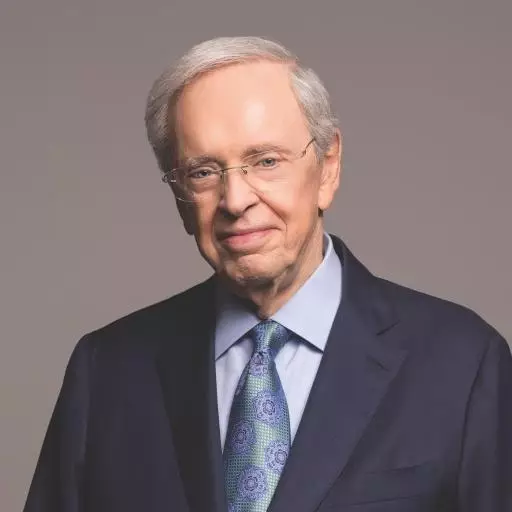
Making the Most of Your Prayer Life - Part 2


Our time alone with God is the most important part of each day—but we don't always prioritize it. Dr. Stanley teaches seven principles that will help Christians devote themselves to prayer. Sow into your prayer life and reap the benefits the Lord has for you.
Dr. Charles Stanley: When prayer becomes that major issue, when it becomes the priority time, the most important event, and God becomes the most important person in your life, and your relationship to Jesus Christ becomes the most important relationship.
And when you begin to major on that, something happens to every single facet of our life. And the only way for you to find that out is not listening to me. The only way to find that out is to try it for yourself.
Host: Scripture tells us to devote ourselves to prayer. When we follow those instructions with the full intention of surrendering to God's direction, the Lord will use us in ways we cannot even imagine.
Stay with us now on In Touch, the teaching ministry of Dr. Charles Stanley, for more on how to make the most of your prayer life. Let us listen in to Dr. Stanley's message.
Dr. Charles Stanley: I believe if you and I had asked the Lord Jesus Christ what is the priority in His given day, on any given day, here is what He would say. It is the time I spend with my Father.
You will recall the scripture says that He was up early in the morning alone with the Father praying. Then in the evening, He was alone with the Father praying. He said, "I only do those things that please the Father. I only do those things I see the Father doing."
I take no initiative of my own. Jesus Christ was in continuous fellowship with His Father, but that was not just because He was God, but simply because He took time to be alone with His Heavenly Father.
I want you to turn, if you will, to Colossians chapter 4, and here Paul gives us an admonition. And I believe in this passage, he really deals with about every facet we need to deal with when it comes to praying. We will deal with one primary part of it. In Colossians chapter 4, verse 2, he says, "Devote yourselves to prayer, keeping alert in it with an attitude of thanksgiving."
"Praying at the same time for us as well, that God may open up to us a door for the word, so that we may speak forth the mystery of Christ, for which I also have been imprisoned. In order that I may make it clear in the way I ought to speak."
Now, I want to talk about something very practical for a moment about our prayer life. Because if I am going to devote myself to prayer, it will not be just haphazard praying there on the expressway on my way to work, or sitting at the table, having a blessing and so forth.
But you see, a lot of people have lots of problems and heartaches in life, and they do not realize God would either eliminate or sustain them through those if they have just spent enough time talking with Him and letting Him give them wisdom as to how to respond to these things.
If you are going to have a prayer life that really makes a difference, that is going to have any impact, have impact on your life, the lives of other people, there are four things I believe are essential. Number one, and that is to set a definite time. If you do not, you will not devote yourself to prayer.
It does not happen. The reason I know that is because Satan hates that above every other activity you and I engage ourselves in. He is going to do everything in his power to keep you what? Busy. To keep you busy so you can say, "I do not have time to pray."
Number one, a time. Secondly, a place. You say, "What in the world does a place have to do with it?" Here is what it has to do with it. There is something about having a spot in your home, a place, in a bedroom, or wherever it may be, the den, or maybe in the bathroom, if that is the only place you have privacy. A place where you and God get together.
Where you battle it out with those things that you and He just need to deal with privately in your life. There is something about having a place and something to remind you. The third thing is a purpose. If you do not have a purpose, you will not pray. You will just pray here and yonder, things arise, this, that and the other, you will pray a little bit here and there, but you will not pray much. What is the purpose? Here is the purpose.
The purpose ultimately is not to get something from God. You know what God sees as our primary purpose for praying? Developing an intimate, warm, personal intimacy with Him. That is His ultimate purpose, and then, of course, meeting our needs and all the rest.
The fourth thing is a plan. Here is a simple plan. It is very important and it is so simple, you are going to look over it if you are not careful. There is something about recording what you are praying about. Just get a cheap little notebook.
Write down the request. Put the date at the end of it when you made the request. And then when God answers that prayer, draw one line through it, only one so you can still read it, and put the date at the end. Here is what happens. After a while, one line, two lines, five lines, 10 lines, two pages, three pages, 10 pages, 20 pages, line, line, skip line, line, line, skip a space, line, line, line. All these lines. You know what those lines say? Here is what they say. Every time you open that book, here is what the line says.
God heard me. God loves me. God cares for me. God is interested in me. God is intervening in my life. God is answering my prayer. God is developing my relationship to Him. I am growing in my faith. Life is getting exciting. God is in my life.
And then he says, "Watchfulness." He says watchfulness, be alert, and with the attitude of thanksgiving, expressing gratitude toward Him. And keeping that prayer journal will motivate you to give thanks again and again and again for what God is doing in your life.
So, that is his first word to us. Then I want you to notice what he says. "Devote yourselves to prayer, keeping alert in it with an attitude of thanksgiving, praying at the same time for us as well," Paul is talking about himself, he is writing this from prison now, "and," he says, "that God may open to us a door for the word," that is the gospel, "so that we may speak forth the mystery of Christ, for which I have also been imprisoned, in order that I may make it clear in the way I ought to speak."
Now, I want you to listen carefully. God did not give us this awesome opportunity of prayer just to get our needs met, though that is part of it. Our personal concerns and our concerns for people, friends and loved ones we are concerned about. But also for ministry. Now listen to what he said.
He said, "Praying at the same time for us." Two things that he says that a door may be opened. Now, as I think about what Paul spoke of here, and he says praying for us also. What he is doing is trying to motivate these Colossians to really talk to God. So what I want to give you is 10 results. Here are 10 things that will happen when you and I begin to pray not just for ourselves, but for the world, for ministry around the world. There are 10 things that are going to happen in a person's life when you get serious about that. So I want you to jot these down.
The first one is, as we said in the very beginning, your personal intimacy with God. Something is going to happen in your relationship to Christ when you get serious about praying. Number one. Number two, your perspective about life is going to be enlarged. You are going to be able to see things the way God sees them. You are going to be able to get concerned about things that you have never been concerned about before. And you are going to be able to have a discerning spirit about things that you have never had before.
Number three, a positive faith attitude is going to develop when you begin to pray seriously, and you keep that notebook, and you just keep marking down the things that God has been saying to you, and how He has been working in your life.
Number four, there is going to be a peace in the midst of pressures. Now, I did not say that prayer is always going to take away the pressure, take away the hardship, take away the trials, tribulations, heartaches, burdens, tears, hurts, sorrow. No, He is not going to take all that away.
But what He does when you and I begin to get serious about our prayer life, what happens is, there begins to prevail over us an awesome sense of peace that no matter how strong the pressures are, how deep the hurt may be, there is going to be an awesome sense of peace that we begin to experience that we had not experienced before.
You say, "You mean just talking to God is going to make that kind of difference?" I guarantee you, if you get serious about your prayer life, and listen, begin to get devoted, spend time with Him, listening to Him and talking with Him.
Then number five, it is going to have a purifying effect upon your life. There is no way to come to Him with an open heart day after day, week after week, month after month, year after year, without God beginning to reveal things in our life that we had not seen. Maybe somebody else had seen them, but we had not seen them.
Beginning to stir up within us a sense of conviction about something, or an awareness of something, not necessarily just sins, but things in our life that God knows would be better if we were without them, or something that He wants to add in our life.
Number six, it is the pathway to true genuine spiritual growth in every area of our life. As you and I begin to pray, what does He do? He shows us the facets of life that you and I should be involved in.
He shows us how to invest our spiritual gifts. He begins to give us more concrete direction about where our money is to be spent, how it is to be invested, where we are to give, whom we are to support, what ministries to support. God begins to give clear direction in every aspect of our life.
Number seven, we begin to develop a passion to obey God. As you begin to pray and listen as God begins to reveal Himself to you, you want to obey Him. You desire to obey Him. Satan is not going to give up, he is not going to quit.
And you have got to listen, it may be that when you get serious about praying, Satan begins to launch his most vicious attacks more frequently than ever before, and you begin to wonder, "Lord, what in the world is happening?" That is the time you and I can rejoice because, listen, when the devil is not bothering you, you are not bothering him.
And when you begin to get serious and intercede and begin to pray, then Satan begins to get upset, and he is going to launch his most vicious attacks.
Number eight, He is going to provide every single need of your life, physical needs, material needs, emotional needs, whatever they are. They are going to begin to flow into your life in a way that is much smoother than they have been before.
Number nine, there is going to be a power in your service for God, whether you are singing in the choir, or taking up an offering, or teaching a class, or preaching a sermon, or singing a solo, it does not make any difference, whether it is on your job as a boss or an employee, in the home as a mother, as a father, whatever you and I are doing, there will be more of the awareness of the presence and power and wisdom of God to do it and do it well.
And then number 10, to sum it all up, you are going to be productive in every facet of your life. When prayer becomes that major issue, when it becomes the priority time, the most important event, and God becomes the most important person in your life, and your relationship to Jesus Christ becomes the most important relationship.
And when you begin to major on that, something happens to every single facet of our life. And the only way for you to find that out is not listening to me. The only way to find that out is to try it for yourself.
And so as I think about the awesome opportunity we have, listen, what he is saying is that you and I become the channels by which God releases His omnipotence in heaven and gets it down here on earth and gets it involved in the lives of people, in the situations and circumstances that change people's lives.
When you and I develop our prayer life and we begin to learn to listen to Him and talk with Him, God will burden us to pray specific things for people. We will think, "Well, why am I praying that?" And I have people who call me once in a while, and this has been going on for years, who call me and say, "Well, is everything all right?" Usually it probably is not. But, "Is everything all right?" "Well, what do you mean?" "Well, yesterday I was praying for you and I had this tremendous burden for you." And I can tell you, I do not remember anybody ever calling me and telling me that that I could not tell them, "Yes, I needed that." "Yes, let me tell you what was going on." "Yes, God must have had me in mind to put me on your heart." Yes, yes, yes.
Now you think about this. How many of you would love to have a group of people praying for you every day? How many of you are willing to be that prayer partner for somebody else? You see, if you want folks praying for you, then you have got to start praying for somebody else.
And you know the tragedy, listen, I would hate to think for one minute that I had to be the pastor of anybody's church and have nobody praying for me. God help me. I am here to tell you, I could not handle it.
And the truth is, you and I cannot even handle life without somebody praying for us. We cannot handle it. Listen, every teenager should cry out to God for parents who pray for them and call their names daily. And every parent should be crying out to God for their children.
And we should be crying out to God for people who are in need. And what we do not realize is, we do not realize the power of people's prayers lifting us up and asking God to protect us and give us wisdom and direction and decisions in life.
Listen, the best asset you have got in your life is not what you have got in the bank or Wall Street. The best asset you have got are people praying for you, lifting you up to God, crying out to God on your behalf.
And that is what Paul is talking about here when he says praying at the same time for us as well, that God may open a door of opportunity. And then he says praying for the ministry. He says, now, two things primarily. He said that God would open up a door of opportunity.
You see, it is prayers that open up doors of opportunity. That is how we got into other countries of the world. We began to pray, "God, You must open the door. What can we do? We do not know who to talk to, we do not know how to go about it, we do not have the money. Lord, we are going to trust You to open the door." And today in every single country in the world, every day, and it is a result of God's people praying.
So if you want God to work in your life, get somebody praying for you. If you want to get somebody praying for you, you begin to pray for someone else, and God will raise up people to pray for you. And you can ask people to pray for you, and get into a small group of people praying. But spend time alone with God on your face before Him, crying out to Him for those things that are needed in your life. And so here is what he says. Listen.
He says praying at the same time for us as well, that God may open us up a door for the word, that God would open opportunities for him to preach the word of God. And then he said, "So that we may speak forth the mystery of Christ," which he was referring to primarily, that the gospel was open to both Gentiles and to Jews. Preaching the gospel in essence.
"For which I have also been imprisoned." Now listen to this. He said, "I want to make two requests in praying ministry-wise." Number one, that God would open doors of opportunity. And second, listen to what he said. He said, "And also that I may make it clear in the way I ought to speak."
Once in a while I want to say to people who are members of churches, and sometimes they criticize their pastor, "Well, you know, my pastor, I just do not like the way he preaches, I do not like the way he dresses, I do not like the way he speaks, I do not like this, I do not like that, I do not like the other." Let me ask you a question, when is the last time on your face before God you began to cry out to God on his behalf and ask God to work in his life?
Or do you just enjoy criticizing him? Because I want to tell you, this pastor, no pastor is perfect. What in the world would you do with a perfect pastor? You would have to go find another church. Because there are no perfect church members. And so all of us are imperfect, and that is why all of us need one another.
And the most powerful thing we can do for one another is to talk to God. Talk to God in behalf of each other. And what is He going to do? He is going to do what He enjoys doing: answering our petition in their behalf.
And Paul is saying, "Here is what I need you to do." He said, "I need for you to pray that God will open doors of opportunity. But I need for you to pray that God will show me how to speak the truth clearly."
And you see, often times people say, "You know the best thing I got out of that sermon?" I will say, "What is that?" It will be something I never said. I never said it. I know I did not say it.
What is that? That is the Holy Spirit taking the word of God and doing what? So working it that when you hear it, you get what you need. It may have been something I said, it did not say. That is why you should never miss coming to church. You say, "Well, I do not know whether I like that sermon or not." Well, you may not, but I will tell you something else. Since God is doing it, you better listen to Him, because He can say it in a way that I cannot say it.
And Paul said, "I want you to pray that I will be able to speak the truth so clearly, nobody will misunderstand it." Now, I am glad he prayed that, I am glad he asked Him to do that because when I read some of the things he wrote, I think, "Goodness, what in the world did he mean by that?" And yet as you and I keep on praying and seeking and reading and studying, God begins to give us understanding.
So let us think about your prayer life for a moment. Personally, do you spend most of your time praying for yourself, your needs, your family, the people closest to you?
How much time do you spend outside that little circle? Listen, this is the circle most of us pray in. How often do you get out of that circle into the big circle of this world and praying for people to be saved by the millions?
And think about all the homeless, helpless, hurting, dying people in other countries of the world in the midst of bloodshed, warfare, vengeance, hostility and anger, brother against brother and sister against sister. Family against family.
And people who desperately, desperately need to know the truth. You and I know enough about what is happening in this world to know that people need the gospel and they need to be saved. And we read enough letters to realize that people are hungry for the truth. They want to know the truth. And what do we read in these letters? "Please tell us the truth. Please tell us. I beg you, tell us the truth."
And here we sit with enough truth to save the whole world. Paul says, "Devote yourself to prayer." And my challenge to you is that if you want your life to really count for God, and you want your life to bear an impact, and if you want to make your life full of things that really make a difference, if you will devote yourself to prayer, you will discover a relationship to Him that you never dreamed possible. And secondly, God will begin to use you in ways you never thought you were even worthy of being used. It is so simple. It is a matter of giving time to the Father and letting Him do in your life what He chooses to do.
Host: Thanks for joining us on In Touch, the teaching ministry of Dr. Charles Stanley. Having seen the value of spending time alone with God, we would do ourselves a favor to follow through. Make regular time for the Lord, so you do not miss an opportunity to have a great conversation with your creator.
You can hear this lesson again at Today on Radio, on intouch.org. You can also find more resources there to help you get to know Jesus better. And the store is where you can order a copy of today's complete message, Making the Most of Your Prayer Life.
Again, log on to intouch.org. Or call or text us at 1-800-IN TOUCH. And to write to us, the address is: In Touch, Post Office Box 7900, Atlanta, Georgia 30357. Or once again, call or text 1-800-IN TOUCH.
Host: When life's challenges seem overwhelming, there is one thing you can always do: trust God. Today's moment with Charles Stanley is coming up.
Host: In our spiritual journey, we often have questions. How do I know God's will for my life? Does God hear my prayers? Why do bad things happen? The answers are found in the word of God. But how do we know where to start? The free In Touch Devotional can help point you in the right direction, with biblically based content from Dr. Charles Stanley. You will gain insight and wisdom through daily devotions, Bible studies and more. The In Touch Devotional, delivered monthly to your mailbox. Subscribe for free at intouch.org/daily.
Host: In Touch Plus is streaming on Local Now, featuring all the best of Dr. Charles Stanley. We need to have strong convictions based on the word of God. He is working out things that you and I would never know about in our future. In Touch Plus, your streaming network for quality
Featured Offer

Drawing from Scripture and the biblical teaching of Dr. Charles Stanley, Prayer in Every Season invites you to meet God right where you are. Through thoughtful reflections, meaningful practices, and prayers for every season of the soul, you'll discover that prayer isn't reserved for life's highest highs or deepest lows. It's an everyday conversation with the faithful God who never leaves your side.
Past Episodes
- Back to Basics
- Before Bethlehem
- Biblical Meditation
- Brokenness: The Way to Blessing
- Building Wise Relationships
- Called to be a Disciple
- Complete in Christ: A Study of Col. - Vol. 1
- Complete in Christ: A Study of Col. - Vol. 2
- Complete in Christ: A Study of Col. - Vol. 2-5
- Complete in Christ: A Study of Col. - Vol. 3
- Complete in Christ: A Study of Col. - Vol. 4
- Complete in Christ: Study/Colossians VOL 1
- Complete in Christ: Study/Colossians VOL 2
- Contending for the Faith: A Study of Jude
- Countdown to Judgment
- Facing Life's Obstacles
- First Peter: Living Triumphantly
- Forgiveness: God's Grace Demonstrated
- Forward By Faith
- God Has An Answer for Our Unmet Needs
- God's Promise for Blessing
- Good News of Great Joy
- Grace for Today
- Grace: God's Second Chance
- Growing Strong in Faith
- Healing Damaged Emotions
- Helps to Holiness
- Helps to Holiness - VOL 1
- Helps to Holiness - VOL 2
- Hope for A New Life
- How Grace Changes Everything
- How the Truth Can Set You Free
- How to Choose Your Destiny
- How to Experience Forgiveness
- How to Reach Your Full Potential
- How to Release Your Burdens
- How to Talk with God
- How to Talk with God - Vol 1
- How to Talk with God - Vol 2
- Humility in the Life of the Believer
- Landmines in the Path of the Believer
- Learning to Pray the Bible Way
- Learning to Walk By Faith
- Letting Go of Anger
- Liberated by Faith: A Study of Galatians
- Liberated to Love
- Life Principles - Volume 1
- Life Principles - Volume 2
- Life Principles - Volume 3
- Life Principles - Volume 4
- Life Principles - Volume 5
- Listening to God
- Living in the Power of the Holy Spirit
- Living Life at Its Best
- Living the Extraordinary Life
- Living Triumphantly: A Study of 1st Peter VOL 1
- Living Triumphantly: A Study of 1st Peter VOL 2
- Living Triumphantly: A Study of 1st Peter VOL 3
- Living Triumphantly: A Study of 1st Peter VOL 3.3
- Living Triumphantly: A Study of 1st Peter VOL 3.4
- Living Triumphantly: A Study of 1st Peter VOL 3.5
- Living Triumphantly: A Study of 1st Peter VOL 3.6
- LP - Volume 5
- Passion for God
- Prayer Life of a Ministry Leader
- Pursuing God's Heart - Vol 1
- Pursuing God's Heart - Vol 2
- Pursuing God's Heart - Vol 3
- Pursuing God's Heart - Vol 4
- Sanctification
- Satanic Attack
- Servanthood: The Way to Greatness
- Spiritual Discernment
- Steps to God's Guidance
- Strong
- Success God's Way
- The Awareness Of God's Presence
- The Believer's Impact
- The Believer's Warfare
- The Blood of Christ
- The Book of Books
- The Character of God
- The Character of God Vol 1
- The Character of God Vol 2
- The Character of God Vol 3
- The Coming King: A Study of Revelation - VOL 1
- The Coming King: A Study of Revelation - VOL 2
- The Coming King: A Study of Revelation - VOL 3
- The Coming King: A Study of Revelation - VOL 4
- The Coming King: A Study of Revelation - VOL 5
- The Coming of Christ
- The Convictions by Which We Live
- The Courage to Stand
- The Encouraging Message from the Cross
- The Encouraging Message of the Cross
- The God Who Cares
- The Joy of Obedience
- The Key to the Heart of God
- The Life That Wins
- The Path of Spiritual Maturity
- The Power of Patience
- The Power of Praise
- The Power of the Holy Spirit
- The Privilege of Knowing God
- The Promises of God
- The Reach of God's Love
- The Real War
- The Source of My Strength
- The Spirit-Filled Life
- The Storms of Life
- The Truth About Grace
- The Truth About Sin
- The Ways of God
- The Will of God
- The Words of Our Mouth
- True Peace

Video from Dr. Charles Stanley
Featured Offer
Drawing from Scripture and the biblical teaching of Dr. Charles Stanley, Prayer in Every Season invites you to meet God right where you are. Through thoughtful reflections, meaningful practices, and prayers for every season of the soul, you'll discover that prayer isn't reserved for life's highest highs or deepest lows. It's an everyday conversation with the faithful God who never leaves your side.
About In Touch Ministries
In Touch Ministries is the broadcast teaching ministry of Dr. Charles Stanley.
About Dr. Charles Stanley
Dr. Charles Stanley
September 25, 1932 – April 18, 2023
Dr. Charles F. Stanley was the senior pastor of First Baptist Church Atlanta for more than fifty years. He was also the founder of In Touch Ministries and a New York Times best-selling author, who wrote more than seventy books encouraging people to seek Jesus as their Savior and know Him as their wise and loving Lord.
Known to audiences around the world through his wide-reaching TV and radio broadcasts, Stanley modeled his 65 years of ministry after the apostle Paul’s message in Acts 20:24: “Life is worth nothing unless I use it for doing the work assigned me by the Lord Jesus—the work of telling others the Good News about God’s mighty kindness and love.”
Contact In Touch Ministries with Dr. Charles Stanley
partnerrelations@intouch.org
https://www.intouch.org
Mailing Address
In Touch Ministries
PO Box 7900
Atlanta, GA 30357
1-800-468-6824