

Lord, Why Can’t I Change?


Though we are saved, forgiven, and cleansed through faith in Jesus Christ, some of us still find ourselves struggling with the same old thoughts and habits after salvation. Dr. Stanley explains why Christians who truly want to bring about positive change in their lives, sometimes fail to do so. Understand how to live a godly life in a way that honors God and brings you peace.
Dr. Charles Stanley: You can't resist any and every evil thought that comes your way, but it is an act of your will depending upon the inner power of the Holy Spirit to say no. I refuse to think that. I refuse to accept that on the basis of what God tells me about a believer and secondly on the basis of what he says about the supernatural power of the Holy Spirit within me. Greater is he that is in me than he that's in the world.
Guest (Male): Have you ever felt so defeated that in exasperation you cried out, Lord, why can't I change? Today's edition of In Touch, the teaching ministry of Dr. Charles Stanley, addresses that question. If you want to see a difference in your attitude and behavior, a real change that lasts, stay with us for practical instruction from Romans chapter 12.
Dr. Charles Stanley: Would you turn please to Romans chapter 12, and I want us to read the first two verses. The title of this message: Lord, Why Can’t I Change? Romans chapter 12, verses 1 and 2.
Paul begins by saying, "I beseech you therefore, brethren, by the mercies of God, that you present your bodies a living sacrifice, holy, acceptable unto God, which is your reasonable service. And be not conformed to this world: but be ye transformed by the renewing of your mind, that ye may prove what is that good, and acceptable, and perfect, will of God."
More than likely all of us at some time or the other have felt like since we were saved, there were times when we wanted to do right, but something inside of us we felt wouldn't allow us to do right. We were tempted with the same old temptations. We had the same old thoughts we'd had before we were saved, maybe even more so to do the same old things we wanted to do before we became a Christian.
Maybe you have become a little discouraged because even after you're saved, you think, "Wait a minute. Does not the Bible say that therefore if any man be in Christ, he's a new creature? Old things are passed away and behold, everything has become new?" Well, if that's true, why is it that I'm having the same old thoughts?
Why is it my pattern of thinking sometimes drifts back to where it was before? Why do I find myself either desiring or sometimes not desiring but doing the things that I used to do before? And is it not true that when you receive the Lord Jesus Christ as your savior that he comes into your life and he just sort of takes over and from then on, it's just a matter of just him doing it all?
Life isn't quite like that and the Bible does not teach that. But there is a reason why God's people who really want to change and want their habits, their attitudes, their actions, their feelings about things to change, when they really want to and they'd really like for it to happen all of a sudden the moment they're saved, they don't happen that way.
There's a reason for that. You know all of us, as you'll recall in the Scripture, the Bible says as a man thinketh in his heart so is he. All of us are the reflection of what we've been thinking all of these years because our thoughts govern what we do and how we respond in life.
In this passage here, you'll notice what Paul says beginning in verse 2. He says, "And be not conformed to this world." Here's what that means. That means don't allow the world to shape you externally in a form that is inconsistent with what you are on the inside.
Because when you receive the Lord Jesus Christ as your savior, Christ comes into your life through the Holy Spirit and it is the will and purpose of God that he exercise and live his life through us. So, he says stop being conformed to the world. Stop allowing the world to shape you and color you and pour you into its mold because all of that is external stuff and it's inconsistent with what you are on the inside.
Christ is in on the inside. He says stop being conformed to the world. Then he says, if you'll notice, "but be ye transformed by the renewing of your mind that ye may prove what is that good and acceptable and perfect will of God." When he uses the word here transformed, that's the word the Greek word here is metamorphosis, which is the way we get our word metamorphosis. A change, a transformation taking place.
He says we are not to allow the world to shape us into its image because we have a different Spirit on the inside. He says now we ought to be being continuously, be ye being transformed. That is, the inner man being renewed day by day in order that the outer man will display the inner man who is Jesus Christ.
God is working in your life. He is beginning to work in your life so that the outward expression of your life is consistent with the inner man. Now, if you'll notice he says this is done by the renewing of your mind. All of us have a mind. And the mind is far more important to the Christian life than we'd like to think.
We say the Lord Jesus Christ just comes in, takes over, and I just throw it all in neutral and just let him have his way. That is not what the Bible says. He says by the renewing of your mind that you may prove what is that good and perfect and acceptable will of God. So, what I want us to discuss here is the concept of the renewing of the mind.
This transforming experience that is the result of the renewing of our mind because that is essential to our being transformed into the likeness and as he says, being conformed into the image of his dear son. So, here's what I want us to see as part of the problem here. He says, for example, in first Corinthians, we have the mind of Christ.
How in the world can I have the mind of Christ and think the same old thoughts and want to do the same old things? When the Spirit of God comes into our life, we have the mind of Christ, but I must choose. It is my responsibility to choose whether I will think Christ's thoughts or whether I will think thoughts that are not of his.
The responsibility of exercising what is mine, receiving what is mine, living out what is mine, taking what is mine is my and your responsibility. We can't just say, well, God, you saved me now you just run this whole life. Because he doesn't operate that way. We have a will which God is not going to ignore.
So, where do evil thoughts come from? Do they come from God or do they come from the devil? They come from the devil. All right, if that be true, you and I are the ones who choose which thoughts we're going to consent to. You see, if an evil thought comes our way, and you having been saved now, let's say for a short period of time, even a long period of time, some of these old thoughts Satan just he'll keep throwing them your way.
You say, "Wait a minute. Can Satan put a thought in my mind?" Now listen to me very carefully. The question: Can Satan put a thought in the mind of a believer? Satan can put a thought in the mind of the believer, but the believer must consent to receive the thought.
Satan operates in our minds in two ways. Not only can he project thoughts into our mind, which we do not have to receive, but we choose to receive them. He can put thoughts into our mind. He can also take truth out of our mind unless we exercise our God-given will under the power of the Holy Spirit.
You see, he says the transformation experience is the result of the renewing of the mind. Now, what you and I have to ask is this. How do we deal with those attitudes? Because we know they're there. And if we could change our thinking process and didn't think certain things, we think the right thing.
And if you think the right thing, he says as a man thinketh in his heart so is he. So, if my life is going to be like the Lord's life, I've got to begin to think like he thinks. How am I going to think like he thinks when Satan keeps hitting me on this side and whopping me on this side and clobbering me on this side? I want to think the right thing and I can't think the right thing.
Listen, not that I can't. I won't. Now watch this. Let's settle this. Who's responsible? We are personally responsible for what we do with our mind. You can't say, oh, the devil made me do it. God, if you hadn't let him... The devil made me do it. No, the devil didn't make you do it. The devil gave you a very, very tempting offer.
The only reason you submitted was because by an act of your will you chose to submit. But here's what I want you to see. Now watch this. You say, "How is it that I'm so deep in?" I want to show you how you got so deep in. Satan offered you something and you said, "Well, I think I will." And so you took the bait.
And after you took it you said, "Oh, goodness Lord, I want you to forgive me and cleanse me. May I never do that again." So, he says let's see. So he makes you another offer and you take it again. The third one becomes easier. The fourth one is easier. The tenth one is much easier. The twentieth one is way, way easy.
You know what you've done? You have given Satan ground for work in your mind and the only reason he has the hold on your mind he has is because you, one act after the other of consenting to his invitations, have aided him in building a stronghold in your mind. That's how habits get into the lives of believers. We give him ground. He can't force that. We consent to that.
Now listen to me. Satan can place a thought into your mind only if you consent to receive it. And I want to say it again. Satan can only place an evil thought into your mind only if you consent to receive it. You don't have to. You have consented to. You say, you mean to tell me all these things I've thought when I've done my best not to think them, that I'm responsible? You're responsible.
You say, but yeah, if you just knew how awful it was and how terrible that I'm just I just can't seem to break loose. I can understand that. He may have such a stronghold that you feel like you can't, but you can. I'm going to show you how in a moment. You say, that's what I want to know.
How is it that I can have victory over this? Because he says in this 12th chapter that if I'm going to be shaped in the likeness of Jesus Christ, going to be conformed to his image, the transforming experience from the inner man must take place and that is the result of the renewing of the mind. As the mind is renewed, the inner man is what? The inner man is transformed and our life is conformed to his likeness.
Now you say, well how does that take place? All right, so the process of the renewing of the mind. First of all, it begins with a desire. And that desire is I really I must have a strong desire to think the thoughts that God would have me to think in order that my life may be transformed in the likeness of Jesus Christ.
I've got to have a strong desire because listen, friend, the enemy is strongly attacking us. I mean a satanic attack. And he launches a mental satanic attack upon your mind. First of all, I must desire to think correctly. Second, I must check the source of those thoughts.
When the thought comes my way, and we're not talking about every single thing that you think, if you're in school trying to do a math problem, that's not what I'm talking about. I'm talking about the rights and wrongs of life and the thoughts that come your way. Now listen, you have a desire to resist it. Secondly, when thoughts come your way ask yourself this question. Is this from the Lord or is this from the devil?
Listen now, watch this. You have God's promise within you. You have the power. It is your will. It isn't Satan's will. It's your will. You will choose when those thoughts come your way and you ask yourself the question. Is this from the Lord or is this from the devil? If it's from the devil, resist him by the power of the Holy Spirit.
You have checked out the source, you know that's not from God, and listen, if you check out the source and you know it's not from God, he that is within you is greater than he that's in the world. By faith and trusting in the power of the Holy Spirit, you can resist any and every evil thought that comes your way.
But it is an act of your will depending upon the inner power of the Holy Spirit to say no. I refuse to think that. I refuse to accept that on the basis of what God tells me about a believer and secondly on the basis of what he says about the supernatural power of the Holy Spirit within me. Greater is he that is in me than he that's in the world. I don't have to receive that.
You say now wait a minute, but how long is it going to take me to renew my mind? Well, that depends upon you and it depends upon how much ground you've given Satan and it also depends upon the thoughts in your mind. You say, well, will this happen instantaneously? And the answer is absolutely not.
Notice what he says. He says and be not conformed to this world but be ye being continuously being transformed by the continuous renewing of your mind. So, I'm not talking about a once and for all act. I'm talking about you making a decision that you don't want those thoughts in your mind.
You want to be the person that God wants you to be. You have a free will to choose to accept or to reject. And therefore beginning right now, today at this very moment, you are choosing to refuse Satan, to resist him by the power of the Holy Spirit.
And by an act of your will you will choose God and you will choose to resist him. It is a continuing process and each time as you say on the basis of God's word, here's what he says in his word, which is part of the area here that I want us to talk about. We said first of all you've got to have a desire. Secondly, you've got to trace the source of it. Thirdly resist him in the power of the Holy Spirit. Fourth, get some Scriptures in your mind that deal with those thoughts that you know are not of God.
Now watch this. You can't tell God, listen, you can't tell God you couldn't help yourself. He's given you a free will. And he has endued you with the power of the Holy Spirit. You can resist.
May I ask you a question? How many of us have done what we knew we shouldn't have done? We chose to do it even though we knew what we were doing was wrong. So, you remember what I said. Knowing the difference between right and wrong, we chose to do the wrong thing.
The truth is that every time we do the wrong thing, we choose to do it. Now, you know what will mature us quicker than anything else as believers? If we will accept here and now that the renewing of the mind is the work of the Holy Spirit according to Titus 3:5.
If you want to look at that verse for just a moment. Hebrews, backwards. Philemon, Titus 3:5. He says, "not by works of righteousness which we've done, but according to his mercy he saved us by the washing of regeneration and the renewing of the Holy Ghost." It is the Holy Spirit who renews us. We don't renew ourselves. That's his work.
But you say, well, what is my part? If he's doing the renewing what's my part? Listen, my part is just one thing. I have one responsibility. Choose, choose, choose, choose. That's all I have to do. Choose to resist. Choose to obey. Choose to resist. Choose to obey. Choose to resist Satan. Choose to believe God's thoughts.
If you and I will assume the responsibility right here and now. Lord, I assume the responsibility for my thinking. I accept by faith the indwelling presence of the Holy Spirit to be all the resistance I need to defeat Satan.
By faith beginning today, I want you to give me wisdom to know the source of the thoughts that come my way. And by faith and dependence upon the Holy Spirit, I want to resist every evil thought that comes my way, knowing that every time I resist him and choose the right thought, the renewing process is going on.
And finally, you know what will happen? Little by little, those things that bothered you, the things that Satan barraged you with, he won't barrage you with them anymore because you see, you know what you've done? You have renewed your mind. It is a process, not an act. It is a continuing process that goes on in the life of the believer who is being transformed into the likeness of Christ.
You say, well then, what is the result of all this? What are the positive results of a renewed mind? Back to Romans chapter 12 for just a moment. He says if you'll notice in verse 1, "I beseech you therefore, brethren, by the mercies of God that you present your body a living sacrifice, holy," h-o-l-y, "acceptable unto God, which is your reasonable service. And be not conformed," poured into the world's image, "but be ye transformed," the metamorphosis taking place, "by the renewing of your mind and you will prove," listen, "you will prove that God's will is good, perfect, and acceptable in your life."
And what you have to ask is a very simple question. Do you really and truly want to be the person God wants you to be? Well, you'll never be that in your strength and your energy. Do you really want victory in your life? You want to think God's thoughts, carry out God's work and his will in your life? Then you have to assume the responsibility for what you think.
Because when you think right you will act right. When you think as the Lord would have you think, then his life will be demonstrated and so beautifully displayed before others through you. But the first step is to assume responsibility.
Don't tell God the reason you're not saved is because he wouldn't give you a chance. Yes, he will. Don't tell God the reason you're where you are is because of what he's done to you. It's because of what we have done to ourselves by giving Satan ground in our mind until he's gotten a stronghold and now we must begin resistance.
You see, we must begin to stand against the devil by faith in the power of the Holy Spirit, trusting God to defeat him as we exercise our will saying, "Lord, I choose to think that which is right. I resist the devil." Then God comes to our rescue and the process of renewing will transform your life and people around you begin to ask you a question.
"What's going on with her? What's going on with him?" Something is happening in his or her life. And what is happening is the inner, quiet, private, invisible renewing process of the mind. What's happening? The mind of Christ is beginning to be exposed. And the life begins to respond to the mind of Christ and things begin to change in your life that you could never change on your own.
And I want to challenge you, my friend. Allow the Spirit of God by your choice, an act of your will, to choose to resist the devil and to receive the Lord. Then you'll not have to pray any longer, "Lord, why can I not change?" but "Lord, thank you that each day of my life by the renewing work of the Holy Spirit, you are changing me into your likeness and in your image."
Guest (Male): You're listening to In Touch, the teaching ministry of Dr. Charles Stanley. You can find lasting victory when you engage in the process of renewing your mind. Temptation may not dissipate overnight, but in time you'll see the fruit of a changed way of thinking. For more help dealing with temptation, take a look at our online resources at intouch.org and jump to Today on Radio to listen to this message again.
And if you'd like to have a copy of Dr. Stanley's complete message, you can order online at the store. The title is: Lord, Why Can’t I Change? Our web address once more is intouch.org. Call or text to 1-800-INTOUCH. If you prefer, you can write to us at In Touch, Post Office Box 7900, Atlanta, Georgia 30357. You'll hear some final thoughts on renewing your mind coming up in today's Moment with Charles Stanley.
Guest (Male): In Touch Plus is streaming on Local Now, featuring all the best of Dr. Charles Stanley.
Dr. Charles Stanley: Great to have strong convictions based on the word of God. He's working out things that you and I would never know about in our future.
Guest (Male): In Touch Plus, your streaming network for quality Christian programming 24/7. Now watch this. In Touch Plus streaming free on Local Now.
Guest (Male): There is an inexplicable joy that comes from understanding Scripture and learning how to apply it in our own life. The Charles F. Stanley Life Principles Bible includes 30 foundational truths that Dr. Stanley has learned from over 60 years of ministry. It's available in the New King James Version, New International Version, the King James Version, and New American Standard Bible version. To order, call 1-800-INTOUCH or go to intouch.org/store.
Guest (Male): You're listening to In Touch. If you're a believer, remember you don't fight the war with temptation alone. Here's a Moment with Charles Stanley.
Dr. Charles Stanley: Where does a critical, vicious spirit about your brother come from? From the devil. But isn't it interesting how it comes this way? The first thing you know, the thought is, "I sure don't want to be like that." And it's like it's in first person.
And sometimes you find yourself thinking things that you think, "Well, I shouldn't think that." But isn't it true that oftentimes the thought's there before you realize that it's there? Where do those thoughts come from? They come straight from the devil. But the believer has someone on the inside who can resist that.
So, what I'm simply saying is this. Even though you've been saved and you want God to change your life and yet somehow you just don't feel that change, you're struggling. Could it be that you've never understood the meaning of the renewing of the mind?
And so, it's you against the devil here and you with God over here and here's Satan, here's God and here you are pulled between the two. He says that's not necessary. Listen, he says don't be shaped into the world's image. He says but be transformed. That is, the inner man being transformed and the expression of the Lord Jesus Christ through our life. He says that is the result of the renewing of the mind that you may prove what? That the will of God is good and acceptable and perfect.
Guest (Male): You can learn more about how to live in the will of God when you visit us at intouch.org. And if you have a story about what you've learned through this program, please share it with us. On In Touch next time, have you ever felt just exasperated? If you don't know what to do in those situations, I hope you'll join us again to learn how to live with frustrations on In Touch, the teaching ministry of Dr. Charles Stanley. This program is a presentation of In Touch Ministries, Atlanta, Georgia, and remains on this station through the grace of God and your faithful prayers and gifts.
Featured Offer

With In Touch monthly devotional, you’ll have a consistent guide for your daily time with God. Each issue includes daily scripture readings, a Bible reading plan, and devotions from the biblical teachings of Dr. Charles Stanley. Always free!
Past Episodes
- Back to Basics
- Before Bethlehem
- Biblical Meditation
- Brokenness: The Way to Blessing
- Building Wise Relationships
- Called to be a Disciple
- Complete in Christ: A Study of Col. - Vol. 1
- Complete in Christ: A Study of Col. - Vol. 2
- Complete in Christ: A Study of Col. - Vol. 2-5
- Complete in Christ: A Study of Col. - Vol. 3
- Complete in Christ: A Study of Col. - Vol. 4
- Complete in Christ: Study/Colossians VOL 1
- Complete in Christ: Study/Colossians VOL 2
- Contending for the Faith: A Study of Jude
- Countdown to Judgment
- Facing Life's Obstacles
- First Peter: Living Triumphantly
- Forgiveness: God's Grace Demonstrated
- Forward By Faith
- God Has An Answer for Our Unmet Needs
- God's Promise for Blessing
- Good News of Great Joy
- Grace for Today
- Grace: God's Second Chance
- Growing Strong in Faith
- Healing Damaged Emotions
- Helps to Holiness
- Helps to Holiness - VOL 1
- Helps to Holiness - VOL 2
- Hope for A New Life
- How Grace Changes Everything
- How the Truth Can Set You Free
- How to Choose Your Destiny
- How to Experience Forgiveness
- How to Reach Your Full Potential
- How to Release Your Burdens
- How to Talk with God
- How to Talk with God - Vol 1
- How to Talk with God - Vol 2
- Humility in the Life of the Believer
- Landmines in the Path of the Believer
- Learning to Pray the Bible Way
- Learning to Walk By Faith
- Letting Go of Anger
- Liberated by Faith: A Study of Galatians
- Liberated to Love
- Life Principles - Volume 1
- Life Principles - Volume 2
- Life Principles - Volume 3
- Life Principles - Volume 4
- Life Principles - Volume 5
- Listening to God
- Living in the Power of the Holy Spirit
- Living Life at Its Best
- Living the Extraordinary Life
- Living Triumphantly: A Study of 1st Peter VOL 1
- Living Triumphantly: A Study of 1st Peter VOL 2
- Living Triumphantly: A Study of 1st Peter VOL 3
- Living Triumphantly: A Study of 1st Peter VOL 3.3
- Living Triumphantly: A Study of 1st Peter VOL 3.4
- Living Triumphantly: A Study of 1st Peter VOL 3.5
- Living Triumphantly: A Study of 1st Peter VOL 3.6
- LP - Volume 5
- Passion for God
- Prayer Life of a Ministry Leader
- Pursuing God's Heart - Vol 1
- Pursuing God's Heart - Vol 2
- Pursuing God's Heart - Vol 3
- Pursuing God's Heart - Vol 4
- Sanctification
- Satanic Attack
- Servanthood: The Way to Greatness
- Spiritual Discernment
- Steps to God's Guidance
- Strong
- Success God's Way
- The Awareness Of God's Presence
- The Believer's Impact
- The Believer's Warfare
- The Blood of Christ
- The Book of Books
- The Character of God
- The Character of God Vol 1
- The Character of God Vol 2
- The Character of God Vol 3
- The Coming King: A Study of Revelation - VOL 1
- The Coming King: A Study of Revelation - VOL 2
- The Coming King: A Study of Revelation - VOL 3
- The Coming King: A Study of Revelation - VOL 4
- The Coming King: A Study of Revelation - VOL 5
- The Coming of Christ
- The Convictions by Which We Live
- The Courage to Stand
- The Encouraging Message from the Cross
- The Encouraging Message of the Cross
- The God Who Cares
- The Joy of Obedience
- The Key to the Heart of God
- The Life That Wins
- The Path of Spiritual Maturity
- The Power of Patience
- The Power of Praise
- The Power of the Holy Spirit
- The Privilege of Knowing God
- The Promises of God
- The Reach of God's Love
- The Real War
- The Source of My Strength
- The Spirit-Filled Life
- The Storms of Life
- The Truth About Grace
- The Truth About Sin
- The Ways of God
- The Will of God
- The Words of Our Mouth
- True Peace

Video from Dr. Charles Stanley
Featured Offer
With In Touch monthly devotional, you’ll have a consistent guide for your daily time with God. Each issue includes daily scripture readings, a Bible reading plan, and devotions from the biblical teachings of Dr. Charles Stanley. Always free!
About In Touch Ministries
In Touch Ministries is the broadcast teaching ministry of Dr. Charles Stanley.
About Dr. Charles Stanley
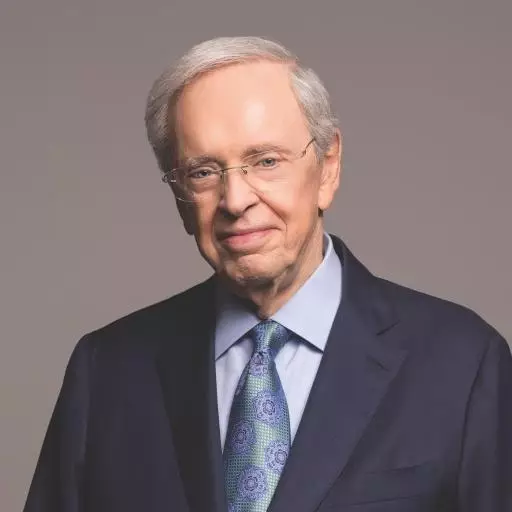
Dr. Charles Stanley
September 25, 1932 – April 18, 2023
Dr. Charles F. Stanley was the senior pastor of First Baptist Church Atlanta for more than fifty years. He was also the founder of In Touch Ministries and a New York Times best-selling author, who wrote more than seventy books encouraging people to seek Jesus as their Savior and know Him as their wise and loving Lord.
Known to audiences around the world through his wide-reaching TV and radio broadcasts, Stanley modeled his 65 years of ministry after the apostle Paul’s message in Acts 20:24: “Life is worth nothing unless I use it for doing the work assigned me by the Lord Jesus—the work of telling others the Good News about God’s mighty kindness and love.”
Contact In Touch Ministries with Dr. Charles Stanley
partnerrelations@intouch.org
https://www.intouch.org
Mailing Address
In Touch Ministries
PO Box 7900
Atlanta, GA 30357
1-800-468-6824