

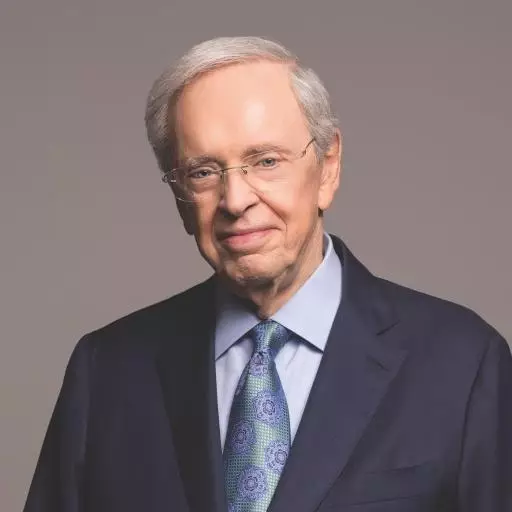
The Transforming Grace of God - Part 1


We encounter many influential forces in our lives—but the most powerful influence in the life of the believer is the transforming grace of God. Dr. Stanley shares how we can experience a changed life—and it’s not through good works. Find hope today in the knowledge that God does for us what we cannot do for ourselves.
Dr. Charles Stanley: The Apostle Paul says something absolutely fantastic happened. All those things that he counted as valuable and would make him accept in the eyes of God, he said he had an experience whereby he realized that could never be. And this is why this man, who was the worst enemy of the church of Jesus Christ in his day, became their greatest asset, their greatest instructor, their greatest motivator, their greatest inspiration. The man who was their worst enemy became their dearest friend. How did it happen?
Guest (Male): Ephesians Chapter 2 tells us that when we come into the world, we're sinners by nature and under the influence of the devil, and we're uninterested in controlling our desires, and even objects of the wrath of God. That's a desperate situation. But today on In Touch, the teaching ministry of Dr. Charles Stanley, you'll discover the way out by yielding to the transforming grace of God.
Dr. Charles Stanley: God says that he has predestined you and me to be conformed to the likeness of his Son, which means that God's ultimate will for every single believer is to be conformed to the likeness of his Son. He begins that process initially when you and we are transformed by his grace at the experience which we call salvation or the new birth. That is the beginning of that conforming us to the likeness of Christ. And so all the rest of our life we are moved and directed and influenced in that direction.
Now, there are a lot of things that influence our life and influence the changes in our life. For example, our heredity, our parents, our grandparents, the way we come along. And then, of course, there's our environment, the kind of atmosphere in which we grow up in. Then there's the training that we have in school and so forth. And then, of course, the decisions we make. We are all the composite of all of those things and we're sort of the sum total of all that: our heredity and our environment, our training, and the decisions that we've made.
But the most powerful influence in the life of the believer is not any of those things. The most powerful influence in the life of the believer is the grace of God, the transforming grace of God. As you and we live day by day by his grace and in his grace, you and we can say with the Apostle Paul, "By the grace of God, I am what I am." I want you to turn, if you will, to 1 Corinthians Chapter 15. The title of this message is "The Transforming Grace of God." Something that has happened to every single believer and God keeps on working in our life.
In 1 Corinthians Chapter 15, the Apostle Paul is a good example, and I would like to use him as the illustration of this whole idea of the power of God to transform a person's life from what they were to what they are and what, of course, we are going to be. So in this 15th chapter, which is his most complete exposition of what the resurrection's all about, he begins early talking about what the Gospel is and how Jesus Christ appeared to him.
In the process of talking about that, he says in verse 9: "For I am the least of the apostles, who am not fit to be called an apostle because I persecuted the church of God. But by the grace of God I am what I am, and his grace toward me did not prove vain; but I labored even more than all of them, yet not I, but the grace of God with me. Whether then it was I or they, so we preach and so you believed."
The Apostle Paul says the grace of God was not given to him in vain. That is, it did not remain barren. Something happened as a result of the grace of God in the life of the Apostle Paul. And what happened to him, God intends to happen to everyone. And so I want us to look at his life as an illustration of this whole principle of the transforming grace of God which has happened in your life already if you are a believer.
The first thing I want you to notice here is the transforming grace of God transformed the Apostle Paul from a sinner into a saint. And when he says in this passage, "His grace toward me did not prove vain," well, listen, everyone who's heard the Gospel of Christ and who has rejected that Gospel, who's rejected the love of God, the forgiveness of God, the kindness of God, the generosity of God—every person who has rejected that by rejecting his Son has in essence made God's grace toward them in vain. That is, it's empty. Because they've not accepted Christ, they've not accepted his grace, they've not accepted his forgiveness, they've not accepted his goodness, and so the expressing of the grace of God toward that person has resulted as being in vain. It's empty. Nothing has happened as a result of it.
But Paul says that didn't happen to me. He says the grace of God, the grace of God he says, toward me did not prove vain. Something miraculous happened. And you'll recall he said before, we lived in darkness, but he says something happened. When this transformation took place, what happened was he says, "I moved from darkness into light. I moved from death into life. I moved from the course of this world into the course of the kingdom." He says something radically changed in my life. It was so radical he said now I realize that I have become a new creation in Christ Jesus. Anyone who has experienced the grace of God in salvation is a brand-new creation. He says in 1 Peter, we have become partakers of his divine nature. And you see, the idea of transformation means a change in nature, a change in condition, a change in character, and can be, of course, a change in appearance.
Now listen carefully. There is only one way to be made acceptable in the eyes of God. If good works and being good and being religious would make you acceptable in the eyes of God, the Apostle Paul would never have written what he's about to write. In Philippians Chapter 3, he's talking about what he used to depend upon to get him accepted in the eyes of God. And so he says, "Although I myself might have confidence in the flesh," that is confidence in God that God would accept him on the basis of his personal human nature, his good works. He says, "Although I myself might have confidence even in the flesh, if anyone else had a mind to put confidence in the flesh, in his own good works and in his own good nature, I far more."
Then he talks about how he used to live. He says, "I was circumcised the eighth day, as a good Hebrew boy, of the nation of Israel, of the tribe of Benjamin, a Hebrew of Hebrews; and as to the law, a Pharisee. Couldn't have gotten any higher in his nation. As to zeal, a persecutor of the church; as to the righteousness which is in the law, that is trying to keep the law, found blameless. But whatever things were gain to me, those I have counted now as loss for the sake of Christ."
He says all of those things that I used to depend upon—and I want to say this again, and I don't know how to say it any stronger: Listen to me carefully. If you are depending on anything, anything about how good you are, how much money you give, or what a fine citizen you are, what a good husband, what a good wife, what a good parent, what a good child, if you are depending on any single solitary thing in all of life, you name it—if you're depending on anything to get you accepted in the eyes of God except the grace of God, my friend, it cannot happen. It will not happen.
The only way any of us are made acceptable in the eyes of God is that we accept by faith the death of his Son at Calvary as the full payment for our sins. And when we receive his Son, we have him. And to do otherwise is to base our acceptance on something within us. It cannot happen. It will not happen. It has never happened. It won't happen. It absolutely is impossible to happen. And when I think about the millions and millions of people who ignorantly but genuinely believe that they're going to be accepted in the eyes of God based on how good they are, I want to tell you, my friend, it grieves my heart to think that you will live your whole life and die in ignorance and blindness having been deceived by Satan and by false doctrine that has been taught you that you're going to be accepted in the eyes of God because you've been good.
If there's any illustration of that whatsoever, here it is in the life of the Apostle Paul. Because he says all of those things that he counted here in Philippians, all of those things that he counted as valuable and would make him accepted in the eyes of God, he said he had an experience whereby he realized that could never be. And this is why this man, who was the worst enemy of the church of Jesus Christ in his day, became their greatest promoter, their greatest asset, their greatest instructor, their greatest teacher, their greatest motivator, their greatest inspiration. The man who was their worst enemy became their dearest friend.
How did it happen? Well, the Apostle Paul says something absolutely fantastic happened. And I want you to turn to Acts Chapter 22. In the same accounts found in Acts 9, but usually we read that one, but let's read this out of Acts 22. Paul here is defending himself on an occasion and I want you to notice what he says. First of all, well let's look at verse 3: "I am a Jew, born in Tarsus of Cilicia, but brought up in this city, educated under Gamaliel, strictly according to the law of our fathers, being zealous for God just as you all are today."
Then verse 4 and 5 tell us something about his attitude before he became a Christian: "And I persecuted this way," speaking of the Christian way, "to the death, binding and putting both men and women into prison. As also the high priest and all the council of the elders can testify. From them I also received letters to the brethren and started off for Damascus in order to bring even those who were there to Jerusalem as prisoners to be punished."
Now here's a man who's the enemy of the church. Now I want you to think about this because there's a lot of truth I want you to evaluate for just a moment. Here's a man who's absolutely committed to the destruction of the last vestige of anything that even reminds you of Jesus Christ. Here he is, verse 6: "And it came about that as I was on my way approaching Damascus about noon time, a very bright light suddenly flashed from heaven all around me. And I fell to the ground and heard a voice saying to me, 'Saul, Saul, why persecutest thou me?'"
Now watch this. Remember what Jesus said, "Inasmuch as ye have done it unto one of the least of these my brethren, ye done it to me." I want to say something to you. If you're one of those persons who is opposed to the church, you attack the church, you attack Christians, you don't like Christians, you don't like what we stand for, you don't like the Bible, you're against all this religious bit. You hate all this stuff. It reminds you of judgment and condemnation and you don't like any of that. And so you're absolutely opposed to it and you often times criticize the church and criticize Christians and criticize Jesus. I want to remind you of something. My friend, no matter whom you may be pointing your finger at, Almighty God says you're pointing it toward him.
Jesus said inasmuch as you treat one of these who is one of my children in a certain way, he says you're doing it to me. You put yourself under the condemnation and the judgment of God to attack and fight against the church, which is the body of Christ. And this is exactly what Paul was doing. He says, verse 8, "And I answered," when Jesus said to him, "Saul, Saul, why are you persecuting me?" "I answered, 'Who are thou, Lord?' And he said to me, 'I am Jesus the Nazarene, whom you are persecuting.' And those who were with me beheld the light to be sure, but did not understand the voice of the one who was speaking to me.
And I said, 'What shall I do, Lord?' And the Lord said to me, 'Arise and go to Damascus, and there you will be told of all that has been appointed for you to do.' But since I could not see because of the brightness of that light, I was led by the hand by those who were with me and came into Damascus. And a certain Ananias, a man who was devout by the standard of the law and well spoken of by all the Jews who were there, came to me and standing near said to me, 'Brother Saul, receive your sight.' And at that very time I looked up at him."
Now, the Apostle Paul had no interest in Jesus, though he believed in Jehovah God, the God of the Old Testament. No interest in Jesus. He hated the name of Jesus. I want to show you in a few moments, he said he blasphemed that name and not only that, he tried to get other people to blaspheme that name under the threat of death. Here's a man who hated everything Christianity stands for. Now here he is on his way to Damascus with papers from the high priest to bring more prisoners back, beat them, imprison them, or murder them, trying to get them to blaspheme the name of Jesus. When all of a sudden with no warning, this light, this brilliant light shines from heaven so brilliant it blinds him. He falls down with the rest of his men and they take him to Damascus and Ananias comes and visits him.
Let me ask you a question. Now here's a terrible mistake people make. Listen to me very carefully. Many people say, "Well, I would be saved but there's some things in my life I need to straighten up. God wouldn't accept me the way I am. When I look back in my past and see how much sin and disobedience and transgressing the law of God and I've violated everything in the Bible, you mean to tell me that all I have to do is to come to Jesus and be accepted by God? Listen, when I get some things straightened out, I clean up my life, then I'm going to be a Christian." Let me ask you a question. What did the Apostle Paul clean up in his life? Not one thing.
You know why? Listen, think about this. You remember what Paul said in Ephesians Chapter 2. He said, "Wherein in times past this is what we were like: dead in trespasses and sin." Let me ask you a question. Have you ever seen a dead man taking a bath? You've never seen a dead man or woman doing anything because they're lifeless. Listen, a person who is spiritually dead can't clean up anything. There's no power within them to clean it up. Now they can say well I'm not going to do this and do the other. They can't clean it up. There's no such thing as self-cleaning.
Here's a man who was the most avowed enemy of the church. One moment he's on his way as a persecutor. The next moment this man has been converted by the grace of God. I want you to think about this. Here's a man who had no interest in Jesus, God, anything but to destroy everything that reminded him of Christ. Vengeance, hostility, anger, and hatred in his heart. All of a sudden with no warning, this man is lying flat on his face or flat on his back and Jesus is talking to him and he says, "Who art thou, Lord?" You know why? Because he knew that was God speaking to him.
Now let me ask you a question. Could the Apostle Paul, Saul of Tarsus at that time, could Saul of Tarsus have said, "No, I hate you Jesus. No, I'm not going to listen to anything you say. No, no, no, no, no, no!" Could he have said that? Nobody has an absolute free will. There's a limitation on everybody's will. Because listen, God is still God though some people may think they are. God is still in charge. He is omnipotent. He's still sitting on the throne. He is in charge. God only has an absolutely perfect free will.
So we have a free will to some degree. But I do believe this, that when a person really and truly falls in love with Christ, when you really fall in love with the Lord Jesus and Jesus Christ is the Lord of your life and somehow deep down inside of you there's this devotion and love you really want to do what God wants you to do because of who he is in you and because of who you are in him. This is my own personal conviction. I do believe if you're growing in your intimacy with him and that growth has been going on for a period of time and you love him and you're devoted to him, that God may require of you something—I'm not talking about salvation—God may require of you something that you don't like, you don't want to do, or you're afraid to do. You're just absolutely scared to do it. And you just may have an absolute rebellion: "God, I absolutely cannot do it. I can't."
Ultimately, you cannot help yourself. If you love him—I love this song, listen to this: "Oh love that will not let me go, I rest my weary soul in thee." That's the grace of God. That's the love of God poured out in our hearts. If you can just disobey him and disobey him and disobey him and disobey him and disobey him and you're not torn up on the inside, you need to ask yourself some real serious questions about your relationship to God. My friend, the next time you get a little proud and egotistical and think you're doing pretty good, you just go back and read Ephesians Chapter 2. No dead man or woman can find anything within their dead self that makes them acceptable in the eyes of God. It is the love of God, it is the grace of God, it is the goodness of God poured out in our hearts.
This God of patience and loving kindness knowing that we're children growing and being conformed and being transformed into his likeness. He's patient and loving and kind and forgiving. You know why? Because listen to this, think about this: the God who saved us has already seen the end. He knows what we're all going to be like when we take our last breath. Think about that. He knows what we're going to be like when we take our last breath. He knows everything that's going to happen the rest of your life. And the reason, if I can put it in human terms, that God is so excited is that he knows that no matter where you are, that conforming, transforming experience of changing everything about us is in process. And sometimes we may say no, God, and he just keeps doing what? He has the most profound way of just putting a little bit of pressure that just becomes more pressure and more pressure and more pressure and more pressure until I say okay, God, okay.
Is that chastisement? No. You know what that is? That is the gentle love of a gracious father. God, listen, God wants to motivate us out of love, not condemnation and judgment. And so Paul says, he says by the grace of God I am what I am. And he says the only thing that you'll ever find me glorying in is the cross, because that's what happened to him. Jesus paid his sin debt.
Guest (Male): Thanks for joining us today for In Touch, the teaching ministry of Dr. Charles Stanley. God is more concerned about our spiritual development than our comfort and it's usually the difficult times that teach us the most. When you face hardship, focus on the Lord and remember who he is. We'll hear more about the transforming grace of God next time. And to hear this message again, click on "Today on Radio." Take time to look at all of our Bible study resources while you visit. There you'll find our bookstore where you can order a copy of today's complete message, "The Transforming Grace of God." It's also included in our teaching set, "Grace for Today." Again, that's intouch.org. To call or text, it's 1-800-INTOUCH. You can write to us at: In Touch, Post Office Box 7900, Atlanta, Georgia 30357.
There's an important difference between reading the Bible and contemplating what God is saying to you. Today's "Moment with Charles Stanley" is coming up.
Dr. Charles Stanley: The peace of God is tranquility and quietness of the soul. It is the assurance that no matter what's going on around us, everything is secure. Peace is not determined by circumstances. Neither is it a matter of chance, but it is a matter of choice.
Guest (Male): In a world filled with noise and uncertainty, you can discover peace that cannot be shaken. Get your new free booklet, "Peaceful and Still: A Guide to Experiencing God's Rest in an Anxious Age." Visit intouch.org/peaceful.
Have you ever forgotten something God taught you when you were reading the Bible? When we take note of what God reveals to us, it helps us to apply it to our lives. With the Charles F. Stanley Life Principles Journal, you can keep track of your spiritual journey and be transformed by God's truth. This journal features artwork of Dr. Stanley's 30 Life Principles, lined pages for writing, a prayer journaling section, and more. To order, call 1-800-INTOUCH or go to intouch.org/journal.
You're listening to In Touch. It's good to read the Bible, but applying what you read is the goal. With encouragement for believers, here's a "Moment with Charles Stanley."
Dr. Charles Stanley: I remember before I preached the first sermon in my life, my mother came in the bedroom and she said, "I have a verse of scripture I want you to read." And so she pointed out this verse in Joshua: "This book of the law shall not depart from your mouth, but you shall meditate on it day and night, so that you may be careful to do according to all that is written in it; then you'll make your way prosperous and then you'll have success." I can honestly say this that my most favorite thing in life is to open the word of God and the meditate upon a passage that he lays upon my heart because he becomes so real. And the word of God just unfolds right before you.
If I want clear direction, I'm going to his word and say, "Lord, show me, what are you trying to say?" And what you're going to find out is this: that reading his word and meditating upon it makes everything far more rewarding in your life. You begin to hear God speak to you in ways you're not going to hear any other way. If you're going to meditate upon the word of God and you're going to get the most out of reading the Bible, you've got to shut the world out and you shut yourself up to God. It's just you and him alone.
And then what you do is you focus your attention on a passage of scripture, asking God to speak to your heart, show you what he's trying to say to you. You're reading his word, you're seeing what he's saying. And you see, there's a difference in praying and reading the scripture and just praying. And haven't you read some scriptures that you wanted driven into your heart, that you'd not forget because you knew in your heart God was trying to say something to you? Just casually reading the scriptures is not meditating. It is reading the scripture, talking to God, listening to him—it's all three things together.
Guest (Male): You'll find resources to keep you spiritually nourished at intouch.org. Have you been encouraged by what you heard today? Take some time to let us know. On the next In Touch program, all Christians have received the transforming grace of God and as a result, we have a responsibility. We'll hear how we can respond to God's goodness next time on In Touch, the teaching ministry of Dr. Charles Stanley. This program is a presentation of In Touch Ministries, Atlanta, Georgia, and remains on this station through the grace of God and your faithful prayers and gifts.
Featured Offer

With In Touch monthly devotional, you’ll have a consistent guide for your daily time with God. Each issue includes daily scripture readings, a Bible reading plan, and devotions from the biblical teachings of Dr. Charles Stanley. Always free!
Past Episodes
- Back to Basics
- Before Bethlehem
- Biblical Meditation
- Brokenness: The Way to Blessing
- Building Wise Relationships
- Called to be a Disciple
- Complete in Christ: A Study of Col. - Vol. 1
- Complete in Christ: A Study of Col. - Vol. 2
- Complete in Christ: A Study of Col. - Vol. 2-5
- Complete in Christ: A Study of Col. - Vol. 3
- Complete in Christ: A Study of Col. - Vol. 4
- Complete in Christ: Study/Colossians VOL 1
- Complete in Christ: Study/Colossians VOL 2
- Contending for the Faith: A Study of Jude
- Countdown to Judgment
- Facing Life's Obstacles
- First Peter: Living Triumphantly
- Forgiveness: God's Grace Demonstrated
- Forward By Faith
- God Has An Answer for Our Unmet Needs
- God's Promise for Blessing
- Good News of Great Joy
- Grace for Today
- Grace: God's Second Chance
- Growing Strong in Faith
- Healing Damaged Emotions
- Helps to Holiness
- Helps to Holiness - VOL 1
- Helps to Holiness - VOL 2
- Hope for A New Life
- How Grace Changes Everything
- How the Truth Can Set You Free
- How to Choose Your Destiny
- How to Experience Forgiveness
- How to Reach Your Full Potential
- How to Release Your Burdens
- How to Talk with God
- How to Talk with God - Vol 1
- How to Talk with God - Vol 2
- Humility in the Life of the Believer
- Landmines in the Path of the Believer
- Learning to Pray the Bible Way
- Learning to Walk By Faith
- Letting Go of Anger
- Liberated by Faith: A Study of Galatians
- Liberated to Love
- Life Principles - Volume 1
- Life Principles - Volume 2
- Life Principles - Volume 3
- Life Principles - Volume 4
- Life Principles - Volume 5
- Listening to God
- Living in the Power of the Holy Spirit
- Living Life at Its Best
- Living the Extraordinary Life
- Living Triumphantly: A Study of 1st Peter VOL 1
- Living Triumphantly: A Study of 1st Peter VOL 2
- Living Triumphantly: A Study of 1st Peter VOL 3
- Living Triumphantly: A Study of 1st Peter VOL 3.3
- Living Triumphantly: A Study of 1st Peter VOL 3.4
- Living Triumphantly: A Study of 1st Peter VOL 3.5
- Living Triumphantly: A Study of 1st Peter VOL 3.6
- LP - Volume 5
- Passion for God
- Prayer Life of a Ministry Leader
- Pursuing God's Heart - Vol 1
- Pursuing God's Heart - Vol 2
- Pursuing God's Heart - Vol 3
- Pursuing God's Heart - Vol 4
- Sanctification
- Satanic Attack
- Servanthood: The Way to Greatness
- Spiritual Discernment
- Steps to God's Guidance
- Strong
- Success God's Way
- The Awareness Of God's Presence
- The Believer's Impact
- The Believer's Warfare
- The Blood of Christ
- The Book of Books
- The Character of God
- The Character of God Vol 1
- The Character of God Vol 2
- The Character of God Vol 3
- The Coming King: A Study of Revelation - VOL 1
- The Coming King: A Study of Revelation - VOL 2
- The Coming King: A Study of Revelation - VOL 3
- The Coming King: A Study of Revelation - VOL 4
- The Coming King: A Study of Revelation - VOL 5
- The Coming of Christ
- The Convictions by Which We Live
- The Courage to Stand
- The Encouraging Message from the Cross
- The Encouraging Message of the Cross
- The God Who Cares
- The Joy of Obedience
- The Key to the Heart of God
- The Life That Wins
- The Path of Spiritual Maturity
- The Power of Patience
- The Power of Praise
- The Power of the Holy Spirit
- The Privilege of Knowing God
- The Promises of God
- The Reach of God's Love
- The Real War
- The Source of My Strength
- The Spirit-Filled Life
- The Storms of Life
- The Truth About Grace
- The Truth About Sin
- The Ways of God
- The Will of God
- The Words of Our Mouth
- True Peace

Video from Dr. Charles Stanley
Featured Offer
With In Touch monthly devotional, you’ll have a consistent guide for your daily time with God. Each issue includes daily scripture readings, a Bible reading plan, and devotions from the biblical teachings of Dr. Charles Stanley. Always free!
About In Touch Ministries
In Touch Ministries is the broadcast teaching ministry of Dr. Charles Stanley.
About Dr. Charles Stanley
Dr. Charles Stanley
September 25, 1932 – April 18, 2023
Dr. Charles F. Stanley was the senior pastor of First Baptist Church Atlanta for more than fifty years. He was also the founder of In Touch Ministries and a New York Times best-selling author, who wrote more than seventy books encouraging people to seek Jesus as their Savior and know Him as their wise and loving Lord.
Known to audiences around the world through his wide-reaching TV and radio broadcasts, Stanley modeled his 65 years of ministry after the apostle Paul’s message in Acts 20:24: “Life is worth nothing unless I use it for doing the work assigned me by the Lord Jesus—the work of telling others the Good News about God’s mighty kindness and love.”
Contact In Touch Ministries with Dr. Charles Stanley
partnerrelations@intouch.org
https://www.intouch.org
Mailing Address
In Touch Ministries
PO Box 7900
Atlanta, GA 30357
1-800-468-6824