

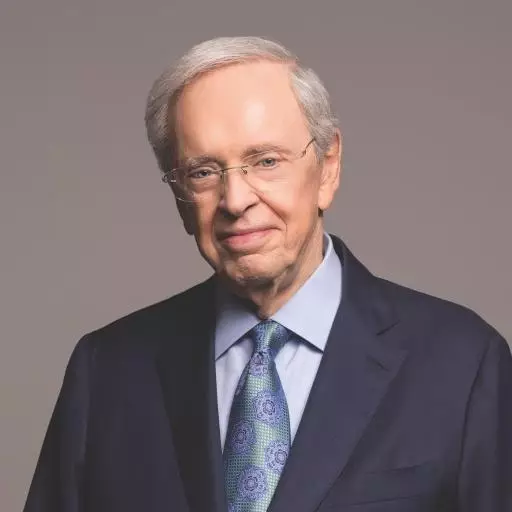
The High Cost of God's Grace


When we believe Jesus died to make God's grace possible for us, we get to experience the love of the Father in a new way. Dr. Stanley describes how Jesus humbled Himself so that we might inherit the riches of God. Though His grace is free to all, the price He paid was immense.
Guest (Male 1): You mean to tell me that in order to be saved, all I have to do is to believe in Jesus? You mean to tell me that there's nothing I can do or that I should do? What about going to church and reading the Bible and praying, giving all that money? What's that got to do with it?
Guest (Male 2): Nothing.
Guest (Male 1): Wait a minute. You mean to tell me that I can be saved by simply believing?
Guest (Male 2): Right.
Guest (Male 1): You mean all I have to do is to believe?
Guest (Male 2): Correct.
Guest (Male 1): I don't have to do anything else?
Guest (Male 2): No.
Guest (Male 1): What kind of salvation is that?
Guest (Male 2): Free. That's the kind it is, free.
Guest (Male 1): Well, how can it be so free?
Announcer: It just can't be that simple. That's a common response when the gospel is explained. Today on In Touch, the teaching ministry of Dr. Charles Stanley, we'll see that all the work that's required for salvation has already been done, completed by Jesus Christ on the cross. Stay with us now and learn more about the high cost of God's grace. Let's join Dr. Stanley now for his message.
Dr. Charles Stanley: Well, grace is free, but it is not cheap. And there's a difference between being cheap and being free. You see, the cry of cheap grace is man's attempt to defend this prideful insistence on doing something to help God or to add to what God has done for him.
You see, grace is God's goodness and graciousness toward us without regard to merit or worth on our part and in spite of what we deserve. But there is something inside of us that somehow feels better if we think that we can help God or if we think that we made a contribution or that it wasn't just all of him but that somehow we helped him. When it comes to forgiveness of sin, salvation, the fullness of the Holy Spirit, there's not a single solitary thing we can do.
That's what I want to talk about in this message: the high cost of the grace of God. Free to us, but not free to him. No cost to us, but a high cost to him. It isn't cheap grace; it's free grace but given at a high cost. And Paul describes this in one single verse in Second Corinthians chapter eight. So if you'll turn there, and let's think about this in terms of that title, the high cost of God's grace.
In the eighth chapter of Second Corinthians, right in the middle of a passage of scripture—two chapters here that deal with the grace of God in the area of giving and how God promises to bless and so forth—listen to what he says in this ninth verse: "For you know the grace of our Lord Jesus Christ, that though he was rich, yet for your sake he became poor, that you through his poverty might become rich."
I want to read that one again. Look at that. "For you know the grace of our Lord Jesus Christ, that though he was rich, yet for your sake he became poor, that you through his poverty may become rich." Now, the grace of God is all about God pouring out the riches of his blessings in your life and my life that have nothing to do with whether we deserve it or not. It has to do with the goodness and love and graciousness and kindness of God.
So I want us to look at this passage in the light of this and see why, when somebody says, "Well, that's just cheap grace if you mean to tell me that it's just believing, that's all you have to do." Well, let me explain this so that you'll not misunderstand. Believing doesn't mean that I simply think that there was something, but believing, according to the New Testament, is an act of faith. That is what believing is all about. It is placing our trust in. It is believing what he said about himself and responding accordingly.
If I really and truly believe that Jesus Christ is the Son of God, really and truly believe that he died for my sins and he was the only one who could, and that salvation is only through him, what else can I do? You see, the person who says, "Now wait a minute, I've got to do something." So let me ask you a question. What does the Bible say about the condition of humanity before a person is saved? Dead in trespasses and sins. What can a dead man or woman do for themselves spiritually? Absolutely nothing.
So when it comes to us helping God or contributing to our forgiveness or doing something to deserve salvation, what in the world can a dead person do? Absolutely zero. Spiritually dead men and women can't do anything. And so this human effort and human works is to no avail. It can't contribute to salvation, can't contribute to being filled with the Spirit, can't do any of that, can't contribute to forgiveness. That is the work of one person at one time in history on the cross: Jesus Christ at Calvary.
Now, cheap to us it appears—not cheap, free—but what did it cost him? So let's think about it for just a moment. When he says he was rich, Jesus was rich in four areas of his life through which he became poor in order to make us rich in those same areas. And that's what grace is all about. First of all, he was rich in his possessions. Well, what in the world did Jesus own? Before he came into this world, friend, he owned it all. Look if you will back in John chapter one, and I want you to look at a couple of verses here.
In John chapter one, in the very beginning of this gospel, notice how John begins his gospel talking about the Lord Jesus Christ and referring to him as the Word, the Word of God, the living Word of God. He says in verse one: "In the beginning was the Word, and the Word was with God, and the Word was God. He was in the beginning with God. All things came into being by him; apart from him nothing came into being that has come into being." That is, he created it all. He was the Creator and Sustainer and Owner of it all.
So the Bible says here that he who was rich, yet for our sake he became poor. So what did he do? Jesus Christ laid aside all of his ownership and all of his wealth of glory and came into this world as a baby owning nothing, possessing nothing. Laying aside his capacity to possess and to own and being born into this world as any other baby except conceived by the Holy Spirit. He owned it all, created it all, possessed it all, and yet he owned nothing.
He said he became poor, that in his poverty you and I might become rich. Now let me explain again, and I've said this many times and I make no apology for saying it again and again and again. Here's the whole heart and the core and the soul of the New Testament wrapped up in this third chapter of Romans when the question is asked: how can God remain just and declare sinners no longer guilty, forgive us of our sins when his law said the soul that sinneth it shall die, the wages of sin is death? Every single person, all of us have sinned against God, all of us have the penalty of death resting upon us.
Then God, seeing the absolute total helpless condition of mankind, that if he fulfilled his own decree, that would have meant that every single one of us would have been born into this world, lived our life, died, and been eternally separated from God. So here's what grace did, and this is what grace is all about. This is why Jesus came, and everything we say about grace is wrapped up in this one passage in Romans. And that is this: in order for God to remain holy, just, and the righteous God that he is, he had to do something to make it possible, if he were going to save us, to provide for the payment of the penalty of our sin.
So Jesus Christ was and is God's gift to you and to me who came into this world, who laid down his life at Calvary, who paid our sin debt in full. That's why he came. But it cost him. Listen, he says Jesus Christ, though he was rich, yet for your sake he became poor. And what happened? As a result of him coming into this world and making it possible for God the Father to forgive us of our sins and make us his children, he has made us rich. Even in this next chapter, chapter nine, verse eight, listen to what he says: "And God is able to make all grace abound to you, that always having all sufficiency in everything, you may have an abundance for every good deed."
That's what the throne of grace is all about, coming to him in time of need, seeking mercy and grace to help in time of need. The second thing he says, look at this. He says now he was rich, yet for your sake he became poor. He became poor not only in what he owned—he laid aside his wealth—but the scripture says he laid aside also his personhood. Who was he? You see, the most important knowledge that I need, the most important information I need in all of life is who is this Christ?
Turn to Hebrews chapter one, a beautiful verse about the Lord Jesus and who he is in his description of him here. Look at this. Chapter one of Hebrews, talking about the Lord Jesus, he says: "And he is the radiance of his (of the Father's) glory and the exact representation of his nature, and upholds all things by the word of his power. When he had made purification of sins," speaking of his coming here to earth and dying for our sins, "he sat down at the right hand of the Majesty on high."
Listen, if somebody says who is Jesus, just turn them to Hebrews chapter one and read them this verse. That Jesus Christ is the radiance of the glory of the Father, the one true God, and the exact representation of his nature. He upholds all things by the word of his power. When he's made purification of sins, he sat down at the right hand of the Majesty on high, where he is today making intercession for us and listening to the cries of sinners who are asking for the forgiveness of their sins.
Now, that's who he is. And the scripture says that he became poor. Well, how did he become poor? Because he came into this world as a baby. He came into this world as a child. He laid aside this personhood of all of his glory and majesty and honor. Who is this man? This is God in the flesh, rich in his personhood, every angel of the heavens bowing down before him. All of the earth is full of his glory, the Bible says. And what is he doing? Being born in a mother's womb. Now he's washing feet as a servant. He said he was the servant of God, the servant of mankind.
He said, "I didn't come into this world to be served. I came into this world to serve. I came into this world to give my life a ransom for many." Here he was serving, a servant, a bond slave, emptying himself of his glory. He was so willing to work in your behalf and mine. Part of his poverty was this: he would not grasp and hold on to his equality with God. Even though he never ceased to be God, he clothed that, he covered that, so that when men looked upon him, they saw him as a man.
They said, "Can anything good come out of Nazareth? You mean this carpenter's son claiming to be God?" I mean, they were furious because they only saw him as a man. What did he do? He laid aside the real essence of his personhood and came into this world as an itinerant preacher, a carpenter's son growing up in a carpenter's home and becoming a carpenter. He became poor, the scripture says, so you and I could become rich. Listen: "He was rich, yet for your sake he became poor, that you through his poverty may become rich."
That is the grace of God. It's the goodness and the love and the unmerited favor of God bestowed upon us through the person of Jesus Christ. And it's—listen—grace isn't cheap. Free but not cheap. If I consider something cheap, I will handle it as if it's cheap. But if I consider something very, very, very valuable, I'm going to treat it as a valuable thing. And you know, when you and I sin against God and we ignore God and do our thing and live our life and don't read his Word and we don't spend time with him in prayer and we just sort of doing our thing, ignoring him, you know what we're doing? We are treating the grace of God in a very cheap fashion.
The most valuable thing you and I have is the grace of God. Listen: his unmerited, undeserved—listen—undeserved, immeasurable, fathomless love, infinite, poured out upon us with no reservations but only this: as God knows it is good for us. That's what we have. And he said in order for that to happen, he became poor in his personhood. So listen: his poverty made me and you rich. His poverty made us rich. It isn't something to be considered cheap because he did all the paying and you and I do all the receiving. That doesn't mean it's cheap. It means it was gloriously expensive to God the Father.
But notice what he says. He said he was rich, yet for your sake he became poor. Rich in his possessions, he gave it up in order that you and I may be rich and wealthy in him. His personhood he gave up in order that you and I may become rich and wealthy in him. He also gave up his position. And what in the world was that? Seated at the Father's right hand, ruling and reigning over all of the earth, exercising absolute and total complete control over all things. And what does he do? He comes to be seated in the heart of sinful humanity.
What a price to lay aside his position of the Father's Son to become the sinner's friend. He called himself a shepherd. He was a friend. Though he called himself God, he only said that in clarifying his true identity. And when you think about his true identity and you think about the power—the power that was his, infinite, absolute, complete control over everything. You see, because he was absolutely infinite in his power, but he laid it aside.
He came to this stage of poverty power-wise. He allowed himself to be a little bitsy bitsy bitsy bitsy bitsy flesh in his mother's womb, growing up as a baby and being born like every other baby except conceived by the Holy Spirit. Growing up as a child, as a little boy, growing up as a man with all the things that little boys have to deal with in life, and yet without sin. When he grew up, he had to labor in the carpenter shop just like any other man. He got tired, weary. He couldn't make furniture 24 hours a day. He got tired, had to sleep, had to rest. He became weary.
You know why? Because he laid aside that infinite power within him in the glory with the Father before in order to become man and to suffer like man. And my friend, listen, he didn't do that because he had to; he did it voluntarily. God the Father and God the Son, if we can put this in human terms—we can only put it in human terms because a mind can't conceive of how far back this all happened—let's say that the two of them talked about it. And the Father said, "Now Son, look at helpless humanity as it's going to be. They're not going to make it. And there's only one way to save them. Are you willing to go?" "Yes, Father. Yes, Father. Yes, Father, I'm willing to go."
Men would approach him to kill him. The Bible says he walked right through the crowd; they couldn't touch him. Was it because he exercised some divine power? No, there was just something about him they couldn't touch. When he stood before Pilate and Pilate talked about what he could do to him, you remember what Jesus said? He said, "Pilate, you can't do anything unless my Father gives you permission." In the Garden of Gethsemane, he said he could have called down legions of angels, wiped out the whole crowd. He didn't do it.
And I want you to think about something. This infinite, indescribable, fathomless power, the Son of God. You say, "Great." Let me tell you something more powerful than that. You think about the power that it took Jesus to give himself over to wicked, vile men whose one purpose in life was to stop God's redemptive plan. Imagine the power it took for him to allow Roman soldiers to beat him and beat him and beat him till his back was just flesh and blood and never say a word when he could have absolutely annihilated them with a blink of his eye, they'd have been gone.
Imagine lying down on a cross and allowing men to take a spike and drive it through his hands and his feet when he could have stopped it at any moment. Imagine the power it took to yield Deity to humanity, holiness to wickedness, and never say a word. Friend, that's wealth becoming poor to make us rich. That's what grace is all about. That's what salvation's all about. That's what Paul is talking about when he says Jesus Christ, who was rich, became poor, that in his poverty you and I may be rich in the grace of Almighty God.
And somebody call it cheap. Free, yes. Cheap, never. Cost the Father a Son, cost the Son everything: his possessions, his personhood, his position, and his power. And why did he do it? Because for God so loved the world that he gave his only begotten Son, that whoever believes in him would not perish but have eternal life, everlasting life. And what does man have to do to get it? Place his or her simple trust in the Lord Jesus Christ as personal Savior. That means simply to believe that when he went to the cross, he went to the cross with you in mind. It is the grace and goodness and love of God poured out.
Cheap? It's not cheap. Free? Yes, it's free. Deserve it? We'll never deserve it. If you live a million years, you couldn't deserve it. It is God's goodness and love and mercy poured out because he loves us. And my friend, what does that say? It says no matter how sinful you've been, no matter how wicked and no matter how guilty, no matter what your past looks like, the grace of God brought into this world by the person of Jesus Christ who became poor in order that you may become rich, has offered to forgive you of your sin and to cleanse you and to make it possible for you to come to him for forgiveness and cleansing and having your needs met, no matter what they are.
That's the grace of God. If you've never trusted him as your Savior, then life hasn't really begun for you. Listen to this: existence could come to an end before you ever began to live. Because you see, Jesus is real life. That's life at its fullest. Troubles, heartaches, burdens, trials, tribulations, difficulties, faults, failures, sins, yes. But when you have Jesus, everything is different. And there is a grace to support you that you'll never know until you tried by faith.
Announcer: Thanks for joining us on In Touch, the teaching ministry of Dr. Charles Stanley. The question left for you to answer is: Will you accept God's offer of eternal life? Once you ask Christ for forgiveness, you can begin experiencing the love that he already has for you. You can learn more about what Christ did for you and find help for living as a Christian when you visit intouch.org.
And be sure to click on Today on Radio to hear this message again and order a copy of today's complete message, "The High Cost of God's Grace." Go to our online bookstore. It's also included in our complete teaching set, "Grace for Today." Look for these resources and more at intouch.org. To call or text us, the number is simply 1-800-IN-TOUCH. And to write to us, address your letter to In Touch, Post Office Box 7900, Atlanta, Georgia 30357.
Just ahead, we'll hear about the response God wants from us when we truly understand who he is. Today's moment with Charles Stanley is coming up.
Guest (Female): In our spiritual journey, we often have questions. How do I know God's will for my life? Does God hear my prayers? Why do bad things happen? The answers are found in the Word of God. But how do we know where to start? The free In Touch devotional can help point you in the right direction with biblically-based content from Dr. Charles Stanley. You'll gain insight and wisdom through daily devotions, Bible studies, and more. The In Touch devotional, delivered monthly to your mailbox. Subscribe for free at intouch.org/daily.
Dr. Charles Stanley: The cross was not something that God gave us as upon a decoration. The cross is the message of the gospel of Jesus Christ.
Guest (Male 3): But what is it about the message of the cross that can transform you every day of your life? In his book, *The Gift of the Cross*, Dr. Charles Stanley walks us through scripture to show us how to see the cross in a new light. *The Gift of the Cross*, order yours today at intouch.org/store.
Announcer: You're listening to In Touch. Believing the truth about Jesus prompts a predictable response. Here's a moment with Charles Stanley.
Dr. Charles Stanley: Received a letter from a young man in Russia; he's 27 years of age. He said, "I've been listening to the program." He said, "I turned it on and listened to it out of curiosity, didn't know what it was about." And he says as I've begun to listen over these months, he says, "I've begun to understand for the first time who Jesus Christ really is, that he's the Son of God," and he went on to talk about a little bit about that. And now he's trusted Jesus Christ as his personal Savior.
What's happening is when people understand who Jesus is—listen, when you really understand who he is, you want him. When you really understand who he is and how helpless you are, you want him. This Christ, this person, who was he? We'll go back to John chapter one, listen to what he says in that first verse: "In the beginning was the Word, and the Word was with God, and the Word was God." Speaking of Christ, he was God. Jesus Christ is God.
Announcer: And Jesus Christ can be your personal Savior once you trust in him for the forgiveness of your sin. Learn more at intouch.org. On the next In Touch program, God's grace is the foundation of our spiritual life, and that should influence our daily activities. So learn more about how the grace of God relates to our finances next time on In Touch, the teaching ministry of Dr. Charles Stanley. This program is a presentation of In Touch Ministries, Atlanta, Georgia, and remains on the station through the grace of God and your faithful prayers and gifts.
Featured Offer

With In Touch monthly devotional, you’ll have a consistent guide for your daily time with God. Each issue includes daily scripture readings, a Bible reading plan, and devotions from the biblical teachings of Dr. Charles Stanley. Always free!
Past Episodes
- Back to Basics
- Before Bethlehem
- Biblical Meditation
- Brokenness: The Way to Blessing
- Building Wise Relationships
- Called to be a Disciple
- Complete in Christ: A Study of Col. - Vol. 1
- Complete in Christ: A Study of Col. - Vol. 2
- Complete in Christ: A Study of Col. - Vol. 2-5
- Complete in Christ: A Study of Col. - Vol. 3
- Complete in Christ: A Study of Col. - Vol. 4
- Complete in Christ: Study/Colossians VOL 1
- Complete in Christ: Study/Colossians VOL 2
- Contending for the Faith: A Study of Jude
- Countdown to Judgment
- Facing Life's Obstacles
- First Peter: Living Triumphantly
- Forgiveness: God's Grace Demonstrated
- Forward By Faith
- God Has An Answer for Our Unmet Needs
- God's Promise for Blessing
- Good News of Great Joy
- Grace for Today
- Grace: God's Second Chance
- Growing Strong in Faith
- Healing Damaged Emotions
- Helps to Holiness
- Helps to Holiness - VOL 1
- Helps to Holiness - VOL 2
- Hope for A New Life
- How Grace Changes Everything
- How the Truth Can Set You Free
- How to Choose Your Destiny
- How to Experience Forgiveness
- How to Reach Your Full Potential
- How to Release Your Burdens
- How to Talk with God
- How to Talk with God - Vol 1
- How to Talk with God - Vol 2
- Humility in the Life of the Believer
- Landmines in the Path of the Believer
- Learning to Pray the Bible Way
- Learning to Walk By Faith
- Letting Go of Anger
- Liberated by Faith: A Study of Galatians
- Liberated to Love
- Life Principles - Volume 1
- Life Principles - Volume 2
- Life Principles - Volume 3
- Life Principles - Volume 4
- Life Principles - Volume 5
- Listening to God
- Living in the Power of the Holy Spirit
- Living Life at Its Best
- Living the Extraordinary Life
- Living Triumphantly: A Study of 1st Peter VOL 1
- Living Triumphantly: A Study of 1st Peter VOL 2
- Living Triumphantly: A Study of 1st Peter VOL 3
- Living Triumphantly: A Study of 1st Peter VOL 3.3
- Living Triumphantly: A Study of 1st Peter VOL 3.4
- Living Triumphantly: A Study of 1st Peter VOL 3.5
- Living Triumphantly: A Study of 1st Peter VOL 3.6
- LP - Volume 5
- Passion for God
- Prayer Life of a Ministry Leader
- Pursuing God's Heart - Vol 1
- Pursuing God's Heart - Vol 2
- Pursuing God's Heart - Vol 3
- Pursuing God's Heart - Vol 4
- Sanctification
- Satanic Attack
- Servanthood: The Way to Greatness
- Spiritual Discernment
- Steps to God's Guidance
- Strong
- Success God's Way
- The Awareness Of God's Presence
- The Believer's Impact
- The Believer's Warfare
- The Blood of Christ
- The Book of Books
- The Character of God
- The Character of God Vol 1
- The Character of God Vol 2
- The Character of God Vol 3
- The Coming King: A Study of Revelation - VOL 1
- The Coming King: A Study of Revelation - VOL 2
- The Coming King: A Study of Revelation - VOL 3
- The Coming King: A Study of Revelation - VOL 4
- The Coming King: A Study of Revelation - VOL 5
- The Coming of Christ
- The Convictions by Which We Live
- The Courage to Stand
- The Encouraging Message from the Cross
- The Encouraging Message of the Cross
- The God Who Cares
- The Joy of Obedience
- The Key to the Heart of God
- The Life That Wins
- The Path of Spiritual Maturity
- The Power of Patience
- The Power of Praise
- The Power of the Holy Spirit
- The Privilege of Knowing God
- The Promises of God
- The Reach of God's Love
- The Real War
- The Source of My Strength
- The Spirit-Filled Life
- The Storms of Life
- The Truth About Grace
- The Truth About Sin
- The Ways of God
- The Will of God
- The Words of Our Mouth
- True Peace

Video from Dr. Charles Stanley
Featured Offer
With In Touch monthly devotional, you’ll have a consistent guide for your daily time with God. Each issue includes daily scripture readings, a Bible reading plan, and devotions from the biblical teachings of Dr. Charles Stanley. Always free!
About In Touch Ministries
In Touch Ministries is the broadcast teaching ministry of Dr. Charles Stanley.
About Dr. Charles Stanley
Dr. Charles Stanley
September 25, 1932 – April 18, 2023
Dr. Charles F. Stanley was the senior pastor of First Baptist Church Atlanta for more than fifty years. He was also the founder of In Touch Ministries and a New York Times best-selling author, who wrote more than seventy books encouraging people to seek Jesus as their Savior and know Him as their wise and loving Lord.
Known to audiences around the world through his wide-reaching TV and radio broadcasts, Stanley modeled his 65 years of ministry after the apostle Paul’s message in Acts 20:24: “Life is worth nothing unless I use it for doing the work assigned me by the Lord Jesus—the work of telling others the Good News about God’s mighty kindness and love.”
Contact In Touch Ministries with Dr. Charles Stanley
partnerrelations@intouch.org
https://www.intouch.org
Mailing Address
In Touch Ministries
PO Box 7900
Atlanta, GA 30357
1-800-468-6824