

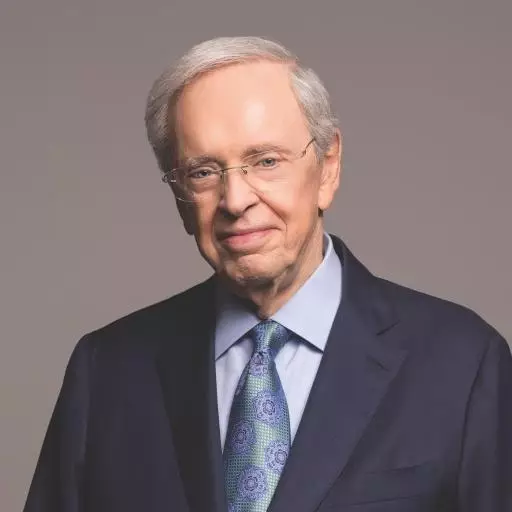
Grace: God's New Lifestyle - Part 1


You don’t need to earn God’s favor because Jesus already did. Dr. Stanley explains the difference between the Old and the New Covenant, what Jesus accomplished for you at Calvary, and how grace changes everything. Jesus' sacrifice for you paid for the grace needed for your life.
Dr. Charles Stanley: Grace is God's goodness and kindness toward us without regard to our merit or our worth and in spite of what we deserve. When Jesus came upon the scene, he came upon the scene the Bible says in order to die for your sins and mine. But dying for our sins and bringing about our forgiveness was only part of it. Because he came to institute an entirely different lifestyle than the people of God had been living before.
Guest (Male): A promise is only as good as the one who makes it. That's why we can confidently trust the promises given by God. Today on In Touch, the teaching ministry of Dr. Charles Stanley, we'll discover some of the guarantees that belong to believers as a result of Christ's work on the cross. Stay with us now and learn more about grace, God's new lifestyle. Let's listen in to Dr. Stanley.
Dr. Charles Stanley: Do you make up rules for yourself in order to discipline yourself and find yourself breaking them? And do you harshly criticize yourself when you don't live up to your own standards and your own expectations? Do you feel distant from God when you're not serving him or doing something that you would consider spiritual? And do you feel close to God when you're doing something that you think is religious or spiritual?
I wonder if oftentimes you feel driven by such phrases as these in your thinking: I must, I should, I ought to. And I wonder if oftentimes you entertain very accusing feelings of I'm not sure I'm saved and I'm not sure I have done exactly right, and those feelings that cause you to feel insecure, inadequate, and not certain of your salvation. Well, if that's true, more than likely if these things happen to be the lifestyle that you're living, you're living in an old lifestyle that God never intended.
Jesus talked about a new lifestyle. He called it a new covenant. That's what I want to talk about in this message, "Grace: God's New Lifestyle." I want you to turn to Luke chapter 22. If you'll recall this 22nd chapter of Luke, this portion of it relates the account of Jesus with his apostles in the upper room, and they're observing the Lord's Supper, the Last Supper.
I want us to begin at verse 19 and 20. Jesus, here breaking bread, said, "And when he had taken some bread and given thanks, he broke it and gave it to them, saying, 'This is my body which is given for you. Do this in remembrance of me.' And in the same way, he took the cup after they had eaten, saying, 'This cup, which is poured out for you, is the new covenant in my blood. A new covenant in my blood.'" What he was saying to them is simply this: that something different is about to happen.
When we talk about the idea of a covenant and we talk about the idea of grace, this is the last message in this series on grace. You'll recall that we've said over and over and over again that grace is God's goodness and kindness toward us without regard to our merit or our worth and in spite of what we deserve. When Jesus came upon the scene, the Bible says he came in order to die for your sins and mine. But dying for our sins and bringing about our forgiveness was only part of it. Because he came to institute an entirely different lifestyle than the people of God had been living before.
And when he speaks here of a new covenant, then he's referring to the fact that something is about to happen to the old covenant. I'm sure they didn't fully understand what he meant when he said that, but he said this cup is poured out as symbolic of a new covenant. Now, a covenant is an agreement that two people make between each other. A divine covenant is God taking the initiative in solemnly providing this promise or in this relationship some agreement.
In the Old Testament, there are many references where God made covenant promises and agreements with people, individuals. For example, with Noah, David, and Abraham, and then with the whole nation of Israel. Turn back to Genesis chapter 9 because this is one of the most familiar covenants that he made. Every time we see God's evidence of this covenant promise he made with Noah, we are to be reminded of it. When you see a rainbow, what you're to be reminded of is that God is faithful to his promise.
If you'll notice in the ninth verse of the ninth chapter of Genesis, he says, "Now behold, I myself do establish my covenant, that is my promise, my agreement with you and with your descendants after you, and with every living creature that is with you, the birds, the cattle, and every beast of the earth with you, of all that comes out of the ark, even every beast of the earth. And I establish my covenant with you, and all flesh shall never again be cut off by the water of the flood, neither shall there again be a flood to destroy the earth."
That was his covenant promise, that never again would God destroy the whole earth with water. God said, "This is the sign of the covenant which I am making between me and you and every living creature that is with you for all successive generations." And what is that? "I set my bow, the rainbow, in the cloud, and it shall be for a sign of a covenant between me and the earth." Then verse 15 says, "And I will remember my covenant which is between me and you and every living creature of all flesh, and never again shall the water become a flood to destroy all the earth. When the bow is in the cloud, then I will look upon it to remember the everlasting covenant between God and every living creature of all the flesh that is on the earth."
That is one covenant. For example, the 15th chapter of Genesis and the 17th chapter of Genesis are God's covenant promises with Abraham. Now listen, God made two types of covenants. For example, there is the conditional covenant which says, here's what I will do if you do so and so. If you don't do this, here's what I'm going to do. Another type of covenant was the one he made with Abraham and his descendants when he said, speaking of the land of Palestine as you know it, he says, I'm going to give you this land and to your descendants forever. That was an unconditional promise, an unconditional covenant relationship that he had with Abraham.
So there are two different kinds. Usually, God would establish these covenants with blood, the shedding of blood. This was his way of establishing that covenant, and he did so with Abraham. Then when he came to the nation of Israel, in establishing this nation when he came to Sinai and he gave them the law, and he gave them all of the sacrificial system that became a part of that law, he established that with blood also.
For example, turn to Hebrews chapter 9. Notice what he says in this 18th verse: "Therefore, even the first covenant was not inaugurated without blood. For when every commandment had been spoken by Moses to all the people according to the law, he took the blood of the calves and the goats with water and scarlet wool and hyssop, and sprinkled both the book itself and all of the people, saying, 'This is the blood of the covenant which God commanded you.'" Well, God established his covenant with his people through, the Bible says, the shedding of blood.
In this 22nd chapter of Luke, when Jesus is speaking here of this new covenant, he talks about his body and the cup being poured out of a new covenant. What he's saying to them is this: something new is about to happen. Now, they grew up under the old law of the Old Testament and all the sacrificial system and all the rest, and now Jesus is saying something new is about to happen. And this new thing that's going to happen, he says, I'm establishing a new covenant.
The next day, here's what happened: the next day Jesus was crucified, and in the shedding of his blood, he established this new covenant relationship between God and mankind. And that is that sin would forever be forgiven on the basis of his crucifixion, the shedding of his blood at Calvary, because he was the final lamb prophesied through all the Old Testament. The shedding of the blood of bulls, goats, lambs, sheep, all of these were only a foreshadowing of the coming of Christ and his crucifixion.
So when he said I'm establishing a new covenant, there was going to be a new lifestyle, a whole new way. The next day when Jesus was crucified, you'll recall what happened. The veil in the temple that separated everyone else from the Holy of Holies where the ark of the covenant was, on that was the mercy seat which represented to them the very presence of God. That's where God dwelt among them. That next day when Jesus was crucified, the Bible says that God rent that veil. He tore that veil, not from bottom to top as men could have done; he tore that veil from top to bottom, which opened the way and was his way of saying all men now have access to me through the blood of my son, through his crucifixion, his atoning death at Calvary.
The next day God did something. So what he was doing, and if you'll go back to Hebrews for a moment and if you'll notice in the eighth chapter of Hebrews in verse 13, he said, "When he said a new covenant, he has made the first obsolete, but whatever is becoming obsolete and growing old is ready to disappear." And so what happened was God established a new covenant relationship with his people. Now, he was referring to a new relationship based on a whole new idea, and secondly, he was referring to a new personal relationship that you and I could have with him.
In the Old Testament, for example, if you and I looked at that lifestyle, we'd see a different kind of lifestyle. In the eighth chapter of Hebrews, look if you will at the sixth verse of this eighth chapter, referring to Jesus and his coming. He says, "But now he that is Christ has obtained a more excellent ministry, by as much as he is also the mediator of a better covenant, a better arrangement, a better relationship, a better promise, a better agreement, which has been enacted on better promises. For if that first covenant had been faultless, there would have been no occasion sought for a second."
Then if you'll notice in the 15th verse of the ninth chapter, he says, "And for this reason, he is the mediator of a new covenant." So he speaks of a better covenant, a new covenant. Back to the seventh chapter of Hebrews, if you'll notice in the 22nd verse, he says, "So much the more also Jesus has become the guarantee of a better covenant." Now, this covenant was promised back in Jeremiah chapter 31.
Go back to Jeremiah for a moment. Jeremiah 31, God made his people a promise here of a new covenant. He says in the 31st verse, "Behold, days are coming, declares the Lord, when I will make a new covenant with the house of Israel and with the house of Judah, not like the old covenant." But he says a new covenant. In verse 34, toward the end of that, he says, "For I will forgive their iniquity and I will remember their sin against them no more." Now, here are a couple of verses that say it a little differently in different translations, but the next time you get to wondering and doubting God, listen to the way God attempts to establish his faithfulness with us.
I want you to go down to verse 35. Listen to what he says having made this promise: "Thus says the Lord, who gives the sun for light by day and the fixed order of the moon and the stars for light by night, who stirs up the sea so that its waves roar; the Lord of Hosts is his name." So what he's saying here is he says, look, I'm the one who places the stars, the sun, the moon in their orbits. I'm the one who causes the tides to work. I'm the one who's provided the ocean.
And listen to this verse 36: "If this fixed order departs from before me, declares the Lord, then the offspring of Israel also shall cease from being a nation before me forever. Thus says the Lord, if the heavens above can be measured and the foundations of the earth searched out below, then I will cast off all the offspring of Israel for all that they have done, declares the Lord." And what he's saying is this: he says my promises are such, this is how you can trust in them. He says when the stars and the sun and the moon just absolutely shoot out of their orbits, when it all begins to be disassembled and falls apart, then you'll have reason to distrust me and to doubt me.
When God makes an unconditional promise, when he makes a covenant promise and establishes that promise, that covenant with blood, everything in the power of Almighty God is there to see to it that it is going to be executed. So when Jesus spoke here of a new covenant, he's speaking of a new relationship. Something new is about to happen, and that new thing is something that is going to transpire in your life and mine.
For example, let's go back to the Old Testament way of thinking about things. They lived under the law. And so they had regulations and systems and laws and all the things they had to abide by. And then, of course, when you come to Jesus' day, the Pharisees just increased and reinterpreted these laws till people lived in terrible bondage. You couldn't walk but so far on the Sabbath and you couldn't, even if you were hungry, you couldn't do this and you couldn't do that, and the oxen fell in the ditch. I mean, you name it, they had all these rules and regulations; they were in absolute bondage.
That old lifestyle also was a lifestyle of fear. The two primary mountains in the Bible, go back, come on over if you will to Hebrews chapter 12 for a moment. And these two are mentioned here, and the reason I want to mention them is because one represents the law and one represents grace. Look at this. He says in verse 18: "For you have not come to a mountain that may be touched and to a blazing fire and to a darkness and gloom and a whirlwind, and to the blast of a trumpet and the sound of words which sound such he says that those who heard begged that no further word should be spoken to them. For they could not even bear the command, if even a beast touches the mountain, it will be stoned. And so terrible was the sight that Moses said, 'I am full of fear and trembling.'"
When he came to Sinai down in the wilderness and God was going to give him the law and the words by which they were to live, the Bible says that God came down in such a fashion it was like thundering and lightning and storm. And God warned them not to let anyone come but so far; even animals or people would die. This awesome sense of the presence of God. And so fear gripped them. They would not have dared have gone through the holy place and the Holy of Holies because God would have struck them dead. This awesome sense of reverence and holiness and righteousness and separation and transcendency of Almighty God whom they worshiped.
Notice what he says in verse 22: "But you have come to Mount Zion, to the city of the living God, the heavenly Jerusalem, and to myriads of angels, to the general assembly and church of the firstborn who are enrolled in heaven, and to God, the judge of all, and to the spirits of righteous men made perfect, and to Jesus, the mediator of a new covenant, and to the sprinkle blood which speaks better than the blood of Abel."
He said I am establishing a new covenant. His death the next day was God shedding the blood of his only begotten son to establish a whole new lifestyle for his people. And you see, their whole idea was bondage, living up to laws, acceptance on the basis of their performance. And so the forgiveness of their sin was based on a literal sacrifice. And so their whole idea of their relationship to God. Well, there are many people today who are living under that same attitude, never quite sure whether they have pleased God or not. That is Old Testament living. That's old covenant living. And Jesus said, I have come to set you free, I'm establishing a new covenant, things are about to change. And the next day God established that covenant.
Now, I say all that as a background to say the most important thing, and that's this. The Bible says that you and I have been saved by the grace of God. For by grace, God's unmerited and undeserved favor, his kindness and goodness and graciousness toward us, not regarding our worth or our merit but in spite of what we deserve, God has acted toward us in grace. That through the crucifixion of Jesus Christ, he's made it possible for God to remain just and holy and at the same time work among us as sinners in such a way that God looks upon us as absolutely and totally redeemed from all sin past, present, and future. It is purely an act of grace. It has nothing to do what we deserve.
And so when we talk about grace, God's new lifestyle, we're talking about the way God deals with us today. And so instead of being under the bondage of I'm not sure I'm pleasing God and I'm not sure that God really loves me today and I don't feel it and sometimes I do and sometimes I don't, listen. If it's a matter of rules and regulations and living up to an impossible, invisible standard, you will never have any peace and never know when you've pleased God and never have any contentment in your life. That's Old Testament living, that is not New Testament grace.
Because when Jesus established the new covenant, he opened the door for you and me to walk into a whole new relationship based on a whole new perspective, and that is the crucifixion, the cross of Jesus Christ. I want to say this today: the most important word in the New Testament is cross, that is apart from Jesus. The word is cross. Apart from the cross of the Lord Jesus Christ, we don't have anything, and by the cross we've got it all. And so it was the establishment of this covenant promise, this relationship with him that made it possible.
Now, when Jesus Christ went to the cross, he settled once and for all the basis of our acceptance. Our acceptance in the eyes of God is based not on behavior, not on conduct, not on performance, but it is based on a condition. And that condition is that Jesus Christ having died at Calvary and having taken all of my sin, and my receiving him as my personal savior by faith, settled once and for all and forever the very basis of my acceptance in the eyes of God. It has nothing to do with conduct, nothing to do with behavior, but a condition. You and I have become the children of the living God, not based on our goodness or our righteousness or our promises or our hopes, but based on the work of Jesus Christ when he died at Calvary.
His death settled once and for all the basis of our acceptance. Now, what does that do? That means when you and I wake up in the morning, we go about our day, we don't have to be looking at things: I hope I did enough, I hope I prayed enough, I hope I read a Bible enough, I hope I didn't say anything wrong. God, I don't want to have to get down beside my bed tonight and pray and hope God loves me. Friend, loved forever through the cross of the Lord Jesus Christ. He paid your sin debt in full.
Guest (Male): You're listening to In Touch, the teaching ministry of Dr. Charles Stanley. The foundation of our acceptance before God is Christ's sacrifice on the cross. We can do nothing to earn his favor. Embrace that truth and freely follow him with the grace that he provides. And we'll hear more about the believer's new lifestyle tomorrow.
You can hear this message again at the link to Today on Radio at intouch.org. And look around the website to learn more about what Jesus accomplished for us on the cross and what that means for you today. If you go to the bookstore page, you can order a copy of Dr. Stanley's complete message, "Grace: God's New Lifestyle," or order the entire teaching set that we've titled, "Grace for Today." Again, you'll find these resources at intouch.org. To call or text us, the number is simple: 1-800-INTOUCH. And to write to us, address your letter to In Touch, Post Office Box 7900, Atlanta, Georgia, 30357, or call 1-800-INTOUCH. When you pray, are you focused on you or on God? Food for thought is just ahead in today's Moment with Charles Stanley.
Dr. Charles Stanley: The cross was not something that God gave us as a point of decoration. The cross is the message of the gospel of Jesus Christ.
Guest (Male): But what is it about the message of the cross that can transform you every day of your life? In his book, *The Gift of the Cross*, Dr. Charles Stanley walks us through scripture to show us how to see the cross in a new light. *The Gift of the Cross*, order yours today at intouch.org/store.
Have you ever forgotten something God taught you when you were reading the Bible? When we take note of what God reveals to us, it helps us to apply it to our lives. With the Charles F. Stanley Life Principles Journal, you can keep track of your spiritual journey and be transformed by God's truths. This journal features artwork of Dr. Stanley's 30 life principles, lined pages for writing, a prayer journaling section, and more. To order, call 1-800-INTOUCH or go to intouch.org/journal. You're listening to In Touch. Praying is something all of us could do more often. With some thoughts for believers, here's a Moment with Charles Stanley.
Dr. Charles Stanley: The Bible says in chapter 1 of Ephesians, verse 6, he says we are accepted in the beloved. Not on the basis of performance and habits, not on the basis of conduct and doing good and living up to. And you see, most people live under this awesome cloud. I hope I have, I tried to. Most people start off their prayers with, oh God, I've blown it again today and oh Lord, I hope you forgive me, and oh God this, that, and the other.
Listen, why don't you start them out praising God and thanking him for what he did for you at the cross and blessing him for being a great and loving God and thanking him for his forgiveness and thanking him for pouring out blessings upon you. You say, well shouldn't you always start out with confession? Listen, sometimes I'm so excited about him I can't, I have to tell him how great he is before I have to get around to me. You see, we are so self-centered that oftentimes we think, well I've got to go through my drudgery. Oh God, I just want him, so sorry Lord.
Do you finally know what we are doing? Here's what we are doing. We are trying to get his acceptance in our prayer. You say, well shouldn't you confess? Absolutely. Repent of sin? Absolutely. But listen, we should be so excited about him. And usually, we are so self-centered and so worried about ourselves and thinking, oh I hope God—listen, forget it. When Jesus died, he settled the issue of your acceptance. You say, you say that every Sunday. Right. Right. You know why? Because it is absolutely essential to joy in the Christian life. Absolutely essential.
Guest (Male): And the Christian life begins with trusting Jesus Christ for the forgiveness of your sin. Visit us at intouch.org to find out more. Is there someone who needs the truth you heard today? Share it with them, and then tell us what happened. On the next In Touch program, we'll conclude our series on God's grace to hear more about the lifestyle that he intends for every believer. That's next time on In Touch, the teaching ministry of Dr. Charles Stanley. This program is a presentation of In Touch Ministries, Atlanta, Georgia, and remains on the station through the grace of God and your faithful prayers and gifts.
Featured Offer

With In Touch monthly devotional, you’ll have a consistent guide for your daily time with God. Each issue includes daily scripture readings, a Bible reading plan, and devotions from the biblical teachings of Dr. Charles Stanley. Always free!
Past Episodes
- Back to Basics
- Before Bethlehem
- Biblical Meditation
- Brokenness: The Way to Blessing
- Building Wise Relationships
- Called to be a Disciple
- Complete in Christ: A Study of Col. - Vol. 1
- Complete in Christ: A Study of Col. - Vol. 2
- Complete in Christ: A Study of Col. - Vol. 2-5
- Complete in Christ: A Study of Col. - Vol. 3
- Complete in Christ: A Study of Col. - Vol. 4
- Complete in Christ: Study/Colossians VOL 1
- Complete in Christ: Study/Colossians VOL 2
- Contending for the Faith: A Study of Jude
- Countdown to Judgment
- Facing Life's Obstacles
- First Peter: Living Triumphantly
- Forgiveness: God's Grace Demonstrated
- Forward By Faith
- God Has An Answer for Our Unmet Needs
- God's Promise for Blessing
- Good News of Great Joy
- Grace for Today
- Grace: God's Second Chance
- Growing Strong in Faith
- Healing Damaged Emotions
- Helps to Holiness
- Helps to Holiness - VOL 1
- Helps to Holiness - VOL 2
- Hope for A New Life
- How Grace Changes Everything
- How the Truth Can Set You Free
- How to Choose Your Destiny
- How to Experience Forgiveness
- How to Reach Your Full Potential
- How to Release Your Burdens
- How to Talk with God
- How to Talk with God - Vol 1
- How to Talk with God - Vol 2
- Humility in the Life of the Believer
- Landmines in the Path of the Believer
- Learning to Pray the Bible Way
- Learning to Walk By Faith
- Letting Go of Anger
- Liberated by Faith: A Study of Galatians
- Liberated to Love
- Life Principles - Volume 1
- Life Principles - Volume 2
- Life Principles - Volume 3
- Life Principles - Volume 4
- Life Principles - Volume 5
- Listening to God
- Living in the Power of the Holy Spirit
- Living Life at Its Best
- Living the Extraordinary Life
- Living Triumphantly: A Study of 1st Peter VOL 1
- Living Triumphantly: A Study of 1st Peter VOL 2
- Living Triumphantly: A Study of 1st Peter VOL 3
- Living Triumphantly: A Study of 1st Peter VOL 3.3
- Living Triumphantly: A Study of 1st Peter VOL 3.4
- Living Triumphantly: A Study of 1st Peter VOL 3.5
- Living Triumphantly: A Study of 1st Peter VOL 3.6
- LP - Volume 5
- Passion for God
- Prayer Life of a Ministry Leader
- Pursuing God's Heart - Vol 1
- Pursuing God's Heart - Vol 2
- Pursuing God's Heart - Vol 3
- Pursuing God's Heart - Vol 4
- Sanctification
- Satanic Attack
- Servanthood: The Way to Greatness
- Spiritual Discernment
- Steps to God's Guidance
- Strong
- Success God's Way
- The Awareness Of God's Presence
- The Believer's Impact
- The Believer's Warfare
- The Blood of Christ
- The Book of Books
- The Character of God
- The Character of God Vol 1
- The Character of God Vol 2
- The Character of God Vol 3
- The Coming King: A Study of Revelation - VOL 1
- The Coming King: A Study of Revelation - VOL 2
- The Coming King: A Study of Revelation - VOL 3
- The Coming King: A Study of Revelation - VOL 4
- The Coming King: A Study of Revelation - VOL 5
- The Coming of Christ
- The Convictions by Which We Live
- The Courage to Stand
- The Encouraging Message from the Cross
- The Encouraging Message of the Cross
- The God Who Cares
- The Joy of Obedience
- The Key to the Heart of God
- The Life That Wins
- The Path of Spiritual Maturity
- The Power of Patience
- The Power of Praise
- The Power of the Holy Spirit
- The Privilege of Knowing God
- The Promises of God
- The Reach of God's Love
- The Real War
- The Source of My Strength
- The Spirit-Filled Life
- The Storms of Life
- The Truth About Grace
- The Truth About Sin
- The Ways of God
- The Will of God
- The Words of Our Mouth
- True Peace

Video from Dr. Charles Stanley
Featured Offer
With In Touch monthly devotional, you’ll have a consistent guide for your daily time with God. Each issue includes daily scripture readings, a Bible reading plan, and devotions from the biblical teachings of Dr. Charles Stanley. Always free!
About In Touch Ministries
In Touch Ministries is the broadcast teaching ministry of Dr. Charles Stanley.
About Dr. Charles Stanley
Dr. Charles Stanley
September 25, 1932 – April 18, 2023
Dr. Charles F. Stanley was the senior pastor of First Baptist Church Atlanta for more than fifty years. He was also the founder of In Touch Ministries and a New York Times best-selling author, who wrote more than seventy books encouraging people to seek Jesus as their Savior and know Him as their wise and loving Lord.
Known to audiences around the world through his wide-reaching TV and radio broadcasts, Stanley modeled his 65 years of ministry after the apostle Paul’s message in Acts 20:24: “Life is worth nothing unless I use it for doing the work assigned me by the Lord Jesus—the work of telling others the Good News about God’s mighty kindness and love.”
Contact In Touch Ministries with Dr. Charles Stanley
partnerrelations@intouch.org
https://www.intouch.org
Mailing Address
In Touch Ministries
PO Box 7900
Atlanta, GA 30357
1-800-468-6824