

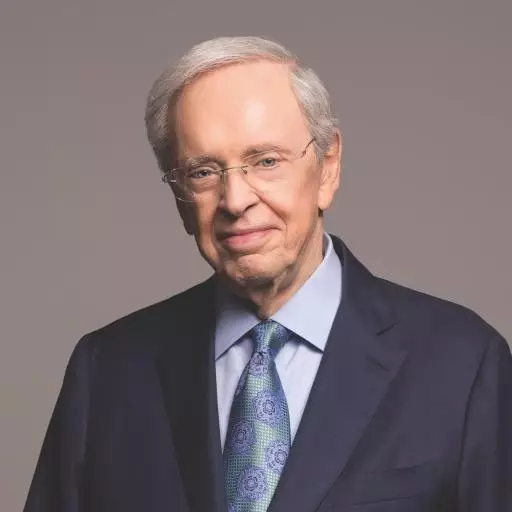
Brokenness: The Purpose - Part 2


Dr. Stanley uses Exodus 2:11-15 and 3:1-4 to examine how God's purpose in brokenness is to deal with the independent nature that is bent away from Him so that every person may fulfill God's great purpose for their life.
Dr. Charles Stanley: God said to Moses, "There at the burning bush, I want you to go to Pharaoh and tell him to let my people go."
Now, you can imagine what he must have felt. "Me, a shepherd, go to Pharaoh's court, tell him that you said, 'Let my people go.'"
Then, think about organizing two and a half million people. Imagine what he must have thought, what must have gone through his mind when God said to him, "Moses, I have chosen you."
Announcer: Do you know God's plan for your life? If so, are you resisting His efforts to prepare you? Welcome to In Touch, the teaching ministry of Dr. Charles Stanley. Today, we'll look at the life of Moses to see how God trains us for service. Listen carefully as a familiar Bible story offers insight into the purpose for brokenness. Let's listen in to Dr. Stanley.
Dr. Charles Stanley: There are two primary reasons, two primary purposes for which God breaks us. The first purpose is spiritual maturity. So, I want you to jot that down. In fact, I'm going to give you a number of things to jot down. The two primary purposes, so there are two primary points to this message. One of them, spiritual maturity. God breaks us in order to mature us and to make us Christ-like.
There's a second reason that God has in mind, a second purpose for brokenness. First of all, we said spiritual maturity, bringing us to the end of ourselves, so it is us and God alone.
Our dependence upon Him, His life flowing through us, that intimate, loving relationship of utter dependence upon Him. And the second purpose for that brokenness is, remember first, spiritual maturity. Secondly, supernatural ministry.
You say, "Well, that leaves me out because I'm a homemaker." Let me ask you something, Mom. Can you tell me any more responsibility in all of life that is more demanding than raising a godly family?
You think of the wisdom and the faith and the patience and the love. You can think of all the attributes that are so absolutely necessary for a mother to raise godly children.
Think of all the sacrifice and all the time it takes, and all the skill and the wisdom and the knowledge and the understanding that a woman must have to raise godly children. Don't ever belittle your responsibility as a mother.
Don't ever belittle and say, "Well, I don't have a ministry." Suppose Moses' mother had said, "I don't have a ministry." Moses' mother had a great ministry. Bringing her son into the world, saving him. And then in the feudal compact years she had, she ingrained within him something he never lost.
Now, if I should ask you, "How many of you know the name of Moses' mother?" You can look in the Bible and find out, but you know Moses' name. But Moses' mother had a godly ministry. She raised her son.
And you see the truth is that all of us that have a ministry, that doesn't mean behind a pulpit, we have different roles. It doesn't mean one is more important than the other in God's eyes, in your life.
But what God wants is this: He wants your maturity to be such that whatever His purpose is in your life, He would be able to accomplish that and achieve that.
Now, He chose Moses for the purpose of liberating this family of people that now has grown to almost three million. Now, I want you to see the ministry to which He called him and how God has worked this purpose in his life.
First of all, it was absolutely spectacular in its objective. Now, think about this for a moment. God said to Moses, "There by the burning bush, I want you to go to Pharaoh and tell him to let My people go."
Now, you can imagine what he must have felt. "Me, a shepherd, go to Pharaoh's court, tell him that I said or you said, and he won't even know who you are, tell him that you said, 'Let my people go.'"
Then, think about organizing two and a half million Hebrews. Imagine getting them together. Imagine what he must have thought, what must have gone through his mind when God said to him, "Moses, I have chosen you."
After forty years on the backside of the desert, now Moses flat out before God, before the burning bush, "Take off the shoes on your feet. The ground upon which you stand is holy ground." "I've got a job for you."
He said the same thing you and I would have said, "You got the wrong fellow." There's no way. He told him he couldn't speak in public, he said, "I can't do it, send somebody else." He told him all of these things.
And remember what he asked him to do: "Bring the nation of Israel or bring the family of Hebrews out of Egyptian bondage, across the Red Sea, down to Sinai to be de-Egyptianized, to receive the law, teach them the law, then carry them up to the Promised Land, into the Promised Land, having learned the law, so that they would be a peculiar people, different from everyone else."
God intended to separate the Hebrews from all the pagan, heathen, idolatrous people around them. So that the way they dressed, their customs, their sacrifices, everything made them absolutely a totally different people.
He said, "You are not to marry them, you are not to fellowship with them, you are not to fight with them, you are not to worship with them. Nothing. You are to be absolutely separated from all the other peoples of the world."
So God gave them their own economy, God gave them their own lifestyle, their own way of living that would totally separate them. That's why He said to them, "Under no condition are you to marry with the heathen."
"You are not to worship their gods." He gave them the Ten Commandments and all the other laws in order to keep them a separated, peculiar people. A spectacular objective He gave to Moses. He says, "This is the responsibility you have."
Secondly, it was strategic in its purpose for God. God's purpose was that through this nation all the other nations of the earth would learn the identity of the one true God who is Jehovah. Yahweh, Adonai, all the other names the Old Testament gives us for God.
Now, what a tremendous task. And through this family and through this nation would come the Messiah. What a tremendous goal God had set for these people.
This task that God had given to him was supernatural in its method. Now, I want you to think about this for a moment. How in the world would God ever pull this off?
Moses could never have done it. The only way he could possibly have fulfilled the ministry God called him to was first of all to absolutely strip him of all self-confidence, all goals, all ideas, all plans, all strategy, and leave him with nothing. Took him forty years to do it.
So now, when God comes to Moses, what does He tell him? He says, "I want you to go to Pharaoh and tell him, 'Let My people go.'"
He says, "Well, now when I tell the Hebrews who sent me, what shall I say?" "You tell them, 'I Am hath sent you.'"
"I Am in the past, I Am in the present, I Am in the future. I Am sovereign in the past, I Am sovereign in the present, I Am sovereign in the future. I'm all-powerful in the past, I'm all-powerful in the present, I'm all-powerful in the future. The great I Am has sent you."
Now, He told him what to do, but there's some things God didn't tell him. So I want to tell you, my friend, when God calls you to a task, He's not going to give you the full story.
Can you imagine what Moses must have thought if God had said to him at the burning bush, "Moses, I want you to go to Pharaoh and tell him to let My people go. I'm going to send ten plagues. I'm going to open the Red Sea. I'm going to cover you with a cloud by day and fire by night."
But God gave him just enough. He said, "Moses, all you need to know is that you're to go, and the only thing you need to remember is, 'I will be with thee.'"
Why did God strip Moses and break him? Because He wanted Moses to go to see Pharaoh with only one thing, a shepherd staff in his hand, which was a symbol of the presence of God. That's all he had. He said, "I will go with thee."
And what did God do? Not only did He free those Hebrews, the Bible says God sent them plagues, plague after plague after plague, ten plagues He sent them, until finally even the Pharaoh was broken and he let them go.
Then when they got, of course, to the Red Sea, you remember what happened there. Supernatural the way God did it. He gave them a cloud by day to keep the heat of the desert sun off of them, to keep them cool.
At night, the desert is cold, and so He let there be a fire in the heavens, a cloud of fire to keep them warm at night. Their shoes didn't even wear out.
And God rained down food from heaven, and water was there when they needed it. Every single thing they needed, I want you to remember, Moses didn't provide any of it.
Moses didn't open the Red Sea, Moses didn't convince Pharaoh. The only thing Moses did was to follow the commands of the Lord his God.
God assumed full responsibility for all the consequences and all the needs of two and a half millions of people through the leadership of one obedient servant, who had been stripped of all self-confidence, all self-reliance, so that all he had was God.
Supernatural in its method. But I want you to notice something else about it: sacrificial in its demands. You think about the toll this took on Moses. Moses had the responsibility of organizing this crowd.
And you can imagine the kind of attitudes that cropped up. Sacrificial in its demand. Moses, you're to lead these people, you're to obey me no matter what.
No matter how often they persecute you, and you remember what happens. So many times they want to rebel against him. He came down from getting the Ten Commandments, and what had they done? Now, they just come from the Red Sea. God had opened the Red Sea for them.
They had seen the miracle, they were a part of the miracle. It wasn't something they read about. They walked through the sea. Now what? They've built themselves a golden calf, and they're worshiping a golden calf.
You're talking about sacrifice and demands. But likewise, it was stormy in its progress. You think about all the heartaches and the burdens and the strife.
You think about two and a half million Hebrews out there wandering in the desert and following a man they've never seen. Oh, they tell me his name is Moses. Have you ever seen him? "No, but he's up the head of the crowd."
"Well, what did he say?" "I don't know what he said, but somebody told me that somebody told them that someone else told them that he said we were going to the Promised Land." "Well, I heard there are enemies out there." "Well, somebody told me that somebody else said that there."
Can you imagine two and a half million people marching through the desert, and the only thing they had to depend upon was one guy they've never even seen? That's all they had.
And besides that, every once in a while, they wanted to go back. "Take us back to Egypt, with the leeks and the onions and the cucumbers," and don't mention slavery.
Isn't it amazing how when God begins to break us, God begins to work in our lives, we want to run back to where it's ease and comfort and pleasure, but you can't do that.
You see, God has set a purpose in your life, and I want to tell you something, my friend, you can weasel out of it the best you can and determine your heart, "You are not going to be broken, and you with your determination, you are going to get it done." And one of two things is going to happen: you're either going to give up and surrender, God's going to put you on the shelf.
Now, you know you can take a beautiful vase that's worth a thousand dollars or more, beautifully colored, and set it on some very prominent place in your living room, and you can walk by and say, "Isn't that pretty?" Or you can take an old five-dollar gallon bucket pail, and I can carry enough water to refresh a whole lot of people who are thirsty.
There are some folks who'd rather be pretty and just looked at. God wants buckets. Old buckets, full of God, emptied of self, not beautiful vases, something to look at.
But in order for that to happen, you've got to get broken. You've got to be willing to get dirty, got to be willing to work, got to be willing to sacrifice, got to be willing to go through some stormy times, got to be willing to suffer, and most folks don't want any pain.
We want maturity without suffering and pain. We want to be able to succeed in the work that God has called us to do with no suffering, no pain, no rejection, no any of that. We just want it just God answering our prayers and making everything so sweet and comfortable, but I want to tell you, that isn't the way God operates.
Moses had a stormy path, but it was stretching in its effect. Listen, when he came to Pharaoh and said, "God said, Jehovah said, 'Let My people go!'" And he said, "No!"
You can imagine what happened to the faith of Moses when time after time he went to see these horrible plagues come upon the Egyptians. The first plague, the second, the third, the fourth, the fifth, the sixth, the seventh, the eighth, the ninth, the tenth, until finally he let them go.
Can you imagine the faith-stretching experience of that in the life of Moses? And then when he came to the Red Sea, rumbling behind them was the sound of Egyptian charioteers. They'd come this far. Here's the water. There's the bank. Two and a half million of us. We can't swim it. What now?
God said, "Moses, what do you have?" "Nothing." Same old rod, same old staff. He said, "Just raise that."
The sea right before his eyes opens up. They march across through the walls of water until every last Hebrew is on the other side. And when they're on the other side, God said, "Moses, just drop the rod now. Watch what happens." God just releases the water, and they're all covered up and drowned, washed away.
You can imagine the faith when Moses thought, "You know, usually the desert's hot." It was on the backside, down in Horeb, or down in Midian it was hot. He looks up, here's God's cloud keeping him cool.
At nighttime, usually when they had to wrap up real good, here was the fire of God keeping them warm. Can you imagine the faith of Moses when God said to him, "I want you to go up to the top of this mountain, Mount Horeb, Mount Sinai."
And there, waiting upon God, God writes in stone His law in the very hand of Moses. And He says to Moses, "I want you to teach this to My people, because I'm going to rule them and govern them all of their lives by this."
His promise was, "I will go with you." Do you realize that God's made the same promise to you that He made to Moses?
It's even a better promise for you and me because now we are indwelt by the supernatural presence and the power of the Holy Spirit.
That is the same, listen to this now, the same supernatural power that opened the Red Sea and created clouds of coolness and clouds of warmth, is the same supernatural Holy Spirit who is abiding and dwelling in you and me every single moment of our life.
You say, "Well, why doesn't God do something supernatural in my life?" Because it may be, my friend, that you may be too stubborn and determined, self-willed and independent, to allow God to shatter and break you, so that He can trust you with something good and big in your life.
You see, brokenness is God's method. It isn't man's method, it's God's method. It's preparation. Our usefulness by God will be determined by the degree of brokenness within our life.
There are a lot of folks who are just satisfied getting saved. But let me ask you a question. Would you really and truly like to discover what God could do in your life if there were nothing within you to keep Him from doing it?
Would you like to live your life and find out what God really planned for you the day He brought you into the world? Now, here's your first response: "Oh, but..."
Would you forget the "buts" for a moment? I mean, "buts" like, "I'm sixty years old," and, "buts, I've made these mistakes," and, "buts, here's what happened." Just forget all that for a moment.
Because I want you to think about something: God will use anybody who's broken. He takes the weak. Think about this. Moses' shepherd staff. David's slingshot. Gideon's pitcher.
So I want to ask you a question. What is it in your life that you're holding on to that you're not willing to surrender to God so He can use you to the maximum? You want a new vision of God's purpose in your life?
You want a new freedom in your spirit? You want a new power in your service for God? Here is where it begins.
With a sense of humility to be willing to say to God, "Lord, I'm willing for You to break any aspect of my life, no matter what it is, in order to prepare me to become the total person You created me to be and to achieve the work in this world You've called me to achieve."
Are you willing to tell Him that? And listen, if not, why not?
Listen. A new vision of God's purpose for your life, a new freedom in your spirit, and a new power in your service.
Moses learned a great lesson by being broken. And God wanted to teach him a simple truth. This absolutely impossible task, but he had to learn something. That God and God alone will do the work.
"Bear not a single care thyself. One is too much for thee." "The work is mine and mine alone. Thy work to rest in me."
It is when you and I learn to rest in Him and know that it's all His and not ours, that God is able to accomplish what He has so willed to accomplish in your life.
Announcer: We can either rebel against God's work or surrender to His will. Today on In Touch, Dr. Stanley's message assured that the Lord doesn't intend to break our spirits, only our self-reliance. If you need to understand more of the big picture concerning hardship and heartache, visit intouch.org. To review this lesson, follow the link to today on radio. Head over to our bookstore to order a copy of today's complete message, "Brokenness: The Purpose." It's also included in Dr. Stanley's teaching set, "Brokenness: The Way to Blessing." Again, that's intouch.org. To call or text, it's 1-800-IN-TOUCH. You can write to us at In Touch, Post Office Box 7900, Atlanta, Georgia, 30357. How much do you trust God? And how easily do you forgive others? Could those two things be linked? Today's moment with Charles Stanley is coming up. With the 30 Life Principles Bible Study, you'll enjoy a rich exploration of God's...
Featured Offer

With In Touch monthly devotional, you’ll have a consistent guide for your daily time with God. Each issue includes daily scripture readings, a Bible reading plan, and devotions from the biblical teachings of Dr. Charles Stanley. Always free!
Past Episodes
- Back to Basics
- Before Bethlehem
- Biblical Meditation
- Brokenness: The Way to Blessing
- Building Wise Relationships
- Called to be a Disciple
- Complete in Christ: A Study of Col. - Vol. 1
- Complete in Christ: A Study of Col. - Vol. 2
- Complete in Christ: A Study of Col. - Vol. 2-5
- Complete in Christ: A Study of Col. - Vol. 3
- Complete in Christ: A Study of Col. - Vol. 4
- Complete in Christ: Study/Colossians VOL 1
- Complete in Christ: Study/Colossians VOL 2
- Contending for the Faith: A Study of Jude
- Countdown to Judgment
- Facing Life's Obstacles
- First Peter: Living Triumphantly
- Forgiveness: God's Grace Demonstrated
- Forward By Faith
- God Has An Answer for Our Unmet Needs
- God's Promise for Blessing
- Good News of Great Joy
- Grace for Today
- Grace: God's Second Chance
- Growing Strong in Faith
- Healing Damaged Emotions
- Helps to Holiness
- Helps to Holiness - VOL 1
- Helps to Holiness - VOL 2
- Hope for A New Life
- How Grace Changes Everything
- How the Truth Can Set You Free
- How to Choose Your Destiny
- How to Experience Forgiveness
- How to Reach Your Full Potential
- How to Release Your Burdens
- How to Talk with God
- How to Talk with God - Vol 1
- How to Talk with God - Vol 2
- Humility in the Life of the Believer
- Landmines in the Path of the Believer
- Learning to Pray the Bible Way
- Learning to Walk By Faith
- Letting Go of Anger
- Liberated by Faith: A Study of Galatians
- Liberated to Love
- Life Principles - Volume 1
- Life Principles - Volume 2
- Life Principles - Volume 3
- Life Principles - Volume 4
- Life Principles - Volume 5
- Listening to God
- Living in the Power of the Holy Spirit
- Living Life at Its Best
- Living the Extraordinary Life
- Living Triumphantly: A Study of 1st Peter VOL 1
- Living Triumphantly: A Study of 1st Peter VOL 2
- Living Triumphantly: A Study of 1st Peter VOL 3
- Living Triumphantly: A Study of 1st Peter VOL 3.3
- Living Triumphantly: A Study of 1st Peter VOL 3.4
- Living Triumphantly: A Study of 1st Peter VOL 3.5
- Living Triumphantly: A Study of 1st Peter VOL 3.6
- LP - Volume 5
- Passion for God
- Prayer Life of a Ministry Leader
- Pursuing God's Heart - Vol 1
- Pursuing God's Heart - Vol 2
- Pursuing God's Heart - Vol 3
- Pursuing God's Heart - Vol 4
- Sanctification
- Satanic Attack
- Servanthood: The Way to Greatness
- Spiritual Discernment
- Steps to God's Guidance
- Strong
- Success God's Way
- The Awareness Of God's Presence
- The Believer's Impact
- The Believer's Warfare
- The Blood of Christ
- The Book of Books
- The Character of God
- The Character of God Vol 1
- The Character of God Vol 2
- The Character of God Vol 3
- The Coming King: A Study of Revelation - VOL 1
- The Coming King: A Study of Revelation - VOL 2
- The Coming King: A Study of Revelation - VOL 3
- The Coming King: A Study of Revelation - VOL 4
- The Coming King: A Study of Revelation - VOL 5
- The Coming of Christ
- The Convictions by Which We Live
- The Courage to Stand
- The Encouraging Message from the Cross
- The Encouraging Message of the Cross
- The God Who Cares
- The Joy of Obedience
- The Key to the Heart of God
- The Life That Wins
- The Path of Spiritual Maturity
- The Power of Patience
- The Power of Praise
- The Power of the Holy Spirit
- The Privilege of Knowing God
- The Promises of God
- The Reach of God's Love
- The Real War
- The Source of My Strength
- The Spirit-Filled Life
- The Storms of Life
- The Truth About Grace
- The Truth About Sin
- The Ways of God
- The Will of God
- The Words of Our Mouth
- True Peace

Video from Dr. Charles Stanley
Featured Offer
With In Touch monthly devotional, you’ll have a consistent guide for your daily time with God. Each issue includes daily scripture readings, a Bible reading plan, and devotions from the biblical teachings of Dr. Charles Stanley. Always free!
About In Touch Ministries
In Touch Ministries is the broadcast teaching ministry of Dr. Charles Stanley.
About Dr. Charles Stanley
Dr. Charles Stanley
September 25, 1932 – April 18, 2023
Dr. Charles F. Stanley was the senior pastor of First Baptist Church Atlanta for more than fifty years. He was also the founder of In Touch Ministries and a New York Times best-selling author, who wrote more than seventy books encouraging people to seek Jesus as their Savior and know Him as their wise and loving Lord.
Known to audiences around the world through his wide-reaching TV and radio broadcasts, Stanley modeled his 65 years of ministry after the apostle Paul’s message in Acts 20:24: “Life is worth nothing unless I use it for doing the work assigned me by the Lord Jesus—the work of telling others the Good News about God’s mighty kindness and love.”
Contact In Touch Ministries with Dr. Charles Stanley
partnerrelations@intouch.org
https://www.intouch.org
Mailing Address
In Touch Ministries
PO Box 7900
Atlanta, GA 30357
1-800-468-6824