

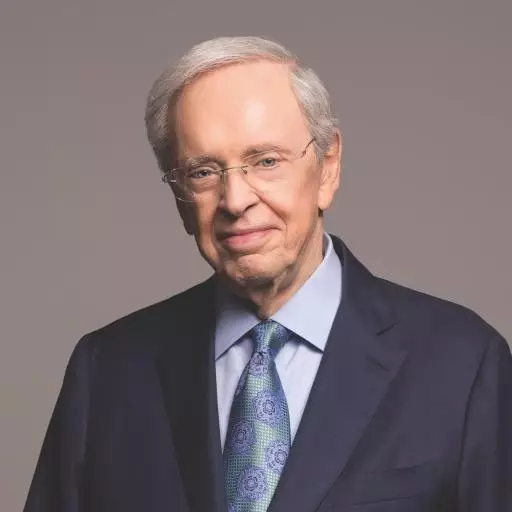
A Pattern for Prayer - Part 1


Dr. Stanley takes a close look at the true purpose of prayer. Once you create a healthy pattern of talking to God, you will begin to see how He has provided for your needs and continually purifies your heart. Your prayer life will be transformed and will take on a powerful, new meaning.
Dr. Charles Stanley: If we understand the holiness of God, we will live holy before God. Not to do so is a contradiction of everything we profess, everything we claim to be, and everything we say to the world we are. My Father who art in heaven, You’re holy. I want Your kingdom's rule in my life. I want Your will in my life. I look to You as the source of all my needs. You’re the only one who can forgive me and cleanse my heart.
Guest (Male): We face complex issues on many levels almost every day. Scripture tells us to pray fervently about these needs, but how do you know what the real issue is? Today on In Touch, the teaching ministry of Dr. Charles Stanley, we'll discover a pattern for prayer that's accurate and relevant every time. Our series, Learning to Pray the Bible Way, continues.
Dr. Charles Stanley: When you pray, what is the primary objective of your prayer? Is it to get something from God? If that is, there's nothing wrong with that because Jesus said, "Ask and it shall be given you; seek and ye shall find; knock and it shall be opened unto you." All through the Scriptures, we are admonished to ask for our needs. But if that is the primary objective of your prayer, you're missing something, because from God's point of view, the primary objective of our prayer should be fellowship and communion with the Father.
Most people's idea of praying is that you just ask God for what you want, and He'll give it to you sooner or later. If you're living right, you'll surely get it; if you're not, maybe you won't. That's not what praying is all about. But because many people sense that as a method of talking to God, and they call it prayer, that's the way they pray. Their prayer after a while becomes ritualistic and perfunctory—something they sort of get through. After they've given their list, it's in Jesus' name and they're on their way.
What happens is after a while, it gets sort of dull because not many answers come. If not many answers are coming and that's what you're primarily after, then why keep talking to God who's not answering your prayer? There is a prayer that millions of people have prayed that God will not answer. There's a reason for it. I want you to turn to that prayer. It's found in the Sermon on the Mount, in Matthew chapter 6.
We call it the Lord's Prayer. It is a pattern prayer, and that's the title of this message: "A Pattern for Prayer." In Matthew chapter 6, beginning in verse 5 and reading through verse 15, it's a prayer that many people have repeated and repeated for years and years. They didn't know what it meant, they still don't know what it meant, and most of all, they have absolutely no right whatsoever to be praying the prayer.
Let's look at it and see what God would say to us. As we've said in the very beginning, this is part of a series on prayer: Learning to Pray the Bible Way. Each of these times, we've taken a passage to find out what is God saying in that specific passage about prayer.
Let's look at this beginning in verse 5: "And when you pray, you are not to be as the hypocrites; for they love to stand and pray in the synagogues and on the street corners, in order to be seen by men. Truly I say to you, they have their reward in full. But you, when you pray, go into your inner room, and when you've shut your door, pray to your Father who is in secret, and your Father who sees in secret will repay you."
"And when you're praying, do not use meaningless repetitions as the Gentiles do, for they suppose that they will be heard for their many words. Therefore, do not be like them; for your Father knows what you have need of before you ask Him. Pray then in this way," Jesus says. "Here's a method: Our Father who art in heaven, Hallowed be Thy name. Thy kingdom come, Thy will be done, on earth as it is in heaven. Give us this day our daily bread, and forgive us our debts, as we also have forgiven our debtors. And do not lead us into temptation, but deliver us from evil. For Thine is the kingdom and the power and the glory forever. Amen."
Then He adds the following: "For if you forgive men for their transgressions, your heavenly Father will also forgive you. But if you do not forgive men, then your Father will not forgive your transgressions." Now I want to ask you a question that I'm going to ask you several times: How much time in any given day does God have you all to Himself with your undivided attention, concentrating on Him and no one else?
No matter what you say about your prayer life, if you're only giving God a little bit of time in which you are making your request and you hurry and get over that so you can get on with something more important, more than likely, you are not really praying God's way. That's not communion. That's issuing a list hurriedly, praying that the Father will reach into the storehouse, send you what you want, and you get on your way with what you think is important in the eyes of God.
More important than giving you what you want is time to fellowship with you. It takes time to love and to be loved. God's objective in giving us prayer is giving us the privilege of expressing our feelings, our desires, our wants, our heartaches, our burdens, our sorrows, our cares. Likewise, thinking about Him, adoring Him, loving Him, worshipping Him.
The problem is that most folks' idea of prayer is so juvenile, so infantile, and so unbiblical that thinking in terms of listening to God, speaking to God, and fellowshipping with Him is totally foreign to their thinking. If praying is primarily communing with the Father and we only give Him a few moments per week, then we don't know anything about prayer.
Here's the problem: I could stand here all day and tell you what it means to be quiet and to be alone by yourself with the Father, just listening, just loving Him, just letting Him love you in return, just telling Him what you feel and knowing that He's listening, and having Him speak to your spirit, assure you, encourage you, or give you direction. I could go through all of that, but it won't make one bit of difference until you give God the time and you allow Him to do that in your life.
When you do, nobody's going to have to ask you to pray. Nobody's going to have to beg you to spend time praying. You will make time to be with the Father. When did you ever rush into your bedroom or into your den, take the phone off the hook, isolate yourself from everybody else, and just get on your face before God and just tell Him you just love Him and you're grateful, and you thank Him and you praise Him? You run out of words and you go over them again because you don't know how to tell Him exactly how you really feel.
Well, there's a prayer lots of folks have repeated and repeated. In fact, millions of people have prayed this prayer or repeated it. They didn't know what it meant; God never heard it the first time. We call it the Lord's Prayer. He says our prayers ought to be what? Listen to verse 5: "When you pray, you're not to be as the hypocrites. They love to stand and pray in the synagogues and on the street corners in order to be seen by men. Truly I say to you, they have their reward in full."
He says, first of all, when you come to God in prayer, you should come in sincerity—never to show off, never to make an impression, not praying so other folks will hear us and maybe somehow say, "Wasn't that a beautiful prayer? Doesn't she pray well? Isn't he good at praying?" If that's the reason we are praying, you know what God says? He says whatever they say is all the reward you get in full. You just got paid, which means it's not going to do you a bit of good. If you're praying to be seen, you've had it; that's all the reward you're going to get.
Second thing He said: "But when you pray, go into your inner room, and when you've shut your door, pray to your Father who is in secret; and your Father who sees in secret will repay you." Notice He says the first fellow has his reward; he's been seen by others. The person who prays in secret will be repaid, that is God will honor and God will answer that prayer.
What is He referring to here? Simply this: the times when you and I exclude ourselves from everyone else and we get alone to talk to the Father. All the public praying will ever do will have no more effect than the private prayers we pray. The choicest way to pray is not in public where everybody can see you and everybody can hear. There's nothing wrong with that; He's not against public prayer.
But our public prayers should probably be short, to the point, and certainly not arrayed in some kind of beautiful language in order to impress someone with our education, experience, spirituality, or piety. Rather, He says the real key here is what? In the privacy, the door shut, that's where we can be spontaneous. That's where we can feel liberty. That's where the real you comes forth. In the privacy of our own prayer room, whatever that may be, He says in secret, because the secret prayer is going to make the public prayer more effective.
Then He says a third thing in verse 7: "When you pray, do not use meaningless repetitions." Now the Lord's Prayer, which is the pattern prayer, and the Lord's prayer in John 17 is probably the best Lord's prayer, the best explanation of that. But this is a pattern that Jesus gave. Now you can repeat this: "Our Father who art in heaven, hallowed be Thy name. Thy kingdom come, Thy will be done, on earth as it is in heaven." Every one of us can say the whole prayer in a matter of a split few seconds. It's absolutely meaningless and we can think of something else while we are praying it.
We can be just as guilty as the unbeliever by simply quoting or repeating a prayer which we call praying when it's meaningless to us. We don't understand what it means, we're not applying it to our life, and I want to show you really the truth is it's sort of dangerous to pray this way. He says don't be like the heathens who pray with meaningless repetitions. What they would do is they would just go on and on, long elaborate prayers trying to impress their God.
It doesn't mean that we will not pray the same thing over and over again. Jesus in the Garden of Gethsemane prayed, "Father, if it be Thy will," three times He prayed the same prayer. There's nothing wrong with saying the same thing in your request over and over again if that's what you feel. Nor is there anything wrong with a prayer that maybe someone else has written that you can honestly pray with them in sincerity. There are denominations that have prayer books and you can pray that prayer.
If you mean it, if you understand the meaning of the prayer and you can commit yourself to what you are praying, that's one thing. But if you are just repeating some instruction that someone else has given you or someone else's prayers, it becomes the same meaningless jargon that Jesus talked about when He said those pagans who pray to their gods trying to convince and persuade them. It's meaningless repetition and it amounts to absolute zero. Don't expect anything from God.
Then He gives us a prayer. He says to His disciples, "Here's a pattern that you can go by." This does not mean that this is the prayer that we are to pray all the time, or this is the only prayer we are to pray. I want to explain this prayer that has three parts to it. I want you to look here for a moment. The first part is in verse 9 when He says, "Our Father which art in heaven." That's sort of the doxology—or rather the invocation. Then comes the petition beginning with "hallowed be Thy name." Then comes the doxology at the very end when He says, "For Thine is the kingdom and the power and the glory forever. Amen."
A very short prayer, but I want you to ask yourself this question. I'll explain it and then I want you to ask yourself this question: Can I really pray that prayer? Some of you who are lost, you've never received Jesus Christ as your Savior, you don't even go to church too much, you happen to be listening at this particular time. You've been repeating this prayer for years. You get in trouble, you get scared, finances go down, somebody gets sick, you want to call in some preacher or somebody.
What do you do? You get on your knees and pray, "Our Father which art in heaven, hallowed be Thy name. Thy kingdom come, Thy will be done." You repeat that prayer, and the worse off the condition is, the more sincere you repeat the prayer. I want to tell you, God never hears one word of it. You say, "Now wait a minute. Jesus said we were to pray that prayer, and if I pray that prayer, you mean God isn't listening?" Not listening.
Why did Jesus say to them, "Pray then in this way," if He's not going to listen? Here's the reason: because He begins by saying, "Our Father." Listen: "Our Father who art in heaven." Who can say, "Our Father who art in heaven"? Only those who have recognized Jehovah God as their Father. You say, "Well, but I do believe that God is God." Do you really? Listen to what His virgin-born, incarnate Son, His only beloved Son, Jesus Christ the Lord, Jesus Christ the Savior, Jesus Christ our life said.
The one who said, "If you've seen the Father, you've seen Me. I and the Father are one." Listen to what He said: "No man comes to the Father but by Me." To those who believe in Him, to them gave He the power to become the sons of God. The only person who can say, "Our Father," is one who is a child of God. You say, "Well, but all of us are children of God because God is the Creator." Everyone is a child of God in the fact that God is the Creator of all humanity.
But until you can say spiritually, "Our Father," then my friend, that prayer is meaningless and to repeat it is absolutely a waste of your time. The only way you can say, "Our Father," is first of all to accept the gift of forgiveness provided by our Father. That forgiveness is provided in His Son, Jesus Christ, who went to Calvary, sacrificed His life, laid down His life, placed upon Himself the sin of all mankind so that every single person who is forgiven of their sin is forgiven by receiving Jesus Christ as their personal Savior.
Jesus said, "If you've seen Me, you've seen the Father. You cannot get to the Father and bypass the Son." Somebody says, "I don't believe all this stuff about Jesus, but I believe in God." No, you don't. You may believe there is a God. You may believe in a god that you have configured in your mind. But until you believe in the God as revealed by the person of Jesus Christ, you are believing in a god, but not the God who is Jehovah Elohim, Yahweh, the God of the Old Testament, the God of the New Testament, whose Son Jesus Christ is the only way to understand what God's all about.
Therefore, He limits this prayer in the very beginning to those who can honestly and sincerely say, "My Father who art in heaven." Now when He said "who art in heaven," that does not mean that God is geographically bound to heaven because you and I know that everything and every place and all things are in the presence of God. But God is seated, on the other hand, in the heavens at His throne. He says when you and I come to Him, we are to approach Him as our Father who art in heaven.
Then He says there are three things about the Father that you and I are to think about and to honor in our prayers: His name, His kingdom, and His will. "Hallowed be Thy name." What that means is holy be the name of the Lord God. The name of God represents all that God is. It represents all of His characteristics, all of His attributes, all of His actions. That is, the name of a person summarizes the totality of that person.
So when a person says, "Hallowed be Thy name," what you're saying is, "God, I recognize and honor You as holy God." If you're an unbeliever, the reason you can't pray that prayer is because you don't recognize the holiness of God. You say, "Well, yeah I do too." No, you don't. If you acknowledged the holiness of God, you would fall upon your face in confession and repentance and cry out to Him for mercy and forgiveness before God.
It is either mere words or a confession and a declaration and a proclamation that you acknowledge and honor the holiness of God and that no sinfulness can stand in the presence of holy God. The very idea that a lost person can come to God and say, "Our Father which art in heaven, hallowed be Thy name," is a contradiction in terms. That person living in willful, known rebellion against God and rejecting His Son does not honor the holiness of God because the holiness of God is to be found in His Son Jesus Christ.
Any person who says to God the Father, "I do believe that I can come to You and bypass Your Son," is declaring, "God the Father, Your experience at Calvary by crucifying Your own Son was a tragic mistake. I can come to You without Him." Therefore, what a terrible, horrible waste, what blasphemy against God. A person cannot say, "Our Father who art in heaven, holy is Thy name, I recognize Your holiness and Your righteousness." That means that whatever God says and does is right.
God says no man comes to the Father except through His Son Jesus Christ. Jesus says, "I came into the world that the lost in the world may be saved. I came to give My life a ransom for many. I was sent by the Father. I only do the things I see the Father do." For you to come to the Father and bypass His Son, ignore His Son, rebel against His Son, reject His Son, spurn His Son is blasphemy against God.
"I'm coming to You, God, but I don't have to come through Your Son." What you're saying is, "God, You either made a mistake and You're wrong. I'm coming anyway." No, you're not. You may try to, but you won't get there. You can pray all you want to pray, but I want to tell you God isn't going to answer that prayer because an unrighteous, unholy, lost person who has rebelled against God is not recognizing the holiness of God.
So that petition won't work. But you are to come to him acknowledging His holiness. What does that do? When you and I kneel in the presence of God or stand in the presence of God or whatever it may be, in our heart, when you understand the holiness of God, there cannot be any pride. There can be no egotism. There can be no self-sufficiency. I'm not coming to God in control. I'm humbling myself before holy God whose righteousness is absolutely supreme and sovereign above all the works of humanity.
Guest (Male): Maybe Dr. Stanley's message has opened your eyes to the essential significance of Christ's sacrifice. Place your trust in Him today and receive God's gift of forgiveness and salvation. Then you can begin enjoying the incomparable benefits of prayer. Learn more about becoming a Christian at intouch.org and listen to this message again by clicking on the link to today on radio.
To order a copy of today's complete message, "A Pattern for Prayer," or the entire "Learning to Pray the Bible Way" teaching set, visit our bookstore page. Again, that's intouch.org. To call or text, it's 1-800-IN-TOUCH. You can write to us at In Touch Ministries, Post Office Box 7900, Atlanta, Georgia 30357. The believer who serves God in this life is preparing to serve Him for eternity. Listen for today's Moment with Charles Stanley coming up.
In places where churches have closed or never existed, the need for discipleship beyond evangelism is urgent. Our mission is to train people on the front lines of mission through life principles training based on the biblical teaching of Dr. Charles Stanley, shaping people to reflect Jesus and empowering them to fulfill the Great Commission. For more info, visit intouch.org/global.
With the 30 Life Principles Bible Study, you'll enjoy a rich exploration of God's Word. Designed as a 90-day learning experience for individual use or in a group setting, you'll explore Dr. Stanley's 30 Life Principles and learn how to make the Bible a part of your everyday life because we can all benefit from a closer look. To order the 30 Life Principles Bible Study, call 1-800-IN-TOUCH or visit intouch.org/store. You're listening to In Touch. God is honored when believers...
Featured Offer

Drawing from Scripture and the biblical teaching of Dr. Charles Stanley, Prayer in Every Season invites you to meet God right where you are. Through thoughtful reflections, meaningful practices, and prayers for every season of the soul, you'll discover that prayer isn't reserved for life's highest highs or deepest lows. It's an everyday conversation with the faithful God who never leaves your side.
Past Episodes
- Back to Basics
- Before Bethlehem
- Biblical Meditation
- Brokenness: The Way to Blessing
- Building Wise Relationships
- Called to be a Disciple
- Complete in Christ: A Study of Col. - Vol. 1
- Complete in Christ: A Study of Col. - Vol. 2
- Complete in Christ: A Study of Col. - Vol. 2-5
- Complete in Christ: A Study of Col. - Vol. 3
- Complete in Christ: A Study of Col. - Vol. 4
- Complete in Christ: Study/Colossians VOL 1
- Complete in Christ: Study/Colossians VOL 2
- Contending for the Faith: A Study of Jude
- Countdown to Judgment
- Facing Life's Obstacles
- First Peter: Living Triumphantly
- Forgiveness: God's Grace Demonstrated
- Forward By Faith
- God Has An Answer for Our Unmet Needs
- God's Promise for Blessing
- Good News of Great Joy
- Grace for Today
- Grace: God's Second Chance
- Growing Strong in Faith
- Healing Damaged Emotions
- Helps to Holiness
- Helps to Holiness - VOL 1
- Helps to Holiness - VOL 2
- Hope for A New Life
- How Grace Changes Everything
- How the Truth Can Set You Free
- How to Choose Your Destiny
- How to Experience Forgiveness
- How to Reach Your Full Potential
- How to Release Your Burdens
- How to Talk with God
- How to Talk with God - Vol 1
- How to Talk with God - Vol 2
- Humility in the Life of the Believer
- Landmines in the Path of the Believer
- Learning to Pray the Bible Way
- Learning to Walk By Faith
- Letting Go of Anger
- Liberated by Faith: A Study of Galatians
- Liberated to Love
- Life Principles - Volume 1
- Life Principles - Volume 2
- Life Principles - Volume 3
- Life Principles - Volume 4
- Life Principles - Volume 5
- Listening to God
- Living in the Power of the Holy Spirit
- Living Life at Its Best
- Living the Extraordinary Life
- Living Triumphantly: A Study of 1st Peter VOL 1
- Living Triumphantly: A Study of 1st Peter VOL 2
- Living Triumphantly: A Study of 1st Peter VOL 3
- Living Triumphantly: A Study of 1st Peter VOL 3.3
- Living Triumphantly: A Study of 1st Peter VOL 3.4
- Living Triumphantly: A Study of 1st Peter VOL 3.5
- Living Triumphantly: A Study of 1st Peter VOL 3.6
- LP - Volume 5
- Passion for God
- Prayer Life of a Ministry Leader
- Pursuing God's Heart - Vol 1
- Pursuing God's Heart - Vol 2
- Pursuing God's Heart - Vol 3
- Pursuing God's Heart - Vol 4
- Sanctification
- Satanic Attack
- Servanthood: The Way to Greatness
- Spiritual Discernment
- Steps to God's Guidance
- Strong
- Success God's Way
- The Awareness Of God's Presence
- The Believer's Impact
- The Believer's Warfare
- The Blood of Christ
- The Book of Books
- The Character of God
- The Character of God Vol 1
- The Character of God Vol 2
- The Character of God Vol 3
- The Coming King: A Study of Revelation - VOL 1
- The Coming King: A Study of Revelation - VOL 2
- The Coming King: A Study of Revelation - VOL 3
- The Coming King: A Study of Revelation - VOL 4
- The Coming King: A Study of Revelation - VOL 5
- The Coming of Christ
- The Convictions by Which We Live
- The Courage to Stand
- The Encouraging Message from the Cross
- The Encouraging Message of the Cross
- The God Who Cares
- The Joy of Obedience
- The Key to the Heart of God
- The Life That Wins
- The Path of Spiritual Maturity
- The Power of Patience
- The Power of Praise
- The Power of the Holy Spirit
- The Prayer Life of a Ministry Leader
- The Privilege of Knowing God
- The Promises of God
- The Reach of God's Love
- The Real War
- The Source of My Strength
- The Spirit-Filled Life
- The Storms of Life
- The Truth About Grace
- The Truth About Sin
- The Ways of God
- The Will of God
- The Words of Our Mouth
- True Peace

Video from Dr. Charles Stanley
Featured Offer
Drawing from Scripture and the biblical teaching of Dr. Charles Stanley, Prayer in Every Season invites you to meet God right where you are. Through thoughtful reflections, meaningful practices, and prayers for every season of the soul, you'll discover that prayer isn't reserved for life's highest highs or deepest lows. It's an everyday conversation with the faithful God who never leaves your side.
About In Touch Ministries
In Touch Ministries is the broadcast teaching ministry of Dr. Charles Stanley.
About Dr. Charles Stanley
Dr. Charles Stanley
September 25, 1932 – April 18, 2023
Dr. Charles F. Stanley was the senior pastor of First Baptist Church Atlanta for more than fifty years. He was also the founder of In Touch Ministries and a New York Times best-selling author, who wrote more than seventy books encouraging people to seek Jesus as their Savior and know Him as their wise and loving Lord.
Known to audiences around the world through his wide-reaching TV and radio broadcasts, Stanley modeled his 65 years of ministry after the apostle Paul’s message in Acts 20:24: “Life is worth nothing unless I use it for doing the work assigned me by the Lord Jesus—the work of telling others the Good News about God’s mighty kindness and love.”
Contact In Touch Ministries with Dr. Charles Stanley
partnerrelations@intouch.org
https://www.intouch.org
Mailing Address
In Touch Ministries
PO Box 7900
Atlanta, GA 30357
1-800-468-6824