

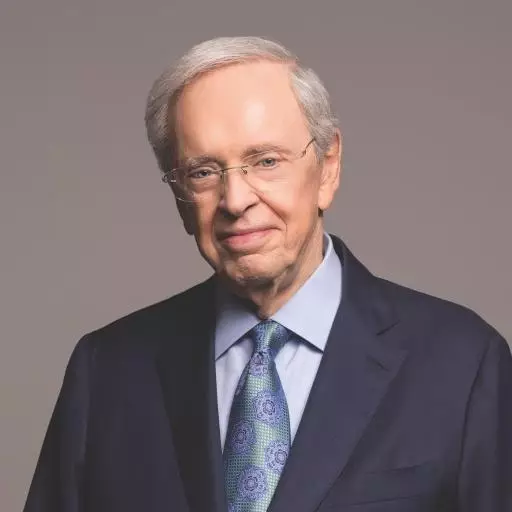
A Covenant Relationship


As the son of a defeated royal family, Mephibosheth had everything to fear when David ascended the throne. But instead of execution, he was invited to dine with the king for the rest of his life. Dr. Stanley teaches us that God has extended the same kindness and covenant love toward us through His Son Jesus.
Dr. Charles Stanley: If you and I ever begin to grasp what is ours because of what God did at the cross through Jesus Christ, He sealed your redemption and mine through the shedding of His blood. Now listen, the very thing that was true of Jonathan and David, God's done for you and me. And what is God saying to us? God says that you and I have become joint heirs with Jesus Christ. All that's His is ours.
Guest (Male): Most people want relationships that are enduring, with people who are committed and full of love. But when those characteristics are required of us, are we eager to give that same kind of devotion? Today on In Touch, the teaching ministry of Dr. Charles Stanley, we continue our study of 1 Samuel, where we’ll see that the friendship between Jonathan and David is a prime example of a covenant relationship. Let’s join Dr. Stanley for his message.
Dr. Charles Stanley: Let me explain first of all what a covenant is. If you looked in the Hebrew and you look at that word, more than likely the explanation would be to cut a covenant because a cutting was a part of a covenant when it was a certain type of covenant, which surely this was between Jonathan and David.
A covenant is an agreement. It's a contract. It's more than just a "yes, I will" or "no, I won't" kind of a thing, but it's a binding thing. Of course, a person's loyalty, their word, and their faithfulness was the heart and core and the basis of all of that. When men made covenants in those days, they intended to keep the covenant, and they did several things that would remind them of their commitment because with the responsibility often came blessing, and with the blessing, there was a responsibility.
If you go back in the scriptures, the first time you'll find that word is when God makes a covenant with Noah. Remember what God said to Noah? He said He's going to make a covenant with him, and He said this will be a sign of the covenant. What's the sign? A rainbow. Every time you see that, you ought to say, "Praise the Lord, He's still keeping His word." What He said was, "I'm going to make a covenant between us that I will never destroy the whole earth by water again."
Then, of course, you come on through the scriptures and you find the most familiar covenant with Abraham. You recall what God said to him? He said, "I'm going to make of you a great nation." He gave him lots of blessings there in the 15th and 17th chapters of Genesis. But the important thing is the three characteristics that are always involved in a covenant.
First of all, whether it is conditional or unconditional. You'll recall when God made the covenant with Abraham, was it conditional or unconditional? It was unconditional, which means God said, "Here's what I'm going to do, period. I'm going to give you this land. Your seed's going to be blessed. The nations of the earth are going to be blessed because you." He didn't say, "If you do this" or "If you do that." That is an unconditional covenant.
When He makes covenants later on, for example, when He says, "If you will do this, this is what I will do," that is a conditional covenant. A second characteristic was that it was either temporal or eternal. It was either something for a short period of time or something that lasted forever. The third thing was, was it symbolical or was it a literal covenant? Sometimes they were symbolical, and of course, I believe you and I can understand clearly this was a very literal covenant that they made—a pledge, an agreement, a contract, a covenant, a commitment to one another.
They committed that as long as they lived, and even in their households and families to come, they too would be included in this agreement that they made. It wasn't a temporal thing. It certainly wasn't symbolic. It was a covenant that they made, not conditional, but unconditional. A covenant of love and loyalty to each other.
When you think about the way they transacted this covenant here, we get an indication in the third verse when it says Jonathan and David made a covenant because he loved him as his own soul. Jonathan stripped himself of his robe that he had upon himself and gave it to David, and his garments, even to his sword, to his bow, and to his girdle. There were a number of ways that people indicated the covenant relationship and binding that covenant.
Sometimes a fellow could take off his shoe, the other fellow take off his shoe, and they made a contract with each other. Or sometimes, as they carried salt in a little pouch, they would just give a pinch of salt, and you give a pinch of yours. But the way they made eternal, everlasting, irrevocable covenants was always they shed blood. Sometimes as in the hand or their wrist, they bound their wrists together in order that their blood may mingle together, which meant my life and your life, your life and my life. It was a covenant that was not to be broken. They did not make those covenants lightly.
It may be that's where we got the idea of shaking hands on a deal. Let's shake hands, and that's a deal. In those days, they didn't just shake hands. They shook hands and shed blood. Their word was a bond. Each time they saw that scar when it mended, that reminded them of the responsibility they had, plus the blessings that would ensue as a result of the covenant they had made to each other.
When we look at this covenant here, it does not say that they shed blood. But because it was a covenant that was an eternal covenant between their households, we know that they did. They didn't just swap shoes or swap clothes here, but it was an eternal covenant. That very word "covenant" means to cut a covenant when it was to be something that was to last, irrevocable, with the shedding of blood.
I want you to notice what happened here. I want us to see four things about their covenant. First of all, what was the motive of it? This will relate to the two applications that I want to share a few moments later. They joined in their covenant with each other built on two things: first of all, their genuine love for one another and their loyalty to each other. I believe those are two qualities that ought to be more evident in the lives of Christians than ever before because there are so few people it seems that loyalty is a thing of the past. Most people don't really understand the true meaning of love when you say, "I love you." Love is an all-encompassing thing that demands something.
When these two men cut a covenant between them motivated by love and loyalty to each other, they meant that for a lifetime. They didn't mean that until one of them wronged the other or until one of them misunderstood the other. The motive here was that of love and loyalty to each other. Secondly, what was the method that they used? First of all, you notice they exchanged possessions. Jonathan stripped himself of his robe, which must have been very valuable, and of his garments, likewise valuable.
It says even to his sword, which was one of the last things a man would give up, especially a warrior, and to his bow and to his girdle. What he gave is what clothed him and likewise he gave his protection. What they were really saying is that the two men were becoming one in their love and loyalty to each other. It was a binding of their faithfulness of support and unconditional support to one another. Not only that, but it was a commitment that included not only themselves but a commitment that included their families because when Jonathan and David came together, potentially their families likewise were involved in that covenant.
When Saul and Jonathan were killed in the battle, finally David became king. Of course, the household of Saul fled for their lives because they were told when David becomes king, he's going to wipe out everything that reminds him of Saul. What they didn't understand was that Jonathan and David had made a covenant with each other. In the fourth chapter of 2 Samuel, it says in verse four, "And Jonathan, Saul's son, had a son that was lame of his feet. He was five years old when the tidings came of Saul and Jonathan out of Jezreel."
He was five years of age when they heard that Jonathan and Saul had been killed in the battle of the Philistines at Jezreel. They knew that David was coming on the scene. He was coming fast and hard. He was going to take over. The scripture says that a nurse took him up and fled. They were going to flee for their lives. It came to pass as she made haste to flee that he fell and as a result of the fall, it broke his legs or in such a way that it made him lame. He couldn't walk. His name was Mephibosheth.
Let's move on over to chapter nine for a moment. David has been king for a while and his friend Jonathan, with whom he made the covenant, unconditional, literal covenant of love and loyalty, which they likewise included in their whole household—the household of Jonathan and the household of David. Jonathan's dead, Saul's dead. What has happened to the household of Jonathan? Naturally, they had scattered. Some time went by and David kept trying to find out if there was anyone around left of Jonathan's household.
Chapter nine says David said, "Is there any left of the household of Saul that I may show him kindness for Jonathan's sake?" He'd made a blood covenant with Jonathan for their household. Saul had tried to kill him several times, hunted him down like a wolf for ten long years. Each time David had a chance to kill Saul, he did not do it. One of the reasons is because they had made a covenant promise with each other. That included their households.
Jonathan and Saul are dead. David can't find any remains of Jonathan's family. He says, "I want to find somebody and show them kindness for Jonathan's sake." Verse two: "And there was of the house of Saul a servant whose name was Ziba. And when they had called him unto David, the king said to him, 'Are you Ziba?' And he said, 'Thy servant is he.' Then the king said, 'Is there not yet any of the house of Saul that I may show the kindness of God unto him?' And Ziba said unto the king, 'Jonathan has yet a son who is lame on his feet. He can't walk.'"
The king said to him, "Where is he?" And Ziba said unto the king, "Behold, he is in the house of Machir, the son of Ammiel, in Lo-debar." Then King David sent and fetched him out of the house of Machir, the son of Ammiel, from Lo-debar. Now when Mephibosheth, the son of Jonathan, the son of Saul, was come unto David, he fell on his face and did reverence. Here is Mephibosheth, who's been lame all of his life now, some years have gone by. He's been told all this time, the one thing you want to avoid like the plague is David. He's out to kill everything that reminds him of Saul's household.
But what they didn't realize again is they didn't realize the covenant. When Mephibosheth heard when they came to get him, he knew this was it. He'd made it so far hiding out in Lo-debar, but this was it because David was either going to decapitate him, put him in prison, or cut him up. He surely was going to die. When they brought him in to David, notice what happens. Verse six: "When Mephibosheth, the son of Jonathan, the son of Saul, was come into David, he fell on his face and did reverence. And David said, 'Mephibosheth.' And he answered, 'Behold thy servant.'"
He knew he was going to lose his life. David said to him, "Fear not. For I will surely show thee kindness for Jonathan thy father's sake." He kept his word. He kept the covenant. David said, "And I will restore thee all the land of Saul thy father. Whatever Saul owned, I'm giving it to you. And thou shalt eat bread at my table continually." He says, "Not only am I going to give you everything that belonged to Saul, but I am adopting you here and now. From this moment on, you sit at my table, not out in Lo-debar in some run-down shack somewhere, scared to death."
The covenant went not only between the two men but also to their families. When those two men made a blood covenant with each other, it was an eternal covenant that included their households. That is a covenant relationship. Does it mean anything to us? We don't make covenant relationships like that today, but God the Father made a covenant with this old world. He provided the shedding of the blood of the Lord Jesus Christ, not with two different people's wrists, but He stretched them out on a cross and drove a spike through both wrists.
He crowned His head with thorns, severed His side with a javelin, drove the nails in His feet. God said, "This is my covenant. I will save, I will redeem. I will make a child of God. I'll make it possible for you to sit at my table. I will indwell you, I will give you eternal security. I will be responsible for all of your needs. I will equip you to do whatever I call you to do. I assume total responsibility for every need you've ever had from this moment, the moment you receive and accept my covenant relationship through Jesus Christ, for all eternity. I assume the responsibility."
If you and I ever begin to grasp what is ours because of what God did at the cross through Jesus Christ, He sealed your redemption and mine through the shedding of His blood. Listen, the very thing that was true of Jonathan and David, God's done for you and me. What did he say to Mephibosheth? He said, "What belonged to your father, it's all yours." What is God saying to us? God says that you and I have become joint heirs with Jesus Christ. All that's His is ours.
He says we have Christ within us. He says we are seated in the heavenlies. All we'll ever need's already deposited to our account. He's going to live His life through us. He's going to empower us. We have the anointing of the Spirit of God within each of us who is a child of God. We are sealed unto the day of redemption. He says He's providing us a home in heaven. Anybody in his right mind wants to be saved when all of that is offered through Jesus Christ.
Secondly, nobody ought to be giving out of duty. How in the world can you give out of duty when God Almighty has through the Lord Jesus Christ provided all your possessions, all your power, His presence, the promise of everything you'll ever need? He says it's not going to be yours, it's already yours. Come sit at my table. Yield your life to me and let me bless you with all that I have already provided. I've made a covenant relationship through the Lord Jesus Christ. It's yours for the taking.
What would you have thought of Mephibosheth if he said, "Oh no, I can't take that"? If he walked out and went back to Lo-debar to live in a shack until he died, when King David said, "You sit at my table. The servants will wait on you. All you have to do is to enjoy for the rest of your life. I've made a covenant with your father Jonathan." I'm saying to you, my friend, that Almighty God, the sovereign of this universe, has made a covenant. That covenant was sealed in the blood of Jesus Christ.
The covenant says whosoever shall believe in the name of the Son of God will be redeemed, made a child of God, and forever shall be eternally secured as a child of God with all access to all he will ever need until Jesus Christ comes to take us home, which He is surely and certainly going to do one of these days. Then we're going to have the full blessing of the covenant He's made.
Let me tell you something. If you are not saved tonight, I want to tell you something. Think about this. Let's be honest. Cut out all of the surface stuff and just think about this. Have you got a better deal than that? Living for the devil, who's going to destroy your body, destroy your mind, destroy your soul? Can he give you the capacity to love? Can he anoint you with God's spirit? Almighty God says, "I've made a covenant through my son Jesus Christ." I just told you what he had to offer.
I want to tell you, my friend, out of love in my heart, you are a fool to turn down the grace of God through Jesus Christ our Lord because there are only two options. It's the devil's way on your way to hell, or God's way: blessing now and blessing forever. He made a covenant. It's conditioned upon my trusting the Lord Jesus Christ as my savior. It is an eternal covenant and it is not a type. It's not a symbol. It is a literal salvation and eternal redemption through Jesus Christ.
You say, "Isn't that sort of buying somebody off?" No. He's the one who provided it. He's the one who gave the invitation. You know what he says? He says, "Don't you know that the goodness of God is for the purpose of leading you to repentance?" God loves us to get our attention to say, "Look what I've provided for you." Listen, it's unconditional love. If your idea about love is conditional, or if that's the way you love, you may see that. But unconditional love says, "I want you regardless of what it costs me and regardless of how wicked you've been and how wicked your family's been. I'll take you just like you are. Receive me and I'll bless you for eternity."
What did Mephibosheth do to deserve David's blessing? Not a thing. Mephibosheth enjoyed the fruits of David and Jonathan's covenant with each other. You and I have the privilege of eternally enjoying the relationship, the fellowship, the blessings of the covenant that God has made with us through Jesus Christ our Lord. I want to invite you, my friend, to start living, beginning tonight, trusting Jesus Christ as your savior.
Guest (Male): Thanks for joining us on In Touch, the teaching ministry of Dr. Charles Stanley. You enter into a covenant relationship with Jesus Christ when you believe that His death on the cross took away the penalty of your sin. Trust in Him today and receive His gift of forgiveness. To learn more about becoming a Christian and understand what is yours in Christ, please visit us at intouch.org. That’s where you can listen again to this message by clicking on "Today on Radio" on our homepage.
Open our online store and you can acquire a copy of Dr. Stanley’s complete message, "A Covenant Relationship," or order the teaching set, "Pursuing God’s Heart: A Study of 1st and 2nd Samuel." That’s all at intouch.org. You can call or text us at 1-800-IN-TOUCH. You can also write to us at In Touch, Post Office Box 7900, Atlanta, Georgia 30357. Do you have a decision to make? Have you decided to ask God to give you direction? Today’s Moment with Charles Stanley is coming up.
Dr. Charles Stanley: The peace of God is tranquility and quietness of the soul. It is the assurance that no matter what’s going on around us, everything is secure. Peace is not determined by circumstance, neither is it a matter of chance, but it is a matter of choice.
Guest (Male): In a world filled with noise and uncertainty, you can discover peace that cannot be shaken. Get your new free booklet, "Peaceful and Still: A Guide to Experiencing God’s Rest in an Anxious Age." Visit intouch.org/peaceful.
Dr. Charles Stanley: Let your time and your schedule and everything about you revolve around this: that you and I are to develop and continue to develop this ongoing, intimate, wonderful, exciting, satisfying, indescribable, wonderful, incomparable relationship with a personal God.
Guest (Female): Dr. Stanley devoted his entire life to helping us get closer to Jesus, as we all want to do. You can learn how at charlesstanleyinstitute.org.
Guest (Male): "From the Pastor’s Heart" is an in-depth teaching letter inspired by the teachings of Dr. Charles Stanley. To receive In Touch’s "From the Pastor’s Heart" letter, call 1-800-IN-TOUCH or visit intouch.org/pastorsheart. You’re listening to In Touch. God is willing to give direction to Christians who ask in humble faith. Here’s a Moment with Charles Stanley.
Dr. Charles Stanley: What’s right and what’s wrong? What is a godly decision and what is a human fleshly decision? One of the most important things we learn is how to find out what God wants us to do in any given situation, in the decision that we have to make. One of the wonderful things about it is this: God who is omniscient, omnipresent, who loves us unconditionally, who is willing to make Himself known to His children, those who are followers of Jesus Christ. Yet many people never stop to ask Him.
They just make decisions and their response is, "Well, here’s what I’m going to do and I hope God will bless me in the middle of it." Well, that’s not a very wise way to make a decision. Oftentimes we’ll say, "Well, Lord, show me your will in this situation. Show me what to do if it’s your will." You don’t have to ask if it’s your will if it’s something that God has already made a specific promise about.
We’re His children. We’re His followers. We don’t have to think and wonder if He’s listening. Whenever every one of us who is a follower of Jesus Christ comes to Him and asks for direction and guidance, He is sitting on ready to show us. It’s consistent with who He is. God is our Lord and Master and He is willing to show us what to do.
Now if He’s willing to show us what to do, I must come to Him and ask Him. And if I come to Him and ask Him, it would be out of character for Him to say, "No, you figure it out. You just take the best guess you can. You choose whatever you choose, but I’m too busy for that." The God who calls us to obey Him is the same God who calls us with the promise of giving us guidance and direction. So we can face any decision with confidence. My heavenly Father knows what I’m to do, He’s already made preparation for me to do it, and He’s going to work it out for me if I will acknowledge that.
Guest (Male): Learn more about seeking direction from God at intouch.org. Are these truths impacting your walk with Jesus? Please tell us your story. Next week on In Touch: God is always working, whether we realize it or not. Our series on 1st and 2nd Samuel continues and we’ll hear about what God is up to in believers’ lives. That’s next time on In Touch, the teaching ministry of Dr. Charles Stanley.
This program is a presentation of In Touch Ministries, Atlanta, Georgia, and remains on this station through the grace of God and your faithful prayers and gifts.
Featured Offer

Drawing from Scripture and the teachings of Dr. Charles Stanley, Peaceful & Still will show you how God’s peace is not the absence of trouble, but the presence of God Himself in your life. Discover how you can experience an inner rest that coexists with hardship and anchors the soul regardless of what happens in life.
Past Episodes
- Back to Basics
- Before Bethlehem
- Biblical Meditation
- Brokenness: The Way to Blessing
- Building Wise Relationships
- Called to be a Disciple
- Complete in Christ: A Study of Col. - Vol. 1
- Complete in Christ: A Study of Col. - Vol. 2
- Complete in Christ: A Study of Col. - Vol. 2-5
- Complete in Christ: A Study of Col. - Vol. 3
- Complete in Christ: A Study of Col. - Vol. 4
- Complete in Christ: Study/Colossians VOL 1
- Complete in Christ: Study/Colossians VOL 2
- Contending for the Faith: A Study of Jude
- Countdown to Judgment
- Facing Life's Obstacles
- First Peter: Living Triumphantly
- Forgiveness: God's Grace Demonstrated
- Forward By Faith
- God Has An Answer for Our Unmet Needs
- God's Promise for Blessing
- Good News of Great Joy
- Grace for Today
- Grace: God's Second Chance
- Growing Strong in Faith
- Healing Damaged Emotions
- Helps to Holiness
- Helps to Holiness - VOL 1
- Helps to Holiness - VOL 2
- Hope for A New Life
- How Grace Changes Everything
- How the Truth Can Set You Free
- How to Choose Your Destiny
- How to Experience Forgiveness
- How to Reach Your Full Potential
- How to Release Your Burdens
- How to Talk with God
- How to Talk with God - Vol 1
- How to Talk with God - Vol 2
- Humility in the Life of the Believer
- Landmines in the Path of the Believer
- Learning to Pray the Bible Way
- Learning to Walk By Faith
- Letting Go of Anger
- Liberated by Faith: A Study of Galatians
- Liberated to Love
- Life Principles - Volume 1
- Life Principles - Volume 2
- Life Principles - Volume 3
- Life Principles - Volume 4
- Life Principles - Volume 5
- Listening to God
- Living in the Power of the Holy Spirit
- Living Life at Its Best
- Living the Extraordinary Life
- Living Triumphantly: A Study of 1st Peter VOL 1
- Living Triumphantly: A Study of 1st Peter VOL 2
- Living Triumphantly: A Study of 1st Peter VOL 3
- Living Triumphantly: A Study of 1st Peter VOL 3.3
- Living Triumphantly: A Study of 1st Peter VOL 3.4
- Living Triumphantly: A Study of 1st Peter VOL 3.5
- Living Triumphantly: A Study of 1st Peter VOL 3.6
- LP - Volume 5
- Passion for God
- Prayer Life of a Ministry Leader
- Pursuing God's Heart - Vol 1
- Pursuing God's Heart - Vol 2
- Pursuing God's Heart - Vol 3
- Pursuing God's Heart - Vol 4
- Sanctification
- Satanic Attack
- Servanthood: The Way to Greatness
- Spiritual Discernment
- Steps to God's Guidance
- Strong
- Success God's Way
- The Awareness Of God's Presence
- The Believer's Impact
- The Believer's Warfare
- The Blood of Christ
- The Book of Books
- The Character of God
- The Character of God Vol 1
- The Character of God Vol 2
- The Character of God Vol 3
- The Coming King: A Study of Revelation - VOL 1
- The Coming King: A Study of Revelation - VOL 2
- The Coming King: A Study of Revelation - VOL 3
- The Coming King: A Study of Revelation - VOL 4
- The Coming King: A Study of Revelation - VOL 5
- The Coming of Christ
- The Convictions by Which We Live
- The Courage to Stand
- The Encouraging Message from the Cross
- The Encouraging Message of the Cross
- The God Who Cares
- The Joy of Obedience
- The Key to the Heart of God
- The Life That Wins
- The Path of Spiritual Maturity
- The Power of Patience
- The Power of Praise
- The Power of the Holy Spirit
- The Privilege of Knowing God
- The Promises of God
- The Reach of God's Love
- The Real War
- The Source of My Strength
- The Spirit-Filled Life
- The Storms of Life
- The Truth About Grace
- The Truth About Sin
- The Ways of God
- The Will of God
- The Words of Our Mouth
- True Peace

Video from Dr. Charles Stanley
Featured Offer
Drawing from Scripture and the teachings of Dr. Charles Stanley, Peaceful & Still will show you how God’s peace is not the absence of trouble, but the presence of God Himself in your life. Discover how you can experience an inner rest that coexists with hardship and anchors the soul regardless of what happens in life.
About In Touch Ministries
In Touch Ministries is the broadcast teaching ministry of Dr. Charles Stanley.
About Dr. Charles Stanley
Dr. Charles Stanley
September 25, 1932 – April 18, 2023
Dr. Charles F. Stanley was the senior pastor of First Baptist Church Atlanta for more than fifty years. He was also the founder of In Touch Ministries and a New York Times best-selling author, who wrote more than seventy books encouraging people to seek Jesus as their Savior and know Him as their wise and loving Lord.
Known to audiences around the world through his wide-reaching TV and radio broadcasts, Stanley modeled his 65 years of ministry after the apostle Paul’s message in Acts 20:24: “Life is worth nothing unless I use it for doing the work assigned me by the Lord Jesus—the work of telling others the Good News about God’s mighty kindness and love.”
Contact In Touch Ministries with Dr. Charles Stanley
partnerrelations@intouch.org
https://www.intouch.org
Mailing Address
In Touch Ministries
PO Box 7900
Atlanta, GA 30357
1-800-468-6824