
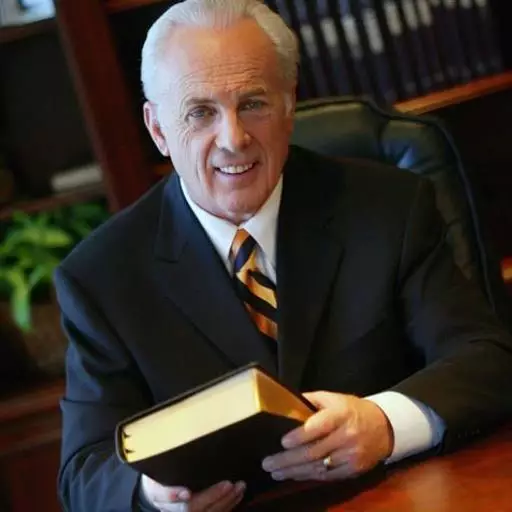
A Pattern of Prayer from a Man of Prayer


It’s said that nothing is discussed more, and practiced less, than prayer. And there certainly are times when every Christian feels he has failed to meet the biblical standard for prayer. But what exactly is that standard? And why is it so important to cultivate good prayer habits in the first place? Consider those questions with John MacArthur as he continues his study called Don’t Be Afraid to Ask.
John MacArthur: True prayer is in response or in harmony or in agreement with the Word of God. Daniel takes up intercession for his people based on what he knows is God's will. This is an essential element of prayer.
Phil Johnson: Welcome to Grace to You Weekend with the Bible teaching of John MacArthur. I'm your host, Phil Johnson. What do healthy marriages, good parenting, and really every thriving relationship have in common? The answer, effective communication. You've got to know how to talk to those you love. Well, it's no different in your relationship with God. To draw closer to him, you need to know how to talk to him. So today John is going to give you a primer on prayer, looking at the prophet Daniel and his example of fervent and effective communication with the Lord. It's a great model for each of us. So with his lesson called A Pattern of Prayer from a Man of Prayer, here is John MacArthur.
John MacArthur: Turn in your Bible to the 9th chapter of Daniel. Daniel, the Old Testament prophet, chapter 9. Well, the ninth chapter of Daniel is for many Bible students a very familiar chapter, but sad to say, in one sense, people are most familiar with the back half and not the front half. We're familiar with the answer to Daniel's prayer. That brings us the prophecy of the 70 weeks, which starts in verse 24, was God's answer to this model prayer. As we come to the ninth chapter, Daniel is in great distress. If you notice the end of chapter 8 and verse 27, you will see he says, "I, Daniel, was exhausted and sick for days." Sometimes what's going on in our lives in terms of ministry can be so overwhelming as to make us physically sick.
Daniel was suffering from what he was hearing from God. He knew that the children of Israel were under current judgment. That's why they were in captivity. That's why he was there. He knew Jerusalem was destroyed, the temple was destroyed, the sanctuary was desolate. He knew all that. He knew this was a judgment for sin, and he knew that there was more judgment coming in the future against the people of Israel, because he'd had a vision of that. But he also knew that there was a coming kingdom. He had a vision of that. So as much as was revealed, much more was not, and he was feeling the stress of not fully understanding that and also knowing that all was not well with Israel and there was to be more judgment in the future.
He is stunned and astounded at the visions and left without a full explanation. There's a big burden in his heart and that burden is over his people and it is that burden that he discharges before the throne of God in this ninth chapter. One day at this time he is reading. He's reading scrolls, biblical scrolls, verse 2. And it says, "I, Daniel, observed in the books," or the scrolls, "the number of the years which was revealed as the word of the Lord to Jeremiah the prophet for the completion of the desolation of Jerusalem, namely seventy years. He's reading Jeremiah, who, by the way, he calls a source for the word of the Lord.
He had a right view of biblical inspiration. And as he's reading in Jeremiah, he is reading in chapter 25. They didn't have chapters and verses in the Jeremiah scrolls in those days, but for us, this would be where he found this. Jeremiah 25:11. Here is the prophecy from Jeremiah of what was going to happen, and it did happen, and Daniel had lived it. He had been taken into captivity in the earliest of captivities, and he's been there the whole time. So in Jeremiah 25:11, "This whole land," writes Jeremiah, "shall be a desolation," speaking of Israel, "and a horror, and these nations shall serve the king of Babylon, or these peoples shall serve the king of Babylon seventy years.
Then it will be when seventy years are completed, I will punish the king of Babylon and that nation, declares the Lord, for their iniquity, and the land of the Chaldeans, and I will make it an everlasting desolation." God says, "Seventy years, I'm going to let the Babylonians hold Israel in captivity, and then I'm going to punish that Babylonian Empire with an everlasting desolation. Well, Daniel had seen it. The Babylonian Empire was over. The seventy years had come. He also, in reading in the text of Jeremiah, came across another portion of Scripture in the twenty-ninth chapter of Jeremiah, which added another feature to it in verse 10, "Thus says the Lord, when seventy years have been completed for Babylon, I will visit you and fulfill my good word to you to bring you back to this place.
For I know the plans that I have for you, declares the Lord, plans for welfare and not for calamity, to give you a future and a hope. And you will call on me and come and pray to me, and I will listen to you, and you will seek Me and find Me when you search for Me with all your heart, and I will be found by you, and I will restore your fortunes and gather you from the nations, and so forth. So he knew that at the end of the 70 years, there would be the destruction of Babylon, which had happened, and there would also be the restoration of the people of God. That's what he was reading in the books.
Seventy years, for all intents and purposes, was up. He knows what's been promised to happen. Babylon will be destroyed. It was. The people will be restored to the land. That hadn't happened yet, but that was what God promised. That teaches us the first characteristic of prayer, one, prayer is in response or in harmony with the Word of God. True prayer is in response or in harmony or in agreement with the Word of God. Daniel takes up intercession for his people based on what he knows is God's will. This is an essential element of prayer. I've learned through the years that my best prayer times are with an open Bible.
I give you an illustration of that on Sunday mornings. I did it this morning. I do that every week. I read a portion of Scripture and then I sort of pray my way back through that because I'm just lining up with the purposes of God, lining up with the Word of God, lining up with what God has revealed. If you have a difficulty praying because you're sort of done in a few minutes, you can't think of what to say, just try praying through a text of Scripture, identifying with what God is revealing there, and when you need to confess, confess, and when you need to praise, praise, and when you need to thank Him, thank Him.
The Word really teaches us how to pray because it reveals God's agenda and God's character. So Daniel's prayer, first of all, like all prayer, should be born out of the study and understanding of God's revealed plan and character in Scripture. Secondly, we pray not only generated by God's Word, but grounded in God's will. He knew God's will, 70 years, verse 2. He knew the whole thing, the desolations of Jerusalem was to be completed in 70 years, and that is because that's what Jeremiah had said. Now you might say, well, that of all things makes it unnecessary to pray. Why in the world is he going to pray for restoration if he knows it's going to come?
And again, it begs the same issue that God has not only chosen what He will do, but the means by which He will do it. And those people who are most attached to God, who most love God, who most embrace His glory, will find themselves drawn into prayer that relates to His purposes. This is not fatalism. Fatalism is deadly to prayer, and it demonstrates that you do not know the heart of God and that you do not participate in His purposes with all your soul. Once you know the will of God, you know how to pray because your prayers God uses as means to the end of His purpose. Whatever you ask according to His will, He hears.
Whatever you ask according to His will, He hears. Prayer according to the will of God is affirmation. It is acquiescence. It is celebration of the divine purpose. Daniel would not accept the way things were. He wanted the fulfillment that God had promised, and so that's how he prayed. Daniel prayed because it was generated by the Word of God, and it was grounded in the will of God. There's another element. It was characterized by fervency. You could say, okay, I accept it's the Word of God, I accept it's the will of God, but you know, you sort of just accept it. Okay, God, do what you're going to do.
I affirm it. It's a great plan. Carry it out. I vote for you, God. I hope you do that. That isn't the way we see Daniel pray. Verse 3, I gave my attention to the Lord God to seek Him by prayer and supplications with fasting, sackcloth, and ashes. The Hebrew actually says, I set my face. I fixed my gaze. I pointed my face in the direction of God. This is an undistracted kind of preoccupation. This is resoluteness. Unto the Lord God, the Lord God, the Lord Adonai, unto the Lord. Adonai means master, sovereign ruler. Yes, I understand the sovereignty of God. Yes, I understand divine authority fully.
Yes, I understand that I am to submit to the sovereignty of God. He is my sovereign, my master, my Lord, but I set my face to the sovereign one to plead with him in prayer and supplication to the degree of fasting, wearing sackcloth, and pouring ashes on my head. He set his face toward the sovereign and to seek the sovereign with such fervency that he didn't eat. He was like Hannah in 1 Samuel 1:8. Hannah was weeping and fasting, pleading for a son. Daniel employs then every indication of fervency, the effectual, fervent prayer of a righteous man, James 5:16. This is him. Christ in the garden is praying so fervently.
What's he praying, you say? He's praying to the Father and saying to the Father, if this cup may pass from me, Father, please let it be so. Nevertheless, not my will, but Yours be done. He knew what the will of the Father was. He was a lamb slain from before the foundation of the world. He knew the plan from beginning to end. That didn't change the fervency of his prayer. He accepted God's answer, but in the prayer sweat blood because he was praying with such fervency that the capillaries exploded. Jesus never resigned himself to anything, and he knew the will of the Father perfectly, and neither does Daniel, and he knew the will of the Father.
It's just that when you're really caught up in the agenda of God, there's a fervency in your life, and it's a commentary on our kind of Christianity to look at our indifference toward the issues that concern the heart of God. So true prayer is generated by the Word of God, grounded in the will of God, characterized by fervency. And let me give you a fourth one, and this is getting to the heart of it. It is identified with God's people. That's why in Daniel's prayer, you just notice the pronouns. Verse 5, we have sinned. Verse 6, we have not listened to your servants who spoken your name to our kings, our princes, our fathers.
Verse 7, to us belongs open shame. Verse 8, open shame belongs to us. Verse 9, we have rebelled. Verse 10, we did not obey the voice of the Lord our God. Daniel was coming before the Lord for his people. He regards even the sins of his people and the sins of his priests and the sins of his rulers and judges and kings as if they were his own. He cannot divorce himself from his people because he knows he's part of the problem. Daniel understood, as did all the Jews, the solidarity of the people of God. I don't know if we fully understand the solidarity of the people of God today in our church and in the body of Christ.
We all suffer together. I'm telling you, we all suffer together. You know that. Sometimes your Christianity is discredited because of the Christianity that some of your friends see on television that has nothing to do with you. Prayer then is generated by the Word of God. It's grounded in the will of God. It's characterized by fervency. It's identified with God's people. And intercession is built on confession. It's built on confession. I want you to catch this. He wants God to do his work. He wants God to restore Israel, Daniel does, and God said he would. He wants to see Jerusalem rebuilt, the temple rebuilt, the sanctuary restored, God's presence to come back.
That's what he wants. But before he ever even gets close to that, look at this prayer, verse 5. We have sinned, committed iniquity, acted wickedly, and rebelled, even turning aside from thy commandments and ordinances. Boy, that's saying it every way you could say it. We sinned, we committed iniquity, we acted wickedly, we rebelled, and we turned aside. Five ways to say it, and he says we're sinful. This is an awful lot of confession here. You'd say, does he have to keep saying it and saying it and saying it and saying it and saying it every way possible? It isn't a, this is not some kind of technical approach to prayer.
This is what is in the man's heart. And this is very personal, even though it's we, we, we. If you go over to verse 20, now while I was speaking and praying and confessing my sin and the sin of my people Israel, your prayer has to be predicated on an understanding of your unworthiness so that we always know when we pray, I have no right to ask. I have no right to enter your presence. There's nothing in me that makes me worthy to hear an answer and to be blessed, because I'm just a sinner. All our prayers need to be built on this concept of confession, knowing we're worthy of nothing. Oh God, I don't deserve anything.
I'm a sinner. I'm a rebel. We pray for all the needs of people around us, but we're overwhelmingly aware of the fact that we don't do anything to earn an answer. It's all mercy. It's all grace. And another thing that's important about prayer, now we're getting to the heart of it. Prayer is generated by God's Word, grounded in God's will, characterized by fervency. It is identified with God's people. It is built on confession. And here's a critical key. It is dependent on God's character. It is dependent on God's character. You say, what in the world would make me think I had a right to go to this God?
Go back to verse 4. I prayed to the Lord my God and confessed, and this is what I said. Alas, O Lord. Alas, O Lord, the great and awesome God. Now that might keep us away. That's transcendence. But the God who keeps his covenant and loving kindness for those who love him and keep his commandments, that's immanence. God is both transcendent and immanent. And down in verse 7 he says, righteousness belongs to thee, O Lord. Our God is great, awesome, and righteous, or holy. Down in verse 9, however, he says, to our God belong compassion and forgiveness. Yes, He's great. Yes, He's awesome. Yes, He's holy, but He's also a faithful God who keeps His promise, a God of loving kindness, a God of compassion, and a God of forgiveness.
There's one final element, and we end. The purpose of prayer is God's glory. We could say it consummates in God's glory. Verse 16, here's the ending. O Lord, in accordance with all your righteous acts, let now your anger and wrath turn away from your city Jerusalem, your holy mountain. For because of our sins and the iniquities of our fathers, Jerusalem and thy people have become a reproach to all those around us. He's saying, God, now it's enough. Turn away your wrath. Turn away your anger. And so now, our God, verse 17, listen to the prayer of thy servant and to his supplication, and here it comes, and for thy sake, O Lord, let thy face shine on thy desolate sanctuary.
The point he says is, God, we're not asking for our sake, we're asking for your sake. The glory of God is the consummation of all prayer. Verse 18, "O my God, incline your ear and hear. Open your eyes and see our desolations in the city which is called by thy name. We're not presenting our supplications before thee on account of any merits of our own. We dealt with that in the confession section, but on account of thy great compassion." Here it comes. "O Lord, hear. O Lord, forgive. O Lord, listen. O Lord, take action because we deserve it. No, do it for your own sake, oh my God. Don't delay because your city and your people are called by your name.
Your reputation is at stake. Pray for the church and say, "O God, purify your church. It bears your name."
Phil Johnson: Here is the true man of prayer. It's one consuming passion, and that is the glory of God. That's John MacArthur helping you understand the how-tos of prayer. John's message today on Grace to You Weekend was titled, A Pattern of Prayer from a Man of Prayer. Now, even though the Bible gives us examples of how to pray like Daniel, and even though scripture tells us to pray, and it promises us that God listens when his people pray, it's not always easy to pray as we should, and in fact, that's frequently the case. So why is that? What makes this spiritual discipline particularly challenging, even for veteran Christians?
Here's how John answered that question.
Unidentified Speaker: Yeah, and I think it's what we've been talking about. Why, even if I followed what Jesus taught, why do I need to say to God, hallowed be your name? What does that do? Your kingdom come, your will be done. Why am I saying that? His name will be hallowed, his will is being done, and his kingdom is coming. And Jesus said, I'll build my church and the gates of Hades won't prevail against it. and then to say to him, forgive us our debts as we forgive our debtors, or forgive us our trespasses. Well, we know he's going to do that. Lead us not into temptation. Well, we know he's not going to lead us into temptation.
Deliver us from evil. We know he's going to do that. So what you have to understand about prayer is the same thing you have to understand about salvation. It is a work of God, but it incorporates means. You could say to somebody, well, look, hey, you know, I hope you're a Christian, and if God wants to save you, he'll save you. Don't worry about it. But we're not told to do that. We're told to preach the gospel to every creature. We're told to call them to faith. Jesus said, you'll die in your sins because you believe not on me. Whosoever believes is saved. So God saves by his sovereign will, but not apart from means.
And the means is repentance and faith prompted by the Spirit of God. And I think God operates in his kingdom the same way, not apart from means, and our prayers are part of that means. But secondly, it also lines us up with his will. Praying about something and then seeing God answer opens up new avenues of praise. If I don't pray about it and I don't know about it, God does it, I don't know he did it. But if I'm involved in praying and God hears and answers in a very obvious way, then I can glorify God for what I've seen. So I think we have to look at prayer like we do anything where the believer does something that God uses as a means to affect his work.
So God will do what he will do. He will build his kingdom. He will hallow his name. But our prayers fit into God doing that very thing. I want to mention quickly the book, Lord, Teach Me to Pray, a whole lot about prayer in this book, packed with biblical truth, and it's Jesus teaching you how to pray.
Phil Johnson: Yes, friend, this book is an excellent refresher on the fundamentals of prayer. It shows you why to pray, how to pray, and what to pray for. To order your copy of Lord, Teach Me to Pray, contact us today. Call 855-GRACE or purchase Lord, Teach Me to Pray at our website, GTY.org. This is a great resource for anyone who wants to be more disciplined in prayer or who wants to get more joy out of the time they spend with the Lord. Lord, Teach Me to Pray is affordable and shipping is free. Again, to place your order, call 800-55-GRACE or go online to gty.org. And if you're looking for more resources on prayer or some other topic, let me encourage you to visit our website.
We have thousands of free resources available on subjects like how to pray, assurance of salvation, God's design for the family, the life of Christ, and much more. And that includes our blog, daily devotionals, and 3,600 of John MacArthur's sermons. Our website again, gty.org. Now for our entire staff, I'm Phil Johnson. Watch Grace to You television this weekend on WBPH in Philadelphia, Pennsylvania, or check your local listings and then be here next week as John MacArthur shows you what biblical discernment is and why it's necessary, how to cultivate it. It's another 30 minutes of unleashing God's truth, one verse at a time, on Grace to You Weekend.
Featured Offer

New to Grace to You? Get a free copy of this classic volume by John MacArthur.
Past Episodes


Featured Offer
New to Grace to You? Get a free copy of this classic volume by John MacArthur.
About Grace to You Weekend
About John MacArthur
John MacArthur is the pastor-teacher of Grace Community Church in Sun Valley, California, president of The Master’s College and Seminary, and featured teacher with the Grace to You media ministry. Grace to You radio, video, audio, print, and website resources reach millions worldwide each day. Over four decades of ministry, John has written dozens of bestselling books, including The MacArthur Study Bible, The Gospel According to Jesus, The New Testament Commentary series, The Truth War, and The Jesus You Can’t Ignore. He and his wife, Patricia, have four married children and fifteen grandchildren.
Contact Grace to You Weekend with John MacArthur
letters@gty.org
http://www.gty.org/
Grace to You
P.O. Box 4000
Panorama City, CA 91412
1-800-55-GRACE
1-800-554-7223