
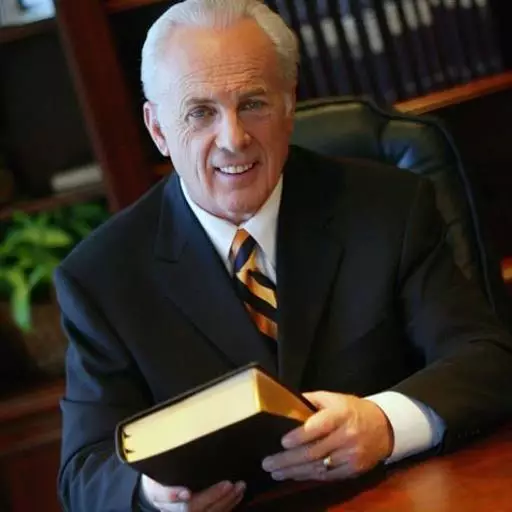
How God Buried His Son


Over the next few days, many people will gather to commemorate the Resurrection of Jesus
Christ—all the while actually missing the meaning of this decisive moment in history. So what is the
significance of the Resurrection . . . and what does it mean for your life today?
John MacArthur: It pleased the Lord to crush him, to put him to grief. It was the will of God that he be treated in this manner and that he be killed. That he might be a sacrifice for sin, that he might die in the place of sinners, that he might bear the curse for us, that he might bear the punishment for our sin.
Phil Johnson: Welcome to Grace to You Weekend with the Bible teaching of John MacArthur. I'm your host, Phil Johnson. It's a tragic scene: the King of the universe hanging on a cross, his enemies rejoicing at his death. And yet, as John MacArthur will show you today, even in that dark hour, God was at work in the lives of his people, and many people who once despised Jesus came to believe he was the Son of God.
So why the sudden transformation? Consider that as we continue John MacArthur's study called "The Divine Drama of Redemption." But before today's lesson, I want to take a moment to mention the purpose behind the lesson you're about to hear. In fact, there is a common goal, a common purpose that weaves its way through every message you ever hear on our broadcasts. Here's John to explain what that goal is.
John MacArthur: Well, the goal is obviously instruction in the word of God so that we can become mature, so that we can be shaped into Christlikeness, so that we have discernment. Back in 1984, Grace to You put a purpose statement in writing. It's been guiding us ever since. It's the fountain from which all this water of teaching flows. We look to our purpose statement very often. Written, permanent, it's why we exist, it's why we do what we do.
In fact, every member of the Grace to You staff is asked to affirm that purpose statement in writing every year. Because of time constraints, we'll only share a couple of portions of it, but I think you'd like to know what is behind what we're doing today. Here are a couple of paragraphs from our purpose statement: "We use mass communication media to expose our teaching to as wide an audience as possible.
And here's the key: for the equipping of the saints for the work of ministry, to the building up of the body of Christ, until we all attain to the unity of the faith and the knowledge of the Son of God, to a mature man, to the measure of the stature which belongs to the fullness of Christ." In other words, all that we do is to shape people into Christlikeness.
And here's the concluding paragraph of our purpose statement: "Our desire is that God be glorified through Grace to You's resources. The Lord Jesus Christ is the head of this ministry, and we desire to perform our work as unto him, to reflect him to all those we encounter, and to operate not in our own strength but through his power."
Summing it up, this is a Christ-centered ministry. Everything focuses on Christ. We want to draw every listener to every resource so that they can see the glory of Christ revealed in the scripture. We want every scripture to contribute to shaping believers into the very image of Christ, and we want to honor Christ in doing all of it.
Phil Johnson: That's exactly right, friend. As long as we're able, we will be unleashing God's truth one verse at a time to help people grow in Christ. If you'd like to partner with us, you can express your support by phone or at our website, gty.org. I'll say more about that before we close today. But for now, stay here as John MacArthur continues his look at "The Divine Drama of Redemption."
John MacArthur: We return to Mark chapter 15 and the crucifixion of our Lord Jesus Christ. Everything about this is intended to show Jesus scorn and disdain and ridicule and mock the notion that he is any kind of king at all. The blasphemy is so great, unparalleled and unequaled in history, that we ask the question this morning: where is God?
Shouldn't he have consumed the blasphemers and stopped the ridicule of his beloved Son? Shouldn't he have come down immediately and obliterated these blasphemers and protected his Son? The answer to that is no. God doesn't come down to destroy the blasphemers and he doesn't come down to protect his Son.
And that is because of what it says in Isaiah 53:10, that it pleased the Lord to crush him, to put him to grief. It was the will of God that he be treated in this manner and that he be killed. We know why: that he might be a sacrifice for sin, that he might die in the place of sinners, that he might bear the curse for us, that he might bear the punishment for our sins.
So God did not come down either to destroy the blasphemers or to protect his Son. And you might think that God never came down because Jesus said, "My God, my God, why have you forsaken me?" Is that an indication that God was not there? Well, the answer to that question is he was there. In the moment that Jesus said that, he was feeling the absence of God.
But God was there. And God was there in a way that you would not suspect. Yes, God was there, and he was there not to punish the blasphemers and not to protect his Son, but to punish his Son. Let's look at the passage. Three features come out of this account, three separate features. First, we look at the Savior and the consummation of his sacrifice.
Then we look at the centurion and the confession of his faith. And then we look at the women and the confusion in their minds. First of all, the Savior and the consummation of his death in verses 33 through 38. When the sixth hour came, darkness fell over the whole land until the ninth hour, and it is the darkness of God's presence.
He is the one who is present in judgment from noon to three o'clock. Hell came to Israel. From noon to three o'clock, hell came to Jerusalem. For three hours, hell came to Golgotha. As God unleashed the full extent of everlasting punishment on his Son. As God is the true power behind hell's punishing experience, God is the true power behind the darkness of Calvary, for here he unleashes hell on his Son.
The darkness then, listen, is not the absence of God, and it's not the presence of Satan. The darkness is not the absence of God; it is the presence of God. It is God in full judgment vengeance. It is infinite wrath moved by infinite justice, releasing infinite punishment on the infinite Son who can absorb all the tortures of eternities of hell and do it in three hours.
It is in those three hours that he bore in his body our sins. It is in those three hours that he was made sin for us. It is in those three hours that he took the curse, and at the ninth hour, it ended. 3:00, it ended. What happened is stunning, and Mark tells us of two immediate events. The first one is in verse 38: "The veil of the temple was torn in two from top to bottom."
There were about a dozen curtains in the temple, but this was the most important curtain because it separated the Holy of Holies from the Holy Place. The Holy of Holies into which no one could go but the high priest once a year to sprinkle blood on the mercy seat, on the ark of the covenant, to make atonement for the nation on Yom Kippur, the Day of Atonement.
This symbolized the sinner's separation from God, no access to God. The high priest was only allowed once in order to sprinkle the blood, in quickly and back out. But the new covenant of salvation at the moment Jesus died was ratified. He had paid in full the punishment, the penalty justly for all who would ever believe.
And officially, at 3:00 in the afternoon on that Friday in April in the year AD 30, the old covenant was abolished. The temple was nullified, the priesthood was voided, and all sacrifices became pointless because the only true and saving sacrifice had been offered. And when the veil was split from top to bottom, it couldn't have been done by man; it had to be done by God.
It was God's exclamation point on the death of his Son. And what it said was the way into the presence of God is wide open for anyone. What does the death of the Lord Jesus accomplish? It opens the way. It obliterates the symbols and the ceremonies and brings the reality of salvation to everyone who chooses to enter.
At that very hour, the Passover lamb himself had been slain by God, and all other sacrifices were pointless. Mark doesn't tell us, but Matthew does, that there was another miracle that happened at the time the veil was torn. Matthew 27:51 says the earthquake and the rocks were split. This is an earthquake powerful enough to split rocks, a frightening experience.
And by the way, earthquakes in scripture are very often like the darkness. When Moses met with God at Sinai to receive the law, the whole mountain quaked greatly. Exodus 19:18. Psalm 18:7 says the earth shook and trembled, the foundations of the hills quaked and were shaken because God was angry. Psalm 68:8: the earth shook at the presence of God.
The Jews knew, if they knew their scripture, the darkness meant judgment and the earthquake meant judgment. Another miracle happened, according to Matthew 27:52 and 53: "The graves were opened, and many bodies of the saints who had fallen asleep were raised; and coming out of the graves after his resurrection, they went into the holy city and appeared to many."
The veil is torn, the earth begins to shake, earthquakes take place, graves are opened, dead people come back to life and proclaim the truth after the resurrection of our Lord. Matthew 27:53 says those who came out of the graves appeared to many. This is a prefiguring of the resurrection. So did God show up at Calvary? Yes, he did. He showed up at Calvary.
He showed up in the darkness. He showed up in the earthquake. He showed up in the ripping of the veil, and he showed up in opening the graves and giving life to dead saints. He made his presence known. Verse 39 takes us to the second scene here: the centurion's confession. The centurion's confession.
When the centurion who was standing right in front of him saw the way he breathed his last, he said, "Truly this man was the Son of God." Centurion, he's involved in the execution; he has to be. He's a commander of a hundred men; that's why he's called a centurion. He's been guarding Jesus. He's overseeing the execution squad.
He heard what Jesus said; perhaps he heard him say, "Father, forgive them, for they know not what they do." Perhaps he heard because he was near the cross, "Today you'll be with me in paradise." He heard everything. He heard Pilate repeatedly declare that Jesus was innocent, and he concluded this is no ordinary man.
And he now comes to the right conclusion: that he is the Son of God. You say, how did he come to that conclusion? Well, we're helped a little bit by Matthew 27. Jesus cried out, verse 50, again with a loud voice, yielded up his spirit. That's what we just read along with this. Behold, the veil of the temple was torn in two from top to bottom, and the earth shook and the rocks were split.
Now, that would convince him that something special was going on. The tombs were opened, and many bodies of the saints who had fallen asleep were raised; coming out of the tombs after his resurrection, they entered the holy city and appeared to many. Now the centurion and those who were with him keeping guard over Jesus, when they saw the earthquake and the things that were happening, became very frightened and said, "Truly this was the Son of God."
They were frightened by the darkness, frightened by the earthquake. Some wonderful things happened at Calvary: a Jew, a Jewish blasphemer was saved, the thief; a Gentile, a few Gentiles, the blaspheming soldiers. And the message is that the grace of God in forgiveness and salvation is extended to the worst blasphemers.
The worst blasphemers are not beyond the possibility of salvation. On the other hand, Luke 23:48 says the crowds, when they observed what had happened, began to return beating their breasts. Not so funny anymore. Wasn't so funny after the darkness and the horrific earthquakes that scared them. Not so funny when they found out the veil had been rent from top to bottom.
They left. Doesn't say anything about them believing, but I think some of them did. So we see the consummation regarding Christ, the confession regarding the centurion, and third point is the confusion of the women. Verses 40 and 41. This is an interesting footnote. There were also some women looking on. Here we see a small group of faithful women.
These are women who started to follow him when he was in Galilee, according to verse 41. They used to follow him and minister to him or serve him. And there were many other women who came up with him to Jerusalem. They're true disciples. They're lovers of Christ. They're believers in the Savior, and they are frankly now baffled.
They are discouraged, they are devastated, they are lost for an explanation. They're confused. Mark even identifies the names of a few of these women. There were many: Mary Magdalene, who later becomes the first eyewitness of Jesus after his resurrection; Mary the mother of James the Less and Joses. Mary the mother of James the Less and Joses, that would be two sons.
James the Less is also called James the son of Alphaeus in Matthew 10:3, and he was one of the twelve. So this lady named Mary, and there are lots of Marys, was the mother of one of the apostles, James the son of Alphaeus, not James the brother of John, sons of Zebedee, different James. There's another lady there by the name of Salome.
She is, however, the mother of James and John, the wife of Zebedee, according to Matthew 27:56. Why are they there? Well, let me tell you something. For all that can be said about the greatness of the apostles, they were gone. And these ladies were there. So much for male courage. Something precious about that, even in their confusion, they were there.
Slowly they started out at the foot of the cross, maybe hoping for some miracle, something to happen that would make sense out of all of it. And then he died. And they're way at the fringe. They had been with him, verse 41 says, when he was in Galilee, and they used to follow him. That means they did it all the time, regularly. And serve him, minister to him.
They were eyewitnesses of his entire ministry in Galilee and subsequently in Judea for the last year of his life. They would be the eyewitnesses first of all of his resurrection. And they're unique because they're not apostles. They're not the chosen twelve. They're not leaders. They're not empowered like the apostles to do miracles.
They're not called to be preachers, but they are the truly precious faithful who, while the apostles have forsaken him, are still there. They are still there. And they will be rewarded because they will be the first to see him on Sunday morning. And the sorrow of those ladies will turn to great joy. I want to close by taking you back to verse 39 for a moment.
When Mark began this gospel in chapter 1 verse 1, he said it's the beginning of the gospel of Jesus Christ, the Son of God. It's the beginning of the gospel of Jesus Christ, the Son of God. It's only a beginning. It's only a beginning. The story has much more to be told. This is the beginning. But it is about the Son of God. It's the story of the Son of God.
Finally, here in verse 39, a human being says, "Truly this man was the Son of God." And would you like to know, that is the first time in the entire Gospel of Mark that any human being has said that. It's almost like Mark waits until the cross to have someone say this is the Son of God. Oh, the Father said it.
The Father said it in chapter 1 verse 11 at his baptism, "This is my beloved Son." The Father said it at his transfiguration in chapter 9. The Father said it from heaven, "This is my beloved Son." And by the way, the demons said it. Chapter 1 verse 24, 3 verse 11, 5 verse 9. The demons called him the Son of God.
So heaven has said it, and hell has said it. And finally, a man says it. And what a man: a Gentile, a Roman soldier, the head of the execution squad. And we all say it too, don't we? And the story of Mark is written for the very purpose that John gives: "These have been written so that you may believe that Jesus is the Christ, the Son of God, and that believing you may have life in his name."
For all who believe that he is the Son of God, from the centurion on, the promise is you have life in his name.
Phil Johnson: You're listening to Grace to You Weekend with the Bible teaching of John MacArthur. John's current series is titled "The Divine Drama of Redemption." Now, going back to what we said before the lesson, this broadcast, this ministry, is driven by one goal, and that is to help people become more like Christ.
When you partner with Grace to You financially, you play a vital role in connecting people with verse-by-verse teaching through radio and television and thousands of online resources. To help make a life-changing spiritual difference in people's lives, contact us today. You can mail your tax-deductible donation to Grace to You Weekend, Box 4000, Panorama City, California 91412.
Or you can express your support online at gty.org or when you call us at 800-55-GRACE. Thanks for your help in taking God's word to the spiritually hungry around the globe. And again, to partner with us, call 800-55-GRACE or go to gty.org. And when you visit gty.org, be sure to take advantage of the thousands of free resources available, including GraceStream.
That's a nonstop loop of John's verse-by-verse teaching through the entire New Testament. GraceStream begins at Matthew 1 and takes you all the way through Revelation 22 in a continuous two-month-long stream of John's Bible teaching. So whether you have 15 minutes or a couple of hours, log on to GraceStream for encouragement from God's word.
GraceStream and much more is available free of charge at gty.org. Now, for our entire staff, I'm Phil Johnson. Watch Grace to You television Sundays on DirecTV channel 378. And be here next week when John MacArthur helps you deal with a kind of anxiety that's particularly prevalent: namely, financial worry.
It's another 30 minutes of unleashing God's truth one verse at a time on Grace to You Weekend.
Featured Offer

New to Grace to You? Get a free copy of this verse-by-verse study guide from John MacArthur.
Past Episodes


Featured Offer
New to Grace to You? Get a free copy of this verse-by-verse study guide from John MacArthur.
About Grace to You Weekend
About John MacArthur
Contact Grace to You Weekend with John MacArthur
letters@gty.org
http://www.gty.org/
Grace to You
P.O. Box 4000
Panorama City, CA 91412
1-800-55-GRACE
1-800-554-7223