
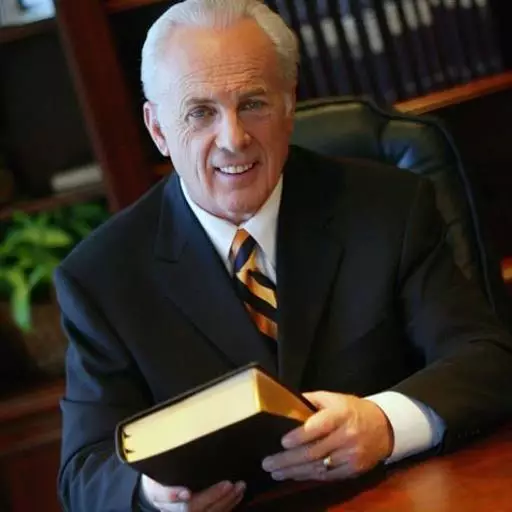
“Elements of True Prayer, Part 2”


If the Bible says to pray without ceasing—and that’s exactly what it says—does it also explain how to pull that off? What does it take to be consistent in your prayers even when you’re busy, discouraged, and you just don’t feel like praying?
John MacArthur: The heart of all true prayer, mark this, people. The heart of all true prayer is an initial awareness that you don't even belong there to begin with. You see, I mean, you don't even belong in the presence of God. You don't have one thing in and of yourself to commend you to him.
Phil Johnson: Welcome to Grace to You Weekend with the Bible teaching of John MacArthur. I'm your host, Phil Johnson. What's on your mind today? What are your concerns for your husband or wife or your kids, your friends from church and others in your life? There is so much to think about, so much you want to bring to the Lord.
But is that all prayer is, making requests? Bottom line, what is prayer supposed to be? What does God expect? Are there any examples you can follow? See if you're approaching God's throne of grace the right way, both in what you say and the attitude behind it, as John MacArthur continues his study titled Elements of True Prayer. So if you have your Bible close by, turn now to Daniel chapter 9, that's the basis for our study, and with today's message now, here's John MacArthur.
John MacArthur: When we study the book of Daniel, again and again, chapter by chapter, we find unfolding in a very unassuming way the marvelous traits of the character of Daniel. And one of them has to be prayer. He understood that prayer was living in the presence of God and nothing could change that, not the threat of death. Not the threat of the loss of reputation or place, nothing. Prayer was a vital link with God. And so does Daniel pray.
And as he prays, we find eight elements of true intercessory prayer emerging, flowing out of this marvelous prayer. And as I say, they are not explicitly taught, they are implicitly found. They are not the purpose of the prayer, and yet they become for us a very good purpose because it helps us to see what is included in proper intercessory prayer.
It is generated by the Word of God. It is grounded in the will of God. It is characterized by fervency. Number four, it is realized in self-denial. It is realized in self-denial. Verse 4. And I prayed unto the Lord my God and made my confession. Now, stop right there. The heart of all true prayer, mark this, people. The heart of all true prayer is an initial awareness that you don't even belong there to begin with. You see, I mean, you don't even belong in the presence of God. You don't have one thing in and of yourself to commend you to him.
And so where does he begin? With that recognition. I made my confession. Why did you do that, Daniel? Because I knew that I didn't belong in his presence. And especially if I were to drag some sin there. Contrast that with the prayer of the Pharisee. In Luke 18. Who says, "God, I thank thee that I am not as other men." Why I fast and I give tithes and so forth and so forth. And God didn't even hear that prayer in terms of an answer, a response. Because it was self-righteous, self-seeking, self-confident.
And so Daniel begins with a recognition that he doesn't belong there. Isaiah saw God high and lifted up in chapter 6, and he said, "Woe is me, for I am undone." The Apostle Paul recognized the same truth about himself. He had no right to be in God's presence, he was a chief of sinners. John saw the same thing, and when he saw the beauty of the revealed Christ, he fell in humility. And Daniel understands this. Daniel understands that he doesn't belong in the presence of God.
And so before he can intercede for anybody else, he's got to make sure he's gotten himself in perspective. If there's impotence in your prayer life, maybe it's because there's not self-denial there. And self-denial encompasses this, people. It encompasses you setting your will aside for God's will, right? And if you're in there trying to badger God into what you want for yourself, that's not self-denial. I don't really think anybody can ever minister to anybody else in prayer or preaching or anything else until they take the path of self-denial. Because you have to fight ego anyway. You might as well get rid of it at the beginning.
And Daniel knew that. And so he dealt with that matter. True intercession is generated by the Word of God, grounded in the will of God, characterized by fervency, and realized in self-denial and fifth. True intercessory prayer is identified with God's people. It's identified with God's people. You'll notice that he says, "I prayed unto the Lord my God," verse 4, "and made my confession." He starts with himself, but he doesn't stop there. Watch.
Verse 5, we're going to move quickly. We have sinned. Verse 5. Verse 6. Neither have we hearkened. Verse 7. Lord, righteousness belongeth unto thee, but unto us confusion of faces. Verse 8. O Lord, to us belongeth confusion. Verse 10. Neither have we obeyed. Verse 11. Yea, all Israel has transgressed and thy curse is poured upon us and because at the end of the verse, we have sinned against him. Verse 12. He spake against us, our judges that judged us. And verse 13, us, our, and we. Verse 14, us, we. Verse 15, we and we have done wickedly. Verse 16. Our sin, our fathers, a reproach to all that are about us. Now listen.
True intercessory prayer identifies the one praying with the people being prayed for. It's a tremendous thing. Paul had it when he said, "praying always for all saints." And then he added in Ephesians 6:19, "And pray most of all for me." The focus of our prayers, beloved, is to be on others. After we've taken care of setting our self aside. You go into prayer and you realize first of all, you don't even belong there. But the word of God has called you there. And you seek the will of God, and you set your own will aside, and then you pour out your heart on behalf of others.
And Daniel sees himself bound up with others also. It was true of those in Israel that they saw themselves as a part of the total entity. And I believe that's true in the body of Christ, don't you? I think it's very clear that when you study First Corinthians chapter 12, you find that we're all one body, aren't we? And when one member hurts, the whole body suffers. And when one rejoices, the whole body rejoices. I have to be identified in the sins of the church. I have to encompass myself in that.
First Samuel 12:23 puts it to us simply, "God forbid that I should sin against the Lord in ceasing to what? Pray for you." And I learned long time ago that the focal point of my prayer life is not me. I start recognizing God's will. I get me out of the picture, and I start praying for you. See? And there are in Christianity today, around this country and the world, Christians who are missing the boat in prayer because all they've got in prayer is I, me, mine. And they're not embracing the needs of God's people.
Paul always prayed for others. In Philippians 1, Paul says, "I'm always praying for you." In Colossians 1, he says, "I'm always praying for you." In Philemon 4 and 5, "I'm praying for you." And then he recalls in Second Corinthians 1:11, "You also helping together by prayer for us." There was mutual. I pray for you, you pray for me. Then neither of us get selfish, right? That's the way the body functions. We should learn that and learn it well. We ought to pray for those in authority over us, pray for leaders, pray for those in need.
And Daniel saw his people, and he gathered his people in his arms. Well, you know what? Something wonderful about Daniel. He included himself in their sins. He included himself in their shortcomings. He included himself in their foibles and their failures and their follies. He encompassed himself in his prayers. It was we, and it was us, not them. I mean, he didn't stand apart as if he were self-righteous. A self-righteous man would repudiate such an identification with chasing sinners. And you could say, "Well, Daniel had every right to stand up and say, 'Boy, am I ever glad that I'm not a part of that bunch.'"
I mean, I've been really true for over 80 years. I've been hanging in here in the palace and doing my thing, and I'm, remember me, I'm the guy with all the visions. I'm the guy that shut the mouths of the lion. I'm the guy that overcame Nebuchadnezzar, and so forth. He could get pretty high and mighty. And there are people who are so self-righteous, they won't identify with the sins of others, but not Daniel. He embraced them because they were his people. And he knew he was a sinner too, and he knew he had failed too, and he wasn't ashamed to identify himself with their needs. Daniel sees, as did all the Jews, the solidarity of the people of God, and we are to see it in the church, the body of Christ as well.
So, Daniel passionately interceded for his people. The secret of intercession, you want to know it in one word, that in your prayers, you say, "We." We, not I. So that your prayer, watch this, is not so selfish as to be directed toward you, no matter how it affects anybody else, but that you're really praying on behalf of what is best for the whole body of Christ. We.
Prayer then is generated by the Word of God, grounded in the will of God, characterized by fervency, realized in self-denial, identified with God's people. Number six, strengthened in confession, strengthened in confession. Now, we've already seen that Daniel had personally denied himself in expressing his confession. And if you look at verse 20, he says, "And while I was speaking and praying and confessing my sin and the sin of my people Israel." See, there's that identification again. He says, "Now, when I was praying and confessing my sin and the sin of my people." It's so wonderful that he didn't just become a critic and say, "Boy, I'm the only righteous one. I'm the only guy out here doing it right, and just damn everybody else and drag them all before God to be chastened and judged." No, he knew that he was a sinner too. And so this whole prayer is really confession. This is an absolute.
When God is at work in a life, and I want you to listen to what I say. When God is at work in a life, repentance and confession becomes the norm, the norm. In fact, listen, the more devout your soul is, the deeper your love for God, the higher your standard of holiness, the truer your commitment to Christ, the greater will be your sense of sinfulness. Now, if you think that as you mature as a Christian, you'll get less and less sensitive to sin, it's just the opposite. The more you mature as a Christian, the more sensitive you become to sin. The closer you get to God, the more heinous it becomes.
In Romans chapter 7, when Paul really understood the law of God, and when he understood what the law of God was saying and what the standards of God really were, it was then that he said, "I saw myself and sin revived, and I died. It slew me." Confession is the daily part of the life of a godly man and a godly woman. And it was a part of Daniel's prayers, the confession of his sins and the sins of those people who were all around him. Now, let me just read through this because we don't need to spend time on every verse. It's repetitive. Verse 5. We have sinned and have committed iniquity and have done wickedly, and have rebelled, even by departing from thy precepts and from thine ordinances. And there he says four things really. We have sinned, that's one word means to miss the mark, to wander from the path. We have committed iniquity, that means to distort or to act perversely. We have done wickedly, that means to do something wrong that you know is wrong, premeditated evil. And we have rebelled to defy authority. He's he gives you four different terms for sin in the Hebrew. To miss the mark, to distort, to do known wrong, and to defy authority. And he says, "We we're guilty of every way you cut it. We have departed from your precepts and from your ordinances." And when we departed, we didn't come back. Verse 6. We have not hearkened to your servants, the prophets, who spoke in your name to our kings, our princes and our fathers, and all the people of the land. We didn't listen to your spokesmen either. We went our way, unheeding the call. O Lord, righteousness belongeth unto thee, but unto us confusion.
Now go down to verse 8. We'll come back to that verse. O Lord, to us belongeth confusion of face. What is that? It means shame of face, better way to translate it. They were shamefaced. Their hearts were filled with shame and it was showed on their face. The north was gone into captivity under Assyria, never to return. The south had been carried away. And our faces are covered with shame. Our kings are ashamed, our princes, our fathers because we've sinned against thee. Watch, it just keeps coming, confession. Verse 10. Again he says, and in our sin, we didn't respond. Neither have we obeyed the voice of the Lord our God to walk in his laws, which he has set before us by his servants the prophets. Again he says the same thing. And we don't listen to the prophets either. We don't heed, we don't hear.
And he he sums it up. He says, "All Israel," verse 11, "has transgressed thy law." Even by departing, that they might not obey thy voice, therefore the curse is poured upon us and the oath that is written in the law of Moses, the servant of God, because we have sinned against him. I want you to note in verse 11 that one of the truest elements of confession, and mark this down somewhere. One of the truest elements of confession, it is always in true confession, is that when God chastens you for sin, you accept the responsibility for that chastening and never blame God. There are people want to blame God. Just like Adam. He said, "The woman you gave me." I didn't ask to be married. I woke up one morning, I was married. You gave me this woman. Why did you sin? The woman you gave me. You did this. I didn't even know what a woman was, and I woke up and I was married. Now you're going to hold me accountable for this sin? The woman you gave me. Passed her buck to God.
In the book of Revelation chapter 6 as the Holocaust breaks loose in the tribulation, the people blaspheme the God of heaven. We don't deserve this. People say, "How can there be a God in the world? Well, if there's a God, why is there all this disaster?" And if there is a God, boy, you must be some kind of a crummy ogre. You see, they're not willing to accept the fact that there are evil consequences in the world because the world is filled with evil deeds done by evil men who bring those consequences on themselves.
One of the truest elements of confession is that therefore, the curse is poured upon us, and the oath that is written in the law of Moses, the servant of God, because we have sinned. It's our fault. We admit it. And verse 12 says, "He confirmed his words." Which he spoke against us and against our fathers that judged us by bringing on us a great evil. For unto the whole heaven hath not been done as hath been done upon Jerusalem. Nothing has ever happened in human history to match this as disastrous as the captivity of the people of Judah and Israel. And he says, "Nothing like this has ever happened, but it has happened just the way God said it would. He wrote it in his book this way. He said if you don't obey, you're going to get it, and we didn't obey, and we got it." And we don't blame God. Verse 13, "As it is written in the law of Moses, all this evil is come upon us." He keeps going back, he says, "This is what it's said in the book. This is what it's said in the law of Moses. God already told us this. We had fair warning." Listen, when you sin and things go bad in your life, don't blame God. It's you. It's you. God doesn't accept that responsibility. Don't curse God. Don't question God. Sin brings its just reward. It is written in the law of Moses, verse 13, "All this evil has come upon us." Yet made we not our prayer before the Lord our God that we might turn from our iniquities and understand thy truth. Now listen to that.
He says, "Even when the pain came, we still didn't get it straight. We didn't confess it." We didn't seek forgiveness. We didn't turn, repent. Therefore hath the Lord watched upon the evil and brought it upon us, for the Lord our God is righteous in all his works which he doeth, for we obeyed not his voice. Do you see at the end of verse 14? The Lord our God is righteous in all his works which he doeth. Now, beloved, I can't emphasize enough, that is the truest element of true confession, that all negative circumstances that you receive, all of those chastenings that come from sin are received as things deserved for sinfulness. Oh, what a mature perspective that is. I just want to close by reading verse 15. And now, O Lord our God, who has brought thy people forth out of the land of Egypt with a mighty hand, and has gotten thee renown as at this day, we have sinned, we have done wickedly. And he sums it up. Listen, beloved. True intercessory prayer is generated by God's word, grounded in God's will, characterized by fervency, realized in self-denial, identified with God's people, and strengthened in confession.
Phil Johnson: You're listening to Grace to You Weekend, the Bible teaching ministry of John MacArthur. Our current study is called Elements of True Prayer. Well, today John talked about having the right attitude when you pray. Certainly attitude is crucial when you're approaching the Lord, but the words themselves still matter. We received a question along those lines on our Q&A line a while back. Let's hear that question now, and then you'll hear how John answered it.
Guest (Male): Oh, Pastor John, my name is Ed, and I have a couple questions. The first one is, how do I pray? I don't feel my prayers work, I don't feel my prayers, I connect with my prayer. And the other question is, whom do I pray to? Am I praying to Jesus? Am I praying to God? Thank you so much.
John MacArthur: Well, thank you, Ed, and let me answer the second question first. To whom are you to pray? Is it to God the Father, is it to God the Son, is it to God the Holy Spirit? The answer is yes. Of course, you can speak to the Father, the Son, and the Holy Spirit. Each of them is fully God. Each of them is to be worshipped, one God in three distinct persons, and each are worthy of our adoration, each worthy of our praise and worship. And prayer is primarily worship. And maybe, Ed, that would be the thing that helps you the most. Prayer is the purest form of worship.
What do we mean by worship? We mean acknowledging to God the Father, God the Son, God the Holy Spirit, what is true about their nature and their work and thanking them for both. Prayer should begin with worship. That is the purest form of worship. When you as an individual communicate your heart to God. And then you can pour out the requests that are on your heart, that you have need of in your life and in the life of the church. You start with, "Our Father, who art in heaven, hallowed be your name." And then you come to, "give us, give us." And it's all an act of faith. You may not see an answer, but trust God is answering.
Phil Johnson: That's right. Friend, perhaps you can relate to that frustrating scenario. You think God doesn't hear what you say, and so you struggle to pray. To help you get past that struggle and pray the way God intends, download John's current study, Elements of True Prayer, when you get in touch with us today. All four sermons from Elements of True Prayer are available for free in MP3 and transcript format at our website, gty.org. In fact, all of John MacArthur's sermons, more than 3600 messages are free. Take advantage of all that free content at gty.org.
And keep in mind that we're able to offer these downloads for free and to broadcast on hundreds of radio stations each day because friends like you support us financially. When you give, you help get sound Bible study resources into the hands of people like you all around the world. To express your support, write to Grace to You Weekend, Box 4000, Panorama City, California, 91412, or call 800-55-GRACE. That's our phone number, one more time, 800-55-GRACE. And thank you for your faithfulness to pray for Grace to You. That's really the most critical way you can partner with us.
Now for our entire staff, I'm Phil Johnson. Thanks for joining us today. Be sure to watch Grace to You Television Sundays on Direct TV Channel 378, and then be back next week as John MacArthur helps you enjoy greater blessings in your prayer life. It's another 30 minutes of unleashing God's truth one verse at a time on Grace to You Weekend.
Featured Offer

New to Grace to You? Get a free copy of this verse-by-verse study guide from John MacArthur.
Past Episodes


Featured Offer
New to Grace to You? Get a free copy of this verse-by-verse study guide from John MacArthur.
About Grace to You Weekend
About John MacArthur
Contact Grace to You Weekend with John MacArthur
letters@gty.org
http://www.gty.org/
Grace to You
P.O. Box 4000
Panorama City, CA 91412
1-800-55-GRACE
1-800-554-7223