
Counting the Cost, Part 3


Neither the weakest Christian nor the strongest Christian struggles toward victory - he stands in it. Nor does either fight to achieve a blessing. The Christian steps up by faith and accepts all that God has for him. In Jesus Christ, this is our position. If you are a believer in the Lord Jesus, regardless of how weak you are or how worldly and carnal you may be - in the sight of God, you are on redemption ground in Jesus Christ. That is our position.
Tim Kelly: It's fertile, it's a little easier. So we'll stay on the east side of the Jordan and we'll let the rest of our brothers and family go to the west side of the Jordan. But God saw a very distinct difference between those two locations. On the east side of the Jordan, it was still called the wilderness. On the west side of the Jordan, it was called the promised land, the land of full blessing. The very best that God had for them, the very best, was on the west side of the Jordan.
The east side of the Jordan had a measure of that and it looked pretty cool, but God said, "That's the wilderness, that's not my very best. You can settle for that if you want, but you're not settling for my very best. My very best is over here, and if you want my very best, you need to go over this and settle there." Now, before I go any further with this, I want to settle some things because this raises questions. First of all, neither the weakest Christian nor the strongest Christian struggles towards victory.
They stand in victory. Understand that. It's not me doing anything; we stand in victory (Colossians 2:10). Nor does either fight to achieve a blessing, but he steps in faith. We accept all that God has for us. That's how we find our blessing. We don't necessarily fight. When we war, the war's with ourselves usually. We have a position in Christ. Now, no matter how weak I am, maybe even worldly or carnal I may be, or how feeble my faith is, it still doesn't change my standing in Christ.
When I'm placed in Christ, born again, my name is written, my friends, I belong to him. I'm a partaker of his nature. When he died, I died. When he was buried, in Romans 6:1-6, I was buried. When he was resurrected, I was resurrected. When he ascended, I ascended. So I participate in his nature, no matter how I may be in my Christian life here. We stand in this unmerited favor and mercy. So I'm talking about the saved here, not the unsaved, and we're going to talk a little bit about that Sunday morning.
People where you don't actually see any transformation—is there salvation? Good question, isn't it? But there's a choice to be made, and this is the choice: Where do I want to live? Do I want to live on second best, the east side of the Jordan, or do I want to live in the best of the best, the west side of the Jordan? Do I want to live in the good life of the wilderness, or do I want to live in the land of God's very best—the land of his promise, the land of full blessing?
When some choose Canaan—"I want to go to God's very best"—you can see it in their lives. When someone says, "No, I just want to stay on the east side," what they've done is they've drawn a line. They're born again, they're saved, they're going to heaven, they have their name written in the Lamb's Book of Life, but they've drawn a line. This is how far I'm going. "God, I'm going to give you a lot of my life. I'm just not giving you all of it. You can control a lot about me, God, and I'm going to let you influence me to a great measure, but I'm still going to measure my own life to myself in some areas.
I'll let you do this with me, I'll let you do that with me, but you're not getting my past. I'm not going to be that vulnerable with you, Lord. You're not getting my wounds, you're not getting my pain, you're not getting those things. I'm going to keep those things and still let them dominate my life. I won't go over to Canaan. I'm going to stay right here. I can still enjoy this right here, but I don't have to go over here because when I get over here on the other side into Canaan, it's a little scary sometimes.
There are enemies there, enemies from my past, enemies that tempt me, enemies that scare me a little bit, they intimidate me. I have to come to grips with myself over here. I need to be honest with myself, I need to be honest with God. I need to allow the spotlight of the Spirit of God to show me things about me, show me my motives, show me why I do what I do, why I hurt where I hurt. The Word of God needs to show me my buttons. Why do I even have these buttons? Where did my button come from?"
Canaan can be a little scary. We go into it by faith that even though it's a little scary, God's going to bring me to life on the highest plane there. I can stay over here and measure it, measure my commitment, measure my vulnerability, and even live a churchy, good life. Let me read you a quote by Alan Redpath: "The evidence that God expects to find is not to be found in the correctness of our creed but in the chastity of our character. And the evidence for which the world looks is not in what a Christian believes but in how a Christian behaves.
God looks for a man with a big heart, a man with a big love, a man with great mercy in dealing with others, a man whose charity and love take in all the people of God, a man who can be trusted with the confidence of anybody because he is not only a loving man, but he is a righteous man." He's saying we want to win the world for Christ? Put my feet in Canaan. Let God show me, let God start transforming me. God does not need clever people; he wants clean people.
People that are humble enough to be entrusted with a blessing, humble enough to receive enlightenment and chastisement from God if he wants to show us those things. Those who stay on the east side of the Jordan River have very little impact in the world around them. Those who cross over and take up residence in Canaan become that 2 Corinthians 3:2, that living epistle that Paul spoke about that is read by all men. Are they perfect people? No, they're just as much a mess as the people over there, but they're people that have allowed God to do the work that he wants to do in their lives.
They're not people that go like this; they're people that go like this: "Do the work in me, Lord. I can't fix those people out here, do the work in me. Show me the things about me that I have yet to see." The challenge to the church today, my friends, I believe is identical—and I'll close with this—to that which was in the New Testament times. There are two groups of people in New Testament times that controlled the Jewish mind. On the left were the Sadducees.
The Sadducees were bankrupt in theology. They were what we would call a modernist today who can explain away anything; they're naturalists. They take the supernatural out of a supernatural God. They didn't believe in the resurrection and different things, so they're just very naturalistic in their approach. They were more politically minded. Moral? Yes. But the supernatural things of our faith were just fairy tales. Then they had an even more influential group than that: the Pharisees.
The fact they worked together to crucify Christ was a miracle; it might be the biggest miracle of the whole thing, those two groups working together. The Pharisees were proud of their religion, proud of its law, proud of its theology. It's a fundamentalism that continually adds to the commandments of the law, carefully dots all of its I's and crosses its T's, picks and chooses who it's going to fellowship with. They create a fundamentalist barrier. It can be any of us, any church, any group of people.
So on the right you have liberalism that's bankrupt and beaten, and on the left fundamentalism, broken and baffled. In the name of heaven, we're called to break these barriers down. How are we going to do it? How do we battle entrenched religion? How do we battle the doubters of a supernatural God? To the doubters of a supernatural God, we show them a supernatural transformation. We show them a life that changes, that can have no other explanation but the work of a divine being itself.
This is what set the world on fire in the third century. One of the greatest proofs of the resurrection of Christ is the fact that these 12 disciples were willing to be crucified upside down, beheaded, speared to death, and torn up by wild beasts. They weren't doing that for a fable; they weren't doing that for a lie. They were doing that because they had a conviction, a faith, and an understanding that Jesus did resurrect from the dead and it was true. They didn't die for a scam.
They died for something they fully believed and saw with their own two eyes. Then you have the other group, the Pharisees. How are you going to win them? By showing them when God says, "I am love," you show them that. Show them a God of compassion who uses the Rahab, doesn't throw her off to the scrap heap of moral humanity—he uses her. The God that picks you up and dusts you off, the God that doesn't put you on the shelf because you failed, the God that keeps his call on your life even though you maybe have hurt it, the God that forgives as many times as you need him to forgive. This is how we fight. This is how we win the world.
Ephesians 4:22: "Throw off your old sinful nature and your former way of life, which is corrupted by lust and deception. Instead, let the Spirit renew your thoughts and your attitude." And it says this: "Put on the new nature, created to be like God, truly righteous and holy." So I put on my new nature, I step into Canaan. This is where I find it. I don't find it on the east side; I find it on the west side, in Canaan. I don't find it with my brothers who just look for the easy way out.
I jump over here. It's a little scary. I have to battle my own demons, got to battle my own fears, got to battle my own past. But this is where I go. I put on the new man. At that point, my transformation is God's responsibility. I don't know I'm impacting people, but I am, touching people I never thought I could touch. People in the cubicle next to me in the offices. "There's something different about that person. Something different about that neighbor of mine, I don't know what it is."
I shared the story a few months ago, and I'll close with this. It was interesting when that night I spent in the hospital I was telling you about. I was in the emergency room at St. Anthony's Hospital. It was a trip to hell; it really was. They did things that they shouldn't ever do to another human being to me in that place. It was torturous. Get any terrorist in there, they'll tell you everything they want to know. You want to know, they'll get information out of there.
So I'm laying there, and I have a male nurse who's a very, very good guy. He asked me what I did for work. I told him I was a pastor, and he goes, "I knew it!" Just like that, "I knew it!" And I said, "What did you know?" I'm afraid he found something in me. And he said, "I knew there's something different about you." And I'm looking at my situation—I'm leaving out details on purpose—and I'm thinking, "This is not really happening. I mean, how does this work?"
And I don't understand how it worked, but he said, "I knew there's something different about you. You have something," quote-unquote, "I don't have, and I want to find out what it is." That's what he told me. Now you've got to remember, I'm laying in the emergency room with IVs, very compromised, just very compromised. "And you have something I don't have." It was something. I wasn't trying to turn on any light; I was just trying to get home. I was trying to get through the next minute.
I was in absolute survival mode, and he's just, "There's something you have I don't have." How does that happen? We spend time in Canaan. We get over the Jordan, we spend time here, because in that place is God's blessing, God's fullness, God's fellowship, imperfect as we are. Oversleeping, not getting up and praying as you want to, maybe not reading your Bible as much as you should, but we're in Canaan and we want the very best.
We do the best to hide the Word in our hearts and we walk the walk, we're honest, we're true with ourselves and the people around us, and we become attractive to the world. That's when the world will see Christ. They won't see us if we stay on this side of the Jordan—only when we get on the other side.

About Grace Thoughts
Grace Thoughts with Pastor Tim Kelley is dedicated to proclaiming the simple, age-old message of Grace - the complete Gospel of Jesus Christ. We believe not only that this is still a relevant message; it is indeed the only message. Grace Thoughts will help you take the message of the Cross and make it practical for today's diverse challenges.
About Tim Kelley
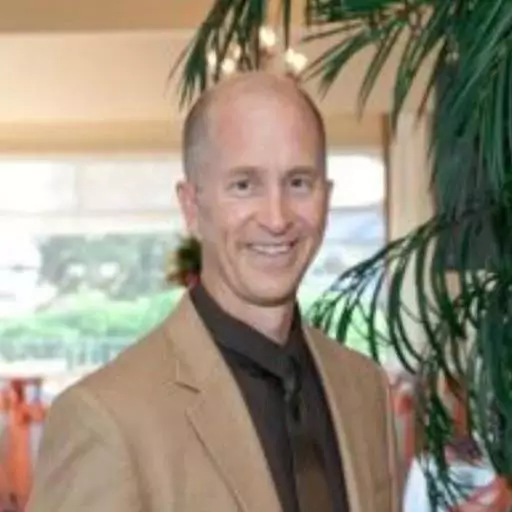
Tim Kelley, at the age of 18, surrendered his life and heart to Jesus Christ. After receiving his degree in Biblical Studies, he relocated to St. Petersburg, Florida. In July of 1989 he became the senior pastor of Grace Connection Church and launched a local radio broadcast called “Grace Thoughts”, a daily radio program broadcast in the Tampa Bay region http://wtis1110.com/ and is now heard at www.oneplace.com. Pastor Kelley is now in his 33th year in public ministry here in the Tampa Bay area. He is an avid sports fan of the Boston Red Sox, New England Patriots, and the Boston Celtics. As you may have guessed, our pastor grew up in New England in the Plymouth Mass. area. Pastor Kelley’s two greatest and heartfelt passions are teaching and preaching a clear gospel of God’s grace and its impact in our daily lives, as well as his love and compassion for people (even if they are not New England Fans). Pastor Kelley has a Master’s Degree in Biblical Studies and is currently pursuing a second Masters in Counseling, graduating in May 2013. He is happily married to his beautiful wife of 27 years, Peggy. They have one child at home, Sadie Lynne. Their beautiful daughter Hannah Grace, in February 2012, went home to be with the Lord, due to a firearm mishap after a church service. Pastor Kelley and Peggy have started the Hannah Grace Foundation in memory of their daughter, which raises funds for the housing, care and education of children and young adults, here locally in the Tampa Bay region, throughout America as well as the third world.
Contact Grace Thoughts with Tim Kelley
Grace Thoughts
P.O. Box 41734
St Petersburg, FL 33743
727-492-2058